Denizli Turkey with Pamukkale, Hierapolis, Laodicea, Tripolis, Buldan, caves, lakes, mountains and regional food
Wow Cappadocia Turkey Travel Guide

Denizli Travel Guide – Best Places to Visit

Discover the best places to visit in Denizli, from UNESCO-listed Pamukkale and Hierapolis, Laodicea, Tripolis and biblical Colossae to Karahayıt’s red springs, Kaklık and Keloğlan caves, historic Buldan, Işıklı and Kartal lakes, Honaz Mountain, Seljuk caravanserais and one of inland Aegean Turkey’s richest local food traditions.

Pamukkale & HierapolisLaodicea, Tripolis & Colossae Caves, Lakes & MountainsKebab, Keşkek & Local Food

Discover Denizli Beyond Pamukkale

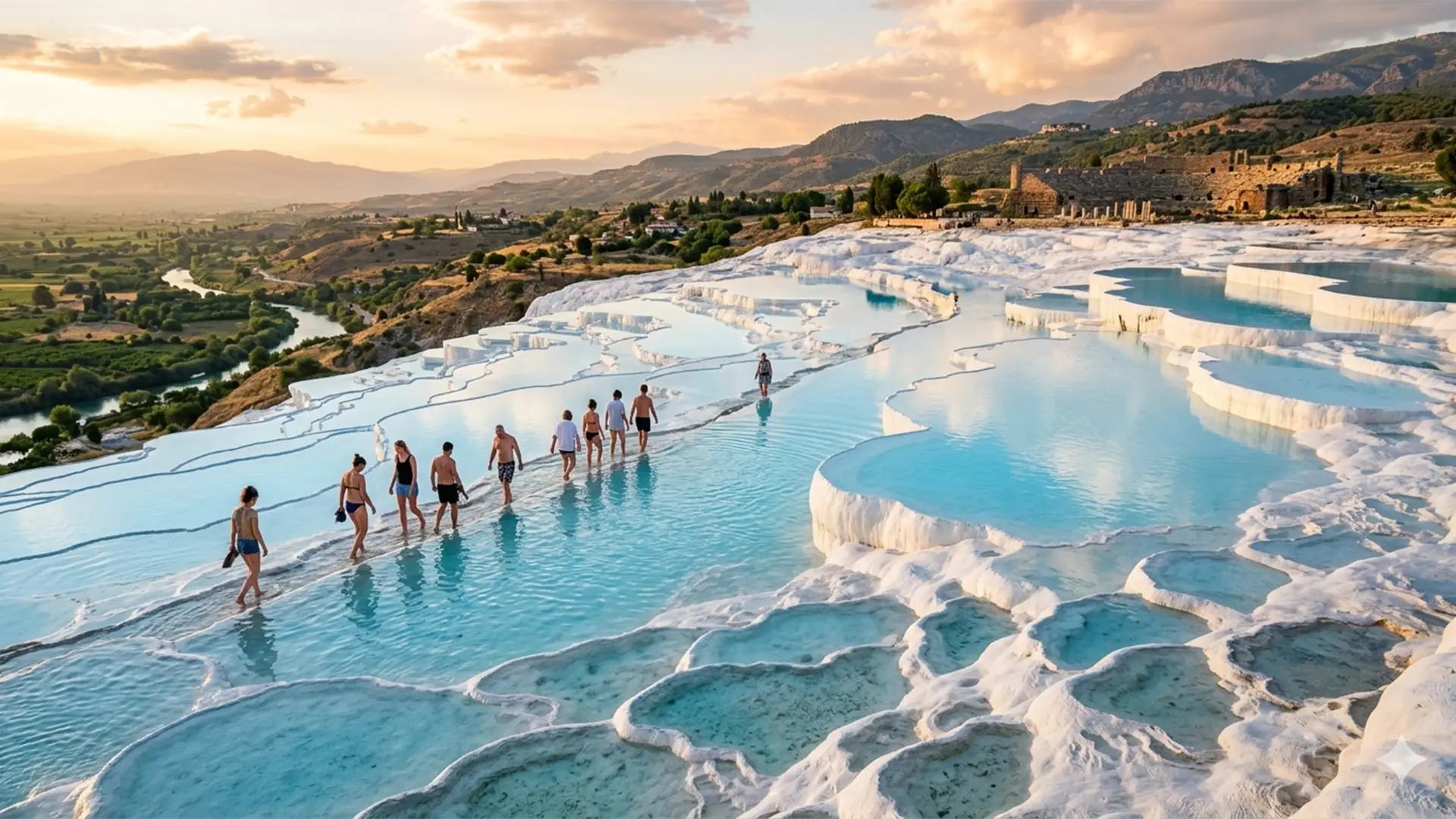
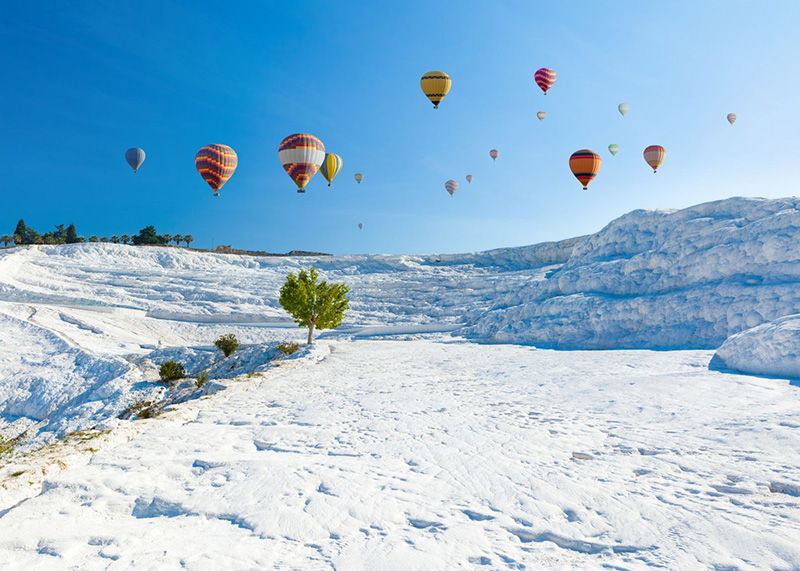
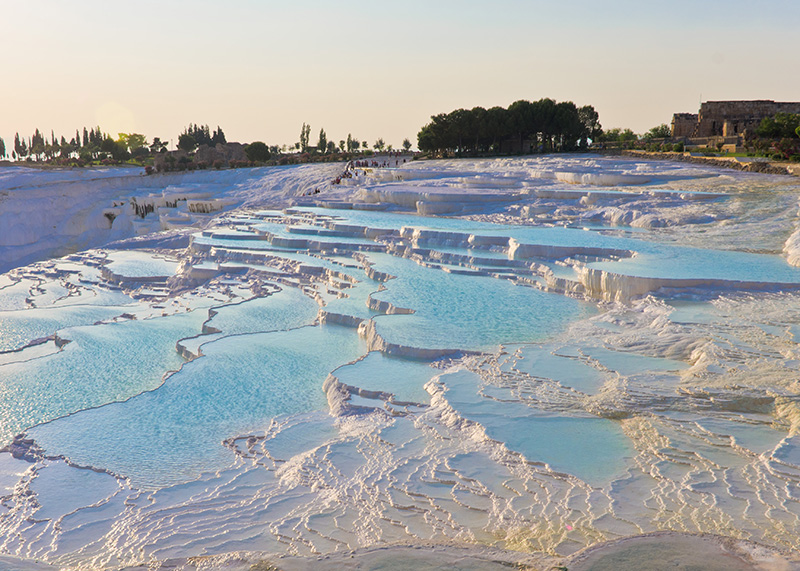
Denizli Province lies where the inland Aegean meets the routes toward central and southern Anatolia. Its best-known landscape is Pamukkale, where white calcium terraces rise beneath the ancient thermal city of Hierapolis, but the province extends far beyond this UNESCO landmark.


The wider region preserves an exceptional archaeological network. Laodicea, Tripolis and Colossae anchor the Lycus and Büyük Menderes corridors, while Tabae, Herakleia Salbace, Eumeneia, Attuda, Dionysopolis, Sebastopolis, Apollonia Salbace and many smaller settlements reveal how densely inhabited this part of Anatolia was in antiquity.


Nature and living culture are equally important. Historic Buldan, Kaklık Cave, Keloğlan Cave, Işıklı Lake, Honaz Mountain, İnceğiz Canyon and Kartal Lake add textiles, traditional houses, wetlands, caves, mountains and highland scenery. Denizli Tandır Kebabı, keşkek, leblebi, Tavas Baklavası, Kale Biberi, Çaput Aşı and numerous village dishes make food a major part of the journey.

Quick Visitor Information

  • Best for: UNESCO heritage, archaeology, biblical history, thermal landscapes, caves, nature, food and road trips
  • Suggested stay: 2 days for Pamukkale and major highlights; 4–6 days for a wider province itinerary
  • Main highlights: Pamukkale–Hierapolis, Laodicea, Tripolis, Colossae, Buldan, Kaklık Cave and Karahayıt
  • Best regional trips: Pamukkale–Laodicea, Buldan–Tripolis, Honaz–Colossae–Kaklık, Çivril–Işıklı and Tavas–Kale
  • Best seasons: Spring and autumn for touring; summer mornings and evenings for exposed sites; winter for thermal travel
  • Local identity: Denizli kebab, keşkek, leblebi, Tavas cuisine, Kale pepper, Çal vineyards, Buldan textiles and the Denizli rooster
Denizli’s Signature Story

Thermal Water, Ancient Cities and the Crossroads of Western Anatolia

Denizli’s identity is inseparable from water and movement. Mineral-rich springs created the white terraces of Pamukkale and supported ancient medical and bathing traditions around Hierapolis and the wider Lycus Valley. The same valleys carried roads linking the Aegean ports with inland Anatolia, helping cities such as Laodicea, Tripolis, Colossae and Attuda grow as centers of trade, religion and culture.


Modern Denizli still feels like a crossroads. Pamukkale and Karahayıt form the international tourism center; Buldan preserves textile traditions and historic streets; Honaz leads toward Colossae, Kaklık and the high mountain landscape; Çivril opens onto lakes, wetlands and prehistoric archaeology; while Tavas, Kale, Çal, Acıpayam and Beyağaç reveal quieter archaeological sites, vineyards, canyons, caves and mountain nature.

Explore Pamukkale Travel Guides, Tours & Experiences

Start planning your visit with our most useful Pamukkale area pages, including places to visit, guided daily tours and flexible private tours.

Places to Visit Around Pamukkale

Guide

Discover the most important attractions around Pamukkale and the wider Denizli region, including Pamukkale Travertines, Hierapolis, Laodicea, Karahayıt and other rewarding nearby destinations.

Top attractions UNESCO heritage Regional planning Historical highlights
  • Ideal starting point for first-time visitors
  • Nature, archaeology and thermal heritage together
  • Useful for wider western Turkey itineraries

Pamukkale Daily Tours

Tours

Join guided daily tours in the Pamukkale area and visit the region’s most important natural, historical and archaeological landmarks with easier planning and efficient routing.

Daily departures Guided sightseeing Balloon options Historic region
  • Ideal for short stays and classic itineraries
  • Explore Pamukkale with professional planning support
  • Combine scenery, archaeology and cultural heritage

Private Tours in Pamukkale Area

Private

Explore Pamukkale and the surrounding region at your own pace with private guided tours, flexible timing and customized routes designed around your interests and travel plans.

Flexible timing Private guide Custom routes Personalized travel
  • Perfect for tailored sightseeing
  • Easy to combine multiple historical places
  • Ideal for couples, families and private groups

Choose Denizli by Travel Style

Denizli is much more varied than a single Pamukkale visit. Choose the travel style that interests you most.

Best for UNESCO & Thermal Heritage

Pamukkale, Hierapolis & Karahayıt

Follow thermal water from white travertines and an ancient spa city to the colorful mineral springs of Karahayıt.

Best for Archaeology & Biblical History

Laodicea, Colossae, Tripolis & Hidden Cities

Explore Roman cities, early Christian history, ancient trade routes and a remarkably dense network of lesser-known settlements.

Best for Nature

Caves, Lakes, Canyons & Mountains

Discover Kaklık and Keloğlan caves, Honaz Mountain, Işıklı Lake, İnceğiz Canyon, waterfalls and remote Kartal Lake.

Best for Food & Living Culture

Denizli Kebab, Buldan, Tavas & Çal

Combine traditional cuisine with textile heritage, local markets, vineyard landscapes and district specialties.

Denizli’s UNESCO Masterpiece

Pamukkale & Hierapolis – Nature and Ancient History in One Landscape

Pamukkale–Hierapolis deserves several hours rather than a rushed photo stop. The white travertine slope is only one part of the experience. Above it extends an ancient city with a monumental theatre, sacred district, Plutonium, Temple of Apollo, baths, gates, colonnaded streets and an exceptionally large necropolis.


Early Christian heritage adds another layer through the monuments associated with Saint Philip. The on-site archaeology museum, housed in part of the ancient bath complex, helps connect sculpture, inscriptions and funerary art with the larger story of the city. Karahayıt and Laodicea can turn a Pamukkale stay into a much broader Lycus Valley journey.

Explore All Denizli Attractions

Browse Denizli by Pamukkale and the Lycus Valley, city-center heritage, Buldan and Tripolis, Honaz and Colossae, Çivril, Çal, Tavas and Kale, caves, lakes, mountains, caravanserais, archaeology and food.

Best Day Trips and Regional Routes in Denizli

The province stretches well beyond Pamukkale. Its strongest experiences fall into distinct geographic clusters.

UNESCO & Thermal Route

Pamukkale, Hierapolis, Karahayıt & Laodicea

Build the essential Denizli day around white travertines, the ancient spa city, red mineral springs and one of Anatolia’s great Roman cities.

Historic Town & Archaeology Route

Buldan, Tripolis & Yayla Lake

Combine monumental archaeology with traditional textile culture, historic houses and a peaceful highland wetland.

Biblical & Nature Route

Honaz, Colossae, Kaklık & Honaz Mountain

Explore the landscape of ancient Colossae, an extraordinary thermal cave and the forests and elevations of Denizli’s great mountain.

Hidden Southern Denizli

Tavas, Tabae, İnceğiz & Beyağaç

Head south for historic settlements, Carian archaeology, canyons, local food and remote mountain landscapes rarely seen on standard itineraries.

Ancient Denizli

Far More Than Hierapolis and Laodicea

Denizli is one of western Anatolia’s densest archaeological provinces. The official regional inventory includes Hierapolis, Laodicea, Tripolis, Colossae, Tabae, Eumeneia, Herakleia Salbace, Dionysopolis, Sebastopolis, Trapezopolis, Attuda and Apollonia Salbace among many other ancient settlements and sanctuaries.


The geography helps explain this concentration. The Lycus and Büyük Menderes valleys connected the Aegean with the interior, while routes toward Caria and the Mediterranean passed through mountain districts to the south. Some smaller sites remain lightly developed, partially buried or located within modern villages, so access conditions can differ greatly from major excavated sites such as Laodicea and Tripolis.

Biblical Denizli

Colossae, Chonae and the Christian Landscape of the Lycus Valley

Colossae is less visually monumental than nearby Laodicea, but historically it is one of Denizli’s most important names. Ancient sources place it among the significant centers of Phrygia, and the city later became inseparable from early Christian history through the New Testament Epistle to the Colossians.


After the ancient settlement declined, the center shifted toward later Chonae, associated in medieval Christian tradition with Saint Michael. Visiting Colossae together with Laodicea and Hierapolis creates one of Turkey’s most meaningful biblical landscapes, while Honaz Mountain provides the dramatic natural setting behind the entire route.

Living Heritage

Buldan – Historic Houses, Weaving and a Different Side of Denizli

Buldan gives the province something that archaeological and thermal sites cannot: a living historic town. Traditional houses, sloping streets and textile workshops preserve a strong local identity shaped by generations of weaving and trade.


The town also sits within one of Denizli’s best day-trip clusters. Tripolis Ancient City lies near Yenicekent, while Süleymanlı Yayla Lake adds forest and wetland scenery. Together they create an unusually balanced route of archaeology, architecture, crafts, food and nature.

What to Eat & Buy in Denizli

Denizli’s cuisine reaches far beyond its famous kebab, with wheat and corn dishes, village breads, meat dishes, peppers, grapes, roasted chickpeas, layered pastries and a remarkable collection of traditional desserts.

Denizli Food Culture

From Tandır Kebabı to Çaput Aşı, Tavas Baklavası and Leblebi

Denizli Tandır Kebabı is the province’s best-known meat specialty and remains an essential local meal, but Denizli’s traditional table is much broader. Keşkek, arabaşı, mısır gömbesi, leyen böreği, börülce böreği, cızlama, kiide, patlıcanlı kapama, topalak, kabak aşı and kaçamak reveal a strong inland-Aegean cooking tradition built around grains, meat, legumes, vegetables and village ovens.


Tavas deserves particular attention for göveç, tahinli pide and its celebrated layered baklava. Serinhisar and Denizli leblebi add a major snack and trade tradition, while Kale Biberi connects the southern districts with agricultural identity. Around Çal and Bekilli, grape-growing and vineyard landscapes form another important part of local culture.


Traditional sweets deepen the inventory further. Pekmezli un helvası, akaşı, inge tatlısı, kara halva, çıtır helva, çoban bulamacı, bulamaç, telem helvası and saraylı tatlısı are exactly the kind of regional foods that help visitors understand Denizli beyond the international image of Pamukkale.

How Many Days Do You Need in Denizli?

One day covers the famous UNESCO landscape, but additional days reveal an entirely different province.

One Day

Pamukkale, Hierapolis & Laodicea

Give Pamukkale and Hierapolis most of the day, then add Laodicea if your pace and daylight allow.

Two Days

Add Karahayıt, Buldan & Tripolis

Use the second day for red thermal springs, Tripolis and the historic textile town of Buldan.

Three Days

Add Honaz, Colossae & Kaklık

Explore biblical Colossae, Honaz Mountain scenery and the unusual thermal formations of Kaklık Cave.

Five Days+

Explore Çivril, Çal, Tavas, Kale & Beyağaç

Extend into lakes, vineyards, hidden ancient cities, canyons, caves, Seljuk monuments and remote mountain nature.

Suggested Denizli Center Route

Denizli City Museum, Atatürk House, Kaleiçi & Local Culture

Begin at the Denizli City Museum for an overview of the province’s history, crafts, commerce and urban identity. Continue to the Atatürk and Ethnography Museum, then explore the historic commercial area around Kaleiçi and Bayramyeri.


A city visit is also the right moment to experience Denizli’s culinary identity. Try traditional tandır kebab, look for local leblebi and regional products, and use the center as a practical base for Pamukkale, Laodicea and the wider province.

Suggested UNESCO & Thermal Route

Pamukkale, Hierapolis, Karahayıt & Laodicea

Start early at Pamukkale and Hierapolis and allow enough time for the travertines, theatre, sacred district, necropolis and museum. Continue to nearby Karahayıt to see a different geothermal landscape shaped by red and rust-colored mineral deposits.


Finish at Laodicea if time allows, especially for travelers interested in Roman cities and early Christianity. A slower itinerary can divide Pamukkale–Hierapolis and Laodicea between separate days for better light, more museum time and less rushing.

Suggested Historic Town Route

Tripolis, Buldan & Süleymanlı Yayla Lake

Begin at Tripolis Ancient City, where the scale of the excavated streets and public monuments makes it one of Denizli’s most rewarding archaeological sites outside Pamukkale and Laodicea. Continue uphill toward Buldan for historic houses, weaving and local food.


If conditions and daylight are suitable, finish at Süleymanlı Yayla Lake for a quiet wetland and forest landscape. This route is particularly good for travelers who want archaeology, living culture and nature in the same day.

Suggested Biblical & Nature Route

Colossae, Honaz Mountain & Kaklık Cave

Start with Colossae near Honaz, approaching it as a historical landscape connected with ancient Phrygia, the Epistle to the Colossians and later Chonae rather than expecting a fully excavated monumental city.


Continue into the Honaz Mountain area for scenery and walking, then visit Kaklık Cave. Its thermal water and pale travertine formations create one of Denizli’s most unusual natural sights and a fitting geological counterpart to Pamukkale.

Suggested Northern Denizli Route

Çivril, Işıklı Lake, Beycesultan & Akdağ

Northern Denizli rewards travelers who enjoy wetlands and deep archaeology. Işıklı Lake is the central nature stop, while Beycesultan Höyük introduces a long settlement history extending far earlier than the classical cities for which the province is better known.


Travelers with additional time can add Gümüşsu Waterfall, Tokalı Canyon or the Akdağ landscape. Distances and rural-road conditions make this better as a dedicated regional day rather than a quick extension from Pamukkale.

Suggested Southern Denizli Route

Tavas, Tabae, Old Kale & İnceğiz Canyon

Head south through Tavas, a district strongly associated with regional food and zeybek culture, before continuing to Kale and the layered remains of ancient Tabae and the historic settlement above the modern town.


Add İnceğiz Canyon for a dramatic nature finish. Travelers interested in deeper archaeology can also investigate Herakleia Salbace, Sebastopolis and other smaller ancient sites across the Tavas–Kale landscape, keeping in mind that visitor facilities vary.

Suggested Seljuk Heritage Route

Akhan, Çardakhan & the Medieval Roads of Denizli

Denizli’s position on historic east–west routes continued into the Turkish period. Akhan Caravanserai near Denizli and Çardakhan / Hanabad at Çardak preserve two important examples of 13th-century Seljuk roadside architecture.


This is an excellent route for travelers interested in the infrastructure of medieval Anatolia rather than only palaces and mosques. Kaklık Cave or the Denizli city center can be added depending on direction and available time.

Suggested Denizli Nature Journey

Caves, Lakes, Waterfalls, Canyons & Mountain Forests

Denizli’s natural inventory is unusually varied. Kaklık and Keloğlan caves offer underground landscapes; Işıklı and Süleymanlı lakes add wetlands; Honaz Mountain and Kartal Lake bring forest and high-elevation scenery; while İnceğiz Canyon and Güney Waterfall reveal another side of the province’s geology and water systems.


Do not attempt to combine all of these in a single day. Build separate northern, southern and mountain routes, and always check seasonal weather, road, water and access conditions before traveling to remote nature areas.

Planning Advice

Practical Tips for Exploring Denizli

  • Pamukkale: Start early or visit later in the day during hot weather and allow several hours for Hierapolis
  • Laodicea: Treat it as a major archaeological site rather than a quick add-on
  • Driving: A private vehicle is the easiest way to reach Buldan, Çivril, Kale, Beyağaç and smaller ancient sites
  • Small sites: Excavation, opening and local access conditions can change
  • Nature: Check road, weather, water and seasonal conditions for mountain lakes, waterfalls and canyons
  • Summer: Exposed ancient sites can be extremely hot at midday
  • Food: Try district specialties in Denizli center, Tavas, Buldan, Çal, Kale and Serinhisar rather than relying only on tourist restaurants near Pamukkale
  • Nearby excursion: Aphrodisias is an excellent addition from Denizli, but it is in Karacasu district of neighboring Aydın Province

Best Routes at a Glance

  • Classic first visit: Pamukkale–Hierapolis + Laodicea
  • Thermal: Pamukkale + Karahayıt
  • Historic town: Tripolis + Buldan + Yayla Lake
  • Biblical: Hierapolis + Laodicea + Colossae
  • Northern nature: Çivril + Işıklı Lake + Beycesultan
  • Southern heritage: Tavas + Tabae + İnceğiz Canyon
  • Seljuk: Akhan + Çardakhan
  • Mountain nature: Honaz Mountain or Beyağaç + Kartal Lake

Why Visit Denizli?

Denizli is one of Turkey’s strongest destinations for travelers who want natural wonder and major archaeology in the same journey. Pamukkale’s white travertines and Hierapolis form the internationally famous centerpiece, while Laodicea adds a monumental Roman city and one of the most important early Christian sites in western Anatolia.


The province becomes much more interesting when travelers move beyond the classic circuit. Tripolis, Colossae, Tabae and the smaller ancient cities deepen the archaeological story; Buldan preserves historic houses and weaving; Kaklık and Keloğlan caves, Işıklı Lake, Honaz Mountain, İnceğiz Canyon, Güney Waterfall and Kartal Lake add remarkably varied natural landscapes.


Denizli’s food and craft culture completes the experience. Tandır kebab, keşkek, leblebi, Tavas Baklavası, Tavas Göveci, Kale Biberi, Çaput Aşı, village breads, pastries and sweets reveal a culinary identity that deserves far more attention, while Buldan textiles and Çal’s vineyard landscape connect everyday culture with the geography of the province.

Denizli Travel Questions

Frequently Asked Questions About Denizli

Pamukkale and Hierapolis, Laodicea, Tripolis, Karahayıt, Kaklık Cave, Colossae, historic Buldan, Işıklı Lake, Honaz Mountain, Keloğlan Cave, İnceğiz Canyon and Kartal Lake are among the strongest places to begin.

One full day can cover Pamukkale and Hierapolis, while two days allow Laodicea and another nearby area. Four to six days are better for travelers who want Buldan, Tripolis, Colossae, caves, lakes and the wider province.

No. Aphrodisias is near Geyre in Karacasu district of neighboring Aydın Province. It is a very rewarding excursion from Denizli or Pamukkale, but geographically it should be treated as an Aydın attraction.

Major names include Hierapolis, Laodicea, Tripolis, Colossae and Tabae. The wider archaeological inventory also includes Eumeneia, Herakleia Salbace, Dionysopolis, Sebastopolis, Trapezopolis, Attuda, Apollonia Salbace and other smaller settlements.

Colossae was an important ancient Phrygian city and is especially famous in Christian history through the New Testament Epistle to the Colossians. The later center of Chonae developed near modern Honaz.

Kaklık Cave, Keloğlan Cave, Honaz Mountain National Park, Işıklı Lake, Süleymanlı Yayla Lake, Kartal Lake Nature Reserve, İnceğiz Canyon and Güney Waterfall are among the province’s strongest nature destinations.

Denizli is especially known for tandır kebab, keşkek, leblebi, Tavas Baklavası, Tavas Göveci, tahinli pide, Kale Biberi and traditional dishes such as Çaput Aşı, arabaşı, mısır gömbesi and various pastries and sweets.

Pamukkale and central routes can be reached with public transport or organized tours, but a private vehicle is strongly recommended for Buldan, Çivril, Kale, Beyağaç, smaller ancient sites and multi-stop nature routes.

Spring and autumn are excellent for archaeology and road trips. Summer is popular but can be very hot at exposed ruins, while winter works particularly well for quieter cultural visits and the province’s thermal identity. High mountain areas can have very different seasonal conditions.

Ready to Explore Denizli Beyond Pamukkale?

Tell us your travel dates, starting point and interests, and we will help you build a private Turkey itinerary that can include Pamukkale, Hierapolis, Laodicea, Tripolis, Colossae, Buldan and other destinations across western Turkey.

WhatsApp Us for Denizli Planning