Ancient Monastic Canyon
Ihlara Valley History & Significance
Discover one of the most important historic landscapes in the wider Cappadocia world, where natural beauty and early Christian heritage meet.
Ihlara Valley became an important religious center during the early centuries of Christianity.
Protected by its deep canyon structure and hidden natural setting, the valley provided an ideal environment for
monastic life, worship and settlement during periods when both seclusion and safety were important.
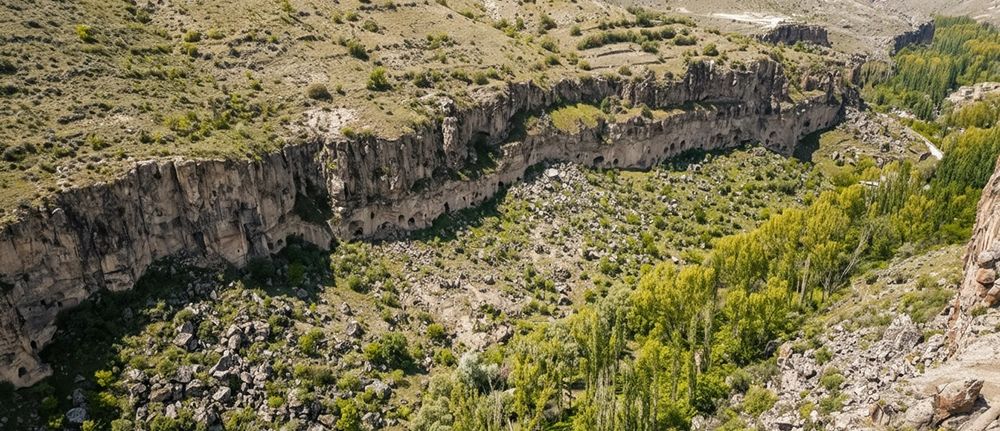
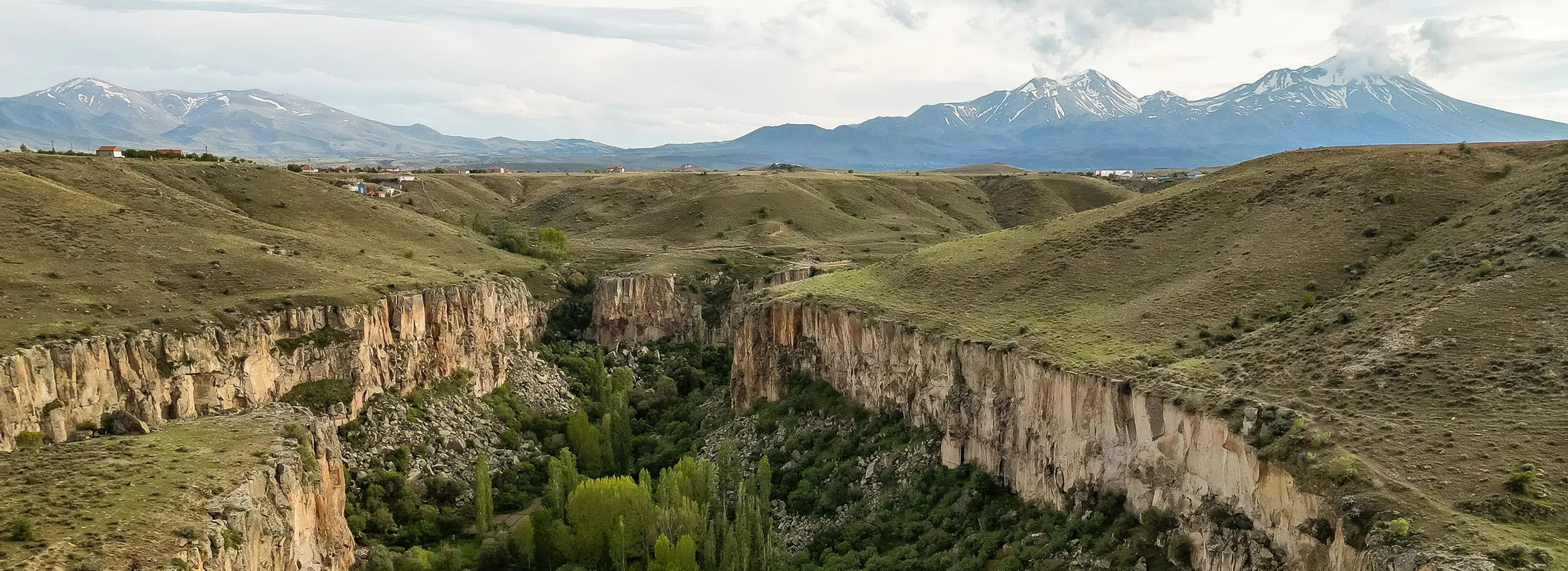
The valley itself was formed through volcanic layers shaped over time by the erosion of the
Melendiz Stream. This process created a dramatic canyon that reaches depths of around
120 meters in some sections, producing one of the most distinctive landscapes in the wider Cappadocia region.
Over time, churches, shelters, monastic spaces and living quarters were carved into the soft rock.
Ihlara is especially known for its rich concentration of rock-cut churches, many of them decorated with frescoes.
The valley contains over 100 churches, with a selection open to visitors, including important examples such as
Ağaçaltı, Sümbüllü, Yılanlı, Kokar, Pürenliseki, Eğritaş and Kırkdamaltı.
What makes Ihlara so special is that it is not simply a scenic valley and not only a religious site.
It is a place where nature, spirituality, daily life and geology all came together to shape one of the most remarkable
historical environments in Anatolia.