From Apollonia to Tripolis
Tripolis History & Significance
Discover how a Hellenistic settlement became an important Roman commercial center and later a Byzantine city.
Archaeological evidence from nearby mounds shows that settlement in the wider area reaches back to the
Late Neolithic and Early Chalcolithic periods. The city itself first entered recorded history
during the Hellenistic period under the name Apollonia.
Tripolis occupied an exceptionally valuable position on the ancient road network. Routes beginning in
Pergamon and Smyrna met at Sardis, continued through Philadelphia and reached Tripolis before extending toward
Hierapolis,
Laodicea and the interior of Anatolia.
This location helped the city grow as a center of commerce, agriculture and regional transportation.
The city was briefly called Antoniopolis around the time of Mark Antony’s visit to Asia Minor
in 41 BC. Coins from the Augustan period use the name Tripolis. From the 2nd century AD onward, the city was
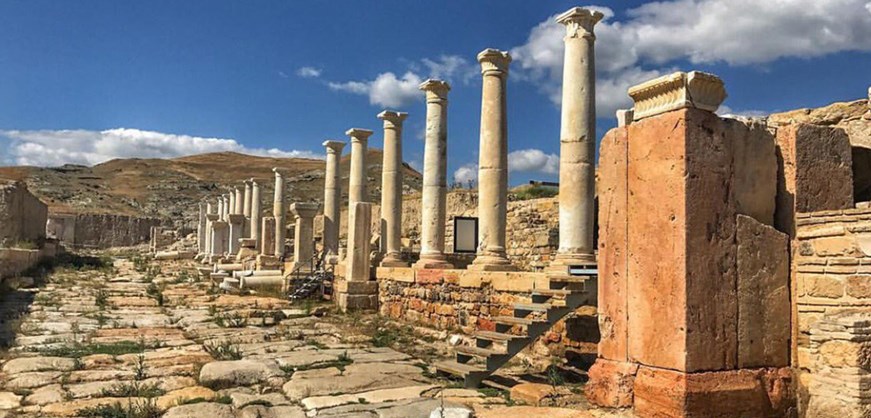
extensively rebuilt with a planned urban layout that included streets, gates, baths, a stadium, theater,
council building, agoras and monumental fountains.
Tripolis experienced its most prosperous period under Roman rule. Earthquakes and conflicts repeatedly damaged
the city, yet occupation and rebuilding continued through the Byzantine period. Churches and fortification
walls demonstrate its later Christian and defensive importance, while settlement continued into the medieval era
before the region eventually came under Ottoman rule.
Modern excavation and restoration have revealed a remarkably complete urban landscape. Since 2012, major work
has been carried out in the residential quarter, churches, colonnaded street, monumental fountain, main street,
agora, arched structure, shops and sanctuary, making Tripolis one of the most dynamic archaeological projects
in the Denizli region.