The Last Center of Ottoman Government
Yıldız Palace History & Significance
Discover how a wooded imperial retreat became the political heart of the late Ottoman Empire.
The wooded hills of Yıldız had been used by Ottoman sultans for hunting and recreation for centuries.
The first known pavilion on the palace grounds was built during the reign of
Sultan Selim III at the end of the 18th century. Later rulers continued to develop the area,
adding gardens, residences and pavilions.
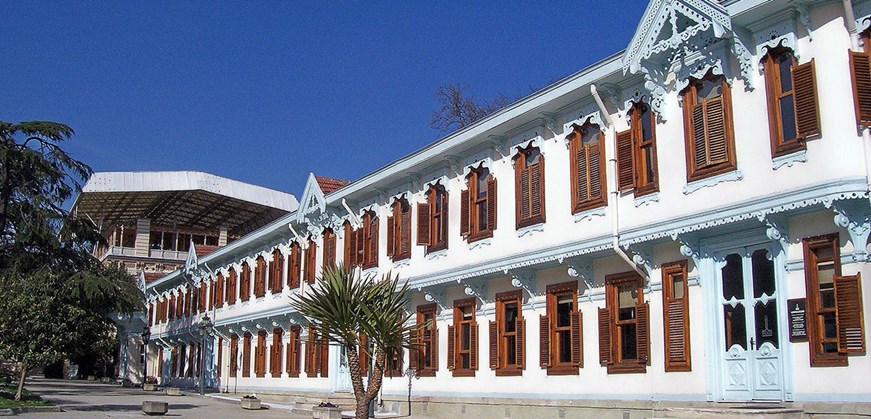
During the reign of Sultan Abdülaziz, important structures such as the Malta Pavilion,
Çadır Pavilion and Çit Pavilion were constructed. The complex entered its most important period after
Sultan Abdülhamid II moved the imperial court from Dolmabahçe Palace to Yıldız in 1876.
Sultan Abdülhamid II expanded Yıldız into a vast administrative, residential, cultural and industrial center.
Government offices, private apartments, a palace theatre, library, pharmacy, workshops, military facilities,
gardens and the Imperial Porcelain Factory all formed part of the wider palace world.
Contemporary accounts suggest that thousands of people lived or worked within the complex.
For 33 years, Yıldız Palace served as both the sultan’s principal residence and the administrative center of the empire.
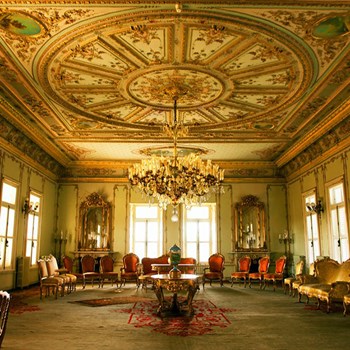
Its combination of traditional Ottoman palace planning with Baroque, Neoclassical and Art Nouveau influences makes it
one of the most distinctive architectural ensembles in Istanbul. The complex has been included on
Turkey’s UNESCO World Heritage Tentative List since 2015.