A 19th-Century Imperial Residence
Beylerbeyi Palace History & Significance
Discover the history of an Ottoman summer palace created for royal life, diplomatic hospitality and ceremonial prestige.
The Beylerbeyi area had been used as a residential and imperial retreat since the Byzantine period.
In the early 19th century, Sultan Mahmud II commissioned a wooden palace on the site.
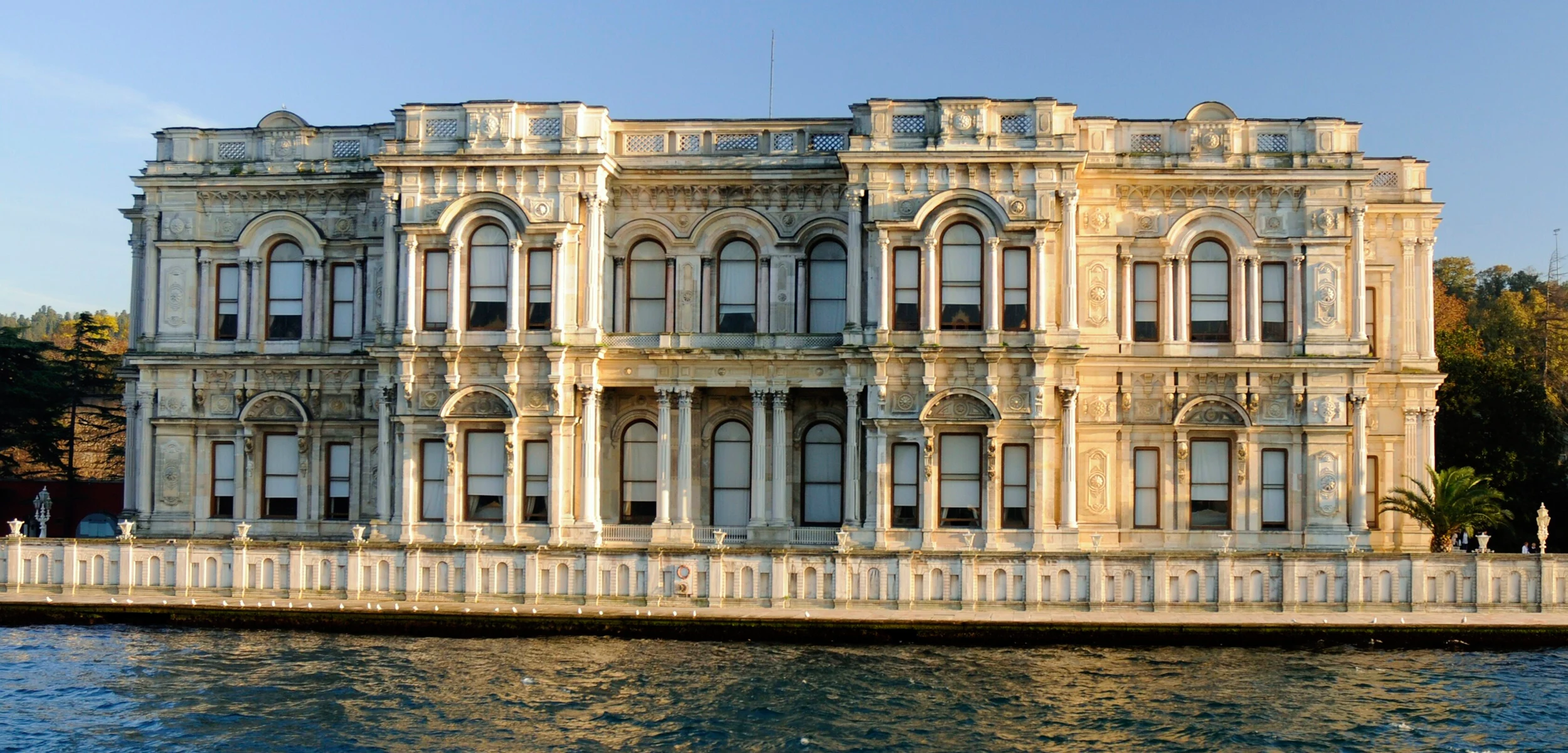
After the earlier structure was destroyed by fire, Sultan Abdülaziz ordered the construction of the present palace.
Work began in 1863, and the new palace was officially opened in 1865.
The project was organized by Sarkis Balyan, a member of the influential Balyan family of Ottoman court architects.
The palace was designed as both a summer residence for the sultan and a state guest house for foreign rulers and dignitaries.
Distinguished guests associated with Beylerbeyi Palace included Empress Eugénie of France,
Emperor Franz Joseph of Austria-Hungary, King Nikola of Montenegro
and German Emperor Wilhelm II. Their visits reflect the palace’s important diplomatic role during the final decades of the Ottoman Empire.
Beylerbeyi Palace also holds a deeply personal place in late Ottoman history.
After being deposed, Sultan Abdülhamid II spent the final six years of his life here
and died in the palace in 1918.
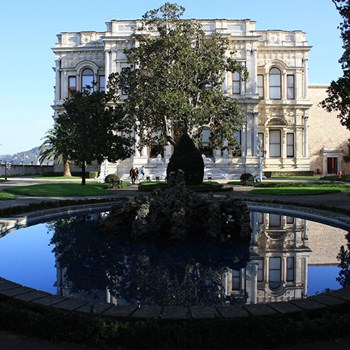
Today, the palace preserves a remarkable collection of 19th-century decoration and furnishings.
Its combination of western architectural influence, traditional Ottoman spatial planning and an exceptional Bosphorus setting
makes it one of the most distinctive royal residences in Istanbul.