A Living Lycian Coastal Landscape
Kekova & Simena History and Significance
Discover a protected Mediterranean landscape where ancient settlements, maritime history and village life remain closely connected.
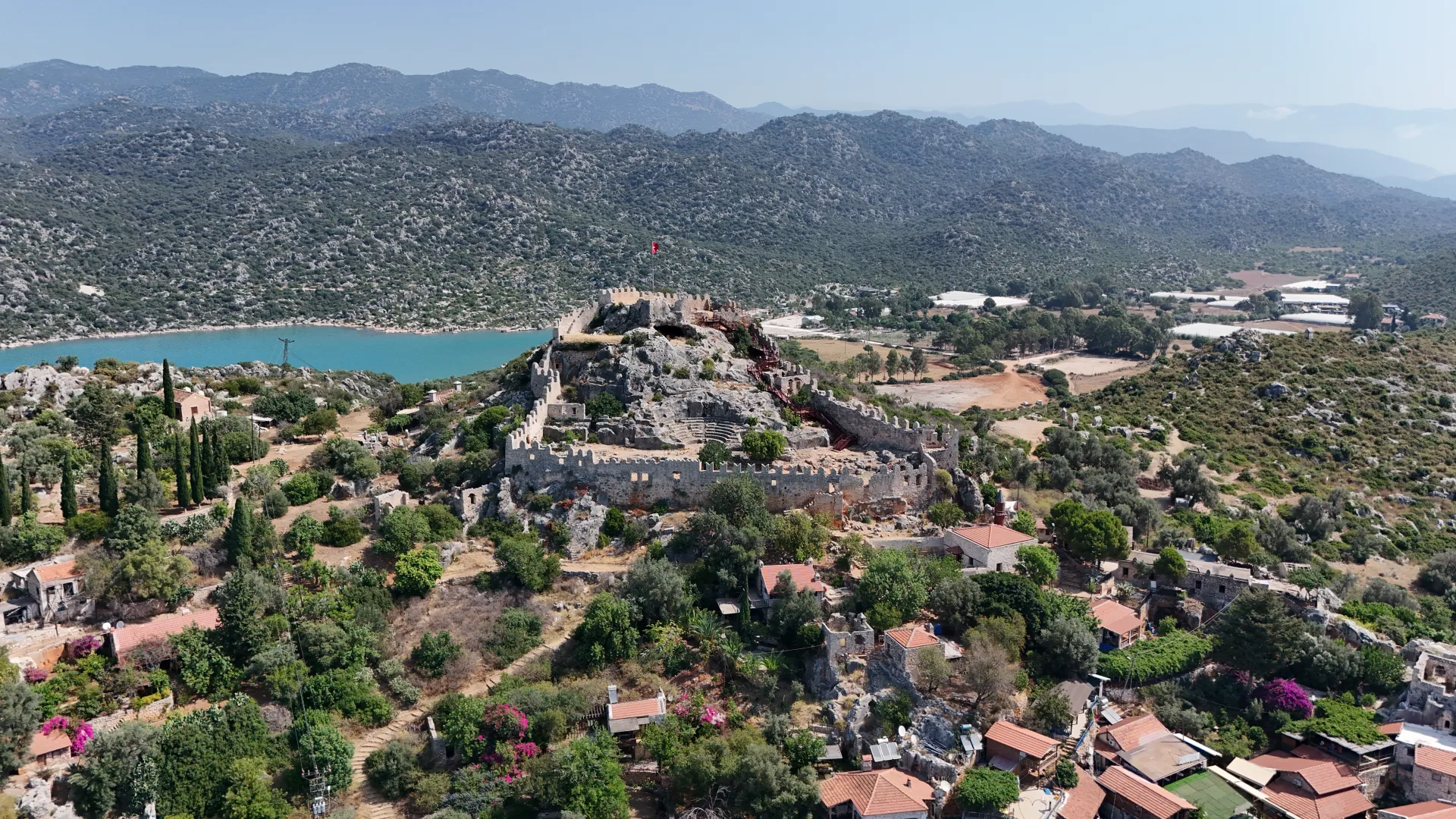
Simena, known today as Kaleköy, was a small but strategically placed Lycian coastal settlement.
Inscriptions show that its history reaches back to at least the 4th century BCE. Its sheltered position made the surrounding waters
a valuable natural harbor, while the settlement continued to be used through Roman, Byzantine and medieval periods.
The most commanding structure is Simena Castle, whose medieval walls rise partly over earlier Lycian foundations.
Inside the fortified area stands a small theatre carved into the natural rock. With seven rows and space for roughly 300 spectators,
it is regarded as the smallest known theatre among the Lycian cities.
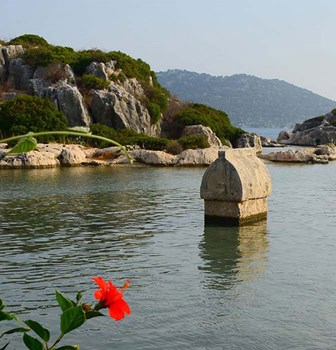
Simena also contains a remarkable collection of burial monuments. Rock-cut tombs and house-type graves appear around the settlement,
while the eastern necropolis is filled with Lycian sarcophagi overlooking the sea. The best-known example rises directly from the shallow water
near Kaleköy and has become one of the defining images of the Kekova region.
Across the channel, the northern shore of Kekova Island preserves ancient stairs, walls, house foundations and harbor remains,
some extending several meters below the surface. These remains were partly submerged after earthquakes and geological changes.
Kekova was submitted to UNESCO’s Tentative List in 2000 as a mixed cultural and natural landscape.
Today, Simena lies within the Kaş–Kekova Special Environmental Protection Area. The region remains exceptional because its archaeological heritage,
clear water, rocky islands, natural bays and inhabited coastal villages still form one continuous historical landscape.