A Multicultural Golden Horn Story
Fener & Balat History & Significance
Discover how faith, trade, migration and neighborhood life shaped one of the most fascinating parts of
Istanbul.
Fener and Balat developed beside the Golden Horn within the historic peninsula of Istanbul.
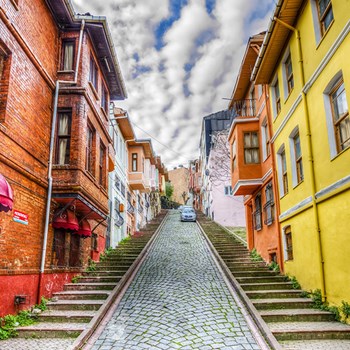
Their streets preserve a dense urban landscape of houses, schools, places of worship and small commercial spaces,
reflecting the communities that lived and worked here through the Byzantine, Ottoman and modern periods.
Fener became especially important as a center of Greek Orthodox life in the Ottoman capital.
The Ecumenical Patriarchate of Constantinople and the Patriarchal Church of St. George remain among the district’s
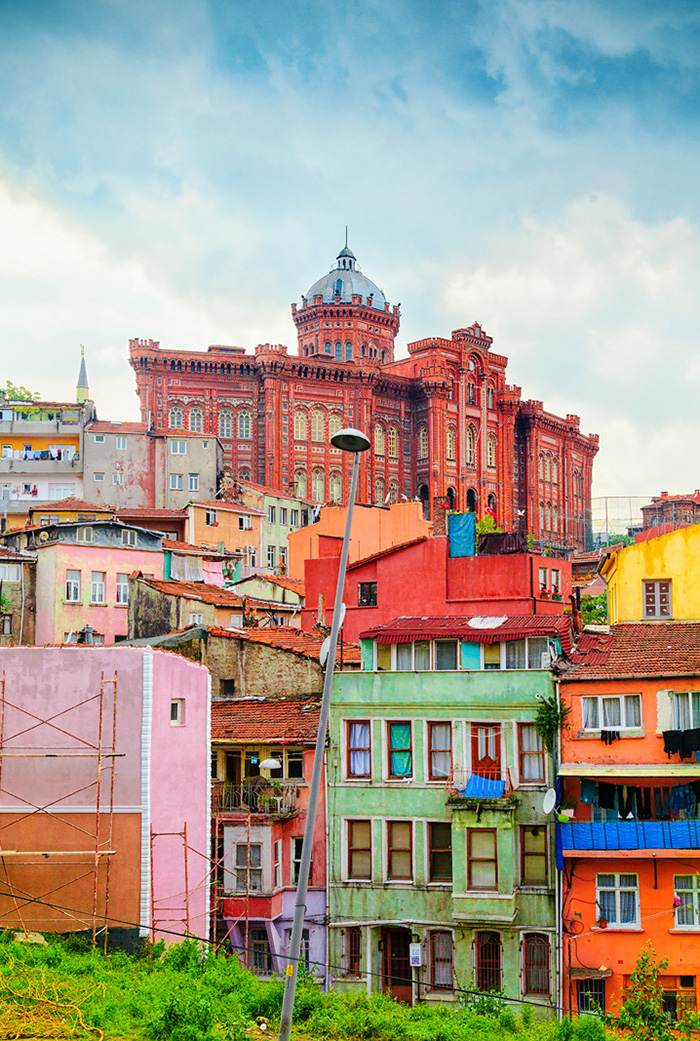
most significant institutions. The nearby Fener Greek High School, recognized by its monumental red-brick architecture,
is one of the most visible landmarks above the Golden Horn.
Balat became closely associated with Istanbul’s Jewish community. Jewish life in the city has deeper roots,
but the neighborhood grew in importance after Sephardic Jews arrived in the Ottoman Empire following their expulsion from
the Iberian Peninsula at the end of the 15th century. Historic synagogues such as Ahrida preserve part of this heritage.
Fener and Balat were also the focus of an important UNESCO- and European Union-supported urban rehabilitation initiative.
The project aimed to protect historic buildings while improving local living conditions. The neighborhoods should not be
described as a separate UNESCO World Heritage Site; their international heritage significance is connected to the wider
conservation story of Istanbul’s historic peninsula.