Church of Constantine & Helena
A grand basilica in the village square with impressive stone craftsmanship.






Mustafapaşa, formerly known as Sinasos, is widely considered the best-preserved historical village in Cappadocia. Located just 5km south of Ürgüp, it was once a wealthy Greek settlement famous for its "caviar merchants" who brought wealth and neoclassical architecture back to their home village in the 18th and 19th centuries.
Walking through Mustafapaşa feels like stepping into an open-air museum. Unlike the more commercialized tourist centers, Sinasos maintains a quiet, academic, and cultural atmosphere, home to Cappadocia University and some of the most intricate stone carvings in Anatolia.
Ornate stone houses with elaborate door frames and balconies built by wealthy Greek families.
Visit the Church of Constantine and Helena and the hidden Church of St. Nicholas.
A nearby mysterious valley filled with multi-story pigeon houses and dark cave complexes.
Savor authentic local flavors in restored historic mansions turned into fine dining restaurants.
5km from Ürgüp, situated in the heart of the "Blue Tour" region.
Greek stone masonry, the Church of Constantine and Helena, and its university.
2 to 3 hours for the village, or a full day to include Gomeda Valley hiking.
Culture seekers, architecture photographers, and slow-travel enthusiasts.
For centuries, Mustafapaşa, then known by its Greek name Sinasos, stood as a beacon of prosperity and high culture in the heart of Anatolia. Unlike many other Cappadocian villages that relied solely on agriculture, the people of Sinasos were renowned for their entrepreneurial spirit. The men of the village were famous throughout the Ottoman Empire as the primary merchants of the Istanbul Caviar Trade. This exclusive commercial success funneled immense wealth back into the village, transforming it into a "little Athens" filled with intellectual life and architectural grandeur.
This wealth was most visibly expressed through the village's unique masonry. The affluent "Caviar Merchants" commissioned the most skilled stonemasons of the era to construct neoclassical mansions that are unlike anything else in Cappadocia. These homes feature ornate "Sinasos-style" portals—grand arched entrance doors carved with intricate floral motifs, solar symbols, and family crests. Inside, these mansions often housed hidden chapels and massive vaulted halls adorned with vibrant wall paintings depicting scenes from Istanbul and Greek mythology, many of which are still being restored and rediscovered today.
The 1924 population exchange between Greece and Turkey served as a poignant turning point in the village's story. As the Greek Orthodox families departed for their new homes, Turkish families arriving from the Juma-i Bala region of Macedonia moved into the stone mansions, bringing with them new customs, crafts, and culinary traditions. This layering of identities is what gives Mustafapaşa its soul today; it is a place where Macedonian folk music occasionally echoes through Greek courtyards, and where Ottoman-era madrasas stand in the shadow of Byzantine basilicas.
In the center of the village, the Church of Constantine and Helena remains a testament to the village's enduring faith. Built in 1729 and later renovated in the 19th century, its massive stone columns and barrel-vaulted ceiling reflect the importance of Sinasos as a religious center. Nearby, the Old Greek Madrasa, with its majestic gateway, now serves as the heart of Cappadocia University, ensuring that the village remains a center of learning and youth, just as it was a century ago.
Beyond the urban architecture, the history of Mustafapaşa extends into the surrounding landscape. The nearby Gomeda and Saklı Valleys house some of the earliest Christian rock-cut monasteries, such as the Monastery of St. Nicholas. These multi-story cliffside complexes, used by hermits and monks for centuries, provide a stark and fascinating contrast to the refined elegance of the village’s stone mansions, offering a complete picture of the spiritual and social evolution of the region.
A grand basilica in the village square with impressive stone craftsmanship.
A multi-story rock-cut monastery complex located just outside the village center.
A peaceful walking trail featuring the Church of St. Gregory and ancient rock-cut dwellings.
Housed in a 150-year-old mansion, this museum tells the story of the region through handmade dolls.
A historic stone bridge connecting the neighborhoods of the village.
One of the region's unique rock-cut churches with distinct Byzantine frescoes.
Discover the rich history of Mustafapaşa (Sinasos) through our curated itineraries. We include this historic village as a key highlight in our "Blue Tour" routes and multi-day private experiences.
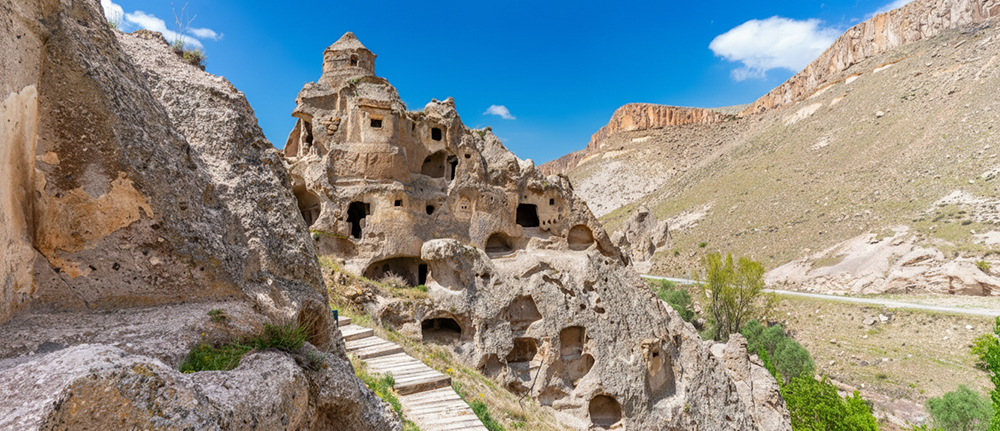
Commonly known as the "Blue Tour," this route visits the majestic Greek mansions of Mustafapaşa, the remote Soganli Valley, and deep underground cities.
View Tour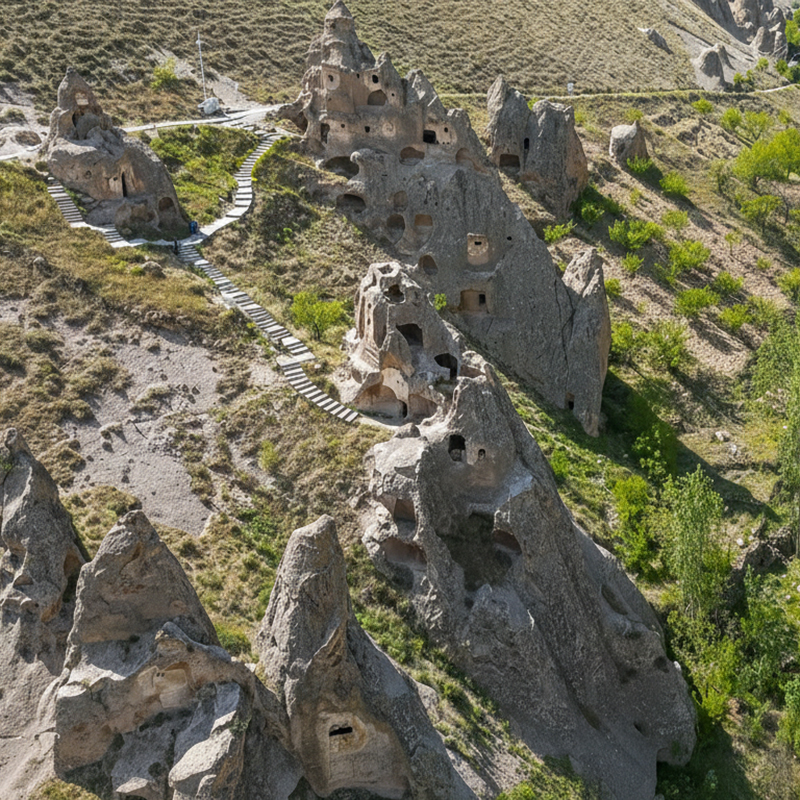
Experience the architectural wonders of Sinasos and the rock-cut churches of Soganli with an exclusive guide and a flexible schedule tailored to your pace.
View Tour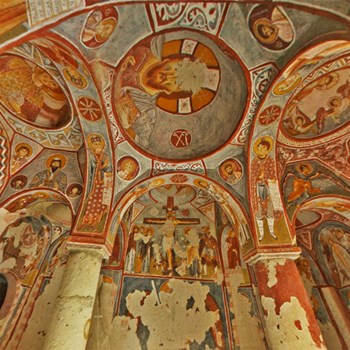
Our most comprehensive package. Fly from Istanbul for a three-day luxury exploration that includes the historic heart of Mustafapaşa and all regional highlights.
View TourTell us your interests, and we will craft a personalized itinerary that includes the architectural wonders of Mustafapaşa and the hidden valleys nearby.