Historic Valley Settlement
Zelve History & Significance
Discover one of the most important settlement landscapes in Cappadocia, where daily life, religion and geology shaped a remarkable valley community.
Zelve is one of the most historically layered valleys in Cappadocia.
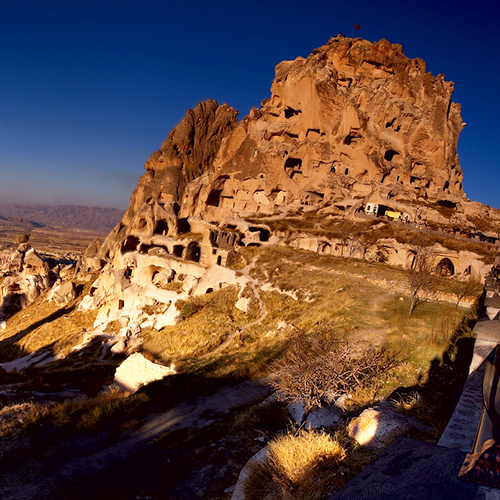
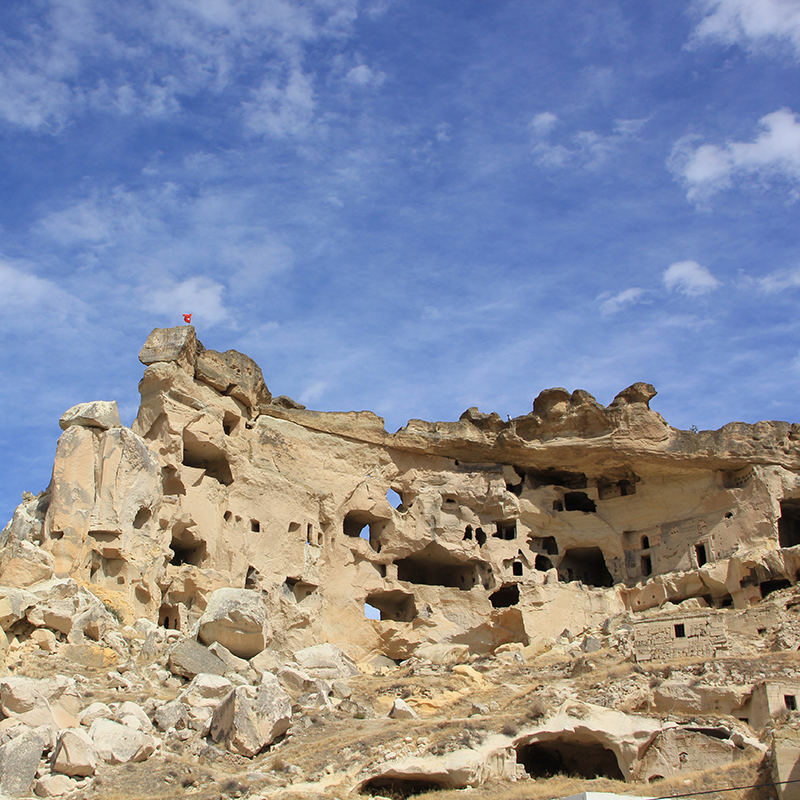
For centuries, it was not only a religious center but also a lived settlement where communities carved homes,
passages, storage spaces and worship areas directly into the rock.
The site became especially important between the 9th and 13th centuries, when it functioned as a monastic center.
During periods of instability and invasion, Zelve served as a place of refuge, and its carved religious spaces reflect that long spiritual role.
Zelve is also historically notable because Christians and Muslims lived here together until the early 20th century.
Later, because of erosion risks and changing settlement conditions, the valley was gradually abandoned and its inhabitants moved elsewhere.
In 1967, Zelve was officially transformed into an open-air museum.
Today it stands as one of the best places in Cappadocia to understand how a valley could function at once as
monastery, village, shelter and geological wonder.