Private Thyatira Ancient City Experience
Share your dates, group size and interests. We will propose a sensible route and confirm access before booking.
Request Your Private Programme





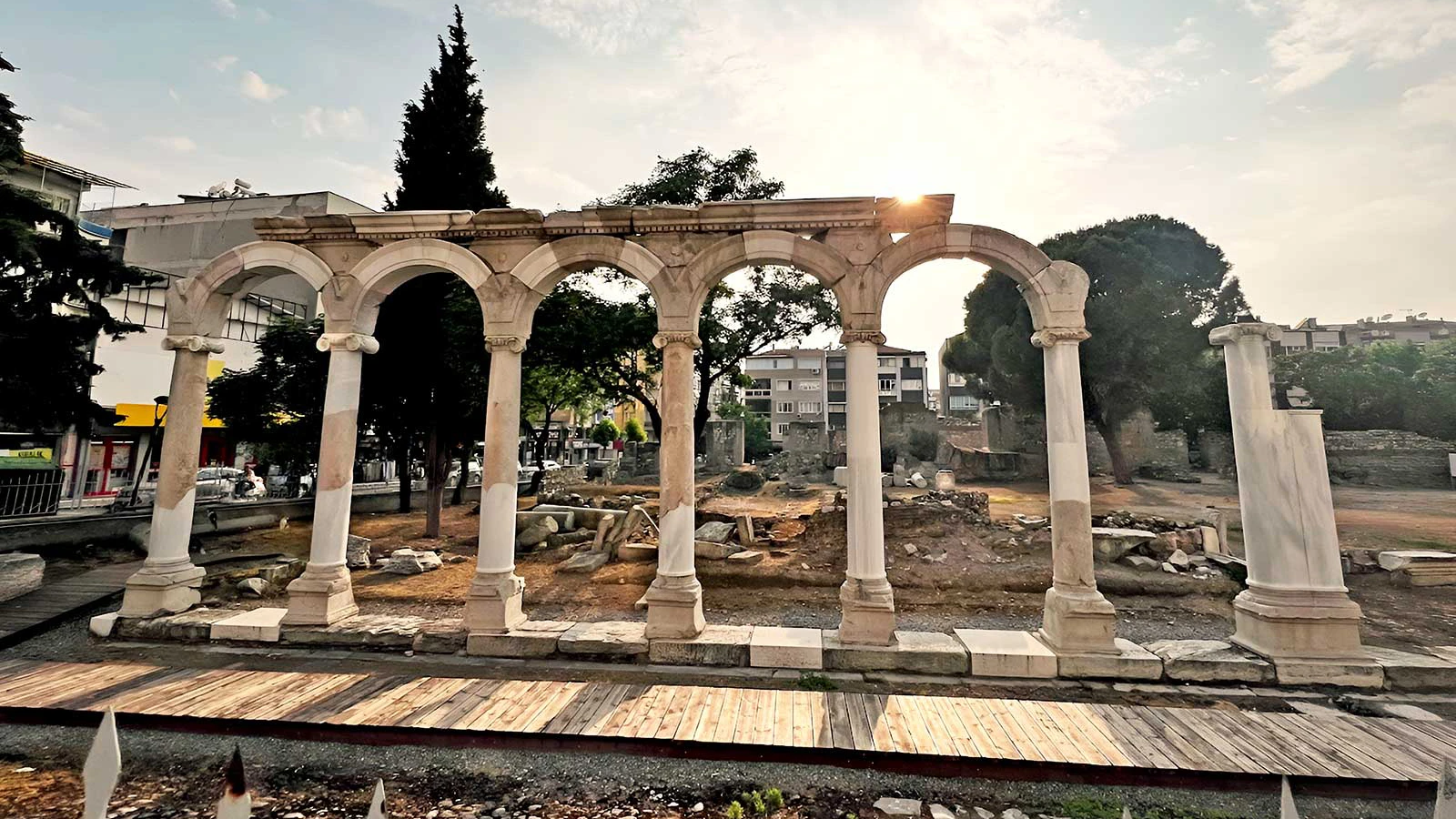
Thyatira is one of the ancient cities most closely associated with the Seven Churches of Revelation. Its location is not a remote archaeological park: the ancient settlement lies beneath and among the streets of modern Akhisar.
The city was a commercial centre of Roman Asia Minor and is remembered in accounts of textile production and purple-dyed fabrics. The New Testament’s reference to Lydia, a seller of purple goods from Thyatira, is a useful historical connection to the region’s trade networks.
Only selected archaeological remains are visible today. A visit is therefore as much about interpreting an urban palimpsest as about walking through extensive ruins.
Thyatira is addressed in Revelation, making it important for biblical heritage itineraries in western Türkiye.
Ancient accounts associate the city with craft guilds and dyed fabrics, a reminder that religion and commerce shared the same urban environment.
The surviving remains are fragmentary and situated within a modern town; access depends on local site arrangements.
Street patterns and later buildings show the long continuity of settlement rather than a fully excavated classical city.
Useful orientation before planning a visit.
Modern Akhisar, Manisa
Ancient city remains within a modern town
Hellenistic, Roman and Byzantine
Urban Akhisar and surrounding plain
45–90 minutes for an urban heritage stop
Confirm current entry and route conditions before travel
Thyatira is compelling because its historical importance exceeds the scale of what survives above ground.
For a thoughtful biblical tour, the key is to connect the written tradition with the city’s economic and urban history without inventing a standing first-century church.
Thyatira developed under Hellenistic and Roman rule in the fertile inland routes of western Anatolia. Its position supported craft production and trade.
The Christian community of Thyatira received one of the seven messages in the Book of Revelation (Revelation 2:18–29). The text is a religious source, not a map of surviving church buildings.
Later rebuilding and continuous settlement altered the archaeological landscape. The modern city preserves the name Akhisar while covering much of the ancient site.
The site is embedded in Akhisar, where shops, roads and neighbourhood life surround archaeological areas.
The modern setting can help visitors understand how ancient cities continue to be inhabited and transformed.
Thyatira is addressed in Revelation, making it important for biblical heritage itineraries in western Türkiye.
Look at this feature in relation to the broader setting rather than as an isolated photo opportunity.
Ancient accounts associate the city with craft guilds and dyed fabrics, a reminder that religion and commerce shared the same urban environment.
Small construction or geological details can tell a different story from the broad panorama.
The surviving remains are fragmentary and situated within a modern town; access depends on local site arrangements.
What is visible today may reflect more than one historical period or natural process.
Street patterns and later buildings show the long continuity of settlement rather than a fully excavated classical city.
Interpret this feature alongside the other highlights, while respecting current access limits.
Manisa brings together Lydian history, the Seven Churches of Revelation, Ottoman architecture, craft villages and volcanic geology. Thyatira Ancient City offers a particular window into that varied region.
For a coherent itinerary, choose neighbouring sites by theme and geography rather than trying to cover the whole province in a single day.
Distinguish references to the Christian congregation in Revelation from the date and identity of visible architectural remains.
Use the city’s trade traditions to explain why Thyatira mattered within Roman provincial networks.
Thyatira is addressed in Revelation, making it important for biblical heritage itineraries in western Türkiye.
Ancient accounts associate the city with craft guilds and dyed fabrics, a reminder that religion and commerce shared the same urban environment.
The surviving remains are fragmentary and situated within a modern town; access depends on local site arrangements.
Street patterns and later buildings show the long continuity of settlement rather than a fully excavated classical city.
Confirm the exact archaeological area open to visitors and do not expect the scale of Ephesus or Sardis.
A guide familiar with the Seven Churches can provide historical context even where surviving remains are limited.
Visit the accessible remains in Akhisar, then include a short orientation to the modern town and its museum if open.
For a longer biblical circuit, connect Thyatira with Sardis and Philadelphia on separate drives with realistic travel time.
An urban visit is possible year-round; choose cooler hours in summer and check any local archaeological access notices.
Photograph visible ruins with enough surrounding city to show the continuity of settlement. Respect local residents and businesses.
Urban pavements may be easier than rural sites, but archaeological sections can have steps or uneven surfaces. Verify on arrival.
Thyatira is within modern Akhisar, Manisa. Navigate to the officially identified archaeological area rather than a generic city-centre pin.
Explore Sardis Ancient City as a complementary stop. Check travel time and access before combining sites.
Explore Philadelphia Ancient City as a complementary stop. Check travel time and access before combining sites.
Explore Akhisar Museum as a complementary stop. Check travel time and access before combining sites.
Thyatira lies within modern Akhisar in Manisa Province.
Yes. Thyatira is one of the seven communities addressed in the Book of Revelation.
The city was associated with trade and crafts, including textile and purple-dye production.
The biblical reference concerns a Christian community; do not assume a surviving building from that period is identifiable.
A short urban heritage visit may take 45 to 90 minutes, depending on access and guiding.
Yes, they are all in modern Manisa Province, but travel between the towns requires careful planning.
Respect signs, barriers and any directions from site staff.
Do not enter fenced excavations or treat worship-related heritage as a stage for intrusive photography.
Keep entrances clear and ask before photographing residents or worshippers.
Carry away rubbish and avoid disturbing vegetation, rocks or historic material.
Wow Cappadocia / Venere Travel can plan a private, tailor-made route with a licensed guide and suitable vehicle, subject to confirmed access and without compulsory shopping stops.
Combine archaeology, living culture and natural landscapes at your preferred pace.
Share your dates, group size and interests. We will propose a sensible route and confirm access before booking.
Request Your Private Programme
Discover a related destination and plan a route with realistic travel times.
Read the Nearby Guide