Sacred Hills of Ancient Mesopotamia

Soğmatar Ancient City – Complete Visitor Guide

Explore a remote ancient cult centre of moon worship, sacred hills,
Syriac inscriptions, monumental tombs, rock chambers, and desert legends.

Explore Soğmatar

Discover the Sacred Landscape of Soğmatar

Hidden among the rocky hills of the Tektek Mountains, approximately 60 kilometres southeast of central Şanlıurfa, Soğmatar Ancient City is one of southeastern Türkiye’s most unusual archaeological landscapes.

Rather than developing as a conventional Roman city filled with streets, theatres, and public baths, Soğmatar became famous as a religious and funerary centre. Its sacred landscape includes the Pognon Cave, the Sacred Hill, Syriac inscriptions, carved divine figures, monumental mausoleums, a fortified settlement mound, ancient wells, and extensive areas of Early Bronze Age and Roman-period rock-cut tombs.

Soğmatar became particularly important during the second century AD, when the worship of the Mesopotamian moon god Sin and the supreme divine figure Marelahe, meaning “Lord of the Gods,” played a central role in the religious life of the region.

Archaeological evidence demonstrates that the history of Soğmatar reaches far beyond the Roman period. The site contains material connected with the Chalcolithic Age, Bronze Age, Iron Age, Roman period, Late Antiquity, and Islamic eras. Some Early Bronze Age tombs were enlarged and reused during Roman times, revealing how the sacred landscape was repeatedly adapted by different communities.

In this complete Soğmatar visitor guide, you will discover the history of the ancient settlement, the worship of the Moon God Sin, the meaning of the Sacred Hill, the reliefs and inscriptions inside Pognon Cave, the monumental tombs, archaeological excavations, practical access information, photography advice, nearby attractions, and private travel options combining Soğmatar with Harran, Şuayb Ancient City, Göbeklitepe, Karahantepe, and Şanlıurfa.

Moon God Sin

Discover one of the most important ancient cult centres associated with the Mesopotamian moon god Sin and the religious traditions of Harran.

Sacred Hill

Climb the open-air sanctuary covered with carved figures and Syriac inscriptions dedicated to ancient gods, rulers, and local families.

Pognon Cave

Enter a mysterious rock-cut sanctuary containing human reliefs, cult images, ancient inscriptions, and traces of ritual activity.

Ancient Necropolis

Explore rock-cut tombs originating in the Early Bronze Age and later enlarged, modified, and reused during the Roman period.

Plan Your Visit

Soğmatar Ancient City – Quick Facts

Essential information for visiting this remote archaeological and religious landscape in southeastern Şanlıurfa.

📍

Location

Near Yağmurlu village in the rural Eyyübiye district, approximately 60 kilometres southeast of Şanlıurfa.

Open on Google Maps
🌙

Famous For

The Moon God Sin cult, Sacred Hill, Pognon Cave, Syriac inscriptions, celestial sanctuaries, monumental tombs, and rock-cut necropolis.

Visit Duration

Allow approximately 1.5–2.5 hours to explore the central hill, cave sanctuary, mausoleums, rock tombs, and surrounding landscape.

🎟

Visitor Access

Soğmatar is generally visited without a separate entrance ticket. It is a rural archaeological landscape rather than an enclosed museum.


From the Bronze Age to Late Antiquity

The History of Soğmatar Ancient City

Discover how an area rich in water and natural rock formations became a settlement, necropolis, pilgrimage destination, and celestial cult centre.

The archaeological history of Soğmatar extends much further into the past than its famous second-century religious monuments. Evidence recovered from the wider area indicates occupation or activity during the Chalcolithic Age, Early and Middle Bronze Ages, Iron Age, Roman period, Late Antiquity, and Islamic era.

The availability of natural water sources played an important role in the settlement of this otherwise dry and rocky region. Ancient inhabitants carved wells into the bedrock, and some of these water sources continued to serve the local population long after the ancient cult centre had declined.

During the Early Bronze Age, Soğmatar was already being used as a burial area. Shaft-like tombs were cut into the natural rock, creating chambers in which members of local communities could be buried together with funerary offerings.

During the Iron Age, settlement activity continued around the central mound. Archaeological work announced in 2025 revealed a large public building complex dating to approximately the first millennium BC and associated with the Neo-Assyrian period.

The public building contained several rooms with substantial stone walls, demonstrating that Soğmatar was not merely an isolated sanctuary. It also possessed organised settlement areas and monumental architecture during periods long before its Roman-era religious importance.

Soğmatar reached its greatest fame as a cult centre during the second century AD. At that time, the surrounding region stood between the cultural worlds of Edessa, Harran, northern Mesopotamia, Syria, and the Roman East.

Worship at Soğmatar was strongly connected with the Moon God Sin, whose principal regional cult centre was located at Harran. Inscriptions and carved images at Soğmatar also refer to Marelahe or Mar Alahe, a title meaning “Lord of the Gods.”

Ancient worshippers gathered around the Sacred Hill, entered cave sanctuaries, commissioned carved images, left inscriptions, and visited monumental buildings placed across the surrounding hills.

Some scholars have interpreted seven structures surrounding the central sanctuary as monuments connected with the Sun, Moon, Saturn, Jupiter, Mars, Venus, and Mercury. This celestial arrangement gave Soğmatar its reputation as a landscape devoted to planetary worship.

The importance of Soğmatar continued into Late Antiquity and the early Islamic period, although the character of the settlement and its religious practices changed over time. The present-day village preserves a remarkable relationship between living rural traditions and the ancient landscape.

What to See

Top Highlights of Soğmatar Ancient City

Explore sacred caves, divine reliefs, ancient inscriptions, monumental mausoleums, rock-cut tombs, wells, and panoramic hilltop ruins.

The Sacred Hill

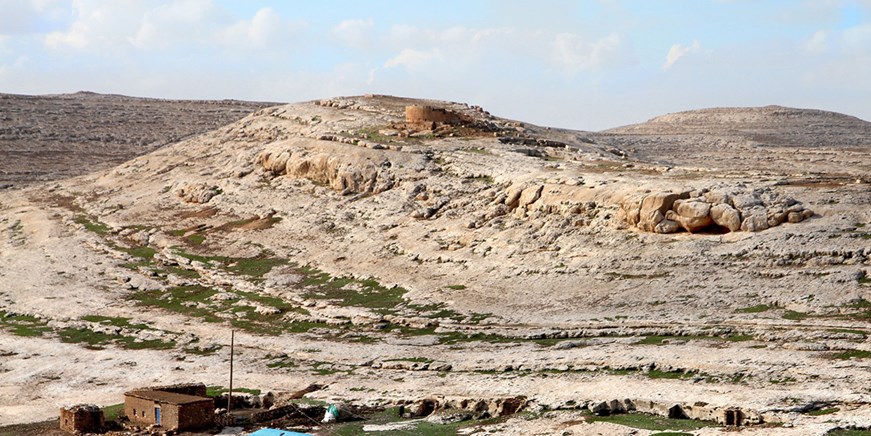
The rocky hill at the centre of Soğmatar functioned as an open-air sanctuary. Its exposed bedrock contains carved divine figures and inscriptions connected with the religious leaders and families who maintained the cult centre.

  • Ancient function: Open-air sanctuary
  • Main deity: Marelahe, the Lord of the Gods
  • Main features: Reliefs, inscriptions, and panoramic views

Pognon Cave

Named after the scholar Henri Pognon, who documented inscriptions at Soğmatar, this cave contains carved standing figures and Syriac texts. It appears to have served as a cult sanctuary associated with the worship of the Moon God Sin.

  • Structure: Rock-cut cave sanctuary
  • Decoration: Human reliefs and inscriptions
  • Religious connection: Moon God Sin

Divine Reliefs

Several human figures were carved directly into the rock surfaces. Some are shown standing inside framed niches, while others appear as busts or symbolic representations associated with divine worship.

  • Technique: Relief carving directly into bedrock
  • Style: Regional Roman and northern Mesopotamian influences
  • Meaning: Cult devotion, commemoration, and authority

Syriac Inscriptions

Syriac inscriptions record personal names, family connections, dedications, religious titles, dates, and warnings against damaging sacred images. They are among Soğmatar’s most important historical records.

  • Language: Early Syriac
  • Content: Dedications, names, dates, and protective warnings
  • Importance: Evidence for local religion and administration

Seven Celestial Sanctuaries

Structures positioned on hills surrounding the Sacred Hill have traditionally been associated with seven celestial bodies: the Sun, Moon, Saturn, Jupiter, Mars, Venus, and Mercury.

  • Number: Seven surrounding monuments
  • Interpretation: Planetary or celestial worship
  • Relationship: Arranged around the central sacred landscape

Monumental Mausoleums

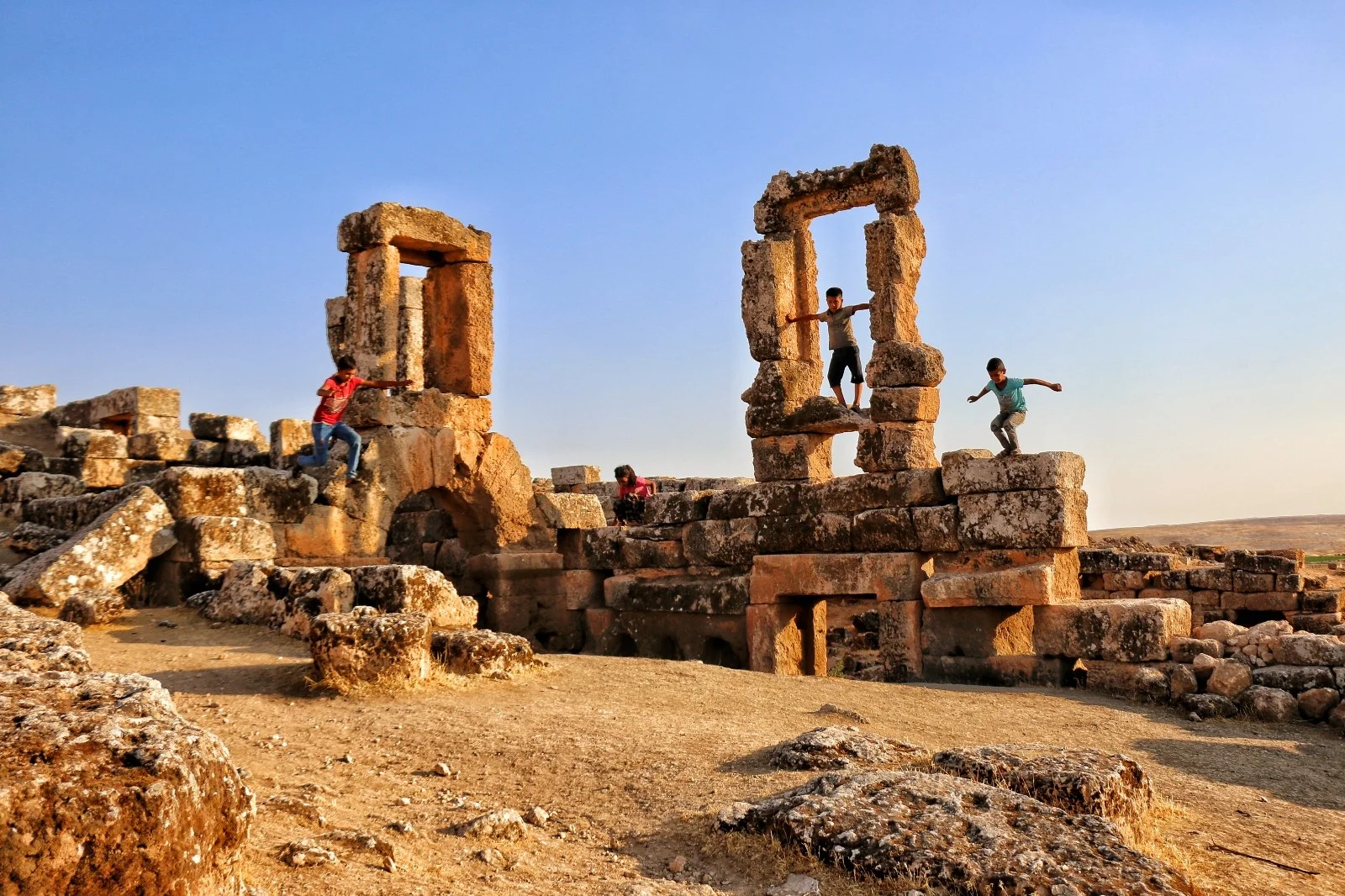
Six prominent stone-built monuments with square or circular plans survive around Soğmatar. Although traditionally called temples, several are more accurately interpreted as monumental funerary buildings.

  • Number: Six principal monuments
  • Plans: Square and circular
  • Likely purpose: Monumental burial and commemoration

Rock-Cut Necropolis

Numerous tombs were carved into the low limestone hills around Soğmatar. Some originated in the Early Bronze Age and were later expanded or remodelled during the Roman period.

  • Earliest phase: Early Bronze Age
  • Later reuse: Roman period
  • Architecture: Shafts, stairs, corridors, and burial niches

Settlement Mound and Fortress

The mound at the centre of the modern village preserves the remains of long-term occupation. Wall foundations and defensive structures indicate that its summit was used as a fortified position.

  • Location: Centre of the modern settlement
  • Function: Settlement and fortified stronghold
  • Periods: Multiple archaeological phases

Ancient Wells

Water wells carved into the natural rock made permanent settlement possible within the dry Tektek landscape. Some are connected with local religious traditions involving the Prophet Moses.

  • Construction: Cut directly into bedrock
  • Purpose: Water supply for residents and visitors
  • Tradition: Associated locally with Moses

The Religion of Ancient Soğmatar

Religion at Soğmatar developed within a cultural environment influenced by Mesopotamian, Syriac, local Edessan, Harranian, and Greco-Roman traditions. The sky, Moon, planets, sacred hills, and natural rock formations formed an important part of this religious landscape.

Moon God Sin

Sin was one of the great deities of ancient Mesopotamia. Originally associated strongly with Ur, his cult later became especially important at Harran and throughout the surrounding region.

Marelahe

The name Marelahe or Mar Alahe appears in inscriptions at Soğmatar and can be translated as “Lord of the Gods” or “Master of the Gods.”

Celestial Bodies

The Sun, Moon, and five visible planets occupied important positions within ancient Near Eastern religious thought and the traditional interpretation of Soğmatar’s surrounding monuments.

Sacred Landscape

Worship was not limited to one enclosed temple. Hills, caves, carved rock surfaces, monumental tombs, and routes through the surrounding landscape were all part of the sacred experience.

The Moon God Sin at Soğmatar

The cult of the Moon God Sin connected Soğmatar closely with Harran, one of the most important ancient centres of lunar worship in northern Mesopotamia.

Ancient Origins

The worship of the moon deity can be traced through ancient Sumerian, Babylonian, Assyrian, and northern Mesopotamian religious traditions.

Symbol of the Crescent

Sin was frequently represented through the crescent moon, sometimes combined with divine figures, standards, or celestial symbols.

Connection with Harran

Harran became one of the principal centres of the Sin cult. Archaeological evidence from nearby sites shows that lunar worship extended across the wider Harran and Tektek region.

Regional Pilgrimage

Soğmatar may have functioned as a sacred destination visited by worshippers from surrounding settlements rather than only serving the residents of one permanent town.

Pognon Cave

Pognon Cave is one of the most atmospheric monuments at Soğmatar. Its modern name comes from Henri Pognon, a French diplomat and scholar who documented Syriac inscriptions in the region during the late nineteenth and early twentieth centuries.

Rock-Cut Sanctuary

The chamber was excavated directly into the limestone and appears to have been used for religious gatherings, dedication, or commemoration.

Carved Figures

Standing human figures carved into the walls may represent divine beings, priests, worshippers, or important local individuals.

Syriac Texts

Inscriptions surrounding the reliefs help date religious activity and preserve the names of individuals connected with the sanctuary.

Fragile Interior

Carved surfaces have been exposed to centuries of weathering and human contact. Visitors should avoid touching or leaning against them.


Interior visibility can be limited, particularly when natural light is weak. A small flashlight can be useful, but direct flash photography should be avoided when restrictions or conservation notices are displayed.

The Syriac Inscriptions of Soğmatar

The inscriptions carved across Soğmatar are among the site’s most significant archaeological features. Unlike texts placed only on formal architectural blocks or tombstones, several were carved directly onto exposed natural rock surfaces.

Religious Dedications

Some inscriptions identify deities, sacred images, acts of devotion, or monuments commissioned in honour of divine beings.

Personal Names

The texts preserve the names of local individuals, officials, patrons, craftsmen, and family members connected with the monuments.

Dated Records

Several inscriptions contain dates, allowing scholars to place important phases of religious activity within the second century AD.

Protective Warnings

Some texts warn future visitors not to damage the reliefs or monuments, demonstrating that protection of sacred images was already a concern in antiquity.

Local Administration

References to rulers, officials, and prominent families provide information about the organisation of the cult centre.

Early Syriac Culture

The inscriptions contribute to the study of the Syriac language, religious vocabulary, personal identity, and cultural life of Roman-period northern Mesopotamia.

The Monumental Tombs of Soğmatar

Six major stone-built monuments stand around the ancient landscape. Their elevated positions, carefully cut masonry, and distinctive plans made them visible from across the surrounding valleys.

Square-Plan Buildings

Several monuments have square or rectangular plans constructed from large, carefully shaped stone blocks.

Circular Monuments

Other structures use circular forms, creating visually distinctive silhouettes against the open Tektek landscape.

Funerary Interpretation

Although traditionally associated with planetary temples, architectural and archaeological evidence suggests that several monuments functioned primarily as monumental tombs.

Celestial Association

Their arrangement around the Sacred Hill contributed to the interpretation that each monument was connected symbolically with one of the seven celestial bodies.


The exact function of every building remains open to archaeological interpretation. Religious symbolism and funerary use were not necessarily separate in ancient societies, and some monuments may have combined commemoration with ritual activity.

The Rock-Cut Tombs of Soğmatar

The low limestone hills surrounding Soğmatar provided suitable surfaces for carving tomb chambers. Archaeological work has demonstrated that burials took place here during more than one historical period.

Bronze Age Shaft Tombs

Early tombs were approached through vertical or steep shaft-like entrances leading into underground burial chambers.

Roman Modifications

Roman-period users enlarged several earlier tombs, introduced stairways or sloping corridors, and created more accessible entrances.

Burial Niches

Wall niches and platforms were added to accommodate multiple burials and the repeated use of chambers by families.

Elite Necropolis

The size and monumentality of selected tombs indicate that parts of the necropolis were used by wealthy, powerful, or high-status families.

Funerary Gifts

Ceramic vessels, small objects, and model vehicles recovered from burial contexts provide evidence for ancient funerary customs.

Unfinished Adaptations

Some chambers preserve incomplete Roman modifications, allowing archaeologists to see both the earlier and later construction phases.

Excavations at Soğmatar Ancient City

Archaeological surveys, documentation, cleaning, and excavations have gradually transformed knowledge of Soğmatar. The site is now understood as a multi-period settlement rather than only a Roman religious sanctuary.

Settlement Excavations

Work around the central mound investigates domestic buildings, defensive walls, occupation layers, streets, and public architecture.

Necropolis Research

Rock-cut tombs are being documented to understand their chronology, construction techniques, burials, reuse, and funerary offerings.

Iron Age Public Building

Excavations announced in 2025 revealed a large building complex with seven rooms and substantial walls dating to approximately 3,000 years ago.

Bronze Age Evidence

Earlier burials and archaeological material demonstrate that Soğmatar’s history reaches back thousands of years before the Roman cult centre.

Conservation

Reliefs, inscriptions, tomb chambers, masonry, and exposed rock surfaces require continuing protection from weathering and human damage.

Continuing Research

Archaeological interpretations may change as new structures, burials, inscriptions, and occupation layers are uncovered.


Active excavation areas may occasionally be closed or protected by temporary barriers. Visitors should follow all instructions and avoid entering trenches or restricted chambers.

The Legend of Moses at Soğmatar

Local tradition connects the countryside around Soğmatar and Şuayb Ancient City with the story of the Prophet Moses. These stories belong to the region’s religious folklore and should be understood separately from the archaeological dating of the monuments.

Flight from Egypt

According to regional tradition, Moses travelled through this landscape after fleeing Egypt and lived among communities associated with Prophet Jethro.

Shepherding Tradition

Moses is said to have worked as a shepherd, tending sheep and goats in the open countryside surrounding Soğmatar.

The Miraculous Well

One story says that Moses caused water to emerge by striking the ground or opening a well with his staff.

Living Folklore

These traditions continue to shape how residents and visitors understand the spiritual character of the Tektek Mountains.


The association with Moses is a local religious tradition rather than a claim that can currently be demonstrated through archaeological evidence.

Why Soğmatar Ancient City Is So Important

Soğmatar is important because it preserves evidence for settlement, funerary traditions, celestial religion, language, sculpture, architecture, and cultural exchange across several thousand years.

Multi-Period Archaeology

The site contains evidence from the Chalcolithic, Bronze Age, Iron Age, Roman, Late Antique, Islamic, and modern periods.

Early Syriac Inscriptions

The inscriptions preserve valuable information about language, religious titles, personal names, local rulers, families, and patrons.

Regional Religion

Soğmatar helps explain how the worship of Sin and other celestial powers spread beyond Harran into the surrounding countryside.

Ancient Sculpture

Rock reliefs and freestanding finds suggest that Soğmatar was an important regional centre for distinctive sculptural production.

Funerary Development

Reused tombs demonstrate how later communities adapted prehistoric burial chambers to meet new architectural and ritual requirements.

Cultural Landscape

The relationship between monuments, caves, wells, hills, paths, village houses, and open countryside remains unusually visible.

Soğmatar Ancient City Entrance Fee

Soğmatar is a rural archaeological landscape rather than a conventional enclosed museum or ticketed archaeological park.

General Admission

The site is generally visited free of charge and there is normally no formal entrance ticket required.

Museum Pass

A Museum Pass is not normally required for visiting the open archaeological landscape at Soğmatar.

Guiding Services

Professional guiding, private transportation, and organised excursions are charged separately.

Local Arrangements

Access conditions may change during excavation, conservation work, official visits, severe weather, or local maintenance.


There may be no staffed visitor office, ticket booth, café, or formal reception area. Bring water and other essentials before leaving Şanlıurfa or Harran.

Soğmatar Opening Hours and Best Time to Visit

Soğmatar does not always operate according to the nationally standardised opening hours used by major Turkish museums. A daytime visit is strongly recommended because the site is remote, uneven, and spread across open hills.

Recommended Visiting Hours Approximately 09:00–17:00 during daylight
Best Seasons March–May and September–November
Summer Visits Early morning or late afternoon to avoid extreme heat
Best Photography Morning or late afternoon when the reliefs receive angled light
Winter Conditions Check road and weather conditions before travelling

Avoid arriving close to sunset unless you are travelling with a driver familiar with the area. There may be limited lighting, signage, mobile coverage, and visitor assistance after dark.

The Şanlıurfa region can become extremely hot during July and August. Temperatures across the exposed rocky hills may feel considerably higher than those experienced inside the city.

How to Get to Soğmatar Ancient City

Soğmatar is situated near Yağmurlu village in the Tektek Mountains, approximately 60 kilometres southeast of central Şanlıurfa and around 40–55 kilometres from Harran, depending on the selected road.

From Şanlıurfa

The drive usually takes approximately 60–90 minutes, depending on traffic, road conditions, and the route used through the countryside.

From Harran

Soğmatar can be combined with Harran and Şuayb Ancient City on a full-day private route through the Tektek Mountains.

By Rental Car

Independent travellers should download offline navigation, carry sufficient fuel and water, and avoid relying only on roadside signs.

By Private Tour

Private transportation is the most comfortable option because public transport is limited and archaeological monuments are spread across the rural landscape.


Road quality may vary on the final approach. Drive carefully around village roads, livestock, agricultural vehicles, and unpaved sections.

Best Route for Visiting Soğmatar

A logical route helps visitors understand the relationship between the settlement mound, sacred sanctuary, cave, mausoleums, and necropolis.

1. Begin in Yağmurlu Village Orient yourself around the modern settlement and identify the central mound, wells, surrounding hills, and principal pathways
2. Visit Pognon Cave Examine the rock-cut chamber, standing figures, inscriptions, and evidence of ancient cult activity
3. Climb the Sacred Hill Follow the permitted route to see the exposed inscriptions, carved figures, and panoramic view across the ancient landscape
4. Locate the Monumental Tombs Observe the square and circular stone monuments positioned on surrounding hills
5. Explore the Necropolis View accessible rock-cut tomb entrances, shafts, corridors, chambers, and evidence of later Roman modification
6. Continue to Şuayb Ancient City Combine Soğmatar with the extensive Late Antique settlement traditionally associated with Prophet Jethro
7. End at Harran Visit Harran’s ancient settlement, castle, mosque ruins, beehive houses, and traditions connected with the Moon God Sin

Soğmatar Ancient City Visitor Tips

Travel During Daylight

Visit early enough to complete the route before sunset. The site is remote and has limited lighting and visitor facilities.

Bring Drinking Water

Carry sufficient water, particularly between May and September. Shops and cafés may not be available beside the monuments.

Wear Strong Shoes

The terrain includes loose stones, uneven bedrock, steep slopes, tomb entrances, agricultural tracks, and unprotected surfaces.

Use Sun Protection

Bring a hat, sunscreen, and light clothing. Much of the archaeological landscape has no shade.

Do Not Enter Unsafe Tombs

Avoid unstable chambers, vertical shafts, unprotected openings, active excavations, and areas closed with barriers.

Do Not Touch Inscriptions

Oils, scratching, chalk, water, and repeated physical contact can permanently damage ancient carvings and texts.

Download Offline Maps

Mobile reception and navigation may be inconsistent in the rural Tektek Mountains.

Use a Local Guide

Important reliefs and inscriptions are easy to overlook without someone familiar with the layout of the site.

Respect Village Life

Soğmatar is also a living rural settlement. Ask permission before photographing residents, homes, livestock, or private areas.

Carry Small Essentials

Bring tissues, hand sanitiser, basic medication, snacks, and a charged mobile phone before leaving the main city.

Check Weather Conditions

Heavy rain can make rural roads and exposed limestone surfaces difficult or slippery.

Allow Enough Time

Do not treat Soğmatar as a quick roadside stop. Its monuments are scattered across a broad archaeological landscape.

Accessibility at Soğmatar Ancient City

Accessibility is limited because Soğmatar occupies a natural landscape of uneven limestone hills, village tracks, rock chambers, steep slopes, and archaeological excavation areas.

Central Village Area

Some monuments near the settlement can be viewed with relatively limited walking, depending on vehicle access and road conditions.

Sacred Hill

Reaching inscriptions and viewpoints on the hill requires walking across sloping and uneven natural rock.

Rock Tombs

Tomb entrances may involve steps, narrow corridors, shafts, darkness, and irregular surfaces unsuitable for many visitors.

Wheelchair Access

The wider archaeological route is not wheelchair accessible. Selected exterior monuments may be viewed from nearby vehicle-accessible areas.

Limited Mobility

A private driver can reduce walking distances and concentrate the visit on the most accessible exterior monuments.

Advance Planning

Visitors with mobility concerns should discuss route conditions with their tour provider before travelling.

Frequently Asked Questions About Soğmatar

What is Soğmatar Ancient City?

Soğmatar is a multi-period archaeological settlement and religious landscape in the Tektek Mountains of Şanlıurfa. It is famous for the Moon God Sin cult, Sacred Hill, Pognon Cave, Syriac inscriptions, monumental mausoleums, and rock-cut tombs.

Where is Soğmatar Ancient City?

It is located near Yağmurlu village in Şanlıurfa’s rural Eyyübiye district, approximately 60 kilometres southeast of central Şanlıurfa.

How far is Soğmatar from Şanlıurfa?

The distance is approximately 60 kilometres. The drive usually takes between 60 and 90 minutes, depending on the selected road and conditions.

How far is Soğmatar from Harran?

Soğmatar is approximately 40–55 kilometres from Harran, depending on the route used through the Tektek Mountains.

How old is Soğmatar?

The site contains archaeological evidence from several periods, including the Chalcolithic, Bronze Age, Iron Age, Roman period, Late Antiquity, and Islamic era.

When was Soğmatar most important?

It became particularly important as a religious cult centre during the second century AD, although the settlement’s archaeological history began much earlier.

Which god was worshipped at Soğmatar?

Soğmatar is strongly associated with the Mesopotamian Moon God Sin. Inscriptions also refer to Marelahe, meaning the Lord of the Gods.

What is the Sacred Hill?

The Sacred Hill is an open-air sanctuary at the centre of the religious landscape. Its rock surfaces contain carved figures and Syriac inscriptions.

What is Pognon Cave?

Pognon Cave is a rock-cut sanctuary containing human reliefs and Syriac inscriptions. It was named after the scholar Henri Pognon, who studied inscriptions in the region.

What language are the Soğmatar inscriptions written in?

Many of the most important inscriptions are written in Syriac, an Aramaic language used widely by communities in northern Mesopotamia.

What do the inscriptions say?

They include personal names, family relationships, dates, religious dedications, references to deities, commemorative statements, and warnings against damaging sacred images.

Were seven planets worshipped at Soğmatar?

Seven surrounding monuments have traditionally been associated with the Sun, Moon, Saturn, Jupiter, Mars, Venus, and Mercury. The exact purpose of every structure remains open to archaeological interpretation.

Are the seven monuments temples?

They were traditionally described as planetary temples, but several structures are now interpreted more cautiously as monumental tombs that may also have possessed religious symbolism.

How many monumental tombs are at Soğmatar?

Six principal square or circular stone-built mausoleums are commonly identified across the archaeological landscape.

Are there rock-cut tombs at Soğmatar?

Yes. The surrounding hills contain numerous rock-cut tombs. Some originated during the Early Bronze Age and were modified or reused during the Roman period.

What was discovered during recent excavations?

Excavations announced in 2025 revealed a large Iron Age public building complex dating to approximately 3,000 years ago.

Is Soğmatar free to visit?

Soğmatar is generally visited without a separate entrance fee. Current access arrangements may change during archaeological work.

What are the opening hours?

There may not be nationally standardised museum hours. Visiting during daylight, approximately between 09:00 and 17:00, is recommended.

How long should I spend at Soğmatar?

Allow approximately 1.5–2.5 hours for the principal monuments. A deeper archaeological visit may require additional time.

Can Soğmatar be visited without a guide?

Yes, but monuments are spread across a broad rural landscape and several important reliefs are difficult to locate or interpret without local knowledge.

Is Soğmatar suitable for children?

Older children interested in archaeology may enjoy the visit, but constant supervision is required around tomb shafts, uneven terrain, caves, steep slopes, and active excavation areas.

Is Soğmatar wheelchair accessible?

The complete archaeological route is not wheelchair accessible. Some exterior structures may be viewed from lower or vehicle-accessible areas.

Are there cafés and toilets?

Visitor facilities may be very limited. Use facilities and purchase food or water before travelling into the rural Tektek region.

Can I take photographs at Soğmatar?

Personal photography is generally possible in accessible areas. Do not touch carvings, climb monuments, enter excavation trenches, or cross protective barriers.

Can I fly a drone at Soğmatar?

Drone and commercial filming activity may require official permission from cultural heritage, museum, aviation, security, and local authorities.

Is the story of Moses historically proven?

No archaeological evidence currently proves that Moses lived at Soğmatar. The connection belongs to the religious and oral traditions of the region.

Can Soğmatar and Harran be visited on the same day?

Yes. A private full-day route can combine Harran, Şuayb Ancient City, Soğmatar, and selected sites in the Tektek Mountains.

Is Soğmatar Ancient City worth visiting?

Yes, particularly for travellers interested in archaeology, ancient religion, Syriac culture, remote landscapes, and places rarely included in standard Türkiye itineraries.

Best Photo Spots at Soğmatar Ancient City

Soğmatar offers unusual compositions combining exposed limestone, open skies, carved figures, shadowed caves, monumental tombs, ancient wells, village houses, and distant desert-like hills.

Sacred Hill Panorama

Use a wide composition from the upper hill to show the modern village, surrounding monuments, valleys, and sacred landscape.

Pognon Cave Reliefs

Photograph the standing figures with angled natural light that reveals their shallow outlines and carved details.

Syriac Inscriptions

Side lighting can make weathered letters more visible without touching, wetting, chalking, or tracing the ancient surfaces.

Circular Mausoleum

Frame the circular monument against the open sky to emphasise its isolated position and geometric form.

Rock-Cut Tomb Entrances

Use the contrast between bright limestone and dark openings to communicate the depth and mystery of the necropolis.

Late-Afternoon Landscape

Warm low-angle sunlight brings out the texture of the hills, stone blocks, reliefs, tomb façades, and village architecture.


Never climb onto monuments, enter unstable chambers, move archaeological stones, or cross excavation barriers to obtain a photograph.

Private Soğmatar and Şanlıurfa Tours

Soğmatar can be included in a private archaeological journey combining Harran, Şuayb Ancient City, Göbeklitepe, Karahantepe, Balıklıgöl, Şanlıurfa Archaeology Museum, Halfeti, Zeugma, and Mount Nemrut.

Private Tektek Mountains Experiences

Custom-designed routes with private transportation, flexible timing, and optional professional guiding.

Şanlıurfa and Southeastern Türkiye Tours

Add Soğmatar as a customised extension to a longer private journey through Göbeklitepe, Karahantepe, Gaziantep, Zeugma, and Mount Nemrut.