Monumental Rock-Cut Heritage
Selime Monastery History & Significance
Discover one of the most important rock-cut monastic complexes in Cappadocia, where scale, history and landscape come together in a remarkable way.
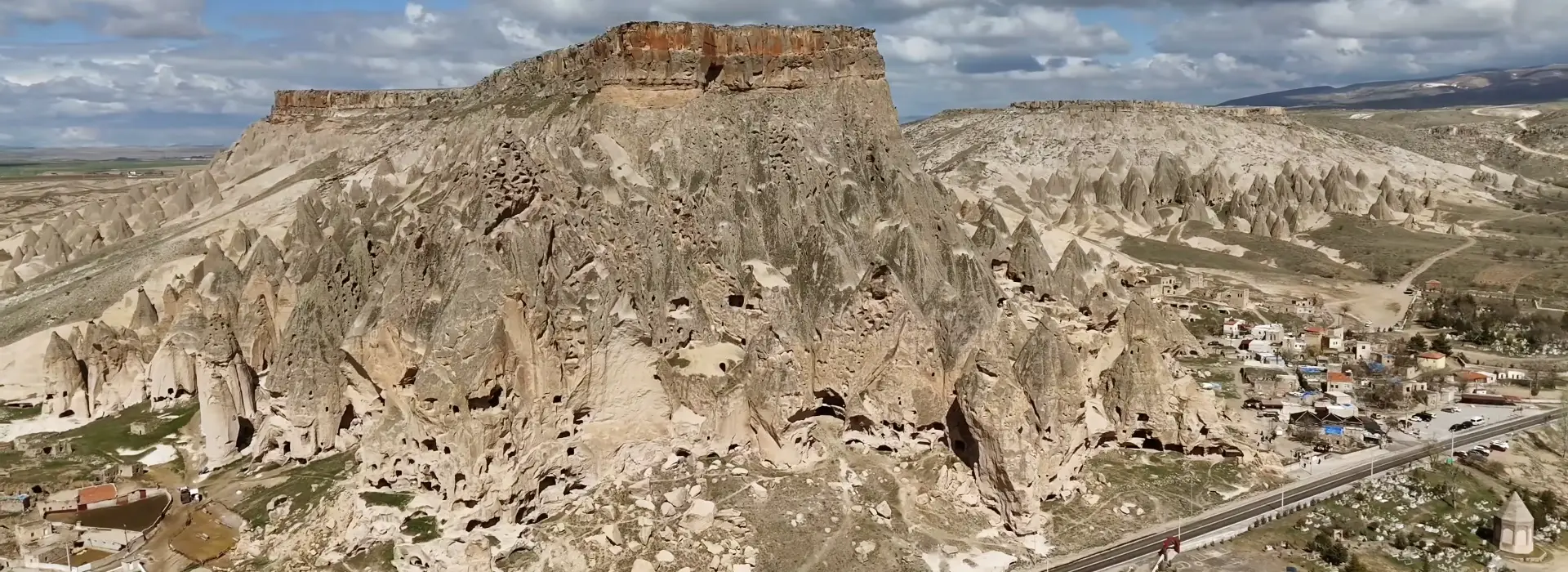
Selime Monastery is widely known as the largest and most notable monastery in the Cappadocia region.
According to your current page, it likely dates to the 8th or 9th century and may have taken
more than 200 years to complete.
What makes Selime especially impressive is not only its size, but the complexity of the carved environment.
The site includes a grand kitchen with a chimney, a water well, a missionary school, storage spaces,
chapels, living quarters and the monumental cathedral that dominates the complex.
Your current page also notes that Selime was originally built as a monastery and later converted into a
caravanserai in the 11th century, linking it to wider trade routes and the movement of merchants through Anatolia.
This gives the site an unusual dual identity: both religious center and practical stop within a broader historical network.
Over time, the site was abandoned, and although parts of its painted decoration were damaged,
Selime still remains one of the most visually powerful places in Cappadocia for understanding how
religious life, daily life and monumental rock-cut architecture once came together in one dramatic setting.