From Ancient Smyrna to Modern İzmir
Saint Polycarp Church History & Significance
Explore the layered story of a church that preserves the memory of Saint Polycarp and the long Christian heritage of
Smyrna.
Saint Polycarp lived during the first and second centuries and became Bishop of Smyrna,
the ancient city beneath modern İzmir. Christian tradition remembers him as a disciple of Saint John the Evangelist
and an important link between the apostles and later generations of the Church. He was martyred in Smyrna on
23 February 155 after refusing to renounce his faith.
The present Saint Polycarp Church is commonly dated to 1625 in official local tourism sources.
The church’s own historical account also points to early construction and development in the late 1620s and around 1630,
when the site served İzmir’s Catholic community and was connected with the French Capuchin presence in the city.
Earthquakes and fires repeatedly affected the building. It was repaired after seventeenth-century damage and was rebuilt
in 1775 with Ottoman authorization and support associated with King Louis XVI of France.
This phase gave the church the form of a three-aisled basilica.
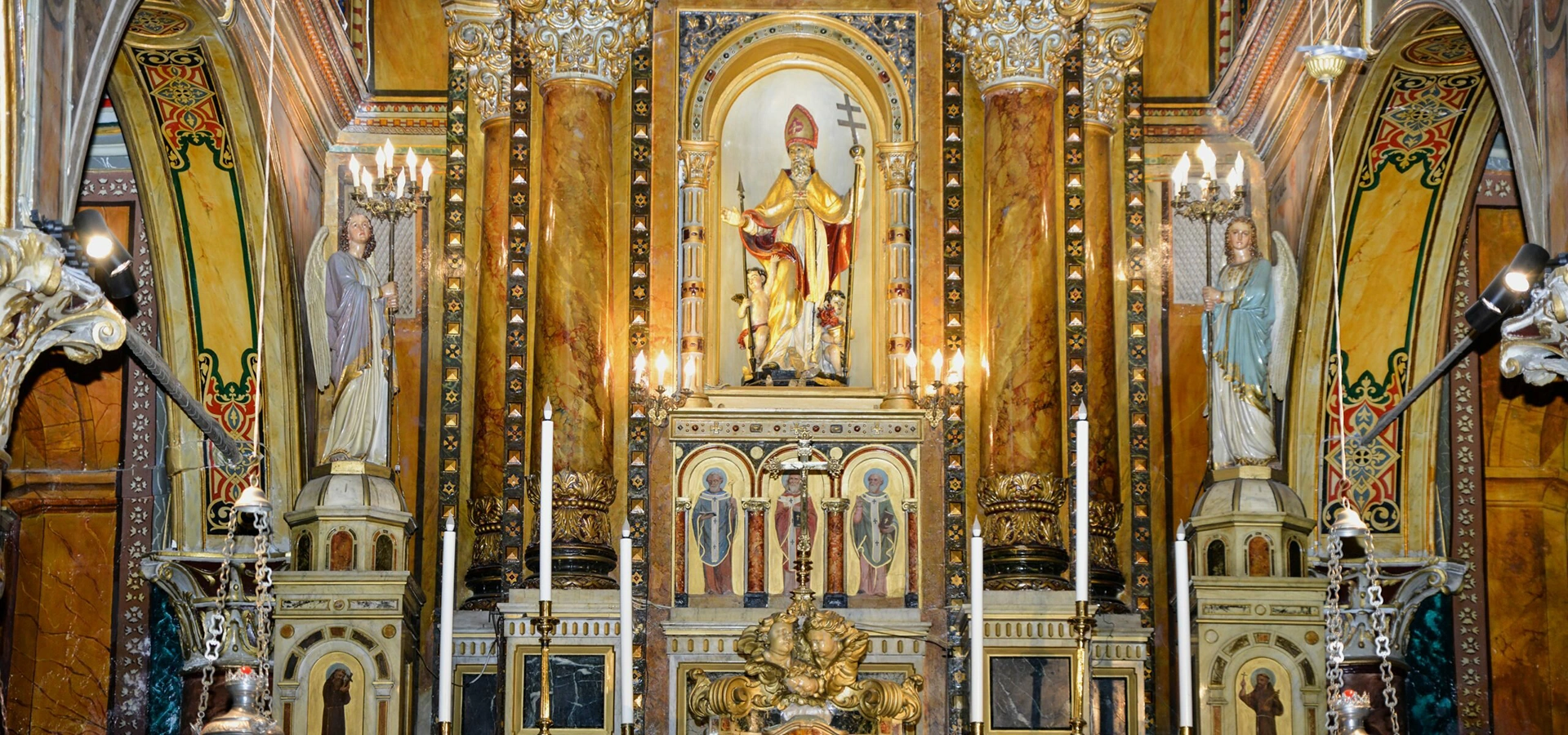
Between 1892 and 1898, the church was expanded with chapels and richly decorated.
French-born İzmir architect and artist Raymond Charles Péré, together with other artists,
created wall paintings showing scenes from Saint Polycarp’s life, his martyrdom and wider Christian imagery.
The building survived the destructive fire of 1922 but required further repairs.
The church suffered significant damage during the 30 October 2020 İzmir earthquake.
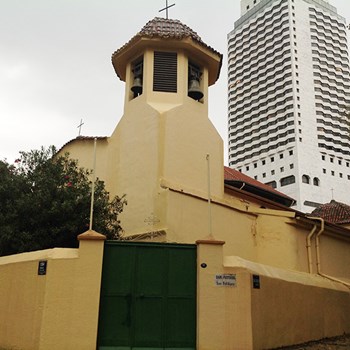
Its bell tower was repaired first, followed by a wider restoration program addressing the structure, roof,
drainage, electrical systems and historic paintings. The building remains an important symbol of İzmir’s
Catholic community and the city’s multicultural past.