The Ottoman Fortress That Changed Istanbul’s History

Rumeli Fortress (Rumeli Hisarı) – Complete Visitor Guide

Explore the monumental Bosphorus stronghold built by Sultan Mehmed II
shortly before the Ottoman conquest of Constantinople.

Discover Rumeli Fortress

Discover the Fortress Built to Control the Bosphorus

Rumeli Fortress, known in Turkish as Rumeli Hisarı, rises dramatically above the European shore of the Bosphorus in Istanbul. Sultan Mehmed II ordered its construction in 1452 as part of his preparations for the conquest of Constantinople, positioning it opposite Anadolu Hisarı at one of the narrowest and most strategically important points of the strait.

With three monumental towers, powerful defensive walls, a green museum courtyard and commanding Bosphorus views, the fortress is one of Istanbul’s most impressive examples of Ottoman military architecture. Today, visitors can explore the museum grounds, see historic artillery and discover the story of the stronghold that helped reshape world history.

Built Before the Conquest

See the fortress Sultan Mehmed II built in 1452 to strengthen Ottoman control of the Bosphorus.

Three Monumental Towers

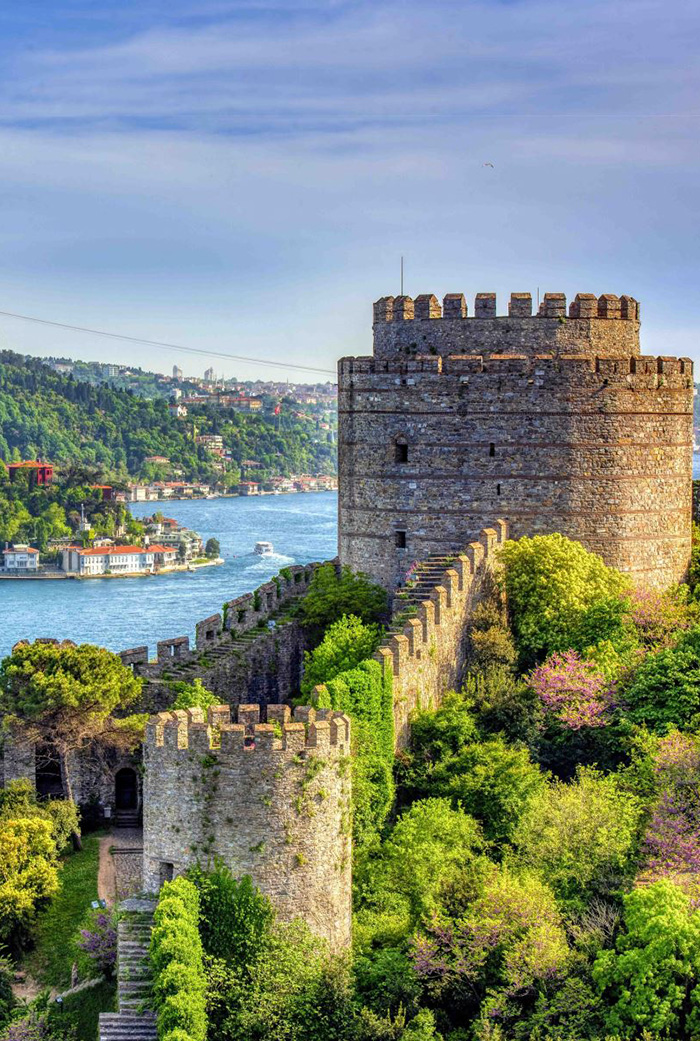
Admire the Çandarlı Halil, Zağanos and Saruca Paşa towers dominating the hillside.

Bosphorus Views

Enjoy striking views across the water toward the Asian shore and Anadolu Hisarı.

Historic Museum Garden

Discover Ottoman cannons, cannonballs, stone artifacts and a fragment associated with the Golden Horn chain.

Plan Your Visit

Rumeli Fortress – Quick Facts

Essential information for planning a visit to one of Istanbul’s most important Ottoman landmarks.

📍

Location

Located in Sarıyer on the European shore of the Bosphorus, between Bebek and Emirgan.

🏰

Construction

Built by Sultan Mehmed II in 1452, shortly before the Ottoman conquest of Constantinople.

Visit Duration

Most travelers spend around 1 to 1.5 hours exploring the museum garden and accessible areas.

Main Highlights

Three main towers, defensive walls, Ottoman artillery, historic inscriptions, gardens and Bosphorus views.


The Bridge to Conquest

Rumeli Fortress History & Significance

Discover the strategic Ottoman stronghold that helped prepare the way for the conquest of Constantinople in 1453.

Rumeli Fortress was commissioned by Sultan Mehmed II to control maritime traffic through the Bosphorus and prevent military supplies from reaching Byzantine Constantinople from the Black Sea. Construction began in March 1452 and was completed within the same year, an extraordinary achievement considering the fortress’s scale and steep hillside location.

The fortress was positioned directly opposite Anadolu Hisarı, which had been built on the Asian shore by Sultan Bayezid I. Together, the two fortifications gave the Ottomans far greater control over the narrow waterway. Rumeli Hisarı was also known historically as Boğazkesen, a name associated with cutting or controlling the strait.

Its three great towers were constructed under the supervision of leading Ottoman statesmen: Çandarlı Halil Paşa, Zağanos Paşa and Saruca Paşa. The towers are among the most imposing features of the fortress, with the Saruca Paşa Tower reaching approximately 28 meters in height.

After the conquest, the fortress gradually lost its original military importance and was later used as a state prison. It suffered damage from the 1509 earthquake and the fire of 1746, followed by repairs during the reign of Sultan Selim III. A major restoration began in 1953, and Rumeli Fortress opened as a museum in 1968.


What to See at Rumeli Fortress

Explore monumental Ottoman military architecture, museum collections, historic details and unforgettable Bosphorus scenery.

The Three Main Towers

Rumeli Fortress is dominated by three enormous towers named after the Ottoman commanders responsible for their construction: Çandarlı Halil Paşa, Zağanos Paşa and Saruca Paşa.

  • Highest tower: Saruca Paşa Tower, approximately 28 meters
  • Architectural value: Among the fortress’s most impressive medieval structures
  • Access note: Interior and upper-level access may be restricted during restoration work

Defensive Walls & Gates

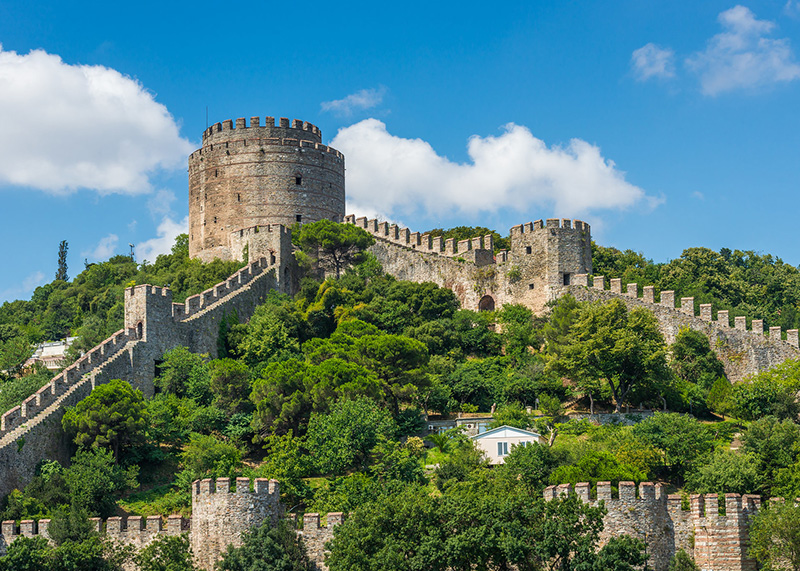
Massive walls connect the main towers with smaller defensive towers and gates, following the natural contours of the steep Bosphorus hillside.

  • Function: Control and defense of the Bosphorus passage
  • Visual impact: Dramatic stone walls descending toward the waterfront
  • Best view: From the coastal road, museum garden and Bosphorus cruises

Museum Garden & Artillery Collection

The museum garden displays Ottoman cannonballs, cannons from different periods, Byzantine stone works and a surviving piece associated with the chain once used to protect the Golden Horn.

  • Collection: Ottoman artillery and historic stone artifacts
  • Setting: Open-air displays within the fortress grounds
  • Best for: Military history and conquest-era heritage

Bosphorus Viewing Terraces

Several viewpoints within the fortress grounds reveal the Bosphorus, the Asian shore and the Fatih Sultan Mehmet Bridge from a powerful historical setting.

  • View: Bosphorus, Anadolu Hisarı and surrounding waterfront districts
  • Best light: Morning or late afternoon
  • Photography: Excellent for fortress-and-water compositions

Historic Inscriptions & Interior Details

The Zağanos Paşa Tower preserves an important Ottoman Turkish inscription, while the Saruca Paşa Tower contains surviving wooden levels and traces from the period when the fortress served as a prison.

  • Special feature: One of the earliest Turkish inscriptions associated with the Bosphorus
  • Historic layers: Conquest, prison and museum periods
  • Access: Some details may not be reachable during conservation work

Fortress Garden & Bosphorus Flora

Pine trees, redbuds and natural ground cover create a surprisingly green atmosphere within the massive stone enclosure, especially during spring.

  • Atmosphere: Historic, peaceful and scenic
  • Best season: Spring for fresh greenery and redbud blossoms
  • Perfect for: A slower cultural stop away from the busiest Old City sights

Tickets & Entrance Fees

An entrance ticket is required to visit Rumeli Fortress Museum. The ticket provides access to the museum garden and any sections open to visitors on the day of your visit. Because restoration and conservation work may affect access to towers, walls or upper terraces, it is wise to check the latest conditions before traveling.

Entrance Ticket (2026)

6 Euro per person for the official e-ticket.

Visit Type

You can visit independently, with a private guide or as part of a Bosphorus-focused Istanbul itinerary.

Museum Pass

Museum Pass Türkiye and eligible museum cards may be accepted. Confirm current validity when purchasing your ticket.

Restoration Note

Some towers, ramparts and elevated sections may remain closed while preservation work continues.

Opening Hours & Best Time to Visit

Rumeli Fortress Museum is open from Tuesday to Sunday. Official hours can change during public holidays, special events or restoration periods, so checking the museum website before your visit is recommended.

Opening Time 09:00
Closing Time 19:00
Ticket Office Closes 18:00
Closed Day Monday
Best Time to Visit Morning or late afternoon for softer light and a calmer atmosphere

Why Visit Rumeli Fortress?

Rumeli Fortress combines conquest history, monumental Ottoman architecture and beautiful Bosphorus scenery in one memorable stop. It also offers a quieter alternative to Istanbul’s busiest historical attractions.

A Landmark of the 1453 Conquest Story

The fortress was built specifically as part of Sultan Mehmed II’s preparations to capture Constantinople, giving it exceptional historical importance.

Powerful Ottoman Military Architecture

Its giant towers, thick walls and strategic hillside layout make it one of Istanbul’s most impressive fortifications.

Beautiful Bosphorus Setting

Few historical sites in Istanbul combine monumental architecture with such direct views of the strait and Asian shore.

Easy to Combine with the Waterfront

Rumeli Fortress fits naturally into a day exploring Bebek, Aşiyan, Emirgan or the Bosphorus by boat.


For travelers interested in Ottoman history, military architecture and panoramic Istanbul views, Rumeli Fortress is one of the most rewarding places along the Bosphorus.

How to Get to Rumeli Fortress

Rumeli Fortress is located at Yahya Kemal Caddesi No: 42 in Sarıyer, on the European side of Istanbul. It can be reached by public bus, metro and funicular connections, taxi, private vehicle or as part of a guided tour.

From Sultanahmet

Take the T1 tram toward Kabataş, then continue by a Bosphorus-side bus serving the Rumeli Hisarı stop.

From Taksim / Beşiktaş

Travel toward Kabataş or Beşiktaş and use a northbound bus along the European Bosphorus shore.

By Metro & Funicular

Use the M2 metro to Levent, change to the M6 line for Boğaziçi Üniversitesi/Hisarüstü, then take the F4 funicular to Aşiyan and walk along the waterfront.

By Taxi or Private Tour

A taxi or private vehicle is the simplest option when combining the fortress with other Bosphorus attractions.

Visitor Tips

Wear Shoes with Good Grip

The grounds include slopes, uneven stone surfaces and steps, so supportive footwear is strongly recommended.

Check Current Access

Restoration work may limit entry to towers, battlements and some upper areas even when the museum garden is open.

Bring Water in Warm Weather

The hillside setting can feel hot in summer, especially around midday, and shade is not available everywhere.

Continue to Bebek or Emirgan

After the fortress, enjoy a waterfront walk, café stop or another Bosphorus attraction nearby.

Who Should Visit Rumeli Fortress?

Ottoman History Lovers

Ideal for travelers who want to understand the military preparations behind the conquest of Constantinople.

Architecture Enthusiasts

A strong choice for visitors interested in fortifications, towers, defensive walls and medieval engineering.

Photographers

The combination of stone architecture, greenery and Bosphorus views creates excellent visual opportunities.

Repeat Istanbul Visitors

Perfect for travelers ready to explore beyond Sultanahmet and discover the historical Bosphorus neighborhoods.

Frequently Asked Questions

What is Rumeli Fortress famous for?

Rumeli Fortress is famous for being built by Sultan Mehmed II in 1452 to control the Bosphorus before the Ottoman conquest of Constantinople.

How long does it take to visit Rumeli Fortress?

Most visitors spend around 1 to 1.5 hours in the museum garden and accessible areas.

Can visitors climb the towers and walls?

Access can vary. Restoration and safety work may keep towers, battlements and elevated sections closed, so check the latest conditions before visiting.

What is the entrance fee for Rumeli Fortress?

The official 2026 e-ticket price is listed as 6 Euro per person.

What are the opening hours of Rumeli Fortress?

The museum is officially open from 09:00 to 19:00, with the ticket office closing at 18:00. It is closed on Mondays.

Is Rumeli Fortress suitable for visitors with limited mobility?

The steep terrain, uneven stone paths and steps can make the site challenging. Accessible areas may also vary during restoration work.

Best Photo Moments at Rumeli Fortress

Rumeli Fortress offers one of Istanbul’s strongest combinations of monumental stone architecture, green gardens and blue Bosphorus scenery.

Coastal Exterior View

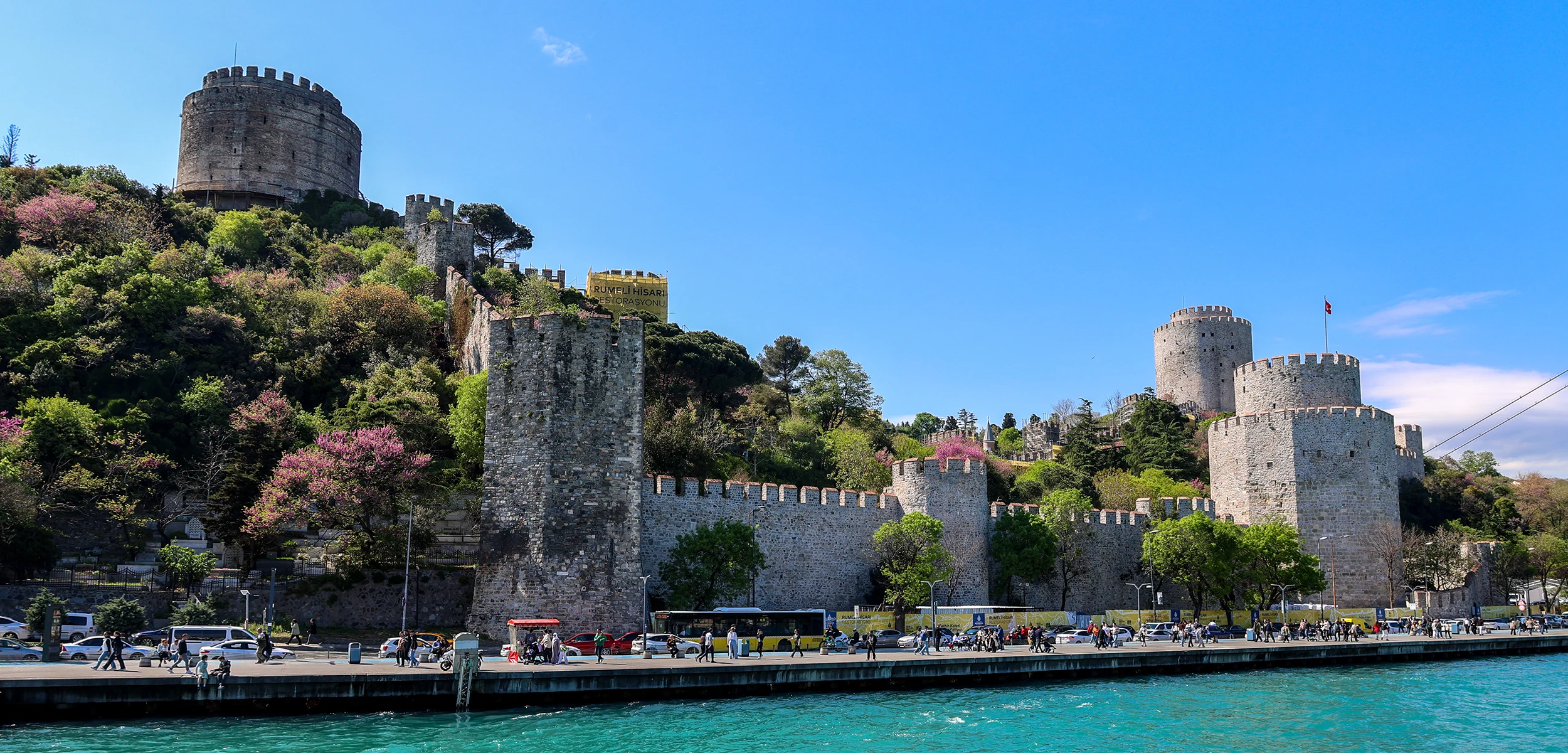
The fortress walls rising directly above the Bosphorus create the classic Rumeli Hisarı composition.

Main Tower Perspectives

Frame the monumental towers against the sky to emphasize their scale and defensive character.

Walls Descending to the Water

The hillside walls create dramatic leading lines toward the Bosphorus and waterfront.

Garden & Stone Details

Redbuds, pine trees and weathered masonry provide beautiful close-up and atmospheric scenes.

Bosphorus Viewing Points

Capture boats, the Asian shore and the bridge through openings in the historic fortress setting.

View from a Bosphorus Cruise

The water offers one of the best ways to photograph the fortress’s full scale and strategic position.

Best Time to Visit Rumeli Fortress

Rumeli Fortress can be visited throughout the year, but weather and seasonal vegetation can significantly change the atmosphere. Spring and autumn offer the most comfortable conditions for exploring the hillside grounds.

Spring (April – June)

The garden is especially beautiful with fresh greenery and Istanbul’s famous redbud blossoms.

Summer (July – August)

Visit early or late in the day to avoid the strongest heat and enjoy softer light over the Bosphorus.

Autumn (September – October)

Comfortable temperatures and clearer light make autumn an excellent season for sightseeing and photography.

Winter (November – March)

The site is generally quieter, but rain, wind and slippery paths can affect the experience.


Best Overall Months

April – June & September – October

Best Time of Day

Morning or late afternoon for comfortable temperatures and attractive Bosphorus light

Travel Tip

Combine the fortress with Bebek, Aşiyan, Emirgan or a Bosphorus cruise

Our Tours Featuring Rumeli Fortress & the Bosphorus

Discover Istanbul tours that include a visit to Rumeli Fortress, a view of the fortress from the Bosphorus or the possibility of adding it to a private itinerary. Actual interior access is subject to museum opening days and restoration conditions.

Bosphorus Day Tours

Ideal for travelers who want to combine Rumeli Fortress with Istanbul’s most beautiful waterfront scenery.

Private Istanbul Tours

Choose a flexible private experience and include Rumeli Fortress or a Bosphorus viewpoint according to your interests and available time.