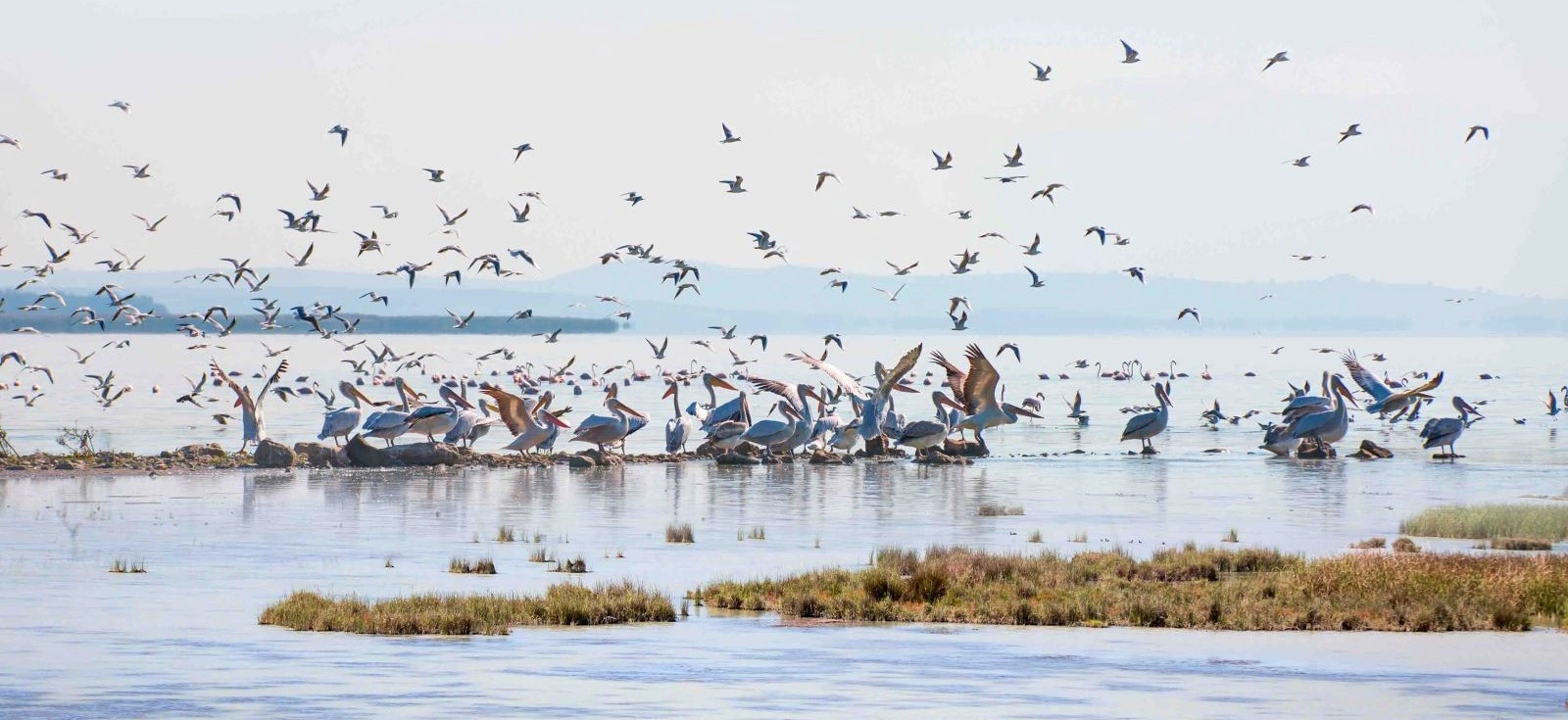
Private Lake Manyas Bird Paradise Experience
Ask us about a tailor-made nature day combining Kuşcenneti National Park, patient birdwatching, Bandırma and optional archaeology or coastal stops according to your interests.
Request a Custom Tour





On the north-eastern shore of Lake Manyas, also known as Kuş Gölü or Lake Kuş, a shallow freshwater wetland in Balıkesir Province, thousands of birds gather in a landscape of reedbeds, flooded willow groves, mudflats, shallow water and river deltas. This is Kuşcenneti National Park, better known to international visitors as Manyas Bird Paradise.
The protected area has a long place in the history of nature conservation in Türkiye. The bird colony was brought to scientific attention by Prof. Curt Kosswig in 1938, and the first protected national-park area was declared in 1959. Today, the park and the wider lake are protected through overlapping national and international conservation frameworks.
The wetland is especially important because water levels change through the seasons. As the lake rises, shoreline vegetation and low willow areas flood; as water retreats, new feeding surfaces, shallows and marsh edges appear. These rhythmic changes help create the feeding, nesting, resting and roosting habitats used by waterbirds throughout the year.
For travellers, Manyas is not a conventional national park filled with hiking routes and picnic grounds. Its strongest experience is much quieter: visit the visitor centre, climb the 17-metre birdwatching tower, use the fixed observation equipment, learn how the lake ecosystem works and watch the colony without entering sensitive breeding habitat.
Lake Manyas is a Ramsar wetland of international importance and one of Türkiye's best-known protected freshwater ecosystems.
More than 200 bird species have been documented across official inventories, including important breeding waterbirds and major migratory gatherings.
Dalmatian pelicans, pygmy cormorants, herons, spoonbills, ibises and other colonial waterbirds are among the park's signature species.
A visitor centre, exhibition spaces and a 17-metre observation tower make the park accessible even to travellers who are new to birdwatching.
Essential information for planning a respectful birdwatching and wetland visit to Kuşcenneti National Park.
North-eastern shore of Lake Manyas / Kuş Gölü in Balıkesir Province, closest to Bandırma.
Kuşcenneti was declared a national park in 1959, making it one of Türkiye's early protected national-park areas.
Current Doğa Koruma ve Milli Parklar information lists approximately 17,058.37 hectares.
Lake Kuş / Manyas is listed as a Ramsar Site of international importance covering 20,400 hectares.
Official sources cite more than 200 species; the 2019 management-plan inventory records 240, while other official inventories cite 266.
The current park information identifies 105 definite or probable breeding bird species.
A 17-metre birdwatching tower provides elevated views over the wetland and fixed observation equipment.
Kuşcenneti received the Council of Europe's European Diploma for Protected Areas in 1976.
The park is approximately 18 km from Bandırma and is reached from the Balıkesir–Bandırma road.
Allow 2–4 hours for the visitor centre, tower and patient bird observation; serious birders may want a longer or repeat visit.
Manyas is one of the best places in western Türkiye to understand how a shallow lake, river delta and seasonally flooded woodland can support extraordinary birdlife.
The first reason to visit is the concentration of waterbirds. The Sığırcı Stream delta, reedbeds, willows and shallow lake margins create nesting and feeding conditions used by pelicans, cormorants, herons, ibises, spoonbills, ducks and many smaller wetland species. During migration, the number and variety of birds can change rapidly from week to week.
The second reason is the clarity of the ecological story. Manyas is not simply a beautiful lake with birds on it. The timing of flooding, the depth of shallow water, fish and invertebrate productivity, the presence of reeds and trees, and the relative quiet of the breeding colony all influence which birds can use the site successfully.
The third reason is accessibility. You do not need to be an expert ornithologist to appreciate the park. The visitor centre and observation tower help newcomers identify the main habitats, understand the conservation history and observe birds without walking into sensitive nesting areas.
Finally, Kuşcenneti represents an important chapter in the history of protected areas in Türkiye. From its early national-park declaration to Ramsar protection and the Council of Europe's European Diploma, the site shows how a relatively small breeding colony became the focus of international wetland conservation.
Kuşcenneti National Park lies in southern Marmara, within Balıkesir Province, around the north-eastern side of Lake Manyas / Kuş Gölü. The principal visitor facilities are on the Bandırma side of the lake, close to the mouth of Sığırcı Stream.
Official regional information describes the park as approximately 18 km from Bandırma. The usual approach leaves the Balıkesir–Bandırma highway and continues south toward the national-park entrance and visitor centre.
The larger protected landscape extends beyond the compact visitor zone. The lake and its surrounding wetlands touch the administrative areas of Bandırma, Manyas and Gönen, so the words “Manyas Bird Paradise” can refer either to the visitor area, the national park or more broadly to the lake ecosystem.
Travel information often uses Manyas Bird Paradise, Kuşcenneti National Park and Lake Manyas interchangeably, but they are not exactly the same geographic concept. Understanding the distinction makes the conservation story much clearer.
Lake Manyas is the shallow freshwater lake itself, also known as Kuş Gölü. The Ramsar Site is an internationally recognised wetland area currently listed at 20,400 hectares. The national park is the legally protected park managed by Türkiye's nature-conservation authorities, with a current official listed area of approximately 17,058.37 hectares.
Older official publications may show a different national-park figure, including 24,047 hectares following a historical boundary expansion. Because official area figures have changed across documents and planning periods, this guide uses the current DKMP listing for the national park and treats older figures as historical documentation rather than mixing them together.
The natural shallow freshwater lake around which the entire wetland system is organised.
The nationally protected park, including the main bird-colony landscape and wider protected lake environment.
An internationally important wetland designation covering 20,400 hectares of Lake Kuş / Manyas.
The accessible observation zone with the entrance, visitor centre, exhibition facilities and birdwatching tower.
Lake Manyas is a shallow, nutrient-rich freshwater lake whose ecological character depends strongly on changing water levels. It is fed by streams and groundwater, with river mouths creating low delta landscapes around the shore.
Two delta systems are especially important within the national park: the Sığırcı Stream delta and the Kocaçay / Manyas Stream delta. These areas create transitions between open water, mud, reedbeds, wet meadow, shrubs and flood-tolerant trees.
The classic Bird Paradise colony developed where Sığırcı Stream meets the lake. Here, seasonal flooding reaches willows, reeds and low ground, turning the shoreline into a highly productive mosaic of nesting and feeding habitat.
The lake's apparent simplicity can be misleading. For birds, a difference of only a small amount in water depth, flooding duration or exposed shoreline can change whether a place is useful for feeding, nesting or resting. That is why wetland conservation focuses on hydrology as much as on the birds themselves.
The modern scientific story of Kuşcenneti is closely associated with Prof. Curt Kosswig, who identified the importance of the bird colony in 1938. The small delta area at the mouth of Sığırcı Stream later became the core of one of Türkiye's earliest national parks.
Kuşcenneti was officially declared a national park in 1959. The original protected nucleus was much smaller than the landscape managed today, reflecting an early conservation model focused directly on the breeding colony.
In 1976, the Council of Europe awarded Kuşcenneti the European Diploma for Protected Areas, recognising its international conservation significance. Lake Kuş / Manyas was later added to the Ramsar List of Wetlands of International Importance, and the protected wetland framework expanded over time.
This layered history matters. Manyas is protected not because it contains one famous species, but because the whole wetland system supports breeding, migration, wintering, feeding and roosting across a broad community of waterbirds.
The Ramsar Convention is the global intergovernmental framework for the conservation and wise use of wetlands. Lake Kuş / Manyas is listed as Ramsar Site No. 660, with a current listed area of 20,400 hectares.
Its international importance comes from several connected functions. The lake lies on major bird-migration routes, supports significant breeding populations, provides feeding and staging habitat and remains important for wintering and roosting waterbirds.
Ramsar information describes the lake as turbid and nutrient-rich, with small deltas, reed and rush marshes, and tree-lined stream margins. That combination creates a productive food web, but it also means the lake is ecologically sensitive to changes in water quality, water quantity and shoreline habitat.
For visitors, Ramsar status should change the way the park is approached. This is not simply a scenic attraction. It is a working wetland ecosystem of international significance, and quiet observation is part of protecting the reason you came to see it.
Birdlife at Lake Manyas changes dramatically through the year. Some species breed around the lake, some arrive during spring and autumn migration, others use the wetland primarily in winter, and many species overlap across more than one season.
In late winter and spring, rising water begins to flood the willow and reed environment around the colony. Migratory birds returning from warmer regions move into the wetland, build nests and begin breeding. This is the period when the park most clearly reveals why the combination of water, trees and shallow feeding habitat is so important.
Summer brings growing chicks, active feeding and large concentrations of colonial waterbirds. As water levels change, different shallows and exposed edges become available. By autumn, new waves of migrants move through the region, sometimes producing very different species combinations from those seen in spring.
Winter should not be dismissed. Ducks, geese and other waterbirds can use the wider lake in significant numbers, although weather, water level and the location of flocks determine what can actually be seen from the visitor tower on any particular day.
The Dalmatian pelican (Pelecanus crispus) is one of the most important and visually impressive birds associated with Lake Manyas. Its immense wings, pale plumage and heavy bill make it unmistakable when seen well.
Manyas is important not merely as a place where pelicans pass overhead. Official conservation information identifies the wetland as an important breeding area for the species, which means disturbance near nesting and feeding zones has consequences beyond a single day's birdwatching.
Pelicans may be visible flying above the lake, resting on open water or moving between feeding areas. Their exact position changes with food, weather, water level and the stage of the breeding cycle, so no single viewpoint guarantees a close observation.
Bring binoculars even though fixed optics are available on the tower. The best encounter is often not a close portrait, but watching a pelican's slow wingbeats or gliding flight across the wider wetland landscape.
Another key species is the pygmy cormorant (Microcarbo pygmaeus, also listed in older sources under Phalacrocorax pygmeus). Lake Manyas is recognised as an important breeding wetland for this compact fish-eating bird.
Pygmy cormorants can be much less conspicuous than pelicans. They may sit low on branches, move through reed-edge water or fly rapidly between feeding and roosting areas. Their presence demonstrates why small-scale wetland structure matters: quiet branches, shallow feeding water, fish availability and protection from repeated disturbance all contribute to breeding success.
Larger great cormorants also occur around the lake, so size, flight style and body proportions are useful identification clues. For first-time visitors, the visitor-centre displays can make the difference between simply seeing “a dark waterbird” and recognising what makes the species important.
Although pelicans are the headline species, the character of Kuşcenneti comes from mixed colonies and constantly changing bird communities. Different species use the same wetland in very different ways, from stalking shallow margins to nesting in trees, diving for fish or grazing open-water vegetation.
A large, familiar heron often seen standing motionless at feeding edges or flying with its neck retracted.
A compact colonial heron associated with wooded and reed-fringed wetlands; often less obvious during the middle of the day.
A striking reedbed species whose long neck and warm-toned plumage can disappear surprisingly well among marsh vegetation.
A small white heron commonly associated with shallow feeding areas, where it actively hunts fish and invertebrates.
Recognisable by its broad spoon-shaped bill, swept side to side through shallow water while feeding.
A dark, long-billed wetland bird with iridescent tones visible in good light; often feeds socially in shallow areas.
Season and water level bring changing combinations of dabbling ducks, diving ducks, grebes, coots and other open-water birds.
Reeds and wet margins also support rails, bitterns, warblers and smaller species that reward patient listening as much as scanning.
The mouth of Sığırcı Stream is central to the identity of Kuşcenneti. Where the stream reaches Lake Manyas, sediment, shallow water, reedbeds and willow vegetation combine to create one of the lake's most important breeding areas.
Official park information notes that thousands of waterbirds breed in this delta area and that the number of adults and young can reach around 20,000 during the breeding cycle. The figure should be understood as a seasonal colony estimate rather than a guaranteed count visible to every visitor.
This is also why visitor access is deliberately controlled. Entering nesting habitat to obtain a closer photograph would destroy the very quality that makes the site special. The park's visitor infrastructure is designed around watching the colony from a respectful distance.
Water level is critical. Flooded trees may support nesting, while nearby shallows provide feeding opportunities. If water conditions change, the distribution of birds changes with them; a quiet-looking foreground does not mean the wetland is empty or unimportant.
The national park's 17-metre observation tower is the principal place for visitors to look across the colony and surrounding wetland. Its elevation gives a much better sense of the relationship between open water, reedbeds, willows and delta habitat than ground level alone.
Fixed observation equipment is available on the tower, but bringing your own binoculars still makes the visit more flexible. A spotting scope is useful for serious birders, especially when birds are feeding or resting far from the observation point.
Do not rush the tower. Many birds become visible only after several minutes of scanning. Start with broad areas of open water, then check tree canopies, reed edges, muddy margins and the sky above the colony. Movement often reveals a bird before colour or shape does.
Approximately 17 metres according to current official national-park information.
Binoculars for scanning; a spotting scope is ideal for distant birds and detailed identification.
Stay quiet, scan slowly and give yourself enough time for birds to reveal themselves through movement.
A long telephoto lens is far more useful than attempting to get physically closer to the birds.
The visitor centre is one of the park's most useful features, especially if this is your first dedicated wetland visit. Official information lists an administration and visitor centre with exhibition and presentation spaces related to the birds and the protected area.
Displays include bird models or prepared specimens, while a presentation area provides visual information about the park, its wildlife and live views of the protected landscape. These facilities make it possible to understand species that may be distant, hidden or absent during your particular visit.
Current official information also lists toilets, a prayer room, a baby-care room and entrance-control facilities within the visitor area. Services can change, so travellers who depend on a particular facility should confirm current availability before setting out.
The centre is best used before the tower. Knowing which birds are breeding, which habitats they prefer and what seasonal behaviour to expect makes the landscape much easier to read.
Manyas is a rewarding destination for both beginners and experienced birdwatchers, but the best method is not to move constantly. Choose a viewpoint, settle in and allow the wetland to become visually familiar.
Start by identifying habitat zones rather than individual species: open water, reed edge, willow canopy, shallow margins and sky. Different birds repeatedly return to the habitat that best matches how they feed, rest or nest.
8× or 10× binoculars are ideal for general observation and make the experience much richer even when tower optics are available.
A spotting scope is excellent for distant pelicans, ducks and colony details without disturbing the birds.
Calls from reedbeds and tree colonies can reveal birds hidden by foliage before you ever see them.
Pelicans, cormorants, herons and raptors may be easier to identify in flight than when partially hidden in vegetation.
Wild birds move. Water level, wind, season and food availability determine where they gather on any given day.
Avoid loud voices, music, sudden movements and any attempt to lure or flush birds for photographs.
The greatest mistake photographers can make at Kuşcenneti is expecting every image to be a frame-filling portrait. Because the park protects breeding habitat, distance is part of the experience. A long lens helps, but good photographs can also show birds as part of the wetland that supports them.
A long focal length is useful for distant waterbirds and flight photography from designated observation points.
Watch repeated flight lines between the colony, lake and feeding areas rather than chasing individual birds.
Include reeds, willow branches, open water and other birds to show why the habitat matters.
Early light can be gentler and bird activity may be high, but direction and visibility depend on weather and the birds' location.
Never use proximity, playback, food or flushing behaviour to manufacture a photograph.
Wetland wind, humidity and sudden rain can affect equipment; carry basic protection even on otherwise mild days.
Bird Paradise is famous for birds, but the vegetation creates the physical architecture that allows those birds to breed and feed. The most characteristic scene combines willow trees, reeds, rushes and seasonally flooded low ground.
Willows are especially important around the classic colony. Their branches provide nesting structure, while flooded bases can help reduce access by terrestrial disturbance. Reedbeds create another habitat entirely, sheltering smaller wetland birds and providing protected edges between open water and dry land.
As lake levels fall in warmer months, previously flooded shoreline can develop rich herbaceous vegetation. This seasonal expansion and contraction is one reason the wetland changes appearance so quickly through the year.
Visitors should resist the temptation to treat reeds or flooded vegetation as empty space. They are functional habitat, and even areas with no obvious large birds may contain nests, young birds, amphibians, fish and invertebrates.
The richness of Manyas is possible because the lake is biologically productive. Current official park information records 34 fish species from eight families within Kuş Gölü, while the Ramsar inventory describes the lake as important habitat for fish and other aquatic life.
Fish are not merely another wildlife group on a species list. They are part of the food chain supporting pelicans, cormorants, herons and other fish-eating birds. Aquatic invertebrates, plankton and marsh organisms support additional feeding relationships throughout the wetland.
Official park information also records amphibians, water-associated snakes, turtles and lizards. These animals are much less visible to casual visitors, but they reveal how the protected area functions as a complete freshwater ecosystem rather than a bird collection.
Do not handle wildlife, enter wet vegetation or move animals for photographs. Observation from designated visitor areas is safer for both wildlife and visitors.
Spring migration gathers pace, water levels are often high and breeding activity begins to transform the colony.
One of the strongest all-round periods for first-time visitors, with active migration, nesting and abundant wetland life.
Excellent for observing breeding colonies and growing young, although heat and changing water levels become more noticeable.
Autumn movement begins and exposed shallow margins can attract feeding birds; conditions vary strongly with water level.
Migration continues and the species mix shifts toward autumn and wintering birds. Cooler weather can make long observation comfortable.
Wintering waterbirds can be rewarding, but rain, wind, fog and bird distribution across the wider lake affect visibility.
If you can choose only one period, April and May are especially attractive for a first visit because migration and breeding activity overlap. Serious birders, however, often value repeat visits in different seasons more than trying to identify one single “best” month.
Early morning is often the most rewarding time for birdwatching. Temperatures are cooler, light is softer and many birds are actively moving between roosting, nesting and feeding areas.
That does not make afternoon useless. Pelicans may soar as the air warms, feeding flocks can change location and different light angles reveal birds hidden earlier in the day. If you are travelling specifically for birds, allow enough time to wait for activity to change rather than treating the tower as a five-minute viewpoint.
Wind can matter as much as time. Strong wind roughens the lake surface, moves reeds and can make prolonged observation uncomfortable. Cloud, mist and glare also change visibility, so a calm overcast morning may be more productive than a technically brighter day.
Current official Doğa Turizmi information lists the national park's visitor hours as 08:30–18:00. Opening hours, entrance arrangements and operational details can change seasonally or administratively, so confirm shortly before travelling if your schedule is tight.
The same official listing identifies a visitor centre, observation tower, toilets, prayer room, baby-care room and entrance-control point. A rural café facility has also appeared in current planning information, but food-service availability should not be assumed.
Kuşcenneti is a conservation-first destination. Official information emphasises bird observation, scientific research and biodiversity education rather than recreational activities that would place pressure on breeding habitat. Camping inside the national park should not be planned as part of a visit.
The park is approximately 18 km away and is the easiest nature excursion from Bandırma for travellers with a private vehicle or transfer.
Official park information places the national park roughly 80 km from Balıkesir city; route and drive time vary with traffic and approach.
The park is approximately 90 km from Bursa according to current official park information, making a long day trip possible by road.
The national park is listed at roughly 200 km from Istanbul by road; actual travel time depends heavily on route, traffic and your starting point.
Official park information gives roughly 270 km. It works better as part of a Balıkesir–Bandırma route than as a rushed standalone excursion.
The visitor entrance is reached from the Balıkesir–Bandırma road via the turn toward the national park. Follow current signs rather than navigating to the centre of Manyas town.
The most practical base, with the widest choice of accommodation, restaurants and transport connections close to the national park.
A quieter district base south of the lake, useful for travellers exploring the wider agricultural landscape but with fewer visitor services than Bandırma.
A useful option for combining the lake with thermal tourism and the western side of the wider Balıkesir region.
Good for travellers who want to combine birdwatching with a coastal stay, Kyzikos and the Kapıdağ Peninsula.
A workable urban base if Manyas is part of a broader inland Balıkesir itinerary, though it is less convenient for very early birdwatching.
Prioritise proximity over resort atmosphere. Reaching the park early and being able to return in another season is more valuable than a long commute.
Enough for a focused visitor-centre visit and observation from the tower if you are passing through the region.
The best first-visit length, allowing time to learn the ecosystem, scan slowly and wait for bird activity to change.
Ideal for birdwatchers and photographers who do not want to rush and may spend long periods working the same viewpoint.
Combine the national park with Bandırma, Daskyleion, Kyzikos or another nearby cultural stop rather than trying to fill the entire day inside the protected visitor area.
Excellent for pairing a serious wetland morning with Bandırma, Erdek, Kyzikos and the wider Manyas landscape at a relaxed pace.
For birders, returning in spring, autumn or winter reveals more than simply spending a very long single day at the same viewpoint.
This itinerary is deliberately slow. Bird Paradise rewards observation rather than mileage. If the wetland is exceptionally active, stay longer; if visibility is poor, use the visitor centre and continue with another nearby attraction rather than disturbing the protected habitat in search of closer birds.
Arrive at Kuşcenneti near opening time for the visitor centre, birdwatching tower and a long observation session.
Explore Bandırma and choose either the archaeological landscape around Daskyleion or a relaxed city-and-waterfront afternoon.
Continue toward Kyzikos and Erdek, linking the inland wetland with the history and coastal geography of the Kapıdağ Peninsula.
Enjoy Erdek or another Kapıdağ stop before returning to Bandırma; in migration season, serious birders may instead choose a second Manyas visit.
Manyas is easier to experience than a remote trekking-based nature reserve because the principal attractions are concentrated around the managed visitor area. The visitor centre, exhibition spaces and observation infrastructure reduce the need for long-distance walking.
The observation tower, however, may present a challenge for visitors with limited mobility, depending on the exact access arrangement and current facilities. Anyone for whom stairs or gradients are a concern should confirm current accessible viewing options with the park before travelling.
Families, older travellers and visitors who do not hike can still gain a great deal from the site, especially through the visitor centre and lower-level wetland interpretation. The goal is not to cover distance, but to understand and observe the ecosystem.
Kuşcenneti can be an excellent family stop because the visit has a clear narrative: find the birds, understand where they live and discover why the wetland is protected. Binoculars turn the tower into an active search rather than a passive viewpoint.
The visitor centre is especially helpful for younger visitors because displays make distant species easier to recognise. Before climbing the tower, choose three or four target birds — perhaps a pelican, a heron, a cormorant and a spoonbill — and turn observation into a quiet wildlife challenge.
Children should remain supervised around elevated structures and water. The most important lesson is behavioural: no shouting toward colonies, no feeding wildlife, no entering reeds and no collecting feathers, eggs, plants or other natural material.
Kuşcenneti exists because birds can feed, rest and breed with limited disturbance. The visitor experience should protect that condition rather than compete with it.
Do not enter reedbeds, flooded ground, colony trees or closed shoreline zones in search of a closer view.
Conversation should remain quiet around observation points; music and amplified sound have no place beside breeding habitat.
If a bird changes behaviour because of your approach, you are already too close. Back away and use optics.
Feeding changes natural behaviour, attracts animals to people and can create health problems.
Recorded calls can stress territorial or breeding birds and should not be used casually to force sightings.
Do not collect feathers, eggshells, plants, reeds or any other natural material from the protected area.
Even small litter can harm wetland wildlife. Use designated bins or carry all waste out with you.
Do not touch monitoring equipment, nesting structures, signs or scientific installations.
Official information currently lists 08:30–18:00, but confirm before a long drive because access arrangements can change.
Morning often offers cooler weather, softer light and active bird movement.
The park provides observation infrastructure, but personal binoculars allow continuous scanning at your own pace.
A field guide or reputable bird-identification app makes distant silhouettes and seasonal plumages much easier to interpret.
Open wetland landscapes can feel cooler and windier than nearby towns, especially outside summer.
Do not assume food and drink services will be operating; carry your own water and basic needs.
Observation can mean standing in exposed light for long periods even when temperatures are moderate.
Birds are wild. Treat every sighting as seasonal and weather-dependent rather than guaranteed.
The closest major city and the most practical base for accommodation, restaurants, transport and a relaxed waterfront evening.
An important archaeological site in the Manyas landscape, associated with Persian-period Anatolia and the ancient satrapal world.
A major ancient city near Erdek with extensive ruins that connect a Manyas visit with the archaeology of the Kapıdağ Peninsula.
A coastal town on the Kapıdağ Peninsula, useful for combining birdwatching with sea views, archaeology and a slower overnight stay.
A mountainous peninsula north of Bandırma with villages, forest roads and coastal landscapes contrasting strongly with the flat wetland.
The district centre south of the lake, closely tied to the surrounding agricultural and dairy-producing landscape.
A nearby district known for thermal tourism and a useful addition to a wider western Balıkesir route.
Continue into the province for a much wider journey through inland heritage, Marmara landscapes and North Aegean destinations.
One of the easiest combinations, linking major archaeology with the Marmara coast and the Kapıdağ Peninsula.
A natural companion to the Manyas landscape for travellers interested in archaeology, ancient political geography and the region's long human history.
Combine thermal culture and a quieter western Balıkesir town with the wetland on a relaxed regional route.
Useful for museums, food and onward transport if you are travelling through the province rather than staying on the Marmara coast.
A longer day-trip option combining Manyas with Ottoman heritage, though the national park deserves an early start if birdwatching is the priority.
Choose this for a strong landscape contrast: wetland plains in the morning and forested peninsula or coastal villages later in the day.
Bandırma's long-running Bird Paradise Culture and Tourism Festival connects the national park with the city's public life. The programme changes each year and can include nature activities, environmental education, talks, children's events, performances and organised visits to Kuşcenneti.
The festival is useful because it keeps the wetland's conservation story visible beyond specialist birdwatching circles. In recent programmes, the municipality has organised guided or scheduled visits to the national park as part of the wider event.
Do not build a trip around an assumed annual date. Festival timing and individual activities can vary, so check Bandırma Municipality's current programme if you want to combine your visit with festival events.
The Manyas landscape is not only a wetland. The surrounding district is an important agricultural and livestock-producing area, and dairy products play a particularly strong role in local food identity.
A firm, aged brined cheese associated with Manyas and the wider Mihaliç cheese tradition, with a distinctive salty and aromatic character.
Look for a regional breakfast built around cheeses, butter, kaymak, olives, honey and other products from across Balıkesir Province.
Balıkesir's best-known cheese-based dessert, traditionally made with fresh unsalted cheese and semolina-style ingredients.
A local-style aubergine dish using regional cheese, combining two ingredients strongly associated with Balıkesir cuisine.
A ceremonial wheat-and-meat dish found across western Anatolia and part of Balıkesir's traditional food culture.
A Balıkesir speciality made with noodles and chicken, especially useful for travellers looking beyond seafood and standard restaurant menus.
The protected area is officially known as Kuşcenneti National Park. It lies around Lake Manyas, also called Kuş Gölü or Lake Kuş.
It is in Balıkesir Province in southern Marmara, with the principal visitor area approximately 18 km from Bandırma.
The national park was declared in 1959.
The site's modern scientific history is closely associated with German zoologist Prof. Curt Kosswig, who identified its importance in 1938.
Current DKMP nature-tourism information lists approximately 17,058.37 hectares. Older official publications sometimes show different figures following earlier boundary changes.
Yes. Lake Kuş / Manyas is Ramsar Site No. 660 and the current Ramsar listing covers 20,400 hectares.
The European Diploma for Protected Areas is awarded by the Council of Europe to protected areas of exceptional European conservation interest. Kuşcenneti received the award in 1976.
Official sources use different inventories. The current DKMP page cites 240 species in the 2019 management-plan work and 105 definite or probable breeding species, while other official inventories cite 266 observed bird species.
The Dalmatian pelican is one of the park's signature species and an important reason for the wetland's international conservation value.
Yes. Lake Manyas is an important breeding wetland for pygmy cormorants, although sightings depend on season, distance and where birds are using the lake on the day.
Yes. Eurasian spoonbills and glossy ibises are among the important colonial waterbirds associated with the wetland.
Spring, especially April and May, is excellent for a first visit because migration and breeding activity overlap. Autumn and winter offer different bird communities.
Early morning is usually an excellent choice for cooler temperatures, soft light and active bird movement, but bird activity can remain rewarding throughout opening hours.
Yes. The national park has a 17-metre birdwatching tower with fixed observation equipment.
Yes. The visitor area includes an administration and visitor centre with displays and presentation facilities related to the birds and wetland.
Current official nature-tourism information lists 08:30–18:00. Check again shortly before visiting because hours and entrance arrangements can change.
For most first-time visitors, 2–4 hours is ideal. Birdwatchers and photographers may want a half day.
They are strongly recommended. The tower has observation equipment, but your own binoculars make it much easier to scan continuously and follow birds in flight.
No. Stay within designated visitor areas and never enter breeding, reedbed or flooded habitat in search of a closer view.
Do not plan on camping inside the protected national park. The visitor experience is centred on observation, education and conservation, not recreational camping.
Yes. The visitor centre and tower make it an excellent place to introduce children to birds, migration and wetland ecology, provided they can observe quietly.
Yes. The main experience does not require a long nature hike. Visitors with mobility concerns should confirm current accessible viewing arrangements, especially for the observation tower.
Current official information places the park approximately 18 km from Bandırma.
Yes. Official park information places Kuşcenneti roughly 90 km from Bursa, making it possible as a road day trip with an early start.
Yes, but it is a longer journey. Official park information gives a road distance of roughly 200 km from Istanbul; travel time varies significantly with route and traffic.
Bandırma is the most practical base because it has the strongest accommodation, restaurant and transport options close to the park.
Good nearby combinations include Bandırma, Daskyleion, Kyzikos, Erdek, the Kapıdağ Peninsula and Gönen.
Look especially for Manyas Kelle Cheese, Balıkesir breakfast products, höşmerim, peynirli patlıcan and other regional dairy-based dishes.
No. Wild birds respond to season, weather, water level, food and disturbance. A quieter day is still valuable for understanding one of Türkiye's most important wetlands.
A private route can combine birdwatching, wetland ecology, photography, Bandırma, Daskyleion, Kyzikos, Erdek and the wider Balıkesir region without rushing the protected area.
Tell us whether your priority is birdwatching, nature photography, family learning, archaeology, regional food or a wider Marmara journey, and we can shape the day around your interests and available time.
Ask us about a tailor-made nature day combining Kuşcenneti National Park, patient birdwatching, Bandırma and optional archaeology or coastal stops according to your interests.
Request a Custom Tour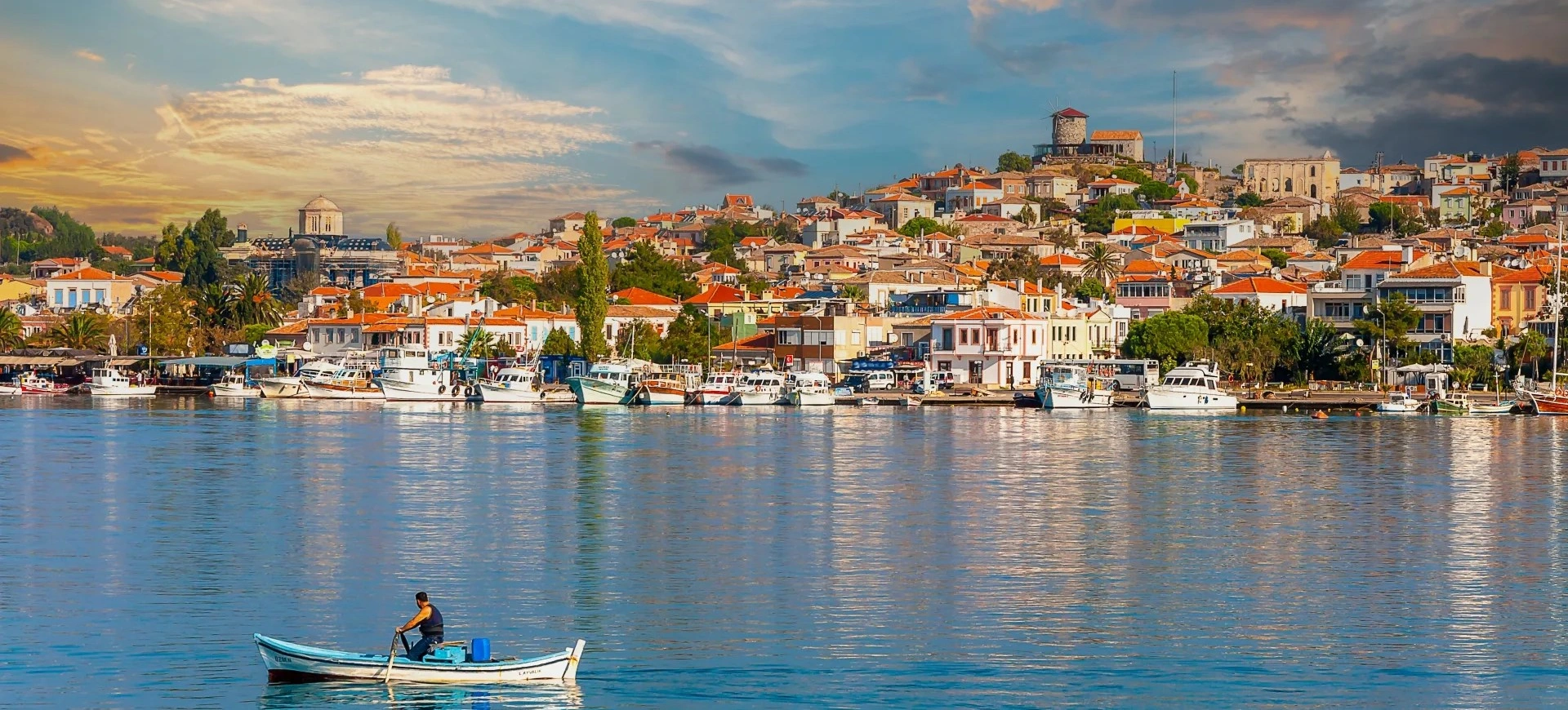
Continue through the province with Bandırma, Erdek, Gönen, Ayvalık, Cunda, Kazdağı, thermal landscapes, archaeology and the coast.
View Balıkesir Guide