Ottoman Courtyard, Living Silk Trade, Historic Bursa

Koza Han Silk Market – Complete Visitor Guide to Bursa

Walk beneath historic arcades, discover Bursa’s centuries-old silk heritage,
and explore one of the most atmospheric Ottoman trading courtyards in Türkiye.

Explore Koza Han

Discover Bursa’s Historic Silk Market

Standing between Bursa Grand Mosque and Orhan Gazi Mosque, Koza Han is one of the most memorable buildings in Bursa’s historic commercial centre. Commissioned by Sultan Bayezid II in the late fifteenth century, the two-storey caravanserai was created to support trade and generate income for the sultan’s religious foundation in Istanbul.

The name Koza Han means “Cocoon Khan,” recalling the period when silk cocoons, raw silk, woven fabrics, and luxury textiles passed through Bursa’s markets. Today, visitors enter through monumental gateways to find vaulted shops, arcaded galleries, an elegant courtyard, and a raised octagonal mosque above a fountain. This complete visitor guide explains Koza Han’s history, architecture, silk-trading legacy, UNESCO context, shopping advice, access information, photography tips, nearby attractions, and the best way to include it in a wider Bursa itinerary.

Historic Silk Market

Explore the landmark most closely associated with Bursa’s centuries-old cocoon and silk trade.

Ottoman Courtyard

Step into a monumental two-storey courtyard surrounded by domed arcades and historic shops.

Raised Courtyard Mosque

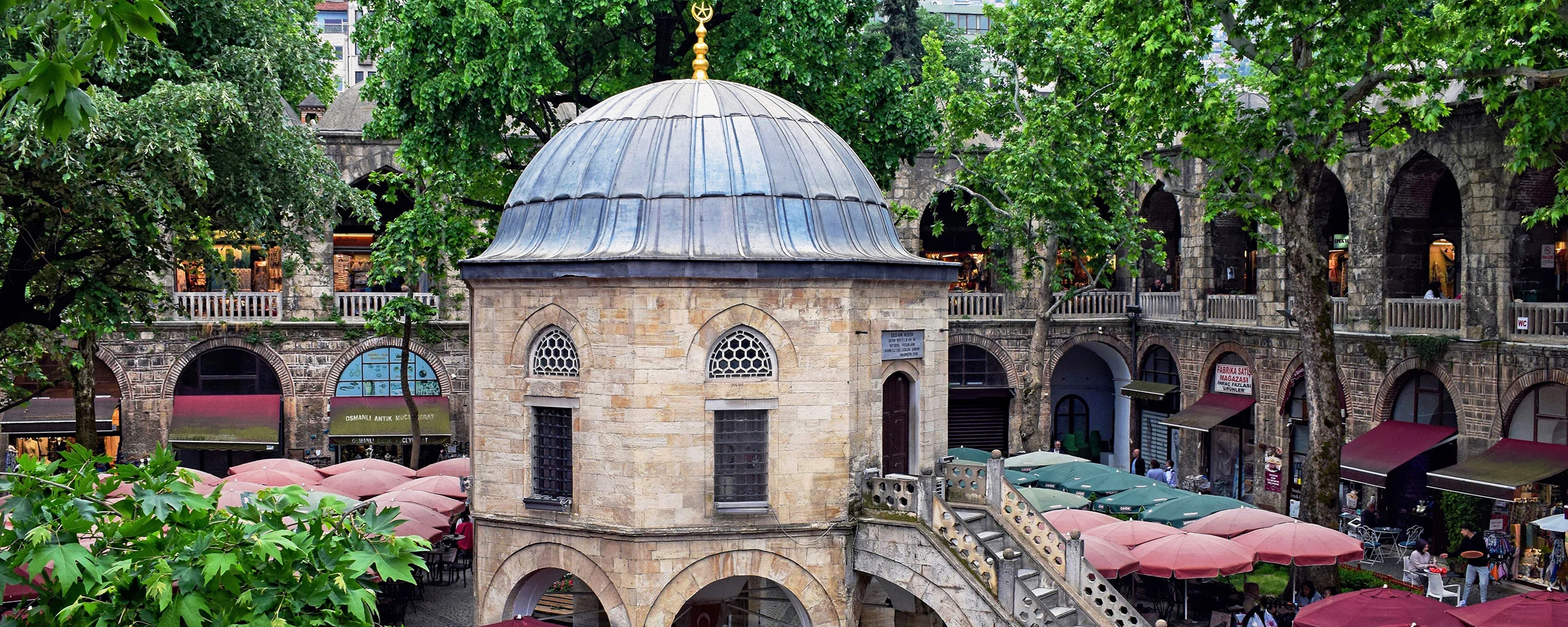
See the distinctive octagonal mescit standing above a fountain at the centre of the han.

UNESCO Khans Area

Experience the living commercial landscape of Bursa’s World Heritage-listed historic centre.

Plan Your Visit

Koza Han Silk Market – Quick Facts

Essential information for exploring Bursa’s historic silk market comfortably and responsibly.

📍

Location

In Bursa’s historic Khans Area, between Ulu Camii and Orhan Gazi Mosque in Osmangazi.

Open on Google Maps
🏛

Built

Commissioned by Sultan Bayezid II and constructed around 1490–1491.

Visit Duration

Allow 45–90 minutes for the courtyard, architecture, shops, photography, and a relaxed browse.

🎟

Visitor Access

General entry is normally free. Individual shops and services operate according to their own schedules.


From Imperial Endowment to Living Market

The History of Koza Han

Discover how a late-fifteenth-century Ottoman caravanserai became the enduring symbol of Bursa silk.

Koza Han was commissioned by Sultan Bayezid II and constructed around 1490–1491. It was built as a commercial foundation whose income helped support Bayezid II’s mosque and madrasa complex in Istanbul, illustrating the Ottoman waqf system through which revenue-producing properties financed religious and social institutions.

The building is associated with the architect Abdül Ula bin Pulad Şah. Historical sources also identify Şuca bin Karaca as a master involved in its construction. Koza Han was erected along Bursa’s established commercial axis between Ulu Camii, Orhan Gazi Mosque, Emir Han, the covered bazaar, and surrounding trading streets.

Over time the han was known by several names, including Yeni Han, Han-ı Cedid, Simkeş Han, Sırmakeş Han, Beylik Han, and Yeni Kervansaray. Its modern name reflects the silk cocoons—koza in Turkish—that were once bought, sold, assessed, stored, and distributed through Bursa’s commercial network.

Bursa had long been connected to routes carrying raw silk and finished textiles between Asia, Iran, Anatolia, the Mediterranean, and Europe. During the Ottoman period, the city became especially famous for silk weaving, brocades, velvets, embroidery, and court-quality fabrics. Koza Han played a major role in the urban infrastructure that supported this trade.

Fires, earthquakes, changing trade patterns, repair campaigns, and later commercial adaptations altered parts of the complex. Nevertheless, the courtyard plan, arcaded galleries, central mosque, historic gateways, and trading function survived. Shops continue to sell scarves, fabrics, garments, accessories, and textile products, preserving a direct connection between architecture and commerce.

Today, Koza Han is both a heritage monument and an active market. Its importance lies not only in what happened here centuries ago, but in the continuation of buying, selling, conversation, craftsmanship, and everyday urban life within a historic Ottoman commercial building.


What to See

Top Highlights of Koza Han

Look beyond the silk shops to discover the courtyard, arcades, gateways, mosque, stonework, and living commercial atmosphere.

The Central Courtyard

Koza Han is organised around a large rectangular courtyard that brings daylight, movement, and orientation to the centre of the building. From here, visitors can understand the two-storey plan at a glance.

  • Form: Rectangular open courtyard
  • Surroundings: Two levels of arcaded galleries and shops
  • Best view: From a courtyard corner looking diagonally across the complex

The Raised Courtyard Mescit

At the centre of the courtyard stands an octagonal prayer space raised above the ground on stone supports and arches. Its elevated position makes it the visual focus of the entire han.

  • Plan: Octagonal
  • Function: Small mosque for merchants and visitors
  • Lower level: Fountain and water feature beneath the prayer space

Silk and Textile Shops

Shops around the galleries display silk scarves, shawls, fabrics, garments, accessories, home textiles, and gift items. Product origin, fibre content, and production technique vary, so thoughtful comparison is recommended.

  • Products: Scarves, fabrics, clothing, textiles, and souvenirs
  • Buying tip: Ask directly about fibre composition and origin
  • Experience: Browse several shops before choosing

Domed Arcades

Covered galleries run around both levels of the courtyard. Their repeated arches, masonry piers, vaults, and domed sections create the rhythm associated with classical Ottoman commercial architecture.

  • Levels: Ground floor and upper floor
  • Purpose: Sheltered circulation in every season
  • Photography: Strong symmetry from gallery corners

The Monumental Northern Gate

The principal northern entrance is one of Koza Han’s most impressive exterior features. Stone carving, structural depth, inscriptions, and traces of coloured decoration distinguish it from an ordinary market entrance.

  • Approach: From the covered bazaar and historic market streets
  • Material: Cut stone with decorative details
  • Photo tip: Step back to include the surrounding commercial street

İç Koza Han

A secondary section adjoins the main complex on the eastern side. Historically associated with stables, storage, and service functions, it helps explain how the commercial building operated beyond its formal courtyard.

  • Historic role: Service, storage, and animal accommodation
  • Position: East of the main han
  • Visitor note: Access and current use may vary

The Living Market Atmosphere

Koza Han remains compelling because it is not an empty monument. Shopkeepers open shutters, textiles fill windows, visitors cross the courtyard, and the building continues to serve the commercial life of central Bursa.

  • Character: Active heritage rather than museum display
  • Best experience: Visit when shops are open
  • Respect: Avoid blocking entrances or photographing people without permission

Architecture of Koza Han

Koza Han follows the traditional urban caravanserai model: a protected commercial structure arranged around an open courtyard, with rooms and shops opening onto covered galleries. The design provided secure storage, sheltered circulation, places for negotiation, and spaces where merchants could conduct business close to Bursa’s principal markets.

Two-Storey Plan

Both floors are organised around the courtyard, allowing every commercial unit to connect with the central circulation space.

Stone and Brick

Cut stone forms much of the structure, while brick appears in selected arches, vaults, domes, and decorative construction details.

Rooms and Shops

Bursa Site Management describes 51 rooms upstairs and 50 downstairs, although other public inventories use different counts after later alterations.

Covered Galleries

Broad arcades protect visitors and goods from rain, sun, and snow while maintaining constant visual contact with the courtyard.


The building’s beauty comes from proportion rather than excessive ornament. Repeated arches, pale stone, deep shadows, small domes, vaulted rooms, timber shopfronts, and the raised central mosque create a balanced composition. Walk around both levels to appreciate how views change from enclosed passage to open courtyard.

Koza Han and Bursa’s Silk Heritage

Bursa’s relationship with silk developed through geography, craftsmanship, imperial demand, and international trade. Raw silk and cocoons arrived through long-distance networks, while local workshops transformed valuable fibres into woven fabrics, velvets, brocades, clothing, furnishings, and ceremonial textiles.

Cocoon Trade

The han became closely associated with the buying and selling of silk cocoons, giving the building its present name.

Ottoman Textiles

Bursa workshops supplied refined fabrics for court, religious, domestic, and international markets.

Merchant Networks

Iranian, Anatolian, Mediterranean, and European trade connections brought merchants, materials, techniques, and fashions together.

Living Identity

Silk remains one of Bursa’s strongest cultural symbols even though modern retail differs from the historic cocoon exchange.


Koza Han should not be imagined as a single workshop where every stage of silk production occurred. It functioned within a much larger economic system that included mulberry cultivation, silkworm raising, cocoon markets, raw-silk processing, dyeing, weaving, tailoring, merchant finance, storage, transport, and retail.

Shopping for Silk at Koza Han

Shopping is part of the Koza Han experience, but visitors should remember that “silk market” describes the building’s heritage rather than guaranteeing that every item is locally woven or made from pure silk. Ask questions, compare products, and choose according to quality rather than pressure.

Check Fibre Content

Ask whether an item is pure silk, a silk blend, viscose, polyester, cotton, or another fibre.

Ask About Origin

Clarify whether the product was woven in Bursa, elsewhere in Türkiye, or imported.

Compare Several Shops

Prices, designs, finishing, packaging, and product descriptions may differ from one seller to another.

Request Documentation

For valuable purchases, ask for a receipt and written details about fibre content, care, and return conditions.


Genuine silk usually feels light, responsive, and warm rather than simply slippery, but touch alone is not a reliable test. Avoid destructive “burn tests” in shops. A clear label, trustworthy seller, realistic price, and written product information provide better protection than souvenir-market myths.

The Koza Han Courtyard Experience

The courtyard is the emotional centre of Koza Han. Merchants once crossed it with bales, ledgers, samples, and trade news; today, visitors pause to admire the mosque, photograph the arcades, browse shop windows, and absorb the rhythm of historic Bursa.

Morning Light

Earlier visits often provide softer light, fewer tour groups, and clearer architectural views.

Midday Activity

The market becomes livelier as shops open fully and visitors move between Ulu Camii and the bazaar.

Seasonal Shade

Mature trees and covered arcades create welcome shade, although summer afternoons can still feel busy and warm.

Changing Arrangements

Courtyard seating, café service, events, and circulation arrangements may change, so assess the current setup on arrival.


Even when the courtyard is crowded, the upper gallery usually offers a calmer architectural experience. Walk slowly, look back toward the central mosque, and notice how the arches frame different layers of the building.

Why Koza Han Is So Important

Koza Han is important because commerce, architecture, religious endowment, international trade, craftsmanship, and daily life remain visible within one functioning historic complex.

Silk Capital

The han represents Bursa’s historic reputation as one of the Ottoman world’s major silk and textile centres.

Waqf Economy

Commercial income from the building helped finance the public and religious foundation of Sultan Bayezid II.

Urban Caravanserai

Its protected courtyard, rooms, galleries, storage areas, and prayer space reveal how an Ottoman commercial han functioned.

Living Heritage

Koza Han continues to house shops and commercial activity rather than surviving only as an archaeological shell.

Is Koza Han a UNESCO World Heritage Site?

Koza Han stands within Bursa’s historic Khans Area, one of the components of the serial UNESCO World Heritage property “Bursa and Cumalıkızık: the Birth of the Ottoman Empire.” The property was inscribed in 2014 and represents the social, religious, commercial, and rural system that shaped the first Ottoman capital.

Khans Area Component

Koza Han belongs to the historic commercial district that developed around the Orhan Gazi complex and Bursa’s main market axis.

Serial Property

The UNESCO listing includes multiple component areas in Bursa together with the nearby village of Cumalıkızık.

Continuing Commerce

The survival of active trading functions strengthens the authenticity of the Khans Area as a living urban landscape.

Not an Isolated Listing

Koza Han should be described as part of the wider World Heritage property rather than as a separately listed monument.

Why Is It Called Koza Han?

The Turkish word koza means “cocoon.” The name reflects the building’s close association with the silkworm cocoons and raw silk that supported Bursa’s textile economy. Historical records and local literature also preserve several alternative names used at different periods.

Koza Han

The modern and most widely recognised name, directly connecting the building with silk cocoons.

Yeni Han

Meaning “New Han,” a practical name used to distinguish it from older commercial buildings.

Han-ı Cedid

An Ottoman expression also meaning “New Khan,” appearing in historical descriptions and records.

Simkeş and Sırmakeş Han

Names associated with specialised metal-thread, textile, or decorative trades in later commercial memory.


Different names do not necessarily indicate entirely separate buildings. They often reflect changing administrative language, commercial specialisation, ownership, public memory, or attempts to distinguish one han from another within the dense market district.

Koza Han Entrance Fee

Koza Han is an active historic market rather than a ticketed museum. Visitors can normally enter the courtyard and public galleries without purchasing an admission ticket.

General Entry

There is normally no entrance fee for walking through the public sections of the han.

Shopping

Purchases are optional, and visitors should feel free to compare products without obligation.

Food and Drink

Any café or refreshment service is paid separately and may change according to current courtyard arrangements.

Guided Tours

Professional guiding and private transportation are separate services and are not included with general entry.

Koza Han Opening Hours

Koza Han is generally visited during normal daytime shopping hours, but the complex does not operate exactly like a state museum with one guaranteed visitor timetable. Individual shops, passageways, courtyard services, maintenance work, holidays, weather, and local regulations can affect access.

Best Time for Visitors Weekday mornings after shops begin opening, or mid-afternoon before the market quiets
Shop Schedules Individual businesses may open and close at different times
Weekends and Holidays Expect heavier visitor numbers and possible changes to normal trading patterns
Quietest Experience Earlier weekday hours outside peak tour-group periods
Last-Minute Changes Restoration, security, special events, or local management decisions may alter circulation

Check current local information shortly before your visit when access to a specific shop, café, gallery, or service is essential. Arriving with some flexibility is more reliable than depending on an old fixed schedule copied from a travel page.

Visitor Etiquette at Koza Han

Koza Han is a protected historic monument, a functioning market, and a workplace for many people. Respectful behaviour protects both the architecture and the quality of everyday commercial life.

Keep Entrances Clear

Do not block shop doors, stairways, narrow galleries, or the entrances used by merchants and delivery staff.

Ask Before Portraits

Request permission before photographing shopkeepers, customers, workers, or anyone praying in the courtyard mosque.

Handle Textiles Carefully

Ask before unfolding delicate scarves, removing packaged items, or touching displays arranged by the seller.

Bargain Politely

Negotiation may be possible in some shops, but aggressive bargaining or insulting product quality is inappropriate.

Protect the Monument

Do not climb on the fountain, mosque supports, stone ledges, balustrades, doors, or historic architectural elements.

Respect Prayer

The raised mescit is a religious space. Dress and behave respectfully and avoid disturbing anyone using it.

How to Get to Koza Han

Koza Han stands in the heart of central Bursa’s pedestrian-friendly historic commercial district. It lies directly beside Ulu Camii, the covered bazaar, Orhan Gazi Mosque, and several other Ottoman khans.

On Foot

The easiest approach is through the historic centre, combining Koza Han with Ulu Camii, Tophane, bazaars, and nearby khans.

By Public Transport

City buses, trams, and Bursaray connections serve central Bursa. Use current route information for the nearest operating stop.

By Taxi

Ask for “Koza Han,” “Ulu Cami,” or “Heykel.” Pedestrian zones and traffic restrictions may require a short final walk.

By Private Tour

A private vehicle is useful when combining central Bursa with Cumalıkızık, the Green Complex, Muradiye, İznik, or Uludağ.


Parking immediately beside Koza Han is very limited. Visitors arriving by car are usually better served by using a public car park outside the densest market streets and continuing on foot.

Best Route for Visiting Koza Han

Koza Han belongs to a dense network of mosques, khans, bazaars, tombs, and commercial streets. The following walking order works well for a half-day exploration of historic Bursa.

1. Tophane and the Ottoman Tombs Begin with city views and the tombs of Osman Gazi and Orhan Gazi
2. Walk Through the Historic Bazaar Descend into Bursa’s commercial district through covered passages and traditional shopping streets
3. Bursa Grand Mosque Explore the twenty domes, interior fountain, monumental calligraphy, and kündekâri minbar
4. Koza Han Allow 45–90 minutes for the courtyard, mosque, upper galleries, silk shops, and photography
5. Orhan Gazi Mosque and Emir Han See how religious foundations and commercial buildings shaped the early Ottoman city centre
6. Green Mosque and Green Tomb Continue by foot, taxi, or public transport to Bursa’s celebrated tile-covered monuments

Koza Han Visitor Tips

Visit When Shops Are Open

The architecture is impressive at any time, but the living-market character is strongest during normal trading hours.

Start in the Courtyard

Pause in the centre before shopping so you can understand the building’s full plan and identify the main exits.

Walk Both Floors

The upper gallery provides different views of the mosque, courtyard trees, domes, arches, and shopfronts.

Compare Before Buying

Look at several shops and ask clear questions about silk content, origin, care, and price.

Carry Small Purchases Securely

The surrounding bazaar can become crowded, so keep wallets, phones, passports, and shopping bags close.

Use Soft Morning Light

Earlier light often gives better detail on the pale stone arcades and reduces strong courtyard contrast.

Check Current Courtyard Rules

Seating, café service, events, and permitted circulation can change according to local management decisions.

Combine Nearby Monuments

Ulu Camii, Emir Han, Orhan Gazi Mosque, the covered bazaar, and Tophane are all natural additions.

Accessibility at Koza Han

The ground-floor courtyard and some entrances may be manageable for visitors with limited mobility, but historic thresholds, uneven stone, crowds, narrow passages, stairs, shop displays, and changing commercial arrangements can create obstacles.

Ground-Floor Access

Use the most level operating entrance and ask local staff for the easiest route into the courtyard.

Upper Gallery

Access is generally by stairs, which may prevent some visitors from reaching the full upper level.

Wheelchairs

Assistance can be helpful at thresholds and during busy periods, especially where merchandise narrows circulation.

Quiet Access

Weekday mornings are usually easier for visitors who need more space, slower movement, or additional assistance.


Historic-market access conditions can change. Visitors with specific mobility requirements should confirm the current entrance arrangement locally and allow extra time rather than depending on a single assumed route.

Frequently Asked Questions About Koza Han

What is Koza Han famous for?

Koza Han is famous for its connection with Bursa’s historic silk and cocoon trade, its two-storey Ottoman courtyard, domed arcades, textile shops, monumental gateways, and raised octagonal mosque above a fountain.

When was Koza Han built?

Koza Han was constructed around 1490–1491 during the reign of Ottoman Sultan Bayezid II.

Who built Koza Han?

Sultan Bayezid II commissioned the han. The architect is identified as Abdül Ula bin Pulad Şah, and historical accounts also associate Şuca bin Karaca with the construction work.

Why was Koza Han built?

It was created as a revenue-producing commercial foundation. Income from the han helped support Bayezid II’s mosque and madrasa complex in Istanbul.

What does “Koza Han” mean?

“Koza” means cocoon in Turkish. The name refers to the silk cocoons and raw silk once traded through Bursa’s commercial network.

Is Koza Han a caravanserai?

Yes. It is an urban Ottoman han or caravanserai designed for commerce, storage, merchant activity, circulation, security, and related services within Bursa’s market district.

Is Koza Han still a silk market?

Koza Han still contains many shops selling silk and textile products, although it no longer functions exactly like the historic cocoon exchange. Modern merchandise varies in material, origin, and production method.

Can I buy genuine silk at Koza Han?

Yes, genuine silk products may be available, but not every item is necessarily pure silk or locally produced. Ask about fibre content, origin, care, and documentation before making a valuable purchase.

How can I tell whether a scarf is real silk?

Touch alone is not fully reliable. Look for clear fibre labelling, careful finishing, a realistic price, a trustworthy seller, and a receipt describing the product. Do not perform destructive tests inside a shop.

How many rooms are in Koza Han?

Bursa Site Management describes 51 rooms on the upper floor and 50 on the lower floor. Other official public descriptions use different totals, probably because later alterations and counting methods distinguish rooms, shops, and service spaces differently.

What is the small building in the courtyard?

It is an octagonal mescit, or small mosque, raised above the courtyard on stone supports and arches. A fountain and water feature occupy the lower level.

Can visitors enter the courtyard mosque?

Access depends on current use and local arrangements. Treat it as an active religious space, dress respectfully, and never disturb anyone praying.

Is Koza Han a UNESCO site?

Koza Han stands within the Khans Area component of the UNESCO-listed serial property “Bursa and Cumalıkızık: the Birth of the Ottoman Empire.” It is not an independent standalone listing.

Is there an entrance fee for Koza Han?

General entry to the public courtyard and galleries is normally free. Shopping, refreshments, guiding, and transportation are paid separately.

What are Koza Han’s opening hours?

The han is generally visited during daytime market hours, but individual shops and services may follow different schedules. Holidays, restoration, events, weather, and local decisions can affect access.

When is the best time to visit Koza Han?

Weekday mornings are often best for softer light, fewer crowds, easier photography, and a relaxed shopping experience after businesses begin opening.

How long should I spend at Koza Han?

Allow approximately 45–90 minutes. Visitors who enjoy textile shopping, architecture, photography, or a slower courtyard experience may spend longer.

Can I take photographs inside Koza Han?

Photography is generally possible in public areas, but do not block circulation, climb on historic features, photograph people closely without permission, or disturb prayer and commercial activity.

Is bargaining acceptable?

Some sellers may negotiate, while others use fixed prices. Ask politely, remain respectful, and compare products rather than treating aggressive bargaining as compulsory.

Is Koza Han suitable for children?

Yes, but children should remain supervised around stairs, upper galleries, shop displays, the courtyard mosque, fountain, and crowded passages.

Is Koza Han accessible for wheelchairs?

Parts of the ground floor may be accessible, but thresholds, uneven surfaces, crowds, narrow passages, and stairs to the upper level can be challenging. Ask locally for the easiest current entrance.

What is İç Koza Han?

İç Koza Han is an adjoining secondary section historically connected with stables, storage, and service functions. Its access and present use can vary.

What can I visit near Koza Han?

Bursa Grand Mosque, Orhan Gazi Mosque, Emir Han, the covered bazaar, Tophane, the tombs of Osman Gazi and Orhan Gazi, the Green Complex, and Muradiye are natural additions.

Is Koza Han worth visiting?

Absolutely. It combines Ottoman architecture, living commerce, silk heritage, a memorable courtyard, traditional shops, and the atmosphere of Bursa’s World Heritage-listed historic centre.

Best Photo Spots at Koza Han

Koza Han offers strong architectural compositions from both courtyard level and the upper gallery. Photograph patiently and remember that the building is also a workplace, market, and religious environment.

Courtyard Centre

Frame the raised mosque with the surrounding arches, galleries, shopfronts, and mature trees.

Upper Gallery Corners

Use diagonal views to capture both levels of arcades and the full depth of the courtyard.

Under the Arcades

Photograph repeating arches, stone piers, shadow patterns, domes, and the transition from dark passage to bright courtyard.

Northern Entrance

Step back to include the monumental stone gateway and the movement of Bursa’s surrounding market streets.

Silk Shop Details

With permission, focus on folds, textures, colours, tassels, weaving patterns, and layered textile displays.

Ulu Camii Approach

Capture Koza Han as part of the wider historic city while moving between the mosque, bazaars, and khans.


Courtyard light can create strong contrast between bright sky and shaded arcades. Lower exposure slightly, hold the camera steady, and avoid flash inside shops. Always ask permission before photographing shopkeepers, customers, worshippers, or detailed merchandise displays.

Private Bursa Tours Including Koza Han

Koza Han can be included in private day trips and longer itineraries combining Bursa’s Ottoman heritage, Cumalıkızık, İznik, Istanbul, and wider Türkiye.

Private Bursa Day Experiences

Custom-designed routes with private transportation, flexible timing, and optional professional guiding.

Longer Türkiye Heritage Journeys

Include Bursa in a private route linking Ottoman capitals, UNESCO sites, ancient cities, and the cultural landscapes of Türkiye.