Private Karaca Arboretum & Yalova Experience
Ask us about a tailor-made itinerary combining Karaca Arboretum, Termal, Yürüyen Köşk and selected natural or cultural attractions around Yalova.
Request a Custom Tour





The Karaca Arboretum, located on the road between Yalova and Termal, is one of Türkiye’s most important privately created botanical collections. Spread across approximately 13.5 hectares, the arboretum brings together thousands of trees, shrubs, perennials, bulbs and other plants from Türkiye and many parts of the world.
Its story is inseparable from Hayrettin Karaca, the conservationist widely remembered in Türkiye as “Toprak Dede” — Grandfather Earth. What developed from a family fruit-growing property gradually became a remarkable collection of rare and unusual plants, eventually forming Türkiye’s first private arboretum.
According to the Karaca Arboretum Foundation, the collection today includes approximately 7,000 different plant species, subspecies, varieties and cultivated forms. Among its particularly important collections are maples, oaks, magnolias, ornamental cherries, pines and many other woody plants.
Karaca Arboretum is not simply a landscaped park. It functions as a living botanical collection, educational centre, plant-conservation resource and open-air laboratory. For travellers, it is also one of the most peaceful and unusual places to visit around Yalova.
The year Karaca Arboretum was established by Hayrettin Karaca.
A large living collection on the Yalova–Termal road near Samanlı.
Species, subspecies, varieties and cultivated forms are represented in the collection.
Karaca Arboretum is recognized as Türkiye’s first private arboretum.
Essential information for visiting Yalova’s extraordinary living museum of trees and botanical diversity.
Yalova–Termal road near Samanlı, approximately 5 km from central Yalova.
Search on Google MapsPrivate arboretum, botanical collection and living tree museum.
Approximately 7,000 species, subspecies, varieties and cultivated plant forms according to the foundation.
Approximately 13.5 hectares, or 135,000 square metres.
Hayrettin Karaca, the Turkish conservationist widely known as “Toprak Dede.”
Established as an arboretum in 1980 after developing from an earlier family orchard and private garden.
Honoured by the International Dendrology Society in 2004.
The foundation currently lists daily visits from 10:00–12:00 and 13:00–17:00.
The foundation currently states that visits are guided and last approximately 40 minutes.
Advance telephone reservation is recommended, particularly for groups and special visits.
Karaca Arboretum combines conservation, education, scientific interest and landscape beauty in a single living collection.
An arboretum differs from an ordinary public park because its plants are collected, identified and maintained partly for scientific, educational and conservation purposes. A visitor is therefore not simply walking through attractive greenery: the plants themselves are the collection.
Karaca Arboretum is especially important because its development helped demonstrate the value of living plant collections in Türkiye. Rare species, native plants, international introductions and unusual horticultural forms can all be studied side by side.
The arboretum also preserves an important part of the legacy of Hayrettin Karaca, whose environmental work later became closely associated with soil conservation, erosion awareness and the establishment of the TEMA Foundation.
For visitors, its importance can be understood in a simple way: a tree that may require a journey to another continent to encounter in the wild can sometimes be studied here within a few steps of plants originating from completely different regions.
Karaca Arboretum is located along the Yalova–Termal road, near the Samanlı area and approximately 5 kilometres from Yalova city centre.
The location is particularly convenient for travellers heading from central Yalova toward Yalova Termal Hot Springs and Termal Atatürk Mansion. This makes the arboretum an excellent stop on a wider Yalova–Termal sightseeing route.
Unlike Yalova’s higher mountain plateaus and forest waterfalls, the arboretum is relatively close to the city. Visitors can therefore combine it with both urban cultural attractions and the thermal district without spending most of the day travelling.
The word arboretum generally refers to a botanical collection specializing in trees, shrubs and other woody plants. Plants are normally identified and maintained so they can be observed for education, research, conservation and horticultural study.
That makes an arboretum different from a normal ornamental garden. A beautiful maple, oak or conifer is not present only because of its appearance: its species, origin, growth characteristics and relationship with other plants may also be important.
Karaca Arboretum is frequently described locally as a “living tree museum.” The expression is appropriate because, instead of displaying objects inside glass cases, the collection consists of living organisms that continue growing, flowering, changing colour, producing seed and responding to the seasons.
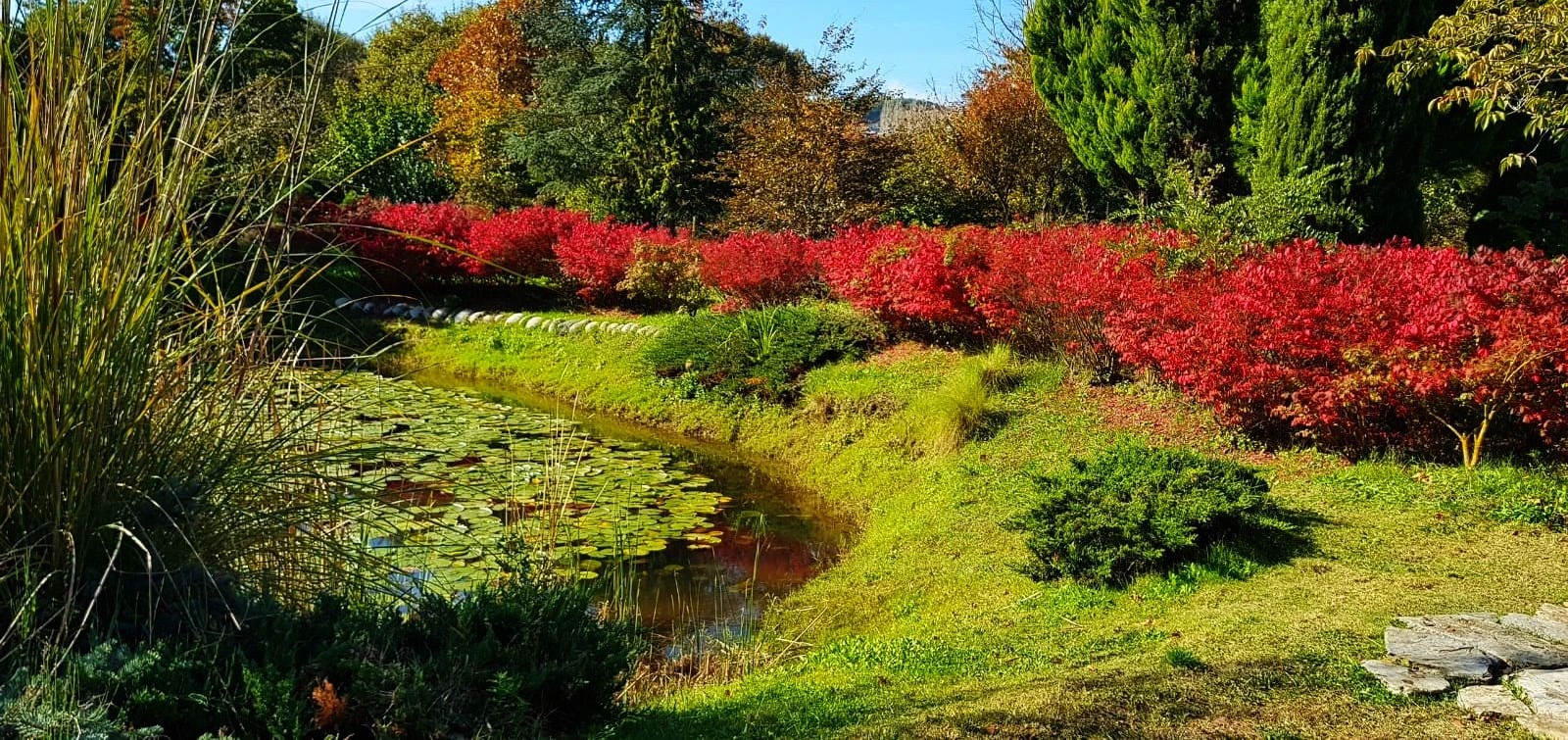
This also means that every visit can be different. The same garden may be filled with new flowers in spring, deep green foliage in summer and dramatic reds, oranges and golds in autumn.
Hayrettin Karaca was a Turkish businessman, plant collector and environmentalist who became one of the country’s most recognizable advocates for the protection of soil and nature. He became widely known by the affectionate name Toprak Dede.
His interest in plants developed into an extraordinary collecting activity. Visits to arboreta, botanical gardens and parks abroad helped shape his vision for creating a major living plant collection in Yalova.
Plants and seeds collected through travels, botanical exchanges and horticultural contacts gradually transformed the family property into something much larger than a private garden. By 1980, the project had developed into what became Türkiye’s first private arboretum.
Karaca’s wider environmental work later extended far beyond the garden, but the arboretum remains one of the most tangible places where visitors can experience his lifelong fascination with plants, biodiversity and conservation.
The history of the site begins before the creation of the arboretum itself. According to the Karaca Arboretum Foundation, the family acquired an initial piece of land in 1948. After improvement work, the property developed into a productive orchard, particularly associated with fruit growing.
After the death of Hayrettin Karaca’s father, the family continued agricultural activity and gradually enlarged the land. A later division of the property left Hayrettin Karaca with a substantial section of the orchard.
During the late 1970s, Karaca began constructing a house on the property. By the time it was completed in 1980, the surroundings were already being transformed through his growing passion for unusual plants.
Inspired by arboreta, parks and botanical gardens he had visited abroad, Karaca continued collecting and planting. The private garden gradually evolved into an extensive scientific and horticultural collection.
In 2004, the arboretum acquired foundation status, helping establish a structure intended to protect, maintain and continue the collection for future generations.
The greatest attraction of Karaca Arboretum is its extraordinary plant diversity. The foundation describes a collection of approximately 7,000 species, subspecies, varieties and cultivated forms.
Some of the most notable groups include Acer — maples, Quercus — oaks, Magnolia, Prunus — including ornamental cherries, Pinus — pines, as well as birches, spruces, firs and many other woody plants.
The collection includes plants connected with Türkiye, Europe, Asia, the Americas and other regions. Visitors can therefore compare very different leaf forms, bark textures, growth habits and seasonal colours during a single walk.
One of the garden’s most visually rewarding groups, especially when foliage changes colour in autumn.
Explore the remarkable diversity within one of the Northern Hemisphere’s most important tree genera.
Magnolia species and cultivars provide spectacular seasonal flowers and impressive foliage.
Ornamental cherries and related trees contribute important spring blossom displays.
Pines, spruces, firs and unusual conifer forms create year-round structure and botanical interest.
Native and endemic plants connect the international collection with the extraordinary flora of Anatolia.
One of the most fascinating aspects of Karaca Arboretum is the presence of plants that differ dramatically from the familiar appearance of their species.
Hayrettin Karaca had a particular interest in unusual, dwarf and naturally occurring mutant forms, especially among conifers. Some remain surprisingly small even when they are mature, creating an opportunity to observe how much variation can exist within a single species.
These plants are interesting not only horticulturally but scientifically. Natural mutations, unusual growth patterns and inherited forms can help botanists and horticulturists understand the genetic diversity contained within plant populations.
For ordinary visitors, they also make an enjoyable challenge: look closely before deciding whether a plant is young. A miniature-looking pine or spruce may actually have been growing for decades.
Türkiye possesses exceptional botanical diversity, with thousands of plant taxa occurring across its Mediterranean, Aegean, Black Sea, Central Anatolian, Eastern Anatolian and southeastern landscapes.
Karaca Arboretum has long placed special value on plants native to Türkiye, including rare and endemic species. Living collections can complement protection in the wild by maintaining plants where they can be studied, propagated and better understood.
The arboretum is therefore more than a showcase of exotic trees. Its role also includes preserving awareness of Anatolia’s own botanical heritage.
When walking through the garden, look at plant labels carefully. Some specimens that may appear less visually dramatic than an exotic flowering tree can be botanically important because of their restricted natural distribution.
The arboretum combines individual specimen trees with specialized landscaped areas and smaller collections. Official local descriptions mention rock gardens, iris areas, rose collections, miniature plants and other themed botanical displays.
Compact and unusual plants can be studied against stone, creating conditions suited to smaller species and dwarf forms.
Seasonal iris flowers add colour and botanical interest, particularly during the spring growing period.
Roses bring fragrance, colour and horticultural variety into the wider tree collection.
Dwarf trees and naturally compact forms demonstrate how dramatically growth habits can vary.
Evergreen pines, firs, spruces and other conifers make the arboretum interesting even outside the flowering season.
Flowers, fruits, new leaves and autumn foliage mean the garden changes continuously throughout the year.
Karaca Arboretum has developed functions that go far beyond tourism. Its activities have included botanical education, student training, gardening instruction, plant propagation and exchanges with botanical institutions.
University students studying subjects such as botany, landscape architecture, horticulture and related disciplines can benefit enormously from living collections because textbooks cannot reproduce the scale, texture, seasonal behaviour and natural variation of real plants.
The arboretum has also participated in seed and plant exchange with botanical gardens and arboreta elsewhere, a long-established practice through which living collections can increase their diversity.
Plant material from Karaca Arboretum has also contributed to the development of botanical collections, public landscapes and educational gardens elsewhere in Türkiye.
Karaca Arboretum’s importance was recognized internationally in 2004 when Hayrettin Karaca and the arboretum received recognition from the International Dendrology Society.
The award was presented during a ceremony held at Karaca Arboretum on 27 June 2004. Official local and foundation sources note that Karaca Arboretum became only the 15th arboretum or collection garden to receive this distinction at that time.
Dendrology is the study of woody plants, particularly trees and shrubs. Recognition from an international dendrological organization therefore reflects the importance of the collection not merely as an attractive landscape, but as a serious contribution to tree study and horticultural conservation.
Karaca Arboretum is best experienced slowly. The attraction is not a single monument or viewpoint: it is the gradual discovery of different leaves, bark, flowers, cones, fruits, forms and colours throughout the collection.
The current Karaca Arboretum Foundation website states that visits are guided and take approximately 40 minutes. Advance telephone reservation is recommended.
A guided visit is particularly valuable because many plants that appear ordinary at first glance have interesting stories connected with their origin, rarity, growth habit or botanical classification.
Visitors with a strong interest in plants should resist the temptation to rush. Even within a relatively compact part of the garden, there can be an extraordinary amount of botanical information.
The current Karaca Arboretum Foundation website lists the arboretum as open every day during two visiting periods:
10:00–12:00 and 13:00–17:00.
The midday break between 12:00 and 13:00 should therefore be considered when planning your arrival.
The foundation currently states that visits are conducted with a guide and last approximately 40 minutes. Visitors are advised to make a telephone reservation in advance.
Older tourism websites sometimes show different opening days and hours. Because visiting arrangements can change, the foundation’s own current information should be checked again shortly before travelling.
Karaca Arboretum can be visited throughout the year, but each season offers a very different experience.
One of the finest periods for new foliage, flowering trees, magnolias, ornamental cherries, irises and fresh green growth.
The garden becomes dense and green, with mature foliage creating a calm escape from the urban environment.
Perhaps the most dramatic season for maples and other deciduous trees, with red, orange, bronze and golden foliage.
Conifers, bark, branching structure and evergreen forms become easier to appreciate when deciduous foliage disappears.
For photographers and visitors who love colour, spring and autumn are especially rewarding. For serious tree enthusiasts, however, winter can be equally fascinating because the architecture of the plants becomes much easier to study.
Karaca Arboretum offers excellent opportunities for nature and botanical photography. Instead of concentrating only on wide landscape views, look closely at individual plants.
Magnolias, ornamental cherries and other flowering plants can produce some of the garden’s most beautiful seasonal scenes.
Maples and other deciduous trees create rich combinations of red, orange, yellow and bronze.
Tree trunks can reveal patterns, colours and textures that are easy to overlook in a normal park.
Conifers and mature trees provide fascinating details for close-up botanical images.
Photograph labels together with specimens if you want to remember the scientific names afterwards.
Stay on appropriate routes and never move, bend or damage plants simply to obtain a photograph.
Professional, commercial or organized outdoor photography may require advance permission, so contact the arboretum before planning a dedicated photo session.
Karaca Arboretum can be an excellent place to introduce children to trees, seeds, leaves, seasons and biodiversity. Unlike a conventional museum, almost everything they are learning about is alive.
Try turning the walk into a simple observation game. Ask children to find:
Compare leaf sizes and shapes among different trees.
Look without damaging the trees and notice how trunks differ.
Compare cones from different conifer families and species.
Especially enjoyable during the autumn colour season.
Search for dwarf forms that appear young even though they may be mature.
Use labels to discover plants whose natural homes may be thousands of kilometres away.
Children should remain supervised, as this is a botanical collection rather than a playground. Plants, labels and collection areas should always be treated carefully.
Karaca Arboretum is an outdoor garden environment, and conditions can therefore be different from those in a modern indoor museum. Walking surfaces, slopes, weather and seasonal ground conditions may affect individual visitors differently.
Travellers with limited mobility, wheelchair users or families using strollers should contact the arboretum before arrival to ask about the current guided route and suitable access.
Comfortable footwear is advisable for everyone, particularly after rain, when outdoor paths may be damp.
Because visits are currently organized through the foundation, advance contact also gives staff an opportunity to advise visitors about individual mobility needs.
The Karaca Arboretum Foundation currently describes the standard guided visit as lasting approximately 40 minutes.
For general visitors, allow around 45–60 minutes including arrival, orientation and the garden walk.
Visitors with a serious interest in botany, dendrology, horticulture or photography may naturally want to spend more time observing individual specimens, depending on the visit arrangement available that day.
The approximate guided-visit duration currently stated by the foundation.
A practical amount of time to allow for the standard visitor experience.
Useful for keen gardeners, tree enthusiasts and botanical photographers where arrangements permit.
Combine Karaca Arboretum with Yalova city centre or nearby attractions along the Termal road.
Plant labels help reveal species names and turn an ordinary walk into a botanical lesson.
Compare lobed maples and oaks with the needles, scales and broad leaves of other groups.
Look for mature plants whose unusual genetics keep them remarkably compact.
Among the arboretum’s notable collections and especially beautiful during flowering.
Acer species and cultivars are particularly striking when autumn colour develops.
Compare leaf forms and growth habits across the diverse Quercus collection.
Do not overlook Turkish species while exploring plants introduced from other parts of the world.
Plants established decades ago demonstrate how trees change as a living collection matures.
Use designated paths and follow the guidance of arboretum staff.
Leaves, flowers, cones and seeds form part of the botanical collection and should remain where they belong.
Plant labels are important scientific and educational tools; do not move or damage them.
Small plants can be easily overlooked, so avoid stepping outside appropriate walking areas.
Help younger visitors enjoy the garden without damaging delicate specimens.
Take all litter with you and help preserve the peaceful garden environment.
Karaca Arboretum lies beside the Yalova–Termal road, approximately 5 kilometres from central Yalova. Its location makes it significantly easier to reach than many of the province’s mountain and waterfall attractions.
Visitors travelling by private vehicle should follow the main road from Yalova toward Termal and use current navigation for the final entrance.
Local transport operating toward the Samanlı and Termal direction may also be useful, although routes and stopping points can change. Confirm current local transport before departure.
Travellers arriving from Istanbul can first reach Yalova by the Marmara ferry or road network. From Bursa, the arboretum can be approached through Yalova and then along the Termal road.
Travel toward Termal; the arboretum is approximately 5 km from the city centre.
Travel toward Yalova along the main Termal road and follow navigation to Karaca Arboretum.
Reach Yalova by ferry or road, then continue toward Termal.
Travel toward Yalova and join the route leading from the city toward Termal.
Start with Karaca Arboretum for a quiet guided walk through one of Türkiye’s richest private botanical collections.
Continue along the same general route to Yalova Termal Hot Springs, where natural mineral waters have attracted visitors since antiquity.
While in Termal, visit Termal Atatürk Mansion for a completely different experience combining early Republican history, architecture and Yalova’s spa heritage.
If you still have time, return toward central Yalova and visit Yürüyen Köşk or the İbrahim Müteferrika Paper Museum.
Karaca Arboretum sits in an excellent position between central Yalova and Termal, making it easy to combine botanical, historical and natural attractions in the same itinerary.
Continue along the Termal road to one of Türkiye’s historic thermal and spa landscapes.
Visit the historic mansion associated with Mustafa Kemal Atatürk in the thermal district.
Discover Yalova’s famous story of Atatürk, a plane tree and a mansion that was moved to protect it.
Explore Ottoman printing history, handmade paper and Yalova’s historic paper-making heritage.
Add a natural excursion with forest scenery and one of Yalova’s best-known waterfalls.
Continue deeper into Yalova’s green landscapes for woodland walks and waterfalls.
Discover hot springs, mansions, wetlands, forests, waterfalls, museums and historical places across the province.
Karaca Arboretum is on the Yalova–Termal road near Samanlı, approximately 5 km from Yalova city centre.
It is a living botanical collection specializing particularly in trees and other woody plants, together with herbaceous, bulbous and ornamental species.
It can be understood as a specialized type of botanical garden. Its principal identity is an arboretum, meaning a curated living collection focused especially on trees and woody plants.
It was founded by Hayrettin Karaca, the Turkish environmentalist widely known as Toprak Dede.
The arboretum was established in 1980, although the history of the family property extends back to the 1940s.
It is recognized as Türkiye’s first private arboretum and contains one of the country’s most significant privately developed living plant collections.
The arboretum covers approximately 13.5 hectares or 135,000 square metres.
The Karaca Arboretum Foundation currently describes the collection as containing approximately 7,000 different species, subspecies, varieties and cultivated forms.
Important collections include maples, oaks, magnolias, ornamental cherries, pines, birches, spruces, firs and many other woody plants.
Yes. The arboretum includes native and endemic Turkish plants as well as species introduced from many other regions.
Yes. The collection includes rare species, unusual horticultural forms and distinctive dwarf or mutant plants, particularly among some conifers.
The Karaca Arboretum Foundation currently lists visits every day from 10:00–12:00 and 13:00–17:00. Always reconfirm before travelling.
Current foundation information shows a break between 12:00 and 13:00.
The foundation recommends making a telephone reservation in advance. This is especially sensible for groups, schools and visitors travelling specifically to see the arboretum.
Yes. The foundation currently states that visits are conducted with a guide.
Current foundation information states approximately 40 minutes.
Foundation information describes visits as supporting Karaca Arboretum through visitor donations. The current contribution or visiting arrangement should be confirmed directly before arrival.
Spring and autumn are particularly colourful, but the arboretum is botanically interesting throughout the year.
Yes. The diversity of deciduous species, especially maples, can create spectacular autumn foliage.
Yes. Spring brings new leaves, magnolia flowers, ornamental blossoms, irises and fresh seasonal growth.
Yes. It can be a valuable outdoor learning experience for children interested in trees, leaves, flowers, seeds and nature, although younger visitors should remain supervised.
Normal visitor photography can make the arboretum especially enjoyable, but organized, professional or commercial shoots should be confirmed in advance.
It is an outdoor garden with natural walking conditions. Visitors with specific mobility requirements should contact the arboretum in advance to confirm the current accessible route.
Comfortable walking shoes are recommended. Conditions can be damp after rain because the visit takes place largely outdoors.
Yes. It received recognition from the International Dendrology Society in 2004.
Good combinations include Yalova Termal Hot Springs, Termal Atatürk Mansion, Yürüyen Köşk and İbrahim Müteferrika Paper Museum.
For travellers interested in nature, trees, gardens, botany, horticulture, photography or environmental history, Karaca Arboretum is one of Yalova’s most distinctive places to visit.
Combine Karaca Arboretum with Termal, historic mansions, waterfalls and selected natural attractions through a private Yalova itinerary designed around your interests and pace.
Discover rare trees, botanical collections, thermal landscapes and Yalova’s remarkable natural heritage.
Ask us about a tailor-made itinerary combining Karaca Arboretum, Termal, Yürüyen Köşk and selected natural or cultural attractions around Yalova.
Request a Custom Tour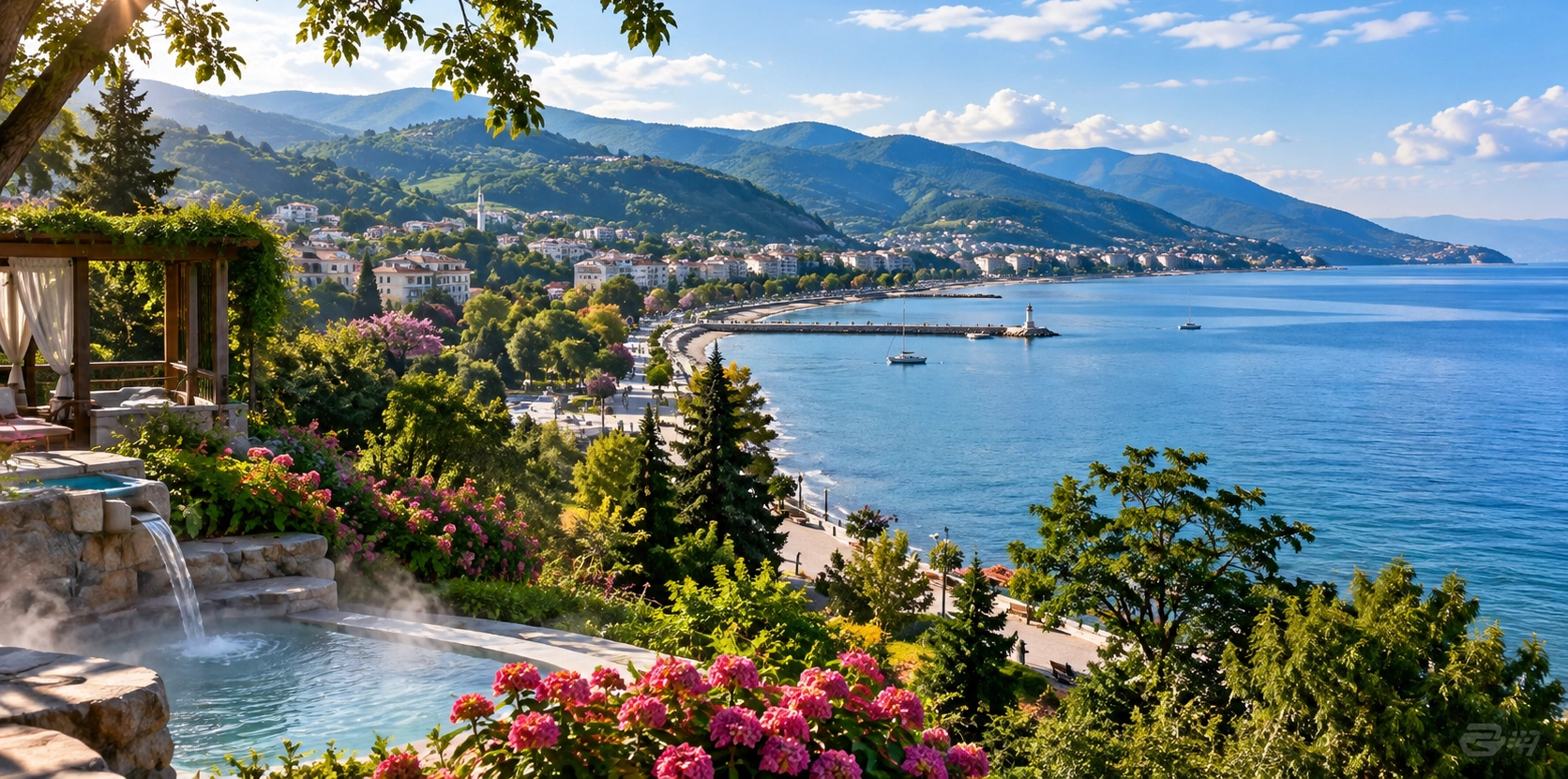
Discover botanical gardens, historic mansions, thermal springs, wetlands, forests, waterfalls, museums and coastal landscapes throughout Yalova Province.
View Yalova GuidePair Karaca Arboretum with places that reveal Yalova’s thermal heritage, Republican history and forest landscapes.
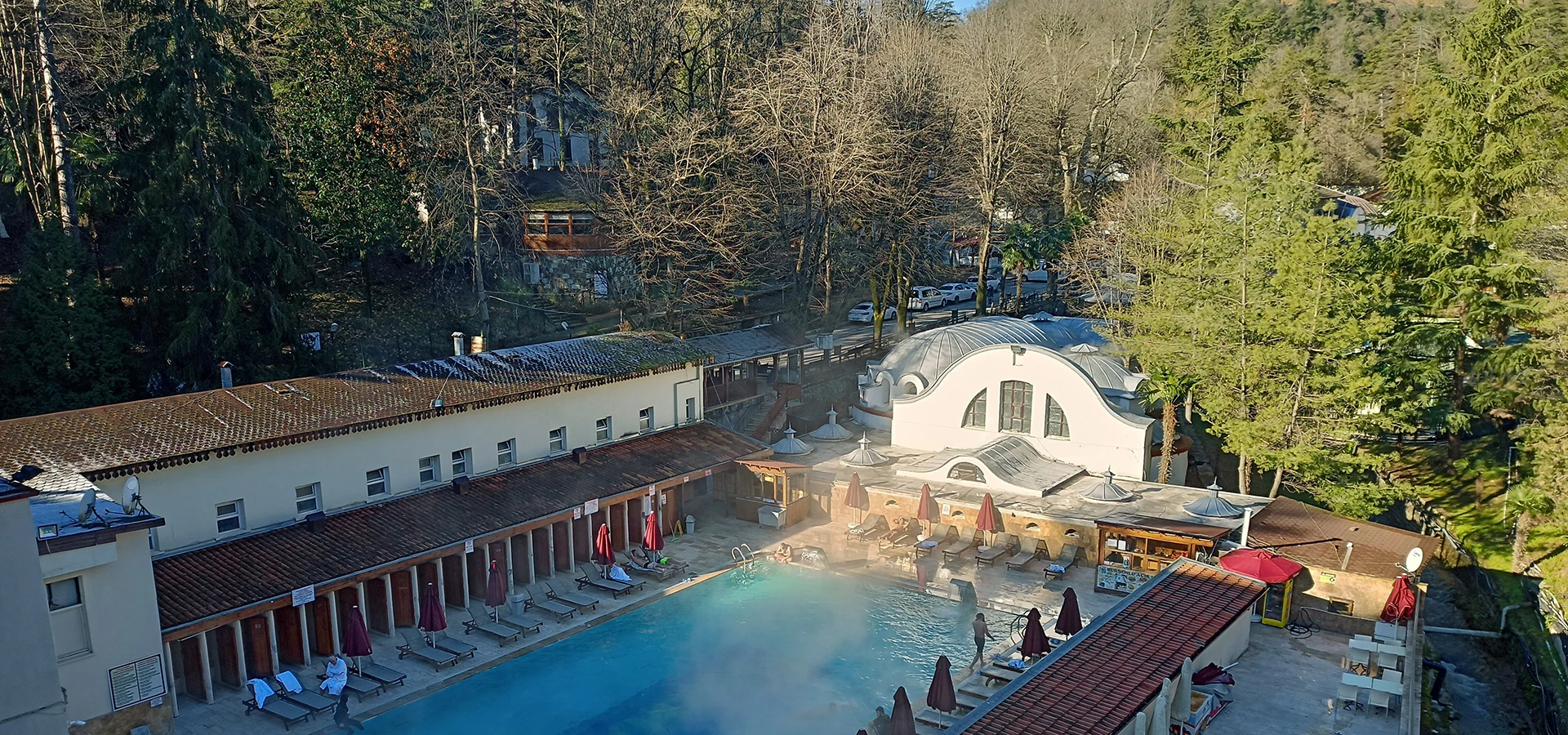
Continue along the Termal road to historic mineral springs, spa heritage and forest scenery.
Explore Yalova Termal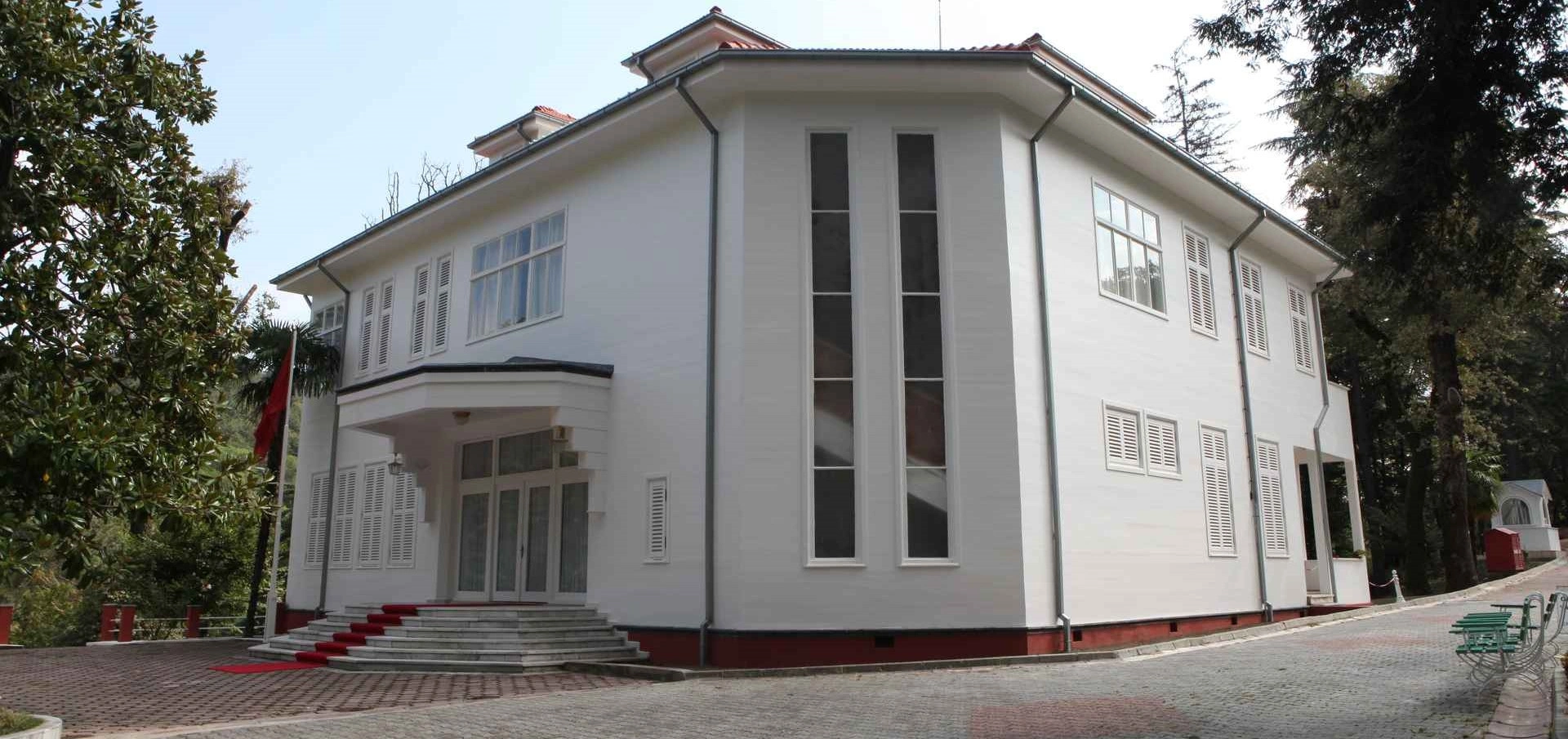
Combine botanical heritage with an elegant mansion connected with Mustafa Kemal Atatürk and Yalova’s thermal district.
Explore Atatürk Mansion
Continue from curated botanical collections into Yalova’s natural woodland, walking paths and waterfall scenery.
Explore Yalova City Forest