Private Kırklareli Heritage Experience
Ask us about a tailor-made journey combining Hızır Bey Mosque, historic Kırklareli, regional museums and the cultural landscapes of Turkish Thrace.
Request a Custom Tour





Standing in the historic center of Kırklareli, Hızır Bey Mosque is one of the city's most important surviving monuments and an exceptional reminder of the early centuries of Ottoman rule in Thrace.
Also known locally as the Büyük Cami – Great Mosque, the building was commissioned in 1383 by Köse Mihalzade Hızır Bey, an Ottoman frontier commander associated with the reign of Sultan Murad I.
More than six centuries later, the mosque remains an active place of worship. Its large central dome, carefully cut stone walls, historic minaret, calligraphic decoration and later Ottoman painted ornament make it one of the most rewarding architectural stops in central Kırklareli.
The mosque was not originally an isolated building. Together with the nearby Hızır Bey Hammam, historic arasta and former burial ground, it formed part of an Ottoman religious and commercial complex that helped shape the development of the surrounding town.
One of the most important surviving monuments from the early Ottoman period in Kırklareli.
The mosque has long been known locally as Kırklareli's Great Mosque.
A square prayer hall crowned by a monumental central dome and constructed with finely cut stone.
More than six centuries after its foundation, the mosque continues to serve its original religious function.
Essential information about one of Kırklareli's most important Ottoman monuments.
Central Kırklareli, close to Cumhuriyet Square and the traditional commercial center.
Open on Google Maps1383 AD / 785 AH.
Köse Mihalzade Hızır Bey, an Ottoman frontier commander associated with Sultan Murad I.
Early Ottoman, with a square prayer hall covered by a large central dome.
Büyük Cami – the Great Mosque of Kırklareli.
An active mosque and living place of worship.
From the Ottoman expansion into Thrace to earthquakes, fires, war damage and restoration, Hızır Bey Mosque has remained part of Kırklareli's urban life since the 14th century.
The story of Hızır Bey Mosque begins during the early Ottoman expansion into Thrace. By the second half of the 14th century, Ottoman power had extended deep into the Balkans, and towns across Thrace were becoming important administrative, commercial and military centers.
According to the mosque's historic inscriptions and documentary evidence, the building was commissioned by Köse Mihalzade Hızır Bey in 1383. Hızır Bey belonged to the famous Mihaloğlu frontier tradition and is described in historical sources as one of the commanders connected with the reign of Sultan Murad I.
The mosque became one of the principal religious buildings of Kırklareli. Historical records demonstrate its importance within the old commercial center, while its traditional name, Büyük Cami – Great Mosque, reflects its prominent role in local religious life.
The monument has not survived unchanged. Like many historic buildings in Thrace, it suffered from earthquakes, fire and warfare and underwent repeated repairs.
A major earthquake in 1824–1825 damaged the building. Its restoration was associated with Aydoslu Hacı Yusuf Paşa. Historical documentation also records further reconstruction after a destructive fire during the following years.
Another earthquake damaged the mosque's son cemaat yeri – entrance portico, which was rebuilt during the late 19th century. Much of the painted decoration visible inside the mosque is associated with these later Ottoman interventions.
The mosque's minaret was seriously damaged during the Balkan Wars. The upper parts were subsequently reconstructed, with major restoration work carried out during the Republican period.
Further conservation projects during the 20th and early 21st centuries helped preserve the structure. Today Hızır Bey Mosque continues to perform the same essential function for which it was created more than six centuries ago: a living mosque at the heart of Kırklareli.
The architectural power of Hızır Bey Mosque comes from its simplicity. Rather than an enormous multi-domed imperial complex, the mosque is organized around a square prayer hall crowned by a single dominant dome.
The main building measures approximately 15 × 15 meters externally. Its thick masonry walls were built largely from carefully cut stone, creating the solid appearance characteristic of important early Ottoman monuments.
Above the prayer hall rises a dome approximately 13.5 meters in diameter. The transition between the square hall and the circular dome is achieved through architectural elements characteristic of early Ottoman design. Outside, the dome rises above a polygonal drum, giving the building its immediately recognizable silhouette.
The main prayer space is organized within an approximately 15 × 15 meter square structure.
A monumental dome approximately 13.5 meters in diameter covers the prayer hall.
Much of the mosque's exterior was constructed from carefully worked stone blocks.
The substantial masonry supports the weight and outward pressure of the large central dome.
The compact domed form belongs to an important stage in the development of Ottoman mosque architecture.
The entrance portico and several decorative elements reflect later repairs and rebuilding campaigns.
The mosque's central dome dominates both the interior and exterior. Its broad span creates a largely unified prayer space without the visual interruption of numerous internal supports.
From outside, the dome rises above a multi-sided drum, giving the comparatively compact mosque a monumental appearance within the surrounding streets of central Kırklareli.
Inside, the dome focuses attention toward the center of the prayer hall while helping create the spacious atmosphere characteristic of Ottoman domed religious architecture.
The central dome has a diameter of roughly thirteen and a half meters.
The dome allows much of the prayer hall to remain visually open and uninterrupted.
The dome rises externally above a multi-sided drum pierced by additional windows.
Windows in the walls and around the dome help illuminate the prayer space.
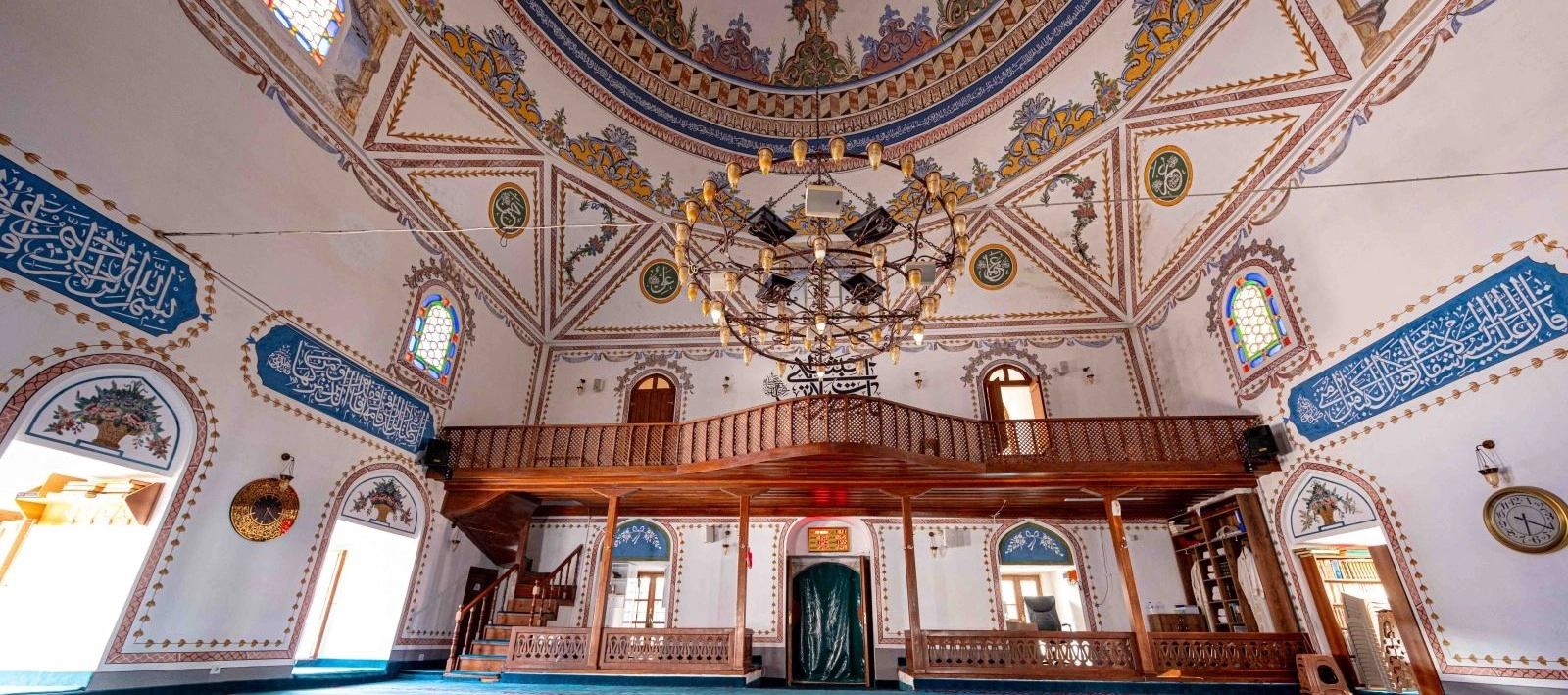
The interior combines the architectural simplicity of an early Ottoman mosque with decoration introduced during later restorations.
The mihrab, which indicates the direction of Mecca, occupies the center of the qibla wall. Nearby stand the mosque's wooden minbar and preaching furniture, whose comparatively restrained forms contrast with the painted ornament surrounding them.
Much of the visible painted decoration is believed to date from 19th-century restoration campaigns. Floral compositions, curtain-like motifs and ornamental borders reflect the decorative taste of the later Ottoman period.
Calligraphic inscriptions also form an important part of the interior. The combination of architecture, Arabic calligraphy and painted ornament gives visitors an opportunity to see how an early Ottoman building continued to evolve during centuries of active religious use.
The prayer niche occupies the center of the qibla wall and remains the principal visual focus during worship.
The wooden pulpit reflects the continuing ceremonial function of the building as a congregational mosque.
Large Ottoman calligraphic panels and inscriptions decorate sections of the prayer hall.
Painted floral and ornamental decoration adds a later Ottoman layer to the medieval building.
A raised wooden gallery occupies part of the northern side of the interior.
Windows arranged at several levels create a surprisingly bright interior beneath the dome.
Beside the mosque rises a slender single-balcony stone minaret, one of the building's most recognizable exterior features.
The minaret begins from a substantial base and rises through a polygonal stone shaft toward its single şerefe – balcony. Its upper sections do not survive entirely in their original medieval form.
During the Balkan Wars, the minaret was heavily damaged. The upper portion was later reconstructed, and restoration work during the Republican period returned the minaret to the skyline of Kırklareli.
The minaret continues the use of finely worked stone seen in the main mosque building.
The minaret has one şerefe, or muezzin's balcony.
The upper part of the minaret was seriously damaged during the Balkan Wars.
Important reconstruction work restored the damaged upper sections during the early Republican period.
A monument that has remained in use since the 14th century inevitably carries the marks of many different periods. Hızır Bey Mosque is therefore best understood not as a building frozen in 1383, but as an architectural monument repeatedly repaired, adapted and protected.
The mosque was founded by Köse Mihalzade Hızır Bey during the reign of Sultan Murad I.
A major earthquake damaged the mosque, leading to significant repairs associated with Aydoslu Hacı Yusuf Paşa.
Fire and subsequent rebuilding altered portions of the monument and contributed to the interior's later decorative character.
The damaged entrance portico was reconstructed during another major repair campaign.
The minaret suffered serious damage during the fighting and occupation of the region.
The damaged upper portion of the minaret was reconstructed.
Additional conservation helped preserve the mosque as an active historic monument.
The Kırklareli cultural heritage inventory records another restoration undertaken by the Directorate General of Foundations.
Hızır Bey Mosque once formed the religious heart of a wider külliye – Ottoman architectural complex. Rather than functioning only as a place of prayer, the surrounding buildings connected worship, commerce, bathing and community life.
Historical sources associate the complex with the mosque, Hızır Bey Hammam, arasta and a burial ground. Together they illustrate how Ottoman urban centers developed around networks of religious and charitable buildings.
The surviving elements are particularly valuable because they allow visitors to understand the mosque as part of the historic commercial center of Kırklareli rather than as an isolated monument.
The religious center of the complex and its most visually prominent surviving monument.
A historic double bath associated with the same Ottoman complex and the traditional commercial center.
A group of commercial spaces linked religious life with the economic activity of the surrounding market.
A former hazire once extended beside the mosque, although only limited traces survive today.
One of the most interesting aspects of visiting Hızır Bey Mosque is the opportunity to explore the historic urban landscape surrounding it.
The nearby Hızır Bey Hammam belongs to the same historic complex and was designed as a traditional Ottoman çifte hamam – double bath, with separate sections serving different users.
The neighboring arasta provided commercial space. Its shops demonstrate the important relationship between religious foundations and economic activity in Ottoman towns. Income-producing commercial properties frequently helped support mosques and charitable institutions over long periods.
Seen together, the mosque, bath and commercial structures create a much richer picture of early Ottoman Kırklareli than the mosque alone.
The hammam played an important role in hygiene, social life and the daily routines of the historic town.
The bath was designed with separate but broadly comparable sections.
The arasta represents the commercial component of the Hızır Bey complex.
Religion, commerce and public life developed together around this part of Kırklareli.
Hızır Bey Mosque is important not simply because of its age. It belongs to the period when the Ottoman state was establishing itself across Thrace and southeastern Europe.
Buildings from this early stage help document the transition from a frontier principality into an expanding Ottoman state. Mosques, baths, markets and charitable foundations became important anchors for new Ottoman urban communities.
Hızır Bey Mosque therefore tells several stories at once: the story of Ottoman expansion, the emergence of Kırklareli as an Ottoman town, the development of domed mosque architecture, and the extraordinary continuity of a building that remains part of community life today.
The mosque belongs to the formative centuries of Ottoman architecture and political expansion.
Its location reflects the growing importance of Ottoman settlements across historic Thrace.
The surrounding külliye demonstrates how religious, commercial and public institutions developed together.
The building remains part of Kırklareli's living religious landscape rather than functioning only as a museum.
Hızır Bey Mosque stands in the center of Kırklareli and can easily be included in a walking exploration of the city's historic commercial district.
Visitors are generally welcome to experience historic mosques in Türkiye, but Hızır Bey Mosque remains first and foremost a functioning place of Islamic worship. A few simple practices help ensure a respectful visit.
If possible, visit between the daily prayer periods rather than during congregational worship.
Shoes are removed before entering the carpeted prayer area. Follow the local arrangement at the entrance.
Visitors should wear clothing appropriate for entering an active mosque.
The mosque is a quiet religious environment, even when no formal prayer is taking place.
Avoid walking directly in front of people who are praying or disturbing private prayer.
Discreet photography may be possible, but avoid photographing worshippers without permission.
The mosque can be visited throughout the year. Because it lies directly within central Kırklareli, season has less influence on accessibility than at archaeological or natural sites.
A peaceful time to explore central Kırklareli before the surrounding streets and commercial areas become busier.
Soft light can bring out the texture of the stone exterior and create attractive photographs around the mosque.
Excellent seasons for combining the mosque with a longer walking tour of Kırklareli's historic neighborhoods.
Friday midday prayer is particularly important, so sightseeing visitors should avoid entering during the main congregational service.
Hızır Bey Mosque offers excellent photographic opportunities, particularly for travelers interested in historic architecture and urban heritage.
The contrast between its heavy stone walls, broad central dome and slender minaret makes the exterior particularly effective from slightly wider street-level perspectives.
Use a slightly lower viewpoint to emphasize the scale of the dome rising above the stone walls.
Vertical compositions work especially well for combining the dome and minaret in a single frame.
Closer photographs reveal the texture and craftsmanship of the historic cut-stone exterior.
Decorative inscriptions and painted details provide interesting architectural close-ups when photography is permitted.
The courtyard helps place the mosque within its traditional urban and religious setting.
Wider compositions can show how the centuries-old mosque remains embedded within modern Kırklareli.
Enough for a brief exterior visit and a respectful look inside when the mosque is open to visitors.
Better for appreciating the architecture, interior decoration, courtyard and minaret without rushing.
Allow around an hour if you also want to explore the surrounding Hızır Bey complex and traditional commercial streets.
Ideal for combining the mosque with Kırklareli's museums, historic neighborhoods, Ottoman monuments and local food.
This gives you more freedom to appreciate the interior without disturbing worship.
The nearby hammam and arasta are essential for understanding the building as part of a larger Ottoman complex.
The finely worked exterior masonry is one of the mosque's most distinctive architectural features.
Inside, remember to examine the dome, calligraphy and painted ornament above eye level.
The mosque is best experienced as part of a relaxed walking exploration of historic Kırklareli.
Remember that the building is not primarily a tourist attraction but a living community mosque.
Restoration, prayer arrangements or religious events can occasionally affect visitor access.
The compact city-center location makes it easy to continue toward nearby historic and cultural sites.
Hızır Bey Mosque is located in central Kırklareli, within the city's traditional commercial district and close to Cumhuriyet Square.
Its central position makes it one of the easiest historic monuments to include in a walking tour of the city. Visitors arriving by private vehicle can park in the wider city-center area and continue on foot.
The mosque is already within the central urban area and can easily be reached on foot from nearby streets and squares.
Kırklareli can be reached by road from Istanbul and is suitable for an overnight journey or part of a longer Thrace itinerary.
A private vehicle is particularly useful if continuing beyond the city toward Vize, Dupnisa Cave or Kıyıköy.
Once in central Kırklareli, walking is one of the best ways to experience the mosque and surrounding historic streets.
Because the mosque stands in the heart of Kırklareli, it can easily form the starting point for a wider exploration of the city's Ottoman heritage, museums and historic neighborhoods.
Explore another major surviving component of the historic Hızır Bey complex, representing the bathing and social culture of the Ottoman town.
Historic commercial spaces beside the complex demonstrate the close relationship between Ottoman religious foundations and urban trade.
Discover archaeological and ethnographic collections that place the city's Ottoman monuments within the much longer history of Thrace.
Walk through one of Kırklareli's most interesting historic neighborhoods, where traditional streets preserve another layer of the city's multicultural past.
Explore our complete guide to Kırklareli, including museums, Ottoman monuments, historic neighborhoods, regional food and nearby natural attractions.
Travel east to ancient Bizye for its Roman theatre, Byzantine castle, historic churches and Ottoman heritage.
Continue north into the Istranca Mountains to discover one of Turkish Thrace's most impressive cave systems.
Combine Kırklareli's Ottoman heritage with Byzantine monuments, forests, rivers and the Black Sea coast.
Hızır Bey Mosque is located in central Kırklareli, close to Cumhuriyet Square and the city's traditional commercial area.
The mosque was founded in 1383 AD / 785 AH, during the early Ottoman period.
The mosque was commissioned by Köse Mihalzade Hızır Bey, an Ottoman frontier commander associated with the reign of Sultan Murad I.
Hızır Bey Mosque has traditionally been known locally as Büyük Cami – the Great Mosque, reflecting its historic importance as one of Kırklareli's principal congregational mosques.
Yes. The building continues to function as an active mosque more than six centuries after its foundation.
Visitors can normally experience active historic mosques outside prayer times, provided that they dress appropriately, remove their shoes where required and respect worshippers and any instructions given locally.
Hızır Bey Mosque is an important example of early Ottoman architecture in Turkish Thrace.
The mosque has a compact square prayer hall covered by a large central dome, with substantial cut-stone walls and a single stone minaret.
The principal structure measures approximately 15 × 15 meters, while its central dome is approximately 13.5 meters in diameter.
The main structure retains its early Ottoman character, but the mosque has undergone numerous repairs. Much of the visible painted decoration belongs to later Ottoman restoration periods.
Yes. Historical records describe significant earthquake damage, including destruction that led to major repairs during the 19th century.
Yes. The minaret suffered serious damage during the Balkan Wars and its upper portions were later reconstructed.
The historic complex associated with the mosque included the mosque, hammam, arasta and burial ground, combining religious, commercial and community functions.
Yes. The historic hammam stands close to the mosque and formed part of the same Ottoman urban complex.
Around 30 minutes is usually sufficient for the mosque itself. Allow an hour or more if you also want to explore the surrounding Hızır Bey complex and historic streets.
Hızır Bey Mosque is an active religious building rather than a conventional museum. Visitor arrangements can change, so follow any current information displayed locally.
Discreet photography may be possible outside prayer times, but visitors should never disturb worship or photograph individual worshippers without permission.
Good combinations include the Hızır Bey Hammam and arasta, Kırklareli Museum, the historic Yayla Quarter and other Ottoman monuments around the city center.
Yes. Kırklareli and Vize work well together on a longer journey through Turkish Thrace, combining Ottoman heritage with Thracian, Roman and Byzantine archaeology.
Yes. For travelers interested in Ottoman architecture, religious history or the lesser-known heritage of European Türkiye, Hızır Bey Mosque is one of the essential monuments of Kırklareli.
Hızır Bey Mosque has survived for more than six centuries because generations of local people continued to use, repair and protect it. Visitors can help preserve both its architecture and its spiritual atmosphere.
Avoid entering the main prayer space during congregational prayers unless attending appropriately.
Follow normal mosque etiquette and any instructions provided at the entrance.
Do not touch delicate painted decoration, inscriptions or architectural details unnecessarily.
Architecture can be photographed without turning worshippers into unwilling subjects.
Understanding the hammam, arasta and historic streets helps place the mosque within its original urban setting.
Local cafés, restaurants and independent businesses help keep heritage tourism connected to the surrounding community.
Discover Hızır Bey Mosque as part of a tailor-made journey through the Ottoman monuments, archaeological sites, historic towns, caves and forest landscapes of Turkish Thrace.
Explore Hızır Bey Mosque, the historic center of Kırklareli and the wider cultural landscape of Thrace with a private itinerary adapted to your interests and available time.
Ask us about a tailor-made journey combining Hızır Bey Mosque, historic Kırklareli, regional museums and the cultural landscapes of Turkish Thrace.
Request a Custom Tour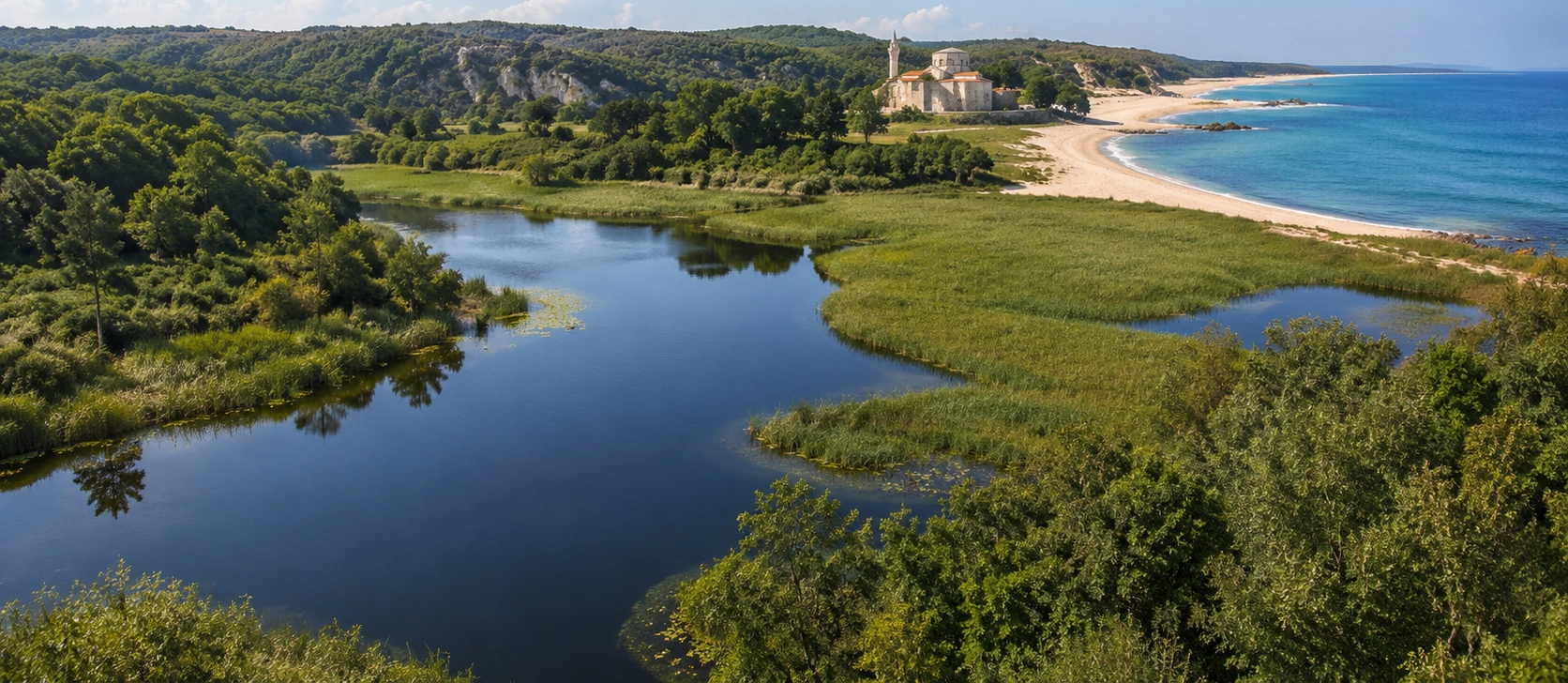
Discover more of Kırklareli, from Ottoman monuments and museums to historic neighborhoods, local food and the surrounding landscapes of Thrace.
View Kırklareli GuideCombine Kırklareli's Ottoman heritage with ancient cities, Byzantine monuments, caves, forests and the Black Sea coast.
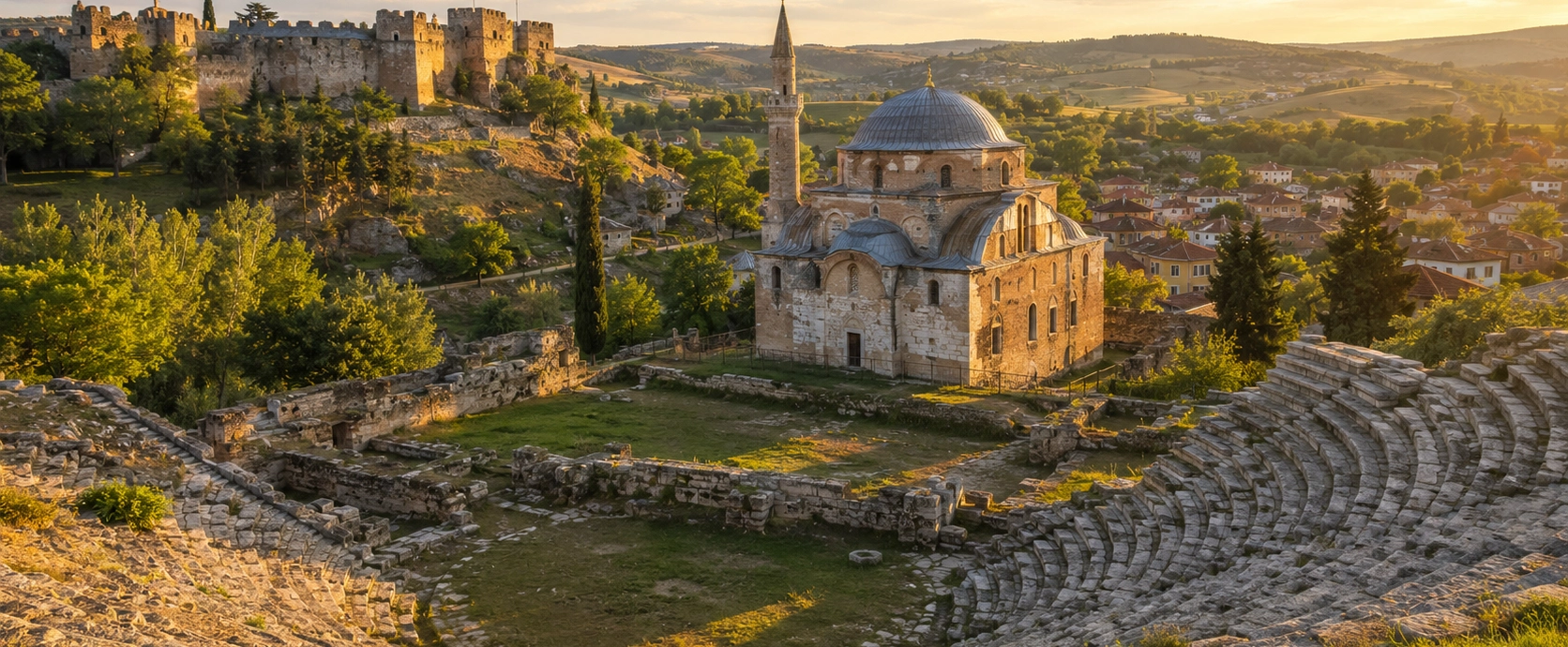
Continue to one of Thrace's most historic towns for its Roman theatre, Byzantine fortifications and remarkable layered heritage.
Explore Vize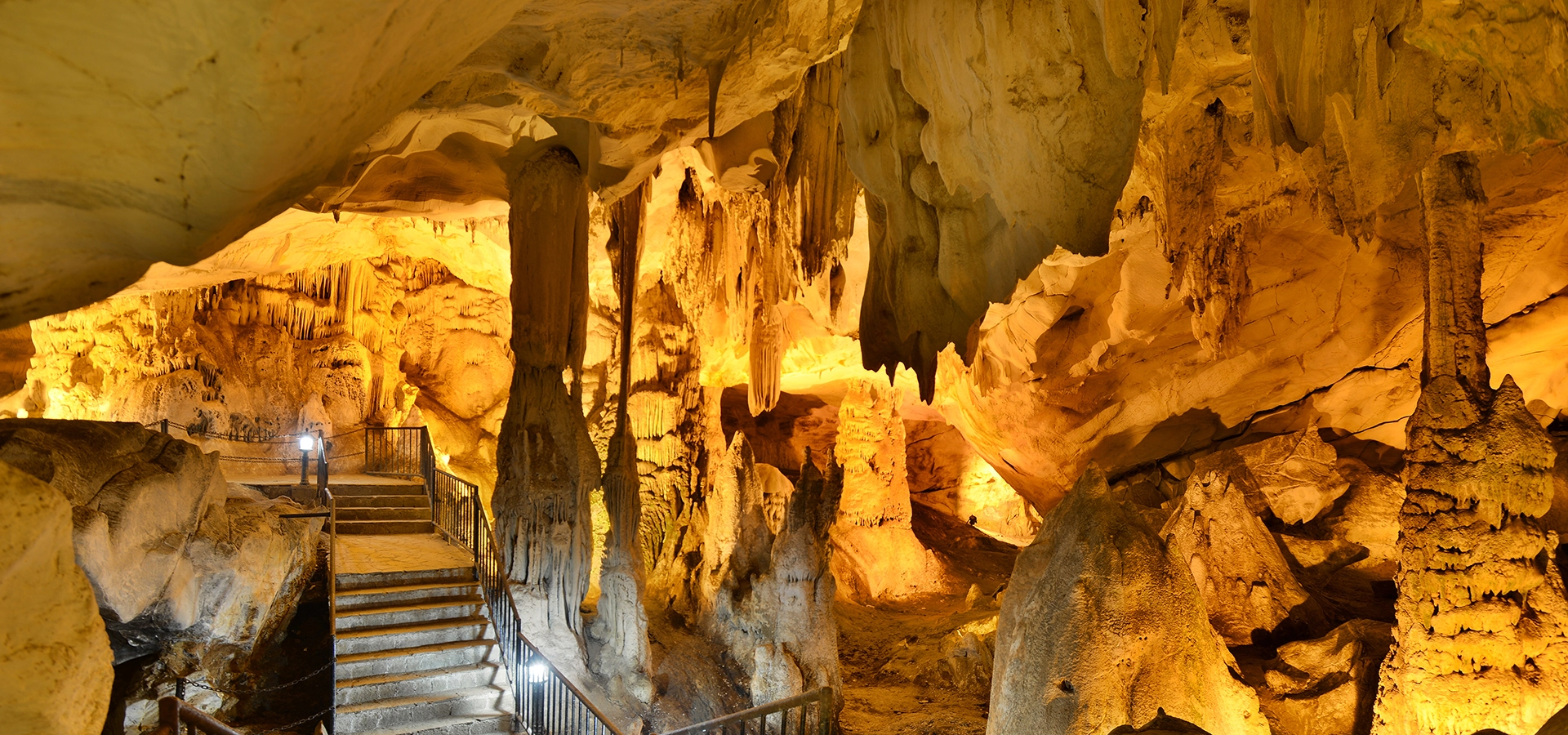
Travel into the Istranca Mountains to discover underground rivers, spectacular formations and one of Thrace's most remarkable natural environments.
Discover Dupnisa Cave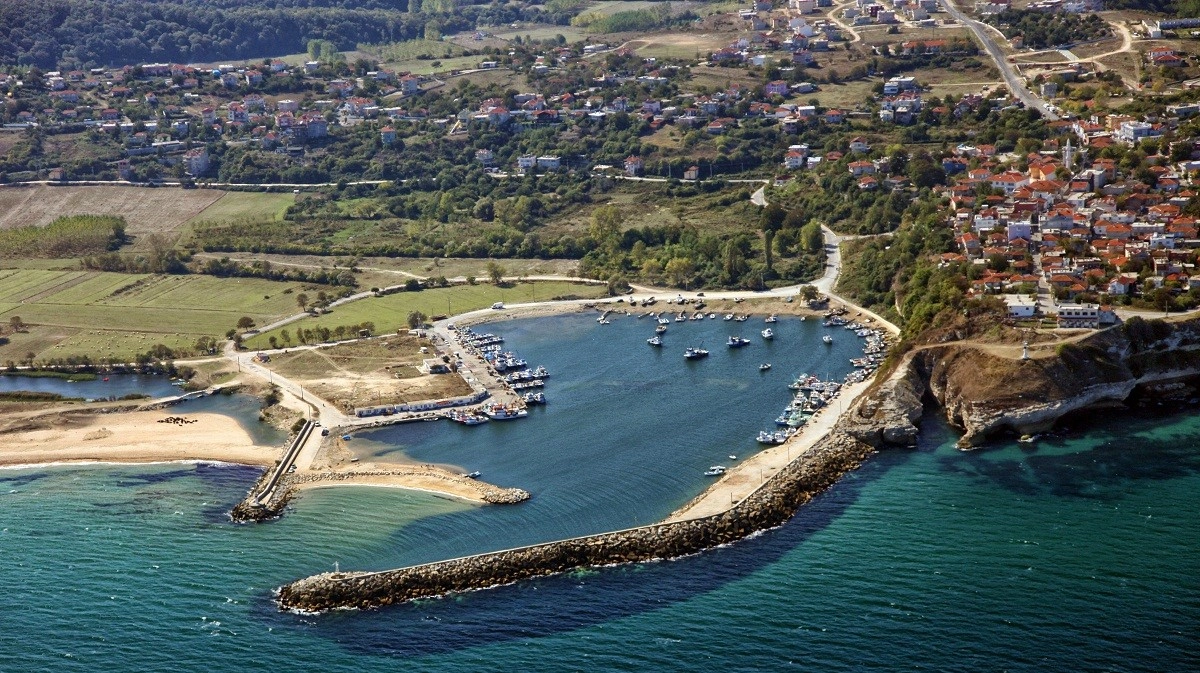
Continue through the forests of eastern Kırklareli to Byzantine Kıyıköy, its river valleys and the Black Sea coast.
Explore Kıyıköy