Roman and Late Antique Mosaics from Ancient Edessa

Haleplibahçe Mosaic Museum – Complete Visitor Guide

Meet the warrior queens of the Amazon Villa, follow the life of Achilles,
and discover the signed Orpheus Mosaic of ancient Edessa.

Explore the Mosaics

Discover the Mosaics of Ancient Edessa in Şanlıurfa

The Haleplibahçe Mosaic Museum preserves one of the most remarkable collections of Roman and Late Antique floor mosaics in southeastern Türkiye. Located close to Balıklıgöl and beside the Şanlıurfa Archaeology Museum, the museum protects the remains of an elite residential complex traditionally called the Villa of the Amazons.

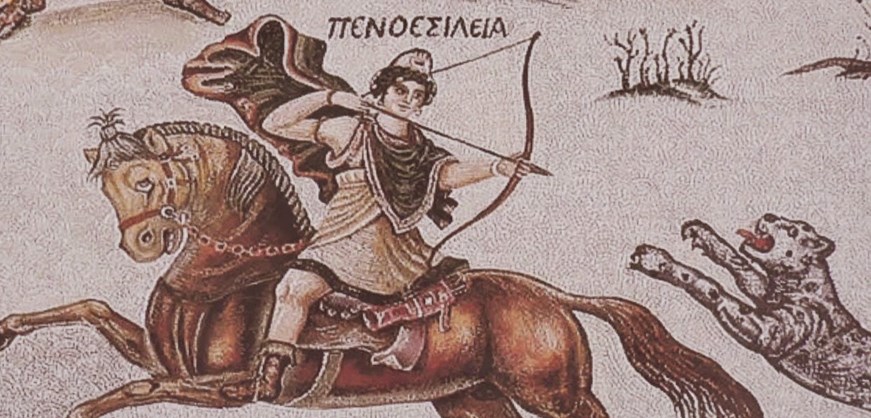
The museum’s most celebrated composition is the Hunting Amazons Mosaic, where named warrior queens appear on horseback in dynamic hunting scenes. Their clothing, weapons, horses, animals, Greek inscriptions, and carefully shaded bodies reveal the skill of mosaic workshops working in ancient Edessa.

Other major works include the Life of Achilles Mosaic, the richly decorated Ktisis Mosaic, rooms with lion and tiger imagery, a figure leading a zebra, and the famous Orpheus Mosaic. Dated by its Syriac inscription to AD 194, the Orpheus panel is especially important because it preserves the name of its artist, Bar Saged.

Many of the Haleplibahçe mosaics are displayed in situ, allowing visitors to understand how the decorated floors once related to courtyards, corridors, reception halls, and private rooms within the ancient villa.

The museum building covers approximately 6,000 square metres and spans about 82 metres without interior columns. This modern protective structure creates broad uninterrupted views while sheltering fragile archaeological remains beneath one roof.

In this complete visitor guide, you will discover the history of the Haleplibahçe excavations, the Villa of the Amazons, the named Amazon queens, Achilles scenes, Orpheus, Ktisis, mosaic-making techniques, museum architecture, current entrance information, opening hours, night museum visits, accessibility, photography advice, nearby attractions, and private Şanlıurfa tour options.

Hunting Amazons

See named warrior queens depicted on horseback in one of the museum’s most extraordinary mythological hunting compositions.

Life of Achilles

Follow episodes from the legendary hero’s childhood, education, destiny, and departure for the Trojan War.

Orpheus Mosaic

Admire a rare signed mosaic dated to AD 194, showing Orpheus playing music while wild and domestic animals listen.

In-Situ Display

Walk above and around mosaics preserved in their original architectural setting within the ancient villa.

Plan Your Visit

Haleplibahçe Mosaic Museum – Quick Facts

Essential information for visiting the Amazon Villa mosaics, Orpheus, Achilles, Ktisis, and the wider Haleplibahçe museum complex.

📍

Location

Haleplibahçe, 2372 Sokak, Eyyübiye, Şanlıurfa, beside the Şanlıurfa Archaeology Museum.

Open on Google Maps
🧩

Main Collection

Roman and Late Antique mosaics from ancient Edessa, including the Villa of the Amazons.

🏛

Display Style

Many mosaics are preserved in situ, within the architectural layout where they were discovered.

🏹

Most Famous Mosaic

The Hunting Amazons Mosaic, depicting named warrior queens in dynamic hunting scenes.

🎼

Oldest Dated Mosaic

The Orpheus Mosaic is dated to AD 194 and includes the name of its artist, Bar Saged.

🎟

Foreign Visitor Ticket

The current official ticket is €10 and is also valid for entry to the neighbouring Şanlıurfa Museum.

🕰

Current Daytime Hours

The official listing currently gives 08:30–18:45 and states that the museum is open every day.

Visit Duration

Allow approximately 60–90 minutes for the mosaic museum, or 3–4 hours for both museums.


A Roman Villa Beneath Modern Şanlıurfa

The History of Haleplibahçe Mosaic Museum

Discover how urban works near Balıklıgöl revealed an elite residence, mythological floor mosaics, and a lost chapter of ancient Edessa.

Modern Şanlıurfa occupies the site of ancient Edessa, a city shaped by Roman, Syriac, Mesopotamian, and later Islamic traditions. Its strategic position connected northern Mesopotamia with Anatolia and Syria, creating a wealthy urban culture in which local patrons commissioned sophisticated architecture, sculpture, and mosaics.

The Haleplibahçe mosaics were discovered during modern infrastructure and construction works in the area close to Balıklıgöl. Initial finds appeared in 2006, and systematic archaeological excavations followed, bringing large decorated floors and parts of an elite residential complex to light.

The excavations revealed rooms arranged around courtyards and a large reception hall. Because one of the principal floors depicts named Amazon warriors, the residence became known as the Villa of the Amazons.

The mosaics are generally associated with the Roman and Late Antique history of Edessa. Important compositions include Amazon hunting scenes, episodes from the life of Achilles, the personification of Ktisis, animals, architectural motifs, rural imagery, and geometric borders.

A major aim of the museum project was to protect the mosaics without removing them unnecessarily from their archaeological setting. The resulting building shelters the villa beneath a broad column-free roof, allowing visitors to see the relationship between the floors and the surrounding rooms.

The museum also displays the Orpheus Mosaic, which was removed from Şanlıurfa and taken abroad before being returned from the Dallas Museum of Art. It was first brought to the Istanbul Archaeology Museums and later returned to Şanlıurfa.

Today, Haleplibahçe forms part of one of Türkiye’s most important museum zones. The mosaic museum stands beside the Şanlıurfa Archaeology Museum, which presents the region’s much earlier Neolithic heritage, including finds connected with Göbeklitepe and other Taş Tepeler sites.

Together, the two museums create a journey from the earliest monumental communities of the Neolithic period to the urban villas, myths, languages, and artistic workshops of Roman and Late Antique Edessa.

What to See

Top Highlights of Haleplibahçe Mosaic Museum

Look closely at the Amazon queens, Achilles narrative, Orpheus and his animals, Ktisis, villa rooms, decorative borders, tiny tesserae, and surviving architectural layout.

The Hunting Amazons Mosaic

Named Amazon queens appear on horseback while hunting wild animals. Greek inscriptions identify the figures and transform the floor into a dramatic mythological narrative.

  • Subject: Warrior queens hunting
  • Details: Horses, animals, weapons, Greek names
  • Setting: Villa of the Amazons

The Life of Achilles Mosaic

A long narrative panel follows Achilles from infancy to his education, the intervention of fate, and his departure for the Trojan War.

  • Hero: Achilles
  • Figures: Thetis, the Moirai, Chiron
  • Theme: Childhood, destiny, and war

The Orpheus Mosaic

Orpheus sits wearing a Phrygian cap and plays his lyre as carnivores, herbivores, horses, goats, birds, and other animals gather to listen.

  • Date: AD 194
  • Inscription: Syriac
  • Artist: Bar Saged

The Ktisis Mosaic

Ktisis, the personification of foundation and construction, wears elaborate jewellery and holds a measuring tool representing a Roman foot.

  • Symbol: Foundation and building
  • Object: Roman measuring standard
  • Length: Approximately 29.7 cm

The Villa of the Amazons

Walkways reveal the residence’s courtyards, corridors, reception hall, and decorated rooms, helping visitors read the mosaics as part of a complete architectural environment.

  • Plan: Inverted T-shaped arrangement
  • Core: Large rectangular hall
  • Feature: Two symmetrically arranged courtyards

Lion, Tiger, and Animal Rooms

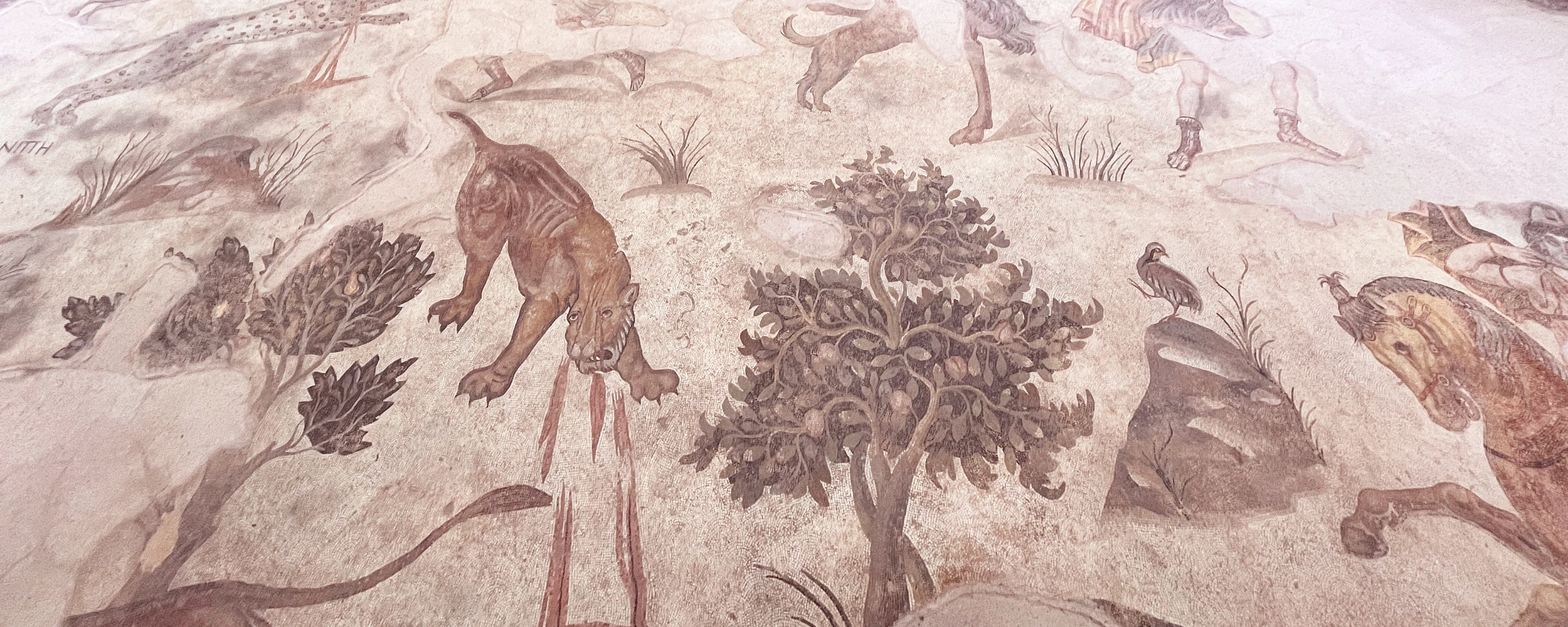
Animal imagery appears throughout the villa, connecting mythological scenes with hunting, status, nature, and the visual culture of elite life.

  • Animals: Lions, tigers, horses, birds, livestock
  • Function: Decorative room floors
  • Meaning: Power, nature, and abundance

The Figure Leading a Zebra

One room contains an unusual scene showing a human figure with a zebra, reflecting the fascination of Roman elites with distant lands and exotic animals.

  • Subject: Human figure and zebra
  • Context: Elite Roman visual culture
  • Interest: Rare exotic-animal imagery

Fine Tesserae and Colour Shading

Tiny coloured stones create faces, muscles, textiles, jewellery, vegetation, animals, and movement with a level of detail that can resemble painting.

  • Material: Small natural stone tesserae
  • Technique: Graduated colour and close setting
  • Effect: Detailed, painterly surfaces

Ancient Edessa and the Culture of Mosaic Art

Ancient Edessa stood at a meeting point between Roman, Greek, Mesopotamian, Iranian, and Syriac worlds. The city’s mosaics reflect this cultural mixture through classical mythology, Greek names, Syriac inscriptions, local artistic preferences, and regional stone materials.

A Crossroads City

Edessa connected Anatolia, northern Mesopotamia, and Syria through trade, diplomacy, language, and religion.

Greek Mythology

Amazons, Achilles, Orpheus, Thetis, the Moirai, and Chiron supplied prestigious subjects for elite domestic art.

Syriac Language

The Orpheus Mosaic preserves a Syriac inscription, demonstrating the importance of the language in Edessa.

Regional Workshops

The combination of local materials and distinctive compositions points to skilled artists working within the wider Edessan cultural region.

The Discovery and Excavation of the Haleplibahçe Mosaics

The mosaics emerged during modern works in the Haleplibahçe area in 2006. Archaeologists then conducted controlled excavations, exposing large floor panels, villa rooms, courtyards, corridors, walls, and decorative borders.

Urban Discovery

The remains appeared beneath a modern neighbourhood close to the historic centre and Balıklıgöl.

Archaeological Excavation

Professional excavation revealed the extent, plan, chronology, and artistic programme of the residence.

Large Mosaic Floors

Substantial areas of decorated pavement survived, including mythological panels and elaborate borders.

Protection in Place

The museum was designed around the archaeological remains so that important floors could remain in their original position.

The Villa of the Amazons

The Villa of the Amazons takes its modern name from the hunting mosaic found within the residence. Its rooms are organised around a large rectangular hall positioned between two symmetrically arranged interior courtyards.

Eastern Entrance

The villa was entered from the east, leading visitors into a carefully structured sequence of spaces.

Inverted T Plan

Official descriptions identify the overall east–west arrangement as an inverted T-shaped plan.

Apsidal Corridor

From the front courtyard, a corridor with apsidal ends led toward the principal hall.

Main Reception Hall

The large hall contained the narrative mosaic showing episodes from the life of Achilles.

Courtyard Light

Interior courtyards supplied fresh air and daylight to surrounding rooms decorated with animal and figure mosaics.

Elite Identity

The architecture and expensive mosaic programme indicate a wealthy household familiar with classical mythology.

The Hunting Amazons Mosaic

The Hunting Amazons Mosaic is the defining masterpiece of Haleplibahçe. It presents warrior women riding horses and hunting wild animals, with Greek inscriptions identifying the individual Amazon queens.

Hippolyte

One of the most famous Amazon queens in Greek mythology, often connected with the heroic cycle of Heracles.

Melanippe

A named Amazon figure associated with the mythological royal family of the warrior women.

Thermodosa

Her Greek name appears beside one of the mounted figures in the official description of the mosaic.

Penthesileia

The Amazon queen remembered for joining the Trojan War and confronting the Greek hero Achilles.


The composition is important not only for its subject but also for its movement. Horses turn and leap, animals react to the hunt, weapons create diagonal lines, and the figures’ clothing and anatomy are modelled through subtle changes in stone colour.

Why Were Amazons Depicted in a Roman Villa?

Classical myth was a visual language of education, prestige, power, and identity in wealthy Roman homes. Amazon scenes allowed patrons to display knowledge of heroic stories while filling reception spaces with action, colour, and memorable figures.

Educated Taste

Mythological subjects demonstrated familiarity with Greek literature and the shared culture of the Roman world.

Power and Courage

Mounted warriors, weapons, and hunting scenes communicated bravery, skill, control, and noble identity.

Conversation Piece

Visitors entering the room would recognise names and stories, encouraging discussion and interpretation.

Local Reinvention

Artists in Edessa adapted widely known myths to regional taste, technique, materials, and domestic architecture.

The Life of Achilles Mosaic

The main hall of the villa contains a rectangular narrative panel showing episodes from the life of Achilles, one of the central heroes of the Trojan War tradition.

1. Infant Achilles The hero appears as a baby held by his nurse
2. The River Styx Thetis holds Achilles by the heel and dips him into the river
3. Farewell to Thetis The young Achilles prepares to leave his mother
4. The Moirai The goddesses of fate spin or determine the thread of his life
5. Education by Chiron The wise centaur trains the young hero
6. Departure for Troy Thetis watches sadly as Achilles follows his heroic destiny

Around the principal narrative, the border includes musicians, rural buildings, horses in different poses, sheep, cattle, and scenes of country life. These details connect heroic myth with ideals of land, prosperity, order, and elite domestic culture.

The Orpheus Mosaic

Orpheus is shown seated and turned to the right, wearing a Phrygian cap and playing a lyre. Around him, predators, grazing animals, horses, goats, birds, and other creatures listen peacefully to his music.

AD 194

The Syriac inscription dates the mosaic, making it the earliest dated mosaic currently known from Edessa.

Artist Bar Saged

The inscription preserves the mosaicist’s name, an uncommon and valuable detail in ancient art.

Rock-Cut Tomb

The panel originally decorated the floor of a rock-cut funerary chamber rather than the Amazon Villa.

Repatriated Heritage

After being taken abroad, the mosaic was returned from the Dallas Museum of Art and eventually brought back to Şanlıurfa.


The scene’s power lies in contrast: animals that would normally hunt one another gather without violence. Orpheus becomes an image of harmony, civilisation, music, and the ability of art to impose order on nature.

The Ktisis Mosaic

The Ktisis Mosaic depicts a richly dressed female bust representing foundation, construction, or the establishment of a building. Her jewellery, garments, and measuring instrument are rendered with exceptional attention to detail.

Jeweled Crown

Pearl-like and gold-coloured stones create an elaborate crown above the figure’s carefully modelled face.

Earrings and Necklace

Yellow, green, brown, and pale tesserae imitate gold, gemstones, pearls, and polished jewellery.

Roman Foot Measure

Ktisis holds a grey measuring standard approximately 29.7 centimetres long, symbolising architectural order.

Protective Identity

Official museum interpretation presents Ktisis as a founding and protective personification associated with the villa.

Animal Mosaics and Decorative Rooms

Animals appear throughout the Haleplibahçe collection. Some belong to mythological stories, others to hunting scenes, rural life, exotic spectacle, or decorative room programmes.

Lions and Tigers

Powerful predators decorated rooms positioned around the villa’s interior courtyards.

Horses

Horses appear galloping, standing, grazing, or carrying Amazon warriors, demonstrating careful observation of movement.

Birds and Small Animals

Birds, squirrels, ducks, partridges, and other creatures enliven borders and connect the mosaics with gardens and countryside.

Zebra Scene

The figure leading a zebra reflects Roman interest in animals brought from distant regions for display and spectacle.

Livestock

Sheep, cattle, and farm imagery evoke agricultural wealth and the prosperity of the villa’s owner.

Orpheus Animals

Predators and herbivores gathering around music turn the natural world into a symbol of peace and harmony.

How the Haleplibahçe Mosaics Were Made

Ancient mosaicists built images from thousands of small pieces called tesserae. By selecting stones of slightly different colours and placing them at carefully controlled angles, artists created outlines, shadows, highlights, textures, and expressions.

Natural Stone

Regional stones supplied cream, red, brown, yellow, grey, black, green, and other tones.

Small Tesserae

Fine pieces allowed artists to model eyes, lips, jewellery, hair, animal fur, weapons, and folds of fabric.

Curving Lines

Tesserae were arranged to follow the contours of bodies, horses, vegetation, and clothing.

Colour Gradation

Closely related shades produce volume and movement without paint, creating a surprisingly pictorial effect.

Prepared Floor Layers

Mosaics rested on carefully constructed bedding layers designed to create a strong, level, and durable surface.

Border Design

Geometric, vegetal, animal, and architectural borders framed the central narrative panels.


When viewing the mosaics, alternate between distant and close observation. From farther away, the stones merge into complete figures; from nearby, the individual tesserae and the artists’ technical decisions become visible.

The Architecture of Haleplibahçe Mosaic Museum

The museum building was created to shelter a wide archaeological area without placing columns directly among the fragile remains. Official museum sources describe the structure as approximately 6,000 square metres in area and 82 metres in diameter.

Column-Free Span

The roof creates an uninterrupted interior, protecting the excavation without visually dividing the villa.

Raised Walkways

Visitor routes allow mosaics and room plans to be viewed from above while limiting physical contact.

Controlled Environment

The enclosed museum reduces exposure to weather, dust, direct sunlight, water, and sudden temperature changes.

In-Situ Interpretation

The building makes it easier to understand which mosaic belonged to which room, corridor, or hall.

Why Haleplibahçe Mosaic Museum Is So Important

Haleplibahçe is important because it combines exceptional artistic quality, named mythological figures, local Syriac evidence, in-situ architecture, repatriated heritage, and the domestic life of ancient Edessa.

Named Amazon Queens

Greek inscriptions identify individual warrior figures rather than presenting anonymous hunters.

Signed Ancient Artist

Bar Saged’s name gives a rare personal identity to an ancient mosaic workshop.

Dated Syriac Mosaic

The AD 194 Orpheus inscription is a major document for the artistic and linguistic history of Edessa.

Mythological Narratives

Achilles, Orpheus, Amazons, Ktisis, and other figures reveal the intellectual culture of elite households.

Original Architectural Context

In-situ display preserves the connection between images and the rooms they once decorated.

Recovered Cultural Property

The return of the Orpheus Mosaic highlights the importance of protecting and repatriating archaeological heritage.

Haleplibahçe Mosaic Museum Entrance Fee

The official museum listing currently provides a combined admission arrangement for Haleplibahçe Mosaic Museum and the neighbouring Şanlıurfa Museum.

Foreign Visitors

The current official ticket price is €10 per person.

Combined Museum Entry

The €10 ticket is also valid for entry to the Şanlıurfa Museum in the same museum complex.

MüzeKart

MüzeKart is valid for eligible Turkish citizens under the current official museum rules.

Night Museum Ticket

Night museum access may require a separate ticket or supplement, depending on visitor category and current regulations.


Ticket prices, combined-entry rules, and night museum arrangements can change. Check the official museum page shortly before your visit, especially during public holidays or seasonal programmes.

Opening Hours and Night Museum Visits

The current official listing states that Haleplibahçe Mosaic Museum is open every day. Hours can be updated seasonally, so confirm them before travelling.

Current Daytime Opening 08:30
Current Daytime Closing 18:45
Closed Days Currently listed as open every day
Night Museum Opening 19:00
Night Museum Closing 21:00
Night Box Office Closing 20:30
Suggested Mosaic Museum Visit Approximately 60–90 minutes

Arrive at least one hour before closing if you want to study the mosaics without rushing. For both Haleplibahçe Mosaic Museum and Şanlıurfa Archaeology Museum, allow at least three hours and preferably half a day.

Best Time to Visit Haleplibahçe Mosaic Museum

Because the collection is indoors, the museum can be visited throughout the year. It is especially valuable during Şanlıurfa’s hottest summer hours, rainy days, or cold winter mornings.

Morning

Visit soon after opening for a quieter atmosphere and easier access to the most famous mosaic viewpoints.

Midday in Summer

The air-conditioned museum provides a comfortable break from the intense outdoor heat.

Late Afternoon

Explore the mosaics before continuing to Balıklıgöl for softer evening light and a cooler old-city walk.

Night Museum

Evening access offers a different atmosphere and can fit well into a busy summer sightseeing programme.

How to Get to Haleplibahçe Mosaic Museum

The museum is located in the Haleplibahçe area of Eyyübiye, within walking distance of Balıklıgöl and many attractions in historic central Şanlıurfa.

From Balıklıgöl

Walk west toward the modern museum complex. Depending on the route, the journey generally takes around 10–20 minutes.

By Taxi

Ask for “Haleplibahçe Mozaik Müzesi” or “Şanlıurfa Müzesi.” Local drivers know the museum complex.

By Public Transport

Local buses and minibuses serve central Şanlıurfa. Continue on foot from the nearest Haleplibahçe or museum stop.

By Private Tour

A private vehicle can combine the museum with Balıklıgöl, old bazaars, Göbeklitepe, Karahantepe, or Harran.


The Şanlıurfa Archaeology Museum and Haleplibahçe Mosaic Museum are located beside one another. Confirm which entrance and ticket office are operating on the day of your visit.

Best Route for Visiting Haleplibahçe

The mosaic museum fits naturally into a full day combining prehistoric archaeology, Roman art, sacred traditions, and the old city of Şanlıurfa.

1. Şanlıurfa Archaeology Museum Begin with the Neolithic galleries, Urfa Man, Göbeklitepe, and regional archaeology
2. Haleplibahçe Mosaic Museum Continue into the Villa of the Amazons, Achilles, Ktisis, and Orpheus
3. Kızılkoyun Necropolis See Roman rock-cut tombs and the funerary landscape of ancient Edessa
4. Balıklıgöl Walk through the sacred pools, gardens, mosques, and Abraham traditions
5. Historic Bazaars Explore covered markets, workshops, caravanserais, and local food
6. Ulu Camii and Former Churches Finish with Şanlıurfa Grand Mosque, Fırfırlı Mosque, or Selahaddin Eyyubi Mosque

Facilities at Haleplibahçe Mosaic Museum

Official museum information lists a range of facilities designed to make the large museum complex easier and more comfortable to visit.

Audio Guidance

Audio-guide service is officially listed. Availability of languages and devices may vary.

Guiding Service

Guiding services are listed, although private professional guides should be arranged in advance during busy periods.

Café and Shop

The museum complex includes visitor facilities for refreshments and souvenir purchases.

Toilets

Public WC facilities are available within the modern museum complex.

Lift and Accessible Areas

The official listing identifies the museum as accessible and notes lift facilities.

Education Areas

Educational spaces support school visits, organised groups, and museum learning activities.

Haleplibahçe Mosaic Museum Visitor Etiquette

Stay on the Visitor Route

Remain on designated walkways and never step beyond barriers or onto archaeological surfaces.

Do Not Touch the Mosaics

Oils, pressure, and accidental movement can damage ancient stone, mortar, and restored sections.

Avoid Flash

Use available light and follow museum signs concerning flash, tripods, and professional equipment.

Keep Children Close

Raised walkways and fragile displays require close supervision of younger visitors.

Keep Voices Moderate

The broad interior can amplify sound, especially during school and group visits.

Do Not Lean Over Barriers

Avoid extending bags, phones, cameras, or selfie sticks above archaeological areas.

Respect Guided Groups

Leave room around guides and listening groups rather than blocking narrow viewpoints.

Follow Staff Instructions

Temporary closures, altered routes, and photography restrictions may be introduced for conservation.

Accessibility at Haleplibahçe Mosaic Museum

Haleplibahçe is a modern museum and is officially listed as accessible. Its broad interior, lifts, and structured visitor routes make it generally easier to visit than many open-air archaeological sites.

Modern Entrance

The museum complex has paved approaches and a contemporary entrance environment.

Lift Access

Lift facilities are officially listed for movement between visitor levels where required.

Raised Walkways

Most mosaics are viewed from stable paths and platforms rather than uneven archaeological ground.

Advance Assistance

Visitors with specific mobility, visual, or hearing requirements should contact the museum before arrival.

Frequently Asked Questions About Haleplibahçe Mosaic Museum

What is Haleplibahçe Mosaic Museum?

It is a modern museum in Şanlıurfa protecting Roman and Late Antique mosaics from ancient Edessa, including the Villa of the Amazons.

Where is Haleplibahçe Mosaic Museum?

It is located in Haleplibahçe, 2372 Sokak, in the Eyyübiye district of central Şanlıurfa.

Is the museum close to Balıklıgöl?

Yes. The museum complex is within walking distance of Balıklıgöl and the historic old city.

Is Haleplibahçe beside Şanlıurfa Archaeology Museum?

Yes. The two museums stand beside one another within the same broad museum zone.

When were the Haleplibahçe mosaics discovered?

The first major remains were discovered during modern works in 2006, followed by archaeological excavation.

What is the Villa of the Amazons?

It is the modern name given to the elite ancient residence containing the famous mosaic of named Amazon warrior queens.

Are the mosaics displayed in their original place?

Many of the Haleplibahçe mosaics are displayed in situ, preserving their relationship with the villa’s rooms and courtyards.

What is the most famous mosaic?

The Hunting Amazons Mosaic is the museum’s best-known work, showing mounted warrior queens and their Greek names.

Which Amazon queens are shown?

The official museum description identifies Hippolyte, Melanippe, Thermodosa, and Penthesileia.

What is shown in the Achilles Mosaic?

The panel follows Achilles from infancy through the River Styx episode, his education by Chiron, the Moirai, and his departure for Troy.

Who is Ktisis?

Ktisis is a personification of foundation or construction, shown wearing jewellery and holding a Roman measuring standard.

What is special about the Orpheus Mosaic?

It is dated to AD 194, contains a Syriac inscription, and preserves the name of its artist, Bar Saged.

Was the Orpheus Mosaic returned from abroad?

Yes. It was returned from the Dallas Museum of Art, transferred first to Istanbul, and later brought back to Şanlıurfa.

What animals can visitors see in the mosaics?

The collection includes horses, lions, tigers, birds, goats, cattle, sheep, wild animals, and a zebra scene.

How old are the Haleplibahçe mosaics?

The collection includes Roman and Late Antique works. The Orpheus Mosaic is specifically dated to AD 194, while the Amazon Villa floors are later.

How large is the museum?

Official information describes a building of approximately 6,000 square metres with an 82-metre column-free span.

What is the entrance fee?

The current official foreign visitor ticket is €10 and also covers admission to the neighbouring Şanlıurfa Museum.

Is MüzeKart valid?

Yes. The current official listing states that MüzeKart is valid for eligible Turkish citizens.

Is the museum open every day?

The current official museum page states that it is open every day, although schedules can change.

What are the current daytime opening hours?

The official listing currently gives 08:30–18:45. Confirm shortly before visiting because seasonal hours may be updated.

Is there a night museum programme?

Yes. The official listing currently gives night museum hours of 19:00–21:00, with the night box office closing at 20:30.

How long should I spend in the mosaic museum?

Allow approximately 60–90 minutes, depending on how closely you study the individual panels and villa plan.

How long do both Şanlıurfa museums take?

Plan at least three hours and preferably half a day for both Haleplibahçe Mosaic Museum and Şanlıurfa Archaeology Museum.

Is Haleplibahçe suitable for children?

Yes. Mythological stories and animal imagery can be engaging, but children should remain close to adults on the raised walkways.

Is the museum accessible?

The official listing identifies accessible facilities and a lift, making it generally suitable for visitors with reduced mobility.

Is an audio guide available?

Yes. Audio guidance is officially listed, although language and device availability should be checked on arrival.

Can I take photographs?

Personal photography is generally possible, but visitors must follow current rules regarding flash, tripods, and professional equipment.

Is Haleplibahçe Mosaic Museum worth visiting?

Yes. It is one of Şanlıurfa’s essential museums for visitors interested in Roman art, ancient mythology, mosaics, and the history of Edessa.

Can I combine the museum with Göbeklitepe?

Yes. A full-day private itinerary can combine the museum complex, Göbeklitepe, Balıklıgöl, and selected old-city monuments.

Best Photo Spots at Haleplibahçe Mosaic Museum

The museum offers dramatic views of complete floors, mythological figures, geometric borders, animals, jewellery, tiny tesserae, and the architectural plan of the ancient villa.

Amazon Hunting Panel

Photograph the full composition first, then focus on horses, weapons, animals, faces, and Greek names.

Achilles Narrative

Capture the panel in sections so that each episode remains clear and the figures are not lost in a wide image.

Ktisis Portrait

Look closely at the crown, earrings, necklace, clothing, facial shading, and measuring instrument.

Orpheus and Animals

Frame Orpheus centrally while including the surrounding predators, herbivores, birds, and inscription.

Villa Overview

Use raised viewpoints to show how floors, walls, corridors, and courtyards relate to one another.

Tesserae Close-Ups

Zoom into transitions between colours to reveal how individual stones create modelling and movement.


Avoid flash, do not extend cameras beyond barriers, and never place equipment on archaeological surfaces. Follow all current museum signs and staff instructions.

Private Haleplibahçe and Şanlıurfa Tours

Haleplibahçe Mosaic Museum can be included in a private route combining Şanlıurfa Archaeology Museum, Balıklıgöl, the old bazaars, Kızılkoyun Necropolis, Göbeklitepe, Karahantepe, Harran, and other regional highlights.

Private Şanlıurfa Museum and Old-City Experiences

Custom-designed routes with private transportation, flexible timing, and optional professional guiding.

Southeastern Türkiye Journeys

Add Şanlıurfa’s museums to a longer private route through Göbeklitepe, Karahantepe, Gaziantep, Zeugma, and Mount Nemrut.