A Former Church in the Heart of Şanlıurfa

Fırfırlı Mosque – Twelve Apostles Church Visitor Guide

Discover a remarkable stone monument shaped by Christian heritage,
changing civic use, Islamic worship, and the layered history of ancient Urfa.

Explore Fırfırlı Mosque

Discover Fırfırlı Mosque and the Former Twelve Apostles Church

Rising above the historic streets of central Şanlıurfa, Fırfırlı Mosque is one of the city’s most fascinating examples of a sacred building adapted across different periods. The monument was constructed as a church and is traditionally known as the Twelve Apostles Church or the Church of the Holy Apostles.

The exact construction date remains uncertain because the building has no surviving foundation inscription. Historical traditions connect the church with the Holy Cross of Varak, said to have been brought from the Varak Monastery near Van to Urfa in 1092. This association reflects the importance of the building within the Christian memory of the city.

After its period as a church, the building served other functions, including use as a prison. It was converted into a mosque in 1956, a date recorded by the inscription above the mihrab. Today it remains an active place of Muslim worship and is also known locally as Hz. İyad bin Ganem Mosque.

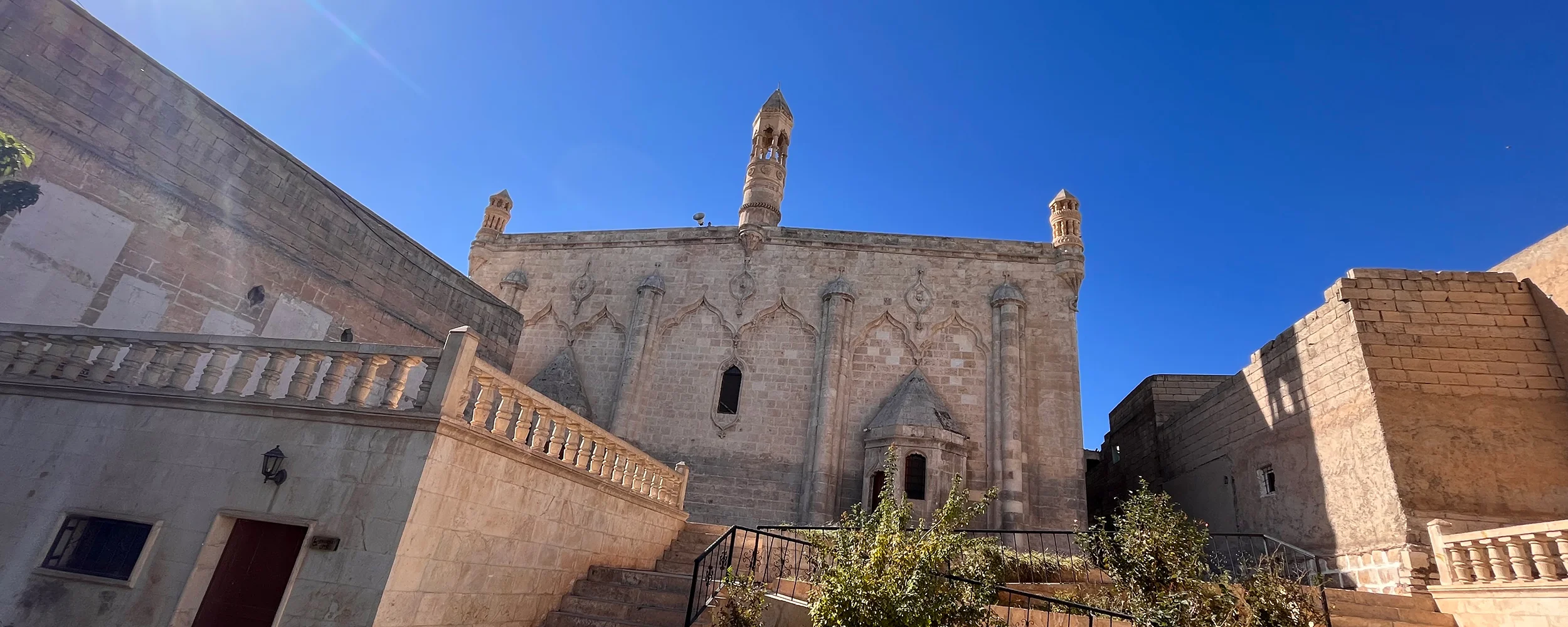
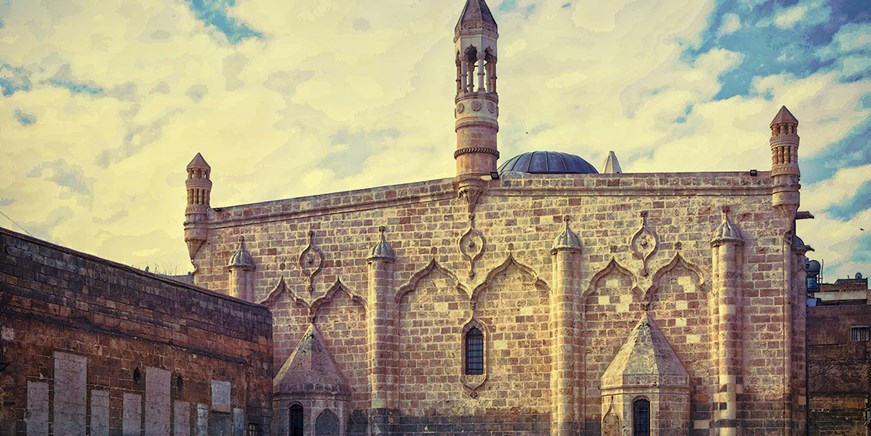
Architecturally, Fırfırlı Mosque preserves the form of a three-naved basilica. Its cut-stone walls, domed central nave, vaulted side aisles, tall windowed drum, half-columns, corner towers, and richly worked western façade make it one of Şanlıurfa’s most distinctive historic religious monuments.

In this complete visitor guide, you will discover the building’s Christian origins, the tradition of the Twelve Apostles, the story of the Varak Cross, its prison years, conversion into a mosque, architectural details, the origin of the name “Fırfırlı,” practical visiting information, etiquette, photography advice, nearby attractions, and private tour options in Şanlıurfa.

Church Heritage

Explore a former Christian sanctuary known as the Twelve Apostles Church or Church of the Holy Apostles.

Stone Architecture

Admire a three-naved basilica with domes, vaults, carved half-columns, corner towers, and elaborate exterior masonry.

Layered History

Follow the building’s transformation from church to prison and finally to an active mosque opened for worship in 1956.

Historic Urfa

Visit the monument while walking between Balıklıgöl, old bazaars, traditional stone streets, and other landmarks of central Şanlıurfa.

Plan Your Visit

Fırfırlı Mosque – Quick Facts

Essential information for visiting this historic former church and active mosque in the centre of Şanlıurfa.

📍

Location

Yeni Mahalle, close to Vali Fuat Bey Street in the historic centre of Şanlıurfa, within walking distance of major old-city attractions.

Open on Google Maps

Former Name

Twelve Apostles Church, Church of the Holy Apostles, or Aziz Havariler Church.

🕌

Present Use

An active mosque, widely called Fırfırlı Mosque and also associated with the name Hz. İyad bin Ganem Mosque.

Visit Duration

Allow approximately 20–40 minutes for the exterior, interior, architectural details, and respectful photography.

🎟

Entrance Fee

Entry is generally free. Visitors should respect prayer times, religious services, and any temporary access restrictions.

🏛

Architectural Plan

A cut-stone, three-naved basilica with a domed central nave, vaulted side aisles, and richly decorated façades.


From Christian Sanctuary to Active Mosque

The History of Fırfırlı Mosque

Discover how one monumental stone building reflects the changing religious, social, and civic history of Şanlıurfa.

Şanlıurfa, historically known as Edessa and Urfa, developed as an important centre of faith, trade, language, and scholarship. Christian communities played a major role in the city’s history, and numerous churches, monasteries, schools, and sacred traditions once shaped its urban landscape.

Fırfırlı Mosque was originally constructed as a church. It is recorded under several names, including the Twelve Apostles Church, Church of the Holy Apostles, and Aziz Havariler Church. The surviving building has no foundation inscription, so its precise construction date is not known.

A long-standing historical tradition connects the church with the Holy Cross of Varak. According to published regional sources, this revered Christian object was brought from the Varak Monastery near Van to Urfa and placed in the church in 1092.

The tradition is important because it demonstrates the religious prestige associated with the sanctuary. However, the surviving architectural fabric has experienced repairs, alterations, changes of use, and later restoration, making the full construction chronology difficult to reconstruct.

During the Ottoman period, the building became popularly known as Fırfırlı Church. The name is traditionally connected with wind-vane-like ornaments or a rotating device associated with the structure or its immediate surroundings. The local word “fırfırlı” preserved this memorable feature in the building’s popular identity.

After it ceased functioning as a church, the building was used for different civic purposes. It served for a period as a prison, and traces left by prisoners have been reported on parts of the interior stonework. Such marks form another layer in the social history of the monument.

The structure was converted into a mosque in 1956. The conversion date is recorded by the inscription above the mihrab. The former liturgical arrangement was adapted for Islamic worship while much of the basilical volume and historic masonry remained visible.

Today the building continues to serve the local Muslim community. At the same time, its former church plan, Christian historical associations, prison memories, stone ornament, and later mosque additions make it a powerful example of Şanlıurfa’s layered urban heritage.

What to See

Top Highlights of Fırfırlı Mosque

Look closely at the basilical plan, stone façades, central dome, vaulted aisles, half-columns, corner towers, mihrab, and evidence of the building’s changing use.

The Western Façade

The western side is one of the most visually impressive parts of the monument. Carefully cut stone, vertical architectural elements, recessed forms, arched openings, and decorative details create a monumental entrance composition.

  • Material: Carefully cut local stone
  • Main feature: Rich exterior masonry
  • Best light: Morning or late afternoon

Three-Naved Basilica Plan

The interior is divided into a broad central nave and two narrower side aisles. This arrangement preserves the spatial character of the former church even though the building now functions as a mosque.

  • Plan: Rectangular basilica
  • Interior: Central nave and two side aisles
  • Importance: Clear evidence of church origins

The Central Dome

The central nave rises beneath a prominent dome and high drum. Numerous windows bring light into the interior and emphasise the vertical scale of the former sanctuary.

  • Position: Above the wider central nave
  • Lighting: Windowed drum
  • Effect: Bright and elevated central space

Vaulted Side Aisles

The side aisles are covered by stone vaulting. Their lower scale contrasts with the taller centre and helps visitors understand how the original church interior was organised.

  • Roofing: Stone vaults
  • Relationship: Flank the central nave
  • Visual quality: Repeating bays and arches

Columns and Half-Columns

Interior supports and wall-attached half-columns carry the arches, domes, and vaults. Their capitals and transitions reveal the skill of the masons who shaped the building’s stone structure.

  • Function: Support arches and vaults
  • Materials: Basalt and cut stone are reported
  • Detail: Carved capitals and mouldings

Corner Towers

Slender tower-like elements rise at the corners and edges of the exterior. Their sculptural profiles give the building a distinctive silhouette within Şanlıurfa’s historic stone neighbourhood.

  • Location: Exterior corners and roofline
  • Character: Decorative vertical accents
  • View: Best appreciated from surrounding streets

The Mihrab and Mosque Adaptation

Following the 1956 conversion, the interior was adapted for Islamic prayer. The mihrab indicates the direction of Mecca and the inscription above it records the building’s transformation into a mosque.

  • Conversion: 1956
  • Present function: Islamic worship
  • Key evidence: Inscription above the mihrab

Traces of the Prison Period

The building served as a prison before becoming a mosque. Marks and names attributed to prisoners have been reported on the stone surfaces, preserving personal traces from this difficult period of its history.

  • Former use: Prison
  • Evidence: Incised marks and names
  • Protection: Do not touch or trace the surfaces

Why Was It Called the Twelve Apostles Church?

The former sanctuary is widely identified as the Twelve Apostles Church or Church of the Holy Apostles. The title refers to the disciples who formed the central apostolic community in Christian tradition.

Apostolic Dedication

Churches dedicated to the apostles expressed continuity with the earliest Christian community and the transmission of the faith.

Christian Urfa

Historic Edessa became an influential centre of Syriac Christianity, theology, pilgrimage, literature, and ecclesiastical culture.

Multiple Names

The building appears in modern sources as the Twelve Apostles Church, Holy Apostles Church, Aziz Havariler Church, and Fırfırlı Church.

Uncertain Dating

Because no original building inscription survives, the exact date and complete sequence of construction phases remain uncertain.

The Holy Cross of Varak and Fırfırlı Church

Regional historical sources connect the church with the Holy Cross of Varak, an object of great importance in Armenian Christian tradition. The cross was associated with the historic Varak Monastery in the Van region.

Varak Monastery

The monastery near Van was one of the important religious centres associated with the veneration of the cross in Armenian Christianity.

The Year 1092

Published local sources state that the Holy Cross of Varak was brought to Urfa and placed in this church in 1092.

Religious Prestige

The tradition suggests that the church held a prominent position within the religious life and memory of Christian communities in Urfa.

Historical Caution

The story is preserved in regional publications, while the exact architectural sequence of the surviving structure remains debated.

Why Is It Called Fırfırlı Mosque?

The unusual name is one of the most memorable parts of the monument’s identity. During the Ottoman period, local people began calling the sanctuary Fırfırlı Church because of wind-vane-like or rotating ornaments associated with the building or its nearby surroundings.

Wind-Vane Tradition

Official regional accounts describe materials resembling wind vanes or pinwheels that once turned in the wind.

Local Urfa Usage

The word “fırfırlı” entered popular speech as an affectionate and easily remembered name for the building.

Name Preserved

When the former church became a mosque, the familiar local name continued rather than being replaced completely.

Living Urban Memory

The name demonstrates how architecture, sound, movement, and local storytelling can shape the identity of a historic monument.

The Architecture of Fırfırlı Mosque

Fırfırlı Mosque is especially valuable because the building’s original basilical organisation remains legible. Its architecture combines a strong rectangular mass with a bright central nave, lower vaulted aisles, carefully designed façades, and vertical corner elements.

Cut-Stone Construction

The walls are built from carefully shaped stone blocks, reflecting the long tradition of masonry craftsmanship in Şanlıurfa.

Central Nave

The central nave is wider and taller than the side aisles, producing a strong longitudinal axis through the interior.

Windowed Drum

A high drum pierced by numerous windows supports the central dome and brings daylight into the main space.

Stone Vaulting

The side aisles are covered by vaults supported by columns, arches, and wall-attached half-columns.

Decorated Façades

Exterior half-columns, mouldings, arches, niches, and geometric stone details create rhythm across the façades.

Corner Towers

Sculptural corner towers and roofline elements give the building an unusually dramatic silhouette.


Visitors should walk around the exterior before entering. The surrounding streets reveal different views of the towers, buttress-like wall elements, arched windows, and changing colours of the limestone throughout the day.

The Prison Period of Fırfırlı Church

Before its conversion into a mosque, the former church was used for a period as a prison. This phase altered the way the building was experienced and introduced a deeply human layer of confinement, memory, and survival.

Change of Function

The sacred interior was adapted for civic use after it ceased to serve its original congregation.

Prisoner Marks

Incised lines, dates, and names attributed to prisoners have been reported on sections of the stone walls.

Architectural Loss

Changing uses and interventions affected parts of the original church architecture before later restoration.

Social History

These traces remind visitors that monuments preserve personal stories as well as formal religious and architectural history.


Any surviving marks should be observed without touching, tracing, wetting, or adding new graffiti. Modern damage can permanently erase historic evidence.

The Conversion into Fırfırlı Mosque

The former church was converted into a mosque in 1956. The date is recorded in the inscription placed above the mihrab, providing a clear historical reference for the building’s present function.

Mihrab

The mihrab was arranged to mark the qibla, the direction faced during Islamic prayer toward Mecca.

Prayer Interior

The basilical hall was adapted for congregational prayer while retaining much of its historic spatial form.

Active Mosque

Fırfırlı Mosque is not only a monument. It continues to serve local worshippers and should be visited with appropriate respect.

Shared Heritage

Christian architectural features and Islamic religious use now coexist within one of Şanlıurfa’s most recognisable historic buildings.

Why Fırfırlı Mosque Is So Important

Fırfırlı Mosque is important not because it belongs to only one period, but because it preserves several chapters of Şanlıurfa’s history within the same walls.

Christian Heritage

The former Twelve Apostles Church reflects the long history of Christian communities in Edessa and Urfa.

Architectural Survival

The basilical plan, domes, vaults, columns, façade decoration, and corner towers preserve significant historic craftsmanship.

Urban Memory

The name Fırfırlı preserves a local story connected with wind, movement, and the popular memory of the old city.

Civic History

The prison phase demonstrates how religious monuments may be reused during periods of demographic and political change.

Living Worship

The building remains part of the daily religious life of Şanlıurfa rather than functioning only as a museum.

Cultural Dialogue

Its layered identity encourages a more complete understanding of the diverse communities that shaped the city.

Fırfırlı Mosque Entrance Fee

Fırfırlı Mosque is an active place of worship rather than a conventional ticketed museum.

General Admission

Entry is generally free of charge for respectful visitors.

Museum Pass

A Museum Pass is not required because the building is not operated as a ticketed archaeological museum.

Donations

Any donation arrangements are voluntary and should follow instructions displayed or provided by mosque representatives.

Tour Services

Professional guiding and private transportation are separate services and are not connected with entry to the mosque.

Fırfırlı Mosque Opening Hours and Best Time to Visit

Because Fırfırlı Mosque is an active religious building, access is connected with daily prayer schedules rather than fixed museum opening hours.

Recommended Visit During daylight and outside congregational prayer times
Friday Visits Avoid the period around the main Friday noon prayer
Visit Duration Approximately 20–40 minutes
Best Exterior Light Morning or late afternoon
Temporary Restrictions Possible during worship, cleaning, maintenance, or religious events

Prayer times change throughout the year. If the doors are closed or worship is taking place, wait quietly and return later rather than interrupting the service.

How to Get to Fırfırlı Mosque

Fırfırlı Mosque stands in Yeni Mahalle near Vali Fuat Bey Street, within Şanlıurfa’s central historic area. It is easy to combine with a walking route through the old city.

From Balıklıgöl

Walk north through the historic centre, following local navigation toward Vali Fuat Bey Street and Yeni Mahalle.

By Taxi

Ask for “Fırfırlı Camii” or “İyad bin Ganem Camii,” both names commonly used for the monument.

By Public Transport

City buses and minibuses serve central Şanlıurfa. Continue on foot from the nearest stop in the old-city area.

By Private Tour

A private guide can include the mosque within a broader route covering Balıklıgöl, bazaars, historic streets, museums, and Kızılkoyun Necropolis.


The surrounding streets can be busy and parking may be limited. Walking or using a taxi is usually more convenient than approaching by private car.

Best Route for Visiting Fırfırlı Mosque

The monument works especially well as part of a half-day or full-day walking route through historic Şanlıurfa.

1. Begin at Balıklıgöl Explore the sacred pools, gardens, mosques, and Abraham tradition
2. Walk Through the Historic Bazaars See covered markets, workshops, courtyards, and caravanserai architecture
3. Continue to Fırfırlı Mosque Circle the exterior before entering respectfully outside prayer times
4. Visit Kızılkoyun Necropolis Explore Roman rock-cut tombs and archaeological remains near the city centre
5. Explore Şanlıurfa Museum Complex See prehistoric sculpture, Göbeklitepe discoveries, and regional mosaics
6. End with Urfa Cuisine Try regional kebabs, lahmacun, lebeni, isot, and traditional desserts

Fırfırlı Mosque Visitor Etiquette

Visit Outside Prayer Times

Wait until congregational worship has finished before entering for sightseeing or photography.

Dress Modestly

Cover shoulders and knees. Women should carry a scarf for covering the hair inside the prayer space.

Remove Your Shoes

Take off footwear before stepping onto the carpeted prayer area and place shoes where indicated.

Keep Your Voice Low

Speak quietly and avoid phone calls, loud conversations, or music inside the mosque.

Do Not Cross Worshippers

Never walk directly in front of someone who is praying.

Ask Before Photographing People

Do not photograph worshippers, staff, or local residents without clear permission.

Avoid Flash During Worship

Use natural light and silent camera settings whenever possible.

Protect Historic Surfaces

Do not touch carvings, scratch walls, lean on columns, or trace old inscriptions and prisoner marks.

Accessibility at Fırfırlı Mosque

Fırfırlı Mosque is located in a central urban neighbourhood, but access conditions can be affected by historic pavements, street gradients, entrance thresholds, and the arrangements of an active prayer space.

Urban Approach

The mosque can be approached through paved city streets, although some old-city surfaces may be uneven.

Entrance Thresholds

Historic doorways and changes in floor level may present difficulties for visitors using wheelchairs or walking aids.

Interior Movement

The main prayer floor is broad, but visitor movement may be limited during worship or religious gatherings.

Advance Assistance

Visitors with mobility concerns should ask a local guide or mosque representative about the most suitable entrance.

Frequently Asked Questions About Fırfırlı Mosque

What is Fırfırlı Mosque?

Fırfırlı Mosque is a historic stone religious building in central Şanlıurfa. It was originally constructed as a church and is traditionally known as the Twelve Apostles Church or Church of the Holy Apostles.

Where is Fırfırlı Mosque?

It is located in Yeni Mahalle near Vali Fuat Bey Street in the historic centre of Şanlıurfa.

Is Fırfırlı Mosque the same as the Twelve Apostles Church?

Yes. The present mosque occupies the former church widely identified as the Twelve Apostles Church, Holy Apostles Church, or Aziz Havariler Church.

When was the church built?

The exact construction date is unknown because no original foundation inscription survives. The building and site experienced different phases of use, alteration, and restoration.

What happened in 1092?

Regional historical sources state that the Holy Cross of Varak was brought from the Van region to Urfa and placed in this church in 1092.

What was the Holy Cross of Varak?

It was a revered Christian object associated with the historic Varak Monastery near Van and held great importance in Armenian Christian tradition.

Why is the building called Fırfırlı?

The popular name is traditionally linked to wind-vane-like or rotating ornaments once associated with the building or its immediate surroundings.

Was Fırfırlı Church used as a prison?

Yes. The former church served as a prison for a period before it was converted into a mosque.

Are prisoner marks still visible?

Marks, lines, and names attributed to prisoners have been reported on parts of the interior stonework. Visitors should never touch or trace them.

When did it become a mosque?

The building was converted into a mosque in 1956, a date recorded by the inscription above the mihrab.

Is it still an active mosque?

Yes. It remains an active place of Muslim worship and is also associated with the name Hz. İyad bin Ganem Mosque.

What architectural style does it have?

It has a cut-stone, three-naved basilical plan with a broad central nave, vaulted side aisles, a domed upper structure, columns, half-columns, decorated façades, and corner towers.

Is there an entrance fee?

Entry is generally free because the building functions as a mosque rather than a ticketed museum.

What are the opening hours?

There may not be fixed tourist opening hours. Visit during daylight and outside daily prayer times, especially avoiding the main Friday prayer.

How long should I spend there?

Approximately 20–40 minutes is usually enough to explore the exterior, interior, and principal architectural details.

What should visitors wear?

Wear clothing that covers shoulders and knees. Women should carry a scarf for covering the hair inside the prayer area.

Do visitors need to remove their shoes?

Yes. Shoes should be removed before stepping onto the carpeted prayer floor.

Can I take photographs?

Respectful photography is generally possible outside worship times. Do not photograph people without permission or use disruptive flash.

Is Fırfırlı Mosque close to Balıklıgöl?

Yes. Both monuments are in central Şanlıurfa and can be combined within a historic old-city walking route.

Is Fırfırlı Mosque worth visiting?

Yes. It is especially rewarding for travellers interested in architecture, Christian heritage, Islamic culture, urban history, and the layered identity of Şanlıurfa.

Best Photo Spots at Fırfırlı Mosque

Fırfırlı Mosque offers striking compositions of honey-coloured stone, sculptural towers, carved façades, domes, vaults, columns, and changing light.

Western Façade

Photograph the entrance elevation straight on to emphasise symmetry, carved stonework, arches, and vertical corner elements.

Corner Perspective

Use a wide-angle view from a nearby street corner to show the scale and mass of the building against the sky.

Dome and Drum

Frame the upper structure to capture the rhythm of the windows and the relationship between the dome and stone roofline.

Interior Nave

From the entrance, use the central axis to show the broad nave, supporting columns, arches, and prayer space.

Vaulted Side Aisles

Photograph repeating arches and vaults from a low, respectful position without obstructing worshippers.

Late-Afternoon Stone

Warm angled light reveals the texture, depth, and colour variations of the exterior masonry.


Do not move prayer furnishings, cross in front of worshippers, climb onto historic masonry, or touch architectural surfaces for a photograph.

Private Şanlıurfa and Fırfırlı Mosque Tours

Fırfırlı Mosque can be included in a private historical route combining Balıklıgöl, Şanlıurfa’s bazaars, Kızılkoyun Necropolis, the archaeology museums, Göbeklitepe, Karahantepe, Harran, and other regional highlights.

Private Şanlıurfa Experiences

Custom-designed routes with private transportation, flexible timing, and optional professional guiding.

Southeastern Türkiye Journeys

Add the historic centre of Şanlıurfa to a longer private journey through Göbeklitepe, Karahantepe, Gaziantep, Zeugma, and Mount Nemrut.