Ask About a Private Uşak Programme
Share your dates, party size and interests. We will check what can realistically be arranged.
Request a Private Programme





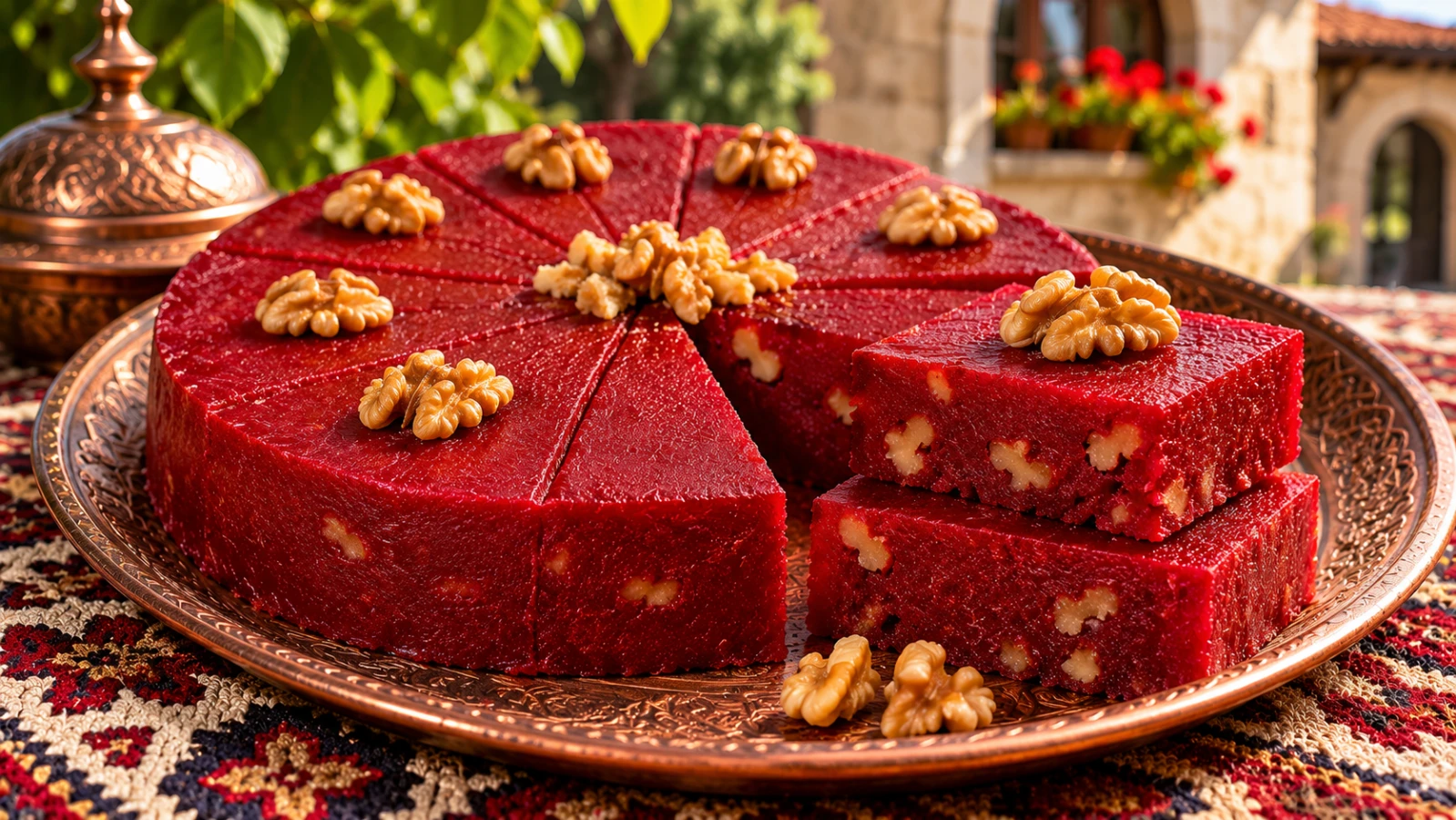
Gelin helvası, also called kırmızı helva or red halva, is one of Uşak’s most distinctive food traditions. Its name refers to a social practice: local cultural records describe the sweet being included in a bundle of gifts taken to a bride-to-be. The story therefore belongs as much to family customs as to confectionery.
Uşak’s provincial culture directorate describes the product as made with tahini from local sesame, sugar beet and walnuts, and says the red colour comes from beet. The source also identifies it as a geographically registered local specialty. This should not be confused with a generic red-coloured sweet made anywhere in Türkiye.
The sweet is traditionally placed among gifts for the bride-to-be, giving the product its name.
Local descriptions attribute the red colour to beet; avoid assuming every commercially coloured sweet uses the same ingredient.
Tahini contributes a nutty base and walnuts are noted among the traditional components.
Bridal halva is not simply roasted-flour halva dyed red; the ingredients and cultural setting are different.
Practical orientation for an informed Uşak visit.
Uşak Province
Red halva, sesame, walnuts and gift-giving
A documented local bridal-gift tradition
Food heritage and local production
15–30 minutes to sample and learn the custom
Check current access, local conditions and any applicable permissions.
The distinctive value of Uşak Bridal Halva (Gelin Helvası) lies in the relationship between the bridal bundle and a distinctive colour. These are useful details to ask about when tasting or buying a product associated with Uşak Province.
A local food guide should distinguish a documented recipe or registered product from a maker’s individual variation. The focus here is red halva, sesame, walnuts and gift-giving, rather than unverified claims about a single origin story.
Uşak’s provincial culture directorate describes the product as made with tahini from local sesame, sugar beet and walnuts, and says the red colour comes from beet. The source also identifies it as a geographically registered local specialty. This should not be confused with a generic red-coloured sweet made anywhere in Türkiye.
The geographical focus is Uşak Province. For orientation, begin with the bridal bundle and then consider sesame and walnut; their relationship is more instructive than treating the subject in isolation.
The sweet is traditionally placed among gifts for the bride-to-be, giving the product its name.
Local descriptions attribute the red colour to beet; avoid assuming every commercially coloured sweet uses the same ingredient.
Tahini contributes a nutty base and walnuts are noted among the traditional components.
Bridal halva is not simply roasted-flour halva dyed red; the ingredients and cultural setting are different.
For a fuller picture, compare Uşak Bridal Halva (Gelin Helvası) with Tahini Halva and Uşak Sesame. These are related but distinct subjects; follow the relevant guides for their own historical or culinary context.
A useful first question is what makes the bridal bundle different from a distinctive colour. The following sections explain the practical details, materials or historical evidence needed to answer it.
In many Anatolian communities, gifts of food can signal welcome, respect or celebration. Uşak’s bridal halva illustrates this principle in a particularly visible way.
The custom is described in local heritage records, but individual households may choose different gifts today. It is better to ask families or makers about current practice than to assume every engagement follows an identical script.
The recorded connection between tahini, beet and walnut makes the sweet different from plain sesame halva. Taste and texture depend on the maker’s process and proportions.
An authoritative publicly available formula with exact quantities is not reproduced here; a general ingredient description should not be mistaken for a tested recipe.
Ask whether the shop sells gelin helvası specifically, as the term “helva” alone may produce a different item. A small portion is enough to compare its colour, density and nut flavour.
Because it contains sesame and walnuts in traditional accounts, allergy checks are essential. Packaging should be inspected for additional ingredients and storage guidance.
The sweet is traditionally placed among gifts for the bride-to-be, giving the product its name.
Local descriptions attribute the red colour to beet; avoid assuming every commercially coloured sweet uses the same ingredient.
Tahini contributes a nutty base and walnuts are noted among the traditional components.
Bridal halva is not simply roasted-flour halva dyed red; the ingredients and cultural setting are different.
Availability can be more limited than ordinary tahini halva. Confirm with shops before building a special trip around it.
Opening hours, admission arrangements and product availability may change. Confirm them with the museum, municipality, venue or producer rather than relying on an old price list.
Ask a Uşak confectioner about red bridal halva and compare it with plain tahini halva. If a producer is willing, ask about the meaning of the bridal bundle rather than only the recipe.
Allow extra time for breaks and for local circumstances. A short, meaningful visit is preferable to a schedule that depends on unconfirmed access or shopping stops.
The sweet is associated with family occasions rather than a fixed harvest date; retail availability varies.
If your visit involves exposed landscapes, check weather and daylight. For food or indoor heritage, opening hours and the availability of a knowledgeable host matter more than a particular season.
Photograph the preparation, product and its context only with permission. A sequence of raw ingredients, working hands and finished serving can tell a better story than a single staged plate.
Ask before photographing people, private property or production areas. Never enter restricted spaces or put objects at risk to obtain a picture.
Confectionery shops are the normal place to look; workshops may not be accessible to visitors.
If travelling with reduced mobility or young children, confirm gradients, steps, seating and toilet access for each individual stop.
The starting area is Uşak Province. Verify actual road and public-transport connections, especially for rural sites or specialised producers; map distances alone do not guarantee a practical visit.
If an access point or venue is not clearly identified by an official operator, request directions before setting out.
Compare the sesame-based sweet.
Explore the local oilseed behind tahini.
Understand a different halva method.
Plan a food-and-culture walk.
Check actual opening conditions and travel times before combining several stops. Links to new editorial guides in this package may not appear on the Uşak hub until the site owner adds them.
Gelin helvası is a local red halva traditionally included in a bridal gift bundle.
Gelin means bride; the name reflects its place among gifts taken to the bride-to-be.
The Uşak Provincial Directorate of Culture and Tourism attributes the colour to beet.
Local descriptions include walnuts and sesame-derived tahini. Always confirm the ingredients of the specific product.
No. The documented ingredients and preparation tradition differ from roasted-flour un helvası.
Ask local confectioneries in Uşak; stock and production schedules vary by maker.
Treat marriage customs respectfully and never photograph a private family event without explicit permission.
Information on protected heritage, opening arrangements and local production should be rechecked before travel. This guide does not grant access to archaeological or private property.
This guide draws on Turkish cultural authorities and, where relevant, academic research. For background and current institutional information, consult: Official or research reference 1 Official or research reference 2.
Wow Cappadocia / Venere Travel can discuss a tailor-made Uşak itinerary with suitable transport and guiding, subject to availability and confirmed access. No compulsory shopping stops.
Choose archaeology, craft, cuisine or landscape according to your interests.
Share your dates, party size and interests. We will check what can realistically be arranged.
Request a Private Programme