İvesi Lamb Loin
The registered recipe uses loin meat from the İvesi breed of lamb raised in the Şanlıurfa region. The meat is cut into evenly sized cubes before cooking.
- Breed: İvesi lamb
- Cut: Loin meat
- Preparation: Cubed into bite-sized pieces






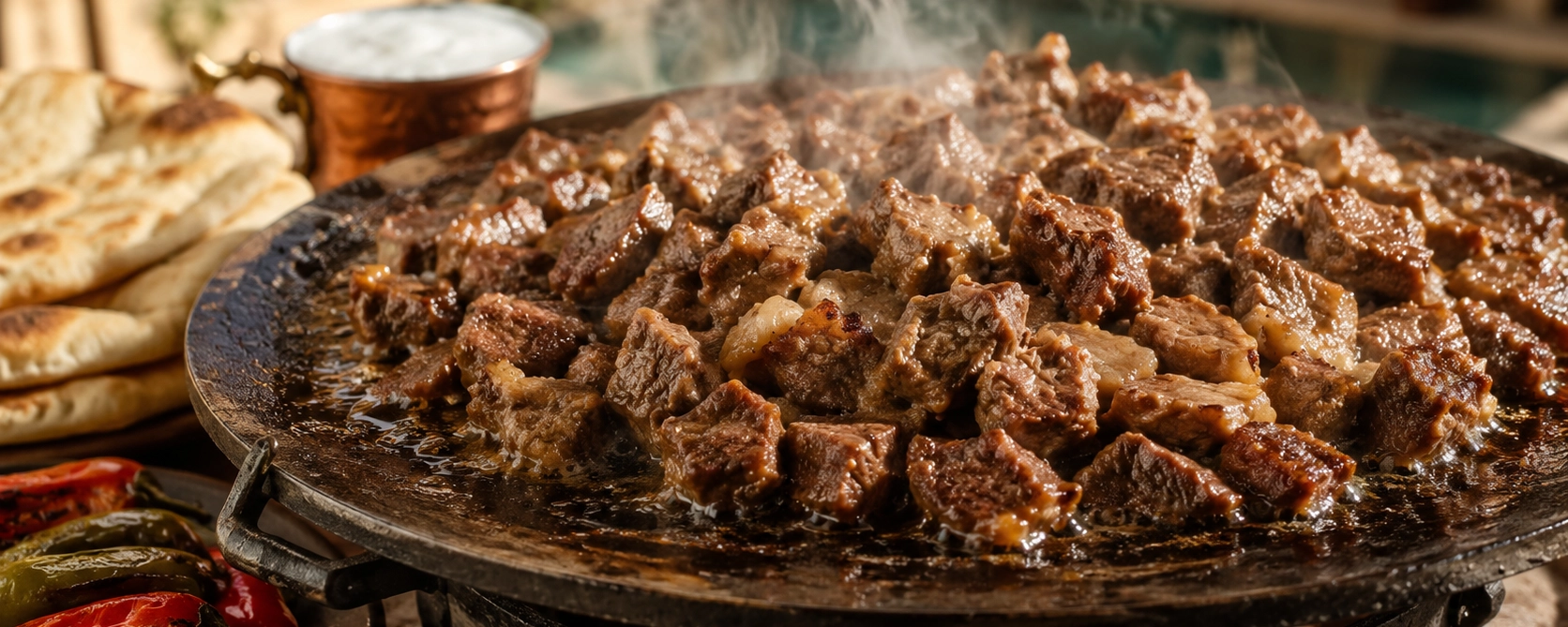
Urfa Sac Kavurma, officially registered as Urfa Sac Kavurması / Şanlıurfa Sac Kavurması, is a traditional lamb dish prepared on a metal sac griddle or in a special kavurma pan. The registered recipe combines cubed loin meat from locally raised İvesi lamb, lamb tail fat, geographically indicated Şanlıurfa clarified butter, salt, and black pepper.
The dish has been prepared in Şanlıurfa for centuries as a feast food, while also remaining part of ordinary daily meals. Its character comes from a short ingredient list, carefully rendered tail fat, tender lamb, the broad heated surface of the sac, and the rich aroma of Urfa butter. This complete guide explains its history, ingredients, official preparation method, geographical-indication status, regional identity, traditional cooking vessel, flavour, presentation, visitor tips, and the best way to experience it in Şanlıurfa.
Prepared with cubed loin meat from the İvesi breed of lamb raised within the Şanlıurfa region.
Rendered first on the sac to create the rich base in which the lamb is cooked.
Şanlıurfa clarified butter is added after the meat has absorbed its cooking juices.
A centuries-old celebratory dish that is also enjoyed as part of everyday regional cuisine.
Essential information about Şanlıurfa’s geographically indicated lamb dish cooked on a traditional metal griddle.
Şanlıurfa in southeastern Türkiye, where the dish is connected with both feast tables and daily meals.
Open Şanlıurfa on Google MapsCubed loin meat from İvesi lamb, a breed closely associated with the region.
Cooked on a metal sac griddle or in a purpose-made sac kavurma pan.
Registered by TÜRKPATENT as a mahreç indication with registration number 510.
Discover how a once highly communal preparation became one of Şanlıurfa’s recognised regional dishes.
Şanlıurfa’s food culture developed around pastoral life, grain agriculture, clarified butter, peppers, bulgur, local livestock, shared tables, and techniques passed between generations. Meat dishes prepared over direct heat or on broad metal cooking surfaces occupy an important place within this culinary landscape.
Urfa Sac Kavurma has been prepared by local communities for centuries as a feast dish. It was associated with occasions when substantial quantities of meat were cooked for families, guests, and larger gatherings, yet it was never limited only to formal celebrations.
The official geographical-indication document records that the traditional method once involved cooking an entire lamb carcass, including the bones, in large pieces on the sac. In contemporary preparation, the dish is generally made with cubed loin meat from the İvesi breed of lamb.
The modern recipe preserves the essential regional elements: İvesi lamb, lamb tail fat, Şanlıurfa clarified butter, a metal sac or kavurma pan, and a restrained seasoning of salt and black pepper.
Unlike heavily marinated meat dishes, sac kavurma depends on ingredient quality and timing. The tail fat is rendered first, the lamb is cooked until its juices are absorbed, and Urfa butter is then added to enrich the final stage.
This close relationship between local ingredients, established craftsmanship, communal food traditions, and Şanlıurfa’s cultural identity led to its official registration as a geographically indicated product.
The dish is defined by its regional lamb, rendered tail fat, protected Urfa butter, traditional cooking surface, and precise order of preparation.
The registered recipe uses loin meat from the İvesi breed of lamb raised in the Şanlıurfa region. The meat is cut into evenly sized cubes before cooking.
Tail fat is finely chopped or minced and placed on the sac before the meat. As it melts, it creates the first layer of flavour and cooking fat.
Geographically indicated Şanlıurfa Sadeyağı, also known as Urfa Yağı, is added after the lamb has absorbed its juices. It gives the finished dish its characteristic richness.
A sac is a broad metal cooking surface used across Anatolia. Its heated surface allows the small pieces of meat to cook quickly while moisture evaporates.
The registered preparation uses only salt and black pepper. The restrained seasoning allows the lamb, tail fat, and clarified butter to remain at the centre of the dish.
Tail fat is rendered first, followed by the cubed lamb. Urfa butter is added only after the meat has absorbed its released juices.
Sac kavurma is intended to be eaten hot. Immediate service preserves the softness of the lamb and the aroma of the rendered fats.
The dish carries the memory of large communal preparations but is also consumed in ordinary meals, making it both ceremonial and familiar.
Urfa Sac Kavurması / Şanlıurfa Sac Kavurması is officially registered by the Turkish Patent and Trademark Office as a geographically indicated product associated with Şanlıurfa.
The official name is Urfa Sac Kavurması / Şanlıurfa Sac Kavurması.
It is protected as a mahreç işareti, identifying a product whose reputation and established production are linked with its geographical area.
The dish carries geographical-indication registration number 510.
The registration was completed on 24 July 2020.
The official application file is C2014/036, submitted on 10 June 2014.
The applicant and registration holder is the Şanlıurfa Chamber of Commerce and Industry.
The geographical boundary is the province of Şanlıurfa. The registration protects the recognised identity and production method of the dish, including the use of locally raised İvesi lamb loin, lamb tail fat, Şanlıurfa clarified butter, and preparation on a sac or sac kavurma pan.
The registration also reflects the cultural knowledge and practical skill of Şanlıurfa’s cooks, who have prepared the dish within the region for generations.
The official recipe uses only five ingredients. Quantities may be increased or reduced according to the amount being prepared while preserving the same balance.
Approximately 2 kilograms of loin meat from İvesi lamb, cut into evenly sized cubes.
Approximately 200 grams, finely chopped or passed through a meat grinder before rendering.
Approximately 80 grams of geographically indicated Şanlıurfa Sadeyağı / Urfa Yağı.
Approximately 8 grams, added near the end of cooking.
Approximately 3 grams, sprinkled over the finished meat before it is removed from the heat.
A metal sac or purpose-made sac kavurma pan is used for the registered preparation.
The geographical-indication recipe defines the meat dish itself rather than a fixed set of side dishes. Restaurants and family tables may present it with different regional accompaniments.
The registered production method follows a clear sequence designed to render the fat, cook the lamb evenly, and add the clarified butter at the correct stage.
The sac is a broad metal cooking surface used in Anatolian and regional cuisines. Depending on its shape and intended use, it can be slightly convex, concave, or formed as a shallow pan.
The broad cooking area allows the lamb cubes to spread out rather than collect in a deep pot.
Metal transfers heat quickly, helping the meat cook efficiently when the temperature is correctly controlled.
The open surface helps released meat juices evaporate or become absorbed during cooking.
The cook can stir, turn, and gather the pieces easily to prevent uneven browning.
Large sacs are suitable for preparing generous quantities of food for families and gatherings.
A specialised sac kavurma pan can reproduce the traditional process in restaurant and home kitchens.
The word sac refers to this metal griddle. It does not refer to seafood or scallops; “Urfa Sac Kavurma” is a lamb dish whose name comes from its cooking vessel.
İvesi sheep are strongly associated with southeastern Anatolia. The geographical-indication specification requires loin meat obtained from İvesi lambs raised within the Şanlıurfa region.
The required lamb links the dish directly with Şanlıurfa’s pastoral landscape and livestock traditions.
Modern production uses loin meat, which can be divided into small, evenly sized cubes for rapid cooking.
The official inspection system checks the origin of the meat used by registered producers.
The use of regional İvesi lamb is one of the principal elements distinguishing authentic Urfa Sac Kavurma.
The official specification notes that meat used in registered production must be obtained through documented slaughterhouses in Şanlıurfa, allowing its origin to be checked during inspections.
Şanlıurfa Sadeyağı, also called Urfa Yağı, is a clarified butter with its own geographical-indication registration. It is one of the ingredients that gives Urfa Sac Kavurma its recognised regional identity.
Şanlıurfa clarified butter is separately registered with geographical-indication number 363.
It is incorporated after the meat has cooked in the rendered tail fat and absorbed its juices.
The clarified butter contributes a concentrated dairy richness without requiring a complicated sauce.
Its use connects the dish with Şanlıurfa’s wider traditions of butter production and ceremonial cooking.
Replacing the registered Urfa butter with an unrelated cooking fat changes the character of the dish. In the protected preparation, both the regional lamb and the regional clarified butter are essential.
Tail fat is not an optional garnish in the registered preparation. It is the first ingredient placed on the heated sac and establishes the cooking base for the lamb.
Finely chopped or minced tail fat melts more readily and spreads across the metal surface.
The rendered fat coats the lamb cubes when they are added to the sac.
It contributes the savoury depth associated with many southeastern Anatolian meat dishes.
The registered recipe uses about 200 grams of tail fat for 2 kilograms of lamb loin.
Visitors unfamiliar with tail fat may find the dish rich. Warm bread, fresh vegetables, and cold ayran can create a lighter and more balanced overall meal.
The official registration preserves an important detail about the dish’s earlier communal form. Traditionally, an entire lamb carcass could be divided into large pieces and cooked on the sac together with its bones.
Large pieces from the whole carcass, including bone-in portions, were cooked for substantial gatherings.
The method suited feast tables and occasions requiring a large quantity of meat.
Modern production generally uses cubed loin meat from İvesi lamb.
Although the cut has changed, the sac, regional lamb, tail fat, Urfa butter, and local expertise remain central.
This evolution made the dish easier to prepare in restaurants and smaller kitchens while retaining the ingredients and cooking principles recognised by the geographical indication.
Urfa Sac Kavurma has a rich, deeply savoury character. The flavour comes primarily from lamb, rendered tail fat, clarified butter, and the light warmth of black pepper rather than from a complex spice mixture.
Properly cooked loin pieces should remain tender while developing lightly roasted edges.
The rendered fat gives the meat a fuller, distinctly southeastern Anatolian richness.
Urfa butter adds a smooth dairy aroma and rounds out the final cooking stage.
The restrained seasoning provides gentle warmth without masking the natural flavour of the meat.
The dish is more buttery and meat-forward than many tomato-based or pepper-based kebabs. Guests who prefer lighter flavours may enjoy it with fresh onion, parsley, roasted vegetables, and ayran.
The official method specifies that Urfa Sac Kavurma should be consumed hot. The exact presentation can vary between homes, restaurants, and special gatherings.
Because the lamb and fats begin to firm as they cool, the best experience is to eat the dish soon after it leaves the sac.
Urfa Sac Kavurma belongs to both celebratory and everyday food culture. Its historical role as a feast dish remains an important part of its identity.
The dish has long been prepared for occasions when families and communities gather around a generous meat meal.
Its rich ingredients and shared presentation make it suitable for welcoming visitors and honoured guests.
Smaller quantities can be prepared as a substantial meal for the household.
Regional restaurants may offer sac kavurma as an individual portion or a larger order for several diners.
The dish is not limited to one season or a single religious occasion. Availability depends on the restaurant, local menu, and the time required to source and prepare the correct ingredients.
Sac kavurma may be found in regional restaurants, traditional kebab houses, establishments specialising in Şanlıurfa cuisine, and venues serving group meals or sıra gecesi programmes.
Restaurants around the old city and bazaar districts often feature a broad selection of regional dishes.
Look for establishments that specifically identify İvesi lamb, Urfa butter, and sac cooking on their menus.
Larger portions may be prepared for families, tour groups, private meals, and cultural evenings.
Some restaurants may require advance notice, particularly for a large shared sac or a special traditional presentation.
Choose a clean, established venue where the meat is prepared fresh and the cooking process is visible or clearly explained. Ask whether the dish uses İvesi lamb, tail fat, and Şanlıurfa clarified butter if you are seeking the registered regional style.
Ask for “Urfa Sac Kavurması” or “Şanlıurfa Sac Kavurması.” The word sac refers to the metal cooking griddle.
The texture and aroma are best immediately after cooking, before the lamb and rendered fats begin to cool.
For the registered preparation, the meat should come from the loin of locally raised İvesi lamb.
Authentic Urfa-style preparation uses geographically indicated Şanlıurfa Sadeyağı, also called Urfa Yağı.
Tail fat and clarified butter are both essential ingredients, giving the dish a fuller flavour than a lean lamb sauté.
A communal serving reflects the feast-table origins of the dish and allows several regional sides to be tried together.
Warm local bread is ideal for enjoying the juices and butter remaining on the serving plate.
A large or specially prepared sac may need to be ordered in advance, especially for groups.
Urfa Sac Kavurma is one part of an exceptionally diverse regional cuisine shaped by lamb, bulgur, clarified butter, isot pepper, vegetables, yoghurt, flatbreads, and communal dining.
Small pieces of lamb liver and tail fat grilled over charcoal and served hot with bread, herbs, onion, and pepper.
Eggplant and seasoned meat arranged together and cooked until smoky, tender, and richly flavoured.
Small onions and seasoned meat cooked together until the onions become soft and lightly caramelised.
Fire-roasted eggplant combined with seasoned minced meat in a classic southeastern Anatolian preparation.
A substantial local dish combining bread, meat broth, lamb, yoghurt, and regional garnishes.
A distinctive bulgur-based speciality finished with eggs and enjoyed with fresh herbs and vegetables.
A traditional meal can easily be combined with Şanlıurfa’s sacred landscapes, historic bazaars, archaeological museums, and extraordinary Neolithic sites.
Explore stone streets, traditional bazaars, caravanserais, local workshops, historic mosques, and the living culture of the City of Prophets.
Visit Şanlıurfa’s sacred pool complex and discover the traditions associated with Prophet Abraham.
See remarkable finds tracing the region’s human history from the prehistoric era to later civilisations.
Discover Roman-period mosaics, hunting scenes, mythological figures, and the celebrated Amazon mosaics.
Explore monumental Neolithic enclosures, carved T-shaped pillars, and one of the world’s most important prehistoric sites.
See rock-cut spaces, carved human imagery, monumental pillars, and discoveries belonging to the Taş Tepeler landscape.
Visit the ancient settlement known for its beehive-shaped houses, fortress, historic learning traditions, and vast plain.
Travel to the Euphrates for Old Halfeti, Savaşan’s submerged minaret, Rumkale views, and a peaceful boat journey.
Urfa Sac Kavurma is a traditional Şanlıurfa lamb dish prepared on a metal sac griddle or in a special kavurma pan. It combines İvesi lamb loin, tail fat, Şanlıurfa clarified butter, salt, and black pepper.
The registered name is Urfa Sac Kavurması / Şanlıurfa Sac Kavurması.
No. In this context, sac is the Turkish name for the broad metal griddle or pan on which the lamb is cooked. The dish contains no scallops or seafood.
Yes. It is registered by the Turkish Patent and Trademark Office as a mahreç indication with registration number 510.
The registration was completed on 24 July 2020. Its official application was submitted on 10 June 2014.
The applicant and registration holder is the Şanlıurfa Chamber of Commerce and Industry.
The registered preparation uses loin meat from the İvesi breed of lamb raised in the Şanlıurfa region.
Loin meat can be cut into small, evenly sized cubes that cook rapidly and evenly across the heated sac.
Tail fat is rendered first and creates the cooking base for the meat. It also provides the rich flavour associated with the traditional dish.
Şanlıurfa Sadeyağı, also called Urfa Yağı, is a regional clarified butter with its own geographical-indication registration. It is added during the final cooking stage.
The registered recipe uses only salt and black pepper. It does not depend on a complex spice mixture.
No marinade is included in the official registered method. The flavour comes from the lamb, tail fat, clarified butter, cooking technique, salt, and black pepper.
Tail fat is rendered on the sac first. Cubed lamb is then added and cooked until its juices are absorbed. Urfa butter is mixed in, the meat is cooked until tender, and salt and black pepper are added before serving.
Cooking time depends on the heat, quantity, vessel, and size of the meat cubes. The registered method notes approximately five to ten minutes for the final stage after the Urfa butter is added.
The official registration records that an entire lamb carcass was once cooked in large pieces on the sac together with its bones. Modern preparation generally uses cubed İvesi lamb loin.
Yes. It has been prepared for centuries as a feast food, although it is also consumed during ordinary daily meals.
It is rich, savoury, buttery, and strongly meat-forward, with gentle warmth from black pepper and a distinctive flavour from rendered tail fat.
The registered version is not especially spicy because black pepper is its only hot seasoning. Restaurants may offer additional peppers or spices separately.
It is served hot, often as a shared or individual meat portion. Bread, onion, parsley, roasted vegetables, and ayran may accompany it, although side dishes vary.
A restaurant may offer a leaner lamb sauté, but tail fat is part of the registered Urfa Sac Kavurma recipe and contributes significantly to its traditional flavour.
A substitute may be used in an informal home recipe, but the protected regional preparation specifically requires Şanlıurfa Sadeyağı / Urfa Yağı.
Look for established regional-cuisine restaurants in Şanlıurfa, particularly around the historic centre and traditional dining areas. Ask whether the kitchen uses İvesi lamb, tail fat, and Urfa clarified butter.
Individual portions may be available directly from the menu, but large shared presentations or group meals may require advance notice.
Yes. It offers a direct introduction to Şanlıurfa’s pastoral heritage, feast traditions, protected ingredients, and distinctive sac-cooking technique.
The broad metal sac, rising steam, glistening lamb, traditional bread, copperware, and historic surroundings of Şanlıurfa create excellent food-photography opportunities.
Photograph the broad cooking surface as the tail fat begins to render and the first pieces of lamb are added.
Capture the cook turning and gathering the meat across the hot metal surface.
The moment the clarified butter melts into the cooked lamb reveals an important stage of the traditional method.
Side lighting can emphasise rising steam, lightly browned edges, and the sheen of the finished dish.
Include warm bread, fresh vegetables, ayran, and the hands of diners to communicate the communal character.
Combine the food with stone courtyards, bazaars, traditional architecture, and local dining spaces.
Ask permission before photographing cooks, staff, or other guests. Keep a safe distance from the hot sac and avoid interrupting service.
Experience Urfa Sac Kavurma as part of a private journey combining Şanlıurfa’s bazaars, sacred heritage, regional cuisine, Göbeklitepe, Karahantepe, Harran, Halfeti, Gaziantep, and Mount Nemrut.
Custom-designed services with private transportation, professional guiding, flexible timing, and opportunities to discover local food traditions.
Explore Şanlıurfa’s historic streets, traditional bazaars, local workshops, Balıklıgöl, and regional food culture with opportunities to try sac kavurma and other local specialities.
Request This Tour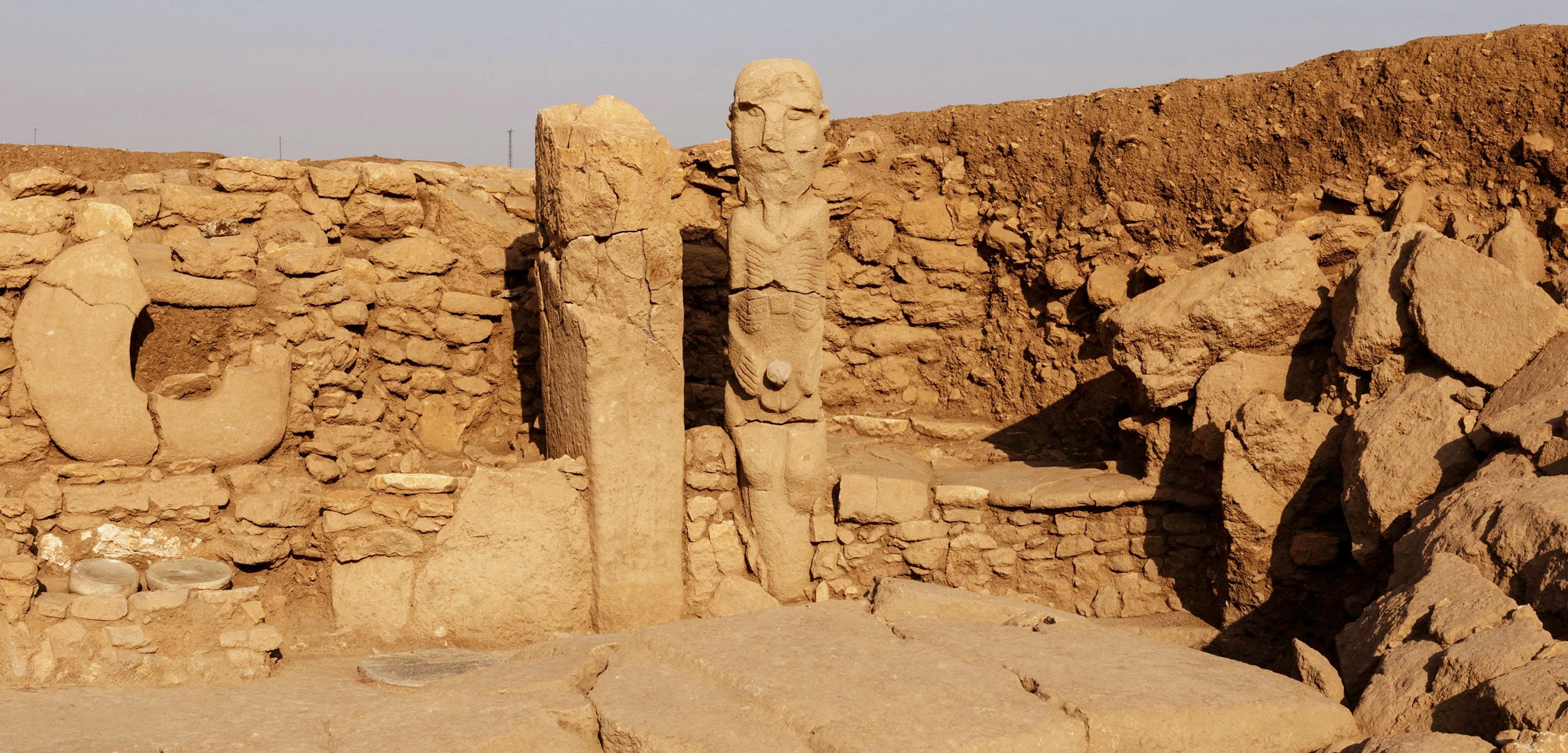
Combine the Neolithic sites of Göbeklitepe and Karahantepe with Şanlıurfa’s museums, sacred landmarks, historic bazaars, and celebrated regional cuisine.
Request This TourAdd Şanlıurfa’s culinary traditions to a private route through Gaziantep, Halfeti, Göbeklitepe, Karahantepe, Harran, Mount Nemrut, and Mardin.
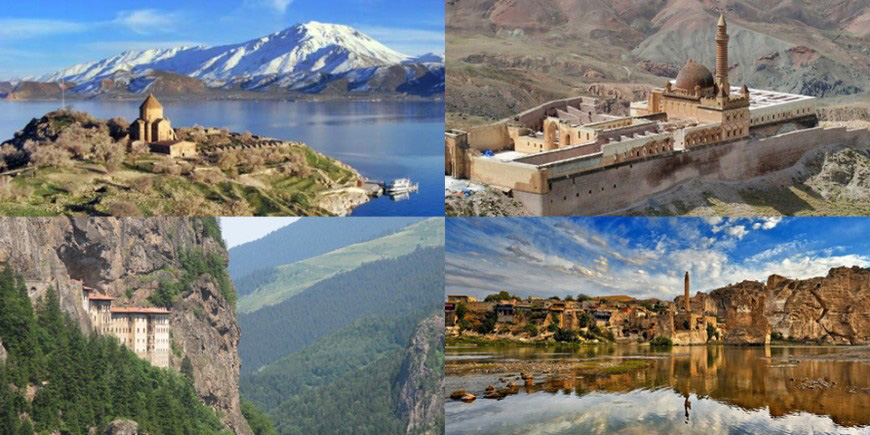
Explore Cappadocia, Gaziantep, Şanlıurfa, Göbeklitepe, Mount Nemrut, Mardin, Lake Van, Ani, Erzurum, and the Black Sea while discovering the regional cultures and flavours of eastern Türkiye.
View Tour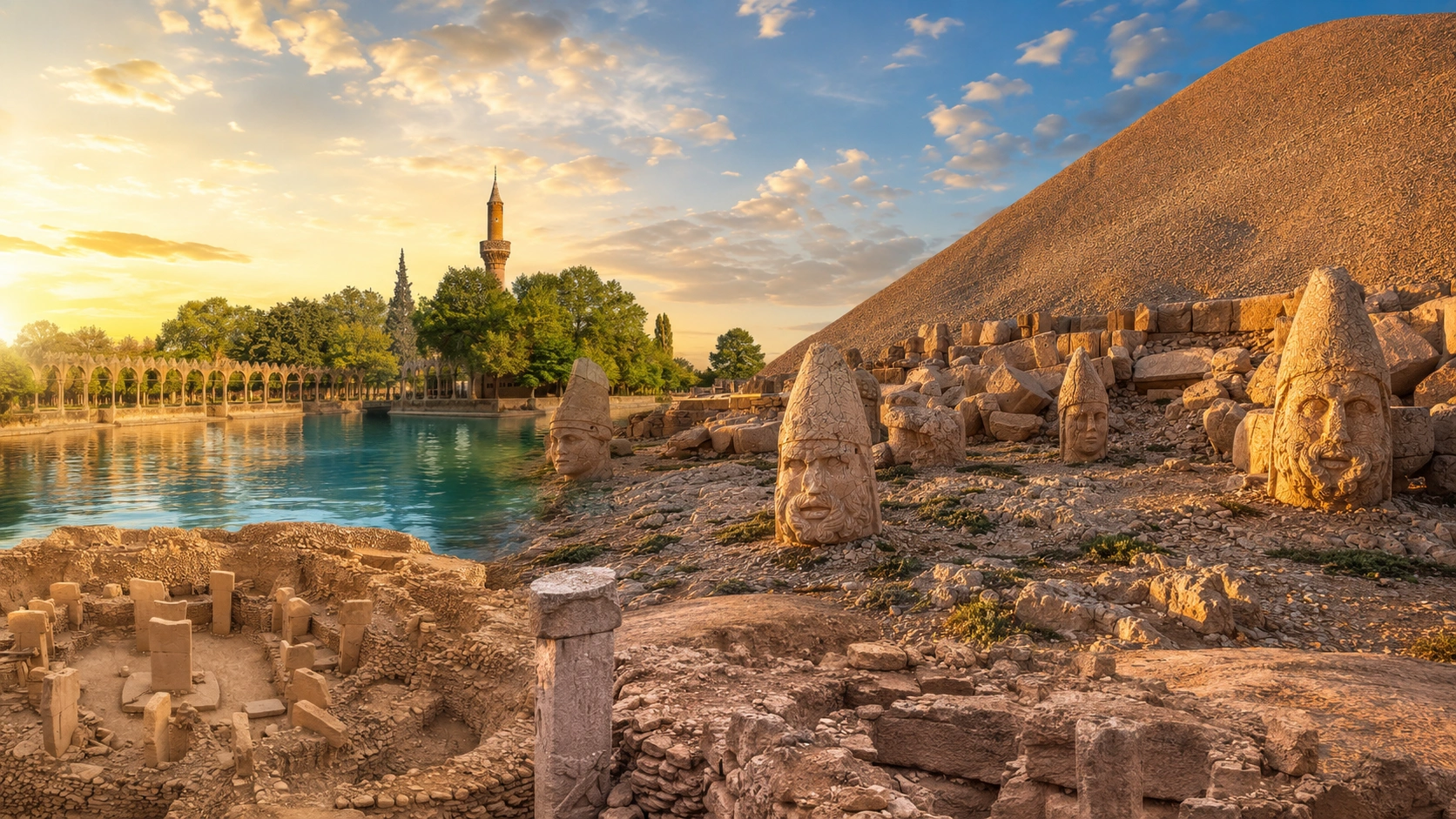
Compare private routes covering Gaziantep, Halfeti, Şanlıurfa, Göbeklitepe, Karahantepe, Harran, Zeugma, and Mount Nemrut, with regional dining experiences arranged according to your interests.
Explore Tours