A Traditional Charcoal Kebab of Şanlıurfa

Urfa Poppy Kebab – Complete Food Guide

Discover zırh-minced İvesi lamb, glowing charcoal,
traditional iron skewers, warm lavash, fresh herbs, and the authentic flavour of Şanlıurfa.

Discover Urfa Poppy Kebab

Discover Urfa Haşhaş Kebabı

Urfa Poppy Kebab, known locally as Urfa Haşhaş Kebabı or Şanlıurfa Haşhaş Kebabı, is one of the most distinctive charcoal-grilled dishes of southeastern Türkiye. The registered preparation uses meat from male İvesi lambs raised in the region. The rested meat is taken from the section locally called boşluk, finely chopped by hand with a traditional crescent-shaped knife called a zırh, and seasoned only with salt.

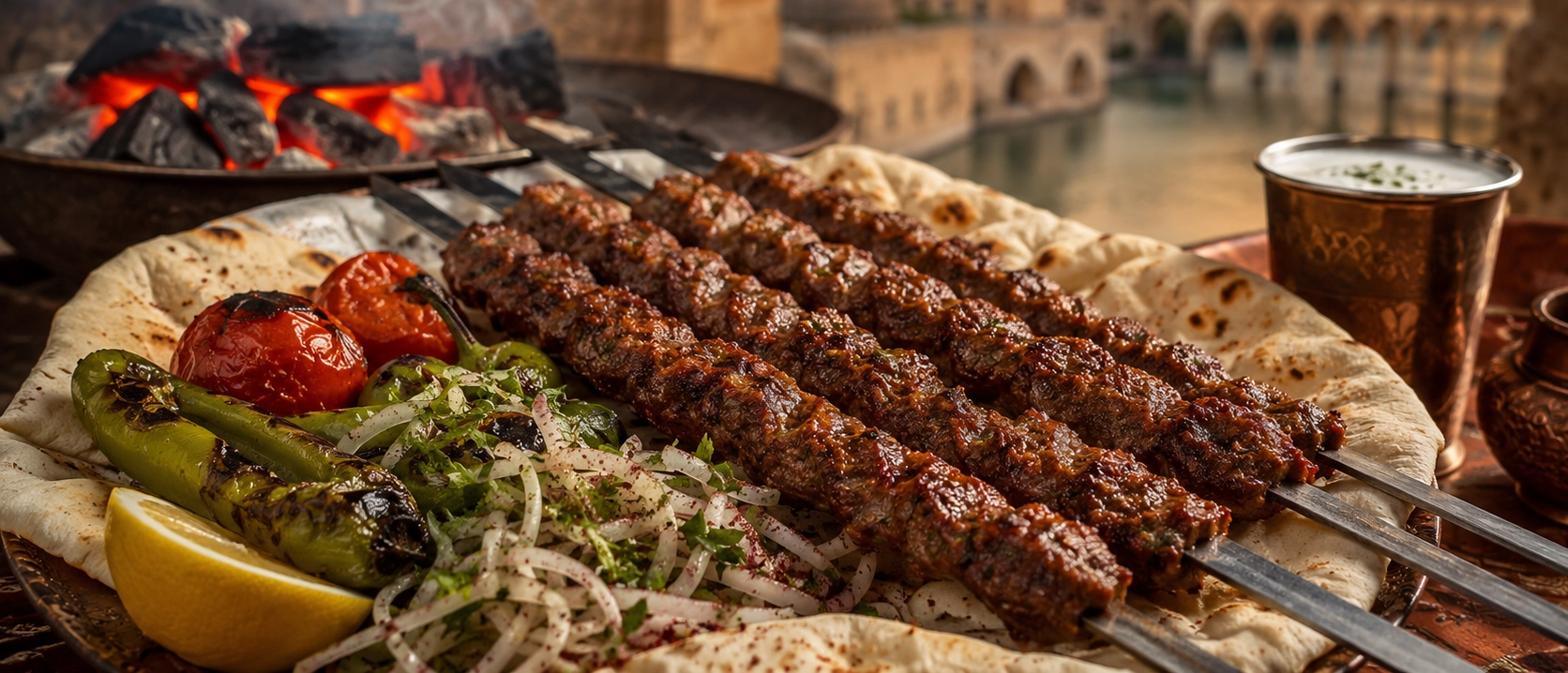
The meat is cooled, shaped onto square-sectioned forged-iron skewers, and cooked over glowing hardwood charcoal. Frequent turning during the first stage of grilling helps the meat bind securely to the skewer. Once cooked, the kebab is traditionally served with onion, parsley, roasted peppers, tomatoes, lemon, and thin lavash or sac bread.

Despite the literal English translation of the name, the officially registered preparation does not contain poppy seeds. The word Haşhaş is the traditional local name of the kebab rather than a description of one of its ingredients.

This complete guide explains the kebab’s ingredients, protected production method, geographical-indication status, zırh-chopping technique, special skewers, charcoal cooking, traditional presentation, flavour, regional importance, visitor tips, and the best way to experience Şanlıurfa’s remarkable kebab culture.

İvesi Lamb

Prepared with carefully selected meat from male İvesi lambs traditionally raised in the Şanlıurfa region.

Zırh-Minced Meat

The rested lamb is finely chopped by hand with a large crescent-shaped knife rather than processed in an ordinary grinder.

Only Salt

The official registered recipe adds no complicated marinade, vegetables, herbs, or spices to the meat—only salt.

Charcoal Grilling

The shaped kebabs are cooked on traditional iron skewers above an even bed of glowing hardwood charcoal.

Know Before You Taste

Urfa Poppy Kebab – Quick Facts

Essential information about one of Şanlıurfa’s geographically indicated charcoal-grilled specialities.

📍

Origin

Şanlıurfa in southeastern Türkiye. The kebab is particularly associated with the city’s regional grill culture and the Birecik area.

Open Şanlıurfa on Google Maps
🥩

Main Ingredient

Zırh-minced meat from the section locally called boşluk of a male İvesi lamb.

🔥

Cooking Method

The shaped lamb is spread onto forged-iron skewers and grilled over glowing hardwood charcoal.

🏅

Geographical Indication

Registered by TÜRKPATENT as Urfa Haşhaş Kebabı with registration number 275.


A Regional Grill Tradition

The Culinary Story of Urfa Poppy Kebab

Discover how carefully selected lamb, skilled hand chopping, and charcoal grilling created one of Şanlıurfa’s protected regional dishes.

Şanlıurfa’s cuisine developed around livestock raised on regional pastures, wheat and bulgur, peppers, fresh herbs, seasonal vegetables, stone ovens, and open charcoal fires. Kebab preparation became a specialised craft in which the quality of the meat and the ability of the cook were considered just as important as the recipe itself.

Urfa Haşhaş Kebabı reflects this philosophy through an unusually simple ingredient list. Its registered preparation depends on male İvesi lamb meat and salt rather than a long mixture of spices, vegetables, or marinades.

The lamb traditionally comes from animals raised in the regional landscape, including pasture areas connected with Karacadağ and the Harran Plain. The meat is taken from the section locally known as boşluk, rested, and chopped by hand with a zırh.

Hand chopping preserves a distinctive texture. Instead of producing a completely uniform paste, the zırh breaks the meat down gradually while allowing an experienced kebab master to control its consistency.

The preparation also requires careful temperature management. The salted meat is cooled before being placed on the skewers. If the meat or skewer becomes too warm, the mixture may lose its hold and fall during cooking.

Once shaped, the kebab is placed above glowing hardwood charcoal and turned repeatedly. This creates a browned exterior, a juicy interior, and the characteristic smoky fragrance associated with Şanlıurfa’s traditional grills.

The importance of its ingredients, production method, local craftsmanship, and relationship with Şanlıurfa led to the registration of Urfa Haşhaş Kebabı as a geographically indicated product.


What Makes It Special

Distinctive Features of Urfa Poppy Kebab

The kebab’s identity comes from its regional lamb, zırh-chopping technique, minimal seasoning, traditional skewers, controlled temperature, and charcoal fire.

Male İvesi Lamb

The registered preparation specifies meat from male İvesi lambs raised in the region. İvesi, also known internationally as Awassi, is a sheep breed strongly connected with southeastern Anatolia.

  • Traditional breed: İvesi lamb
  • Registered specification: Male lamb
  • Regional connection: Şanlıurfa’s pasture landscape

The Boşluk Cut

The meat is taken from a section locally called boşluk, around the lamb’s abdominal or flank area. This cut is valued for producing the kebab’s characteristic texture and flavour.

  • Local name: Boşluk
  • Location: Abdominal or flank area
  • Purpose: Balanced texture for hand chopping

Traditional Zırh Chopping

A zırh is a large, sharp, crescent-shaped knife operated with both hands. The kebab master repeatedly rocks the blade over the rested lamb until it reaches the required minced texture.

  • Tool: Crescent-shaped chopping knife
  • Technique: Two-handed rhythmic chopping
  • Result: Controlled, hand-minced texture

Only Salt

The official geographical-indication recipe adds only salt to the zırh-minced lamb. The flavour is expected to come from the quality of the meat, the fire, and the kebab master’s technique.

  • Seasoning: Salt
  • Registered ratio: Approximately 1–2%
  • No registered marinade: No complex spice mixture

Cold Meat Preparation

After salt is added, the minced meat is chilled. It must be shaped before becoming warm because temperature affects how securely the mixture remains attached to the skewer.

  • Preparation: Rested and chilled
  • Reason: Helps maintain structure
  • Risk: Warm meat may fall from the skewer

Forged-Iron Skewers

Traditional skewers are made from forged iron, have a square cross-section, and measure approximately 50–60 centimetres. One end is pointed, while the handle end has a twisted form.

  • Material: Forged iron
  • Section: Square
  • Length: Approximately 50–60 cm

Hardwood Charcoal

The kebab is cooked over charcoal that has developed into glowing embers. An even fire allows the meat to brown without being overwhelmed by uncontrolled flames.

  • Fuel: Hardwood charcoal
  • Heat: Strong, even embers
  • Character: Smoky and lightly browned

Frequent Early Turning

The kebab is rotated frequently during the first stage of grilling so that all four sides begin cooking and adhere to the skewer. Waiting for one side to cook completely can cause the meat to separate.

  • Initial technique: Turn all four sides frequently
  • Purpose: Secure the meat to the skewer
  • Required skill: Timing and heat control

Does Urfa Poppy Kebab Contain Poppy Seeds?

No poppy seeds appear in the official geographical-indication recipe for Urfa Haşhaş Kebabı. The protected preparation consists of zırh-minced lamb from the specified cut, approximately 1–2% salt, skewers, charcoal, and the traditional accompaniments served beside the cooked meat.

Turkish Name

The registered Turkish name is Urfa Haşhaş Kebabı or Şanlıurfa Haşhaş Kebabı.

English Translation

Haşhaş is literally translated as poppy, which leads to the English names Poppy Kebab or Poppy Seed Kebab.

Registered Ingredients

The official recipe contains lamb and salt. Poppy seeds are not listed as an ingredient.

Traditional Usage

The name should be understood as the established local name of the kebab rather than a description of its seasoning.


Several informal explanations concerning the origin of the name circulate locally, but the geographical-indication registration does not establish a definitive etymology. Visitors should therefore avoid expecting a poppy-seed flavour or visible poppy seeds in the authentic registered version.

Urfa Poppy Kebab’s Geographical Indication

Urfa Haşhaş Kebabı is officially registered by the Turkish Patent and Trademark Office as a geographically indicated product associated with Şanlıurfa.

Registered Name

The official name is Urfa Haşhaş Kebabı / Şanlıurfa Haşhaş Kebabı.

Registration Number

The product carries geographical-indication registration number 275.

Registration Date

The registration was completed on 13 December 2017.

Application Date

The original geographical-indication application was submitted on 9 July 2012.

Indication Type

It is registered as a mahreç işareti, identifying a product closely associated with a particular geographical area.

Registered Institution

The application and registration were made by the Şanlıurfa Chamber of Commerce and Industry.


The registration records the principal characteristics of the dish, including the İvesi lamb, the cut locally called boşluk, zırh chopping, salt ratio, cooling process, skewer dimensions, shaping method, hardwood-charcoal cooking, frequent turning, and traditional presentation.

The official geographical boundary is Şanlıurfa. The production method also emphasises the skill of Şanlıurfa’s kebab masters and the relationship between the dish and lambs raised in the regional pasture environment.

Ingredients Used in Urfa Poppy Kebab

Authentic Urfa Haşhaş Kebabı depends on a very short list of ingredients. Its flavour comes primarily from the lamb, hand-chopping technique, charcoal fire, and careful cooking.

İvesi Lamb Meat

Rested meat from the section locally called boşluk of a male İvesi lamb raised in the regional environment.

Salt

Salt is added at a proportion of approximately 1–2% of the meat’s weight.

Hardwood Charcoal

Charcoal is prepared until the fire becomes a strong, even bed of glowing embers.

Traditional Skewers

Square-sectioned forged-iron skewers measuring approximately 50–60 centimetres are used for shaping and grilling.


Traditional Accompaniments

Bread Open flatbread, thin lavash, yufka, or traditional sac bread
Onion Sliced dry onion or seasonal chopped fresh green onion
Fresh Herbs Parsley, served whole, sliced, or finely chopped according to the restaurant
Grilled Vegetables Charcoal-roasted peppers and tomatoes
Lemon Fresh lemon may be squeezed over chopped onion and parsley
Drink Cold ayran is one of the most traditional accompaniments

Restaurant versions may vary, and some local recipes include additional ingredients. However, the officially registered production method defines the meat mixture as zırh-minced lamb seasoned only with salt.

What Is a Zırh?

The zırh is one of the most important elements in traditional Şanlıurfa kebab preparation. It is a large, sharp, crescent-shaped blade designed to be held and operated with both hands.

Crescent Shape

The curved blade allows the kebab master to rock the tool rhythmically across the meat.

Two-Handed Use

Handles allow the cook to control the blade with both hands while maintaining speed and consistency.

Texture Control

The cook can observe the meat throughout the process and stop chopping when the correct consistency is reached.

Traditional Skill

Effective zırh chopping requires strength, rhythm, experience, and an understanding of the meat’s fat and moisture.


Compared with an ordinary mechanical grinder, zırh chopping gives the kebab master direct control over the size and texture of the minced meat. The method is also an important visual and cultural part of Şanlıurfa’s kebab tradition.

How Urfa Poppy Kebab Is Prepared

The traditional production method follows a precise sequence. Careful temperature control, shaping, and early rotation are essential for keeping the meat attached to the skewer.

1. Select the Meat Use rested meat from the section locally called boşluk of a male İvesi lamb raised in the regional environment
2. Chop with the Zırh Finely chop the lamb by hand with the traditional two-handled crescent-shaped knife
3. Add Salt Mix approximately 1–2% salt into the zırh-minced meat without adding other ingredients to the registered preparation
4. Chill the Mixture Place the salted meat in a refrigerator for a period so that it becomes cold and easier to secure on the skewer
5. Portion the Meat Take approximately 75–80 grams of chilled meat for each skewer
6. Form an Egg Shape Shape the portion in the palm of the hand before placing it onto the iron skewer
7. Spread Along the Skewer Press and spread the meat by hand until it forms a thick kebab approximately 10–12 centimetres long
8. Prepare the Fire Allow the hardwood charcoal to develop into an even bed of glowing embers
9. Turn Frequently Rotate all four sides repeatedly during the first stage so that the meat begins cooking evenly and attaches securely
10. Complete the Cooking Continue grilling until the kebab is evenly browned and cooked while remaining moist inside
11. Remove Carefully Pull the cooked kebab onto the serving plate while preserving the long shape formed on the skewer
12. Serve Immediately Present three skewers with bread, onion, parsley, roasted peppers, tomatoes, lemon, and ayran

How the Meat Is Shaped on the Skewer

The registered description specifies both the approximate weight of the meat and the length of the kebab formed on each skewer.

Weight per Skewer

Approximately 75–80 grams of chilled meat is used for each skewer.

Initial Shape

The meat is first gathered and formed into an egg-like shape in the palm of the hand.

Placement

The shaped portion is passed onto the square-sectioned iron skewer.

Hand Pressure

The cook presses the meat firmly so that it surrounds and grips the skewer.

Finished Length

The meat is spread until it reaches a length of approximately 10–12 centimetres.

Traditional Portion

Three cooked skewers are regarded as one standard portion in the registered presentation.


The kebab is generally thicker and shorter than a long, thin minced-meat kebab. Correct pressure is essential: the meat must be firm enough to remain attached but should not be compressed so aggressively that the finished texture becomes dense.

Why Must the Meat Remain Cold?

Temperature is one of the most important technical details in the production of Urfa Haşhaş Kebabı. The salted meat is cooled before it is shaped and should be placed on the skewers without being allowed to warm significantly.

Better Adhesion

Cold meat maintains a firmer structure and grips the square-sectioned skewer more securely.

Safer Grilling

A stable mixture is less likely to loosen and fall into the charcoal during the first stage of cooking.

Controlled Texture

Keeping the mixture cool helps the cook shape the kebab evenly without excessive softness.

Cool Skewers

The skewers should also not be excessively hot when the raw meat is placed onto them.


Even with properly chilled meat, the first moments above the charcoal require close attention. The kebab master rotates the skewer repeatedly so that every side begins setting before any one surface cooks completely.

How Urfa Poppy Kebab Is Grilled

The grilling process combines strong heat with constant control. The goal is to secure the meat, brown the exterior, cook the centre, and retain moisture without exposing the kebab to uncontrolled flames.

Glowing Embers

The charcoal is prepared in advance and allowed to burn down until a stable bed of glowing embers has formed.

Four-Sided Rotation

The square skewer allows the kebab master to rotate the meat across four distinct sides.

Frequent Early Turning

Every side is exposed to the heat repeatedly before one surface becomes completely cooked.

Final Browning

Once the meat has secured itself to the skewer, grilling continues until the exterior is evenly coloured.


Direct flames can burn the meat or create uneven cooking. Experienced cooks manage the charcoal, distance, timing, and rotation according to the strength of the fire and the thickness of each kebab.

How Urfa Poppy Kebab Is Served

The cooked kebab is removed from the iron skewer while preserving its elongated shape. Three skewers traditionally form one portion and are accompanied by fresh and charcoal-roasted ingredients.

Three Skewers The registered presentation considers three cooked kebab skewers to be one portion
Lavash or Sac Bread Thin bread may be served beneath or beside the kebab or used to prepare a wrap
Dry Onion Sliced onion provides freshness, texture, and sharpness beside the rich lamb
Parsley Fresh parsley adds colour, aroma, and a lighter herbal contrast
Roasted Peppers Charcoal-roasted peppers reinforce the smoky character of the meal
Roasted Tomatoes Warm tomatoes provide sweetness, acidity, and moisture
Green Onion Seasonal chopped green onion may be mixed with parsley and served beside the kebab
Lemon Fresh lemon may be squeezed over the onion and parsley according to preference
Ayran Cold ayran is a classic drink pairing for charcoal-grilled kebabs in Şanlıurfa

Some diners eat the meat directly from the plate with pieces of bread, while others prepare a dürüm by wrapping the kebab with onion, parsley, roasted pepper, tomato, and a small amount of lemon.

What Does Urfa Poppy Kebab Taste Like?

The flavour is deeply savoury, lamb-forward, smoky, and relatively uncomplicated. Because the registered meat mixture contains only lamb and salt, the quality of the ingredients and charcoal cooking remain clearly noticeable.

Natural Lamb Flavour

The kebab preserves the distinctive taste of regional lamb rather than covering it with a powerful marinade.

Charcoal Aroma

Glowing hardwood charcoal gives the surface a gently smoky fragrance and light browning.

Hand-Chopped Texture

Zırh chopping creates a texture that is cohesive enough for the skewer while retaining the character of hand-prepared meat.

Fresh Contrast

Onion, parsley, roasted peppers, tomatoes, lemon, and ayran balance the richness of the lamb.


Visitors expecting an intensely spiced or very hot kebab may be surprised by its simplicity. The authentic registered version is designed to highlight the meat, charcoal, and craftsmanship rather than chilli heat.

Is Urfa Poppy Kebab the Same as Urfa Kebab?

The names can sometimes create confusion because restaurants and local cooks may use regional terminology differently. Both dishes belong to Şanlıurfa’s minced-lamb and charcoal-grilling tradition, but Urfa Haşhaş Kebabı has its own registered production description.

Specific Lamb Selection

The protected Haşhaş Kebabı description specifies male İvesi lamb and the cut locally called boşluk.

Registered Seasoning

Only salt is added to the meat in the official geographical-indication preparation.

Short, Thick Form

Each 75–80 gram portion is shaped into a kebab approximately 10–12 centimetres long.

Three-Skewer Portion

The registered service description defines three individual skewers as one portion.


Some establishments may use the names Urfa kebabı and Haşhaş kebabı in overlapping ways, while others treat them as clearly separate dishes. Asking the restaurant how its version is prepared is the best way to understand what will be served.

Urfa Poppy Kebab and Birecik

Although the registered geographical boundary covers Şanlıurfa, Haşhaş Kebabı is especially associated with Birecik, a historic district situated beside the Euphrates River.

Euphrates Setting

Birecik’s riverfront restaurants create an atmospheric setting for tasting regional kebabs.

Local Grill Culture

The district is known for restaurants where lamb is chopped, shaped, and grilled using traditional techniques.

Regional Stop

Birecik lies on an important travel route between Gaziantep and Şanlıurfa.

Food and Nature

A visit can combine the kebab experience with views of the Euphrates and the region’s natural and cultural heritage.


Visitors travelling between Gaziantep, Halfeti, and central Şanlıurfa can include Birecik as a culinary stop. Restaurant recipes may vary, so travellers specifically seeking the geographically indicated preparation should ask whether the meat mixture contains only lamb and salt.

Where to Eat Urfa Poppy Kebab

Urfa Haşhaş Kebabı can be found in specialist kebab restaurants in Şanlıurfa and is especially associated with establishments in and around Birecik.

Birecik Restaurants

Restaurants near the Euphrates are among the best-known places for experiencing the local tradition.

Şanlıurfa City Centre

Traditional grills and regional restaurants in central Şanlıurfa may also include Haşhaş Kebabı on their menus.

Specialist Kebab Houses

Choose restaurants where the meat is prepared frequently and the charcoal grill is visible.

Ask About the Recipe

Confirm whether the restaurant follows the registered lamb-and-salt version or prepares a house variation.


A busy, clean restaurant with a steady flow of local customers generally offers better turnover of fresh ingredients. Menus, opening hours, portion sizes, and preparation styles can change, so confirm current details locally.

Urfa Poppy Kebab Visitor Tips

Do Not Expect Poppy Seeds

The literal English name is misleading. Poppy seeds are not part of the official registered recipe.

Ask for Haşhaş Kebabı

Use the Turkish name when ordering so the restaurant understands exactly which regional dish you would like.

Check the Ingredients

The registered version contains zırh-minced lamb and salt, although individual restaurants may offer variations.

Watch the Preparation

Seeing the meat chopped with a zırh and shaped by hand adds an important cultural dimension to the meal.

Eat It Immediately

The kebab has its best texture and aroma when eaten directly after leaving the charcoal grill.

Try the Full Portion

Three skewers traditionally make one portion, but serving sizes may differ between restaurants.

Add Fresh Garnishes

Onion, parsley, roasted pepper, tomato, and lemon balance the richness of the lamb.

Order Ayran

Cold ayran complements the warmth, salt, smoke, and richness of the charcoal-grilled meat.

Visit Birecik

A riverfront meal in Birecik offers one of the most atmospheric ways to experience the kebab.

Choose a Busy Grill

High customer turnover usually means that the meat is prepared and cooked more frequently.

Request Mild Garnishes

The registered kebab itself is not chilli-based, but roasted peppers and table seasonings may be hot.

Confirm the Price

Restaurants may price the kebab by portion, plate, or skewer. Ask before ordering when the menu is unclear.

Frequently Asked Questions About Urfa Poppy Kebab

What is Urfa Poppy Kebab?

Urfa Poppy Kebab is a traditional Şanlıurfa kebab made from zırh-minced male İvesi lamb meat seasoned with salt, shaped onto forged-iron skewers, and grilled over hardwood charcoal.

What is Urfa Poppy Kebab called in Turkish?

It is called Urfa Haşhaş Kebabı or Şanlıurfa Haşhaş Kebabı.

Does Urfa Poppy Kebab contain poppy seeds?

No. Poppy seeds are not included in the official geographical-indication recipe. The registered meat mixture contains lamb and approximately 1–2% salt.

Why is it called Poppy Kebab?

The English name is a direct translation of the Turkish word haşhaş. Several explanations for the traditional name circulate locally, but the official registration does not establish a definitive etymology.

Is Urfa Poppy Kebab geographically indicated?

Yes. Urfa Haşhaş Kebabı is registered by the Turkish Patent and Trademark Office with geographical-indication registration number 275.

When was Urfa Poppy Kebab registered?

Its geographical-indication registration was completed on 13 December 2017 following an application submitted on 9 July 2012.

Who registered Urfa Haşhaş Kebabı?

The geographical-indication application and registration were made by the Şanlıurfa Chamber of Commerce and Industry.

What type of meat is used?

The registered preparation specifies meat from male İvesi lambs raised in the regional environment.

Which part of the lamb is used?

The meat comes from the section locally called boşluk, generally understood as an abdominal or flank-area cut.

What is an İvesi lamb?

İvesi, also known internationally as Awassi, is a sheep breed closely associated with southeastern Anatolia and neighbouring regions.

What is a zırh?

A zırh is a large crescent-shaped knife operated with both hands. Kebab masters use it to chop meat gradually into a controlled minced texture.

Is the meat prepared in an ordinary grinder?

The traditional registered method requires the meat to be chopped with a zırh rather than relying on an ordinary mechanical grinder.

Which spices are added?

The official registered recipe adds only salt to the meat. Restaurant variations may contain other ingredients, but these are not part of the protected production description.

How much salt is used?

Salt is added at a proportion of approximately 1–2% of the meat’s weight.

Why is the meat chilled?

Chilling helps the meat remain firm and attached to the skewer. Warm meat or a warm skewer can increase the risk of the mixture loosening during cooking.

How much meat is placed on each skewer?

Approximately 75–80 grams of meat is used for each individual skewer.

How is the meat shaped?

The meat is first formed into an egg-like shape in the palm, placed onto the skewer, and pressed by hand until it reaches approximately 10–12 centimetres in length.

What type of skewer is used?

The traditional skewer is made from forged iron, has a square cross-section, and measures approximately 50–60 centimetres.

How is Urfa Poppy Kebab cooked?

The kebab is grilled over glowing hardwood charcoal. All four sides are turned frequently during the first stage so that the meat begins cooking evenly and remains securely attached.

Why is the skewer turned so frequently?

If one side is allowed to cook completely before the others are exposed to heat, the meat may fail to bind evenly and can fall from the skewer.

How many skewers make one portion?

The registered presentation defines three cooked skewers as one portion.

How is Urfa Poppy Kebab traditionally served?

It is served with dry onion, parsley, roasted peppers, tomatoes, seasonal green onion, lemon, and thin lavash or traditional sac bread.

What should I drink with it?

Cold ayran is one of the most traditional drinks to accompany the smoky, savoury kebab.

Is Urfa Poppy Kebab spicy?

The registered meat mixture is not chilli-based because it contains only lamb and salt. However, roasted peppers and additional table seasonings may be hot.

Is it similar to Adana Kebab?

Both are minced-lamb kebabs cooked over charcoal, but Urfa Haşhaş Kebabı has its own registered meat selection, hand-chopping method, shaping dimensions, seasoning, and presentation.

Is it the same as ordinary Urfa Kebab?

The names may overlap in some restaurants, but the geographically indicated Haşhaş Kebabı follows a specific registered production description.

Are vegetables mixed into the meat?

Not in the official registered recipe. Some restaurant or household variations may add vegetables, herbs, spices, or bulgur, so ask how the local version is prepared.

Can it be eaten as a wrap?

Yes. The cooked kebab can be wrapped in lavash with onion, parsley, roasted pepper, tomato, and optional lemon.

Where is Urfa Poppy Kebab most famous?

It is associated with Şanlıurfa and is particularly well known in Birecik, where restaurants beside the Euphrates serve regional kebabs.

Where can I eat authentic Urfa Poppy Kebab?

Look for established kebab restaurants in Şanlıurfa or Birecik where the lamb is freshly prepared, shaped by hand, and cooked over charcoal.

Is Urfa Poppy Kebab worth trying?

Yes. It provides an excellent introduction to Şanlıurfa’s regional lamb, zırh-chopping craftsmanship, charcoal-grilling tradition, and protected culinary heritage.

Best Photos of Urfa Poppy Kebab

The crescent-shaped zırh, glowing charcoal, forged-iron skewers, rising smoke, fresh garnishes, and Euphrates landscapes provide excellent opportunities for food and travel photography.

Zırh Chopping

Photograph the rhythmic movement of the traditional blade as the kebab master prepares the lamb.

Hand Shaping

Capture the moment each portion is pressed and spread along the square iron skewer.

Skewers over Charcoal

Photograph the kebabs as they are rotated above the glowing embers.

The Finished Portion

Include all three skewers with lavash, onion, parsley, roasted pepper, tomato, and lemon.

Preparing a Dürüm

Capture the kebab as it is placed into warm bread with fresh and roasted garnishes.

Euphrates Views

In Birecik, combine the food experience with river scenery, bridges, boats, and the surrounding landscape.


Ask permission before photographing cooks, restaurant staff, or other guests. Avoid interrupting the preparation process or standing close to the hot charcoal grill and moving skewers.

Şanlıurfa Tours and Culinary Experiences

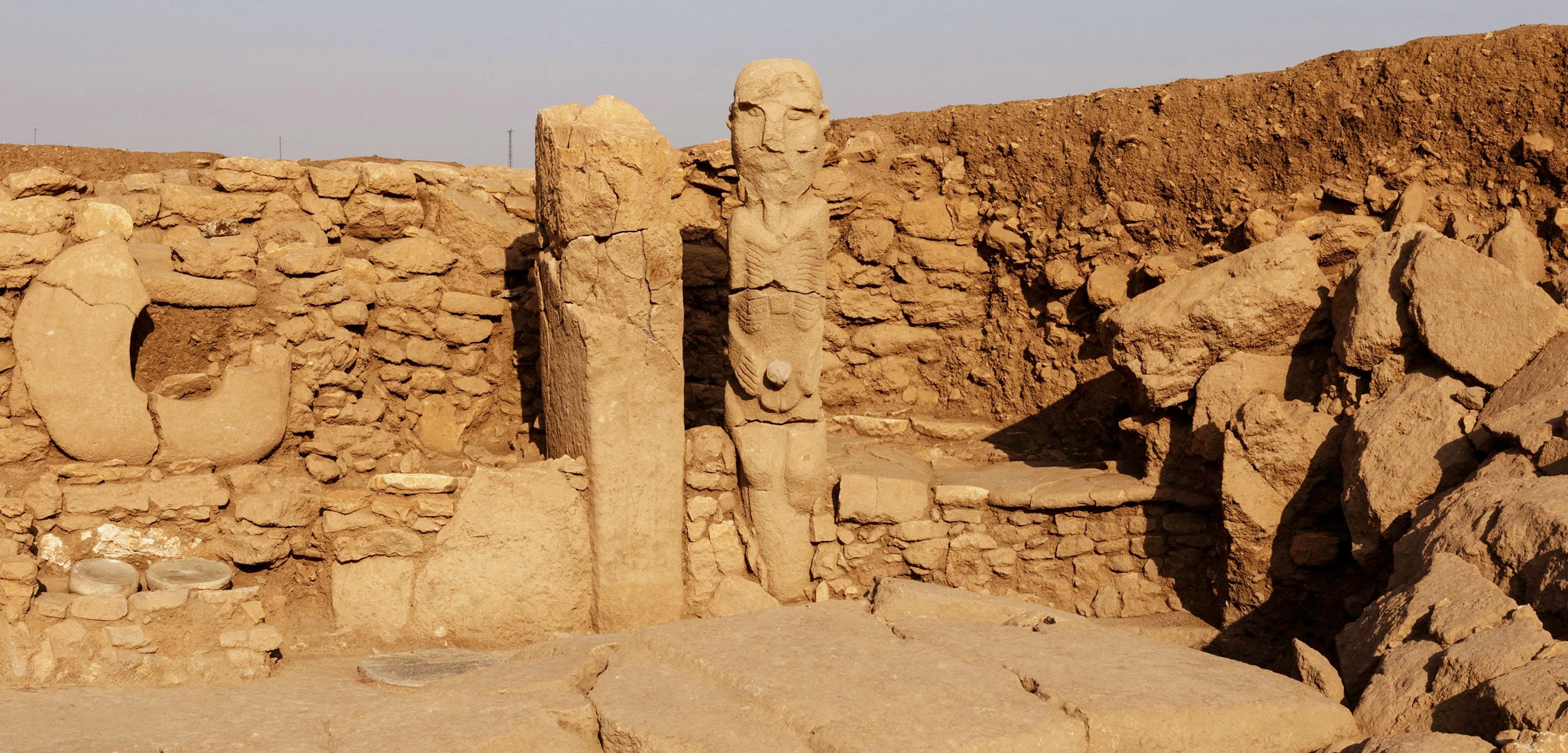
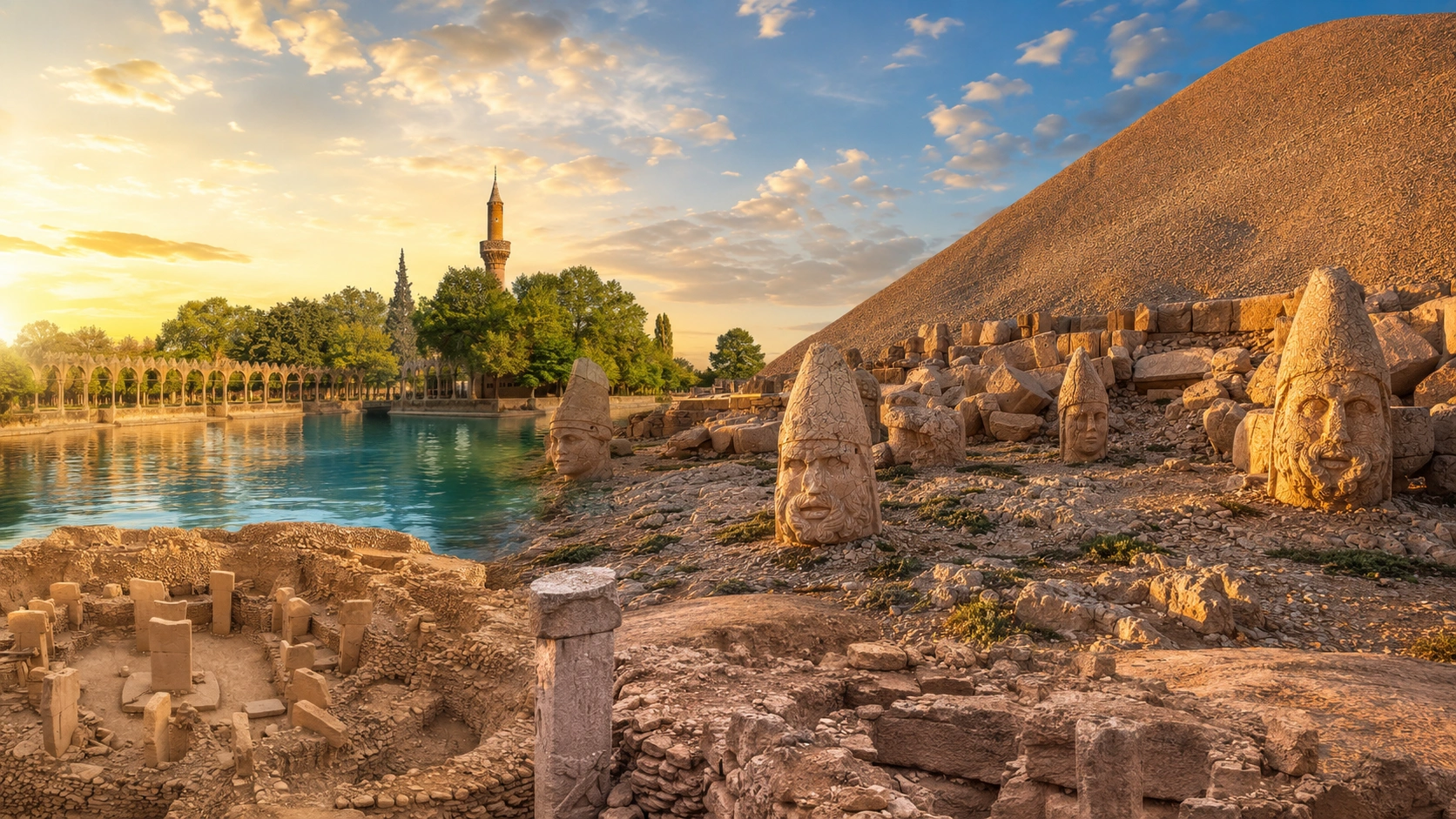
Experience Urfa Haşhaş Kebabı as part of a private journey combining Birecik, Halfeti, Şanlıurfa’s bazaars, regional cuisine, Göbeklitepe, Karahantepe, Harran, Gaziantep, and Mount Nemrut.

Private Şanlıurfa Experiences

Custom-designed services with private transportation, professional guiding, flexible timing, and opportunities to discover local food traditions.

Longer Southeastern Türkiye Journeys

Add Şanlıurfa’s culinary traditions to a private route through Gaziantep, Birecik, Halfeti, Göbeklitepe, Karahantepe, Harran, Mount Nemrut, and Mardin.

Eastern Turkey tour including Sanliurfa regional cuisine

Eastern Turkey Tour – 14 Days

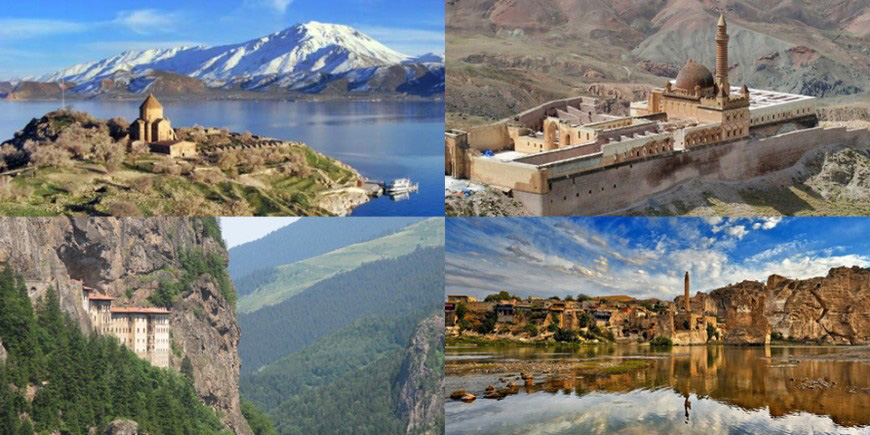
Explore Cappadocia, Gaziantep, Şanlıurfa, Göbeklitepe, Mount Nemrut, Mardin, Lake Van, Ani, Erzurum, and the Black Sea while discovering the regional cultures and flavours of eastern Türkiye.

View Tour