A Dish with a Story
The Culinary Tradition of Miftahi Tas Kebab
Discover how a family-associated recipe and a remarkable cooking vessel became part of Şanlıurfa’s food culture.
Şanlıurfa’s cuisine reflects centuries of pastoral life, agriculture, trade, family cooking, copper craftsmanship, and the abundant use of lamb, bulgur, onions, herbs, spices, and pomegranate products. Many of the city’s best-known foods are defined not only by their ingredients but also by the vessels and techniques used to prepare them.
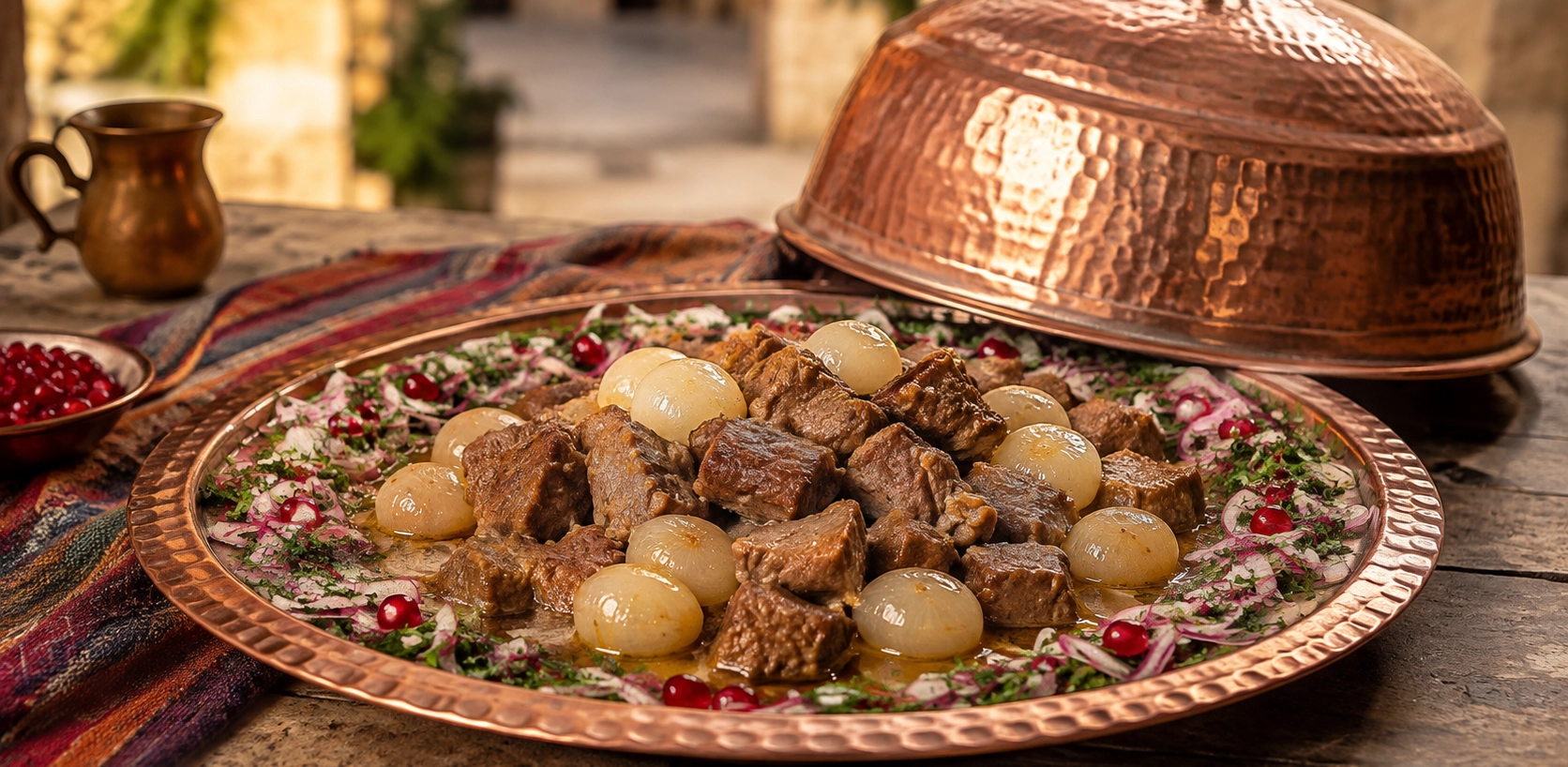
Urfa Miftahi Tas Kebab is an outstanding example of this relationship between recipe and cookware. The dish is prepared in a specially formed bowl and a wide copper plate or pot with raised edges. The filled bowl is inverted onto the plate, enclosing the lamb, pearl onions, and tail fat during the long cooking process.
A culinary account published by Şanlıurfa Metropolitan Municipality associates the name with an old local family known by the nickname Miftahizade, whose members later took the surname Açanal. According to that account, the family prepared this distinctive tas kebab in a vessel made especially for the dish.
The registered version is strikingly restrained in its seasoning. The lamb and pearl onions are mixed only with black pepper. Rather than relying on tomato, paste, garlic, or a long list of spices, the dish develops its character through meat quality, tail fat, onions, low heat, the enclosed cooking vessel, and time.
The final presentation is part of the experience. The dish arrives hot in the vessel in which it was cooked. A parsley, onion, and pomegranate-molasses salad is arranged around the plate, and the central bowl is traditionally opened at the table to reveal the kebab beneath it.
Its historic reputation, specialised production method, association with Şanlıurfa, and continuing place in local culinary culture led to its registration as a geographically indicated product in 2022.