A Dish Shaped by Place
The Culinary Tradition of Urfa Calabash Dish
Discover how local produce, sheep farming, sour flavours, and slow cooking come together in one regional recipe.
Şanlıurfa has one of Türkiye’s most recognisable regional cuisines. Its food traditions were shaped by the city’s climate, agricultural landscape, livestock, trade routes, religious communities, household customs, and the accumulated knowledge of generations of cooks.
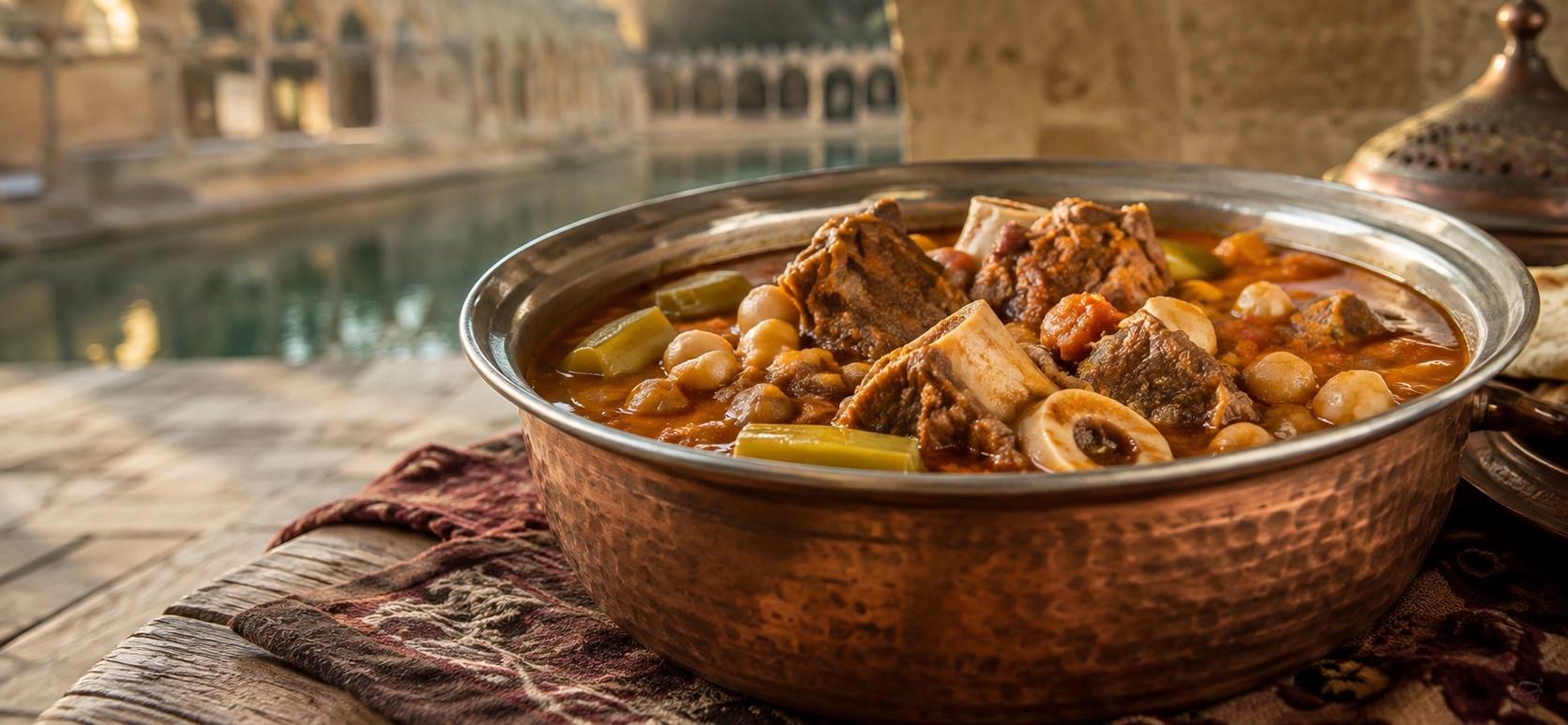
Within this culinary landscape, Urfa Calabash Dish represents the quieter side of local cuisine. While Şanlıurfa is internationally associated with kebabs and charcoal grilling, many family tables also feature carefully balanced pot dishes prepared with vegetables, lamb, legumes, tomato, and souring ingredients.
The dish uses the immature fruit of the bottle gourd, a plant scientifically known as Lagenaria siceraria. In Şanlıurfa, suitable local genotypes are cultivated so that the young fruits can be consumed as vegetables before the shell becomes hard and fibrous.
Lamb from the local İvesi sheep tradition gives the stew depth, while chickpeas and marrow bones strengthen the cooking liquid. Fresh tomato juice replaces water, concentrating the flavour and creating the dish’s characteristic red sauce.
Sour pomegranate juice or verjuice introduces a bright acidity. This sour-savoury profile is an important feature of many southeastern Anatolian recipes, where fruit acids, sumac, pomegranate, or unripe grape juice are used to balance meat and vegetables.
The combination of local raw materials, a recognised preparation method, regional culinary knowledge, and a strong association with Şanlıurfa led to the official registration of Urfa (Şanlıurfa) Su Kabağı Yemeği as a geographically indicated product.