Sprouted Wheat Base
The defining ingredient is wheat that has been germinated under carefully controlled conditions before being crushed.
- Base: Germinated wheat
- Process: Moistening in darkness
- Target shoots: About 4–5 cm






Taraklı Uğut Dessert, known in Turkish as Taraklı Uğut Tatlısı, is one of the most distinctive traditional foods of Taraklı in southern Sakarya Province. Made from sprouted wheat, wheat flour and water, it develops its sweetness through a long and carefully controlled production process rather than through added sugar.
The dessert is prepared by germinating wheat, crushing the sprouts to extract their liquid, combining the wheat-sprout extract with a small amount of water and flour, and boiling the mixture until it becomes dark, glossy, thick and marmalade-like. The process demands patience, constant stirring and experienced judgement.
Taraklı Uğut Tatlısı is a registered geographical indication of Türkiye. It is registered as a Mahreç İşareti and all production stages must take place within Taraklı district. The protected specification also confirms that no sugar, food additives, flavourings or flavouring ingredients are used.
This complete guide explores the dessert’s history, cultural meaning, protected status, ingredients, wheat-sprouting stage, extraction method, long boiling process, flavour, texture, traditional occasions, storage, buying tips, local food culture, photography opportunities, nearby attractions and the best ways to experience Taraklı beyond its famous Ottoman houses.
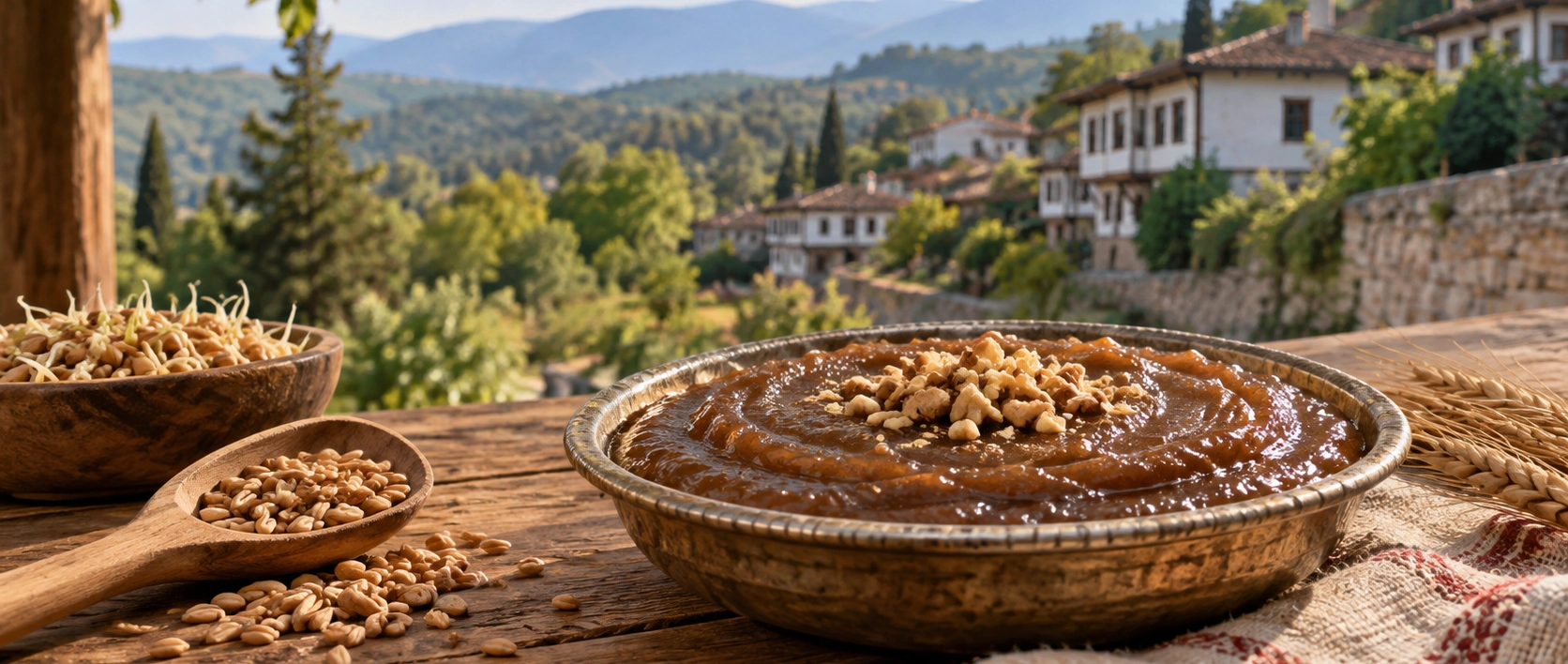
Traditional Taraklı Uğut Dessert contains no added sugar; its characteristic sweetness develops from wheat and the production method.
Wheat is germinated in darkness until the shoots reach the correct stage, then crushed to release the liquid used for the dessert.
The mixture is cooked slowly in large cauldrons and continuously stirred until it reaches its deep brown colour and thick flowing texture.
Taraklı Uğut Tatlısı is registered in Türkiye as a geographical indication with registration number 809.
Essential information about one of Taraklı’s most unusual and deeply rooted traditional foods.
Taraklı district in southern Sakarya Province, Türkiye.
Open Taraklı on Google MapsSprouted wheat, combined with special-purpose wheat flour and drinking water.
Dark brown, homogeneous, thick yet flowing, with a marmalade-like consistency.
Registered as Taraklı Uğut Tatlısı with Turkish geographical-indication registration number 809.
Uğut is more than a sweet preserve. In Taraklı, its difficult preparation has long been connected with shared labour, special occasions and collective memory.
Taraklı is best known to many visitors for its preserved Ottoman houses, narrow streets and quiet historic atmosphere. Yet the district also carries an important rural food heritage, and Taraklı Uğut Tatlısı is one of its most distinctive examples.
The dessert has been prepared in Taraklı for generations. Its production takes time because the wheat must first be cleaned, soaked and carefully germinated before the edible extract can be separated and cooked.
Traditional production depends heavily on experience and timing. The sprouts must reach the desired stage without becoming green, the extracted liquid must be handled correctly, and the cooking mixture must be stirred continuously so it thickens evenly without scorching or developing a floury texture.
The registered product description records Taraklı Uğut Dessert as a food traditionally associated with Hıdırellez celebrations, weddings, religious and public holidays, and commemorative occasions. Because preparation is long and labour-intensive, families and neighbours have historically come together in an imece spirit of shared work.
This communal preparation has helped make uğut a symbol not only of local gastronomy but also of solidarity, cooperation and continuity within Taraklı’s community life.
Its protected geographical-indication status today formally recognises the reputation of Taraklı Uğut Tatlısı and the specialised local production method behind it.
The protected product is defined not by elaborate ingredients but by the transformation of wheat through germination, extraction and long cooking.
The defining ingredient is wheat that has been germinated under carefully controlled conditions before being crushed.
Sugar is not part of the registered ingredient list, making the production method central to the dessert’s natural sweetness.
Long cooking gradually transforms the pale wheat liquid into the dark brown colour associated with finished uğut.
The finished dessert is thick and cohesive but remains flowing rather than setting into a solid confection.
The boiling stage demands continuous stirring, careful thickening and close attention to colour and consistency.
The registered specification uses only wheat, special-purpose wheat flour and drinking water.
Its demanding preparation encouraged neighbours and families to work together during important community occasions.
Once the desired consistency is reached, the dessert is filled into glass jars while still hot.
Taraklı Uğut Tatlısı is officially registered by the Turkish Patent and Trademark Office as a geographical indication associated with Taraklı district in Sakarya Province.
The official geographical-indication name is Taraklı Uğut Tatlısı.
Taraklı Uğut Tatlısı carries geographical-indication registration number 809.
The geographical indication was registered on 27 July 2021.
It is registered as a Mahreç İşareti, a Turkish geographical-indication designation linked to a recognised product and defined production method.
The registration holder is the Sakarya Chamber of Commerce and Industry.
The defined geographical area is the Taraklı district of Sakarya Province.
The protected specification requires all stages of production to take place within the stated geographical boundary. The product’s reputation is therefore inseparable from Taraklı itself and from the local skill used in preparing it.
One of the most remarkable features of Taraklı Uğut Dessert is the simplicity of its registered ingredient list. The complexity comes from technique rather than from a long list of additions.
Wheat, preferably grown in the local area, is cleaned, washed and germinated to create the sprouted-wheat base.
A controlled quantity of wheat flour is added during boiling to adjust dry matter and support the desired final consistency.
Water is used during wheat preparation and in the cooking mixture.
The registered preparation does not use sugar, making uğut very different from most preserves and traditional desserts.
The geographical-indication specification does not include food additives in the production method.
Artificial or added aroma and flavouring ingredients are not part of the protected production method.
The production process begins by transforming ordinary wheat into germinated wheat. This stage is essential because it creates the raw material that gives uğut its distinctive sweetness and character.
The registered production description recommends approximately 18–26°C for wheat-sprout development with relative humidity around 40–50%. Under suitable conditions, germination takes about five to six days.
Once germination has reached the correct stage, the sprouted wheat is processed to release the liquid that will become the heart of the dessert.
The mature sprouts are traditionally transferred to a stone mortar, or taş dibek.
The sprouted wheat is pounded with a suitable food-safe pestle or similar tool to break down the plant material.
After crushing, the mass is strained so the wheat-sprout liquid can be separated from the fibrous material.
The extract should be separated before the sprouts begin turning green.
If the roots and shoots become green, the finished dessert can develop an undesirable bitter note.
At the proper stage, the roots and shoots remain pale or whitish because the wheat has been germinated away from sunlight.
The final transformation takes place in the cauldron. This is the stage where liquid wheat extract slowly becomes the rich brown, thick and glossy dessert associated with Taraklı Uğut Tatlısı.
The registered specification gives a reference ratio of approximately 5 kg of water for 50 kg of sprouted wheat. During boiling, wheat flour is added at about 4% to help regulate dry matter and support the long cooking process.
Taraklı Uğut Dessert may look simple in a jar, but the protected production method depends on skilled judgement at nearly every stage.
The wheat must germinate sufficiently without being allowed to turn green and bitter.
The wheat must remain moist enough to germinate while avoiding stagnant conditions.
Crushing and straining must release enough of the sprouted wheat liquid for an even cooking base.
Too much flour would change the texture, while insufficient thickening would prevent the characteristic consistency.
Long cooking requires close attention so the mixture darkens and thickens without burning.
Continuous stirring is one of the defining pieces of labour behind traditional uğut production.
Taraklı Uğut Dessert has a naturally sweet, grain-based flavour very different from sugar syrups, fruit jams or milk desserts. Its character comes from sprouted wheat and prolonged cooking.
The sweetness is produced without adding refined sugar to the registered recipe.
A gentle cereal and malt-like character reflects the sprouted wheat base.
Long heating creates a richer and darker flavour than the raw wheat-sprout liquid.
The dessert has a substantial spoonable texture rather than a thin syrup consistency.
Its marmalade-like body makes it suitable for spreading on bread at breakfast.
The flavour comes from wheat and the cooking method rather than from added flavourings.
The geographical-indication registration describes Taraklı Uğut Dessert as a homogeneous product with a dark, flowing consistency and characteristic brown colour.
The finished dessert should have an even texture rather than visible flour lumps or separated layers.
Long cooking gives the final product its distinctive dark appearance and dense body.
Although thick, properly prepared uğut remains somewhat fluid and spoonable.
The registered specification requires a dry-matter content of at least 45%.
The registered specification sets a maximum ash content of 0.7% on a dry-matter basis.
The dessert is transferred into glass jars while still hot after reaching the desired final consistency.
The social story of uğut is inseparable from the effort required to make it. Long hours of preparation naturally encouraged collective work, turning a food-production process into a community event.
Families and neighbours traditionally shared the labour of sprouting, crushing, boiling and stirring.
The protected product description identifies Hıdırellez celebrations as one of the occasions when uğut has traditionally been prepared.
Uğut has also been associated with weddings and other important family gatherings.
Religious and public holidays are among the traditional times when the dessert may be prepared and shared.
Community memorial and remembrance events are also part of the dessert’s recorded local cultural context.
The difficult process has made uğut a symbol of cooperation, continuity and local identity in Taraklı.
Uğut can be enjoyed very simply. Its concentrated flavour and spreadable texture mean that only a small serving is needed to experience its distinctive character.
Taste a small spoonful on its own to appreciate the natural wheat sweetness and texture.
Uğut can be served at breakfast as a traditional spread.
Its marmalade-like consistency makes it easy to spread over fresh village bread or toasted bread.
A small serving can accompany Turkish tea as part of a local tasting experience.
Visitors interested in regional gastronomy can compare uğut with the more familiar syrup- and milk-based desserts of Türkiye.
Because the flavour is concentrated and unusual, first-time visitors may prefer a modest spoonful before taking a larger serving.
Proper storage matters because Taraklı Uğut Dessert is produced without the added sugar or additives used in many commercial preserves.
Keep the sealed product at room temperature in a cool, dry environment away from direct sunlight.
The storage area should be clean and free from strong external smells.
The protected specification gives a recommended consumption period of up to 12 months from production.
Once the jar is opened, it should be stored under refrigerator conditions.
The registered production description recommends consuming the opened product within approximately 15 days.
For home use, always serve with a clean utensil to help protect the remaining product in the jar.
Visitors may encounter uğut through local producers, food shops, agricultural organisations, regional product sellers and selected businesses in or around Taraklı.
Uğut has a distinctive grain-based flavour that is unlike conventional fruit jam or syrup desserts, so a small tasting is ideal for first-time visitors.
Local sellers may be able to explain whether the batch was made by traditional sprouting, stone crushing and long cauldron cooking.
Authentic uğut is dense and spoonable but still has a flowing, marmalade-like consistency rather than a solid texture.
Combine your tasting with a walk among Taraklı’s Ottoman-era houses and quiet historic streets.
If you visit during the right season, Taraklı Artichoke offers another geographically indicated taste from the district.
Small local businesses and regional-product sellers are often the best places to discover jars of uğut and other Taraklı foods.
A sealed jar travels more easily than many fresh desserts, provided it is protected from heat and handled according to storage instructions.
If you are invited to observe production, ask before photographing people, workspaces or private preparation areas.
Spring celebrations connected with Hıdırellez are historically among the occasions associated with traditional uğut preparation.
Local cultural events can provide opportunities to encounter traditional foods and learn how they fit into community life.
Uğut has long been part of special-event food traditions rather than merely an everyday commercial sweet.
Taraklı is especially atmospheric in cooler weather, making food tasting a natural part of an old-town visit.
Jarred uğut can provide a traditional local taste when many fresh seasonal crops are unavailable.
Because the dessert is preserved in sealed jars, it may be available throughout the year depending on producer stocks.
Taraklı’s food identity reflects the agricultural landscapes and household traditions surrounding its historic centre. Uğut is one of the district’s most unusual tastes, but it sits within a wider world of seasonal produce and village cooking.
The district’s famous wheat-sprout dessert combines simple ingredients with demanding traditional craftsmanship.
Another registered geographical indication of Taraklı, grown in early and late local forms.
Fresh local-style bread is a natural companion for a spoonful of dense, spreadable uğut.
Fields, orchards and gardens around southern Sakarya contribute fresh ingredients to local household cuisine.
Taraklı is also associated with seasonal strawberry cultivation and small-scale rural food production.
Food discovery adds another layer to a walking visit through restored houses, traditional streets and local shops.
A tasting stop in Taraklı can easily become a wider journey through Ottoman architecture, canyon scenery, mountain plateaus and the productive countryside of southern Sakarya.
Walk among traditional Ottoman houses, narrow streets, small shops and one of Sakarya’s most atmospheric historic districts.
Explore a rugged natural landscape close to Taraklı and add a countryside stop to your food and heritage journey.
Discover forest scenery, cooler mountain air and broad highland landscapes above the Taraklı countryside.
You are exploring one of Taraklı’s most unusual local foods, prepared from sprouted wheat without added sugar.
Discover another geographically indicated speciality from Taraklı and compare the district’s agricultural and culinary traditions.
Continue toward neighbouring Geyve to discover one of southern Sakarya’s best-known geographically indicated fruits.
Taraklı Uğut Dessert is a traditional sweet made in Taraklı from sprouted wheat, wheat flour and water. It has a thick, flowing, marmalade-like consistency and is produced without added sugar.
It is called Taraklı Uğut Tatlısı.
Its protected geographical area is Taraklı district in Sakarya Province, Türkiye.
Yes. Taraklı Uğut Tatlısı is officially registered as a geographical indication in Türkiye.
Taraklı Uğut Tatlısı carries registration number 809.
The geographical indication was registered on 27 July 2021.
The registration holder is the Sakarya Chamber of Commerce and Industry.
Taraklı Uğut Tatlısı is registered as a Mahreç İşareti.
The protected ingredient list consists of wheat, special-purpose wheat flour and drinking water.
No. Sugar is not used in the protected production method.
The registered specification states that food additives are not used in the product preparation.
No. Added aroma and flavouring food ingredients are not part of the protected production method.
Germination transforms the wheat and creates the sprouted-wheat material whose extracted liquid provides the characteristic sweetness and flavour of uğut.
Under suitable conditions, the registered process describes germination taking approximately five to six days.
The germination stage is completed when the shoots reach roughly 4–5 cm.
The wheat is germinated in darkness so the shoots do not turn green. Green sprouts can give the finished dessert an undesirable bitter taste.
The mature sprouts are traditionally crushed in a stone mortar with a suitable pestle and then strained to separate the liquid.
The registered production description notes that copper cauldrons are preferred, although suitable food-safe steam cauldrons may also be used.
Wheat flour helps regulate the dry-matter level, supports thickening and helps the product withstand prolonged cooking.
The protected production description gives approximately 4% wheat flour during the boiling stage.
Continuous homogeneous stirring helps prevent lumps, scorching and an uneven floury texture while the mixture thickens.
The finished dessert has characteristic brown to deep-brown tones.
It is homogeneous, thick and flowing, with a consistency often compared to marmalade.
After cooking, it is filled hot into glass jars.
The registered specification recommends consumption within up to 12 months from the production date when stored correctly.
Keep it at room temperature in a cool, dry place away from sunlight and strong odours.
After opening, the jar should be kept refrigerated.
The protected specification recommends consuming it within approximately 15 days after opening.
In Taraklı it has traditionally been associated with Hıdırellez celebrations, weddings, holidays and various commemorative occasions.
Because production is long and demanding, families and neighbours historically shared the work, making the dessert a symbol of cooperation and community solidarity.
It can be eaten by the spoon, served at breakfast or spread on bread like a dense preserve.
Taraklı is known for preserved Ottoman houses, traditional streets, Taraklı Artichoke, local crafts, rural scenery and nearby natural attractions such as Karagöl Plateau and Tuzla Canyon.
Yes. Historic Taraklı, Karagöl Plateau, Tuzla Canyon and nearby Geyve can easily be combined into a wider southern Sakarya route.
Uğut is visually modest when seen only in a jar, but the production process can tell a powerful story through photography: pale sprouted wheat, traditional tools, large cauldrons, constant stirring and the final dark brown dessert.
Photograph the pale roots and shoots before they are crushed, showing the ingredient at its most distinctive stage.
A traditional taş dibek, pestle and crushed wheat can visually explain the extraction stage.
Steam, firelight and a large cooking vessel create strong images of the long production process.
Hands and long stirring tools communicate the labour behind the dessert better than a finished jar alone.
The thick brown dessert flowing from a ladle or container can show its characteristic texture.
Pair the food with traditional houses, wooden architecture and old streets to connect flavour with place.
Always ask permission before photographing private producers, kitchens or food-preparation areas at close range. Traditional food production is often part of family and working life rather than a formal visitor attraction.
Combine Taraklı’s historic streets, traditional foods, rural landscapes and nearby natural attractions on a private journey through southern Sakarya.
Custom-designed private journeys with flexible timing, private transportation and opportunities to explore lesser-known food traditions, heritage sites and landscapes of Sakarya Province.
Explore historic Taraklı, discover its traditional food culture, taste regional products when available and visit selected cultural and natural attractions on a private journey through southern Sakarya.
Request This Tour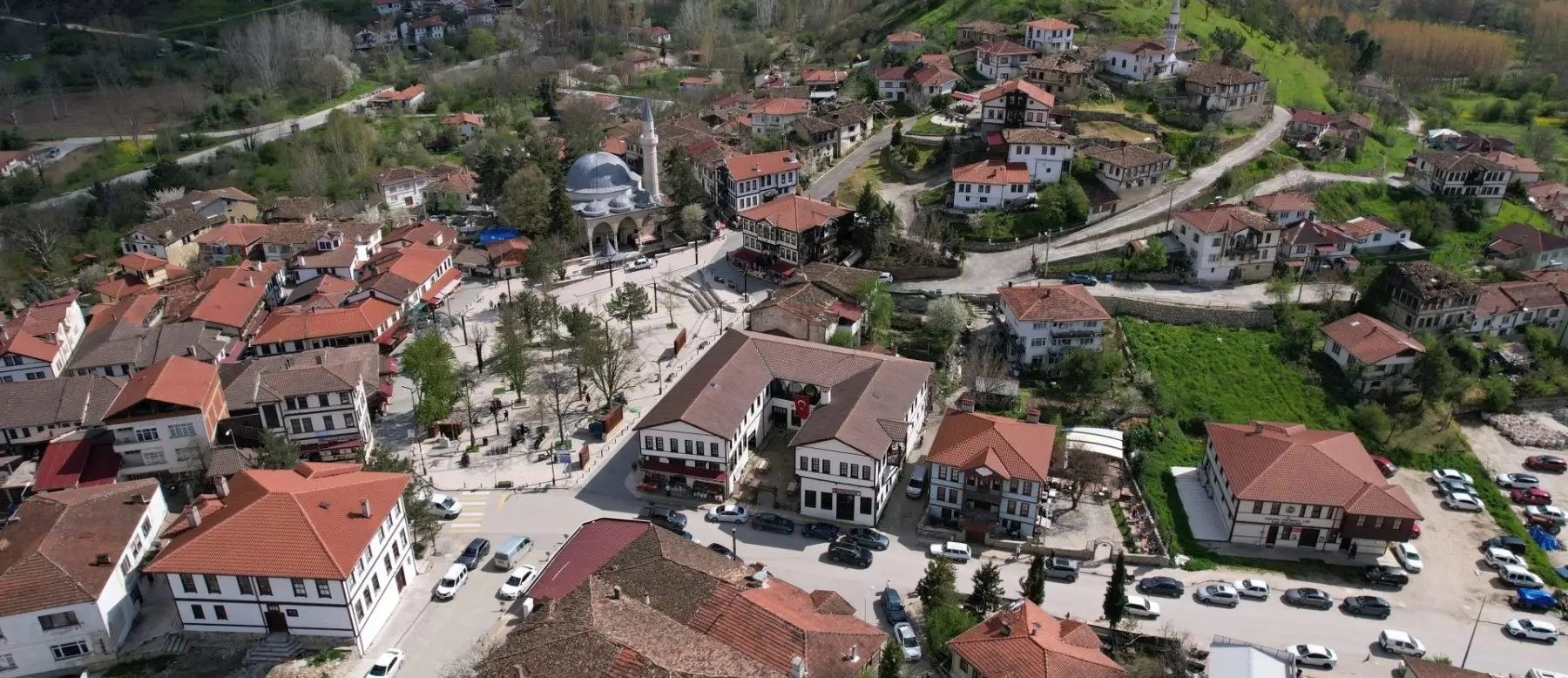
Combine Taraklı with Karagöl Plateau, Tuzla Canyon, neighbouring Geyve and selected cultural, agricultural and natural highlights across southern Sakarya.
Request This Tour