A Pastry Shaped by Hand
The Culinary Tradition of Şanlıurfa Ağzı Yumuk
Discover how careful shaping, local ingredients, and inherited kitchen knowledge define this regional speciality.
Şanlıurfa’s cuisine is known for its lamb dishes, bulgur recipes, richly seasoned kebabs, clarified butter, peppers, handmade doughs, and meals prepared for large family tables. Within this extensive culinary tradition, pastries are not simply side dishes. They form an important category of recipes that combine flour, meat, fat, skilled handwork, and methods passed between generations.
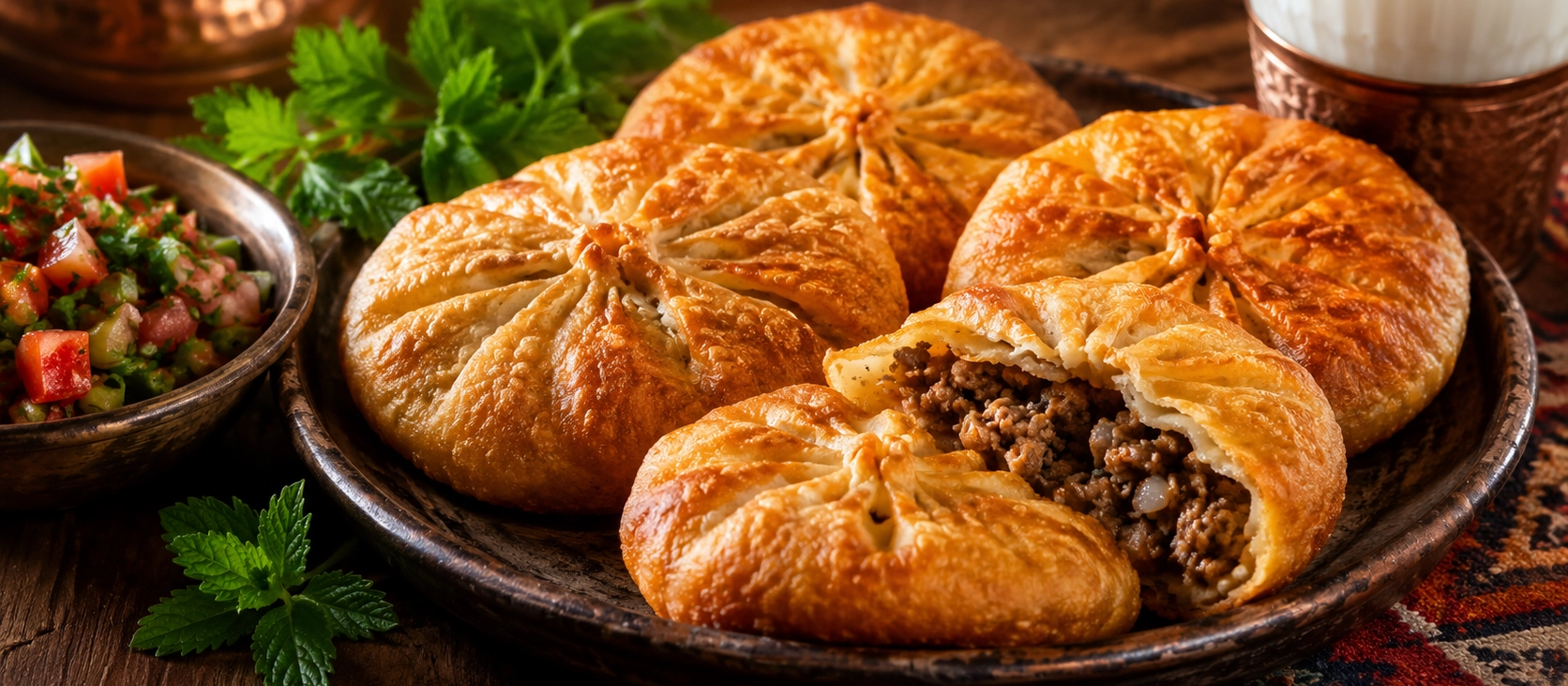
Şanlıurfa Ağzı Yumuk is immediately recognisable because of the way its dough is closed. After the filling is placed in the centre, the edges are gathered upward and joined together. The closed centre gives the pastry both its name and its visual identity.
The local pronunciation Yumuk appears beside the standard Turkish form yumuk in the official registered name. Both forms refer to the same protected product and reflect the connection between Şanlıurfa’s spoken culture and its food vocabulary.
Although the ingredient list is relatively short, successful preparation requires experience. The dough must be soft enough to roll and gather without cracking, yet strong enough to contain the filling during frying. The filling must be cooked and cooled sufficiently, and the final pleated top must be closed with exactly the right amount of pressure.
If the centre is squeezed too firmly, the folded section may remain undercooked. If it is left too loose, the filling can escape into the oil. A light final press helps the pastry remain stable in the pan and allows both sides to brown more evenly.
These details show why Ağzı Yumuk is more than a simple fried pastry. Its identity comes from local language, Şanlıurfa clarified butter, lamb filling, controlled shaping, frying technique, and the practical knowledge of the person preparing it.