Intense Quince Aroma
Real quince purée gives the confection its characteristic fruit fragrance and flavour.
- Fruit: Osmaneli-grown quince
- Character: Aromatic
- Flavour: Fruit-forward






Osmaneli Quince Delight, known in Turkish as Osmaneli Ayva Lokumu, is a geographically indicated fruit-based Turkish delight produced in the Osmaneli district of Bilecik Province in northwestern Türkiye. It is made with quince grown in Osmaneli, transformed into a smooth but naturally textured purée and cooked with sugar, corn starch, water and citric acid.
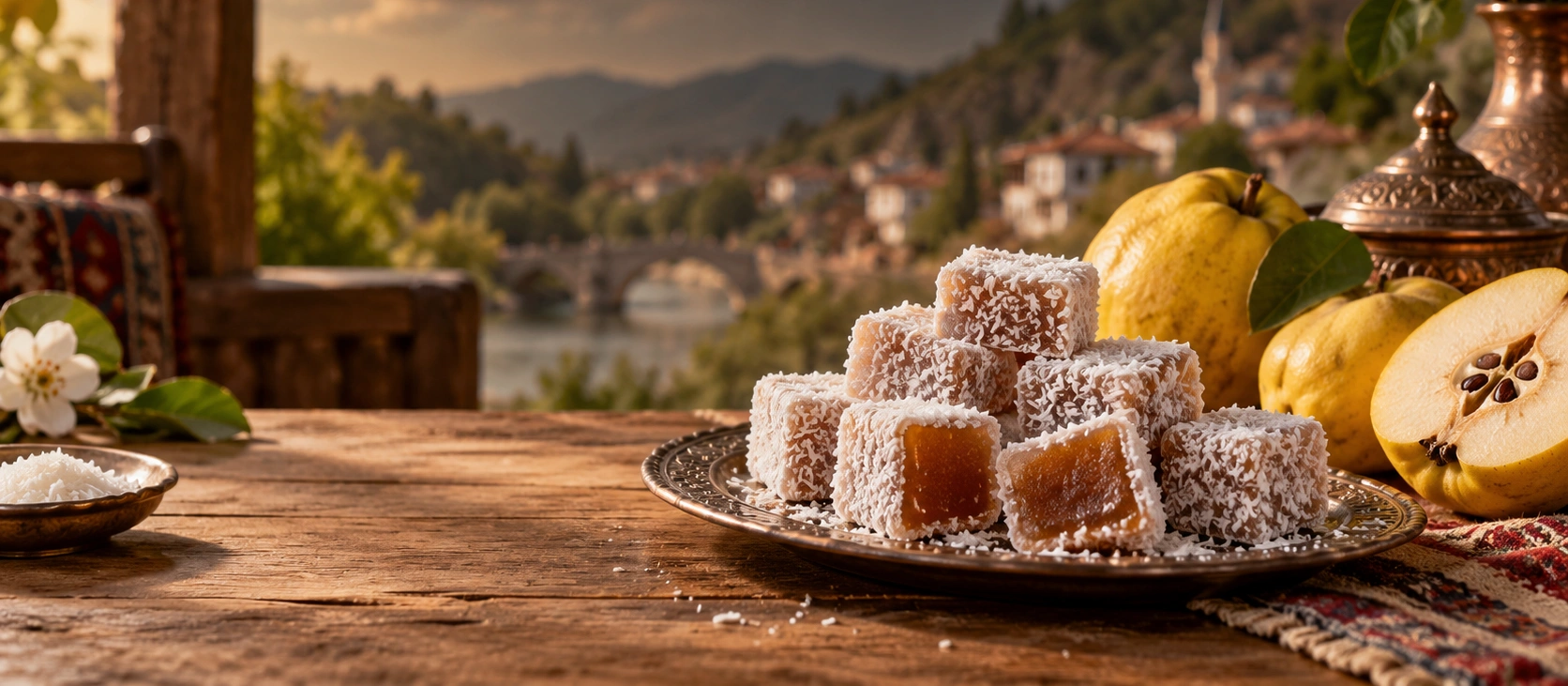
Unlike many brightly coloured or highly glossy varieties of Turkish delight, Osmaneli Ayva Lokumu has a distinctive matte brown appearance, relatively low gel-like transparency and an unmistakable quince aroma. The natural structure of the quince purée gives the confection a lightly textured sensation that can feel almost as though tiny pieces of fruit remain within the delight.
The finished lokum is cut into cubes and coated with grated coconut, creating a soft contrast between the aromatic quince interior and the delicate outer layer. Its identity is closely tied to Osmaneli’s long association with quince cultivation and to the skilled production method developed within the district.
Osmaneli Ayva Lokumu is protected in Türkiye as a Mahreç İşareti geographical indication under registration number 681. The geographical boundary is the entire Osmaneli district of Bilecik Province, and the registered specification requires both the use of quince grown within Osmaneli and completion of all production stages inside the district.
This guide explores Osmaneli Quince Delight’s protected status, ingredients, quince harvest, purée preparation, traditional production method, cooking and cooling stages, texture, flavour, coconut coating, storage, current production, buying tips, gift culture, visitor advice and ways to combine this regional speciality with Osmaneli’s historic streets and countryside.
Osmaneli Ayva Lokumu received geographical-indication registration in 2021.
The protected recipe requires quince grown within Osmaneli district.
The finished cubes are covered with grated coconut after cooling and cutting.
Under the registered conditions, the product can be stored for up to six months.
Essential information about one of Osmaneli’s best-known geographically indicated sweets.
Osmaneli district, Bilecik Province, Türkiye.
Open Osmaneli on Google MapsQuince grown within Osmaneli district.
Fruit-based Turkish delight coated with grated coconut.
Mahreç İşareti registration number 681.
Osmaneli Ayva Lokumu transforms one of the district’s characteristic fruits into a distinctive regional sweet.
Osmaneli has long been associated with quince cultivation. The geographical-indication specification explicitly connects the reputation of Osmaneli Ayva Lokumu with the district’s importance as a quince-producing area and with the skilled preparation required to turn the fruit into lokum.
Instead of relying only on flavouring, the registered product uses a substantial quantity of real quince purée. This gives the lokum a recognisable fruit aroma, a less transparent appearance and a natural texture that differentiates it from many conventional varieties of Turkish delight.
The preparation requires careful control of temperature, timing and consistency. The starch-and-sugar base is cooked first, quince purée is added later, and the entire mixture continues cooking until the desired structure develops.
After cooking, the lokum must rest for several hours before it can be handled. It is then moved to marble surfaces, covered with grated coconut, cut into cubes and coated once again before packaging.
The product’s regional identity was formally protected when Osmaneli Ayva Lokumu received geographical-indication registration on 23 February 2021, safeguarding the name, production method and connection with Osmaneli.
Colour, aroma, fruit texture and coconut coating give Osmaneli Ayva Lokumu its distinctive identity.
Real quince purée gives the confection its characteristic fruit fragrance and flavour.
The puréed quince creates a fine texture that can feel as though tiny fruit particles remain in the lokum.
The protected description identifies a muted, naturally fruit-derived appearance rather than a glossy transparent finish.
Grated coconut covers the outer surfaces after the lokum has cooled and been prepared for cutting.
The geographical-indication specification emphasises that making Osmaneli Ayva Lokumu requires production skill and careful process control.
When kept under suitable cool, dry and hygienic conditions, the registered product may be stored for up to six months.
Osmaneli Ayva Lokumu is officially registered by the Turkish Patent and Trademark Office as a geographical indication. The registration protects the name, defined characteristics, production method and relationship between the confection and Osmaneli.
The official protected Turkish name is Osmaneli Ayva Lokumu.
The geographical-indication registration number is 681.
The product was registered on 23 February 2021.
The geographical-indication application number is C2019/227.
The application was filed on 30 December 2019.
It is registered as a Mahreç İşareti.
The registration holder is the Bilecik Chamber of Commerce and Industry.
The protected geographical boundary is the Osmaneli district of Bilecik.
The registration requires the use of quince grown within Osmaneli district. Because the product’s reputation is linked with both the local fruit and the skill involved in its preparation, all production stages must also take place within the defined geographical boundary.
The protected name and the Mahreç İşareti emblem are used according to Turkish geographical-indication rules, allowing consumers to identify products marketed under the registered regional name.
Osmaneli Quince Delight is a fruit-based Turkish delight made by incorporating Osmaneli quince purée into a cooked sugar-and-starch mixture. The finished mass is cooled, transferred to marble, coated with grated coconut and cut into cubes.
Quince purée is not merely a flavouring; it is a major ingredient in the registered production formula.
The protected product is made with quince cultivated in Osmaneli district.
Corn starch, sugar, drinking water and citric acid form the initial cooked mixture.
The fruit purée is incorporated after the first stage of cooking and the mixture continues to cook.
After cooling, the lokum is cut into traditional bite-sized cubes.
Grated coconut coats the surface and gives the sweet its characteristic final appearance.
Many visitors know Turkish delight as a soft starch-and-sugar confection flavoured with rose, citrus, nuts or other ingredients. Osmaneli Ayva Lokumu stands apart because its registered identity is built around real quince purée and the sensory qualities that the fruit contributes.
The production formula includes a large quantity of quince purée rather than relying only on flavouring.
The registered product has a lower gel-like appearance than many conventional Turkish delights.
Its surface and interior are described as relatively matte rather than highly shiny.
The natural structure of quince creates a delicate textured sensation in the mouth.
The fragrance and flavour of quince remain central to the finished confection.
Grated coconut provides the characteristic outer coating of the registered product.
The identity of Osmaneli Ayva Lokumu begins in the orchards. The geographical-indication specification requires that the quince used for the confection be grown within Osmaneli district, linking the processed sweet directly with local agricultural production.
Quince used for the registered lokum must come from within the protected Osmaneli geographical boundary.
The specification identifies November and December as the main period when quince is harvested for purée preparation.
Quince supplies the distinctive fragrance that defines the finished confection.
The fruit’s structure gives the purée a fine grain that remains perceptible after cooking.
Osmaneli’s longstanding role as a quince-growing district is part of the product’s registered reputation.
Prepared purée can be frozen so that quince delight may be produced beyond the fresh harvest season.
The geographical-indication specification provides a production formula for approximately 50 kg of finished product. Much of the water is lost during the long cooking process, concentrating the mixture as it develops the characteristic lokum texture.
The first stage of production takes place during the local quince harvest. Fruit collected in Osmaneli during November and December is processed into purée, allowing the flavour of the harvest to be preserved for later lokum production.
Quince used for the protected product is harvested within Osmaneli district during the late-autumn and early-winter season.
The quince is mechanically chopped before the heating stage.
The prepared fruit is heated at approximately 75 °C.
The registered method specifies approximately seven minutes of heating at this stage.
Citric acid is added to the heating water to help limit enzymatic colour change.
After cooling, the prepared purée can be stored frozen at -18 °C for use throughout the year.
Osmaneli Ayva Lokumu is not a quick confection. The registered method involves several hours of controlled cooking followed by a long cooling period before the sweet can be cut and finished.
The final texture develops not only during cooking but also during the resting and finishing stages. The hot lokum must cool sufficiently before it can be transferred, coated and cut without losing its structure.
The hot lokum is poured into trays that have been prepared with starch.
The registered method describes approximately 12.5 kg of lokum mass in each tray.
The trays remain at room temperature for approximately six to eight hours.
Once cooled, the lokum slabs are transferred to marble work surfaces.
The surfaces are coated with grated coconut before cutting begins.
Traditional lokum scissors are used to cut the confection into cube-shaped pieces, which are then coated again.
The defining experience of Osmaneli Ayva Lokumu is the combination of sweetness, intense quince aroma, soft lokum texture and a lightly textured fruit sensation. Coconut adds a mild finishing note without replacing the flavour of the quince.
The fruit aroma remains at the centre of the flavour rather than sitting only in the background.
Sugar provides the familiar confectionery sweetness expected from Turkish delight.
Long cooking and starch create a tender, cohesive texture.
The purée gives a subtle granular sensation that distinguishes the confection from completely smooth lokum.
The outer coating adds a delicate coconut character and prevents the pieces from sticking together.
The product is intentionally less transparent and glossy than many familiar lokum varieties.
Visitors expecting brightly coloured Turkish delight may be surprised by Osmaneli Ayva Lokumu. Its appearance is naturally understated, reflecting the presence of real quince purée rather than artificial visual brightness.
The registered product is described as having a matte brown colour.
Its surface is less glossy than highly gelatinous or transparent confectionery.
The quince purée gives the lokum a naturally dense and less transparent appearance.
Grated coconut creates a pale coating around each finished cube.
Traditional cutting gives the finished pieces the familiar individual character of lokum cubes.
The contrast between brown quince lokum and coconut is one of the product’s most recognisable visual features.
The registered specification provides unusually clear storage guidance. Correct temperature and humidity are important for maintaining both texture and food quality.
The registered storage environment is approximately 15–16 °C.
A low-humidity environment helps preserve the structure of the confection.
Clean storage and handling are essential throughout the product’s shelf life.
The product can be stored for as long as six months when the specified conditions are maintained.
Excessive warmth can soften confectionery and affect its intended texture.
For purchased products, always follow the producer’s printed storage and best-before instructions.
Quince orchards move toward the late-autumn harvest period as fruit reaches maturity.
Quince used for the registered product enters its principal harvest and processing period.
Harvest and purée preparation continue, capturing the fruit for later confectionery production.
Freshly prepared purée may be used directly while part of the production is preserved frozen.
Frozen purée makes continued lokum production possible outside the fresh quince harvest.
Packaged Osmaneli Ayva Lokumu can therefore be encountered beyond the orchard season.
Osmaneli’s quince-delight tradition is not only a protected culinary heritage product; it is also part of the district’s active food-production economy. Osmaneli Municipality operates an Ayva Lokumu and Local Products Production Centre that expanded significantly after moving to a new production area on 1 July 2024.
The municipal production centre moved into its new production area in July 2024.
The municipality reports that daily production capacity increased from 500 units to approximately 5,000.
Staff numbers were reported to have grown from six to thirty-three following the expansion.
Osmaneli quince delight and other local products are distributed well beyond the district through retail channels across Türkiye.
Expansion of processing creates additional employment around a product rooted in local agriculture.
The facility demonstrates how a protected local speciality can develop into a recognisable modern regional product.
Osmaneli Municipality also operates a modern cold-storage facility that opened on 5 September 2025. The facility stores local agricultural products including quince, apples, watermelon, tomatoes and peaches, as well as processed fruit and vegetable purées.
The municipal cold-storage facility began operating in September 2025.
Locally grown quince is among the agricultural products that can be stored within the facility.
Processed fruit and vegetable purées can also be kept under controlled conditions.
Cold-storage capacity helps producers manage highly seasonal fruit harvests more effectively.
Storage infrastructure gives agricultural producers greater flexibility between harvest and sale.
The system links Osmaneli’s orchards with the district’s growing local-products economy.
When shopping in Osmaneli or elsewhere in Türkiye, ask specifically for Osmaneli Ayva Lokumu. The registered name identifies a product connected with the protected geographical boundary and production method.
Osmaneli Ayva Lokumu is designed to be enjoyed in small pieces. Its fruit-rich flavour makes it suitable both as a simple sweet and as part of the Turkish tradition of serving confectionery with tea or coffee.
A small cube of quince delight pairs naturally with the bitterness and intensity of Turkish coffee.
Tea provides a simple accompaniment that allows the quince aroma to remain prominent.
Trying the lokum without another sweet first makes it easier to notice its fruit texture and aroma.
A moderate serving temperature helps preserve the characteristic soft texture.
Packaged Osmaneli Ayva Lokumu is a practical edible souvenir from Bilecik.
Tasting it beside a conventional Turkish delight highlights the difference created by real quince purée.
Regional sweets make meaningful souvenirs because they connect a journey with a place through flavour. Osmaneli Ayva Lokumu is particularly suited to this role: it is protected by geographical indication, closely tied to local agriculture and available in packaged form.
The protected name links the gift directly with Osmaneli rather than with Turkish delight in general.
Cube-shaped pieces make the confection convenient for serving to friends, family or colleagues.
Correctly packaged product can travel more easily than fresh fruit, provided storage instructions are followed.
The souvenir carries the story of Osmaneli’s quince orchards as well as its confectionery tradition.
Geographical-indication status adds an identifiable regional heritage dimension to the sweet.
The quince aroma can become an immediate sensory reminder of a journey through Osmaneli.
Osmaneli Ayva Lokumu connects several parts of the local economy: fruit cultivation, food processing, packaging, retail, transportation and tourism. Its development shows how agricultural production can gain additional value when transformed into a protected regional speciality.
The confection begins with fruit produced by farmers within Osmaneli district.
Turning quince into purée and then lokum creates added value beyond selling fresh fruit alone.
Expanded production requires workers for preparation, cooking, cutting, packaging and distribution.
Packaged products allow Osmaneli’s name to reach consumers far beyond Bilecik.
The protected name strengthens the association between Osmaneli and its food heritage.
Visitors who taste or buy the product add a culinary dimension to a trip focused on Osmaneli’s history and architecture.
Use the full protected Turkish name when shopping locally.
Check producer details, storage conditions, ingredients and best-before information.
The fruit purée gives the lokum a different mouthfeel from completely smooth confectionery.
Grated coconut is one of the most visible characteristics of the protected product.
A small piece beside Turkish coffee creates a classic sweet-and-bitter pairing.
Packaged quince delight makes an easy regional souvenir when stored according to the producer’s instructions.
November and December add an agricultural dimension because they coincide with the fruit-processing period described in the registration.
Taste local products before or after exploring Osmaneli’s Ottoman streets, churches, mosques and historic houses.
Osmaneli’s food identity reflects both its fertile agricultural surroundings and the effort to transform local fruit into products that can travel far beyond the harvest season.
Quince is the agricultural foundation of Osmaneli Ayva Lokumu and an important fruit in its own right.
Discover another geographically indicated product closely connected with Osmaneli’s productive agricultural landscape.
Pomegranate-based local products form another part of Osmaneli’s fruit-processing tradition.
Markets and local sellers reflect the broad range of fruit and vegetables grown around the district.
Municipal processing initiatives help transform seasonal harvests into packaged regional foods.
Protected products connect agriculture, craftsmanship, local identity and visitor experience.
A tasting of Osmaneli Ayva Lokumu fits naturally into a broader day exploring traditional architecture, Ottoman monuments, Christian heritage and rural landscapes around the district.
Walk through traditional streets lined with houses that preserve the architectural character of old Osmaneli.
Explore one of the most important surviving reminders of Osmaneli’s historic Greek Orthodox community.
Discover an important Ottoman monument associated with the architectural heritage of historic Osmaneli.
Combine local food with scenic countryside routes and the agricultural landscapes surrounding the town.
Explore the story of another protected Osmaneli product shaped by the district’s fertile alluvial fields.
Look for regional fruit, confectionery and seasonal foods in local shops and markets around Osmaneli.
Osmaneli Quince Delight, or Osmaneli Ayva Lokumu, is a geographically indicated fruit-based Turkish delight made with quince grown in Osmaneli district of Bilecik Province.
Its protected geographical boundary is the Osmaneli district of Bilecik Province, Türkiye.
Yes. It is officially registered as a Turkish geographical indication.
The registration number of Osmaneli Ayva Lokumu is 681.
Osmaneli Ayva Lokumu is registered as a Mahreç İşareti.
The geographical indication was registered on 23 February 2021.
The application was filed on 30 December 2019.
The official application number is C2019/227.
The registration holder is the Bilecik Chamber of Commerce and Industry.
It is registered in the chocolate, confectionery and related products group as a fruit-based lokum.
The protected product uses quince grown within Osmaneli district.
Yes. The registered specification requires quince grown within the defined Osmaneli geographical boundary.
The registration describes quince harvested during November and December for purée preparation.
The quince is broken down, heated at approximately 75 °C for seven minutes with citric acid used to limit enzymatic colour change, then cooled.
Yes. The registered method allows prepared purée to be stored frozen at approximately -18 °C for year-round production.
The registered formula uses drinking water, white sugar, Osmaneli quince purée, corn starch and citric acid, with grated coconut used for the exterior coating.
The reference formula for approximately 50 kg of finished product includes about 20 kg of quince purée.
The reference formula includes approximately 30 kg of white sugar before cooking losses are taken into account.
The registered formula specifies approximately 3.6 kg of corn starch.
The starch, sugar, water and citric acid mixture is cooked first at approximately 105–110 °C with continuous stirring, and the quince purée is added later.
The initial starch-and-sugar mixture cooks for approximately two hours.
After the purée is added, cooking and stirring continue for approximately one hour and forty-five minutes.
The cooked confection rests in trays at room temperature for approximately six to eight hours.
Grated coconut is part of the registered finishing method and gives the cubes their characteristic exterior.
The registered product is described as matte brown with relatively low gloss and low gel-like transparency.
It has a pronounced quince aroma, sweet confectionery character, soft texture and a fine fruit-derived mouthfeel.
The natural structure of the quince purée creates a sensation that can resemble tiny fruit particles within the confection.
The cooled confection is cut into traditional cube-shaped pieces.
It can be produced outside the fresh quince harvest because prepared purée may be stored frozen for later use.
The registered specification calls for hygienic, dry conditions at approximately 15–16 °C.
Under suitable registered conditions, it can be stored for up to approximately six months.
Yes. The protected specification requires all production stages to take place within Osmaneli district.
Regular inspection is coordinated by the Bilecik Chamber of Commerce and Industry with representatives from local agricultural and municipal authorities.
Its defining differences are the use of real Osmaneli quince purée, strong fruit aroma, naturally textured mouthfeel, matte appearance and coconut coating.
The registered formula specifies corn starch, not wheat flour. Travellers with dietary restrictions should still check the producer’s package for full ingredient and allergen information.
Yes. Packaged quince delight is widely regarded as an edible regional gift and is easier to transport than fresh quince when stored correctly.
It can be found through producers and retailers in Osmaneli, and municipal sources report distribution through retail networks in other parts of Türkiye as well.
Yes. Osmaneli Municipality operates an Ayva Lokumu and Local Products Production Centre that moved to an expanded production area in 2024.
Osmaneli Watermelon is another geographically indicated local product, while seasonal fruit and other locally processed foods add variety to the district’s food culture.
Combine a food stop with Osmaneli Historic Houses, Hagios Georgios Church, Rüstem Pasha Mosque and countryside walks around the district.
Osmaneli Ayva Lokumu is visually subtle rather than brightly coloured, which makes close-up food photography especially effective. The strongest images connect the coconut-covered cubes with fresh quince, traditional serving pieces or Osmaneli’s historic surroundings.
Photograph several pieces closely to capture the contrast between the pale coconut exterior and brown quince centre.
Place ripe quince near the finished confection to immediately communicate the product’s fruit origin.
Show the interior texture of a sliced or bitten piece to highlight how it differs from transparent lokum.
A small cup of Turkish coffee beside quince delight creates a classic hospitality image.
Images of cutting, coconut coating or marble work surfaces can communicate the craftsmanship behind the product.
Include historic houses or orchard scenery to connect the confection visually with its geographical origin.
Combine Osmaneli’s protected regional foods with Ottoman heritage, traditional houses, religious monuments and countryside landscapes on a private journey designed around your interests.
Custom-designed private journeys with flexible timing, private transportation and opportunities to discover Osmaneli Ayva Lokumu, seasonal produce, historic streets, traditional architecture and the agricultural landscapes surrounding the town.
Combine Osmaneli’s protected foods and local products with its traditional houses, Rüstem Pasha Mosque, historic streets and other cultural landmarks on a flexible private journey.
Request This Tour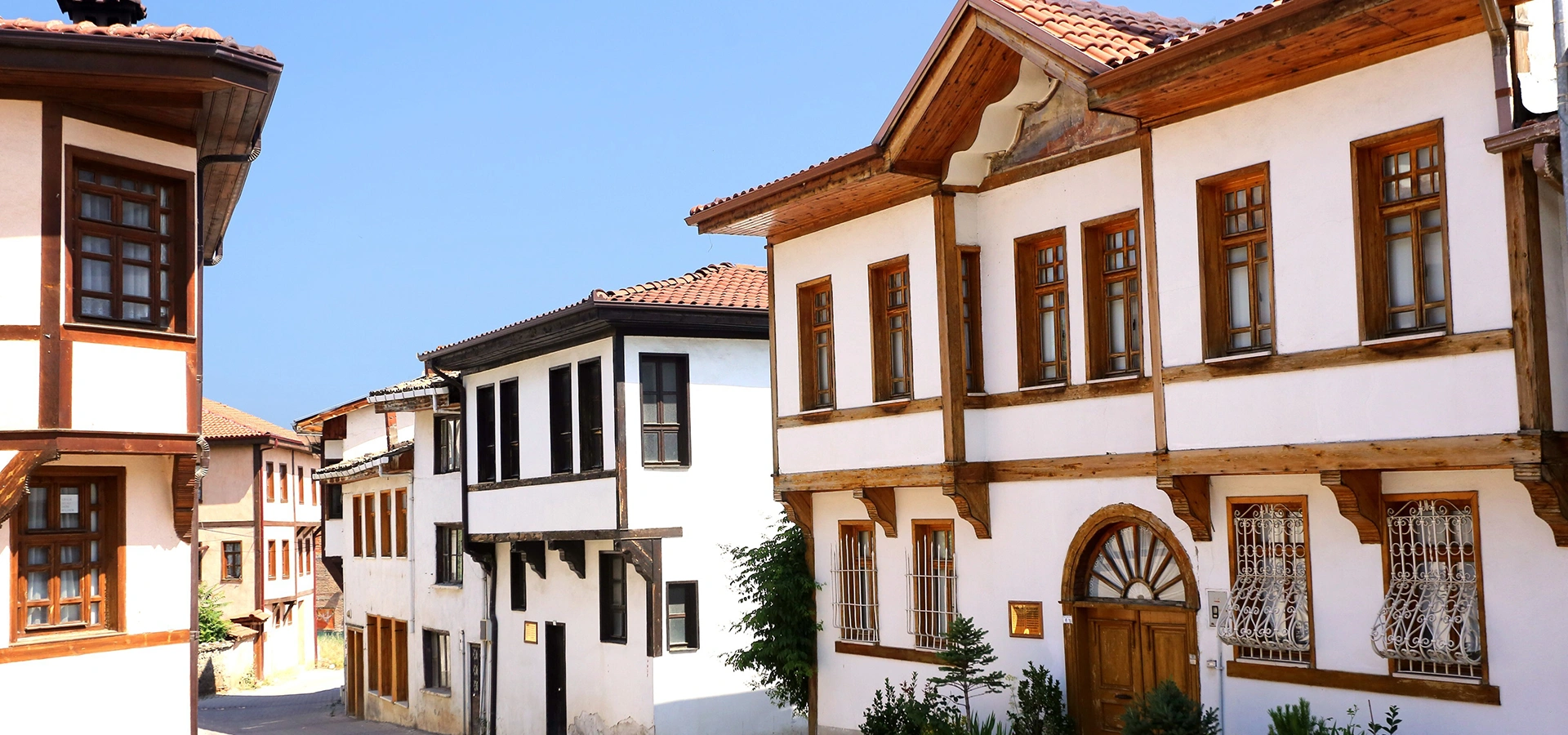
Explore the agricultural landscapes surrounding Osmaneli, seasonal orchards, local produce, village scenery and regional flavours while discovering how geography has shaped one of Bilecik’s most distinctive farming districts.
Request This Tour