A Charcoal-Grilled Tradition of Keşan

Keşan Satır Et – Complete Food Guide

Discover hand-chopped Kıvırcık lamb, a recipe seasoned only with salt,
oak-charcoal grilling, and one of Turkish Thrace’s most distinctive regional meat dishes.

Discover Keşan Satır Et

Discover Keşan Satır Et – Thrace’s Famous Hand-Chopped Lamb

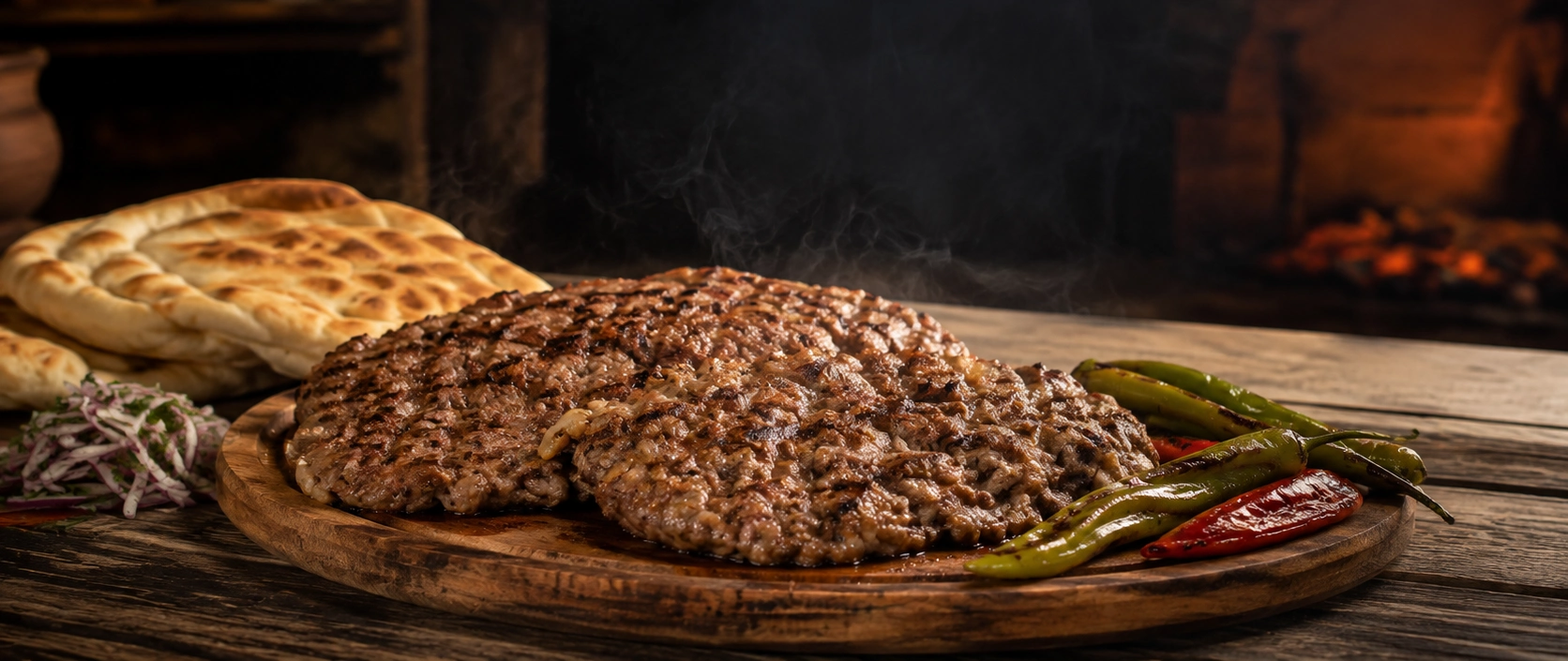
Keşan Satır Et is a geographically indicated meat speciality from Keşan in Edirne Province, prepared principally from Kıvırcık milk lamb raised in the natural landscapes of southern Thrace. Its defining technique is simple but demanding: the rested meat is cleaned carefully, chopped and pounded by hand with a heavy satır cleaver until the pieces are roughly lentil-sized, mixed with a measured amount of salt, shaped into portions and cooked rapidly over oak charcoal.

Unlike many köfte-style preparations, authentic Keşan Satır Et is not built around spices, onion, bread or added tail fat. The geographical-indication specification emphasises that only salt is used as seasoning and that the meat should never be passed through a mincing machine. The official registration also preserves details of the lamb, resting period, hand-chopping method, charcoal fire and double-sided wire grill. This guide explores the dish’s history, registered production method, Kıvırcık lamb tradition, flavour, serving style, visitor tips and the best ways to include it in a Keşan and Gulf of Saros journey.

Kıvırcık Milk Lamb

The registered preparation is based on Kıvırcık lamb raised in the natural environment of southern Thrace, especially around Keşan, İpsala and Enez.

Hand-Chopped with a Satır

The meat is chopped and pounded by hand on a wooden block rather than processed through a meat grinder.

Only Salt

No onion, bread, spices, tail fat or similar additions define the authentic registered preparation—just carefully selected meat and salt.

Oak-Charcoal Fire

The shaped meat is cooked quickly over oak charcoal between a double-sided wire grill for its characteristic smoky, browned exterior.

Know Before You Taste

Keşan Satır Et – Quick Facts

Essential information about one of Edirne Province’s best-known geographically indicated meat specialities.

📍

Origin

Keşan in Edirne Province, in the southern part of Turkish Thrace close to the Gulf of Saros.

Open Keşan on Google Maps
🥩

Main Ingredient

Carefully selected Kıvırcık milk-lamb meat, with the registered method allowing limited lean veal addition in specified circumstances.

🔪

Defining Technique

The meat is hand-chopped with a satır cleaver to pieces approximately the size of lentils and is not mechanically minced.

🏅

Geographical Indication

Registered as Keşan Satır Et with Turkish geographical-indication registration number 153.


From Preservation to Regional Speciality

The Story of Keşan Satır Et

A local meat-preparation technique that developed into one of Keşan’s signature dishes.

The official geographical-indication record traces the story of Keşan Satır Et to the late 1960s. According to the registered account, electricity was not yet widely available in parts of Keşan and its surroundings, so meat removed from the bone was chopped with a cleaver and cooked over a wood fire as a practical way of preserving it.

The cooked meat was also offered to visitors. As the preparation became popular, people began serving it commercially. The dish was reportedly known at first as kıyma et, meaning minced or chopped meat, before the name Satır Et became established.

The word satır refers to the heavy chopping cleaver traditionally used to prepare the meat. This tool gives the dish both its name and its most important culinary identity. Instead of grinding the lamb mechanically into a uniform mince, the cook repeatedly chops and pounds it by hand on a wooden block.

Keşan’s surrounding countryside also shapes the recipe. The registered specification highlights Kıvırcık milk lambs raised in the natural environments of Keşan, İpsala and Enez, where sheep farming has long formed part of the rural economy and culinary culture of southern Thrace.

What makes the dish remarkable is how little is added. There is no complex spice mixture and no bread-based binder. The registered version relies on the quality and texture of the meat itself, a carefully controlled amount of its natural fat, salt, hand chopping and fast cooking over charcoal.

Today Keşan Satır Et is one of the district’s most recognisable culinary products and an excellent example of a regional dish whose identity comes as much from technique and place as from a long list of ingredients.


What Makes It Authentic

Distinctive Features of Keşan Satır Et

The character of Satır Et comes from Kıvırcık lamb, careful resting and trimming, hand chopping, minimal seasoning and fast oak-charcoal grilling.

Kıvırcık Milk Lamb

The registered preparation focuses on Kıvırcık milk lamb from southern Thrace. The breed is valued for good meat quality and for fat that is naturally distributed through the carcass.

  • Breed: Kıvırcık
  • Regional association: Turkish Thrace
  • Registered description: Lambs commonly selected from village producers

Two-Day Resting

After the meat is removed from the bone, the registered method specifies resting it for approximately two days under refrigeration at about +4°C before further preparation.

  • Temperature: Approximately +4°C
  • Time: About two days
  • Purpose: Allows the meat to settle and become more tender

Hand-Chopped with a Satır

The rested meat is placed on a wooden chopping block—traditionally preferably oak—and repeatedly chopped and pounded with a satır cleaver.

  • Tool: Heavy satır cleaver
  • Surface: Wooden chopping block
  • Final texture: Coarser than ordinary minced meat

Lentil-Sized Texture

Rather than becoming a smooth mince, the pieces remain roughly lentil-sized. This contributes to the distinctive bite and juicy texture of the finished meat.

  • Texture: Coarse hand-chop
  • Comparison: Larger than machine mince
  • Result: Noticeable meat texture in every bite

Seasoned Only with Salt

The geographical-indication recipe specifies approximately 5 g of salt for every kilogram of prepared meat and excludes the usual flavourings found in many köfte mixtures.

  • Seasoning: Salt
  • Registered ratio: About 5 g salt per 1 kg meat
  • No: Onion, bread or spice mixture

No Typical Köfte Additions

Tail fat, kidney, internal fat, spices, bread and other additives are specifically excluded from the registered preparation, allowing the flavour of the meat to remain central.

  • No bread: No binder
  • No spices: Meat remains the dominant flavour
  • No added tail fat: The lamb’s own natural fat is used within limits

Oak-Charcoal Grilling

Satır Et is cooked over oak charcoal rather than on a flat hotplate. High heat browns the surface quickly while adding a characteristic charcoal aroma.

  • Fuel: Oak charcoal
  • Heat: Fast, strong fire
  • Character: Browned and lightly smoky

Double-Sided Wire Grill

The registered method calls for the shaped meat to be held between a double-sided wire grill. Grooved and sheet-style grills are specifically excluded.

  • Equipment: Double-sided wire grill
  • Cooking: Direct exposure to charcoal heat
  • Finish: Evenly cooked and browned

Keşan Satır Et’s Geographical Indication

Keşan Satır Et is officially registered by the Turkish Patent and Trademark Office as a geographical indication connected with Keşan in Edirne Province.

Registration Name

The official registered name is Keşan Satır Et.

Registration Number

The product carries geographical-indication registration number 153.

Registration Date

The registration date is 7 February 2012, with protection dating from the original application of 9 July 2008.

Registration Holder

The registration holder is the Keşan Chamber of Commerce and Industry.


The product is registered as a mahreç işareti, a Turkish geographical-indication category for products whose reputation, traditional quality or other characteristics are associated with a particular geographical area and whose registered production requirements must be respected.

The specification protects far more than the name. It describes the Kıvırcık lamb tradition, the resting and cleaning of the meat, chopping by hand instead of machine mincing, the permitted amount of natural lamb fat, the restricted use of salt, the shaping of portions and the use of oak charcoal with a double-sided wire grill.

Why Kıvırcık Lamb Matters

The flavour of Keşan Satır Et begins with Kıvırcık sheep, one of the characteristic native breeds of Thrace and the wider Marmara region. The geographical-indication document places particular importance on milk lambs raised in the southern Thracian countryside.

Southern Thrace

The registered description particularly associates the lambs with the countryside around Keşan, İpsala and Enez.

Natural Feeding

The official description mentions locally available feeds and plants including clover, thyme, barley, wheat and corn.

Balanced Fat

Kıvırcık lamb is valued because its fat is naturally distributed through the meat, helping provide flavour without depending on added tail fat.

Tender Texture

Careful selection, refrigeration, trimming and hand chopping all work together to produce the soft texture for which Satır Et is known.


The registered description refers to lambs approximately five months to one year old and commonly around 40–45 kg. These details help connect the dish with the livestock traditions of the region rather than treating it as a generic minced-meat kebab.

Why Keşan Satır Et Is Chopped by Hand

The most important visual and technical difference between Satır Et and ordinary minced meat is the use of the satır. The meat is worked manually on a wooden block until it reaches a coarse, cohesive consistency while still retaining visible texture.

No Meat Grinder

The geographical-indication method explicitly keeps the meat out of a mincing machine.

Coarser Texture

The pieces remain roughly lentil-sized rather than becoming the fine, uniform strands produced by a grinder.

Controlled Chopping

A skilled cook can remove tough pieces first and then chop the cleaned meat until it binds naturally.

Juicy Result

The traditional method is intended to preserve the meat’s character and produce a tender, succulent finished texture.


For travellers watching the preparation, the rhythmic chopping on the wooden block is part of the experience. It also explains why translating Satır Et simply as “shredded meat” can be misleading: hand-chopped lamb describes the technique more accurately in English.

What Goes into Authentic Keşan Satır Et?

Keşan Satır Et is unusual because authenticity is defined partly by what is not added. The registered preparation keeps the ingredient list deliberately minimal.

Kıvırcık Lamb Meat

The principal ingredient is carefully cleaned meat from Kıvırcık milk lamb associated with southern Thrace.

Natural Lamb Fat

The lamb’s own fat remains part of the mixture, with the registered specification setting an upper proportion rather than adding separate tail or internal fat.

Salt

Approximately 5 g of salt per 1 kg of meat is specified before the chopped meat is kneaded and shaped.

Limited Veal Allowance

The registered production method allows lean veal from the leg/butt section in certain cases, limited to a maximum of 30% of the mixture.


What Is Not Added?

No Bread The mixture is not bulked out or bound with bread or breadcrumbs
No Onion Unlike many köfte recipes, chopped onion is not part of the registered preparation
No Spice Blend Black pepper, cumin, paprika and similar seasonings are not part of the traditional registered formula
No Tail or Internal Fat The recipe depends on the lamb’s own natural fat rather than added tail, kidney or internal fat
No Additives The simplicity of meat and salt is one of the dish’s most important distinguishing characteristics

How Keşan Satır Et Is Prepared

The registered preparation follows a sequence designed to protect tenderness and preserve the coarse hand-chopped texture that distinguishes the dish from ordinary mince.

1. Select the Meat Choose suitable Kıvırcık milk-lamb meat associated with the Thracian production tradition
2. Remove from the Bone Separate the meat carefully from the bone before the resting stage
3. Refrigerate Rest the boned meat for approximately two days at about +4°C
4. Trim Thoroughly Remove nerves, vessels, bone fragments, cartilage, membrane and other hard tissues
5. Prepare the Fat Balance Retain the lamb’s own natural fat within the limits described by the registered method
6. Chop with the Satır Place the meat on a wooden block, preferably oak, and chop and pound it repeatedly by hand
7. Keep It Coarse Continue until the pieces are roughly lentil-sized rather than finely minced
8. Add Salt Use approximately 5 g of salt for each kilogram of prepared meat and knead thoroughly
9. Shape the Portions Form broad, relatively thin portions; the registered specification gives a standard portion of approximately 180–200 g
10. Grill over Oak Charcoal Place the meat between a double-sided wire grill and cook quickly over strong oak-charcoal heat until browned

Why Oak Charcoal Is Essential

The registered method does not treat the grill as an interchangeable piece of equipment. Oak charcoal, strong heat and a double-sided wire grill are all part of the protected cooking tradition.

Direct Charcoal Heat

The meat cooks directly above glowing charcoal, developing browned surfaces while remaining tender inside.

Fast Cooking

The specification calls for strong heat so the exterior cooks quickly rather than slowly drying the meat.

Smoky Aroma

Fat dripping toward the coals contributes to the grilled aroma associated with freshly cooked Satır Et.

Wire-Grill Contact

The double-sided grill allows the cook to turn the broad portion efficiently while keeping its shape intact.


For the most authentic experience, look for a restaurant where the Satır Et is prepared over a visible charcoal grill rather than cooked like an ordinary burger or köfte on a flat metal surface.

What Does Keşan Satır Et Taste Like?

Keşan Satır Et tastes unmistakably of grilled lamb. Because the seasoning is deliberately restrained, the flavour comes from the quality of the meat, its natural fat, hand-chopped texture and the charcoal fire rather than from spices or sauces.

Deep Lamb Flavour

The absence of a spice blend means the natural savoury character of the lamb remains at the centre of the dish.

Tender but Textured

The hand-chopped pieces give a more substantial bite than fine mince while the careful preparation keeps the meat soft.

Charcoal Aroma

High-heat grilling adds a gently smoky, roasted character and a browned surface.

Simple Seasoning

Salt enhances the flavour without disguising it, making meat quality especially important.


The geographical-indication document describes the finished Satır Et as brownish in colour with a distinctive, intense and soft texture—often compared locally with the tenderness of lokum, or Turkish delight.

Keşan Satır Et vs Köfte and Machine-Minced Meat

At first glance Satır Et may resemble a broad köfte or minced-meat patty, but its preparation and eating experience are quite different.

Cutting Method

Satır Et: Chopped by hand with a cleaver.
Typical mince: Passed through a meat grinder.

Texture

Satır Et: Coarse, visible pieces roughly lentil-sized.
Typical köfte: Usually finer and more uniform.

Seasoning

Satır Et: Only salt in the registered recipe.
Many köfte: May contain onion, spices, herbs or bread.

Cooking

Satır Et: Oak charcoal and double-sided wire grill.
Other patties: May be cooked on metal grills, pans or griddles.


The distinction is important when ordering. A generic “satır köfte” or hand-chopped meat dish elsewhere in Türkiye may be excellent, but it is not automatically the same product as geographically indicated Keşan Satır Et.

How Keşan Satır Et Is Served

Keşan Satır Et is best enjoyed immediately after grilling, while the exterior is browned, the meat remains juicy and the charcoal aroma is at its strongest.

Portion Size The registered production description gives a standard portion of approximately 180–200 g
Broad Shape The chopped meat is shaped into a relatively thin, broad portion before grilling
Browned Exterior High charcoal heat should create attractive browning without turning the meat dry
Juicy Interior The centre should remain tender and noticeably meatier in texture than fine mince
Serve Hot Eat it as soon as possible after it leaves the grill for the best texture and aroma

Restaurant accompaniments can vary and are not what defines the geographical indication. Bread, salad, grilled vegetables, onions, pickles, yoghurt or ayran may be served alongside, but the Satır Et itself should remain a simple meat-and-salt preparation.

Where to Eat Keşan Satır Et

The most natural place to taste Satır Et is Keşan itself, where local grill restaurants and meat specialists have the strongest connection with the dish. Because the cooking technique is as important as the ingredients, choosing a place that prepares the meat by hand and cooks it over charcoal is worthwhile.

Keşan Town Centre

Look for established local restaurants that specifically advertise Keşan Satır Et rather than only generic köfte or grilled meat.

Ask About Hand Chopping

If authenticity matters to you, ask whether the meat is chopped with a satır rather than machine-minced.

Look for Charcoal

The registered method uses oak charcoal and a double-sided wire grill, so visible charcoal grilling is a good sign.

Order Fresh

Satır Et is at its best straight from the fire rather than after sitting or reheating.


As with any meat dish, choose a busy, well-maintained restaurant with good refrigeration, clean preparation areas and proper cooking practices. If Satır Et is a priority during a short visit, it is also sensible to check availability before making a special journey.

Keşan Satır Et Visitor Tips

Call It Satır Et

The Turkish name is the clearest way to order. “Shredded meat” is only a loose English translation and does not accurately describe the hand-chopping technique.

Watch the Preparation

If the kitchen is visible, look for the traditional satır cleaver and wooden chopping block that give the dish its distinctive texture.

Check the Grill

Authentic registered preparation is associated with oak charcoal and a double-sided wire grill rather than a flat griddle.

Expect Very Little Seasoning

Do not expect cumin, pepper or onion inside the meat. The simplicity is intentional.

Eat It Immediately

The contrast between browned exterior, juicy interior and charcoal aroma is best straight from the grill.

Notice the Texture

The meat should feel coarser and more substantial than ordinary minced köfte because it has been chopped rather than ground.

Combine It with Saros

Keşan is an excellent food stop before or after exploring the beaches, coves and landscapes of the Gulf of Saros.

Explore Regional Products

Look beyond Satır Et for İpsala rice, Siğilli okra, Mahmutköy dried beans and Korudağ flower honey from the wider Keşan region.

Other Foods and Regional Products to Discover

Keşan lies within one of Thrace’s productive agricultural and livestock regions. A food journey here can combine Satır Et with locally recognised rice, vegetables, pulses, honey and the broader cuisine of Edirne Province.

Edirne Food Culture

Explore the wider culinary traditions of Edirne Province, from liver dishes and rice to sweets, dairy products and Thracian specialities.

İpsala Rice

Geographically indicated rice from nearby İpsala, one of the major agricultural products of Edirne Province.

Keşan Siğilli Okra

A geographically indicated local okra associated with Siğilli village in Keşan district.

Mahmutköy Dried Beans

Another geographically indicated Keşan product, grown around Mahmutköy and valued as part of the district’s agricultural identity.

Korudağ Flower Honey

Geographically indicated flower honey associated with the Korudağ landscape of Keşan.

Edirne Ciğer Sarma

Discover another distinctive Edirne meat speciality: lamb liver and İpsala rice wrapped in caul fat and baked.

Places to Visit Around Keşan

Keşan is an excellent base for exploring the western edge of Edirne Province, especially the Gulf of Saros, the historic town of Enez and the wetlands of Gala Lake.


A particularly enjoyable regional route is Keşan → Gulf of Saros → Enez → Gala Lake, combining Satır Et with coastal scenery, archaeological heritage and wetland nature in a single corner of Turkish Thrace.

Frequently Asked Questions About Keşan Satır Et

What is Keşan Satır Et?

Keşan Satır Et is a geographically indicated meat speciality from Keşan in Edirne Province. It is principally prepared from Kıvırcık milk-lamb meat that is rested, cleaned, chopped by hand with a satır cleaver, seasoned with salt, shaped and grilled rapidly over oak charcoal.

What does “Satır Et” mean?

Satır means a heavy chopping cleaver and et means meat. The name refers directly to the traditional hand-chopping technique.

Is “shredded meat” a good English translation?

It is sometimes translated that way, but hand-chopped meat or hand-chopped lamb is more accurate because the meat is chopped repeatedly with a cleaver rather than pulled into shreds.

Where does Keşan Satır Et come from?

It comes from Keşan, a district of Edirne Province in Turkish Thrace.

Is Keşan Satır Et geographically indicated?

Yes. It is registered by the Turkish Patent and Trademark Office as a mahreç işareti.

What is the geographical-indication registration number?

Keşan Satır Et carries registration number 153.

When was Keşan Satır Et registered?

The registration date is 7 February 2012. The official record states that protection applies from the application date of 9 July 2008.

Who registered Keşan Satır Et?

The registration holder is the Keşan Chamber of Commerce and Industry.

What meat is used for Keşan Satır Et?

The registered tradition is based principally on Kıvırcık milk-lamb meat from Thrace.

Can Keşan Satır Et contain veal?

Yes. The registered production method allows lean veal from the leg/butt section in specified circumstances, limited to a maximum of 30% of the mixture.

Why is Kıvırcık lamb preferred?

The geographical-indication description values Kıvırcık lamb for its meat quality and balanced natural fat distribution, both important to the texture and flavour of Satır Et.

Is the meat minced in a machine?

No. One of the defining characteristics of the registered preparation is that the meat is chopped and pounded manually with a satır cleaver rather than passed through a meat grinder.

How finely is the meat chopped?

The registered description says the pieces should remain approximately lentil-sized, giving the meat a coarser texture than ordinary mince.

What seasonings are used?

The registered recipe uses only salt, at approximately 5 g per kilogram of prepared meat.

Does Keşan Satır Et contain onion?

No. Onion is not part of the registered Satır Et mixture.

Does Keşan Satır Et contain bread or breadcrumbs?

No. Bread and similar binders are specifically excluded from the registered preparation.

Are spices added to Keşan Satır Et?

No spice mixture is used in the geographical-indication recipe. The aim is to preserve the natural flavour of the meat.

Is tail fat added?

No. Tail fat and internal fats are specifically excluded. The mixture relies on the lamb’s own naturally occurring fat within the limits of the registered method.

Why is the meat refrigerated before chopping?

The registered production method specifies resting the boned meat for about two days at approximately +4°C so it can settle and develop tenderness before trimming and chopping.

How is Keşan Satır Et cooked?

It is placed between a double-sided wire grill and cooked quickly over strong oak-charcoal heat.

Can it be cooked on a flat griddle?

A flat or sheet-style grill is not part of the registered traditional method, which specifies a double-sided wire grill over charcoal.

How large is one portion?

The registered preparation describes portions of approximately 180–200 g.

What does Keşan Satır Et taste like?

It has a rich lamb flavour, coarse but tender texture, browned exterior and gentle charcoal aroma. Because only salt is used, the quality of the meat is especially noticeable.

Is Keşan Satır Et the same as köfte?

No. Although the shape can resemble a broad köfte, Satır Et is defined by hand chopping, coarse texture, minimal seasoning and its registered charcoal-grilling method.

Where is the best place to try Keşan Satır Et?

Keşan itself is the best place to begin. Look for local restaurants specialising in Satır Et and ask whether the meat is hand-chopped and charcoal-grilled.

Can I combine Keşan with a Gulf of Saros trip?

Yes. Keşan is a natural gateway to the Gulf of Saros, making Satır Et an excellent lunch or dinner stop during a coastal journey.

Is Keşan Satır Et worth trying?

Definitely for travellers interested in regional Turkish food. It is an unusually pure meat preparation in which breed, hand technique, charcoal fire and local tradition matter more than a long ingredient list.

Best Photos of Keşan Satır Et

Satır Et tells its story best through process photography. The satır cleaver, wooden chopping block, broad hand-shaped meat and glowing charcoal reveal what makes the dish different from ordinary minced meat.

Satır Chopping

With permission, photograph the cook chopping the meat by hand on the wooden block—the defining image of the dish.

Coarse Meat Texture

A close-up before shaping can show the lentil-sized pieces that distinguish Satır Et from machine mince.

Double-Sided Grill

Capture the broad portion held between the wire grill above glowing charcoal.

Charcoal Flames

A low angle toward the grill can show the smoke, glow and fast-fire cooking that give Satır Et its characteristic finish.

Freshly Grilled Portion

Photograph it immediately after cooking, when the browned exterior still looks juicy and the surface has a fresh charcoal sheen.

Keşan & Saros Context

Combine food images with Keşan streets or the nearby Gulf of Saros to connect the dish clearly with its destination.


Always ask permission before photographing cooks, kitchens or other guests. If you photograph the finished meat, work quickly—Satır Et is much more enjoyable hot than after a long photo session.

Private Keşan, Saros & Edirne Experiences

Discover the landscapes and flavours of Turkish Thrace through privately designed journeys combining Keşan Satır Et with the Gulf of Saros, Enez, Gala Lake and historic Edirne.

Private Keşan & Saros Experiences

Custom-designed routes with private transportation, flexible timing and opportunities to experience local food, coastal scenery and lesser-known Thracian heritage.

Longer Thrace Journeys

Combine Keşan with Edirne, Kırklareli, Tekirdağ, Gallipoli or Çanakkale for a deeper private journey through the food, history and landscapes of northwestern Türkiye.