Kandıra’s Traditional Cream Delicacy

Kandıra Dartısı – Complete Food Guide

Discover Kocaeli’s geographically indicated dairy speciality,
slowly cooked from fresh milk cream until rich, browned and intensely aromatic.

Discover Kandıra Dartısı

Discover Kandıra’s Famous Dartı

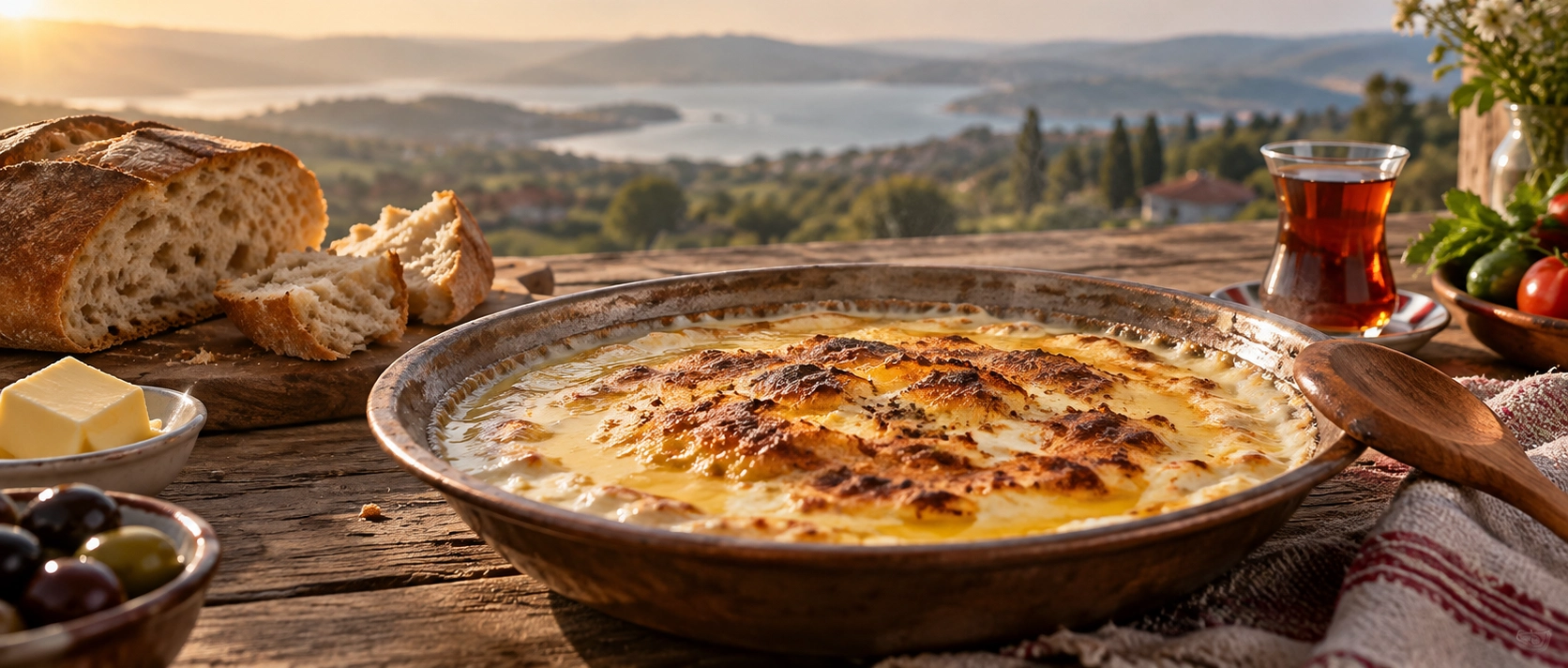
Kandıra Dartısı is one of the most distinctive traditional dairy foods of Kandıra in Kocaeli. Closely connected with the district’s rural and Manav food culture, it is produced by slowly heating cream collected from raw cow’s milk until the milk solids brown and separate from the fat.

The finished product is unlike ordinary butter, cream or cheese. Kandıra Dartısı has a rich two-part structure: a yellow layer of milk fat and a darker, browned, porous sediment created as the cream is cooked. When warmed, these parts combine into a deeply savoury, roasted dairy flavour.

Dartı is especially associated with breakfast tables, but its role in local cooking is much broader. It may be spooned over keşkek, pasta or rice, and it can also be used as a flavourful cooking fat in traditional dishes and pastries.

The tradition is officially protected. Kandıra Dartısı was registered by the Turkish Patent and Trademark Office as a Mahreç İşareti geographical indication in 2022.

Slow-Cooked Cream

Fresh cow’s-milk cream is gently cooked until its solids turn golden-brown and aromatic.

Two-Part Texture

Milk fat rises above a darker, roasted and slightly porous layer of browned milk solids.

Local Table Essential

Dartı is used at breakfast and as a rich topping for keşkek, pasta, rice and other foods.

Protected Heritage

Kandıra Dartısı has been geographically indicated since 2022 under registration number 1099.

Know Before You Taste

Kandıra Dartısı – Quick Facts

Essential information about one of Kandıra’s most characteristic protected dairy traditions.

📍

Origin

Kandıra district in Kocaeli, northwestern Türkiye.

Open Kandıra on Google Maps
🥛

Food Type

A traditional dairy product made by slowly cooking cream collected from raw cow’s milk.

🍳

How It Is Eaten

Usually warmed before serving, either at breakfast or over foods such as keşkek, pasta and rice.

🏅

Geographical Indication

Registered by TÜRKPATENT as a Mahreç İşareti under registration number 1099.


A Taste of Kandıra’s Rural Kitchen

The Kandıra Dartısı Tradition

Discover how a simple dairy technique became one of the signature flavours of Kandıra’s local table.

Kandıra Dartısı belongs to a food culture shaped by dairy farming, village kitchens and the long-established Manav communities of northwestern Anatolia. Its importance comes from transforming a highly perishable ingredient — fresh milk cream — into an intensely flavoured product that can be used in many different ways.

Traditionally, cream collected from milk is accumulated and cooked slowly over gentle heat. Constant attention is important because the goal is not simply to melt the cream but to allow the milk solids to separate, deepen in colour and develop their characteristic roasted flavour without burning.

Once finished and cooled, the product separates naturally. The milk fat remains above while the browned, sediment-like portion settles below. This uneven, layered structure is not a flaw; it is one of the defining characteristics of genuine Kandıra Dartısı.

In local homes, dartı may appear at breakfast with fresh bread, but it is equally at home in savoury cooking. A spoonful can enrich keşkek, pasta or rice, while its concentrated dairy flavour also makes it useful as a cooking fat in traditional dishes and pastries.

The geographical-indication registration formalised this relationship between the product and Kandıra, protecting a preparation method that has long formed part of the district’s culinary identity.


What Makes It Special

Distinctive Features of Kandıra Dartısı

The protected character of Kandıra Dartısı comes from its simple ingredients, careful heat treatment, layered structure and deep connection with Kandıra’s food culture.

Fresh Cow’s-Milk Cream

The registered product begins with cream collected from raw cow’s milk rather than with finished butter or industrial cream products.

  • Base: Raw cow’s milk
  • Key ingredient: Collected milk cream
  • Character: Concentrated dairy flavour

Very Simple Ingredients

The protected specification is remarkably minimal, relying on milk and a small quantity of salt rather than spices or complex flavourings.

  • Main ingredient: Milk
  • Seasoning: Salt
  • Flavour source: Slow cooking

Slow Heat Treatment

The cream is heated gradually and stirred so that the milk solids separate from the fat and develop a toasted colour and aroma.

  • Heat: Low and controlled
  • Method: Continuous stirring
  • Goal: Browning without burning

Browned Milk Solids

As the cream cooks, the darker portion develops from pale yellow to brown and becomes porous, giving dartı its unmistakable visual character.

  • Colour: Golden to brown
  • Texture: Porous and irregular
  • Flavour: Roasted and savoury

Two-Part Structure

After cooling, yellow milk fat remains above while the browned sediment settles below, creating a naturally heterogeneous product.

  • Upper layer: Milk fat
  • Lower layer: Browned solids
  • Structure: Layered and heterogeneous

Served Warm

Kandıra Dartısı becomes firm when refrigerated, so the registered tradition calls for gently warming it before eating.

  • Storage: Chilled
  • Before serving: Warm gently
  • Result: Soft, spoonable texture

Versatile Local Ingredient

Dartı can be eaten directly with bread or used as a rich sauce and cooking fat in several traditional Kandıra dishes.

  • Breakfast: With bread
  • Sauce: Keşkek, pasta and rice
  • Cooking: Savoury dishes and pastries

Protected Kandıra Heritage

Its production method and reputation are formally linked with Kandıra through Türkiye’s geographical-indication system.

  • Registration: 1099
  • Type: Mahreç İşareti
  • Registered: 2022

Kandıra Dartısı’s Geographical Indication

Kandıra Dartısı is officially registered by the Turkish Patent and Trademark Office as a geographical indication under the category Mahreç İşareti.

Registered Name

The protected geographical-indication name is Kandıra Dartısı.

Registration Number

The geographical indication carries registration number 1099.

Registration Date

Kandıra Dartısı was registered on 6 May 2022.

Application Date

The application for protection was submitted on 13 August 2020.

Type of Protection

It is registered as a Mahreç İşareti.

Registration Holder

The registration holder is the Kocaeli Provincial Directorate of Culture and Tourism.

Geographical Boundary

The protected geographical area is Kandıra district in Kocaeli Province.

Product Group

It belongs to the dairy-products category excluding cheeses and butter.


The registration recognises both Kandıra Dartısı’s long-standing reputation and the local character of its production method. The official specification requires the production stages to take place within the Kandıra geographical boundary.

The protected method also defines how the cream is collected, heated, salted, browned, cooled and stored, helping distinguish genuine Kandıra Dartısı from generic cooked-cream products made elsewhere.

The Story of Dartı in Kandıra

Kandıra’s countryside has long supported a food culture based on farming, animal husbandry, seasonal produce and practical household techniques. Dartı reflects this environment particularly well because it transforms the richest part of milk into a concentrated ingredient that can flavour many different meals.

Village Dairy Culture

Dartı grew from a rural tradition in which milk, cream, yoghurt and other dairy foods were prepared and preserved in the household.

Manav Heritage

The product is strongly associated with the traditional food culture of the Manav communities of Kocaeli and Kandıra.

Everyday Versatility

Rather than belonging to only one meal, dartı could move from breakfast to main dishes and dough-based foods.

Local Knowledge

Successful preparation depends on recognising the correct colour, separation and consistency during slow cooking.


The official registration describes Kandıra Dartısı as a product with a history extending far into the past and an important place in the district’s culinary culture. Its reputation is therefore connected not only with flavour but with a recognisable local method of production.

For travellers, tasting dartı offers a useful window into a side of Kocaeli that is very different from the province’s better-known industrial image: village kitchens, dairy farming, seasonal produce and recipes preserved through family practice.

What Is Kandıra Dartısı Made From?

One of the most fascinating things about Kandıra Dartısı is how much flavour is created from so little. The registered specification uses essentially milk and salt; its complexity comes from cream separation and careful cooking rather than from added seasonings.

Raw Cow’s Milk

The process begins with raw cow’s milk, from which the surface cream is collected after chilled resting.

Milk Cream

The cream is the actual cooking base. As it heats, its fat and milk solids gradually separate.

Salt

A small quantity of salt is added during cooking to season the product without masking its dairy flavour.

No Spice Blend

The toasted aroma comes from controlled browning of the cream itself rather than herbs, spices or flavour additives.


The official production ratio records approximately 10 kg of milk and 1.5 g of salt. From around 10 kg of milk, roughly 500 g of cream is collected, producing approximately 300 g of Kandıra Dartısı.

This low yield helps explain why dartı is so concentrated. A considerable quantity of milk is required to create a relatively small amount of the finished speciality.

How Kandıra Dartısı Is Made

The protected production method is based on patience and temperature control. The cream must be collected carefully and then cooked until its solids brown and separate from the milk fat without scorching.

1. Strain the Fresh Milk Raw cow’s milk is first filtered before the cream-separation stage
2. Chill the Milk The milk is held at approximately 4°C so the cream can rise naturally
3. Rest for 12–14 Hours During the chilled resting period, a layer of cream gathers on the surface
4. Collect the Cream The surface cream is carefully removed and transferred to the cooking vessel
5. Begin Gentle Heating The cream is heated over low heat while being stirred continuously
6. Allow the Cream to Thicken As the cream approaches boiling, its texture becomes noticeably thicker
7. Add the Salt A small quantity of salt is incorporated once the cream reaches the boiling stage
8. Continue the Heat Treatment The milk fat begins to separate from the other milk components as cooking continues
9. Brown the Solids The darker portion is gently roasted until it changes from pale yellow to brown
10. Watch for the Porous Texture The browned milk solids develop the irregular, porous structure characteristic of dartı
11. Stop the Cooking The hot vessel is moved to a cool surface to prevent the browned solids from continuing to roast
12. Transfer to Storage Containers The finished product is placed into suitable containers while still warm
13. Cool to Room Temperature As it cools, the product begins to set and the two distinct portions become visible
14. Refrigerate Kandıra Dartısı is stored chilled at approximately 4°C until needed

The official specification records that the cream thickens around 100–101°C. Cooking then continues in the approximate range of 107–111°C until the darker solids become brown and porous.

Traditional home methods may look simple, but successful dartı requires close attention. Too little cooking will not develop the characteristic toasted flavour, while excessive heat can quickly move the milk solids from browned to burnt.

Why Does Kandıra Dartısı Separate into Two Layers?

The layered appearance of genuine Kandıra Dartısı is a natural result of the cooking process. Heat causes the fat in the cream to separate from the denser milk components, and these different parts settle differently as the product cools.

Yellow Milk Fat

The lighter liquid fat rises and forms the upper part of the cooled product.

Browned Sediment

The roasted milk solids form the darker, flavour-rich portion that settles beneath the fat.

Porous Texture

The browned portion develops small irregular spaces, giving dartı a visibly heterogeneous structure.

Reunited by Warming

Gentle reheating softens the fat and allows the layers to be mixed before serving.


For first-time visitors, the separation may look unusual compared with smooth commercial dairy spreads. In dartı, however, the contrast between clear milk fat and browned solids is one of the defining features of the product.

Kandıra Dartısı – Texture and Composition

Because a large quantity of milk is reduced into a small amount of finished product, Kandıra Dartısı is naturally concentrated and rich. The official specification describes measurable ranges for its dry matter, protein and fat content.

Dry Matter

The ready-to-eat product has an official dry-matter range of approximately 82.77–87.58%.

Protein

The registered specification records a protein range of approximately 8.19–8.93%.

Fat

The fat content is high, with an official range of approximately 64.82–69.88%.

Consistency

When refrigerated, dartı becomes firm; once gently warmed, it returns to a softer and more fluid state.


These figures underline why dartı is best thought of as a rich condiment or concentrated dairy ingredient rather than something eaten in very large portions.

What Does Kandıra Dartısı Taste Like?

Kandıra Dartısı has a flavour built around concentrated milk fat and browned dairy solids. It is rich and savoury, with roasted notes created by the long cooking process rather than by added spices.

Rich & Buttery

The high milk-fat content gives dartı a full, rounded richness similar to very concentrated cream or butter.

Roasted

Browning the milk solids creates toasted flavours that make it much more complex than plain cream.

Deeply Dairy

Because the flavour comes almost entirely from milk, its character is intensely dairy-forward.

Lightly Salty

A small amount of salt sharpens the flavour without overwhelming the natural richness of the cream.

Savoury

Dartı works naturally with bread, grains and pasta because its flavour is more savoury than sweet.

Toasty Aroma

When warmed, the browned milk solids release an especially appealing cooked-cream aroma.


Travellers familiar with browned butter may recognise part of the flavour direction, but Kandıra Dartısı has its own texture and preparation method. Its cream is cooked as a whole until the fat and milk solids separate into the traditional layered product.

Why Kandıra Dartısı Is Warmed Before Eating

Kandıra Dartısı is stored cold, but the traditional product is not intended to be eaten straight from the refrigerator. Chilling makes the milk fat firm and locks the two layers into a solid structure.

Firm When Chilled

The high fat content causes the product to harden noticeably under normal refrigerator conditions.

Warm Gently

A small amount can be heated carefully until the fat softens and the aroma becomes more pronounced.

Mix the Layers

Once softened, the yellow fat and darker solids can be stirred together for an even spoonful.

Serve Immediately

Warm dartı is especially good with fresh bread or when spooned over a hot dish.


The official registered description specifically notes that Kandıra Dartısı should be warmed before consumption. This small step makes a major difference to both its texture and its fragrance.

How Is Kandıra Dartısı Used?

Dartı is unusually versatile for a regional speciality. The same jar can provide a rich breakfast spread, a finishing sauce for grains or pasta, or a traditional cooking fat for savoury dishes and pastries.

At Breakfast

Warm dartı can be eaten with bread as part of a traditional Kandıra breakfast table.

Over Keşkek

Its rich fat and browned solids make an excellent finishing sauce for the soft wheat-and-meat texture of keşkek.

With Pasta

Dartı can be warmed and spooned over pasta, creating a simple sauce with a deep roasted dairy flavour.

With Rice

A small amount can enrich rice dishes and add more complexity than plain melted butter.

In Savoury Cooking

The milk fat can be used as a traditional cooking medium in local household dishes.

In Pastries

Dartı may also be used as a fat component in dough-based foods, adding a characteristic dairy aroma.


For visitors, the easiest introduction is often warm dartı with fresh bread. After that, tasting it over keşkek or pasta shows how the ingredient functions within Kandıra’s wider cuisine.

Kandıra Dartısı with Keşkek, Pasta and Rice

The strongest culinary identity of dartı appears when it is used as a finishing sauce. Warmed over a hot dish, its fat spreads through the food while the toasted milk solids remain visible and provide concentrated bursts of flavour.

Keşkek

The traditional wheat-based dish becomes richer when finished with warmed dartı across the surface.

Düdük Makarna

Local pasta traditions are especially well suited to a spoonful of melted dartı in place of an ordinary butter sauce.

Rice

Rice absorbs the melted fat while the browned solids add colour, aroma and a slightly toasted character.

Fresh Bread

For the simplest tasting, warm dartı needs little more than good bread to show its full flavour.


These pairings explain why dartı is more than a breakfast product. In Kandıra cooking it works much like a highly flavoured dairy seasoning, bringing richness and a distinctive local identity to otherwise simple foods.

Kandıra Dartısı at Breakfast

Breakfast is one of the most accessible ways for travellers to experience dartı. A small portion is gently warmed and served beside bread and other traditional dairy foods rather than eaten cold like an ordinary spread.

Warm, Not Cold

Heating softens the fat and releases the toasted aroma of the browned milk solids.

Fresh Village Bread

Crusty bread is ideal for collecting both the liquid fat and the darker flavour-rich portion.

Turkish Tea

Strong black tea helps balance the intense richness of the dairy product.

Local Dairy Pairings

Kandıra yoghurt, cheese and other regional breakfast foods can turn a tasting into a broader introduction to the district’s dairy culture.


Because dartı is rich, a little goes a long way. The aim is not a thick layer like jam, but a small warm portion whose flavour can be appreciated alongside the rest of the breakfast table.

How Is Kandıra Dartısı Stored?

After cooking, Kandıra Dartısı is cooled and kept refrigerated. The official production specification calls for storage at approximately 4°C.

Keep Refrigerated

Store dartı chilled at around 4°C in a clean, food-safe container.

Expect It to Firm Up

The fat naturally becomes solid or semi-solid as the product cools.

Use Clean Utensils

A clean spoon helps protect the product from unnecessary contamination during repeated use.

Follow Producer Advice

For shelf life and transport, follow the storage guidance supplied by the producer or seller.


Travellers planning to carry Kandıra Dartısı as a food souvenir should remember that it is a dairy product requiring cold storage. Ask the producer how long it can be transported safely and whether insulated packing is recommended for your journey.

How Is Kandıra Dartısı Different?

The easiest way to understand dartı is to see it as its own dairy category. It begins with milk cream, but the slow browning process gives it a structure and flavour very different from ordinary cream, butter or cheese.

Compared with Cream

Fresh cream is pale and smooth; dartı is cooked until the solids brown and the fat separates.

Compared with Butter

Butter is churned from cream, while dartı is produced by heating the cream and preserving both separated fat and browned solids.

Compared with Cheese

Dartı is not formed by coagulating milk into curds; its texture comes from cooking and fat separation.

Compared with Kaymak

Kaymak is prized for its fresh creamy richness, while dartı develops a deeper toasted flavour through extended heat treatment.

Distinctive Layering

The combination of yellow fat and brown porous solids is a visual signature of the finished product.

Local Culinary Role

Dartı functions both as a table food and as a cooking ingredient, especially in Kandıra’s traditional cuisine.


English has no perfect one-word equivalent for dartı. Descriptions such as “slow-cooked cream,” “browned cream condiment” or “roasted dairy spread” can explain the idea, but the authentic local name is the most accurate term to use.

Where to Find Kandıra Dartısı

The best place to look for genuine Kandıra Dartısı is Kandıra itself, where local producers, village-product sellers and regional food businesses are most closely connected with the tradition.

Local Producers

Small-scale dairy producers are the most direct connection with the traditional method and local milk supply.

Village-Product Shops

Shops specialising in Kandıra foods may carry dartı alongside yoghurt, cheese and other regional products.

Ask for “Kandıra Dartısı”

Using the full registered name helps distinguish the protected local speciality from similar cooked-cream products.

Check Cold Storage

Because dartı is a refrigerated dairy product, buy it from a seller who stores and handles it appropriately.


If you want to take dartı home, ask about packaging, refrigeration and transport before buying. For longer journeys, especially in warm weather, maintaining a reliable cold chain is important.

Kandıra Dartısı Visitor Tips

Ask for It Warm

Traditional dartı is best appreciated gently heated rather than straight from the refrigerator.

Try Both Layers

Make sure your serving includes both the yellow milk fat and the darker browned solids.

Start with Bread

A simple piece of fresh bread lets you understand the flavour before trying dartı in a larger dish.

Look for Keşkek

If a local restaurant serves keşkek with dartı, it is one of the best ways to experience the ingredient in context.

Pair It with Tea

Turkish black tea works particularly well with the richness of a traditional Kandıra breakfast.

Ask About the Producer

Knowing where the milk and dartı come from can add valuable context to the tasting experience.

Keep Purchases Cold

Use appropriate refrigeration if you buy a jar to take away.

Explore the Coast

Combine a food stop in Kandıra with the district’s Black Sea beaches, rock formations and coastal villages.

Other Foods to Try in Kocaeli

Kandıra Dartısı belongs to a remarkably varied culinary landscape stretching from Kandıra’s villages and Black Sea coast to the Gulf of İzmit.

İzmit Simidi

Discover Kocaeli’s geographically indicated twisted sesame simit, known for its crisp exterior and molasses-coated surface.

Karamürsel Simit Dolması

Taste Karamürsel’s distinctive stuffed simit tradition, filled before baking and finished with a rich surface.

Gebze Bayram Çöreği

Compare Kandıra’s dairy speciality with Gebze’s aromatic geographically indicated holiday bread.

Kandıra Manda Yoğurdu

One of Kandıra’s best-known dairy traditions, valued for its dense texture and the region’s long association with buffalo farming.

Mancarlı Kandıra Pidesi

A local pide filled with greens known collectively as mancar, closely connected with Kandıra’s village cooking.

Kandıra Hindisi

Kandıra is also famous for its turkey tradition, another important part of the district’s agricultural and culinary identity.

Places to Visit Around Kandıra

A tasting of Kandıra Dartısı can easily become part of a broader day exploring one of Kocaeli’s most scenic districts, where forested countryside meets the Black Sea coast.

Kerpe

Visit one of Kandıra’s best-known coastal settlements, famous for sheltered waters, dramatic cliffs and relaxed Black Sea scenery.

Pembe Kayalar

See the unusual pink-toned coastal rock formations near Kefken, historically quarried and transported by sea.

Bağırganlı Beach

Continue west to one of Kandıra’s broad natural beaches, surrounded by the quieter landscapes of the Black Sea coast.

Kumcağız Beach

Enjoy another popular Kandıra beach known for its sandy shoreline and easy access from the Kerpe area.

Babalı Cultural Area

Discover the cultural landscape around Babalı and the eastern end of Kandıra’s long Black Sea coastline.

Kefken

Explore the coastal settlement, harbour and nearby coves that make Kefken one of the classic stops on a Kandıra journey.

Frequently Asked Questions About Kandıra Dartısı

What is Kandıra Dartısı?

Kandıra Dartısı is a traditional dairy product from Kandıra in Kocaeli, made by slowly cooking cream collected from raw cow’s milk until the fat separates and the milk solids become browned and porous.

Where does Kandıra Dartısı come from?

It comes from Kandıra, a district of Kocaeli Province in northwestern Türkiye.

Is Kandıra Dartısı geographically indicated?

Yes. It is officially registered by the Turkish Patent and Trademark Office as a geographical indication.

What is its geographical-indication registration number?

Kandıra Dartısı has registration number 1099.

When was Kandıra Dartısı registered?

It was registered on 6 May 2022.

When was the geographical-indication application made?

The application was submitted on 13 August 2020.

What type of geographical indication does it have?

Kandıra Dartısı is protected as a Mahreç İşareti.

Who registered Kandıra Dartısı?

The registration holder is the Kocaeli Provincial Directorate of Culture and Tourism.

What is Kandıra Dartısı made from?

The registered specification uses raw cow’s milk and a small amount of salt. The cream collected from the milk is the part that is slowly cooked into dartı.

Is Kandıra Dartısı made from buffalo milk?

The official geographical-indication specification defines Kandıra Dartısı as a product made from cream obtained from cow’s milk. Kandıra is also famous for buffalo dairy products, but these are separate traditions.

How much dartı is produced from milk?

The official method states that approximately 10 kg of milk yields around 500 g of cream, from which roughly 300 g of Kandıra Dartısı is produced.

Why is Kandıra Dartısı brown?

The darker colour develops as the milk solids in the cream are slowly roasted during cooking until they change from pale yellow to brown.

Why does Kandıra Dartısı have two layers?

During cooking, the milk fat separates from the other milk components. After cooling, the yellow fat remains above while the browned solids settle below.

Is Kandıra Dartısı butter?

No. It is made by cooking milk cream rather than by churning cream into butter. The finished product contains both separated milk fat and browned milk solids.

Is Kandıra Dartısı a cheese?

No. It is a cooked-cream dairy product and is officially classified among dairy products other than cheese and butter.

What does Kandıra Dartısı taste like?

It is rich, buttery and savoury with pronounced toasted dairy notes created by browning the milk solids during slow cooking.

Is Kandıra Dartısı eaten cold?

No. The registered description states that the product becomes firm during cold storage and should be gently warmed before it is eaten.

How is Kandıra Dartısı served?

It can be warmed and eaten with bread at breakfast or spooned over keşkek, pasta and rice.

Can Kandıra Dartısı be used for cooking?

Yes. In addition to being served as a sauce, it can be used as a flavourful fat in traditional dishes and pastries.

What temperature is used when making Kandıra Dartısı?

The official method notes that the cream thickens near 100–101°C, with further heat treatment continuing around 107–111°C until the darker portion is browned and porous.

How is Kandıra Dartısı stored?

The registered specification calls for refrigerated storage at approximately 4°C.

Can travellers take Kandıra Dartısı home?

Yes, but it is a dairy product that requires proper refrigeration. Ask the producer about packaging, shelf life and safe transport before travelling with it.

Where can I buy Kandıra Dartısı?

Look for reputable local producers and regional-food shops in Kandıra, and ask specifically for the geographically indicated Kandıra Dartısı.

What foods go well with Kandıra Dartısı?

Fresh bread, keşkek, pasta and rice are among the most traditional and accessible pairings.

Is Kandıra Dartısı part of Manav cuisine?

Yes. Dartı is strongly associated with the traditional Manav food culture of Kocaeli and especially with Kandıra.

Is Kandıra Dartısı worth trying?

Absolutely. It is one of the most distinctive ways to experience Kandıra’s dairy traditions and the wider village food culture of Kocaeli.

Best Photos of Kandıra Dartısı

Dartı may look simple at first glance, but its golden fat, browned milk solids and rustic serving traditions offer excellent details for food and cultural photography.

The Two Layers

Photograph the jar or bowl before mixing to show the contrast between yellow milk fat and darker browned solids.

Warm Dartı

Capture the glossy texture just after gentle heating, when the fat softens and the browned portion becomes more visible.

Bread & Dartı

A simple breakfast composition with rustic bread communicates how the product is actually eaten.

Over Keşkek

Photograph dartı being spooned across a hot serving of keşkek to show its role as a traditional finishing sauce.

The Cooking Stage

If a producer allows photography, the moment when the cream browns and separates is one of the most informative images.

Kandıra Breakfast Table

Include tea, bread and other local dairy foods to place dartı within the wider culinary culture of the district.


Always ask permission before photographing producers, kitchen staff, private homes or active food-preparation areas.

Kandıra & Kocaeli Private Experiences

Discover Kandıra Dartısı together with village food traditions, Black Sea landscapes, coastal settlements and the cultural heritage of northern Kocaeli.

Private Kandıra & Kocaeli Tours

Custom-designed private journeys with professional guiding, comfortable transportation and flexible itineraries through Kandıra and the wider Kocaeli region.

Tailor-Made Türkiye Journeys

Add Kandıra and Kocaeli to a private journey connecting Istanbul with the Black Sea coast, Bursa, İznik, Ankara, Cappadocia or other regions of Türkiye.