Wheat & Rye Flour
The dough combines wheat flour with rye flour, giving the bread a deeper grain character than many ordinary festive buns.
- Main flour: Wheat flour
- Additional flour: Rye flour
- Character: Substantial bread texture






Gebze Bayram Çöreği is one of the most distinctive traditional bakery products of Gebze in Kocaeli. Also known locally as parmaklı çörek or “fingered bun,” it is closely associated with the district’s long-established Manav, or settled Turkmen, culture.
Unlike an everyday bread, Gebze Bayram Çöreği is traditionally connected with the days immediately before Türkiye’s major religious holidays. Families purchase several loaves to serve to guests at home or to take with them when visiting relatives and friends.
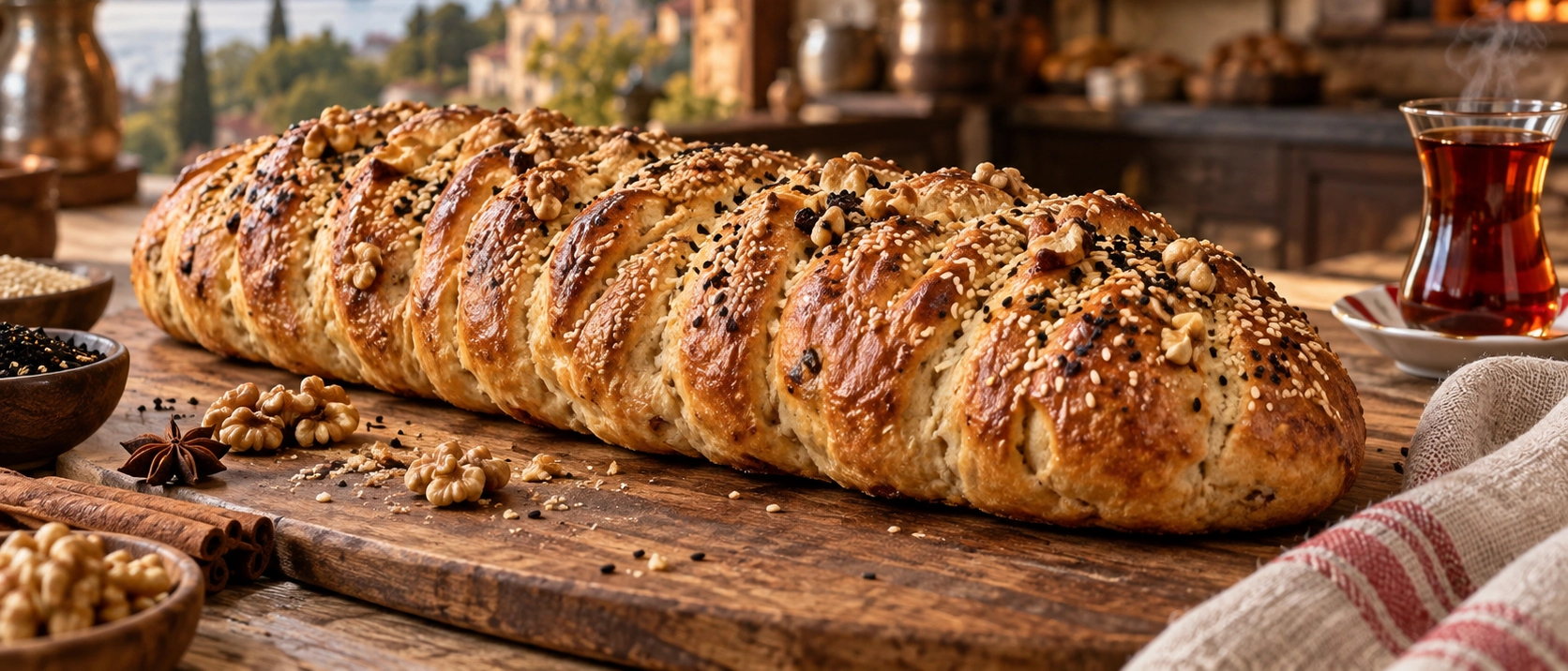
Its flavour is unusually aromatic. Wheat and rye flours are combined with sourdough and fresh yeast, while anise, cinnamon, clove and mastic give the bread its characteristic fragrance. A topping of sesame, nigella seeds and walnut adds additional texture and richness.
The tradition was formally protected in 2021, when Gebze Bayram Çöreği was registered by the Turkish Patent and Trademark Office as a Mahreç İşareti geographical indication.
The bread is especially associated with the eve of Ramadan and Sacrifice holidays.
Anise, cinnamon, clove and mastic create the çörek’s distinctive festive aroma.
The dough is shaped with a characteristic ridged or finger-like form before baking.
Gebze Bayram Çöreği has been geographically indicated since 2021.
Essential information about one of Gebze’s most distinctive protected culinary traditions.
Gebze district in Kocaeli, northwestern Türkiye.
Open Gebze on Google MapsA traditional spiced holiday bread also known locally as parmaklı çörek.
Anise, cinnamon, clove and mastic are among its defining flavourings.
Registered by TÜRKPATENT as a Mahreç İşareti under registration number 777.
Discover how a fragrant local bread became part of the rhythm of holiday life in Gebze.
Gebze Bayram Çöreği belongs to the traditional food culture of the settled Turkmen communities of the Gebze region, commonly known as Manavs. Its importance comes not only from the recipe but also from when, why and how the bread is shared.
Traditionally, bakeries prepare the çörek shortly before religious holidays. Because it appears for such a limited period, families may buy several loaves at once. Some are placed on the household table for guests, while others are carried as edible gifts when visiting relatives, neighbours and friends.
The smell of anise, cinnamon, clove and mastic therefore has a powerful seasonal association. For many local families, the aroma of freshly baked Bayram Çöreği signals that the holiday is approaching.
The bread is also known as parmaklı çörek, a reference to its distinctive shaped surface and elongated form. The shaping method is an important part of the protected production tradition and requires experience.
As Gebze became increasingly urban and culturally diverse, awareness of the old local bread began to decline. Geographical-indication registration and public promotion have helped preserve the tradition and introduce it to younger generations.
The protected character of the çörek comes from its ingredients, aromas, shaping technique and strong connection with holiday tradition.
The dough combines wheat flour with rye flour, giving the bread a deeper grain character than many ordinary festive buns.
Traditional production combines sourdough with fresh yeast, helping create the çörek’s characteristic structure and flavour.
Anise is one of the clearest distinguishing features of Gebze Bayram Çöreği and immediately separates it from ordinary bread.
Ground cinnamon, clove and mastic add layers of fragrance that make the bread particularly memorable.
The rested dough is marked and stretched into a distinctive elongated form that has given rise to the popular name parmaklı çörek.
A mixture including sesame, nigella seeds and walnut is scattered over the dough before baking.
The bread is traditionally associated with the eve of religious holidays rather than everyday bakery production.
Its connection with Gebze is formally protected by Türkiye’s geographical-indication system.
Gebze Bayram Çöreği is officially registered by the Turkish Patent and Trademark Office as a geographical indication under the category Mahreç İşareti.
The protected geographical-indication name is Gebze Bayram Çöreği.
The geographical indication carries registration number 777.
Gebze Bayram Çöreği was registered on 28 May 2021.
The application for protection was submitted on 21 October 2020.
It is registered as a Mahreç İşareti.
The geographical indication was registered by Gebze Chamber of Commerce.
The product belongs to Kocaeli Province.
It belongs to the bakery, pastry, dough-product and sweets category.
The registration protects not only the name but also the product’s recognised ingredients and production method, including its distinctive seasoning, fermentation, shaping and baking process.
The geographical indication is particularly important because the bread’s reputation is closely linked with Gebze’s local Manav culture and its long-standing use during holiday visits and hospitality.
Gebze today is widely known as one of Türkiye’s major industrial centres, yet beneath the modern city lies a much older local culture shaped by villages, neighbourhood traditions and the Manav communities of northwestern Anatolia.
The çörek is associated with the settled Turkmen communities historically rooted in the Gebze region.
Local bakeries traditionally prepare the bread shortly before Ramadan and Sacrifice holidays.
Families serve the bread to people visiting their homes during the holiday.
Several loaves may be purchased so that some can be taken along when visiting relatives and neighbours.
The bread has also been associated in local memory with older bakery masters, including a baker remembered by the nickname Kel Tatar. Such references underline the importance of individual artisans in keeping local recipes alive before formal registration.
In recent decades, Gebze’s rapid population growth and increasingly multicultural character made some older local traditions less visible. Protecting Bayram Çöreği as a geographical indication therefore became a way of recording a food tradition that might otherwise have gradually disappeared.
The registered recipe combines a bread-like dough with an unusually complex aromatic profile. The most important ingredients are grains, fermentation agents, warm spices and a traditional seed-and-walnut topping.
Wheat flour forms the main body of the dough and provides its basic structure.
Rye flour adds depth of flavour and contributes to the traditional character of the bread.
Sourdough is one of the components that connects the bread with older regional bakery practice.
Fresh yeast supports fermentation and helps the shaped dough rise before baking.
Anise gives Gebze Bayram Çöreği one of its most immediately recognisable aromas.
Ground cinnamon adds warm spice and a gentle impression of sweetness.
Ground clove contributes a deeper and more powerful festive aroma.
Ground mastic adds a distinctive resinous note familiar from several traditional Anatolian and eastern Mediterranean foods.
A relatively modest quantity of sugar softens the spice profile without turning the çörek into a conventional sweet pastry.
The registered commercial recipe includes margarine as part of the dough mixture.
Sesame and nigella seeds are used on the surface before the bread enters the oven.
Walnut pieces are included in the characteristic topping mixture.
The official large-scale specification records approximately 125 kg wheat flour, 25 kg rye flour, 95 litres water, 10 kg sourdough, 1 kg margarine, 3 kg anise, 1.5 kg salt, 1 kg sugar, 750 g cinnamon, 1 kg clove, 90 g mastic and 3 kg fresh yeast, together with the surface topping.
These are commercial-production quantities rather than a home recipe. What matters most for travellers is the balance between grain, fermentation and strongly aromatic spices.
A major part of the experience is aroma. Even before tasting it, the çörek can be recognised through the combination of anise, cinnamon, clove and mastic released during baking.
The dominant aromatic note is warm, sweet and slightly liquorice-like.
Cinnamon rounds the sharper spices and creates a familiar bakery warmth.
Clove gives the bread a deep, penetrating fragrance associated with celebratory foods.
Mastic adds a subtle resinous freshness that makes the spice blend more complex.
Together, these ingredients create a flavour profile quite different from ordinary Turkish breads. The aroma is one of the reasons older residents often connect Bayram Çöreği so strongly with childhood memories and the anticipation of a holiday.
The protected method involves several stages of mixing, resting, portioning, shaping, proofing and baking. The distinctive shape is particularly important and traditionally requires practical bakery skill.
The registered specification notes that proofing time varies with the season. In warmer conditions the dough may rise for approximately 45 minutes to one hour, while colder conditions can require around one and a half hours.
The finished çörek weighs less after baking as moisture is lost in the oven. The protected method records a pre-baking dough weight of roughly 270 g and a finished weight of approximately 220–225 g.
Gebze Bayram Çöreği is widely known locally as parmaklı çörek. The name refers to its characteristic marked and elongated appearance.
The rested portion is pressed and marked before the final shaping movement.
The ends are stretched so the çörek develops its distinctive length.
The two ends are turned in opposite directions during the traditional shaping process.
The resulting ridges and divisions give the çörek the finger-like appearance remembered in its local name.
The shaping is more than decoration. It is one of the production details that links the finished bread visually with the traditional Gebze product and helps distinguish it from generic festive bakery items.
After shaping and topping, the dough is placed on baking trays and allowed to proof until it reaches approximately one and a half times its original size.
In warmer periods, the registered method allows roughly 45 minutes to one hour for the final rise.
In colder conditions, the proofing stage may take approximately one and a half hours.
The registered method specifies an oven temperature of approximately 280°C.
The shaped bread is baked for around 15 minutes.
This combination of strong fermentation and relatively hot baking helps produce a firm, aromatic crust while preserving a softer interior.
Gebze Bayram Çöreği is not simply sweet and not simply savoury. Its character lies in the contrast between bread, spice, mild sweetness and the nut-and-seed topping.
Anise, cinnamon, clove and mastic create a fragrance that is stronger than in ordinary bread.
Sugar is present, but the çörek remains much closer to a festive bread than to a dessert pastry.
The warm spice mixture gives every bite a distinctively traditional character.
Walnut, sesame and nigella seeds contribute texture and roasted aromas on the surface.
The hot oven produces a developed baked exterior.
Proper fermentation helps preserve a softer crumb beneath the crust.
Visitors accustomed to sweet European holiday breads may find Gebze Bayram Çöreği less sugary and much more spice-driven. Its flavour reflects a bakery tradition rather than a confectionery tradition.
The word bayram means holiday or festival in Turkish, and the çörek’s identity is inseparable from Türkiye’s two principal religious holidays: Ramazan Bayramı and Kurban Bayramı.
The strongest traditional production period is the day immediately before the holiday begins.
Families traditionally place several loaves on hand so they can offer the bread to holiday visitors.
Bayram Çöreği can also be carried to the homes of relatives and neighbours as a traditional edible gift.
Its seasonal aroma has become closely connected with the emotional atmosphere of the holiday.
This limited seasonal rhythm is one of the most unusual things about the product. Travellers should not assume that it is available every day of the year simply because it is one of Gebze’s best-known traditional foods.
The traditional importance of the çörek becomes clearer when viewed through Turkish holiday hospitality. During bayram, family visits and neighbourly calls may continue throughout the day.
Loaves can be kept ready to serve to relatives, neighbours and other guests.
The bread may be taken along when visiting elders or other family members.
Its use reflects the broader tradition of exchanging food and hospitality during important communal occasions.
Because production is traditionally concentrated around the holiday eve, families may purchase multiple loaves at once.
In this sense, Gebze Bayram Çöreği is not merely something eaten at breakfast. It is part of a social ritual built around welcoming people, visiting others and marking a special day through food.
The bread can be sliced or broken into portions and served as part of a holiday table. Its aromatic character makes it suitable both on its own and beside familiar Turkish drinks and breakfast foods.
Strong black tea is a natural companion for the fragrant, slightly sweet bread.
The çörek can form part of a generous holiday breakfast together with cheese, olives and other local foods.
It is traditionally placed on the table when relatives and neighbours arrive for holiday visits.
A loaf can be carried to another household as part of the exchange of holiday hospitality.
Because the bread already contains a complex spice mixture and a textured topping, it does not need elaborate accompaniments to make an impression.
One reason the bread suits a period of repeated holiday visits is that it can remain enjoyable for several days when stored correctly.
Local references commonly note that the bread may remain fresh for around five days under suitable room conditions.
Traditional descriptions state that refrigerated storage may extend freshness to around fifteen days.
Wrapping the bread well helps prevent unnecessary drying after it has been cut.
A short gentle warming can help revive the aroma of the spices before serving.
Storage conditions always affect bakery products, so travellers should follow the advice of the bakery where they purchase the çörek, especially if they plan to carry it onward as a food souvenir.
Türkiye has countless breads, buns and çörek varieties, but the Gebze version has a combination of features that makes it immediately distinctive.
Its strongest tradition is seasonal and tied directly to religious-holiday eves.
Anise is particularly important and creates a flavour profile unlike most everyday Turkish breads.
Cinnamon, clove and mastic make the bread unusually aromatic.
The use of rye flour alongside wheat contributes to the traditional dough character.
The marked and twisted parmaklı form is an important part of the product’s visual identity.
It is bought not only for eating at home but also for serving and carrying during holiday visits.
For English-speaking travellers, the description “Gebze Holiday Bun” makes the basic idea easy to understand, but the authentic name Gebze Bayram Çöreği should always be preserved because the Turkish word bayram carries the cultural meaning behind the tradition.
The best place to look for the genuine product is Gebze itself, particularly around the eve of Ramazan Bayramı or Kurban Bayramı.
Ask local bakeries whether they are producing the geographically indicated Bayram Çöreği for the coming holiday.
Using “Gebze Bayram Çöreği” helps distinguish the local product from generic çörek varieties.
Older residents and bakers may also recognise the local description parmaklı çörek.
The days immediately before a religious holiday offer the strongest chance of experiencing the tradition at its most authentic.
Availability outside the traditional holiday period can vary. If tasting the bread is a major reason for your visit, it is sensible to check with local bakeries in advance rather than assuming year-round production.
The arife period gives you the best chance to see the çörek in its traditional setting.
The combination of anise, cinnamon, clove and mastic is a major part of the experience.
Notice the ridged, finger-like appearance that explains the local name parmaklı çörek.
The crust, crumb and aromas are easiest to appreciate shortly after baking.
A glass of Turkish tea balances the rich spice profile particularly well.
Local bakers may be able to explain when their families began making the bread and how demand changes during bayram.
Its keeping qualities make it a practical regional food souvenir when properly stored.
Combine your tasting with the district’s Ottoman, archaeological and cultural landmarks.
Gebze Bayram Çöreği belongs to a broader culinary landscape stretching from the Gulf of İzmit to the Black Sea districts of Kocaeli.
Discover Kocaeli’s geographically indicated twisted sesame simit, famous for its crisp exterior and molasses-coated surface.
Compare Gebze’s holiday bread with Karamürsel’s stuffed simit tradition, finished with milk, egg and butter.
Taste Kocaeli’s famous fine-threaded confection made by combining roasted flour with pulled sugar.
Traditional yoghurt reflecting the strong dairy culture of northern Kocaeli.
Kandıra is strongly associated with regional turkey farming and traditional poultry dishes.
Kocaeli’s villages preserve numerous breads, pides and seasonal baked foods connected with local celebrations and family life.
A search for Gebze Bayram Çöreği can easily become part of a broader cultural day exploring the district’s Ottoman history, archaeology, museums and nearby Gulf of İzmit landmarks.
Visit the memorial associated with the celebrated Carthaginian commander Hannibal, who spent his final years in the region.
Discover the Eskihisar home of one of the most important painters, archaeologists and museum pioneers of the late Ottoman period.
Explore the Byzantine-era fortress overlooking the Sea of Marmara and the historic waterfront of Eskihisar.
See one of Gebze’s major Ottoman architectural ensembles, built during the reign of Süleyman the Magnificent.
Continue east along the Gulf of İzmit to discover the restored coastal fortress of Hereke.
See the historic waterfront pavilion associated with German Emperor Wilhelm II’s visit to the Ottoman Empire.
Gebze Bayram Çöreği is a traditional spiced bread from Gebze in Kocaeli, closely associated with religious-holiday eves and local Manav culture.
It is traditionally produced immediately before major religious holidays, or bayrams, and served to guests or taken along during holiday visits.
It comes from Gebze, a district in Kocaeli Province in northwestern Türkiye.
Yes. It is officially registered by the Turkish Patent and Trademark Office as a geographical indication.
Gebze Bayram Çöreği has registration number 777.
It was registered on 28 May 2021.
The application was submitted on 21 October 2020.
Gebze Bayram Çöreği is protected as a Mahreç İşareti.
The registration holder is Gebze Chamber of Commerce.
Parmaklı çörek is a popular local name for Gebze Bayram Çöreği, referring to its characteristic marked and finger-like shape.
The registered recipe uses both wheat flour and rye flour.
Yes. Sourdough is used together with fresh yeast in the protected production method.
Its defining aromatic ingredients include anise, cinnamon, clove and mastic.
Anise is one of the most distinctive flavour characteristics of the local çörek and helps separate it from ordinary festive breads.
Yes. Ground mastic is included in the protected recipe and contributes a subtle resinous fragrance.
The surface traditionally includes a mixture of sesame, nigella seeds and walnut.
The dough is marked, stretched to an elongated form and twisted in opposite directions to create its characteristic appearance.
The registered method forms dough portions of approximately 270 g before baking. The baked product is approximately 220–225 g.
Final proofing depends on temperature. The protected method records approximately 45 minutes to one hour in summer and around one and a half hours in winter.
The registered production method specifies an oven heated to approximately 280°C.
The registered method specifies a baking time of approximately 15 minutes.
It contains some sugar, but it is better understood as a fragrant festive bread than as a conventional sweet dessert pastry.
It is especially associated with the eve of Türkiye’s major religious holidays, Ramazan Bayramı and Kurban Bayramı.
Not necessarily. Its strongest traditional production period is immediately before religious holidays, and availability at other times can vary.
Traditionally, some are served to people visiting the home while others may be taken as gifts when visiting relatives, neighbours and friends.
Local culinary references commonly state that it can remain fresh for around five days at room temperature and up to about fifteen days under refrigerated conditions.
Absolutely. It is one of the clearest ways to experience Gebze’s surviving local food culture beyond the district’s modern industrial identity.
Its elongated form, ridged surface, toasted toppings and holiday setting make Gebze Bayram Çöreği an excellent subject for food and cultural photography.
Photograph the entire çörek from above or at a slight angle to show its distinctive elongated shape.
A close-up of the marked ridges clearly explains the local “fingered bun” nickname.
Show anise, cinnamon, clove and mastic beside the bread to communicate the unusual aromatic profile.
Use a close crop to capture sesame, nigella seeds and walnut on the browned surface.
A bakery image communicates the seasonal tradition and the importance of local production.
Present the bread with Turkish tea and traditional tableware to connect the food with bayram hospitality.
Always ask permission before photographing bakers, bakery staff, customers or active food-preparation areas.
Discover Gebze Bayram Çöreği together with Ottoman monuments, local food traditions, the Gulf of İzmit and the historical landscapes of northwestern Türkiye.
Custom-designed private journeys with professional guiding, comfortable transportation and flexible itineraries throughout Gebze and the Kocaeli region.
Explore Gebze’s historic monuments and local culinary traditions, with the possibility of tasting its geographically indicated Bayram Çöreği when seasonally available.
Request This Tour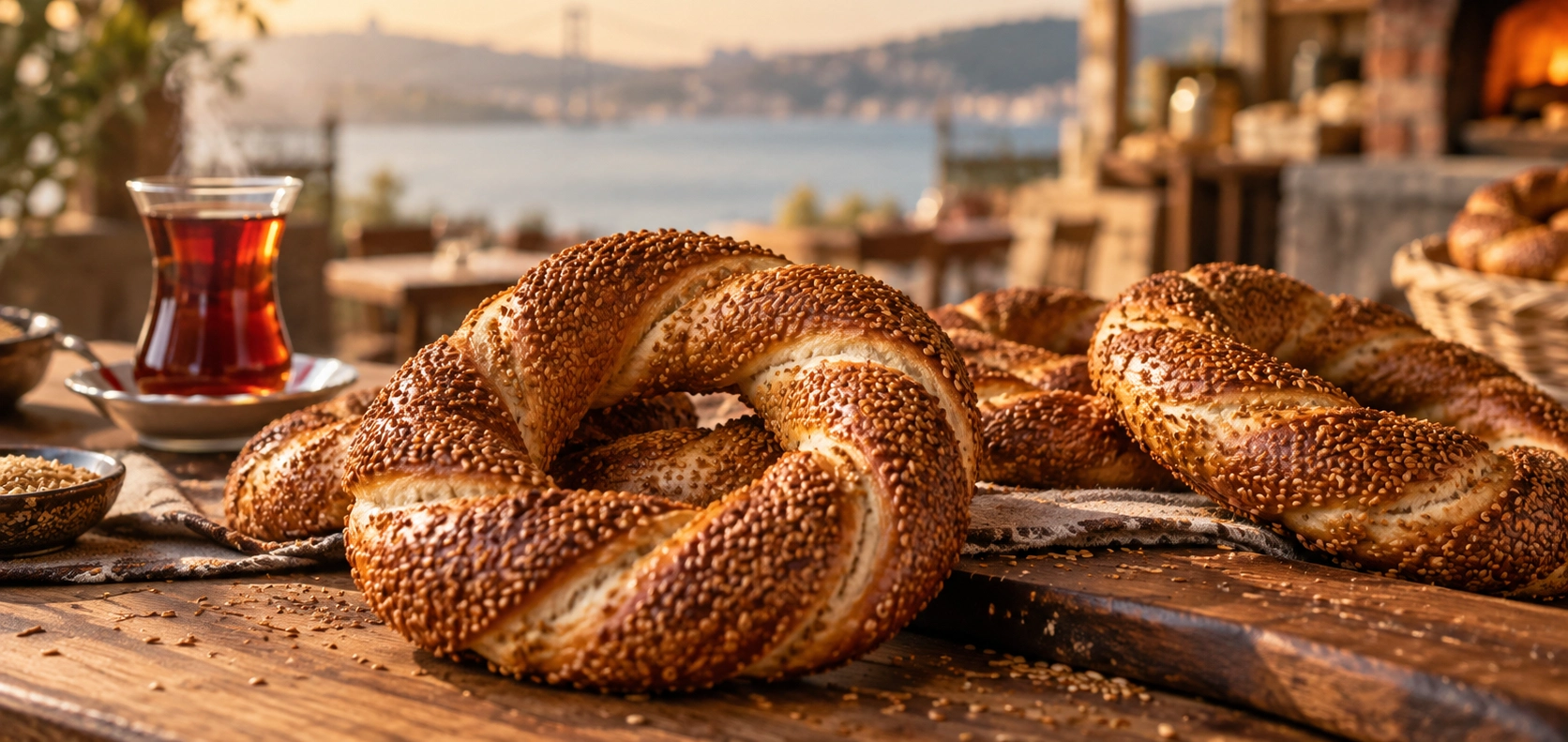
Compare Gebze Bayram Çöreği with İzmit Simidi, Karamürsel Simit Dolması, pişmaniye and other regional foods while exploring the Gulf of İzmit.
Request This TourAdd Gebze and Kocaeli to a private journey connecting Istanbul with Bursa, İznik, the Marmara region, Ankara, Cappadocia or the Black Sea.

Create a private itinerary through Istanbul, Gebze, Kocaeli, İznik, Bursa and other fascinating destinations around the Marmara region.
Plan Your Journey
Connect Istanbul, Gebze and Kocaeli with Türkiye’s archaeological sites, historic cities, regional cuisines and extraordinary landscapes on a completely private itinerary.
Contact Our Travel Specialists