Edirne’s Classic Ottoman-Style Almond Confection

Edirne Almond Paste – Complete Food Guide

Discover Edirne Badem Ezmesi, a smooth almond-and-sugar confection
rooted in Ottoman palace cuisine and protected as a regional speciality.

Discover Edirne Almond Paste

Discover Edirne Almond Paste – Badem Ezmesi from Türkiye’s Former Ottoman Capital

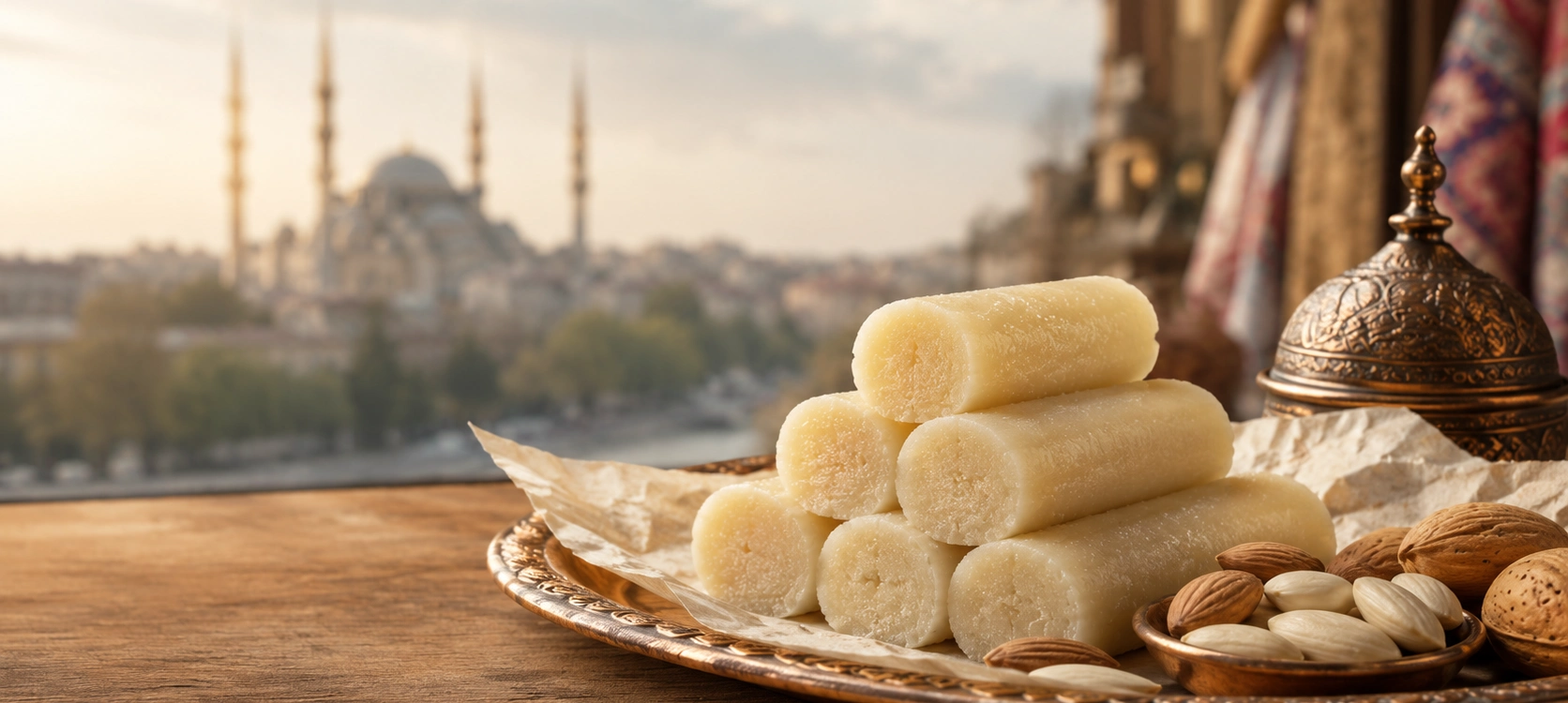
Edirne Badem Ezmesi, or Edirne Almond Paste, is one of the most celebrated traditional sweets of Edirne. Made primarily from finely ground almonds, sugar and water, it has a soft yet compact texture, a naturally rich almond flavour and an elegant simplicity that distinguishes it from heavily flavoured confectionery.

Its history is closely associated with Ottoman palace cuisine, while its modern identity is firmly tied to Edirne and to a particular local almond known as Hacı Alibey (48-5). According to the protected geographical-indication specification, authentic Edirne Badem Ezmesi is produced using these hard-shelled, plump almonds grown in Edirne Province. The almonds are peeled, dried, ground, mixed with carefully prepared sugar syrup, cooled on marble, kneaded, rolled and cut into characteristic cylindrical portions.

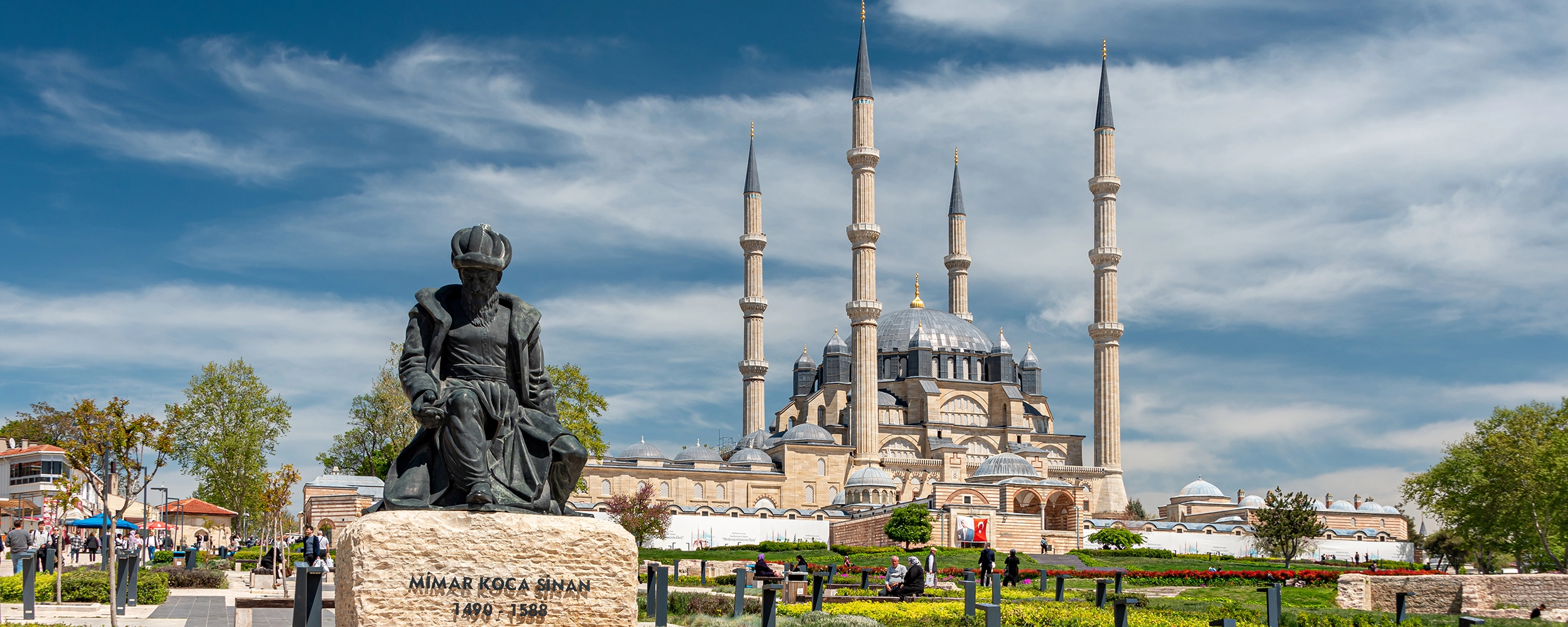
Today almond paste remains one of Edirne’s best edible souvenirs. Travellers exploring Selimiye Mosque, the city’s historic bazaars and the streets of central Edirne will frequently encounter traditional confectionery shops displaying boxes of pale almond paste alongside other local specialities.

Hacı Alibey Almonds

The protected product uses the distinctive Hacı Alibey (48-5) almond variety grown within Edirne Province.

Ottoman Culinary Heritage

Edirne Almond Paste is associated with the confectionery traditions of Ottoman palace cuisine.

Simple Ingredients

Almonds, sugar and water form the heart of this remarkably straightforward yet carefully prepared confection.

Protected Edirne Speciality

Edirne Badem Ezmesi is registered as geographical indication number 656.

Know Before You Taste

Edirne Almond Paste – Quick Facts

Essential information about one of Edirne’s best-known traditional sweets.

📍

Origin

Edirne in Turkish Thrace, a former Ottoman capital with a distinguished confectionery tradition.

Open Edirne on Google Maps
🌰

Main Ingredient

Hacı Alibey (48-5) almonds grown in Edirne Province and recognised for their plump kernels.

🍬

Character

Sweet, intensely almond-flavoured, smooth and dense, with no need for elaborate additional flavourings.

🏅

Geographical Indication

Registered as Edirne Badem Ezmesi under Turkish geographical-indication registration number 656.


From Palace Cuisine to Edirne Sweet Shops

The Story of Edirne Almond Paste

A simple almond confection carrying centuries of culinary memory.

The identity of Edirne Badem Ezmesi is inseparable from Edirne’s long connection with the Ottoman court. Before Constantinople became the imperial capital in 1453, Edirne had already developed into one of the most important administrative and cultural centres of the early Ottoman state. Palace life brought cooks, confectioners, specialist food producers and sophisticated culinary traditions to the city.

The official geographical-indication specification describes Edirne Almond Paste as a product whose history reaches back to Ottoman palace cuisine. Almonds were highly valued in Ottoman cooking and appeared in numerous sweets, rice dishes, beverages and festive preparations, making an almond-based confection entirely at home within this culinary environment.

Over generations, almond paste became closely associated with Edirne’s confectioners. Its apparent simplicity is deceptive: producing a smooth, balanced paste requires careful preparation of the almonds, control of the sugar syrup, correct cooling and skilled kneading.

Various local stories have grown around the sweet over time, sometimes connecting its development with travelling confectioners, palace cooks or particular Ottoman rulers. These accounts form an interesting part of Edirne’s culinary storytelling, although the precise moment when the modern form of Badem Ezmesi first appeared cannot be documented with certainty.

What can be stated confidently is that almond paste became deeply embedded in Edirne’s gastronomic identity. Traditional sweet shops continued producing it, visitors began taking boxed portions home as gifts, and the confection became one of the foods most immediately associated with a trip to the city.

Its relationship with Edirne was formally recognised through geographical-indication protection in 2021, preserving both the characteristic ingredients and the traditional production method of Edirne Badem Ezmesi.

Simple Ingredients, Distinctive Identity

What Makes Edirne Almond Paste Special?

Its character comes from the almond variety, careful sugar work, traditional preparation and strong connection with Edirne.

Hacı Alibey (48-5) Almonds

Authentic Edirne Badem Ezmesi uses the locally associated Hacı Alibey almond variety, characterised by hard shells and relatively plump kernels.

  • Variety: Hacı Alibey (48-5)
  • Origin: Edirne Province
  • Character: Hard-shelled and plump

Generous Almond Content

Almonds account for approximately 35% of the protected formulation, giving the confection its unmistakably nutty flavour and natural richness.

  • Registered proportion: Approximately 35%
  • Role: Flavour, texture and body
  • Allergen: Contains almonds

Carefully Prepared Sugar Syrup

White sugar, water and cream of tartar are cooked together until the syrup reaches the temperature required for the traditional method.

  • Sugar: Approximately 55%
  • Water: Approximately 10%
  • Syrup temperature: 120°C

Smooth Yet Dense Texture

Finely ground almonds combine with syrup to create a cohesive paste that is soft enough to bite easily but firm enough to retain its cylindrical shape.

  • Texture: Dense and smooth
  • Surface: Fine almond grain
  • Mouthfeel: Rich and slightly moist

Characteristic Cylinder Shape

After cooling and kneading, the paste is traditionally rolled into long pieces and cut into neat cylindrical portions.

  • Official shape: Cylinder
  • Preparation: Rolled by hand
  • Serving: Small individual pieces

Natural Almond Colour

The confection has a pale almond-kernel colour with a slightly yellowish tone rather than the bright white appearance of some industrial almond sweets.

  • Colour: Pale almond
  • Tone: Slightly yellowish
  • Source: Natural almond paste

Ottoman Palace Heritage

Edirne’s long history as an Ottoman capital and royal residence gives the sweet an important place in the city’s wider palace-food tradition.

  • Culinary tradition: Ottoman
  • Historic centre: Edirne
  • Modern role: Regional speciality

Geographically Indicated

The geographical indication defines the almond variety, proportions, production method and requirement that production take place within Edirne Province.

  • Registration no.: 656
  • Registration date: 25 January 2021
  • Type: Mahreç İşareti

Edirne Almond Paste’s Geographical Indication

Edirne Badem Ezmesi is officially protected by the Turkish Patent and Trademark Office as a geographical indication associated with Edirne Province.

Registration Name

The official protected name is Edirne Badem Ezmesi.

Registration Number

The geographical-indication registration number is 656.

Registration Date

The product was formally registered on 25 January 2021.

Application Date

The original application was filed on 24 December 2012 under number C2013/003.

Registration Holder

The holder is the Edirne Chamber of Commerce and Industry.

Registration Type

Edirne Badem Ezmesi is protected as a mahreç işareti.


The geographical boundary is Edirne Province. The specification requires the use of Hacı Alibey (48-5) almonds obtained from trees growing in Edirne and states that all stages of production must take place within the geographical boundary.

The geographical indication therefore protects much more than the name. It preserves the relationship between the confection and its local almonds, as well as the characteristic proportions, syrup preparation, almond processing, cooling, kneading and shaping method.

What Is the Hacı Alibey (48-5) Almond?

One of the most interesting aspects of authentic Edirne Almond Paste is its connection with a specific almond variety. The protected specification identifies Hacı Alibey (48-5) almonds grown in Edirne as a defining ingredient.

Hard Shell

Hacı Alibey almonds have a notably hard outer shell protecting the edible kernel inside.

Plump Kernel

The variety is valued for its substantial kernel, which forms the flavour base of Edirne Badem Ezmesi.

Kernel Length

The geographical-indication specification gives a typical kernel length of approximately 22–27 mm.

Kernel Width

The internal almond kernel is approximately 10–15 mm wide.

Kernel Weight

Individual almond kernels generally weigh approximately 1–1.5 g.

Shell-on Weight

A whole almond in its shell generally weighs around 3–4 g.


The official specification also records a kernel yield of approximately 33–38%. These detailed characteristics demonstrate why the almond itself, rather than simply the general technique of making almond paste, is central to the protected identity of the Edirne product.

What Goes into Authentic Edirne Almond Paste?

One reason Edirne Badem Ezmesi is so distinctive is the simplicity of its ingredient list. There are no elaborate spice mixtures or strong additional flavourings needed: the flavour of almond itself is allowed to dominate.

35% Almonds

Hacı Alibey (48-5) almonds from Edirne provide the confection’s characteristic flavour, aroma and natural oils.

55% Sugar

White sugar forms the syrup that sweetens and binds the finely ground almonds.

10% Water

Water is used in preparing the sugar syrup before the almond meal is incorporated.

Cream of Tartar

A small quantity of cream of tartar is used as an acidity regulator during syrup preparation.


The protected recipe permits approximately ±5% variation around the principal proportions. The absence of heavy flavourings makes almond quality particularly important: there is nowhere for an inferior nut to hide.

How Edirne Almond Paste Is Made

The production method requires patience and temperature control. Preparing the almonds correctly is just as important as cooking the syrup, while cooling and kneading determine the final texture.

1. Blanch the Almonds Hacı Alibey almonds grown in Edirne are treated with hot water so their brown skins can be removed
2. Peel the Almonds The outer brown skin is removed, exposing the pale almond kernels used for the paste
3. Dry at 70°C The peeled almonds are dried in an oven at approximately 70°C
4. Grind the Almonds The dried kernels are ground to particles approximately 1–5 mm in size
5. Prepare the Syrup White sugar, water and cream of tartar are combined in a cooking vessel
6. Heat to 120°C The sugar mixture is boiled until it reaches approximately 120°C and becomes a concentrated syrup
7. Add the Ground Almonds The almond mixture is incorporated into the prepared syrup to create the almond-paste dough
8. Cool on Marble The warm paste is spread onto marble work surfaces and allowed to cool
9. Knead by Hand Once cool enough to handle, the paste is kneaded until the ingredients form a cohesive smooth mass
10. Roll & Cut The paste is shaped into long narrow rolls and cut with a knife into characteristic cylindrical pieces
11. Package Carefully The portions are traditionally arranged on greaseproof paper inside boxes ready for sale

Appearance & Characteristics of Edirne Badem Ezmesi

The official specification even defines several physical and compositional characteristics of the finished confection, helping preserve consistency between authentic producers.

Colour

Almond-kernel coloured with a slightly yellowish natural appearance.

Shape

The traditional finished product is formed into small cylindrical portions.

Moisture

The protected specification gives a moisture range of approximately 8–12 g per 100 g.

Fat

The naturally almond-rich confection typically contains approximately 20–24 g fat per 100 g.

Protein

The specification records approximately 8–10 g protein per 100 g.

Total Sugar

Total sugar is specified at approximately 50–55 g per 100 g.


These figures describe the protected product rather than serving as nutritional advice. Individual packaged products should always be checked for their current nutrition labelling and ingredient information.

What Does Edirne Almond Paste Taste Like?

The dominant flavour is unmistakably almond. Because the recipe is so restrained, there are few competing flavours: sweet syrup supports the natural nuttiness, mild bitterness and fragrance of the ground almonds.

Sweet

The high sugar content gives Badem Ezmesi a pronounced sweetness characteristic of traditional confectionery.

Almond-Rich

The flavour of real almond remains the defining taste rather than disappearing beneath extracts or strong additional flavourings.

Gently Nutty

Natural almond oils contribute a rounded richness and slightly buttery impression despite the traditional formula containing no butter.

Clean Finish

A well-made piece leaves a lingering almond aroma rather than an aggressively flavoured aftertaste.


Because almond paste is concentrated and sweet, small portions are usually enough. Eating it slowly with unsweetened Turkish coffee or plain tea makes it easier to appreciate the almond flavour beneath the sugar.

What Is the Texture of Edirne Almond Paste?

Authentic Badem Ezmesi is neither brittle candy nor a loose nut butter. It sits somewhere between a soft confection and a firm almond paste, with enough structure to be rolled and cut while remaining easy to bite.

Compact

The paste holds together firmly and maintains its cylindrical shape after cutting.

Fine-Grained

Ground almond particles give the sweet a subtle natural grain rather than an artificially glossy texture.

Soft to Bite

Despite its compact shape, properly prepared almond paste should yield easily when eaten.

Naturally Rich

Almond oils contribute body and richness without requiring large quantities of additional fat.

Is Edirne Almond Paste the Same as Marzipan?

International visitors often compare Edirne Badem Ezmesi with marzipan, and the comparison is understandable. Both belong to the broad family of almond-and-sugar confections. However, they should not automatically be treated as identical products.

Edirne Badem Ezmesi

Identity: Protected Edirne speciality.
Defining almond: Hacı Alibey (48-5).
Traditional form: Small cylinders.

European Marzipan

Identity: Broad family of almond-and-sugar confections with recipes varying significantly by country and producer.

Similar Principle

Both rely on the natural compatibility of finely ground almonds and sugar to create a dense sweet paste.

Different Traditions

Edirne Badem Ezmesi has its own protected local almond, production requirements and regional cultural identity.


For travellers already familiar with marzipan, it is reasonable to think of Edirne Badem Ezmesi as a relative within the same broad confectionery family. The best approach, however, is to taste it as a distinct Edirne speciality rather than expecting it to duplicate a particular European marzipan.

Edirne Almond Paste in the City’s Culinary Heritage

Badem Ezmesi is valuable not merely because almonds and sugar taste good together. It belongs to a larger Edirne story combining Ottoman court culture, local agriculture, specialist confectionery and the tradition of taking regional foods home as gifts.

Former Ottoman Capital

Edirne’s history as an imperial centre created an environment in which refined sweets and palace-style confectionery could flourish.

Local Almond Heritage

The protected recipe ties the confection directly to almonds grown within Edirne Province.

Confectioners’ Craft

Correct syrup temperature, grinding, cooling, kneading and shaping require experience despite the short ingredient list.

Edible Souvenir

Boxes of almond paste have become one of the classic food gifts associated with visiting Edirne.

How to Eat Edirne Almond Paste

Badem Ezmesi requires no elaborate presentation. A small piece served at room temperature is enough to appreciate its almond aroma, sweetness and texture.

Start with a Small Piece Traditional portions are rich and sweet, so one or two pieces provide plenty of flavour
Eat Slowly Allow the almond to soften in the mouth so its natural nutty aroma becomes more noticeable
Pair with Turkish Coffee Unsweetened coffee provides an excellent bitter contrast to the sweet almond paste
Serve with Turkish Tea Plain black tea is another simple accompaniment that keeps the almond flavour in the foreground
Share as a Gift Traditional boxed almond paste is particularly well suited to taking home for friends and family

Dietary & Allergy Notes

Although Edirne Badem Ezmesi has a relatively short ingredient list, its primary ingredient makes one dietary warning particularly important: it contains almonds.

Contains Tree Nuts

Almond is a defining ingredient and makes up approximately 35% of the protected formulation.

No Egg in the Registered Formula

The geographical-indication specification lists almonds, sugar, water and cream of tartar and does not include egg.

No Dairy in the Registered Formula

Milk and butter are not part of the protected recipe, although individual producer labels should still be checked.

Check for Cross-Contact

Traditional confectionery shops may also handle pistachios, hazelnuts, walnuts, sesame, dairy or other allergens.


If you have a serious food allergy, intolerance or strict dietary requirement, always rely on the current producer label and information provided by the shop. A traditional recipe does not guarantee that every commercial production environment is free from cross-contact.

How to Store Edirne Almond Paste

Almond paste contains natural almond oils and moisture, so correct storage helps preserve both its texture and aroma.

Warm Weather

During hot conditions, the protected-product guidance recommends keeping the sweet in a cool and dry place.

Cool Weather

During cooler periods, it can be stored at room temperature provided the environment remains dry and free from excess humidity.

Keep It Covered

Close the package properly so the almond paste does not dry out or absorb external odours.

Follow the Label

Commercial producers may provide specific best-before dates and storage recommendations that should take priority.

Where to Buy Edirne Almond Paste

The easiest place to discover Badem Ezmesi is in central Edirne, where established confectionery shops continue to sell traditional local sweets to both residents and visitors.

Historic City Centre

Confectionery shops around Edirne’s central commercial streets and bazaars are a natural place to begin your search.

Use the Turkish Name

Ask for “Edirne Badem Ezmesi” when shopping; it is the official and most easily recognised name.

Look at the Packaging

Protected products should be clearly identified, with producer information and appropriate geographical-indication labelling.

Check Freshness

Choose properly sealed packages and follow the manufacturer’s stated best-before and storage instructions.


Traditional producers often sell almond paste in attractive boxes, making it particularly convenient for travellers. If you are taking it on a long journey or flight, ask the seller which package size and storage method they recommend.

Why Edirne Almond Paste Makes a Great Souvenir

Food is often one of the best ways to remember a destination, and Badem Ezmesi has several qualities that make it especially appealing as an Edirne souvenir.

Strong Local Identity

The sweet carries Edirne’s name and is protected specifically in connection with the province.

Easy to Share

Individual cylindrical pieces can be served easily to family, friends or colleagues.

Ottoman Story

Its connection with palace-style confectionery gives the gift a cultural story beyond the flavour itself.

Distinctive but Accessible

The combination of almond and sugar is familiar enough for most visitors while still representing a genuinely regional speciality.

Edirne Almond Paste Visitor Tips

Buy a Small Box First

If you have never tried almond paste before, taste a few pieces before purchasing a large quantity.

Look for the Edirne Name

When seeking the protected speciality, ask specifically for Edirne Badem Ezmesi rather than generic almond paste.

Notice the Almond Aroma

The natural almond fragrance is one of the sweet’s defining qualities and should be immediately apparent.

Do Not Expect Turkish Delight

Badem Ezmesi is nut-based and dense rather than translucent, elastic or starch-based like lokum.

Try It with Coffee

A small piece with unsweetened Turkish coffee creates one of the most satisfying flavour combinations.

Explore the Bazaars

Combine your confectionery stop with Edirne’s historic Bedesten, Arasta and Ali Paşa Bazaar areas.

Compare Local Sweets

Try Badem Ezmesi alongside Deva-i Misk and other Edirne specialities to understand how varied the city’s confectionery culture is.

Check the Box Before Travelling

If you are carrying almond paste home, make sure the packaging is sealed securely and protected from heat.

Other Edirne Foods to Discover

Almond paste belongs to a much wider culinary landscape. Edirne’s food culture ranges from extraordinary Ottoman sweets to celebrated liver dishes, local lamb, cheese and rice.

Places to Visit Near Edirne’s Traditional Sweet Shops

Most visitors encounter Badem Ezmesi while exploring central Edirne, making it very easy to combine a confectionery stop with some of Türkiye’s finest Ottoman monuments and historic bazaars.


A particularly enjoyable central route is Selimiye Mosque → Arasta → Historic Bazaars → traditional confectionery stop → Kaleiçi. It allows you to experience Edirne’s architecture, commercial heritage and food culture within the same leisurely walk.

Frequently Asked Questions About Edirne Almond Paste

What is Edirne Almond Paste?

Edirne Badem Ezmesi is a traditional confection made primarily from finely ground almonds, sugar and water and strongly associated with Edirne’s Ottoman culinary heritage.

What is Edirne Almond Paste called in Turkish?

Its Turkish name is Edirne Badem Ezmesi. “Badem” means almond and “ezme” refers to something crushed, ground or made into a paste.

Where does Edirne Badem Ezmesi come from?

It comes from Edirne Province in Turkish Thrace and is one of the foods most strongly associated with the city.

Is Edirne Almond Paste geographically indicated?

Yes. Edirne Badem Ezmesi is registered by the Turkish Patent and Trademark Office as a mahreç işareti.

What is its geographical-indication registration number?

Edirne Badem Ezmesi carries registration number 656.

When was Edirne Almond Paste registered?

The geographical indication was registered on 25 January 2021.

When was the geographical-indication application made?

The application was filed on 24 December 2012 under application number C2013/003.

Who registered Edirne Badem Ezmesi?

The registration holder is the Edirne Chamber of Commerce and Industry.

What type of geographical indication is it?

It is registered as a mahreç işareti, one of Türkiye’s geographical-indication categories.

What almonds are used in authentic Edirne Almond Paste?

The protected specification requires Hacı Alibey (48-5) almonds obtained from almond trees growing in Edirne.

What are Hacı Alibey almonds?

They are a hard-shelled, plump almond variety associated with Edirne and specifically identified in the protected Edirne Badem Ezmesi specification.

What are the ingredients in Edirne Almond Paste?

The defining ingredients are almonds, white sugar and water, with cream of tartar used in preparing the syrup.

What percentage of the recipe is almond?

The protected formulation specifies approximately 35% almonds, with a permitted variation of around ±5%.

How much sugar does Edirne Badem Ezmesi contain?

The geographical-indication production formula uses approximately 55% sugar.

How much water is used?

Water represents approximately 10% of the protected formulation.

How is Edirne Almond Paste made?

The almonds are blanched, peeled, dried and ground. Sugar, water and cream of tartar are cooked into syrup, the ground almonds are added, and the mixture is cooled on marble before being kneaded, rolled and cut.

At what temperature is the sugar syrup cooked?

The geographical-indication method specifies heating the syrup to approximately 120°C.

Why are the almonds dried first?

After blanching and peeling, drying removes excess moisture and prepares the kernels for controlled grinding into the almond mixture.

At what temperature are the almonds dried?

The protected production method specifies drying the peeled almonds in ovens at approximately 70°C.

Why is marble used?

The hot almond-paste mixture is transferred onto marble worktops where it can cool before being kneaded and shaped.

What shape is traditional Edirne Badem Ezmesi?

The protected product is traditionally formed into small cylindrical pieces.

What colour is authentic Edirne Almond Paste?

It has a natural almond-kernel colour with a slightly yellowish tone.

What does Edirne Almond Paste taste like?

It is sweet, rich and strongly almond-forward, with a clean nutty aroma and a dense but soft texture.

Is almond extract used?

Almond extract is not part of the defining geographical-indication formula. The characteristic flavour comes from the almonds themselves.

Is Edirne Almond Paste the same as marzipan?

They are related types of almond-and-sugar confection, but Edirne Badem Ezmesi has its own protected almond variety, recipe, production method, regional identity and characteristic cylindrical form.

Did marzipan originate in Edirne?

Various local stories link Edirne almond paste with the wider history of marzipan-like sweets, but the exact origins of marzipan are historically debated. It is safer to regard Edirne Badem Ezmesi as its own distinctive Ottoman-Turkish almond confection.

Does Edirne Almond Paste contain flour?

Flour is not part of the protected geographical-indication recipe.

Does it contain egg?

Egg is not included in the registered Edirne Badem Ezmesi formulation.

Does it contain milk or butter?

Milk and butter are not defining ingredients in the registered recipe. Always check the current producer label if you have a dietary restriction.

Does Edirne Almond Paste contain nuts?

Yes. Almonds are one of its principal ingredients, so the product is unsuitable for anyone with an almond or relevant tree-nut allergy.

Is Edirne Almond Paste vegan?

The geographical-indication ingredient specification itself contains no egg, milk or other obvious animal-derived ingredient. However, travellers following a strict vegan diet should still check the individual producer’s current ingredient and processing information.

Is Edirne Almond Paste gluten-free?

The defining geographical-indication formula does not include wheat or other gluten-containing grain ingredients. Anyone with coeliac disease or a serious intolerance should nevertheless confirm cross-contact conditions with the producer.

How should Edirne Almond Paste be stored?

Keep it in a cool, dry and moisture-free environment, following the producer’s instructions. During hot weather, extra care should be taken to protect it from heat.

Can I take Edirne Almond Paste home as a souvenir?

Yes. Boxed Badem Ezmesi is one of the most characteristic edible souvenirs from Edirne.

Where can I buy Edirne Almond Paste?

Look in established traditional confectionery shops in central Edirne, especially around the historic shopping areas and bazaars.

What should I ask for in a shop?

Ask for “Edirne Badem Ezmesi”. Using the Turkish name makes it clear that you are looking for the traditional local speciality.

What should I drink with almond paste?

Unsweetened Turkish coffee or plain Turkish tea balances the sweet richness particularly well.

How much should I try?

Begin with one small piece. The combination of concentrated almond and sugar makes the confection richer than its size suggests.

Is Edirne Almond Paste connected with Ottoman cuisine?

Yes. The official geographical-indication description specifically states that its history is rooted in Ottoman palace cuisine.

Why is Edirne famous for almond paste?

The combination of long-standing confectionery tradition, local almond cultivation and Ottoman culinary heritage has made Badem Ezmesi one of the city’s signature sweets.

Is all almond paste sold in Türkiye Edirne Badem Ezmesi?

No. The protected Edirne product has specific requirements concerning its almonds, proportions, production method and geographical connection.

Does authentic Edirne Badem Ezmesi have to be produced in Edirne?

Yes. The protected specification requires all production stages of Edirne Badem Ezmesi to take place within Edirne Province.

Is Edirne Almond Paste worth trying?

Absolutely, especially for travellers interested in regional Turkish food. It is one of the simplest yet most distinctive ways to taste Edirne’s Ottoman confectionery heritage.


Best Photos of Edirne Almond Paste

Badem Ezmesi is visually understated, so the best photographs emphasise its texture, almond ingredients and connection with Edirne’s traditional confectionery culture.

Close-Up Texture

Photograph several cut pieces closely enough to reveal the fine almond grain and pale natural colour.

Almond Background

Place whole almonds nearby to make the connection between the raw ingredient and finished confection immediately visible.

Turkish Coffee Pairing

A few pieces beside a traditional Turkish coffee cup create an elegant and culturally appropriate composition.

Traditional Sweet Counter

With permission, photograph almond paste among other Edirne sweets inside an established confectionery shop.

Historic Edirne

Use Selimiye Mosque, an old bazaar or a traditional street as contextual background for a strong destination photograph.

Gift Box

A neatly arranged traditional box communicates why Badem Ezmesi has become such a popular edible souvenir.


Always ask permission before photographing shop staff, customers or production areas. For documentary photographs of a protected regional product, showing the product name and producer packaging can add useful context.

Private Edirne Culinary & Cultural Experiences

Discover Edirne through privately designed journeys combining Ottoman architecture, historic bazaars and regional flavours such as Edirne Badem Ezmesi.

Private Edirne Food & Heritage Experiences

Flexible private routes can combine Edirne’s greatest monuments with traditional confectionery, local markets and regional food discoveries.

Longer Thrace Journeys

Extend your Edirne experience into the landscapes, towns and food traditions of Turkish Thrace.