A Bulgarian Orthodox Landmark in Ottoman Edirne
Constantine & Helena Church History & Significance
Follow the story of a nineteenth-century church shaped by community life, migration, loss and restoration.
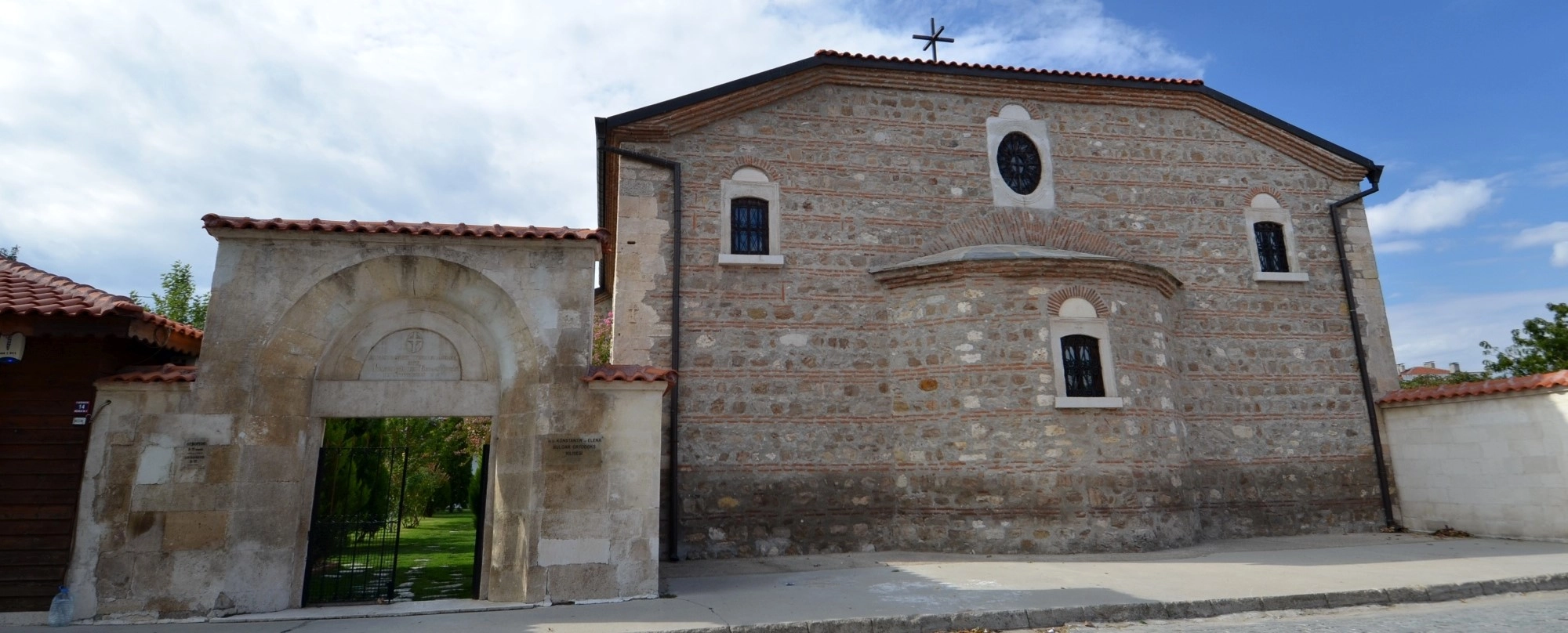
The Church of Saints Constantine and Helena was built in 1869 in the
Kirişhane district of Edirne. At the time, the neighbourhood had a
substantial Bulgarian population, and the new church provided an important religious and social
center for Orthodox families living in the southeastern part of the city.
The inscription above the western entrance records that construction began on
3 March 1869 and was completed on 25 September 1869. It also
refers to the permission and reign of Ottoman Sultan Abdülaziz and credits the
initiative of local Bulgarian community organizations and public-spirited residents.
The church was designed as a basilica with a semi-open narthex, a main worship space divided into
three naves and an eastern apse. Its approximately 400-square-metre covered area reflects the scale
of the congregation that once gathered here for liturgy, feast days, baptisms, weddings and community events.
Wars, border changes and population movements during the early twentieth century greatly reduced
Edirne’s Bulgarian Orthodox population. As the community dispersed, the church was left without the
regular care required to protect its roof, masonry, decoration and furnishings. Years of neglect placed
the historic structure at serious risk.
Restoration planning began in December 2003, and the completed church reopened in 2008. The project
repaired the masonry, roof, interior surfaces and liturgical arrangement while returning the building to
active religious and cultural use. Today, the church is one of the clearest reminders of Edirne’s historic
connections with Bulgaria and the wider Balkan Orthodox world.