A Charcoal-Grilled Classic of Bursa

Bursa Pideli Köfte – Complete Food Guide

Discover charcoal-grilled meatballs, toasted pide bread, tomato sauce,
sizzling butter, creamy yoghurt, and one of Bursa’s most distinctive culinary traditions.

Discover Bursa Pideli Köfte

Discover Bursa’s Famous Meatballs with Pita

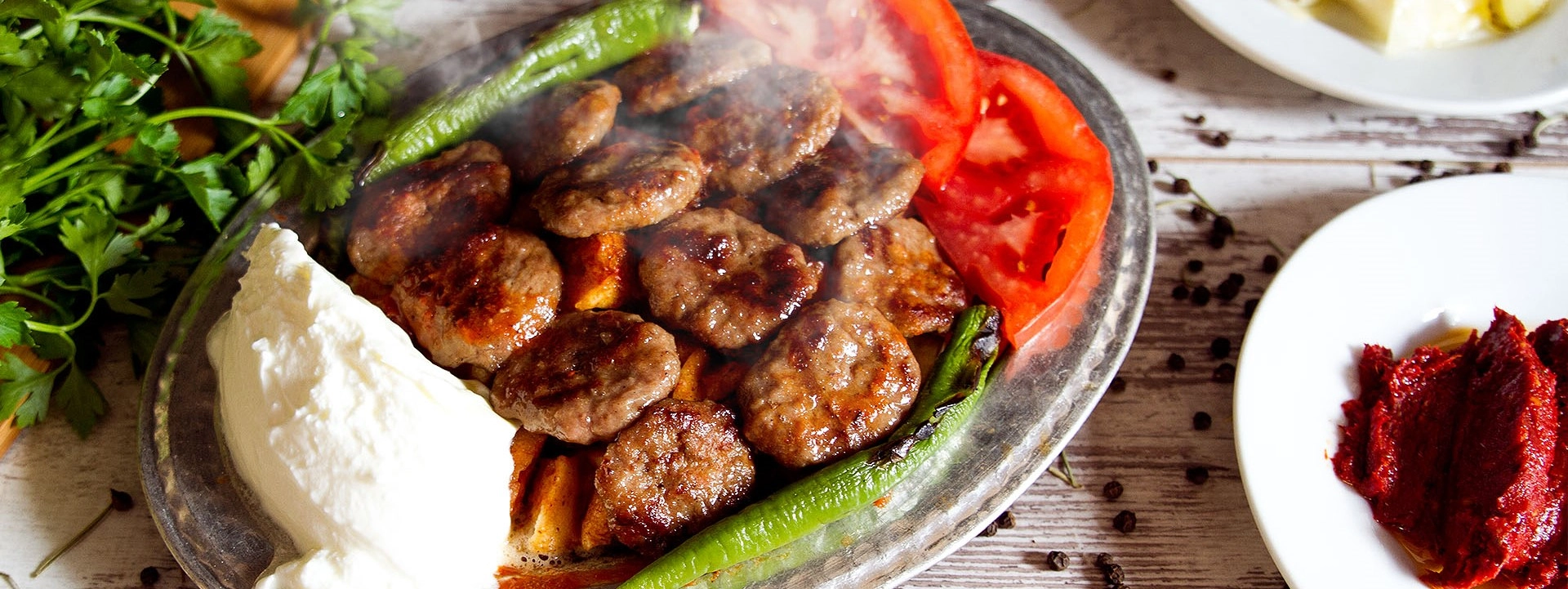
Bursa Pideli Köfte, often translated as Bursa Meatballs with Pita, is one of the signature dishes of Bursa in northwestern Türkiye. Small seasoned beef meatballs are grilled over charcoal and served over pieces of toasted pide bread with tomato-paste sauce, hot melted butter, and yoghurt.

At first glance, the dish may appear simple, but authentic Bursa Pideli Köfte depends on carefully prepared meatballs, specially made pide, controlled charcoal grilling, correct timing, and a distinctive serving method. Unlike many Turkish meatball recipes, onion is not used in the traditional köfte mixture, while black pepper and cumin provide the characteristic seasoning.

The history of the dish reaches back to the 1870s and is closely connected with Bursa’s historic food culture and the old Kayhan Bazaar. Today, Bursa Pideli Köfte is officially protected as a geographically indicated regional speciality.

Charcoal-Grilled Köfte

Small beef meatballs are grilled over charcoal until browned while remaining juicy inside.

Toasted Pide

Traditional pide bread is warmed over charcoal, cut into pieces, and placed beneath the meatballs.

Sauce & Butter

Tomato-paste sauce and sizzling melted butter bring richness, warmth, and moisture to the dish.

Bursa Tradition

The dish has been associated with Bursa since the 19th century and remains part of the city’s living food culture.

Know Before You Taste

Bursa Pideli Köfte – Quick Facts

Essential information about one of Bursa’s most famous geographically indicated dishes.

📍

Origin

Bursa in northwestern Türkiye, where the dish has been part of the local culinary tradition since the 19th century.

Open Bursa on Google Maps
🔥

Cooking Method

Small beef meatballs are traditionally grilled over charcoal while the pide is separately toasted over the fire.

🥣

Classic Serving

Toasted pide, grilled meatballs, tomato-paste sauce, melted butter, and yoghurt form the essential combination.

🏅

Geographical Indication

Bursa Pideli Köfte is registered by TÜRKPATENT with geographical-indication registration number 930.


A Bursa Culinary Tradition

The History of Bursa Pideli Köfte

From the historic markets of Ottoman Bursa to one of the city’s most recognisable dishes.

Bursa has been an important commercial and cultural centre for centuries. As the first major capital of the Ottoman state, the city developed a rich culinary tradition shaped by merchants, craftsmen, farmers, local markets, migration, and the agricultural abundance of the surrounding region.

According to the official geographical-indication record, the history of Bursa Pideli Köfte reaches back to the 1870s. The first known pideli köfte is associated with Bursa city centre in 1871.

The dish became more widely known after the establishment of a historic pide bakery in Bursa in 1876. The bakery later closed during the years of the Turkish War of Independence and reopened after the conflict ended.

During the early 20th century, Bursa’s traditional markets played an important role in the dish’s popularity. People arriving from surrounding towns and villages on market days would visit the historic Kayhan Bazaar, eat pideli köfte, and then return home.

This practice became such a familiar part of market-day culture that pideli köfte gradually developed into one of the foods most strongly identified with Bursa.

Today, the dish remains popular in specialised restaurants throughout the city. Its historical reputation, distinctive ingredients, and traditional production method eventually led to its official registration as a geographically indicated product.


What Makes It Special

Distinctive Features of Bursa Pideli Köfte

Authentic Bursa Pideli Köfte depends on the relationship between the meatballs, pide, charcoal, sauce, butter, yoghurt, and precise timing.

Small Beef Meatballs

The köfte is prepared from beef that is minced twice and combined with stale bread, salt, black pepper, and cumin before being rested.

  • Main meat: Beef
  • Seasoning: Salt, black pepper, and cumin
  • Important: No onion in the traditional mixture

Traditional Pide Bread

The pide is prepared specifically for the dish using additive-free, bran-free flour and a combination of yeast and sourdough.

  • Texture: Light but strong enough to hold the sauce
  • Preparation: Baked before being toasted over charcoal
  • Serving: Cut into cubes or rectangles

Charcoal Grilling

Both the köfte and the pide are exposed to charcoal heat. This adds toasted aromas and distinguishes the dish from simple meatballs served over ordinary bread.

  • Köfte: Cooked over charcoal
  • Pide: Toasted over the grill
  • Character: Warm, smoky, and lightly charred

Simple Tomato Sauce

The registered sauce is deliberately simple, relying on tomato paste and water rather than a complicated mixture of vegetables and spices.

  • Main ingredient: Tomato paste
  • Liquid: Water
  • Cooking: Maintained gently over low heat

Hot Melted Butter

Sizzling butter is poured over the bread as part of the traditional presentation, adding aroma and richness while complementing the tomato sauce.

  • Role: Adds richness and aroma
  • Temperature: Served hot
  • Timing: Added shortly after the sauce

Yoghurt

Yoghurt is an essential part of the registered presentation. It may appear at the side of the plate or across the meatballs and bread according to serving style.

  • Required: Yes
  • Purpose: Balances butter and grilled meat
  • Style: Side portion or spread across the dish

Recognisable Portion

The geographical-indication specification establishes minimum standards for the number and size of meatballs used in a serving.

  • Minimum: 8 meatballs
  • Minimum weight: 10 g per meatball
  • Base: Cubed or rectangular pieces of pide

Precise Timing

A good pideli köfte depends on having the meatballs, bread, tomato sauce, and butter ready at almost exactly the same time.

  • Goal: Keep the pide warm but not soggy
  • Service: Immediately after preparation
  • Skill: Kitchen coordination is essential

Bursa Pideli Köfte’s Geographical Indication

Bursa Pideli Köfte is officially registered by the Turkish Patent and Trademark Office as a geographically indicated product associated with Bursa.

Registered Name

The official geographical-indication name is Bursa Pideli Köfte.

Registration Number

The dish carries geographical-indication registration number 930.

Registration Date

The geographical indication was registered on 25 October 2021.

Registration Type

It is protected as a Mahreç İşareti, a protected geographical indication associated with Bursa.

Registered Institution

The geographical indication was registered by the Bursa Commodity Exchange – Bursa Ticaret Borsası.

Geographical Boundary

The recognised geographical area is the province of Bursa.


The registration protects more than the name of the dish. It describes the ingredients, meat preparation, pide production, charcoal-grilling method, sauce, butter, portion size, yoghurt, and recognised presentation styles.

Because Bursa Pideli Köfte has a long-standing reputation connected with the city and a production method associated with the region, all stages of production covered by the geographical indication take place within Bursa.

What Is Bursa Pideli Köfte Made From?

The flavours of Bursa Pideli Köfte come from relatively simple ingredients. The distinctive character is created by the quality of those ingredients and the way they are prepared together.

The Köfte Mixture

Beef

Fresh beef supplied without interruption of the cold chain forms the base of the meatball mixture.

Stale Bread

Approximately 100–120 g of stale bread crumb is traditionally used for every kilogram of minced meat.

Black Pepper

Black pepper gives the meatballs gentle warmth without overwhelming the flavour of the grilled beef.

Cumin

Cumin provides the recognisable aromatic character traditionally associated with the Bursa preparation.

Salt

Salt is incorporated into the meatball mixture along with black pepper and cumin.

No Onion

The absence of onion is one of the defining differences between authentic Bursa Pideli Köfte and many other Turkish köfte recipes.


Everything Else on the Plate

Pide Bread Specially prepared bread toasted over charcoal before being cut into cubes or rectangles
Tomato-Paste Sauce A simple warm sauce prepared using tomato paste and water
Melted Butter Hot butter poured over the pide to add richness and aroma
Yoghurt An essential component included with every recognised serving style
Roasted Pepper A traditional garnish frequently served beside the meatballs
Tomato May be served as part of the garnish according to the restaurant’s presentation
Onion May appear as a garnish even though onion is not used inside the meatball mixture

How the Meatballs Are Prepared

The registered Bursa method describes the meat preparation in considerable detail. Texture is especially important because the meatballs must remain compact enough for charcoal grilling while still being tender.

1. Select the Beef The meat is obtained from fresh beef supplied under proper cold-chain conditions
2. Choose the Cuts Approximately 80–90% of the meat traditionally comes from the rib area, with thigh and shoulder making up the remainder
3. Adjust the Fat Brisket may be added when the selected meat is considered too lean
4. Mince Twice The beef is passed through the mincer twice to create the characteristic meatball texture
5. Add Bread & Seasoning Stale bread, salt, black pepper, and cumin are incorporated during preparation
6. Rest Overnight The prepared meat mixture is traditionally rested overnight at approximately +4°C
7. Knead The meatball mixture is kneaded for approximately 10–15 minutes
8. Shape The mixture is divided into small pieces of approximately 10–12 grams
9. Refrigerate The shaped meatballs are kept chilled until they are ready to be grilled

Why Is There No Onion in Bursa Pideli Köfte?

One of the easiest ways to distinguish the traditional Bursa recipe from many other Turkish meatball preparations is the absence of onion from the köfte mixture.

Clean Beef Flavour

The simple mixture allows the flavour of the charcoal-grilled beef to remain at the centre of the dish.

Limited Seasoning

Black pepper and cumin are the principal spices defined in the traditional preparation.

Characteristic Texture

The mixture of minced beef and stale bread produces the compact but tender texture expected of the dish.

Protected Method

The absence of onion is specifically identified as an important characteristic in the official geographical-indication specification.


Onion can still appear on the plate as a garnish. The distinction is that it should not be incorporated into the traditional meatball mixture itself.

How the Traditional Pide Is Prepared

The pide is not simply a convenient base for the meatballs. Its texture is fundamental to the dish because it must absorb some sauce and butter while still retaining enough structure to avoid becoming completely soft.

Additive-Free Flour

The traditional specification requires flour without additives and without bran.

Yeast & Sourdough

The dough is prepared using a combination of fresh yeast and sourdough culture.

Fermentation

After kneading, the dough is traditionally allowed to ferment for approximately 30–45 minutes.

Individual Portions

Approximately 220-gram pieces of fermented dough are shaped into pide.

Wood-Fired Baking

The pide is traditionally baked in a wood-fired oven, commonly using hornbeam wood.

High Temperature

The registered method describes baking at approximately 450–500°C for around 5.5–6 minutes.


After baking, the pide undergoes another important step shortly before serving: it is warmed and toasted again over charcoal.

Why the Pide Is Toasted Over Charcoal

Before being cut and placed on the serving plate, the pide is traditionally warmed over charcoal. This process is known locally as tavlatma.

At Least Five Minutes

The registered preparation describes warming the pide over charcoal for at least five minutes.

Even Heat

The bread is gently pressed during warming so that the charcoal heat spreads through it evenly.

Toasted Aroma

The grill creates a lightly toasted flavour that complements the charcoal-grilled meatballs.

Better Texture

Correctly toasted bread can absorb sauce and butter while retaining more structure.


Some traditional masters pour a small amount of warm bone broth over the pide after the charcoal-warming stage. This is an optional technique rather than an essential requirement for every presentation.

The Tomato Sauce of Bursa Pideli Köfte

The sauce used in Bursa Pideli Köfte is intentionally uncomplicated. Its purpose is to add tomato flavour and moisture without masking the grilled meat, toasted pide, butter, and yoghurt.

Tomato Paste

Tomato paste creates the concentrated flavour and distinctive red colour of the sauce.

Water

Water is used to bring the tomato paste to the correct pouring consistency.

No Complicated Seasoning

The traditional registered sauce relies on tomato paste and water rather than a long list of additional ingredients.

Low Heat

The sauce is kept warm over gentle heat while the rest of the dish is being prepared.


The consistency is checked during service so the sauce does not become excessively thick as it remains over the heat.

How Bursa Pideli Köfte Is Prepared

Traditional preparation requires several elements to come together at the same moment. The meatballs should be hot from the charcoal, the pide freshly toasted, the sauce warm, and the butter ready for pouring.

1. Prepare the Meat Beef is minced and combined with stale bread, salt, black pepper, and cumin without onion
2. Rest the Mixture The köfte mixture is refrigerated overnight before final kneading and shaping
3. Shape the Köfte Small meatballs are formed, traditionally around 10–12 grams each
4. Prepare the Pide The special pide is baked and later toasted again over charcoal before serving
5. Heat the Sauce The tomato-paste sauce is maintained at a gentle temperature until required
6. Melt the Butter Butter is heated so it can be poured over the bread while still sizzling hot
7. Grill the Meatballs The small köfte pieces are cooked over charcoal until properly browned and cooked through
8. Cut the Pide Approximately half a pide is traditionally cut into cubes or rectangular pieces and arranged on the plate
9. Add Sauce & Butter Depending on the presentation style, tomato sauce and hot butter are added to the bread
10. Add the Meatballs At least eight charcoal-grilled meatballs are placed over the prepared pide
11. Add Yoghurt Yoghurt is included with every traditional presentation style
12. Serve Immediately The completed dish is brought to the table while the meatballs, sauce, bread, and butter are still hot

Why Timing Is So Important

One of the challenges in preparing Bursa Pideli Köfte is preventing the bread from becoming overly soft while still allowing it to absorb the flavours of the sauce and butter.

Hot Bread

The pide should reach the plate immediately after being properly toasted and cut.

Warm Sauce

The tomato sauce must already be prepared so the kitchen does not keep the bread or meatballs waiting.

Sizzling Butter

When sauce is applied to the bread first, the registered method specifies adding hot butter shortly afterwards.

Freshly Grilled Köfte

The charcoal-grilled meatballs should be ready at the same time as the bread, sauce, and butter.


When sauce is poured onto the pide before the meatballs, hot melted butter should traditionally follow within approximately 15–20 seconds. Waiting too long allows the bread to lose too much of its texture.

Four Ways Bursa Pideli Köfte Can Be Served

The geographical-indication specification recognises several traditional presentation styles. Their ingredients are similar, but the position and timing of the yoghurt and sauce change.

Normal

In the normal presentation, the meatballs are arranged over the pide before the tomato sauce is added, while yoghurt is served at the side of the plate.

Serpme Yoğurtlu

In this variation, yoghurt is distributed across the pide and meatballs rather than being placed only at the edge of the plate.

Kesme Soslu

The tomato sauce is served at the side of the plate instead of being poured directly across the pide.

Islama

In the islama presentation, the warm tomato sauce is poured over the toasted pide before the other components are completed.


Regardless of presentation style, yoghurt remains an essential part of the dish. Roasted pepper, tomato, and raw onion may also be included as garnishes.

What Does Bursa Pideli Köfte Taste Like?

Bursa Pideli Köfte combines smoky grilled meat, toasted bread, concentrated tomato, rich butter, cooling yoghurt, and warm spices. The contrast between the different components is one of the main reasons the dish is so satisfying.

The Köfte

The meatballs are savoury and gently aromatic, with cumin and black pepper supporting the flavour of charcoal-grilled beef.

The Pide

The bread is lightly toasted and absorbs sauce, melted butter, and meat juices while providing substance to the meal.

The Sauce

Tomato paste gives acidity, sweetness, colour, and concentration without dominating the plate.

The Butter

Hot butter adds a rich aroma and silky finish that immediately distinguishes the dish from an ordinary plate of köfte.

The Yoghurt

Cool yoghurt balances the warmth of the grill, tomato sauce, spices, and melted butter.

The Charcoal

Charcoal cooking contributes a gentle smokiness that links the meatballs and toasted pide together.

Is Bursa Pideli Köfte the Same as İskender Kebab?

Bursa Pideli Köfte and İskender Kebab share several elements and both are strongly associated with Bursa, but they are different dishes.

Pideli Köfte

Uses small charcoal-grilled beef meatballs as the main protein.

İskender Kebab

Traditionally uses thin slices of vertically roasted döner meat rather than individual meatballs.

Shared Elements

Both may combine pide bread, tomato sauce, melted butter, and yoghurt.

Different Identity

The preparation of the meat and the resulting texture make the two Bursa specialities clearly different experiences.


Food lovers visiting Bursa should ideally try both. They demonstrate how similar ingredients can produce very different dishes through changes in meat preparation and cooking technique.

Where to Eat Pideli Köfte in Bursa

Pideli köfte restaurants can be found across Bursa, but the historic city centre provides the strongest connection with the dish’s traditional story.

Kayhan Bazaar

The historic Kayhan area is closely connected with the development of Bursa’s pideli köfte tradition and remains an atmospheric place to explore local food culture.

Historic Bursa Centre

Restaurants around the old commercial districts make it easy to combine a traditional meal with Bursa’s mosques, bazaars, hans, and markets.

Specialist Restaurants

Restaurants concentrating primarily on pideli köfte often provide the most traditional preparation and faster turnover of freshly grilled meatballs.

Local Neighbourhoods

Long-established neighbourhood restaurants can also provide excellent examples away from the busiest visitor areas.


Look for a busy establishment where the meatballs are grilled to order, the pide is toasted separately, and the sauce and butter are prepared immediately before serving.

Bursa Pideli Köfte Visitor Tips

Eat It Hot

The combination is at its best immediately after serving, while the butter is hot and the bread still retains some texture.

Try the Yoghurt

Do not treat the yoghurt as optional decoration. Its cool acidity is an important balance to the butter, sauce, and grilled beef.

Notice the Pide

The toasted bread beneath the meatballs is an essential part of the dish rather than simply a side accompaniment.

Watch the Grill

If the restaurant has an open charcoal grill, watching the cooks prepare the small meatballs adds another dimension to the experience.

Try the Garnishes

Roasted peppers, tomatoes, and onion provide freshness and contrast alongside the richer components.

Do Not Expect Onion Inside

Authentic Bursa-style köfte does not contain onion in the meatball mixture even though raw onion may accompany the plate.

Visit Kayhan

Eating pideli köfte around the historic Kayhan district connects the meal with the neighbourhood most closely associated with its story.

Come Hungry

Meatballs, bread, butter, sauce, and yoghurt make pideli köfte a substantial meal even when the plate initially looks modest.

Other Foods to Try in Bursa

Bursa Pideli Köfte is only one part of the city’s extensive culinary tradition. Bursa is particularly rewarding for travellers interested in Ottoman food heritage, regional baked dishes, kebabs, sweets, and local ingredients.

Bursa Cantık

A traditional round, open-faced baked speciality topped with seasoned minced meat and associated with Bursa since the 19th century.

Bursa Döner Kebabı

A geographically indicated Bursa preparation closely connected with the city’s celebrated tradition of vertically roasted meat.

Kestane Şekeri

Bursa’s famous candied chestnuts combine cooked chestnuts with sweet syrup and remain one of the city’s best-known edible souvenirs.

Tahinli Pide

A sweet baked speciality enriched with tahini and strongly associated with Bursa’s bakery culture.

Süt Helvası

A soft milk-based dessert traditionally baked until the surface develops a caramelised golden layer.

Kemalpaşa Dessert

A famous syrup-soaked cheese dessert originating from the Mustafakemalpaşa district of Bursa Province.

Places to Visit Before or After Your Meal

Bursa’s historic centre allows travellers to combine a traditional pideli köfte lunch with some of the city’s most important Ottoman monuments, bazaars, and neighbourhoods.

Frequently Asked Questions About Bursa Pideli Köfte

What is Bursa Pideli Köfte?

Bursa Pideli Köfte is a traditional Bursa dish made with charcoal-grilled beef meatballs served over toasted pieces of pide with tomato-paste sauce, hot melted butter, and yoghurt.

What does Bursa Pideli Köfte mean in English?

It can be translated as Bursa Meatballs with Pita or Bursa Meatballs over Pide Bread. The Turkish name Bursa Pideli Köfte is normally used when referring to the traditional regional speciality.

Is Bursa Pideli Köfte geographically indicated?

Yes. Bursa Pideli Köfte is registered as a geographically indicated product by the Turkish Patent and Trademark Office.

What is its geographical-indication registration number?

Bursa Pideli Köfte carries geographical-indication registration number 930.

When was Bursa Pideli Köfte registered?

Its geographical indication was officially registered on 25 October 2021.

Who registered Bursa Pideli Köfte?

The registration holder is the Bursa Ticaret Borsası – Bursa Commodity Exchange.

How old is Bursa Pideli Köfte?

The documented tradition reaches back to the 1870s. The official geographical-indication record associates the first pideli köfte with Bursa city centre in 1871.

Where did Bursa Pideli Köfte become popular?

The dish is historically associated with central Bursa and particularly the Kayhan Bazaar area, where people visiting the city's markets would traditionally eat pideli köfte.

What meat is used in Bursa Pideli Köfte?

The traditional preparation uses beef. The registered method specifies a mixture based primarily on meat from the rib area together with portions from the thigh and shoulder.

Does Bursa Pideli Köfte contain onion?

Onion is not used inside the traditional meatball mixture. This is one of the defining characteristics of Bursa Pideli Köfte. Onion may, however, be served separately as a garnish.

What spices are used in the meatballs?

The traditional meatball mixture is seasoned with salt, black pepper, and cumin. The registered preparation does not use a complicated mixture of additional spices.

Is bread mixed into the köfte?

Yes. The traditional preparation incorporates stale bread crumb into the minced beef mixture.

How are the meatballs cooked?

The small meatballs are traditionally grilled over charcoal, which adds the smoky flavour characteristic of the dish.

How many meatballs are served?

The geographical-indication specification requires at least eight meatballs, each weighing at least 10 grams, to be placed over the pide.

What kind of bread is used?

A specially prepared pide is used. It is baked first and then traditionally warmed over charcoal before being cut into cube-shaped or rectangular pieces.

What sauce is used?

The traditional sauce is made from tomato paste and water. It is kept warm over gentle heat during preparation.

Is yoghurt always served with Bursa Pideli Köfte?

Yes. Yoghurt is part of every presentation style recognised by the geographical-indication specification.

Why is hot butter poured over the dish?

Melted butter adds richness, aroma, and moisture to the toasted pide and complements the tomato sauce and charcoal-grilled meatballs.

Is Bursa Pideli Köfte spicy?

It is generally not especially hot. Black pepper and cumin provide warmth and aroma, but chilli is not a defining ingredient of the traditional meatball mixture.

Is Bursa Pideli Köfte the same as İskender Kebab?

No. Both dishes are associated with Bursa and may include pide, tomato sauce, butter, and yoghurt, but Bursa Pideli Köfte uses small grilled meatballs whereas İskender Kebab traditionally uses sliced döner meat.

What are the traditional serving styles?

The registered specification describes normal, serpme yoğurtlu, kesme soslu, and islama presentations. The position of the sauce and yoghurt differs between these versions.

What is served beside Bursa Pideli Köfte?

Yoghurt is essential, while roasted peppers, tomatoes, and onion may also accompany the plate.

Where should I try Bursa Pideli Köfte?

Traditional pideli köfte restaurants can be found throughout Bursa. The historic centre and Kayhan Bazaar area provide an especially appropriate setting because of their connection with the history of the dish.

When should I eat Bursa Pideli Köfte?

It is typically enjoyed as a substantial lunch or dinner. The most important consideration is eating it immediately after preparation while the meatballs, bread, sauce, and butter are still hot.

Is Bursa Pideli Köfte worth trying?

Yes. It is one of the best dishes for understanding Bursa’s traditional charcoal-grilling culture and offers a distinctive combination of grilled beef, toasted bread, tomato sauce, butter, and yoghurt.

Best Photos of Bursa Pideli Köfte

The combination of glowing charcoal, grilled meatballs, bright tomato sauce, melted butter, white yoghurt, toasted pide, and Bursa’s historic surroundings creates excellent opportunities for food photography.

Meatballs over Charcoal

Photograph the small köfte while they develop their grilled exterior above the glowing charcoal.

Toasting the Pide

Capture the traditional tavlatma stage as the bread is warmed and lightly toasted over the grill.

The Butter Pour

Hot melted butter being poured across the pide creates one of the most dramatic moments of the preparation.

The Finished Plate

Photograph the contrast between red tomato sauce, grilled meatballs, white yoghurt, golden bread, and roasted vegetables.

The Kebab Master

Capture the movement of the cook working simultaneously with the grill, pide, sauce, butter, and meatballs.

Historic Bursa

Combine your food photographs with the bazaars, hans, mosques, stone streets, and Ottoman architecture of Bursa’s old centre.


Always ask permission before photographing cooks, restaurant staff, or other diners, particularly when working close to a busy charcoal grill or food-preparation area.

Bursa Tours & Culinary Experiences

Combine Bursa’s Ottoman monuments, historic bazaars, traditional neighbourhoods, Cumalıkızık, İznik, and regional cuisine with a carefully planned private journey.

Private Bursa Experiences

Contact us for tailor-made private services combining Bursa’s historical attractions with opportunities to discover local dishes including pideli köfte, cantık, chestnut candy, tahini pide, and other regional specialities.

Explore More of Türkiye

Include Bursa as part of a longer private journey through Istanbul, northwestern Türkiye, the Aegean region, Cappadocia, and other destinations.