The Charcoal-Roasted Signature of Bursa

Bursa Döner Kebab – Complete Food Guide

Discover thinly sliced charcoal-roasted meat, toasted tırnak pide,
hot butter, tomato sauce, yogurt, and Bursa’s celebrated döner tradition.

Discover Bursa Döner Kebab

Discover Bursa’s Famous Döner Kebab Tradition

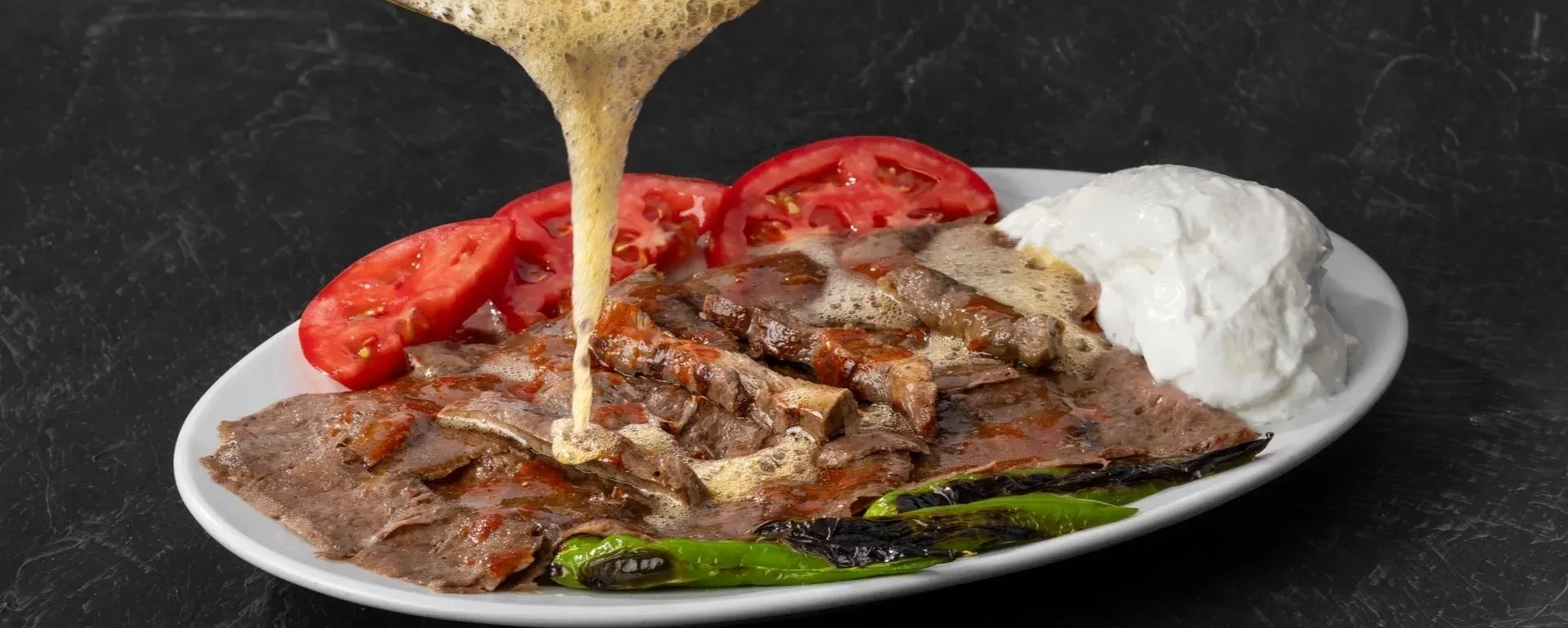
Bursa Döner Kebab, officially registered as Bursa Döner Kebabı, is one of the defining dishes of Bursa and one of the most influential preparations in Türkiye’s kebab culture. Thin layers of sliced meat and seasoned minced meat are stacked on a vertical skewer, slowly roasted in front of wood charcoal, shaved into delicate slices, and placed over small pieces of toasted tırnak pide. Hot butter is poured over the plate, while yogurt, tomato sauce, roasted pepper, tomato, or eggplant may be served alongside.

The dish is closely connected with Bursa’s historic market districts and the development of vertically roasted döner during the nineteenth century. Its identity depends on the balance of meat and fat, the resting of the meat without a complicated marinade, restrained seasoning, patient charcoal cooking, very thin slicing, warm bread, and immediate service. This complete guide explains its history, geographical-indication status, official production method, meat proportions, charcoal technique, bread preparation, traditional accompaniments, flavour, ordering tips, nearby attractions, and the best way to experience Bursa’s celebrated food culture.

Layered Meat

Thinly sliced meat and prepared minced meat are stacked in alternating layers on a long vertical skewer.

Wood Charcoal

The döner is slowly roasted at moderate heat, traditionally in front of glowing oak charcoal.

Tırnak Pide

Small pieces of pide are warmed on the grill with the meat’s cooking fat before receiving the sliced döner.

Hot Butter

The finished plate is completed with hot butter and may include yogurt, tomato sauce, and roasted vegetables.

Know Before You Taste

Bursa Döner Kebab – Quick Facts

Essential information about Bursa’s geographically indicated charcoal-roasted speciality.

📍

Origin

Bursa in northwestern Türkiye, especially the city’s historic commercial and kebab districts.

Open Bursa on Google Maps
🔥

Cooking Method

Layered meat is roasted vertically in front of wood charcoal and shaved into thin slices as it cooks.

🍽️

Traditional Base

Served over toasted pieces of tırnak pide and finished with hot butter.

🏅

Geographical Indication

Registered by TÜRKPATENT as Bursa Döner Kebabı with registration number 1151.


From Historic Bursa to the World

The History and Culinary Tradition of Bursa Döner Kebab

Discover how a nineteenth-century Bursa cooking method became one of Türkiye’s most recognisable food traditions.

Bursa developed as an important Ottoman capital, commercial centre, silk-trading city, agricultural region, and meeting point between Anatolia, the Marmara coast, and Istanbul. Its food culture reflects this history through breads, meat dishes, dairy products, orchard fruits, sweets, market cooking, and recipes connected with the city’s historic neighbourhoods.

The history of Bursa Döner Kebabı is officially associated with the middle of the nineteenth century. Local culinary tradition commonly connects the vertical roasting method with Bursa’s Kayhan district and with İskender Efendi, who is remembered for placing prepared meat upright before the fire rather than cooking a whole carcass horizontally over charcoal.

This vertical arrangement changed the cooking process. The outer surface could roast gradually while the skewer turned, allowing the cook to cut only the browned layer into thin slices and return the remaining meat to the fire. The technique improved control over heat, fat, texture, and portioning.

Bursa’s distinctive presentation developed around more than the meat itself. Small pieces of local pide were warmed with meat fat, the sliced döner was arranged above them, and hot butter was poured over the finished plate. Yogurt, tomato sauce, roasted peppers, tomatoes, or eggplant added temperature, acidity, colour, and contrast.

Over time, Bursa-style döner became one of the city’s culinary symbols and influenced kebab culture throughout Türkiye and far beyond. Yet the protected Bursa preparation remains tied to its specific meat composition, resting method, restrained seasoning, wood-charcoal fire, thin slicing, pide base, hot butter, and service on a warm plate.

The dish’s long-standing reputation and close association with Bursa led to its registration as a geographical indication, helping preserve the recognised production method and the connection between the food and its place of origin.


What Makes It Distinctive

Defining Features of Bursa Döner Kebab

Its character comes from the meat blend, resting period, restrained seasoning, vertical charcoal roasting, thin slicing, toasted pide, butter, and immediate service.

Thinly Sliced Leaf Meat

Part of the döner is prepared from meat cleaned of bones and tendons and cut into thin leaf-like slices. These layers create visible pieces of whole meat within the finished skewer.

  • Official proportion: Approximately 10% to 40% thinly sliced meat
  • Thickness before stacking: About 0.5 centimetres
  • Purpose: Adds structure, texture, and distinct meat layers

Prepared Minced Meat

Meat that is not prepared as leaf meat is minced, salted, combined with onion juice, kneaded, and placed between the sliced layers. This helps create a compact, evenly roasting skewer.

  • Maximum proportion: Up to approximately 90% of the mixture
  • Seasoning: Salt and onion juice
  • Texture: Kneaded to hold the layered skewer together

Lamb, Sheep, and Beef Balance

The protected preparation allows lamb or sheep meat and may include beef to balance fat and texture. The exact blend can vary within the registered production limits.

  • Small-livestock meat: Lamb or sheep may be used
  • Beef: May form up to 40% in a mixed preparation
  • Maximum fat: No more than 25% by mass

Rested Without Heavy Marinade

The prepared meats are rested before the döner is assembled. The method does not rely on a complex spice marinade, allowing the flavour of the meat and charcoal to remain central.

  • Resting period: Approximately 2 to 3 days
  • Marination: No elaborate marinade
  • Main flavouring: Salt, with onion juice used in the minced portion

The Vertical Skewer

Leaf meat and minced meat are layered on a long skewer and shaped into a stable vertical form. Depending on the skewer and shaping method, the profile may be cylindrical or multi-sided.

  • Position: Cooked vertically
  • Possible forms: Cylinder, hexagonal prism, or octagonal prism
  • Technique: Layered and shaped by careful trimming

Oak-Charcoal Roasting

The döner is preferably cooked slowly in front of oak charcoal at moderate heat. The skewer rotates steadily while the cook protects the surface from direct burning.

  • Preferred fuel: Oak charcoal
  • Distance from fire: Approximately 10 to 15 centimetres
  • Heat: Moderate and carefully controlled

Very Thin Slicing

Only the roasted outer layer is shaved from the skewer. A long döner knife is used from top to bottom to create narrow, delicate slices.

  • Approximate thickness: 2 to 2.5 millimetres
  • Approximate width: 3.5 to 4 centimetres
  • Timing: Cut only as the outside becomes properly roasted

Toasted Pide and Hot Butter

The bread is greased with cooking fat from the döner, warmed or toasted on the grill, cut into small pieces, covered with meat, and completed with hot butter.

  • Bread: Tırnak pide
  • Plate: Wide, shallow, and heated
  • Finish: Hot butter poured over the serving

Bursa Döner Kebab’s Geographical Indication

Bursa Döner Kebabı is officially registered by the Turkish Patent and Trademark Office as a geographically indicated product associated with Bursa. Its status is a mahreç işareti, identifying a product whose reputation, traditional knowledge, or production method is closely linked with a particular geographical area.

Registration Name

The official registered name is Bursa Döner Kebabı.

Registration Type

The product is protected as a mahreç işareti.

Registration Number

The geographical-indication registration number is 1151.

Registration Date

The registration was completed on 17 June 2022.

Application Date

The geographical-indication application was filed on 20 August 2020.

Registered Institution

The applicant and registrant is the Bursa Chamber of Commerce and Industry.


The registration records the meat composition, fat limit, resting method, restrained seasoning, onion juice used in the minced meat, layering of leaf and minced meat, vertical skewer, charcoal cooking, cutting dimensions, tırnak pide preparation, butter finish, warm plate, and possible accompaniments.

This protection helps preserve the recognised Bursa method while distinguishing the dish from ordinary döner preparations that may use different meats, marinades, spices, cooking fuels, breads, sauces, or serving styles.

Ingredients Used in Bursa Döner Kebab

Bursa Döner Kebab depends on a relatively short ingredient list. Its flavour develops through meat quality, controlled fat, patient resting, wood charcoal, pide, butter, and precise service rather than a strongly spiced marinade.

Leaf Meat

Thin slices of lamb, sheep, or permitted beef cuts cleaned of bones and tendons and prepared at approximately 0.5 centimetres thick.

Minced Meat

Prepared meat ground and kneaded to form the softer layers between the pieces of leaf meat.

Salt

Used at approximately 2% by mass before the döner is assembled.

Onion Juice

Added to the minced-meat portion at approximately 1.5% to provide moisture and gentle aroma.

Wood Charcoal

Preferably oak charcoal, burned to an even heat suitable for slow vertical roasting.

Tırnak Pide

A soft, dimpled Turkish bread greased with meat fat, warmed on the grill, and cut into small pieces.

Butter

Heated and poured over the finished meat and bread immediately before service.

Optional Accompaniments

Yogurt, tomato or tomato-paste sauce, roasted pepper, sliced tomato, or eggplant may accompany the plate.


Official Meat Proportions and Limits

Leaf Meat Generally forms approximately 10% to 40% of the prepared döner
Minced Meat May form up to approximately 90% of the prepared döner
Lamb or Sheep May be used entirely or as the principal component of a mixed preparation
Beef May be included up to approximately 40% to help balance the fat content
Maximum Fat The total fat content must not exceed approximately 25% by mass
Spices No spice mixture is used; salt is the principal seasoning specified in the registered method

How Bursa Döner Kebab Is Prepared

The traditional preparation follows a carefully controlled sequence. Each stage affects the stability of the skewer, the roasting of the meat, the tenderness of the slices, and the final balance between bread, butter, sauce, yogurt, and charcoal flavour.

1. Select the Meat Choose suitable lamb, sheep, and any permitted beef cuts while keeping the total fat within the registered limit
2. Clean the Cuts Remove bones, tendons, and unsuitable connective tissue from the carcass meat
3. Prepare Leaf Meat Cut part of the cleaned meat into thin slices approximately 0.5 centimetres thick
4. Prepare Minced Meat Grind the remaining suitable meat for the softer layers of the döner
5. Rest the Meat Rest both the leaf meat and the meat intended for mincing for approximately 2 to 3 days without an elaborate marinade
6. Add Salt Season the prepared meat with salt at approximately 2% by mass
7. Add Onion Juice Mix approximately 1.5% onion juice into the minced-meat portion, then grind or knead it thoroughly
8. Layer the Skewer Arrange alternating plates of leaf meat and minced meat on a long vertical skewer
9. Shape the Döner Trim and press the stack into a cylinder, hexagonal prism, or octagonal prism according to the skewer
10. Prepare the Charcoal Develop a stable bed of wood charcoal, preferably oak, with strong but moderate radiant heat
11. Roast Vertically Position the döner approximately 10 to 15 centimetres from the fire and rotate slowly in one direction
12. Slice the Surface Shave the cooked outer layer from top to bottom into slices approximately 2 to 2.5 millimetres thick
13. Toast the Pide Grease tırnak pide with meat fat, warm it on the grill, and cut it into small pieces
14. Assemble the Plate Place the sliced döner over the warm pide on a heated, wide, shallow plate
15. Add Butter and Sides Pour hot butter over the serving and add yogurt, tomato sauce, or roasted vegetables as desired
16. Serve Immediately Present the dish while the meat, bread, butter, sauce, and plate are still hot

How Leaf Meat and Minced Meat Work Together

One of the most distinctive elements of Bursa Döner Kebab is the combination of whole-meat slices and prepared minced meat. The contrast helps create a döner that remains cohesive on the skewer while offering both defined meat fibres and a softer, juicy texture.

Leaf-Meat Layers

Thin pieces of whole meat create structure and visible layers. They roast at the surface and provide the firmer bite associated with traditional meat döner.

Minced-Meat Layers

The kneaded minced portion fills spaces between the leaf meat, supports the shape, and helps distribute salt, onion juice, fat, and moisture.

Fat Control

Keeping the fat at or below the registered maximum prevents the skewer from becoming excessively greasy while still protecting tenderness.

Layering Skill

Uneven stacking can cause the skewer to lean, split, or cook irregularly. Experienced preparation produces a balanced and compact form.

Resting Time

The resting period affects texture, moisture, and handling. The method is not based on covering the meat with strong spices or sauces.

Final Texture

A good serving combines thin browned edges, tender inner meat, softened pide, melted butter, cool yogurt, and bright tomato sauce.


Because establishments work within permitted ranges, one Bursa döner may taste more strongly of lamb while another may have a milder mixed-meat profile. The essential identity lies in the registered balance, production method, charcoal roasting, and Bursa-style presentation.

Why Wood Charcoal Matters

Bursa Döner Kebab is traditionally cooked with radiant heat from wood charcoal rather than by placing the meat directly over open flames. The distance, rotation, charcoal quality, and timing determine whether the surface browns evenly without burning or drying.

Oak Charcoal

Oak is preferred because it can create a stable, long-lasting heat suitable for gradual roasting.

Moderate Heat

The goal is controlled browning rather than sudden scorching. Excessive heat burns the exterior before the inner layers warm properly.

Correct Distance

The registered method places the döner approximately 10 to 15 centimetres from the charcoal fire.

Slow Rotation

The skewer turns slowly in the same direction so every side receives a consistent period of heat.

Surface-by-Surface Cooking

Only the browned exterior is removed. The newly exposed layer then returns to the fire and becomes the next serving.

Charcoal Aroma

The fire contributes a clean roasted scent and gentle smokiness without overwhelming the natural flavour of the meat.


A skilled döner master watches colour, dripping fat, heat intensity, rotation speed, and customer flow. Cutting too early produces pale meat, while waiting too long can make the outer layer hard or overly dark.

How Bursa Döner Is Sliced

Slicing is not simply the final action; it is part of the cooking method. The cook removes only the properly roasted surface, creating thin pieces that spread evenly across the bread and absorb butter and sauce without becoming heavy.

Long Döner Knife

A long, sharp knife allows the cook to shave the vertical surface smoothly from top to bottom.

Thin Cut

The registered slices are approximately 2 to 2.5 millimetres thick.

Narrow Width

The slices are generally around 3.5 to 4 centimetres wide.

Even Browning

Each piece should include a roasted surface without thick, undercooked inner sections.

Immediate Transfer

Freshly cut meat is placed directly onto the warm pide rather than being held for a long time.

Continuous Rhythm

Roasting, rotating, slicing, and serving continue together throughout the meal period.

The Role of Tırnak Pide

Tırnak pide is an essential part of Bursa Döner Kebab. Its name refers to the characteristic fingertip impressions formed on the surface before baking. The bread absorbs meat juices, butter, and sauce while preserving enough texture to support the sliced döner.

Greased with Meat Fat

The pide is traditionally brushed or greased with fat released from the cooking döner.

Warmed on the Grill

Heating revives the bread, develops light roasted notes, and prevents the plate from tasting cold or doughy.

Cut into Small Pieces

Bite-sized pieces create an even base and allow butter and sauce to spread throughout the serving.

Absorbs the Juices

The bread captures meat drippings, hot butter, and tomato sauce, becoming one of the most flavourful parts of the plate.

Textural Balance

The best pide is softened by the sauces but retains a slight toasted edge.

Served Hot

Cold bread quickly absorbs fat without the same aroma or texture, so timing is important.


Visitors sometimes focus only on the meat, but the harmony between charcoal-roasted döner and prepared pide is central to the Bursa experience. A generous quantity of dry bread or an excessively soaked base can disturb the intended balance.

Butter, Tomato Sauce, Yogurt, and Roasted Vegetables

The serving is completed through a contrast of hot and cool, rich and acidic, smoky and fresh. Not every establishment presents the plate in exactly the same way, but several accompaniments are closely associated with Bursa’s famous kebab style.

Hot Butter Poured over the meat and bread immediately before service, adding aroma, richness, and a characteristic tableside sizzle
Tomato Sauce Adds acidity, colour, moisture, and gentle sweetness; it may be prepared from tomato or tomato paste
Yogurt Provides a cool, creamy contrast to the hot meat, butter, bread, and sauce
Roasted Pepper Contributes soft texture, light bitterness, and an additional fire-roasted flavour
Sliced Tomato Adds freshness and acidity when served on the side
Eggplant May appear as a roasted accompaniment, bringing a soft and smoky vegetable element

Some guests prefer the components kept partly separate so they can control each bite, while others enjoy the butter and sauce distributed across the whole plate. Ask how the restaurant serves its standard portion before requesting changes.

How Bursa Döner Kebab Is Served

The complete dish is normally presented on a heated, wide, shallow porcelain or metal plate. The warm plate helps preserve the temperature of the thinly sliced meat, pide, butter, and sauce during the meal.

First Layer Small pieces of tırnak pide warmed on the grill with cooking fat from the döner
Second Layer Freshly sliced, charcoal-roasted döner arranged across the bread
Hot Finish Heated butter poured over the meat and pide immediately before service
Sauce Tomato or tomato-paste sauce may be spread over part of the plate or served alongside
Cool Element A portion of yogurt provides contrast and helps balance the richness
Vegetables Roasted pepper, tomato, or eggplant may complete the presentation
Plate A heated, wide, shallow porcelain or metal serving plate
Best Timing Eaten immediately while the sliced meat remains tender and the butter aromatic

Fresh bread, pickles, salad, ayran, şıra, or tea may also be available according to the establishment. These additions can be enjoyable, but the registered identity of the dish centres on the döner, tırnak pide, hot butter, and permitted accompaniments.

Bursa Döner Kebab, Bursa Kebab, and Ordinary Döner

Visitors may encounter several related names on menus. Bursa’s plated döner tradition is widely known through the terms Bursa kebab, Bursa döner kebab, and, in many culinary and tourism contexts, İskender kebap. Restaurants may use these names differently, so the ingredients and presentation are more informative than the title alone.

Bursa Döner Kebabı

The geographically indicated regional product defined by its meat composition, charcoal roasting, thin slicing, tırnak pide, hot butter, and Bursa-linked reputation.

Bursa Kebab

A common descriptive name for the Bursa plate of sliced döner over bread with butter, sauce, yogurt, and vegetables.

Ordinary Döner

A broad category that may be served in bread, wraps, rice plates, or sandwiches and may use different meats, seasonings, fuels, and accompaniments.

What to Check

Look for vertical charcoal roasting, thin freshly cut meat, warmed pide pieces, hot butter, yogurt, tomato sauce, and a heated plate.


The essential Bursa experience is not simply meat cut from a rotating skewer. It is the complete relationship between the charcoal-roasted layers, prepared bread, melted butter, warm plate, sauce, yogurt, and the city’s historic kebab culture.

What Does Bursa Döner Kebab Taste Like?

The flavour is savoury, buttery, gently smoky, meaty, warm, and balanced by the acidity of tomato sauce and the freshness of yogurt. Because the registered method avoids a complex spice mixture, the meat, fat, bread, charcoal, and dairy remain clearly identifiable.

The Meat

Thin, tender slices with browned edges, a clean roasted aroma, and a flavour that may range from lamb-rich to milder depending on the permitted blend.

The Charcoal

Provides gentle smokiness and roasted depth without covering the natural taste of the meat.

The Pide

Softens beneath the meat and sauce while retaining lightly toasted edges and absorbing the cooking juices.

The Butter

Adds a rich aroma, glossy finish, and round mouthfeel; the quantity can make the dish feel especially generous.

The Tomato Sauce

Brings acidity, colour, and sweetness that lift the richness of the meat and butter.

The Yogurt

Cools each bite and gives a clean, tangy contrast to the hot components.


The plate is filling and richer than a simple döner sandwich. First-time visitors may prefer to combine each bite with a little yogurt and tomato sauce rather than eating the meat, butter, or bread separately.

Where to Eat Bursa Döner Kebab

Bursa döner restaurants are found throughout the city, but the most atmospheric experiences are often associated with the historic centre, Kayhan, the covered-bazaar area, streets around Bursa Grand Mosque, and long-established establishments specialising in the city’s plated kebab tradition.

Historic Kayhan District

Closely connected with Bursa’s nineteenth-century kebab history and still known for traditional food businesses.

Grand Mosque and Bazaar Area

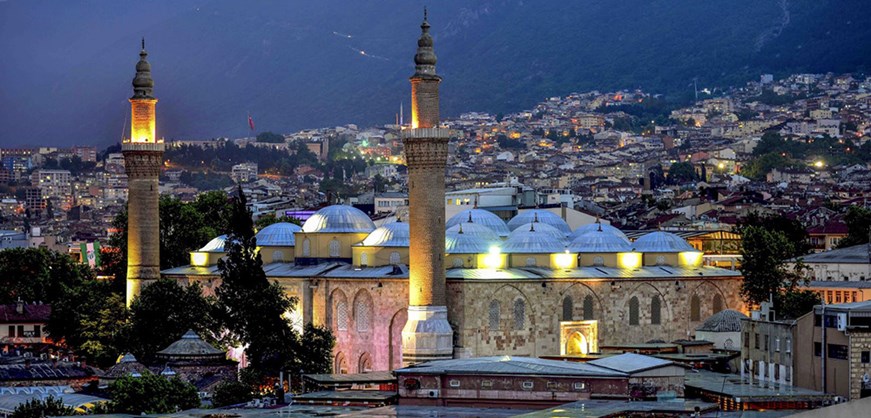
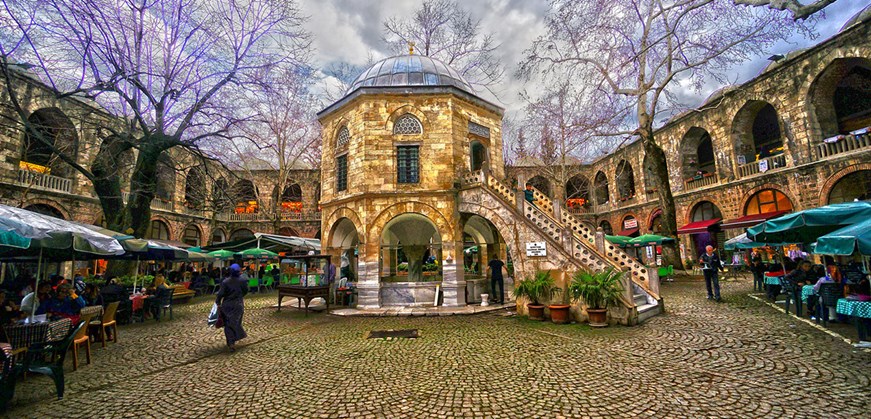
Convenient for combining lunch with Bursa Grand Mosque, Koza Han, covered markets, and nearby historic streets.

Specialist Döner Restaurants

Choose places where the vertical skewer is visible, the meat is cut to order, and pide and butter are prepared for each plate.

Busy Local Establishments

Regular turnover usually means that cooked meat is sliced and served continuously rather than held for long periods.

Modern Bursa Branches

Well-known Bursa-style restaurants also operate outside the old centre, offering easier parking and larger dining rooms.

Ask Before Ordering

Portion size, meat blend, sauce quantity, butter service, and whether yogurt is included can vary.


Choose a clean establishment with a steady customer flow, careful charcoal management, fresh-looking garnishes, and meat sliced directly from the fire. Prices, service styles, and opening hours can change, so confirm current details locally.

Bursa Döner Kebab Visitor Tips

Eat It Immediately

Thin döner slices cool quickly. Begin while the meat, butter, sauce, pide, and plate are still hot.

Watch the Charcoal

A visible wood-charcoal fire and slow vertical rotation are good signs of the traditional method.

Ask About the Portion

Restaurants may offer small, standard, one-and-a-half, or double portions. The dish is rich, so a standard plate is often substantial.

Control the Butter

Hot butter is central to the experience, but you can ask for a lighter pour if you prefer a less rich plate.

Keep the Yogurt Cool

Mix a little yogurt into each bite rather than spreading it over the entire plate at once.

Taste Before Adding Salt

The meat and butter are already seasoned. Additional salt may overpower the balanced flavour.

Try It at Lunch

The skewer is often at its best during a busy lunch period when meat is roasting and being sliced continuously.

Order a Local Drink

Ayran pairs naturally with the dish, while Bursa grape must or şıra can offer a sweeter regional alternative where available.

Leave Room for Dessert

Bursa milk halva, chestnut candy, Kemalpaşa dessert, or a small tahini pide can complete the local food experience.

Combine Food and History

Plan your meal around Bursa Grand Mosque, Koza Han, the covered bazaars, Green Mosque, or Muradiye Complex.

Frequently Asked Questions About Bursa Döner Kebab

What is Bursa Döner Kebab?

Bursa Döner Kebab is a regional dish made by vertically roasting layered sliced meat and minced meat in front of wood charcoal, shaving it thinly, and serving it over toasted tırnak pide with hot butter and optional yogurt, tomato sauce, and roasted vegetables.

What is Bursa Döner Kebab called in Turkish?

It is called Bursa Döner Kebabı. Visitors may also see the related expressions Bursa kebabı or İskender kebap in culinary and tourism contexts.

Is Bursa Döner Kebab geographically indicated?

Yes. Bursa Döner Kebabı is registered by the Turkish Patent and Trademark Office as a mahreç işareti.

What is its geographical-indication registration number?

Its registration number is 1151.

When was Bursa Döner Kebab registered?

The geographical-indication registration was completed on 17 June 2022.

Who registered Bursa Döner Kebab?

The application and registration were made by the Bursa Chamber of Commerce and Industry.

How old is the Bursa döner tradition?

Its history is associated with the middle of the nineteenth century. Bursa culinary tradition commonly links the vertical roasting method with the Kayhan district and the year 1867.

What meat is used?

The registered preparation uses lamb or sheep meat and may include beef within the permitted proportions. It combines thinly sliced leaf meat with prepared minced meat.

How much leaf meat is used?

The registered method specifies approximately 10% to 40% thinly sliced leaf meat.

Does Bursa döner contain minced meat?

Yes. Prepared minced meat forms part of the traditional layered skewer and may make up a substantial portion within the registered limits.

What is the maximum fat content?

The total fat content must not exceed approximately 25% by mass.

Is Bursa döner heavily marinated?

No. The meat is rested for approximately 2 to 3 days without a complicated marinade. Salt is the main seasoning, and onion juice is added to the minced-meat portion.

Are spices used?

The registered production method does not specify a spice mixture beyond salt. The flavour is intended to come mainly from the meat, onion juice, fat, charcoal, bread, butter, sauce, and yogurt.

How is Bursa döner cooked?

The layered skewer is positioned vertically approximately 10 to 15 centimetres from a wood-charcoal fire, preferably oak charcoal, and slowly rotated at moderate heat.

How thin is the meat sliced?

The cooked outer layer is cut into slices approximately 2 to 2.5 millimetres thick and around 3.5 to 4 centimetres wide.

What is tırnak pide?

Tırnak pide is a dimpled Turkish flatbread. For Bursa Döner Kebab, it is greased with meat fat, warmed on the grill, cut into small pieces, and placed beneath the sliced döner.

Why is hot butter poured over the plate?

The butter adds aroma, richness, heat, and moisture and is one of the defining elements of the Bursa-style presentation.

Is yogurt always served with Bursa Döner Kebab?

Yogurt is a classic and permitted accompaniment, but presentation may vary between establishments. Confirm whether it is included with the standard portion.

Does it come with tomato sauce?

Tomato or tomato-paste sauce may be served with the dish. Some restaurants place it over part of the bread and meat, while others serve it separately.

Is Bursa Döner Kebab spicy?

It is generally not spicy. The registered method uses salt rather than a strong spice blend, although accompanying peppers or restaurant sauces may add mild heat.

What does Bursa Döner Kebab taste like?

It is savoury, buttery, gently smoky, and rich, with acidity from tomato sauce and a cool tang from yogurt.

Is it served in bread like a döner sandwich?

The classic Bursa presentation is a plated dish. Thinly sliced meat is placed over pieces of toasted pide rather than served as a handheld sandwich.

What should I drink with it?

Ayran is a refreshing choice. Bursa grape must or şıra may also be available as a regional non-alcoholic pairing.

What is the best time to eat it?

Lunch is often ideal because the skewer is roasting continuously and the turnover is high. It is also commonly enjoyed for dinner.

Where can I find authentic Bursa döner?

Look for specialist charcoal döner restaurants in central Bursa, Kayhan, the historic bazaar district, and long-established local dining areas.

Is Bursa Döner Kebab worth trying?

Yes. It is one of the clearest introductions to Bursa’s culinary identity, charcoal-roasting tradition, bread culture, dairy products, and nineteenth-century food history.

Best Photos of Bursa Döner Kebab

The vertical skewer, glowing charcoal, long döner knife, falling meat slices, hot butter, red tomato sauce, white yogurt, toasted pide, and historic Bursa surroundings create excellent opportunities for food and travel photography.

The Vertical Skewer

Photograph the layered döner as it slowly rotates in front of the glowing charcoal.

The Slicing Moment

Capture the döner master shaving thin pieces from the browned outer surface with the long knife.

The Pide Base

Show the small toasted pieces of tırnak pide before the meat and sauces cover them.

The Butter Pour

A carefully timed photo of hot butter being poured creates steam, shine, and movement.

The Complete Plate

Include meat, pide, yogurt, tomato sauce, roasted pepper, and the wide serving plate.

Historic Bursa

Combine the food with Koza Han, bazaar streets, Ottoman architecture, or views of Bursa Grand Mosque.


Ask permission before photographing cooks, restaurant staff, or other guests. Stay clear of the knife, rotating skewer, hot butter, and charcoal area, especially during busy service.

Private Bursa Tours and Culinary Experiences

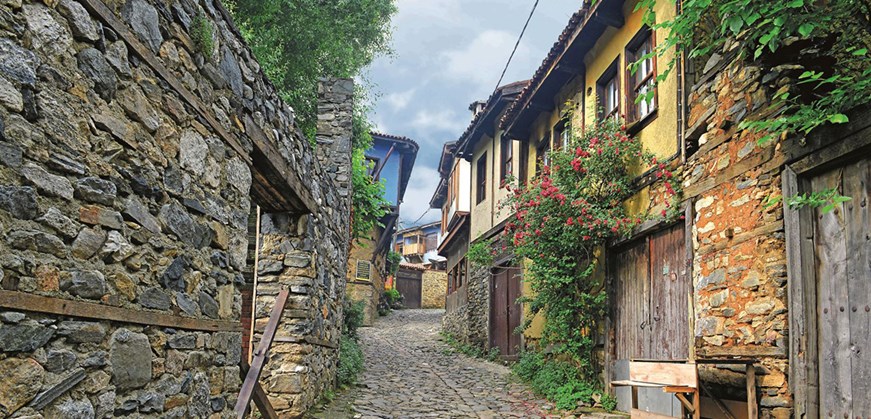
Experience Bursa Döner Kebab as part of a private journey combining early Ottoman monuments, traditional bazaars, silk heritage, Cumalıkızık, İznik, Uludağ, thermal culture, and Bursa’s regional cuisine.

Private Bursa City Experiences

Custom-designed services with private transportation, professional guiding, flexible timing, and opportunities to enjoy Bursa’s historic food traditions.

Longer Bursa and İznik Journeys

Extend your route with İznik’s Roman, Byzantine, Christian, Seljuk, and Ottoman heritage or combine Bursa with Istanbul as part of a private northwestern Türkiye itinerary.