A Taste of Old Bursa
The Culinary Tradition of Bursa Cantık
Discover how a small round pide became part of Bursa’s everyday and ceremonial food culture.
Bursa developed one of western Anatolia’s richest urban food traditions through centuries of trade, agriculture, migration, craft production, and Ottoman culinary life. Bakeries, kebab shops, markets, sweet makers, and family kitchens all contributed to a regional cuisine with a very strong local identity.
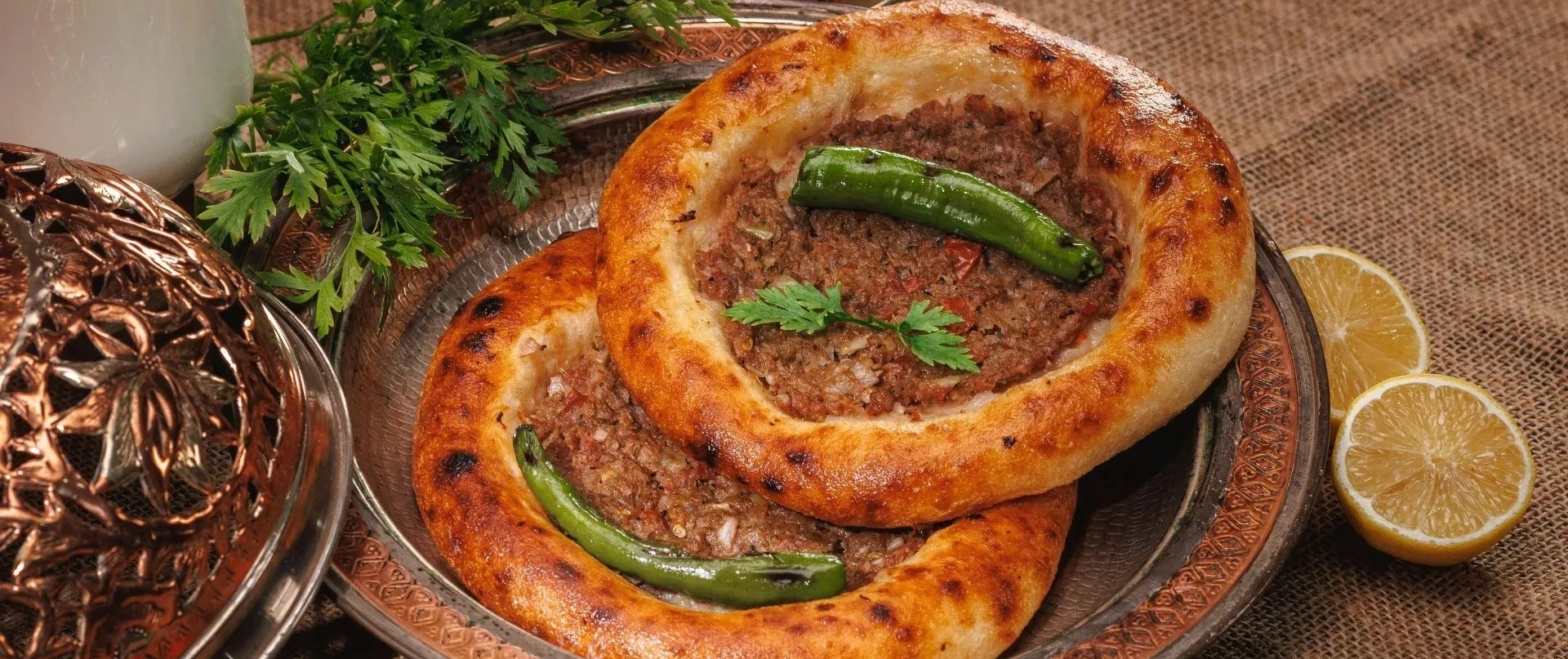
Within this food culture, Bursa Cantık emerged as a distinctive form of meat-topped pide. According to its official geographical-indication registration, the history of Bursa Cantık reaches back to the 1800s.
Cantık is closely associated with communal life in Bursa. Traditionally, it has been served on important ceremonial days including weddings, mevlit gatherings, circumcision ceremonies, henna nights, and funerals. Its role therefore extends beyond that of an ordinary bakery product.
The dish is also defined by a production method specific to Bursa. The dough is left thick around the edges but pressed thinner in the centre, creating a shallow round base that holds the minced-meat mixture while remaining soft inside and well browned around the rim.
Traditional baking is equally important. The registered method describes a domed, stone-based black oven fired with hornbeam wood. The intense heat cooks the relatively small cantık quickly, while the raised edge develops colour and the meat filling remains moist.
This combination of history, regional reputation, characteristic appearance, local preparation method, and ceremonial importance led to the registration of Bursa Cantık as a geographically indicated product connected with Bursa Province.