Mediterranean Sea Urchin
The registered product is prepared from Paracentrotus lividus, a sea urchin species found in Mediterranean and eastern Atlantic waters.






Ayvalık Karadikeni is one of the most distinctive traditional seafood specialities of Ayvalık on Türkiye's North Aegean coast. It is prepared from the edible gonads of the Mediterranean sea urchin Paracentrotus lividus, collected from the waters around Ayvalık and carefully removed from the animal's famously spiny shell.
The flavour is unmistakably marine: salty, fresh and intensely reminiscent of the sea. In Ayvalık, karadiken may be eaten plain, but it is especially associated with the simple combination of extra virgin olive oil and fresh lemon juice.
Ayvalık Karadikeni is now officially protected as a Mahreç İşareti geographical indication. The registration recognises both its long-established relationship with Ayvalık and the specialised skills required to collect, open, clean and prepare the sea urchins for the table.
The edible portion comes from sea urchins traditionally collected from the coastal waters surrounding Ayvalık.
The classic Ayvalık presentation combines the sea urchin with olive oil, lemon juice or both.
Collection and consumption are especially associated with the period from December through March.
Ayvalık Karadikeni is registered in Türkiye as geographical indication No. 1516.
Essential information about Ayvalık's protected sea urchin speciality.
Ayvalık district, Balıkesir Province, on Türkiye's North Aegean coast.
Open Ayvalık on Google MapsThe edible gonads of the sea urchin species Paracentrotus lividus.
Eaten plain or seasoned simply with Ayvalık olive oil and/or fresh lemon juice.
TÜRKPATENT geographical-indication registration No. 1516, registered as a Mahreç İşareti.
A small sea creature became one of the most recognisable tastes of Ayvalık's coastal table.
Ayvalık's culinary identity has always been closely connected with two landscapes: its olive-covered hills and the Aegean Sea. Karadiken brings the two together almost perfectly. The sea provides the intensely flavoured sea urchin, while the surrounding countryside provides the olive oil traditionally used to season it.
Generations of local fishermen have collected sea urchins from the waters around Ayvalık, where rocky seabeds and marine vegetation provide suitable habitat. Preparing them for the table requires far more work than their simple appearance on a meze plate might suggest.
The dark, densely spined shell must first be handled safely and opened correctly. The valuable edible portions are then removed carefully without damaging them. This combination of harvesting knowledge and preparation skill became part of the local fishing culture.
Over time, karadiken developed a strong reputation as an Ayvalık speciality. Its importance was formally recognised when Ayvalık Karadikeni received geographical-indication protection in 2024.
For visitors today, karadiken offers something quite different from a restaurant dish recreated anywhere in the world. It is a direct expression of Ayvalık's maritime culture — seasonal, highly local and traditionally served with very little intervention.
From its almost black spines to its intensely marine flavour, karadiken is one of Ayvalık's most unusual regional foods.
The registered product is prepared from Paracentrotus lividus, a sea urchin species found in Mediterranean and eastern Atlantic waters.
The spines can appear purple, reddish or almost black, creating the appearance behind the local name karadiken — literally “black thorn.”
The prized part is not the shell itself but the soft edible gonads carefully removed from inside.
Its taste is naturally saline and carries the unmistakable aroma and character of fresh seawater.
The edible portion has a delicate, soft consistency very different from firm shellfish such as mussels or shrimp.
The protected preparation presents the fresh edible portion without cooking, either plain or lightly seasoned.
Simple seasoning preserves the natural flavour rather than covering it with sauces or spices.
The product's reputation, preparation skills and longstanding consumption are closely connected with Ayvalık.
Ayvalık Karadikeni is a traditional cold meze prepared from the edible gonads of the sea urchin species Paracentrotus lividus.
Although visitors often describe the edible portion as sea urchin roe, the more anatomically accurate term is gonad. These soft orange, yellow or golden sections are removed from inside the shell and eaten directly.
The local name refers to the sea urchin's densely packed dark spines and is widely used around Ayvalık.
The sea urchin is also known locally as taş kestanesi, or “stone chestnut.”
Sea urchins are echinoderms, belonging to the same broad marine group as starfish rather than to fish or shellfish families.
Only a relatively small portion of each animal becomes the edible meze, helping explain the labour involved in preparation.
For someone tasting it for the first time, the easiest comparison is with the internationally known delicacy uni, although Ayvalık's serving style has its own identity: extraordinarily simple, often using little more than olive oil and lemon.
Ayvalık Karadikeni is registered by the Turkish Patent and Trademark Office as a Mahreç İşareti geographical indication, recognising its reputation, preparation tradition and connection with Ayvalık.
Ayvalık Karadikeni
TÜRKPATENT geographical-indication registration number 1516.
The geographical-indication application number is C2022/000121.
The application was submitted on 4 April 2022.
Ayvalık Karadikeni was registered on 4 January 2024.
The registration holder is Ayvalık Municipality.
The defined geographical boundary is Ayvalık district in Balıkesir Province. The geographical-indication specification states that the production stages of Ayvalık Karadikeni must take place within this geographical area.
The protected name and Mahreç İşareti emblem may be displayed on the product or its packaging. Where this is not practical, they should be displayed visibly by the business offering the product.
The sea urchin used for registered Ayvalık Karadikeni is Paracentrotus lividus, a familiar species of Mediterranean coastal ecosystems.
Its dramatic appearance makes it instantly recognisable. Beneath a dense covering of pointed spines is a roughly hemispherical shell, while the underside is somewhat flatter.
Paracentrotus lividus.
The official product description gives an average shell measurement of approximately 5 cm.
Spines may range through shades of purple and reddish tones to colours approaching black.
The numerous pointed spines require careful handling during collection and preparation.
The underside contains a small mouth region that provides an important reference point when opening the animal.
Properly developed gonads can represent approximately one tenth of the animal's weight.
The coastline around Ayvalık is characterised by islands, sheltered bays, rocky bottoms and rich shallow-water habitats. These environments form the natural setting associated with the karadiken tradition.
The geographical-indication specification describes the sea urchins as occurring along the coastal zone, including rocky areas and within Posidonia oceanica seagrass habitats.
Rocky coastal areas provide surfaces and crevices used by sea urchins.
The official description also associates them with Mediterranean Posidonia oceanica meadows.
Karadiken is strongly associated with the maritime environment surrounding Ayvalık's complex coastline and islands.
As a marine food harvested directly from its environment, provenance and proper handling are especially important.
Ayvalık Karadiken should be understood as a seasonal food rather than an attraction guaranteed throughout the year.
According to the official geographical-indication specification, the collection and food consumption of sea urchins in Ayvalık increase particularly between December and March, and this period is identified as especially productive for karadiken collection.
The traditional winter karadiken period becomes increasingly important as the year ends.
Midwinter is one of the characteristic times to encounter fresh karadiken in Ayvalık.
The delicacy remains strongly associated with local winter seafood culture.
The official productive period continues through March.
Availability can still depend on legal harvesting rules, weather, sea conditions, supply and the individual restaurant or fishmonger. Travellers visiting specifically to taste karadiken should therefore treat availability as seasonal rather than guaranteed.
Harvesting karadiken is one of the reasons this seemingly simple meze involves considerable labour. Sea urchins must first be located and collected in accordance with applicable fisheries regulations before they can be brought ashore and prepared.
This work explains why a small portion of prepared karadiken represents much more effort than its size might initially suggest.
The registered description notes a traditional preference for female sea urchins during collection.
One practical characteristic described in the official specification is that females may attach pieces of vegetation or small stones to themselves, helping experienced collectors distinguish them.
Experienced collectors use visual characteristics and practical knowledge when choosing suitable sea urchins.
The edible gonads are the valuable portion and their development directly affects the usable amount.
Even well-developed gonads may represent only about 10% of the animal's total weight.
Many individual sea urchins therefore need to be opened to prepare a meaningful quantity of meze.
Opening a sea urchin without destroying the delicate edible sections inside requires knowledge and practice. The geographical-indication specification recognises both the cutting and removal of the gonads as stages requiring skill.
Karadiken is striking because so little is needed to transform it into a finished meze. The aim is not to disguise the sea urchin but to preserve its unmistakable marine flavour.
The registered preparation provides two basic versions: plain and seasoned.
The simplest preparation serves approximately 60 g of the sea urchin gonads without additional seasoning.
A small quantity of olive oil softens and rounds the natural salinity while connecting the dish directly with Ayvalık's olive heritage.
Lemon juice contributes freshness and acidity without overwhelming the delicate texture.
The two may be combined for the preparation most visitors associate with Ayvalık's karadiken tradition.
The protected product specification recommends serving and consuming Ayvalık Karadikeni cold.
Additional salt may be provided according to preference, although the sea urchin is naturally saline.
Few dishes express Ayvalık's landscape as directly as karadiken dressed with olive oil and lemon. The central ingredient comes from the sea while the olive oil represents the groves surrounding the town.
Extra virgin olive oil provides fruitiness and richness without hiding the marine character.
Fresh lemon brightens the soft, saline sea urchin and makes the flavour feel cleaner.
The traditional preparation demonstrates confidence in the freshness and natural flavour of the ingredient.
Discover why olive cultivation and olive oil are fundamental to the landscape and cuisine of Ayvalık.
Karadiken tastes unmistakably of the sea. Its character is saline, mineral and marine, with a soft texture and a lingering savoury richness that can be surprising to someone tasting sea urchin for the first time.
Freshness matters enormously because the appeal is based on the purity of that marine flavour rather than cooking, spice or elaborate preparation.
Natural salinity is one of the most immediate impressions.
The flavour evokes the sea directly rather than tasting like an ordinary white fish.
The edible gonads have a tender consistency rather than a firm or chewy bite.
Despite the small serving size, karadiken can deliver a surprisingly concentrated flavour.
Acidity provides contrast and can make the marine intensity more approachable.
Olive oil adds fruitiness and a silky finish that fits naturally with the texture.
Visitors expecting the firmness of shrimp, calamari or mussels may be surprised by karadiken. The edible portion is naturally soft and delicate.
The gonads have a smooth and yielding texture.
The spiny external shell is not eaten; only the carefully extracted interior portions are served.
Removing the edible portions intact requires controlled handling.
Good handling and refrigeration help preserve both texture and flavour.
The official geographical-indication preparation gives a reference serving of approximately 60 g of sea urchin gonads.
Approximately 60 g of prepared gonads.
The seasoned reference preparation uses approximately 5 ml of olive oil when included.
Approximately 5 ml of lemon juice may be used in the seasoned preparation.
The seasoning may be gently combined with the sea urchin for around 30 seconds before serving.
Because each sea urchin yields only a small amount of usable edible material, preparing even one plate can require the processing of numerous individual animals.
Karadiken is a raw marine product, so responsible handling is fundamental. The registered method requires hygienic processing and maintenance of appropriate refrigerated conditions.
Sea urchins should be handled quickly after being brought ashore.
The prepared product should remain refrigerated during storage and distribution.
The official specification recommends eating Ayvalık Karadikeni cold.
Under refrigerator conditions, the protected specification recommends consumption within approximately two days after preparation.
For travellers, the practical rule is simple: choose a reputable restaurant, fishmonger or producer that handles fresh seafood professionally rather than attempting to collect and prepare wild sea urchins independently.
Sea urchins are part of a living marine ecosystem. Karadiken should therefore be treated as a regulated seasonal food rather than something visitors should collect freely from the coast.
Collection must take place in accordance with applicable Turkish fisheries regulations.
Visitors should not assume that sea creatures seen while swimming are legally available for personal harvesting.
Licensed or established seafood businesses are the appropriate route for tasting local marine products.
Seasonality is part of the food tradition and should be respected rather than treating karadiken as a year-round commodity.
December through March is the period most strongly associated with collection and consumption.
Karadiken is seasonal and may not be available every day even during the appropriate months.
Freshness, cold-chain handling and hygienic preparation are particularly important with raw marine foods.
A small first taste without seasoning helps you understand its pure marine character.
A little acidity is enough; too much lemon can overpower the delicate flavour.
Ayvalık olive oil creates the most natural regional pairing with the sea urchin.
Karadiken works naturally as part of a wider table of Aegean seafood and vegetable mezes.
Collection is regulated and processing requires both experience and suitable hygiene conditions.
To understand Ayvalık cuisine, it helps to think beyond individual dishes. The town's food culture developed between an intensely productive coastline and one of Türkiye's great olive-growing landscapes.
Karadiken occupies the maritime side of that identity. It sits comfortably beside local fish, octopus, calamari, shellfish and mezes, yet its preparation with olive oil simultaneously connects it with the agricultural landscape inland.
The collection and preparation of marine foods have long been part of working life around Ayvalık's coast and islands.
Karadiken is naturally suited to the shared-table tradition in which several small dishes are enjoyed together.
The use of olive oil connects the sea urchin with one of the defining ingredients of Ayvalık cooking.
Karadiken reminds visitors that traditional coastal cuisine follows the rhythms of the sea rather than a fixed year-round menu.
Opening and cleaning dozens of spiny sea urchins preserves a kind of culinary knowledge rarely visible on the finished plate.
Geographical-indication registration formally recognises karadiken as part of Ayvalık's regional food heritage.
Karadiken is especially rewarding for travellers who enjoy foods that communicate a strong sense of place. It is not designed to taste neutral. Its appeal comes precisely from being intensely connected with the sea.
Fans of oysters, raw shellfish, bottarga or other concentrated marine flavours are likely to find the experience particularly interesting.
The flavour and texture are unlike ordinary grilled or fried seafood.
Sharing a portion is an easy way to discover whether the intensity appeals to you.
Part of the experience is understanding the connection between the plate, Ayvalık's fishermen and the surrounding Aegean waters.
Karadiken makes an excellent starting point for exploring a broader food culture that moves between the sea, olive groves, bakeries and the multicultural history of the North Aegean.
Continue with seasonal fish, octopus, calamari and other seafood associated with Ayvalık and Cunda.
Discover the olive-growing culture behind the oil traditionally paired with karadiken.
Move from the delicate flavours of the sea to the town's famous hot toasted sandwich.
Finish with Ayvalık's protected mastic-scented cookie covered with sesame.
Seasonal greens, herbs and vegetables prepared with olive oil complete a classic coastal table.
Compare Ayvalık's marine speciality with one of Balıkesir Province's best-known protected desserts.
A seafood tasting can easily become part of a full day exploring Ayvalık's historic streets, islands, religious monuments, beaches and famous coastal viewpoints.
Walk among stone houses and narrow streets shaped by the town's commercial and multicultural history.
Explore waterfront streets, historic architecture and one of the strongest seafood cultures in the Ayvalık archipelago.
Discover one of Ayvalık's most remarkable historic religious monuments.
See an unusual late Ottoman landmark while exploring the historic centre.
Continue to Ayvalık's celebrated panoramic viewpoint for an unforgettable sunset over the islands.
Combine local food culture with one of the area's best-known stretches of Aegean coastline.
Ayvalık Karadikeni is a traditional cold meze prepared from the edible gonads of the sea urchin species Paracentrotus lividus.
Yes. Karadiken is a local name used for the sea urchin from which Ayvalık's protected meze is prepared.
The Turkish words kara and diken mean “black” and “thorn,” a fitting description of the animal's dark, densely spined appearance.
The registered product is made from Paracentrotus lividus.
The edible portion consists of the gonads found inside the shell.
The edible sections are commonly called sea urchin roe in everyday culinary language, although gonad is the more anatomically accurate term.
Yes. It is registered as a Mahreç İşareti geographical indication by the Turkish Patent and Trademark Office.
The TÜRKPATENT geographical-indication registration number is 1516.
It was registered on 4 January 2024.
The geographical-indication application number is C2022/000121.
The application date was 4 April 2022.
The registration holder is Ayvalık Municipality.
The geographical boundary is Ayvalık district in Balıkesir Province.
The sea urchin is also known locally as taş kestanesi, meaning “stone chestnut.”
The spines may range from purple and reddish shades to colours that appear almost black.
The geographical-indication description gives an average shell measurement of approximately 5 cm.
The sea urchins associated with Ayvalık occur in coastal marine habitats including rocky areas and Posidonia oceanica seagrass environments.
Collection and consumption are especially associated with December through March, which the official registration identifies as the most productive period.
It should not be considered a guaranteed summer food. Availability is seasonal and also depends on legal harvesting rules, supply and the individual restaurant or fishmonger.
Yes. The traditional protected product is served without cooking, either plain or seasoned.
The classic preparation uses olive oil, lemon juice or a combination of both.
Olive oil is one of the recognised seasonings and creates a natural connection with Ayvalık's famous olive-growing heritage.
It has a salty, concentrated marine flavour with the aroma of the sea and a soft texture.
The edible gonads are soft and delicate rather than firm or chewy.
Both refer to edible sea urchin gonads, but “uni” is the Japanese culinary term while Ayvalık Karadikeni represents a specific Turkish regional preparation and food tradition.
The shell is carefully cut using suitable clean tools, traditionally working from the mouth area to access the edible gonads inside.
The animal has sharp spines and the delicate edible portions must be removed without unnecessary damage or contamination.
Thick gloves help protect the person preparing the sea urchins from their sharp spines.
The registered reference preparation uses approximately 60 g of sea urchin gonads per portion.
The reference seasoned preparation specifies approximately 5 ml of olive oil when olive oil is included.
The reference seasoned preparation specifies approximately 5 ml of lemon juice when lemon is included.
Yes. The geographical-indication specification recommends serving and consuming it cold.
Yes. Additional salt may be added according to personal preference, although the product already has a naturally salty character.
The registered specification recommends consuming the product within approximately two days when correctly stored under refrigerator conditions.
Each sea urchin provides only a small edible yield, while collection, opening, cleaning and extracting the gonads require considerable manual work.
Visitors should not assume that marine animals can be freely harvested. Collection is subject to fisheries regulations, and professional handling is advisable for a product normally eaten raw.
Ayvalık itself is the most meaningful place, particularly at reputable seafood restaurants or specialised businesses during the appropriate season.
Cunda is part of the wider Ayvalık food landscape and is well known for seafood dining, although karadiken availability depends on season and supply.
It fits naturally into a table of local seafood, seasonal Aegean mezes, olive-oil dishes and fresh bread.
Try Ayvalık toast, local extra virgin olive oil, seafood, mezes and Ayvalık Sakızlı Kurabiye.
It represents the town's close relationship with the Aegean Sea, generations of local fishing knowledge and a specialised food tradition now recognised through geographical-indication protection.
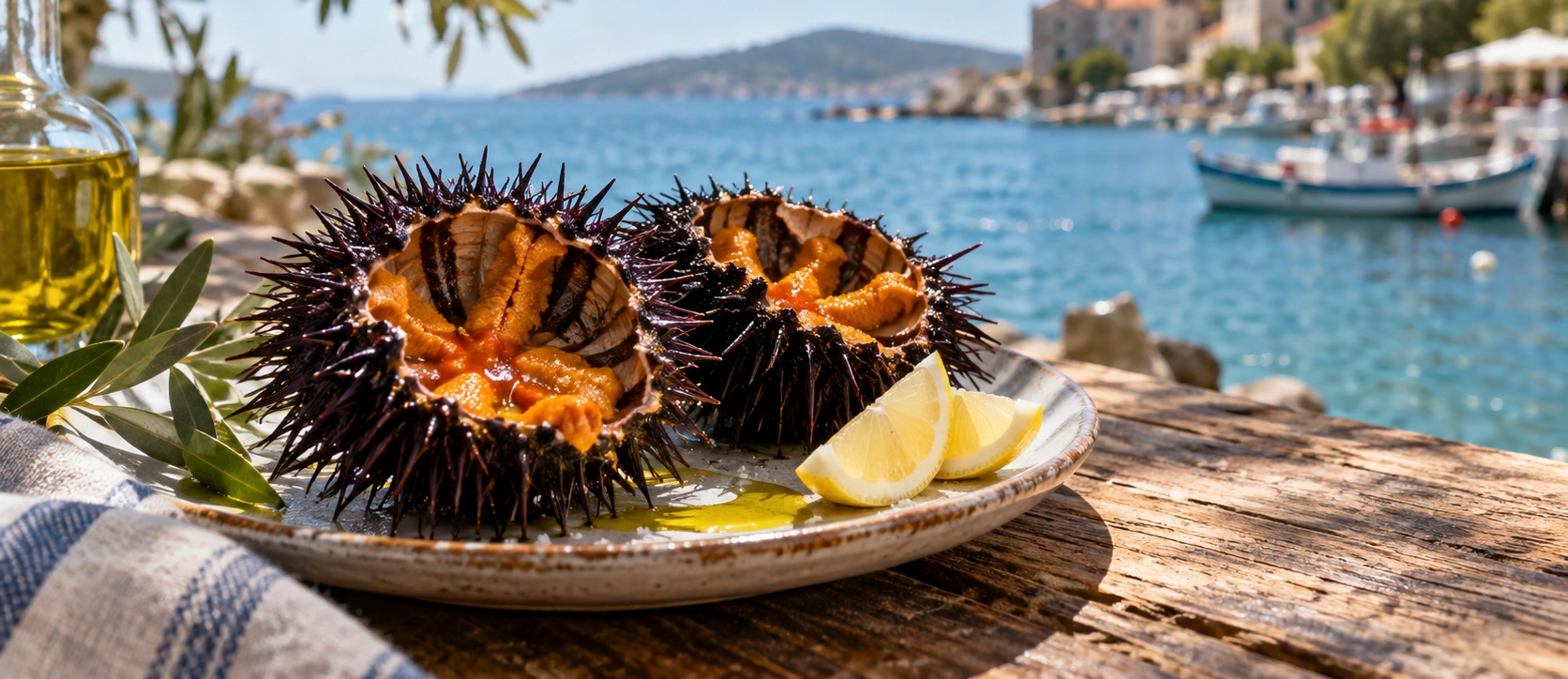
Karadiken is exceptionally photogenic because the severe geometry of the dark spiny shell contrasts dramatically with the delicate golden-orange edible interior.
Photograph an opened shell from above to reveal the striking contrast between black spines and the colourful interior.
A small glimmer of golden olive oil immediately connects the sea urchin with Ayvalık's wider food identity.
A fresh lemon wedge communicates the traditional serving style without needing elaborate food styling.
Karadiken photographed close to the harbour or a small fishing boat tells a stronger story than a generic restaurant table.
Sea views and stone architecture can visually connect the food with its North Aegean setting.
Close detail of the long dark spines creates a powerful image even before the food itself is shown.
Discover Ayvalık's maritime food culture alongside olive oil, historic neighbourhoods, Cunda Island and the landscapes of the North Aegean.
Custom-designed private programs can combine seasonal regional tastings with historic Ayvalık, Cunda Island, olive-oil heritage, panoramic viewpoints and other highlights according to season and availability.
Explore Ayvalık's distinctive coastal food traditions with seasonal seafood, regional mezes, olive-oil specialities and carefully selected local flavours.
Request This Experience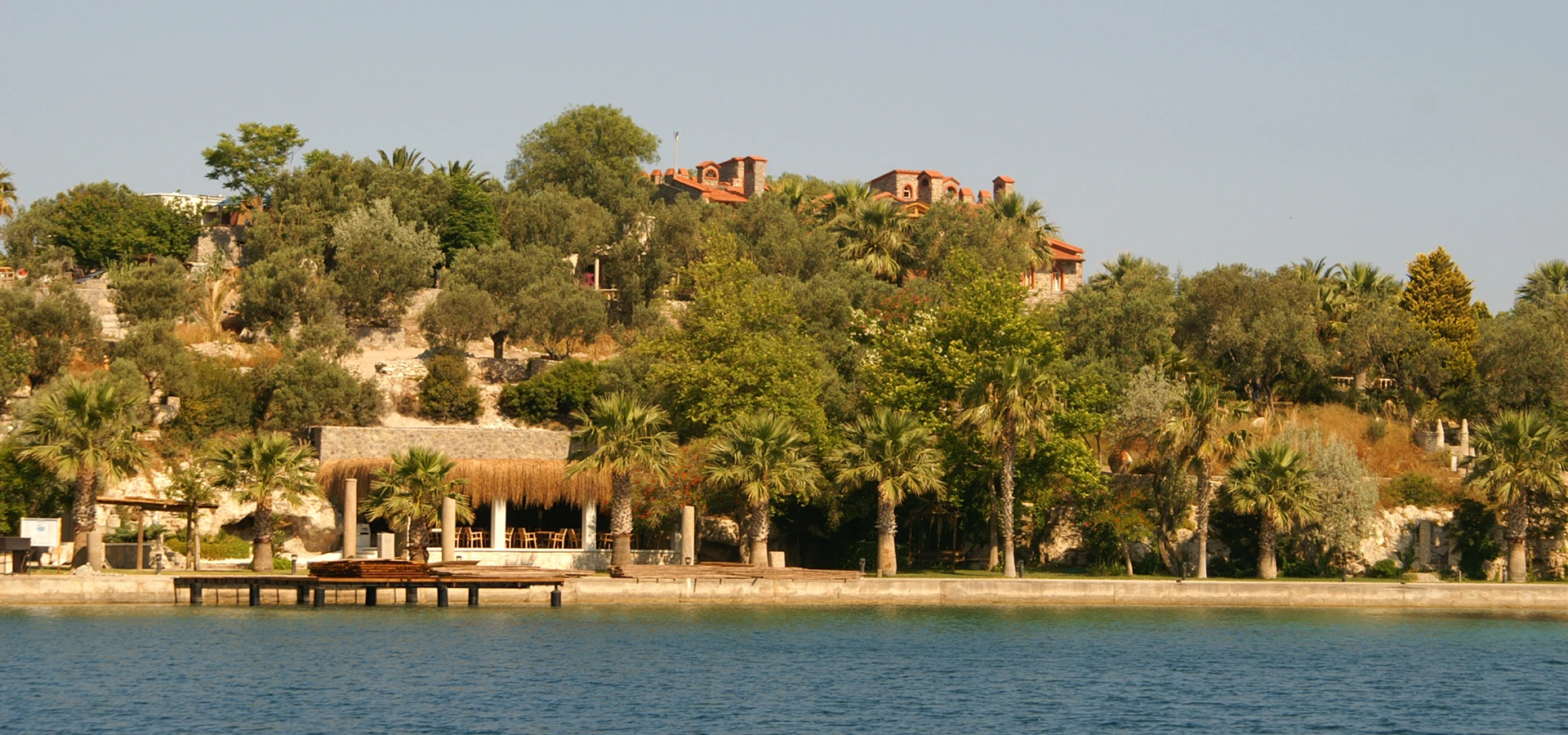
Combine historic Ayvalık, Cunda Island and panoramic coastal scenery with local food stops focused on olive oil, seafood, bakeries and North Aegean culinary traditions.
Request This Tour