Private Alaşehir Food Experience
Share your travel date, interests and group size. We can propose a sensible local route and check any producer access.
Request Your Private Programme





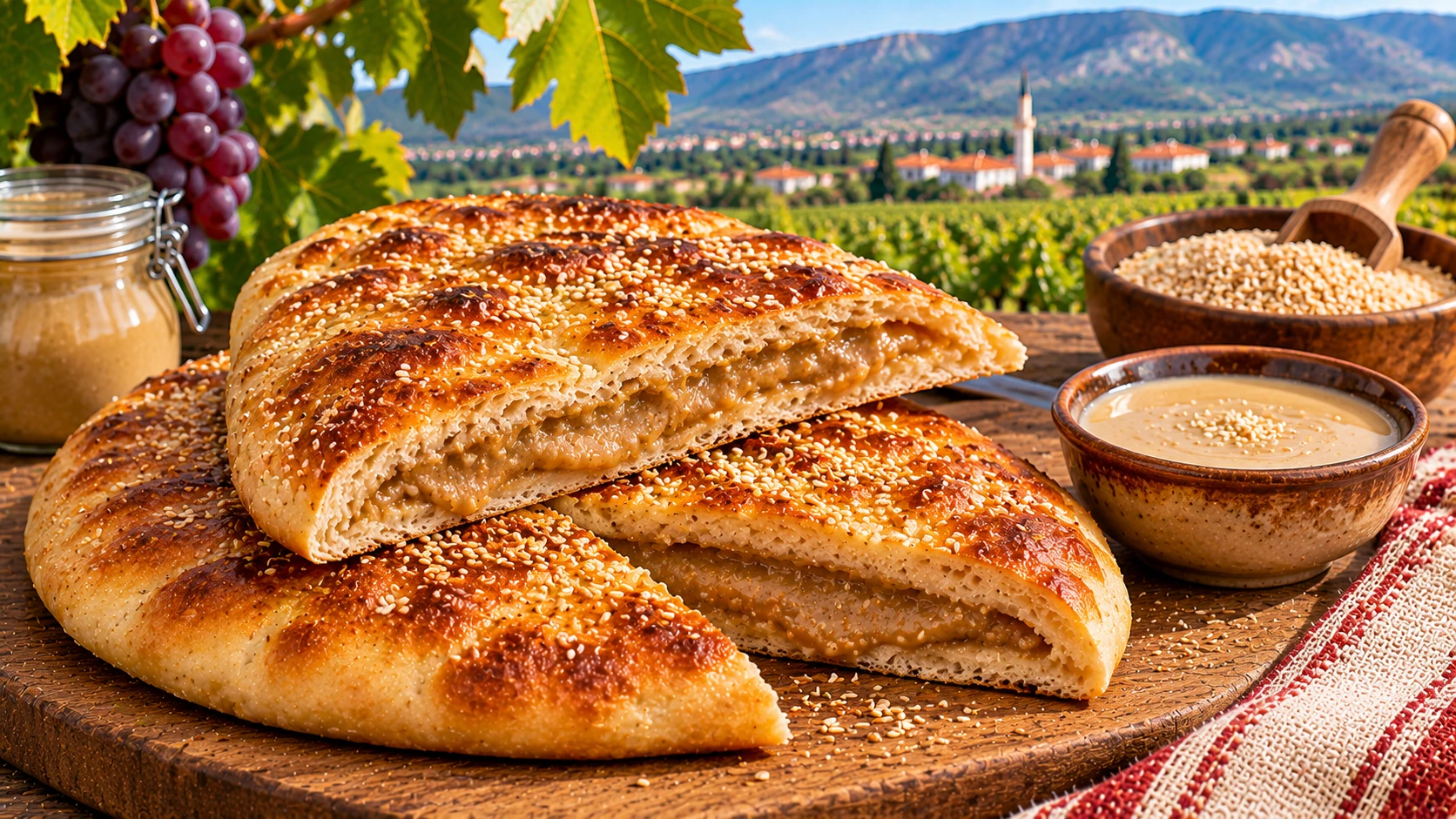
Alaşehir tahinli pide is a rich, round bakery speciality in which tahini is incorporated into the dough and spread over it. Its registered preparation is especially distinctive for a two-stage bake and a sweet finishing touch.
The bakery technique distinguishes this pide from other sesame sweets. Tahini enriches the dough, while a staged bake and sweet finishing ingredients create the final balance.
Alaşehir Tahinli Pidesi, mahreç 1423 (2023).
Tahini is applied inside and over the dough.
Butter is added before the final browning stage.
Warm, with powdered sugar and optionally walnuts.
Essential context for a meaningful food experience.
Alaşehir, Manisa
Sweet tahini pide
GI registration
Sesame richness
Ask locally about availability and season
Turkish GI no. 1423
Alaşehir Tahinli Pidesi is registered as a Turkish geographical indication, number 1423, dated 26 July 2023. The official description specifies a preparation that is cooked in a stone oven, briefly removed and then returned to finish browning.
Although the name resembles other tahini breads, Alaşehir’s registered version has its own proportions, shape and finishing method. It should not be presented as identical to Kula şekerli pide, which is typically rolled and layered.
The Turkish geographical-indication registry lists Alaşehir Tahinli Pide under number 1423 (Mahreç işareti), registered 2023-07-26.
The aroma combines toasted sesame, warm dough and a buttery finish. The sweetness is supplied at serving rather than relying only on sugar baked into the dough.
A well-made example should not be mistaken for an ordinary sesame flatbread. Tahini is integral to its structure and creates a richer mouthfeel.
Alaşehir Tahinli Pidesi, mahreç 1423 (2023).
Tahini is applied inside and over the dough.
Butter is added before the final browning stage.
Warm, with powdered sugar and optionally walnuts.
Alaşehir is a natural place to explore the contrast between sweet tahini pide and the district’s long-fermented, grape-starter bread.
Flour, water, yeast and salt form the base dough. After resting, the dough is stretched and generously coated with tahini, then shaped into a rounded pide.
The oven process is staged: before cooking is fully complete, the bread is taken out, butter is applied and it goes back into the oven to develop its brown surface. Powdered sugar and, optionally, chopped walnuts are added for serving. These details help explain why the finished pide feels closer to a pastry than everyday bread.
Alaşehir Tahinli Pidesi, mahreç 1423 (2023).
Tahini is applied inside and over the dough.
Butter is added before the final browning stage.
Warm, with powdered sugar and optionally walnuts.
Check for sesame, wheat and dairy allergens. If walnuts are used, nut cross-contact may also matter.
Reference for the regional method or designation: Official Turkish GI registry. The linked record is provided for checking the details; opening hours and producer availability must be confirmed separately.
Eat it warm in small wedges with tea. If you want to taste the tahini clearly, try a bite before adding extra toppings.
Ask whether the bakery serves it with powdered sugar or walnuts. These are part of the usual presentation, but optional additions and serving styles may vary.
Start by asking for the simplest or most characteristic preparation. Give yourself time to observe the texture, aroma and serving method, then compare it with one of the related Manisa foods linked below. A short conversation with a producer can be more revealing than collecting several rushed tastings.
Bakeries may produce batches at certain times; check ahead if the pide is the main reason for your visit. Freshness is important because reheating can change the layered dough and topping.
For a special trip, verify the producer or bakery is open and that the item is available. Seasonal harvests, working-kitchen schedules and festival dates can change; this guide deliberately avoids inventing fixed opening hours or prices.
Photograph the product in its actual context: the market stall, bakery counter, plate or orchard, with the maker’s permission. Do not enter production spaces without approval, and avoid disrupting food handling to stage a picture.
The hero path in this page is a website image reference, not a photograph included in this HTML package. Supply a properly licensed image of the specific food or product before publishing.
Food markets and historic town centres may have steps, narrow pavements or limited seating. If you need a step-free tasting location, confirm the venue’s access arrangements before travelling.
Ingredient and allergen information should come from the actual producer or kitchen. A traditional description cannot guarantee the absence of cross-contact or accommodate individual dietary needs.
A food walk can also include Alaşehir kapaması and a visit to Philadelphia’s surviving remains. These are close cultural themes, but exact business hours and walking routes should be confirmed locally.
The local starting point is Alaşehir in Manisa Province. Use an up-to-date map for the exact shop, producer or market and confirm access before making a special journey.
Continue with this related Manisa guide for a different food tradition or nearby heritage stop. Check actual travel time and opening conditions.
Continue with this related Manisa guide for a different food tradition or nearby heritage stop. Check actual travel time and opening conditions.
Continue with this related Manisa guide for a different food tradition or nearby heritage stop. Check actual travel time and opening conditions.
A rich tahini-filled and topped pide baked in stages and usually served sweet.
Yes. Alaşehir Tahinli Pidesi has Turkish GI registration 1423, dated 26 July 2023.
The registered method uses two stages, with butter applied before final browning.
No. Both feature tahini, but the shape and preparation are distinct.
Yes. Tahini is ground sesame and is the central ingredient.
Warm in wedges, often with powdered sugar and optional walnuts.
Buy from identifiable producers and ask respectfully about their methods.
Read labels and ask about allergens, preparation and storage.
Do not enter farms, mills, kitchens or workshops without permission.
Order manageable portions and use practical packaging for purchases.
Ask Wow Cappadocia / Venere Travel to plan a private route with licensed guiding where appropriate, realistic travel times and no compulsory shopping stops. Producer visits are subject to availability and permission.
Combine food, culture and history at your own pace.
Share your travel date, interests and group size. We can propose a sensible local route and check any producer access.
Request Your Private Programme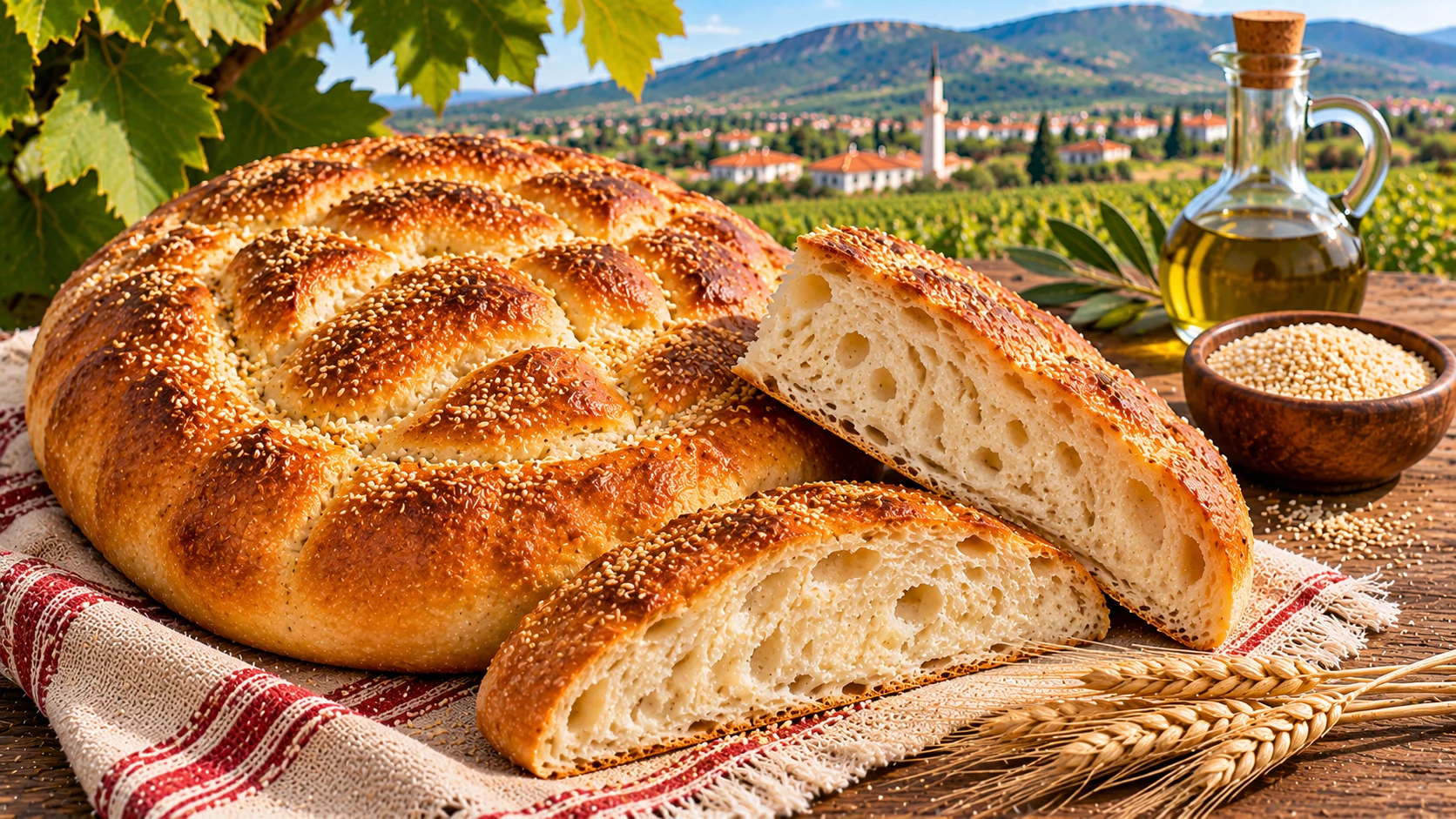
Discover a complementary local food or cultural destination.
Read the Related Guide