Adapazarı Beyaz Kestane Kabağı
The registered dessert must be prepared from Sakarya’s protected white chestnut pumpkin.
- Dessert specification: Mature 13–15 kg pumpkin
- Pumpkin GI: Registration no. 501
- Type: Winter squash






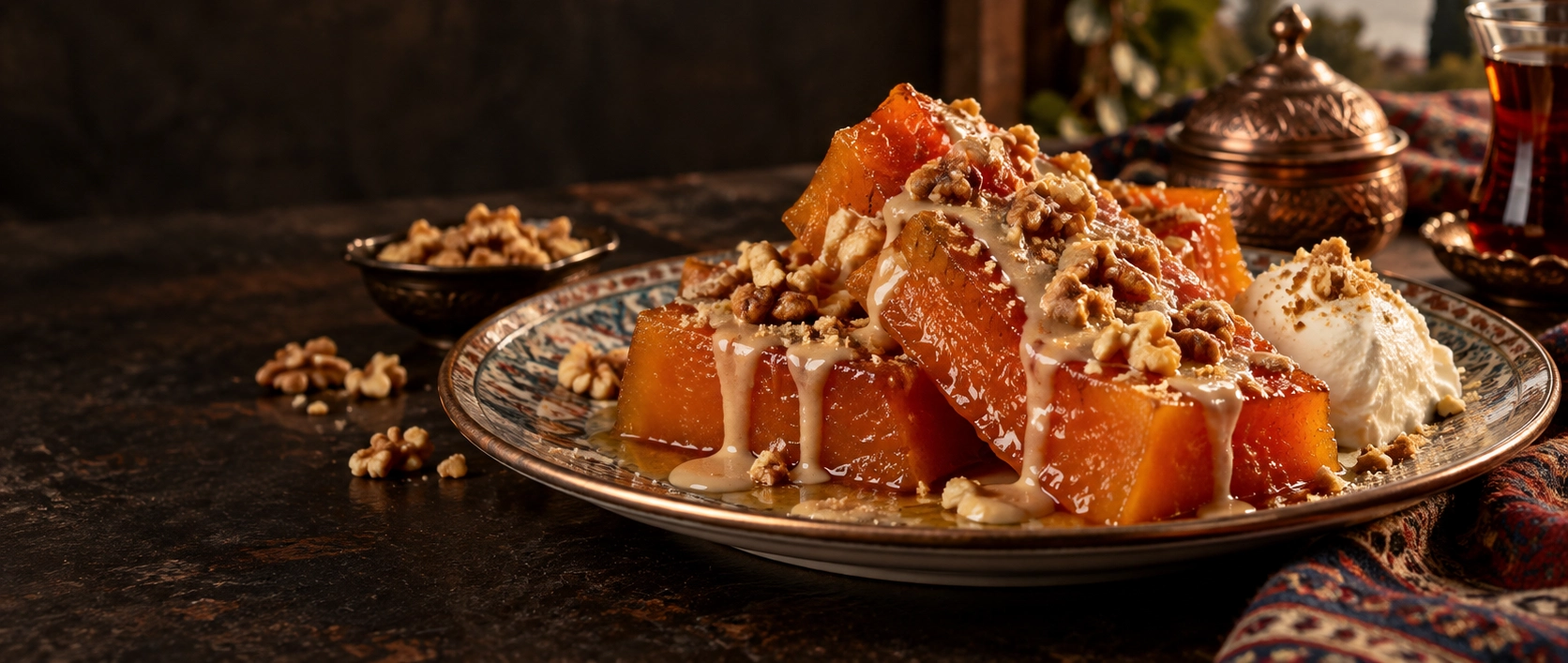
Adapazarı Kabak Tatlısı is one of Sakarya’s most distinctive traditional sweets. Large pieces of locally grown Adapazarı Beyaz Kestane Kabağı are rested with sugar, gently cooked until tender without losing their shape and served plain or with additions such as tahini, kaymak and walnuts.
What makes the dessert especially regional is its raw material. The protected recipe requires Adapazarı Beyaz Kestane Kabağı, a large winter squash cultivated in Sakarya and separately registered as a geographical indication. The dessert and the pumpkin therefore represent two connected layers of the province’s protected food heritage.
The registered preparation is precise. The pumpkin is cut into substantial pieces, part of the sugar is added before an approximately 24-hour refrigerated rest, and the remaining sugar is introduced gradually during a short cooking period designed to preserve the pieces. The dessert may then be served directly or briefly baked for a slightly different finish.
This complete guide explores the geographical indication, the protected white chestnut pumpkin, traditional preparation, registered quantities and timings, texture, flavour, optional baking, serving styles, storage, visitor tips and other Sakarya foods and attractions to combine with an Adapazarı culinary journey.
Adapazarı Kabak Tatlısı is registered in Türkiye as geographical indication number 747.
The dessert must use Adapazarı Beyaz Kestane Kabağı, itself registered under number 501.
The cut pumpkin is traditionally rested under part of its sugar in the refrigerator for about one day.
Tahini, kaymak and walnuts are among the best-known accompaniments for the finished dessert.
Essential information about one of Sakarya’s best-known protected desserts.
Adapazarı and Sakarya Province, Türkiye.
Open Adapazarı on Google MapsAdapazarı Beyaz Kestane Kabağı, a protected winter squash grown in Sakarya.
Large pumpkin pieces are rested with sugar, gently cooked and optionally baked.
Registered as Adapazarı Kabak Tatlısı with registration number 747.
The identity of this sweet begins with a local agricultural product and continues through a carefully controlled cooking method.
Pumpkin desserts are prepared in different parts of Türkiye, but Adapazarı Kabak Tatlısı is tied specifically to Sakarya through both its reputation and its required raw material. The registered recipe uses only Adapazarı Beyaz Kestane Kabağı for the protected preparation.
Sakarya has long been associated with this large, pale-skinned winter squash. It is cultivated in the province and along agricultural areas connected with the Sakarya River, where local soils, humidity, rainfall and transitional climate create favourable growing conditions.
The dessert depends on more than sweetness. Its quality is closely linked to keeping the pumpkin pieces intact. The registered method limits cooking time, discourages stirring after the early stage and controls the resting and baking process so the flesh becomes tender without collapsing into a purée.
The finished pumpkin may be eaten after stovetop cooking or given a brief oven finish. Tahini, kaymak and walnuts add richness and contrast, but the central flavour remains the naturally sweet, dense pumpkin itself.
Geographical-indication registration formally documented this connection between ingredient, place and skill. It also linked the dessert directly to another protected Sakarya product: the Adapazarı Beyaz Kestane Kabağı.
The protected dessert is defined by the pumpkin variety, piece size, sugar-resting stage, short cooking time and traditional serving choices.
The registered dessert must be prepared from Sakarya’s protected white chestnut pumpkin.
The pumpkin is divided along its natural segments, peeled, cleaned and cut into substantial pieces.
Part of the sugar is sprinkled over the prepared pumpkin before cooking begins.
The pieces are cooked only until tender enough, because overcooking can cause them to soften excessively and break apart.
After stovetop cooking, the dessert may be briefly baked before serving.
Traditional serving additions can bring creamy, nutty and rich flavours to the sweet pumpkin.
Adapazarı Kabak Tatlısı is officially registered by the Turkish Patent and Trademark Office as a geographical indication associated with Sakarya’s culinary heritage.
The official protected name is Adapazarı Kabak Tatlısı.
The dessert carries geographical-indication registration number 747.
The registration date is 3 May 2021.
The application was filed on 2 July 2020.
The official application file number is C2020/166.
It is registered as a Mahreç İşareti.
The registration holder is the Sakarya Chamber of Commerce and Industry.
The protected geographical boundary is Sakarya Province.
The registration states that the dessert uses geographically indicated Adapazarı Beyaz Kestane Kabağı and that the traditional production method requires local skill. For the protected product, the production stages described in the specification are to take place within the stated geographical boundary.
The defining ingredient of Adapazarı Kabak Tatlısı is Adapazarı Beyaz Kestane Kabağı, a large winter squash cultivated in Sakarya. It has its own geographical-indication registration, making this dessert a rare example of a protected preparation built around a separately protected regional crop.
Adapazarı Beyaz Kestane Kabağı was registered on 26 June 2020.
The pumpkin is registered as a denomination of origin, reflecting its strong link with Sakarya’s natural growing conditions.
It belongs to the Cucurbita maxima group and is classified locally as a winter chestnut squash.
Mature pumpkins can be very large; the dessert specification selects normally developed fruits weighing about 13–15 kg.
The mature fruit is known for a dark whitish-grey exterior and strongly segmented shape.
Beneath the pale skin is dense orange flesh suited to cooking in substantial pieces.
The protected pumpkin is associated with Sakarya’s agricultural landscape, especially areas influenced by the Sakarya River. Its registration connects the crop with local soil, rainfall, humidity and the province’s transitional climate.
Much of the productive landscape is low and plain-like, supporting intensive agricultural use.
The pumpkin has long been cultivated in agricultural areas extending along the Sakarya River.
Regional humidity and morning dew are identified among the environmental factors favourable to its cultivation.
Sakarya receives substantial annual rainfall with a distribution that supports local agriculture.
The province lies between climatic influences associated with the Black Sea and Marmara regions.
The crop has been cultivated and used by local communities for many years, reinforcing its regional identity.
The geographical-indication specification focuses on proportion as much as on ingredient choice. Quantities of sugar and water are calculated in relation to the prepared pumpkin, which helps standardise the protected method across different batch sizes.
The starting ingredient is a normally developed Adapazarı Beyaz Kestane Kabağı within this weight range.
The total amount of white sugar used is equal to approximately half the weight of the pumpkin.
Water equal to approximately half the pumpkin’s weight is added for the cooking stage.
A small number of cloves may be added while cooking to deepen the aroma.
Tahini can be poured over the finished dessert for a rich sesame flavour.
Clotted cream and walnuts are also traditional flavour additions at serving time.
The physical preparation of the pumpkin is important because the dessert is expected to reach tenderness while the individual pieces remain recognisable. The registered method therefore defines how the mature pumpkin is divided and cleaned.
One of the most distinctive steps in the registered method takes place before cooking. The pumpkin pieces are covered with part of the measured sugar and rested under refrigeration for approximately one day.
The full sugar quantity is calculated as approximately half the weight of the pumpkin.
One third of that measured sugar is sprinkled over the cut pumpkin before the resting period.
The prepared pieces are covered so they can rest without drying or absorbing unwanted odours.
The resting stage takes place in the refrigerator rather than at room temperature.
The protected method calls for a long rest of about one day before cooking.
The other two thirds of the measured sugar are added gradually during the cooking stage.
The protected method combines an overnight sugar rest with a relatively short cooking time. The goal is to sweeten and soften the dense pumpkin while preserving the form of the individual pieces.
The geographical-indication specification recognises both styles. Adapazarı Kabak Tatlısı can be offered after stovetop cooking or given a short period in the oven before serving.
This style highlights the tender pumpkin pieces and their sweet cooking liquid without an additional baking stage.
Cooked pieces can be briefly baked to develop a slightly more concentrated surface character.
The registered baking range is approximately 175–180 degrees Celsius.
The oven stage is deliberately short so the already cooked pumpkin does not dry out or collapse.
The baking step is a finishing technique rather than the primary cooking method.
Visitors may encounter either preparation and both can fit the registered description when properly produced.
The visual quality of Adapazarı Kabak Tatlısı comes from preserving substantial pieces of pumpkin through a carefully timed cooking process. The dessert should look like cooked pumpkin, not a mashed or broken mixture.
The original cut shape should remain visible after cooking.
The dense orange flesh softens enough to eat easily while maintaining structure.
Sugar and cooking liquid give the pieces an attractive moist sheen.
Brief oven finishing can produce a slightly drier or more concentrated exterior.
White kaymak, pale tahini and chopped walnuts create visual and textural contrast against the orange pumpkin.
Several intact pieces are typically arranged together and finished just before serving.
The flavour begins with the naturally sweet, dense character of Adapazarı Beyaz Kestane Kabağı. Sugar intensifies the pumpkin rather than hiding it, while optional cloves and toppings add contrasting layers.
The primary flavour is mellow winter squash with a naturally rounded sweetness.
The protected pumpkin gives the dessert a substantial bite compared with very soft pumpkin preparations.
When used, two or three cloves add fragrance without dominating the pumpkin.
Tahini introduces a toasted sesame flavour that balances the sweetness.
Clotted cream adds cool dairy richness and softens the sweetness of the syrupy pumpkin.
Chopped walnuts provide a dry, earthy crunch against the tender dessert pieces.
A simple serving allows the protected pumpkin and cooking method to remain the focus.
A drizzle of sesame paste adds savoury-nutty depth to the sweetness.
A spoonful of thick clotted cream makes the dessert especially rich and creamy.
Walnuts are a classic topping that adds texture and a distinctly Anatolian dessert character.
Tahini, kaymak and walnuts can be combined for a more elaborate presentation.
Some servings arrive with the optional oven-finished surface described in the registered recipe.
The registered specification treats Adapazarı Kabak Tatlısı as a fresh dessert rather than a long-storage preserve. Production and consumption are intended to be close together.
The protected description states that the dessert is produced and consumed fresh on a daily basis.
If stored, the dessert should remain chilled rather than sitting for extended periods at room temperature.
The registered storage temperature range is approximately 3–6 degrees Celsius.
Within the specified temperature range, the dessert can retain freshness for about two days.
For the best contrast, tahini, kaymak and walnuts can be added shortly before serving.
Freshly prepared pieces show the intended balance between tenderness and structure most clearly.
Travellers will find kabak tatlısı in many parts of Türkiye, but regional versions can differ in pumpkin type, use of lime, sugar ratio, cooking method, baking and toppings. The Adapazarı identity is defined by its protected pumpkin and documented technique.
The dessert specifically requires Adapazarı Beyaz Kestane Kabağı from Sakarya.
The overnight refrigerated rest is an important documented stage in the Adapazarı method.
The 25–30 minute maximum helps preserve the pieces instead of turning the pumpkin to mush.
After the initial stage, the dessert is left largely undisturbed to protect the shape of the pieces.
The registered recipe allows a brief 175–180°C oven finish but does not require it.
The protected name reflects a long-standing reputation linking the dessert with its geographical boundary.
Pumpkin dessert is widely known in Türkiye, so visitors should ask specifically for Adapazarı Kabak Tatlısı when looking for the protected Sakarya style. The defining question is whether the dessert is made with Adapazarı Beyaz Kestane Kabağı and follows the local preparation.
Locally, the Turkish name is the clearest way to order the dessert.
Adding the regional name helps distinguish it from other Turkish pumpkin desserts.
The defining ingredient is Adapazarı Beyaz Kestane Kabağı, not an interchangeable generic pumpkin.
The slightly savoury sesame flavour creates one of the most memorable contrasts with the sweet pumpkin.
Kaymak turns a simple fruit-based dessert into a much richer finish to a meal.
Choose walnuts if you prefer crunch against the soft, syrupy pumpkin.
If both are available, tasting the two styles reveals how a short oven finish changes the surface and concentration.
Combine dessert with islama köftesi and dartılı keşkek for a broader introduction to local protected foods.
Adapazarı Kabak Tatlısı belongs to a varied culinary landscape shaped by local agriculture and the many communities that have made Sakarya home. A food-focused visit can combine protected main dishes, regional fruits, preserves and sweets across the province.
Grilled meatballs served with bread moistened in seasoned broth form another protected Adapazarı speciality.
Wheat and chicken are worked into a thick ceremonial dish and finished with the local dairy preparation called dartı.
Geyve is renowned for quince production and fruit-growing landscapes south of central Sakarya.
A protected walnut-based sweet speciality represents another side of the province’s dessert culture.
Northern Sakarya preserves autumn persimmons through a traditional drying method.
Karapürçek transforms local persimmons into a dark, slowly cooked regional molasses.
A dessert stop in Adapazarı can be combined with the city’s other signature foods, urban landmarks and nearby natural attractions.
Begin with one of the city’s best-known savoury dishes before finishing your meal with pumpkin dessert.
Discover another protected Adapazarı speciality and compare the city’s savoury and sweet culinary traditions.
Walk through one of central Adapazarı’s best-known urban streets before or after a food stop.
Add a historic engineering landmark connected with the city and the river that shapes the province.
Combine the city’s food culture with a modern recreational stop in the Sakarya urban area.
Pair an Adapazarı culinary experience with one of Sakarya Province’s most famous natural landscapes.
It is a traditional Sakarya pumpkin dessert made from protected Adapazarı Beyaz Kestane Kabağı, sugar and water, with optional cloves and toppings such as tahini, kaymak and walnuts.
Yes. It is a registered geographical indication in Türkiye.
The geographical-indication registration number is 747.
The registration date is 3 May 2021.
The application date is 2 July 2020.
The official file number is C2020/166.
It is registered as a Mahreç İşareti.
The registration holder is the Sakarya Chamber of Commerce and Industry.
The geographical boundary defined for the protected dessert is Sakarya Province.
The protected recipe uses Adapazarı Beyaz Kestane Kabağı.
Yes. Adapazarı Beyaz Kestane Kabağı is separately registered under number 501.
It is a large winter chestnut squash belonging to the Cucurbita maxima group and grown in Sakarya.
The dessert specification calls for a normally developed pumpkin weighing approximately 13–15 kg.
The registered method describes pieces approximately 7–9 cm long and 3–6 cm wide.
The total white sugar quantity is calculated as approximately half the weight of the pumpkin.
Yes. One third of the measured sugar is sprinkled over the pieces before the resting stage.
The sugared pumpkin is covered and kept in the refrigerator for approximately 24 hours.
The registered method adds drinking water equal to approximately half the weight of the pumpkin.
The remaining two thirds of the measured sugar are sprinkled over the pumpkin at intervals during cooking.
The cooking period should not exceed approximately 25–30 minutes.
Excessive cooking can make the pumpkin too soft and cause the pieces to break apart.
The mixture may be moved at the beginning, but later stirring is avoided because softened pieces can break.
Yes. The lid remains closed for most of the cooking process and is opened for the final 10 minutes to release steam.
They are optional. The registered description notes that adding 2–3 cloves can improve the flavour.
It can be. Baking is optional after the stovetop cooking stage.
The optional oven finish is carried out at approximately 175–180°C.
The optional baking stage lasts approximately 8–10 minutes.
Tahini, kaymak and walnuts are among the traditional flavour additions described for serving.
Yes. The pumpkin can be served without elaborate toppings if you want to focus on the flavour and texture of the protected squash.
The protected specification gives a storage range of approximately 3–6°C.
At the specified chilled temperature, it can retain freshness for approximately two days.
Adapazarı Islama Köftesi and Adapazarı Dartılı Keşkek are two excellent protected local specialities to combine with the dessert.
The strongest photographs show the contrast between the deep orange pumpkin, glossy sweet surface and pale or nutty toppings. The large intact pieces are an important visual part of the dessert’s identity.
Photograph several intact pieces from a slight angle so the orange flesh and glossy surface remain visible.
Capture tahini being drizzled over the pumpkin to add movement and immediately explain one traditional serving style.
A spoonful of white kaymak beside orange pumpkin creates strong colour and texture contrast.
Use a close-up to show chopped walnuts against the soft surface of the dessert.
When possible, include the large pale Adapazarı pumpkin to connect the finished dessert with its protected raw material.
With permission, photograph the substantial cut pieces or the brief oven-finishing stage to tell the full food story.
Combine Adapazarı’s protected foods, central Sakarya highlights and selected countryside stops on a private journey designed around your interests.
Custom-designed private journeys with flexible timing, private transportation and opportunities to discover regional cuisine, city landmarks, nature and traditional food culture across Sakarya Province.
Explore Adapazarı’s culinary identity through kabak tatlısı, islama köftesi, dartılı keşkek and selected local flavours, combined with central Sakarya highlights.
Request This Tour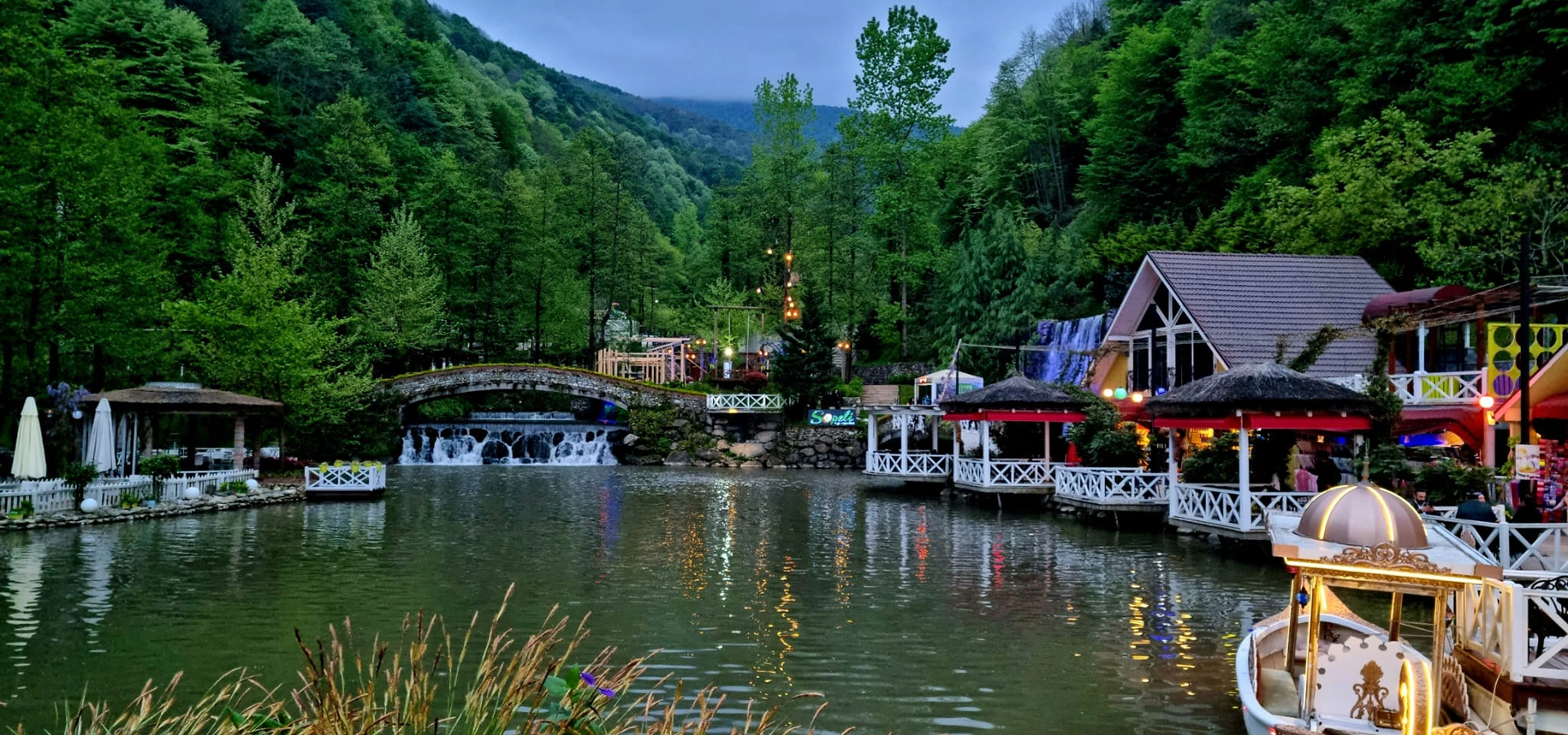
Build a flexible route around Adapazarı’s protected dishes and regional flavours from Geyve, Pamukova, Taraklı, Karapürçek, Kocaali and Sapanca.
Request This Tour