Aşurelik Wheat
The base is hulled wheat prepared for long cooking and a soft, mashable texture.
- Registered amount: About ½ kg
- Preparation: Washed and soaked
- Soaking time: About 10–12 hours






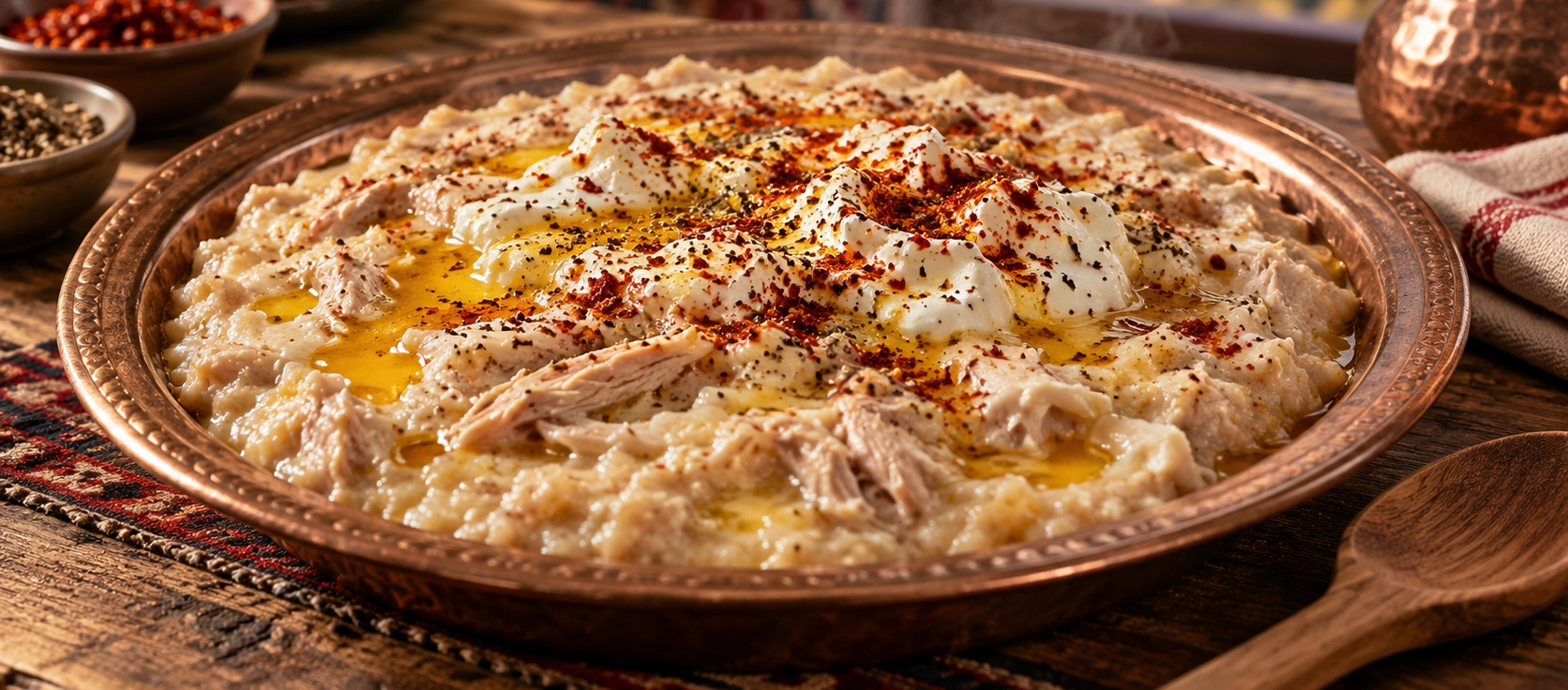
Adapazarı Dartılı Keşkek is one of Sakarya’s most distinctive traditional dishes: soaked wheat and chicken are slowly cooked and worked together until thick and creamy, then served hot with dartı, butter, red pepper and black pepper.
Keşkek is prepared in many regions of Türkiye, but the Adapazarı version has its own identity. Its defining features are the use of chicken and the local dairy preparation called dartı, which gives the dish its characteristic richness and regional connection.
The dish is closely associated with hospitality and communal occasions. The official geographical-indication specification describes it as a food traditionally prepared for weddings, circumcision celebrations and religious or family holidays, when large groups of guests gather around the table.
This complete guide explores the geographical indication, the meaning of dartı, the registered ingredients, wheat preparation, chicken cooking, traditional mashing technique, serving style, cultural role, tasting tips, visitor advice and other Sakarya foods and attractions to combine with an Adapazarı food journey.
Adapazarı Dartılı Keşkek is registered in Türkiye as geographical indication number 168.
The registered version combines aşurelik wheat with slowly boiled and finely shredded chicken.
Dartı is a traditional dairy preparation made from the fatty layer that forms on rested milk and is central to the dish.
The dish is strongly connected with weddings, circumcision celebrations, holidays and honoured guests.
Essential information about one of Sakarya’s best-known geographically indicated dishes.
Adapazarı, the central urban district of Sakarya Province, Türkiye.
Open Adapazarı on Google MapsAşurelik wheat slowly cooked with chicken and worked into a thick, cohesive texture.
Dartı, a local dairy preparation traditionally made from the fatty layer collected from rested milk.
Registered as Adapazarı Dartılı Keşkek with registration number 168.
More than an everyday meal, dartılı keşkek belongs to the culture of gathering, hospitality and shared celebration.
Keşkek has a long history in Anatolian food culture and appears in many regional forms. In Sakarya, however, it holds an especially strong place at tables prepared for important guests and major family occasions.
The Adapazarı version is distinctive because the wheat is combined with chicken rather than the red meat used in some other regional keşkek traditions. The cooked ingredients are patiently worked together with a wooden spoon until the wheat softens and the chicken disperses through the dish.
Its second defining feature is dartı. This rich dairy preparation is closely associated with the Adapazarı area and is used not only with keşkek but traditionally in other local serving traditions as well.
According to the registered description, Adapazarı Dartılı Keşkek is associated with weddings, circumcision celebrations and holidays. Preparing it for a large gathering turns the dish into part of the event itself: soaking, boiling, shredding, stirring and serving all require time and coordination.
The fact that keşkek is offered to honoured guests also helps explain its cultural value. It is a food that represents effort, generosity and the importance placed on feeding people well when families and communities come together.
Its geographical-indication registration formalised this regional identity and documented the elements that distinguish the Adapazarı preparation from other versions of keşkek found across Türkiye.
The protected dish is defined by its ingredients, preparation technique, dairy topping and ceremonial role.
The base is hulled wheat prepared for long cooking and a soft, mashable texture.
Chicken is one of the key features separating this version from many other regional keşkek recipes.
Dartı is prepared from the fatty layer that develops on milk after it is left to rest.
The cooked wheat and shredded chicken are pressed and worked together rather than simply stirred.
The final topping combines butter, prepared dartı, red pepper and black pepper.
Its strongest cultural association is with important communal and family gatherings.
Adapazarı Dartılı Keşkek is officially registered by the Turkish Patent and Trademark Office as a protected geographical indication connected with Adapazarı and Sakarya’s culinary heritage.
The official protected name is Adapazarı Dartılı Keşkek.
The dish carries geographical-indication registration number 168.
The registration date is 8 January 2013.
The application was filed on 26 October 2009.
The official application file number is C2009/037.
It is registered as a Mahreç İşareti.
The registration holder is the Sakarya Chamber of Commerce and Industry.
The current geographical-indication portal classifies it under meals and soups.
The registration identifies Adapazarı as the area from which the product’s reputation and identity originate. The older registration document lists the geographical boundary as Türkiye while defining the Adapazarı method and name; the dish therefore remains culturally and gastronomically identified with Adapazarı.
The word dartı is essential to understanding this dish. It does not mean “darts” in English. Dartı is the name of a traditional dairy preparation used in the Adapazarı area and forms the defining finish of Adapazarı Dartılı Keşkek.
Milk is first allowed to rest before the fatty layer that develops on the surface is collected.
The collected fatty layer is cooked over low heat until it develops a reddish colour and thickens.
The registered description notes small pores or crater-like openings appearing on the surface as dartı reaches the desired stage.
After heating, it is transferred to a container and left to cool and set.
As it sets, the richer fatty portion remains above while denser material settles beneath.
Dartı is part of Sakarya’s local dairy culture and is the feature that gives this keşkek its regional name.
The registered method describes a slow process that begins before the milk is heated. Time is important because the fatty surface layer must first develop and then be cooked carefully.
The geographical-indication specification records a traditional ingredient list for preparing both the dartı and the keşkek itself. Household quantities can vary, but the registered recipe provides the clearest reference for the protected style.
The milk supplies the fatty surface layer used to prepare traditional dartı.
The chicken is boiled until tender, then deboned and finely shredded.
Hulled wheat is washed and soaked before being cooked in the chicken broth.
An onion is included in the registered ingredient list for the dish.
Water is used in the cooking process, with additional liquid adjusted as necessary.
The registration specifies a modest quantity of salt.
Butter forms part of the hot finish poured over the prepared keşkek.
Small amounts of both peppers season the butter-and-dartı topping.
The texture of good keşkek starts with proper wheat preparation. The traditional method uses hulled white wheat suitable for long cooking and mashing.
The grain is traditionally pounded so the outer husk is removed, producing wheat suitable for aşure and keşkek.
The wheat is cleaned and washed before soaking.
The registered method calls for soaking roughly overnight before cooking begins.
Soaking helps the grain absorb water and begin softening before it enters the chicken broth.
The soaked wheat is later added directly to the broth left from boiling the chicken.
The goal is not separate, firm grains but wheat soft enough to merge with the shredded chicken.
The traditional method follows a sequence of soaking, boiling, shredding, slow cooking, mashing and finishing. The transformation from separate wheat and chicken into a unified dish is at the heart of keşkek technique.
A well-prepared keşkek is not simply boiled wheat with pieces of chicken mixed through it. Its identity comes from prolonged cooking and the physical working of the ingredients until they form a unified texture.
The grain should be cooked beyond a firm rice-like texture so it can be mashed and incorporated.
The meat is broken into small pieces so it distributes evenly rather than remaining in large chunks.
The final dish should hold together on the plate while remaining soft and spoonable.
The rich dairy finish sits across the surface and carries the peppery butter into each serving.
Pale wheat and chicken contrast with the deeper tones of browned dairy, butter and pepper.
Heat is important to the experience because it keeps the topping aromatic and the keşkek soft.
The flavour is built in layers rather than from many spices. Wheat creates the mellow base, chicken provides savoury depth, and the dairy-rich dartı and butter give the dish its most distinctive finishing character.
Long-cooked wheat has a soft, gently nutty flavour and absorbs the character of the chicken broth.
Because the grain cooks in chicken broth, the flavour is distributed through the whole dish.
Dartı contributes concentrated dairy flavour that distinguishes the Adapazarı version.
The hot butter finish makes the dish especially fragrant just before serving.
Red and black pepper add warmth without turning the traditional dish into a strongly spicy food.
The combination of soft grain, tender chicken and warm dairy topping makes the dish filling and soothing.
Adapazarı Dartılı Keşkek is important not only because of how it tastes but because of where and when it is traditionally served. The official description explicitly connects it with major social occasions.
Large celebratory meals are among the most strongly associated settings for traditional keşkek.
Sünnet gatherings are another traditional occasion in which families may prepare and serve keşkek to guests.
Bayram tables and important family gatherings reinforce the dish’s connection with hospitality.
Sakarya culinary sources describe keşkek as a dish associated with valued guests and special treatment.
Soaking, boiling, shredding and working a large batch all make the dish suited to communal preparation.
The dish becomes part of the memory of the gathering, linking flavour with celebration and family tradition.
Travellers may encounter keşkek in different parts of Türkiye. The basic idea of long-cooked wheat combined with meat is widespread, but ingredients, meat choices, cooking vessels and finishing sauces can change considerably from region to region.
The registered Adapazarı dish specifically uses chicken, an important point of difference from many lamb- or beef-based versions.
The local dairy preparation is the strongest marker of Adapazarı identity in the dish.
Red pepper and black pepper are incorporated into the finishing mixture with butter and dartı.
The traditional method emphasises pressing and mashing with a wooden spoon so the ingredients integrate.
“Dartılı” is not a decorative word: it identifies the ingredient that makes this version regionally distinctive.
Geographical-indication registration documents these features and protects the recognised name.
Unlike a dish designed only for restaurant menus, dartılı keşkek has deep roots in home cooking and ceremonial food culture. Availability can therefore depend on the venue, the day and whether a traditional meal has been prepared for an event.
Dartı is a local dairy preparation. Keeping the Turkish word is clearer and more accurate.
The texture and aroma are at their best when the dish has been recently prepared and served hot.
The butter, pepper and dartı finish is what makes the Adapazarı version distinctive.
Wheat, chicken and rich dairy make keşkek substantial, so a modest portion may be enough for many visitors.
Older residents and regional cooks may have family stories connected with weddings and special-occasion keşkek.
Adapazarı has several distinctive foods, making the city ideal for a broader culinary route rather than a single tasting.
Wedding or family keşkek is part of a private celebration unless visitors have been invited.
Always ask before photographing cooks, kitchens, ceremonies or large-batch preparation.
Dartılı keşkek belongs to a remarkably varied regional food landscape. Sakarya combines Balkan, Caucasian, Black Sea, Anatolian and local agricultural influences, while different districts are known for their own protected dishes, fruits, sweets and preserves.
Slices of bread moistened with seasoned broth and served with grilled meatballs form another signature Adapazarı dish.
The city’s pumpkin tradition is another important part of its culinary identity.
Geyve is renowned for quince production and the fruit-growing landscape south of central Sakarya.
A protected sweet speciality based on walnuts represents another side of the province’s food heritage.
Northern Sakarya preserves autumn persimmons through a traditional hanging-and-drying method.
Karapürçek transforms local persimmons into a dark, slowly cooked protected molasses.
A traditional meal in Adapazarı can be combined with city landmarks, parks and other local food stops across central Sakarya.
Compare two of the city’s most recognisable protected dishes and build a focused Adapazarı food route.
Walk through one of central Adapazarı’s best-known urban streets before or after your meal.
Add a historic engineering landmark connected with the city and the river that gives the province its name.
Combine food culture with a modern recreational stop in the Sakarya urban area.
Continue from the city into forest scenery for a broader central Sakarya day.
Pair an Adapazarı food experience with one of Sakarya Province’s most famous natural landscapes.
It is a traditional Sakarya dish made from soaked wheat and chicken, worked together until thick and served with a local dairy preparation called dartı, butter and peppers.
Its cultural origin and protected name are associated with Adapazarı in Sakarya Province, Türkiye.
Yes. Adapazarı Dartılı Keşkek is a registered geographical indication in Türkiye.
The geographical-indication registration number is 168.
The registration date is 8 January 2013.
The application date is 26 October 2009.
The registration holder is the Sakarya Chamber of Commerce and Industry.
It is registered as a Mahreç İşareti.
It means that the keşkek is prepared and served with dartı, a traditional local dairy preparation.
No. “Dartı” is a Turkish regional food term. It should normally be kept as dartı in English rather than translated as “darts.”
The fatty layer formed on rested milk is collected and slowly heated until reddish, thickened and marked by small surface pores, then cooled and allowed to set.
The registered recipe specifies approximately 6–7 litres of milk.
The specification describes a resting period of approximately 1½–3 hours before the fatty surface layer is collected.
The registered Adapazarı version uses chicken.
The registered method uses approximately ½ kilogram of aşurelik wheat.
The wheat is washed and soaked for approximately 10–12 hours before cooking.
The whole chicken is boiled for approximately 1½ hours, or until the meat is very tender.
Yes. After the chicken is removed, the soaked wheat is added to the broth and cooked there.
Mashing with a wooden spoon helps the soft wheat and finely shredded chicken combine into the thick, cohesive texture characteristic of keşkek.
The registered finish includes small amounts of red pepper and black pepper.
Yes. Butter is heated and combined with dartı and the peppers before being poured over the keşkek.
It is generally more rich and savoury than hot. The peppers are used in small quantities in the traditional registered recipe.
The official description associates the dish with weddings, circumcision celebrations, holidays and other important gatherings.
It is traditionally served hot, after the butter-and-dartı finish is poured over the top.
No. Keşkek has many regional forms. The Adapazarı version is particularly identified by chicken and dartı.
Not necessarily. Because it requires lengthy preparation and is historically connected with special occasions, availability can vary by restaurant and day.
Adapazarı Islama Köftesi is another essential local speciality and pairs naturally with a broader Sakarya food itinerary.
The strongest visual story combines the soft, worked texture of the keşkek with the glossy dartı-and-butter finish and, when possible, the traditional preparation process behind it.
Photograph the texture from a slight angle so the worked wheat and shredded chicken remain visible.
A spoonful of hot topping flowing across the keşkek immediately explains what makes the Adapazarı version special.
With permission, show the traditional mashing action that integrates the wheat and chicken.
When appropriate and permitted, a large batch can communicate the dish’s connection with communal meals.
A close photograph of traditional dartı can help travellers understand an ingredient that is unfamiliar outside Sakarya.
Presenting keşkek alongside other Sakarya foods creates a strong sense of place without distracting from the main dish.
Always ask permission before photographing cooks, private kitchens, wedding meals or family celebrations. Traditional food is often connected with personal and communal spaces, and those settings should be treated respectfully.
Combine Adapazarı’s protected foods, central Sakarya highlights and selected countryside stops on a private journey designed around your interests.
Custom-designed private journeys with flexible timing, private transportation and opportunities to discover regional cuisine, city landmarks, nature and traditional food culture across Sakarya Province.
Explore Adapazarı’s culinary identity through dartılı keşkek, islama köftesi and selected local flavours, combined with central Sakarya highlights.
Request This Tour
Build a flexible route around Adapazarı’s protected dishes and regional flavours from Geyve, Pamukova, Taraklı, Karapürçek, Kocaali and Sapanca.
Request This Tour