Small Beef Meatballs
The registered recipe uses beef from the rib and shoulder together with onion, stale bread and spices.
- Meat: Beef
- Shape: Small hand-shaped köfte
- Cooking: Grilled






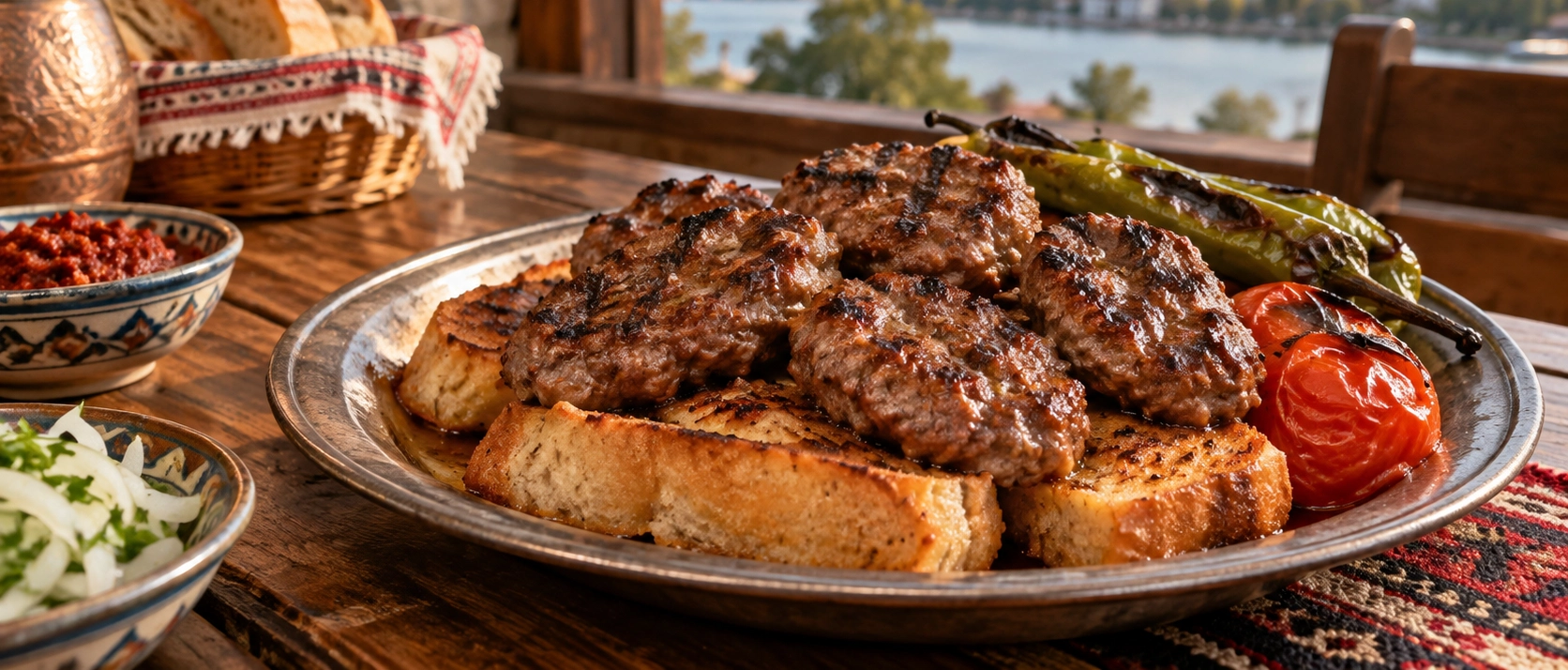
Adapazarı Islama Köftesi is one of Sakarya’s best-known regional dishes: small grilled beef meatballs served over slices of bread that have been dipped in a seasoned beef-bone broth and then lightly grilled. The result is a dish in which the bread is every bit as important as the meatball.
The defining ıslama stage gives the dish its name. Stale, naturally leavened black-oven bread is dipped in a mixture of beef-bone broth, red pepper, oil and salt, then placed on the grill so it absorbs flavour while developing toasted, smoky edges.
The official geographical-indication specification also defines the meatball mixture, the long preparation of the bone broth, the preferred charcoal-grilling method and the classic presentation with grilled tomato and green pepper.
This complete guide explores the history of Islama Köfte, its connection with Balkan migration, geographical-indication status, ingredients, broth, bread, meatball preparation, grilling technique, traditional serving style, flavour, visitor tips, local gastronomy and the best ways to combine an Islama Köfte meal with a wider visit to Adapazarı and Sakarya.
Adapazarı Islama Köftesi is registered in Türkiye as geographical indication number 167.
The bread is dipped in seasoned beef-bone broth and grilled before the meatballs are placed on top.
The registered recipe uses beef, onion, stale bread crumbs, cumin, black pepper, red pepper and salt.
The dish is closely identified with Adapazarı and is regarded as one of Sakarya’s signature foods.
Essential information about one of Sakarya’s most famous regional dishes.
Adapazarı, the urban heart of Sakarya Province, Türkiye.
Open Adapazarı on Google MapsSmall grilled beef meatballs served over seasoned, broth-soaked grilled bread.
Bread dipped in beef-bone broth, red pepper, oil and salt, then grilled.
Registered as Adapazarı Islama Köftesi with registration number 167.
A simple combination of meat, broth and bread became one of the strongest culinary symbols of Sakarya.
Islama Köfte is widely associated with Adapazarı, the central urban area of Sakarya Province. Official cultural sources describe it as one of Sakarya’s most nationally recognised dishes.
The dish is thought to have reached the region through Balkan migration in the early 20th century. Sakarya received communities from different parts of the Balkans and the wider former Ottoman geography, helping create the province’s unusually diverse food culture.
What makes Islama Köfte especially memorable is that it transforms humble ingredients into a complete plate. Stale bread is not discarded; it is revived with long-cooked beef-bone broth, red pepper and oil, then grilled beside the meatballs.
This technique gives the bread a soft, savoury interior and lightly crisped surface while allowing it to absorb meat juices and smoke from the grill. The meatballs are then served directly on top.
Over time, the dish became closely linked with the identity of Adapazarı itself. Today, eating Islama Köfte is not simply ordering another plate of Turkish meatballs: it is one of the classic food experiences of a visit to Sakarya.
The registered dish is defined by the interaction of meatball, broth, bread and grill rather than by the köfte alone.
The registered recipe uses beef from the rib and shoulder together with onion, stale bread and spices.
Thin slices of stale naturally leavened black-oven bread are dipped in seasoned bone broth and grilled.
The traditional broth is prepared from thick beef bones and onions over a long, slow cooking period.
The registered description prefers oak charcoal and waits until the burning charcoal develops a pale surface before grilling.
The grilled broth-soaked bread goes onto the plate first and the cooked meatballs are placed over it.
Official culinary sources record piyaz, grape şıra and ayran among the classic companions to the dish.
Adapazarı Islama Köftesi is officially registered by the Turkish Patent and Trademark Office as a geographical indication. The registration protects the dish’s established reputation and documents the method that distinguishes it from other meatball dishes.
The official protected name is Adapazarı Islama Köftesi.
The geographical-indication registration number is 167.
The product was registered on 8 January 2013.
The original application was filed on 26 October 2009.
It is registered as a Mahreç İşareti.
The registration holder is the Sakarya Chamber of Commerce and Industry.
The official registration identifies Adapazarı as the area from which the geographical indication originates.
The registration document states the geographical boundary as Türkiye, while the protected reputation and name originate from Adapazarı.
The specification focuses strongly on the dish’s preparation: seasoned beef meatballs, long-cooked bone broth, naturally leavened stale black-oven bread, red pepper, oil, charcoal grilling and the final layered service. These details are what make authentic Adapazarı Islama Köftesi recognisable.
The Turkish word ıslama comes from the idea of wetting or soaking. In this dish, it refers primarily to the bread, which is dipped in seasoned beef-bone broth before being grilled. Köfte means meatball.
Refers to the soaking or moistening stage used for the bread.
The Turkish word for a broad family of meatball and ground-meat preparations.
Adapazarı Islama Köfte or Adapazarı Meatballs with Broth-Soaked Grilled Bread.
The meatballs themselves are grilled; the “wetting” refers to the bread.
After dipping, the bread is placed on the grill rather than served soggy straight from the broth.
The full name connects the dish directly with Adapazarı and its culinary heritage.
The official recipe recorded for the geographical indication is detailed enough to show that Islama Köfte depends on balance: seasoned beef, bread inside the meatball mixture, separate bread for soaking, a carefully prepared bone broth and simple grilled garnishes.
The registered 8-person recipe uses 1 kg of beef mince: approximately 500 g rib and 500 g shoulder.
One medium onion is grated into the meatball mixture.
About 80 g of crumb from naturally leavened black-oven bread is incorporated into the köfte mixture.
Cumin, black pepper and red pepper season the meatballs together with salt.
Beef-bone broth is mixed with red pepper, vegetable oil and salt for dipping the bread.
Lightly grilled tomato and green pepper complete the traditional plate.
The meatball component is intentionally straightforward. The aim is a savoury grilled beef flavour that works with, rather than overwhelms, the richly seasoned bread underneath.
The broth is one of the dish’s quiet secrets. It gives depth to the bread before the slices ever reach the grill and connects every bite of bread with the savoury character of the meatballs.
Thick beef bones are used, with rib and shank bones specifically mentioned in the registered method.
The bones are broken so their flavour can be extracted during the long cooking process.
The official method describes the bones being placed in a large pot with approximately 12 litres of water.
Two large onions are added during broth preparation.
The broth is cooked slowly for approximately 12 hours.
The finished broth is passed through cloth so bone fragments and unwanted solids are removed.
Visitors sometimes focus only on the meatballs, but the bread is the feature that truly separates Adapazarı Islama Köfte from ordinary grilled köfte. It is both a flavour carrier and a texture contrast.
The traditional method intentionally uses stale bread rather than fresh soft slices.
The registered description specifies naturally leavened black-oven bread.
The bread is sliced thinly so it can take on broth without becoming excessively heavy.
The slices are dipped in the seasoned broth mixture rather than left soaking for a long period.
The dipped slices are grilled until lightly toasted, giving their surface smoke and structure.
The bread is placed on the plate first so meat juices from the hot köfte can mingle with it.
The soaking liquid is deliberately simple. Its purpose is to enrich the bread without turning it into a separate sauce-heavy dish.
The grill joins the two main elements of the dish. Meatballs cook directly over the heat while the seasoned bread is toasted on the same grill, creating a shared smoky character.
The registered method notes oak charcoal as the preferred fuel.
The charcoal is allowed to burn until its surface turns pale before cooking begins.
The hand-shaped meatballs are cooked in sequence over the prepared charcoal.
Broth-dipped bread slices are lightly toasted rather than heavily charred.
Tomato and green pepper are lightly cooked over the grill for the final plate.
The dish is at its best when the bread, meatballs and garnishes reach the table directly from the grill.
The geographical-indication record provides a useful reference recipe for eight people. Restaurant recipes can vary in scale, but these proportions show the intended balance of the traditional preparation.
Approximately 500 g beef rib and 500 g beef shoulder.
Grated into the meatball mixture.
From stale naturally leavened black-oven bread.
Approximately 10 g in the registered recipe.
Approximately 10 g in the registered recipe.
Approximately 10 g in the meatballs, with additional red pepper for the soaking liquid.
Used in both the meatball mixture and the Islama liquid.
The reference recipe shapes approximately ten small meatballs per portion.
Presentation matters because the order of the components controls how the flavours combine. The bread belongs underneath the meatballs rather than on the side.
The traditional reference portion places two grilled Islama bread slices on the plate.
The reference serving places approximately ten grilled meatballs over the bread.
A small portion of lightly grilled tomato adds sweetness and acidity.
A grilled pepper provides freshness and a lightly smoky bite.
Bean piyaz is a traditional side that balances the richness of the meat and broth.
Ayran is refreshing, while grape şıra offers a more regionally traditional non-alcoholic accompaniment.
The dish is deeply savoury but not complicated. Its pleasure comes from contrast: smoky beef, moist seasoned bread, toasted edges, paprika warmth and the brightness of grilled vegetables.
The meatballs bring straightforward grilled beef flavour rather than a heavily sauced profile.
The bread carries the slow-cooked savouriness of beef bones and onions.
Red pepper colours and seasons the soaking liquid without turning the dish into a hot chilli preparation.
Charcoal grilling adds toasted aromas to both meatball and bread.
The bread should remain moist within while developing structure at the surface from the grill.
The texture is most satisfying before the grilled bread cools and loses its contrast.
Official cultural sources describe Islama Köfte as a dish believed to have entered the region through Balkan migrations around the beginning of the 20th century. This fits Sakarya’s wider social history, in which migration played a major role in shaping the province’s food traditions.
The dish is associated with the migration period that transformed the demographic and culinary life of the region.
The migration connection is part of the accepted local story recorded by official cultural institutions.
Whatever its earlier influences, the dish developed a powerful local identity in Adapazarı.
Using stale bread in a flavour-rich way reflects the economical logic found in many traditional cuisines.
The method evolved from a practical preparation into a dish sought out by visitors to Sakarya.
Islama Köfte remains a working restaurant tradition rather than only a recipe preserved in archives.
One of the most appealing cultural details of Islama Köfte is its treatment of stale bread. Rather than being waste, day-old bread becomes a central ingredient with its own cooking process and texture.
Stale bread gains a second life through broth and grilling.
Older bread is better able to take on broth while keeping enough structure for the grill.
The bread is part of the registered identity of the dish, not an optional accompaniment.
It captures broth, paprika, oil, smoke and the juices from the grilled köfte above.
The ideal result combines a moist centre with lightly grilled surfaces.
Many visitors discover that the bread can be as memorable as the meatballs themselves.
Islama Köfte is most naturally experienced in Adapazarı itself, where specialised köfte restaurants and long-established local eateries prepare it throughout the year. Restaurant names and opening hours can change, so travellers should check current information on the day of their visit.
The city centre is the easiest place to find restaurants specialising in the local dish.
Many restaurants advertise the dish clearly because it is one of the city’s defining foods.
If the kitchen is visible, the broth-dipping and grilling of the bread is part of the experience.
The dish is best when the bread and meatballs come directly from the grill.
Piyaz and ayran make an easy traditional combination for first-time visitors.
Portions vary by restaurant even though the registered reference recipe describes about ten small meatballs.
Traditional Islama Köfte contains both meat and bread. Travellers with allergies or dietary restrictions should confirm ingredients directly with the restaurant because individual kitchens may use their own bread, spice blends or preparation practices.
The traditional dish is based on minced beef and beef-bone broth.
Bread is present both in the köfte mixture and as the grilled Islama base.
Onion is used in the meatball mixture and traditionally in broth preparation.
Even the bread is dipped in beef-bone broth.
Shared grills and kitchen surfaces may matter for travellers with serious allergies.
Red pepper is traditional, but the heat level may vary from one kitchen to another.
The combination of bread, meatballs and sides makes Islama Köfte a substantial meal.
The bread texture is at its best straight from the grill.
The soaked grilled bread is the defining feature of the dish.
The acidity and bean texture provide a useful counterpoint to the rich broth and beef.
A cold ayran is one of the easiest pairings with the smoky, savoury plate.
If available, grape şıra offers a traditional non-alcoholic alternative.
It is easy to combine lunch with the city centre and nearby Sakarya attractions.
If you want a photo, take it before the bread cools—then eat while everything is fresh from the grill.
Ideal for combining a meal in Adapazarı with green parks and countryside excursions.
Pair the dish with ayran and continue toward Sakarya’s lakes, parks or Black Sea coast.
Comforting grilled köfte and warm broth-soaked bread suit the cooler weather especially well.
The hot, savoury plate is particularly satisfying on cold Marmara days.
A natural choice while sightseeing in central Adapazarı.
Also widely enjoyed as an informal evening meal with sides and ayran.
Sakarya’s food culture reflects agricultural abundance and waves of migration. Islama Köfte represents the urban heart of the province, while districts such as Geyve, Pamukova, Taraklı, Kocaali and Karapürçek contribute their own protected fruits, sweets, honey and preserved foods.
The province’s iconic grilled meatball-and-bread dish.
A major orchard product and one of Sakarya’s best-known protected fruits.
A sweet local speciality built around walnuts and regional confectionery tradition.
A traditional wheat-based sweet associated with historic Taraklı.
A protected product tied to northern Sakarya’s forests and beekeeping landscape.
A distinctive fruit molasses produced from locally grown persimmons.
Adapazarı is the historic and commercial core of Sakarya. For travellers moving between Istanbul, Ankara, Sapanca or the western Black Sea, it is easy to overlook the city itself—but a stop for Islama Köfte provides an excellent reason to explore its streets and everyday local life.
Islama Köfte is a distinctly urban food experience within a province famous for both cities and nature.
One of Adapazarı’s best-known pedestrian and shopping areas.
The river gives the province its name and shapes much of the surrounding landscape.
Adapazarı can be combined with Sapanca, Arifiye, nature parks or countryside routes.
Eating Islama Köfte offers a chance to experience an everyday food tradition strongly loved by residents.
The city is a practical starting point for discovering the province’s districts and regional products.
A meal in Adapazarı can easily become part of a broader day exploring the city centre, Sakarya River landscapes, parks and nearby districts.
Walk through one of Adapazarı’s best-known central streets before or after your meal.
Connect the city’s food culture with a landmark linked to the river that gives the province its name.
Add a modern recreation and sports stop to a day in central Sakarya.
Trade the city for forest scenery and walking areas after lunch.
Continue toward Arifiye for a relaxed lakeside-style park experience.
Extend the journey into Sakarya’s protected food heritage with another distinctive local product.
It is a Sakarya speciality of grilled beef meatballs served over slices of bread dipped in seasoned beef-bone broth and then lightly grilled.
The name refers to the bread being wetted or dipped in the seasoned broth before grilling.
No. The meatballs are grilled. The distinctive soaking process is used for the bread.
It is strongly identified with Adapazarı in Sakarya Province, Türkiye.
Yes. It is officially registered as a Turkish geographical indication.
The geographical-indication registration number is 167.
The registration date is 8 January 2013.
The application was filed on 26 October 2009.
It is registered as a Mahreç İşareti.
The registration holder is the Sakarya Chamber of Commerce and Industry.
The defining difference is the bread dipped in seasoned beef-bone broth, grilled and served underneath the meatballs.
The registered recipe uses beef, including rib and shoulder meat.
Yes. Stale naturally leavened black-oven bread crumb is included in the registered meatball mixture.
The registered köfte mixture includes cumin, black pepper and red pepper together with salt.
The official method states that it rests for at least approximately one hour.
The reference recipe describes about ten small meatballs per portion, although restaurant portions can vary.
The registered method specifies stale naturally leavened black-oven bread.
Beef-bone broth, red pepper, vegetable oil and salt.
No. It is dipped and removed, then placed on the grill so it becomes seasoned and lightly toasted.
The registered method uses thick beef bones, especially rib and shank bones, cooked slowly with water and onions and then carefully strained.
The official recipe describes a slow cooking period of approximately 12 hours.
The registered method states that oak charcoal is preferred.
Yes. This is essential: the broth-dipped bread is lightly grilled before serving.
Lightly grilled tomato and green pepper are traditional on the plate, and piyaz, grape şıra or ayran can accompany the meal.
It contains red pepper, but the dish is generally savoury and warmly seasoned rather than intensely hot. Heat levels can vary by restaurant.
No. The meatballs contain beef and the bread is dipped in beef-bone broth.
No. Traditional Islama Köfte contains bread both in the meatball mixture and underneath the meatballs.
It is savoury from bone broth, warmly seasoned with red pepper and lightly smoky from the grill.
Official cultural sources state that the dish is thought to have come to the region through Balkan migrations in the early 20th century.
Adapazarı is the natural place to experience the dish, especially at local restaurants specialising in Islama Köfte.
Yes. Unlike seasonal agricultural products, it is a restaurant dish available throughout the year.
Ayran is an easy classic pairing. Grape şıra is also recorded as a traditional accompaniment.
Çark Street, Sakarya Bridge, Ayçiçeği Bicycle Valley, İl Ormanı Nature Park and nearby Arifiye can all fit naturally into a wider Sakarya day.
The strongest images show what makes the dish different: the red-tinged broth, the dipped bread meeting the grill, the small meatballs over charcoal and the final layered plate.
Shoot from a slight angle so both the meatballs and the bread underneath remain visible.
If the kitchen allows photography, capture the bread entering the seasoned broth.
The red-gold slices toasting beside the köfte immediately explain the dish.
Visible grill smoke creates a strong sense of place and preparation.
Colour from the grilled garnish helps balance the browns and reds of the plate.
A close-up can show the contrast between the moist interior and lightly grilled surface.
Always ask before photographing restaurant staff, open kitchens or other guests. If your Islama Köfte has just arrived, take only a few quick photographs—the texture of the grilled bread is best while the dish is hot.
Combine Islama Köfte, local markets, city highlights, nature and protected regional flavours on a private Sakarya journey designed around your interests.
Custom-designed private journeys with flexible timing, private transportation and opportunities to discover Sakarya’s food heritage, urban culture, forests, lakes, villages and regional products.
Discover the story and flavour of Islama Köfte, central Adapazarı and selected local food stops on a flexible private experience.
Request This Tour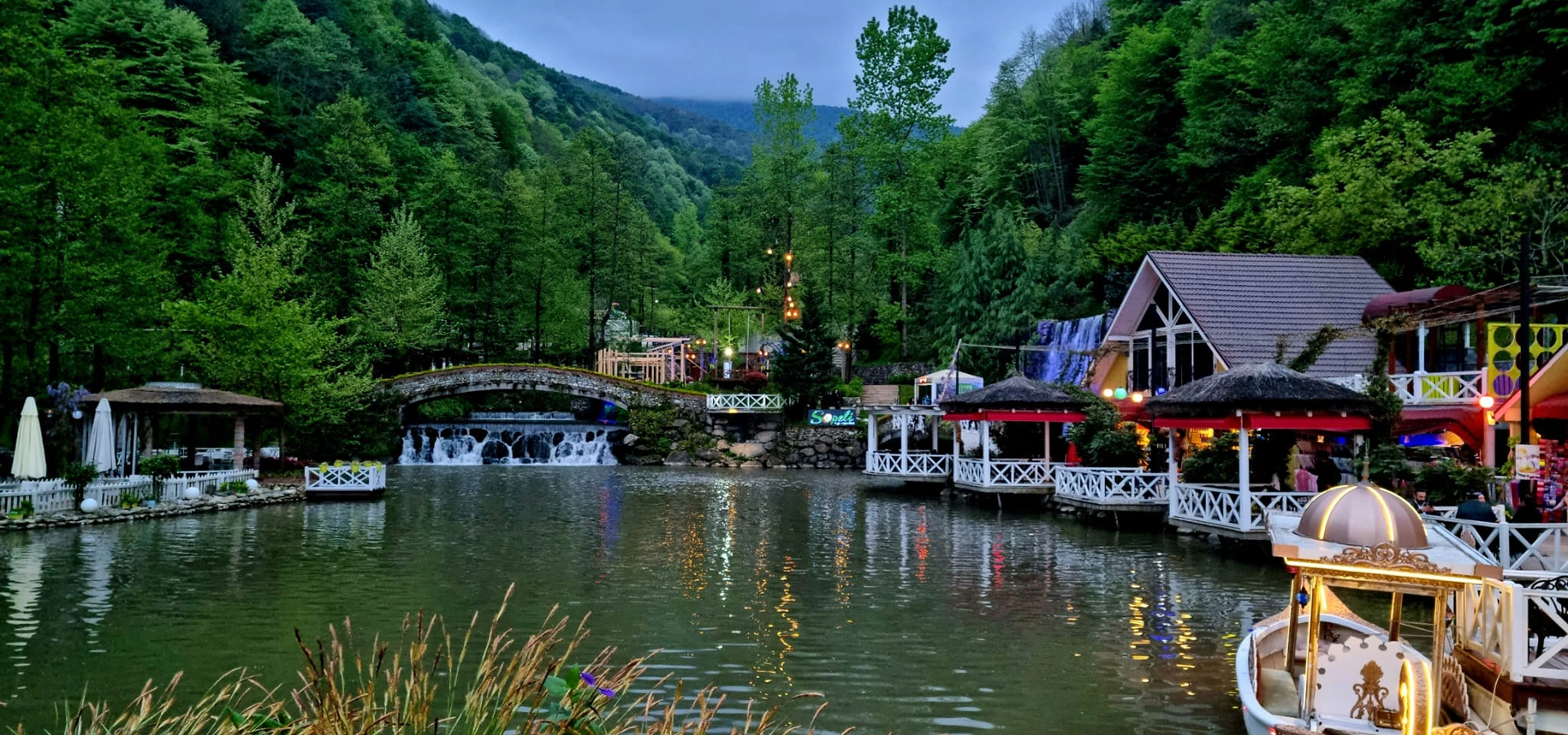
Build a province-wide food route around Adapazarı Islama Köfte and regional flavours from Geyve, Pamukova, Taraklı, Kocaali and Karapürçek.
Request This Tour