Handmade Mantı Dough
The traditional dough is made simply from flour, water and salt, then divided into portions and rested before rolling.
- Base: Flour, water and salt
- Preparation: Kneaded and rested
- Finish: Rolled thin with a rolling pin






Tavuklu Mantı is one of the traditional dishes documented in Yalova’s regional cuisine. Unlike the small boiled meat dumplings that many visitors associate with Turkish mantı, the Yalova version follows a different preparation. A simple flour, water and salt dough is rolled thin, cut into small squares and filled with a cooked mixture of finely chopped chicken offal, onion, rice, tomato paste, salt and black pepper.
The filled pieces are folded into a bow-like shape, arranged on a tray, lightly oiled and baked until crisp and browned. Hot chicken broth is then added so the mantı can soften and finish cooking, and pieces of chicken meat are placed on top before serving. This combination of baking and broth gives the dish its particularly comforting character.
A simple dough of flour, water and salt is rolled thin and cut into small squares.
Liver, heart and gizzard are finely chopped and cooked with onion, rice and tomato paste.
The shaped mantı is first browned in the oven before hot chicken broth is added.
The finished mantı is traditionally served with pieces of cooked chicken meat.
Essential information about one of Yalova’s most unusual traditional mantı preparations.
Tavuklu Mantı is officially documented among the traditional foods of Yalova in northwestern Türkiye.
Open Yalova on Google MapsFlour, water and salt are kneaded into a dough, rested and rolled thin before cutting.
Chicken liver, heart and gizzard are combined with onion, rice, tomato paste and seasoning.
The oven-browned mantı is finished with hot chicken broth and served with chicken meat.
Handmade dough, resourceful poultry cooking and a two-stage baking-and-broth technique come together in a strongly local recipe.
Tavuklu Mantı is recorded by the Yalova Provincial Directorate of Culture and Tourism as part of the province’s traditional cuisine. It also appears in wider presentations of Yalova gastronomy alongside dishes such as Yumurta Dolması, Böğür, Yaprak Pidesi and Ispanaklı Yalova Böreği.
The recipe stands apart from better-known Turkish mantı styles because the filling is based on finely chopped chicken offal rather than minced red meat. Liver, heart and gizzard are cooked with onion, rice, tomato paste, salt and black pepper, creating a substantial savoury filling.
The shaping method is also distinctive. Thinly rolled dough is cut into approximately three-centimetre squares, filled and closed by joining two opposite corners. The resulting pieces are arranged on a tray and lightly oiled before going into the oven.
Baking is only the first cooking stage. Once the mantı has browned and become crisp, hot chicken broth is poured over it and the tray is cooked further until the pieces soften. Cooked chicken meat is then placed on top for serving.
The result is a dish that combines several textures and techniques: delicate handmade dough, a rich rice-and-offal filling, oven-roasted flavour and the comforting softness created by chicken broth.
Its identity comes from a chicken-offal and rice filling, bow-like shaping, oven browning and a final cooking stage with chicken broth.
The traditional dough is made simply from flour, water and salt, then divided into portions and rested before rolling.
The documented filling uses chicken liver, heart and gizzard, chopped very finely to resemble minced meat.
Rice is cooked with the offal mixture, giving the stuffing body and making the filling more substantial.
A small onion is lightly sautéed before the chopped offal is added to the pan.
Tomato paste gives colour, depth and a familiar savoury note to the chicken-and-rice filling.
After filling each square, two opposite corners are joined to create the characteristic folded form.
The filled mantı is arranged on a tray, lightly oiled and baked before any broth is added.
Hot chicken broth is poured over the baked mantı and cooking continues until the dough softens.
The Yalova Provincial Directorate of Culture and Tourism records the filling with chicken offal, one small onion, one glass of rice, one spoon of tomato paste, salt and black pepper. The dough is prepared from flour, water and salt, while oil, chicken broth and cooked chicken meat are used during the final stages of preparation and serving.
Liver, heart and gizzard are finely chopped until they resemble minced meat.
One glass of rice is cooked into the filling with the chopped offal and onion.
One small onion is lightly sautéed before the chicken offal is added.
One spoon of tomato paste is mixed into the filling for savoury depth and colour.
The official preparation seasons the filling simply with salt and black pepper.
These basic ingredients form the handmade mantı dough.
Hot broth is poured over the oven-browned mantı so it can soften and finish cooking.
Pieces of chicken meat are placed over the finished mantı before serving.
Recipe note: the official Yalova source gives exact quantities for the onion, rice and tomato paste in the filling, but it does not specify fixed amounts for the flour, water, salt, pepper, chicken offal, oil or chicken broth. These are therefore adjusted according to the amount being prepared.
The traditional method has several stages, but each one has a clear purpose. The filling is cooked and cooled first, the dough is rolled and shaped by hand, the mantı is browned in the oven and only then is hot chicken broth added for the final cooking stage.
The official Yalova method specifies that the thinly rolled dough is cut into squares of roughly three centimetres. A small amount of filling is placed in the centre, and two opposite corners are brought together and joined. This produces a compact, bow-like shape that remains partly open rather than being completely sealed.
The dough should be thin enough to cook through after both the baking and broth stages.
Approximately 3 cm squares create compact individual mantı pieces.
Overfilling makes the corners difficult to join and can cause the mantı to open while cooking.
The characteristic form comes from bringing together two corners across the filling.
The filling is one of the features that most clearly distinguishes Yalova Tavuklu Mantı from many other mantı varieties. Chicken liver, heart and gizzard are chopped very finely, then cooked with sautéed onion. Rice, tomato paste, salt and black pepper are added with a small amount of water, and the mixture is cooked before being cooled for filling.
The offal should be cut small enough to distribute evenly among the little dough squares.
Lightly sautéing the onion builds the first layer of savoury flavour.
Rice gives structure while tomato paste adds colour and depth.
A cooled filling is easier to portion and less likely to soften the raw dough prematurely.
Yalova’s preparation deliberately browns the filled mantı before adding liquid. The shaped pieces are placed on a tray, lightly oiled and baked until they develop a dry, crisp surface. Only after this stage is hot chicken broth poured over them.
The second cooking stage changes the texture completely. After the mantı has browned, boiling chicken broth is added and the dish is cooked further until the dough softens. The broth carries chicken flavour into both the pasta and its filling while preserving some of the deeper roasted character created in the oven.
The official recipe calls for already boiling chicken broth to be added after baking.
The liquid transforms the baked mantı from crisp pieces into tender dumplings.
The broth reinforces the poultry character already present in the filling.
Continue cooking until the mantı has softened without allowing the pieces to lose their shape.
Tavuklu Mantı is savoury, warming and substantial. The dough absorbs chicken broth while the filling contributes deeper flavours from the offal, sautéed onion and tomato paste. Rice softens the intensity of the filling and adds body, while the oven stage gives the finished dish more roasted character than a mantı cooked only in liquid.
Chicken broth, offal and onion create a rich, distinctly poultry-based flavour.
The baked dough softens in broth while the folded pieces retain their individual form.
Liver, heart and gizzard give the centre more depth than a simple minced-meat filling.
Chicken meat on top makes the dish feel closer to a complete main course than a small pasta side.
According to the official Yalova method, cooked chicken meat is placed over the broth-finished mantı before serving. This gives the dish a layered presentation: tender mantı underneath, savoury filling inside and pieces of chicken on top.
A short resting period makes the dough easier to roll thinly and evenly.
Small pieces fit the three-centimetre dough squares much more easily.
The traditional method cooks the onion, offal and rice mixture before it enters the dough.
Filling the mantı with a cooled mixture helps preserve the dough texture while shaping.
Similar-sized pieces cook at a similar rate and create a neater tray.
A small portion of filling is enough; too much can prevent the opposite corners from joining securely.
The baking stage is a defining part of the Yalova preparation and should not be skipped.
Use hot chicken broth after baking and continue cooking only until the mantı becomes tender.
Yalova’s cuisine reflects influences associated with Anatolian, Balkan and Black Sea food traditions as well as the province’s long history of migration and household cooking. Tavuklu Mantı fits comfortably within this varied culinary landscape: it uses handmade dough, makes thoughtful use of different parts of the chicken and turns simple staples such as rice and onion into a generous regional dish.
Tavuklu Mantı has its own recipe page on the Yalova Provincial Directorate of Culture and Tourism website.
It is also listed in presentations of Yalova gastronomy alongside other regional specialities.
The filling uses liver, heart and gizzard rather than relying only on the most familiar cuts of chicken.
The combination of oven browning followed by chicken-broth cooking gives the dish its defining preparation style.
Tavuklu Mantı is a recognised part of Yalova cuisine, but traditional regional dishes are not necessarily available on every restaurant menu every day. If trying it is important to your visit, ask local restaurants, home-style kitchens, accommodation kitchens or regional-food venues specifically for “Tavuklu Mantı” and confirm how their version is prepared.
Ask directly for “Tavuklu Mantı” when checking whether a venue prepares the regional dish.
Home-style and locally focused kitchens are the most relevant places to ask about traditional Yalova recipes.
Traditional Yalova-style versions use chopped chicken offal, rice, onion and tomato paste.
The characteristic preparation browns the mantı first and then finishes it with chicken broth.
The Yalova version differs in its filling, shape and two-stage cooking method.
The documented filling includes chicken liver, heart and gizzard.
Rice is part of the filling and gives the centre a different texture from ordinary minced-meat mantı.
The traditional pieces are made from small squares folded by joining two opposite corners.
The mantı is browned before broth is added, giving it a different character from purely boiled dumplings.
The final texture depends on hot chicken broth softening the baked dough.
Yalova Sütlüsü or Termal Tatlısı can make a natural finish to a regional meal.
Yürüyen Köşk, Yalova City Museum and Termal can round out a day exploring local culture and cuisine.
Traditional Yalova Tavuklu Mantı contains wheat-based dough and chicken products, including liver, heart and gizzard in the filling and chicken broth in the final cooking stage. It is therefore neither vegetarian nor vegan and is not gluten-free in its documented form.
The handmade dough is prepared with wheat flour.
Chicken offal forms the traditional filling and cooked chicken meat is used for serving.
The baked mantı is softened and finished with hot chicken stock.
The traditional recipe contains multiple chicken ingredients and cannot be considered vegetarian.
This information describes the documented Yalova preparation and should not be treated as a guarantee of ingredients, substitutions, cooking fats or cross-contact practices used by every restaurant, hotel or household.
A strong photograph should make the Yalova version immediately distinguishable from ordinary mantı. The most effective presentation shows a generous shallow dish filled with the small folded pieces, their lightly browned edges still visible, with tender chicken meat arranged over the top and a subtle sheen from the chicken broth.
The bow-like form is one of the dish’s most recognisable visual details.
Golden edges communicate that the mantı was oven-baked before the broth stage.
Pieces of cooked chicken help communicate the traditional serving style.
A light gloss and tender texture should show that this is not a dry baked pasta dish.
A traditional ceramic or metal serving dish on wood or linen suits the regional character.
Do not bury the dish under yogurt and chilli butter if the goal is to show the documented Yalova preparation accurately.
A traditional Yalova food stop can be combined easily with the city’s Atatürk heritage, thermal culture, botanical collections and green landscapes.
Visit one of Yalova’s best-known Atatürk landmarks beside the Marmara Sea.
Explore the province’s history and local identity before continuing into its food culture.
Experience the thermal waters, historic spa buildings and green surroundings of Termal.
Add an important republican-era heritage site to a day combining Termal and local gastronomy.
Explore one of Yalova’s most important botanical collections and its remarkable plant diversity.
Continue into Yalova’s wooded landscapes for walking, scenery and fresh air.
Add a distinctive plant-focused museum to a wider Yalova itinerary.
Discover Yalova’s connection with the history of paper production and printing culture.
Tavuklu Mantı is one part of a much wider regional food story. Yalova’s cuisine ranges from pastries and soups to meat dishes, desserts, honey and locally important agricultural products.
Discover boiled egg halves filled with a yolk, bread and parsley mixture, coated in egg and fried.
Discover Yalova’s substantial stuffed sheep rib filled with seasoned meat-and-rice pilaf.
Discover the province’s coiled yufka pastry filled with spinach, white cheese and yogurt.
Try Yalova’s vegetable-rich soup finished with a yogurt, flour and egg-yolk terbiye.
Explore thinly pounded beef rolled around a savoury onion-and-mushroom filling.
Discover a distinctive grape-leaf and cornmeal preparation with yogurt, fresh onion and mint.
Explore another substantial savoury speciality associated with Yalova.
Discover a rich local dish combining sautéed meat, puff pastry and cheese.
Continue with a crêpe-based dessert filled with apple marmalade and pistachio.
Finish with Yalova’s chilled milk-soaked layered pastry dessert.
Explore a geographically indicated forest honey connected with Yalova’s chestnut woodlands.
Tavuklu Mantı is a traditional Yalova dish made from handmade dough filled with chopped chicken offal, onion, rice and tomato paste. The pieces are baked, finished with chicken broth and served with chicken meat.
Yes. Tavuklu Mantı is officially documented by the Yalova Provincial Directorate of Culture and Tourism and is included in presentations of Yalova gastronomy.
The traditional filling contains chicken liver, heart and gizzard together with onion, rice, tomato paste, salt and black pepper.
The official Yalova recipe specifically describes chicken offal—liver, heart and gizzard—chopped finely until it resembles minced meat.
The official Yalova recipe lists one glass of rice for the filling.
Yes. The documented filling includes one spoon of tomato paste.
The official recipe lists salt and black pepper.
The traditional dough is kneaded from flour, water and salt, divided into portions, rested and then rolled thinly.
The official Yalova preparation describes cutting the rolled dough into squares of approximately three centimetres.
A little filling is placed in the centre of each dough square and two opposite corners are joined, creating a bow-like form.
Not initially. The shaped mantı is first baked with a little oil until browned, and hot chicken broth is added afterwards for the final cooking stage.
The broth softens the oven-browned mantı and carries additional chicken flavour into the dough and filling.
Yes. The official Yalova method finishes the dish by placing cooked chicken meat over the mantı.
No. The traditional recipe contains chicken offal, chicken broth and cooked chicken meat.
No. Chicken products are central to both the filling and the final cooking method.
No, not in its traditional form, because the mantı dough is made from wheat flour.
Yogurt is not listed in the official Yalova recipe. The documented serving method uses chicken broth and cooked chicken meat.
Ask regional restaurants and home-style kitchens specifically for Tavuklu Mantı. Availability may vary because traditional local dishes are not necessarily prepared every day.
Yes. The essential stages are preparing the cooked chicken-offal and rice filling, rolling and shaping the dough, baking the mantı until browned, then finishing it with hot chicken broth.
Its chicken-offal and rice filling, bow-like shaping, oven-browning stage, chicken-broth finish and topping of cooked chicken meat distinguish it from many more familiar Turkish mantı preparations.
The strongest hero image should show Tavuklu Mantı as a generous traditional Yalova dish: dozens of small hand-folded pieces in a shallow rustic serving dish, with lightly browned edges, a moist broth-finished texture and tender pieces of chicken arranged over the top.
This makes both the folded shapes and the chicken topping easy to recognise.
The image should reveal the distinctive folded form rather than looking like an undifferentiated pasta dish.
Some browning should remain visible to suggest the oven stage of the recipe.
Pieces of cooked chicken on top make the regional serving style immediately clearer.
Soft directional light can bring out the dough texture, broth sheen and chicken without making the dish look greasy.
The documented Yalova version should remain visually distinct from the yogurt-and-butter presentation of other mantı styles.
Turn a traditional-food stop into a wider day through Yalova’s historic landmarks, thermal landscape, gardens and green countryside.
Pair a regional food experience with two of Yalova’s most distinctive visitor attractions.

Visit one of Yalova’s best-known Atatürk landmarks and combine coastal heritage with a tasting of the province’s traditional dishes.
Discover Yürüyen Köşk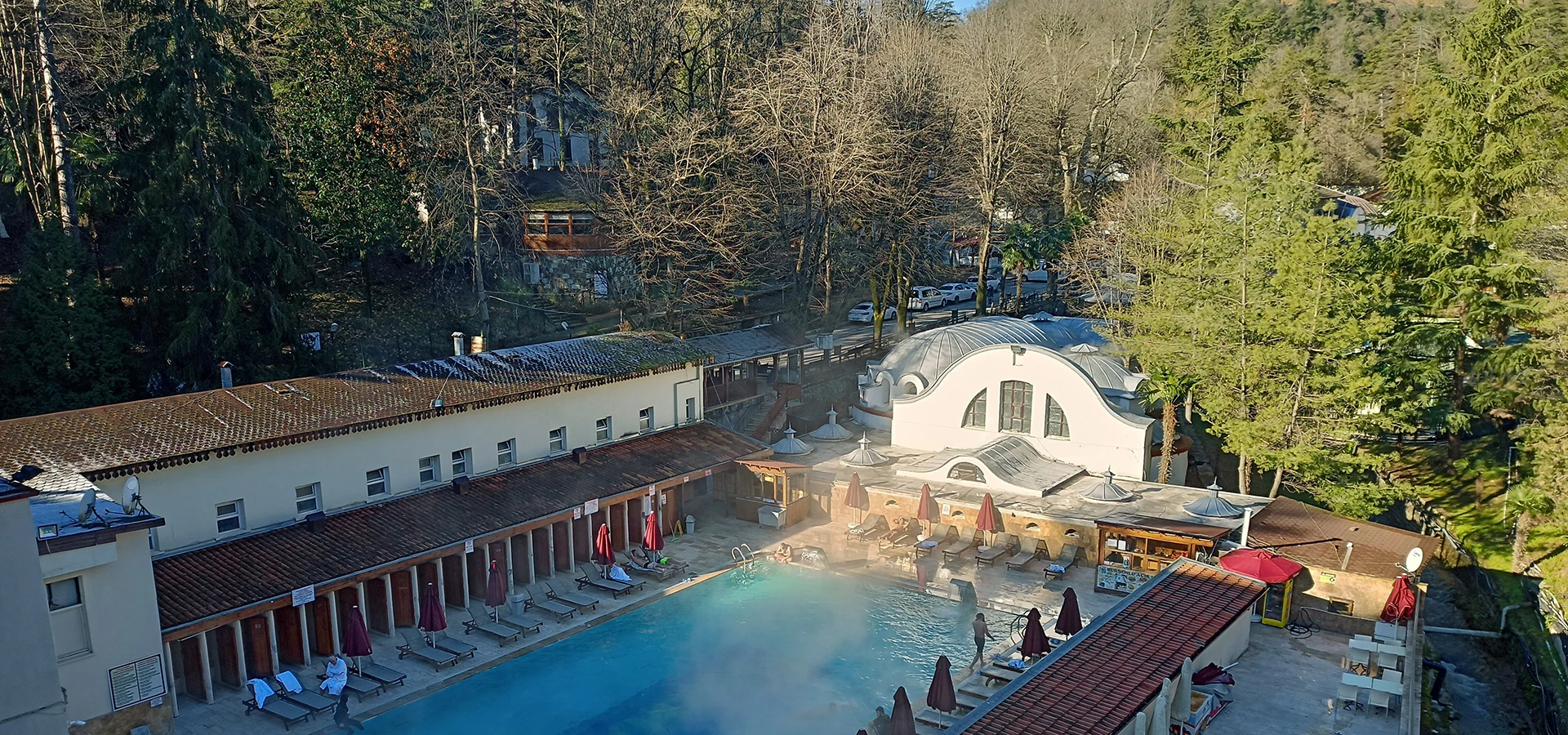
Explore the mineral waters, historic spa culture and forest setting of Termal before or after discovering Yalova’s local cuisine.
Discover Termal Hot SpringsCombine Yalova city, Termal, Atatürk heritage, gardens, waterfalls and regional-food stops in a personalised route.

Create a personalised day combining Yalova city, Termal, Atatürk heritage, botanical gardens, waterfalls and local cuisine.
Request a Private Journey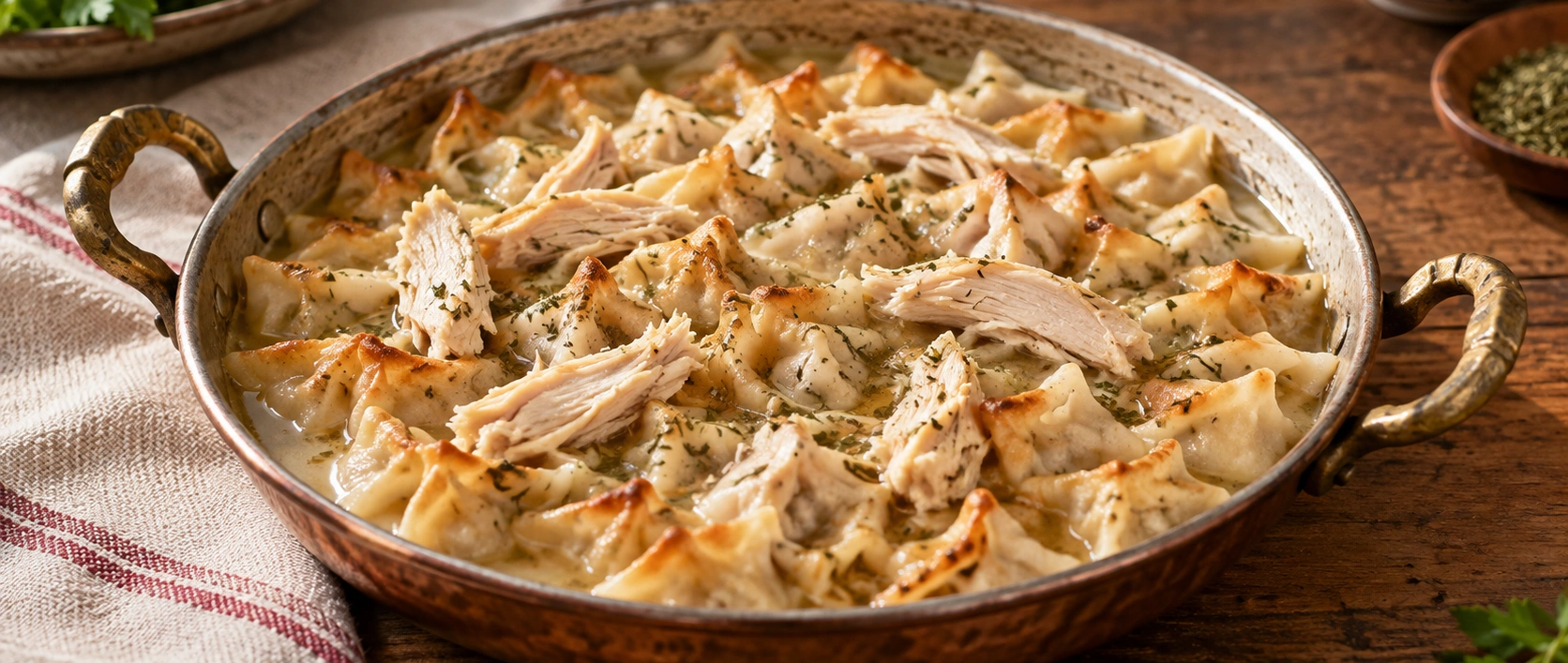
Build a food-focused route around Tavuklu Mantı, Yumurta Dolması, Böğür, Spinach Yalova Börek, Termal Soup, Yaprak Pidesi, local desserts and regional products.
Ask About Custom Options