Grape Leaves
Grape leaves form the distinctive outer layer and separate the cornmeal mixture from the pan.
- Ingredient: Grape leaves
- Official quantity: 20 leaves
- Role: Outer cooking layer






Yaprak Pidesi is one of the traditional dishes associated with Yalova in northwestern Türkiye. Despite the word pide in its name, the documented Yalova preparation is very different from the familiar boat-shaped baked pide found across Türkiye. It is made in a frying pan, with grape leaves forming the outer layer around a soft cornmeal mixture.
Türkiye’s Culture Portal records a recipe supplied by the Yalova Provincial Directorate of Culture and Tourism. Yogurt is mixed with water and salt to make ayran — preferably slightly sour — then combined with cornmeal, fresh onion and mint. Grape leaves are arranged in an oiled pan, the mixture is spread to about 2 cm thick, and the pide is cooked until browned before being flipped and cooked on the second side.
Grape leaves line the pan and give the dish its characteristic appearance, aroma and gently tangy character.
Cornmeal gives Yaprak Pidesi its satisfying body and distinguishes it from wheat-dough pide.
Yogurt, fresh onion and mint create a savoury, fresh-tasting mixture with a distinctly home-style character.
The traditional documented method cooks the pide on the stovetop and turns it so both sides can brown.
Essential information about one of Yalova’s most unusual regional savoury dishes.
Yaprak Pidesi is documented by Türkiye’s Culture Portal as part of Yalova’s traditional cuisine.
Open Yalova on Google MapsGrape leaves are arranged in the pan before the cornmeal mixture is added.
Cornmeal is mixed with ayran, fresh onion, mint and salt to form the savoury filling.
The documented version is cooked in a pan, flipped with the help of a plate and browned on both sides.
A simple Yalova speciality built around grape leaves, cornmeal, yogurt and garden herbs.
Yaprak Pidesi stands out immediately because its name can be misleading to travellers who associate Turkish pide only with long, thin bread baked in a stone oven. The traditional Yalova recipe documented by the Ministry of Culture and Tourism is instead a pan-cooked dish in which grape leaves and a cornmeal mixture work together to create a round, sliceable pide.
Türkiye’s Culture Portal has listed Yaprak Pidesi among Yalova’s traditional foods since 2013, citing the Yalova Provincial Directorate of Culture and Tourism as its source. The Ministry also categorises the dish among vegetable and herb dishes, reflecting the importance of grape leaves, mint and fresh onion in the recipe.
The preparation uses everyday ingredients rather than elaborate pastry techniques. Yogurt and water are turned into ayran, cornmeal is stirred into it, chopped mint and fresh onion add aroma, and grape leaves form the cooking layer. The dish is then browned slowly in a pan and turned so the second side can cook.
Yalova’s broader cuisine has been shaped by agricultural produce and by communities from different parts of the Balkans, Black Sea region and Anatolia. Yaprak Pidesi fits naturally into this food culture: it is practical, seasonal, herb-forward and based on ingredients that can be prepared in a home kitchen without an oven.
Some modern recipes add ingredients such as parsley, dill, egg or spices, but these should be understood as variations. The official Yalova recipe published by the Culture Portal is notably simple and centres on yogurt, water, cornmeal, grape leaves, fresh onion, mint, sunflower oil and salt.
The identity of the dish comes from the meeting of grape leaves, cornmeal, sour ayran and fresh herbs.
Grape leaves form the distinctive outer layer and separate the cornmeal mixture from the pan.
Cornmeal gives the pide its substance and creates a soft but sliceable centre once cooked.
Yogurt, water and salt are whisked together first, and the official method notes that sour ayran is preferred.
The preparation instructions specify fresh onion, finely chopped before being mixed into the cornmeal batter.
Finely chopped mint brings a cool herbal note that balances the richness of the cornmeal and yogurt.
Instead of being sent to an oven, the documented version is cooked directly in an oiled pan.
Once the underside is well browned, a plate wider than the pan is used to turn the pide before it is slid back into the pan.
After both sides are cooked, the pide is removed from the heat and divided into portions.
Türkiye’s Culture Portal publishes a concise recipe sourced from the Yalova Provincial Directorate of Culture and Tourism. It uses only a small group of ingredients, allowing the flavour of the grape leaves, cornmeal, yogurt and fresh herbs to remain central.
1 cup of yogurt is mixed with water and salt to make the ayran base.
1 cup of water is whisked with the yogurt before the cornmeal is added.
2 cups of cornmeal form the main body of the pide mixture.
20 grape leaves are washed, drained and arranged in the pan.
1 bunch of onion is listed, with the method specifying that fresh onions are cleaned and finely chopped.
½ bunch of mint is finely chopped and added to the mixture.
1 tablespoon of sunflower oil is used to grease the pan before the leaves are arranged.
Salt is used to season the ayran and the overall mixture according to taste.
A useful recipe note: the official method specifically says that slightly sour ayran is preferred. That acidity is part of the traditional flavour profile and helps distinguish the dish from a neutral cornmeal batter.
The traditional method is simple but depends on careful layering and controlled pan cooking. The grape leaves should be clean and well drained, the filling should be spread evenly, and the pide must be turned only after the underside has browned sufficiently to hold together.
The Turkish word yaprak simply means “leaf,” and in this dish the leaf is grape leaf. Rather than being rolled individually around rice or meat as in sarma, the leaves are arranged as a broad layer in the pan and become part of the pide itself.
The leaf layer gives the finished pide a recognisable green surface and immediately separates it visually from ordinary bread-based pide.
Grape leaves contribute a pleasantly tart, vegetal note that works naturally with the sour ayran base.
The leaves create a natural layer between the cornmeal mixture and the cooking surface.
Because the pide is cooked and cut as one piece, each portion includes both the leaf layer and cornmeal filling.
The heart of the dish is a cornmeal mixture moistened with ayran. The official preparation begins by whisking yogurt with water and salt; cornmeal is then added along with the herbs. This produces a very different texture from kneaded wheat dough.
Cornmeal absorbs the liquid and creates the main structure of the pide as it cooks.
Yogurt gives the mixture a creamy dairy character without turning it into a heavy cheese-based filling.
The official instructions note a preference for sour ayran, adding a sharper counterpoint to the cornmeal.
The published Yalova recipe does not use a conventional kneaded, risen pide dough.
Fresh onion and mint are the two aromatic ingredients specified in the official recipe. They are chopped finely so their flavour is distributed throughout the cornmeal mixture rather than appearing as large pieces.
Fresh onion supplies a mild savoury bite and works particularly well with the tang of yogurt and grape leaf.
Mint lightens the dish with a clean herbal aroma and keeps the cornmeal filling from feeling too dense.
Small pieces spread more evenly through the mixture and help the pide cook as a consistent layer.
The documented traditional recipe relies on salt rather than a long list of spices.
The pide is cooked as a relatively thick round layer, so browning one side is only half of the process. After the underside has coloured and the filling has set enough to hold its shape, the entire piece is turned with a plate and returned to the pan so the opposite side can cook.
Yaprak Pidesi is savoury, earthy and herbaceous rather than bread-like. Cornmeal gives it a warm grain flavour, yogurt adds gentle acidity, grape leaves contribute a slightly tangy vegetal character, and fresh onion and mint keep the overall taste lively. Browning in the pan adds a toasted note around the outside.
There is no sweet component in the traditional recipe; the dish is seasoned simply with salt and herbs.
Grape leaves and preferably sour ayran give the pide a pleasant acidic edge.
Mint and fresh onion provide the clearest aromatic notes in the filling.
Pan browning gives the exterior deeper flavour and contrasts with the softer cornmeal centre.
The official preparation simply instructs the cook to remove the browned pide from the heat, slice it and serve. Its round pan shape naturally makes it suitable for cutting into wedges or smaller pieces for sharing at the table.
Fresh grape leaves can carry dust or residue, so clean them carefully and let excess water drain away.
Younger, more tender grape leaves are generally easier to eat and arrange neatly than very coarse mature leaves.
The official recipe specifically notes that sour ayran is preferred for the traditional flavour.
Small pieces of fresh onion and mint spread more evenly through the cornmeal mixture.
The documented method calls for the mixture to be spread to about 2 cm thickness so it cooks consistently.
Wait until the underside is well browned and the pide has set enough to move as one piece.
This gives you a safer surface for turning the pide before sliding it back to cook the other side.
Egg, parsley, dill, spices and cheese appear in some modern versions, but they are not listed in the official Culture Portal recipe.
Yalova Municipality describes the province’s food culture as a meeting point of Balkan, Black Sea and Anatolian traditions, supported by the region’s productive land and seasonal ingredients. Yaprak Pidesi sits comfortably within that broader identity because it combines leaves, fresh herbs, dairy and cornmeal in a simple home-style preparation.
A distinctive local meat dish combining lamb, puff pastry and kaşar cheese.
A local meat preparation with a filled centre and oven-baked finish.
A crêpe-based dessert filled with apple marmalade and pistachio and finished with cherry sauce.
A chilled milk-soaked layered pastry that represents a very different side of Yalova’s dessert tradition.
A traditional dish associated with cabbage leaves and another example of Yalova’s vegetable-rich home cuisine.
A savoury speciality associated with Termal and made by rolling beef around a vegetable filling.
Yaprak Pidesi is widely documented as a Yalova speciality, but a traditional regional dish is not necessarily prepared every day by every restaurant. If trying the dish is an important part of your visit, ask local restaurants and traditional-food businesses in Yalova directly and confirm whether Yaprak Pidesi is currently available.
Restaurants serving regional dishes are a practical first place to ask about Yaprak Pidesi.
Ask specifically for “Yalova Yaprak Pidesi” so it is not confused with other regional dishes called pide.
If you want the traditional version, ask whether it is made with grape leaves, cornmeal, yogurt, fresh onion and mint.
Availability may depend on the restaurant, season and whether suitable grape leaves are on hand.
The official Yalova recipe is a pan-cooked cornmeal and grape-leaf dish, not a long wheat-dough flatbread.
Grape leaves are a defining part of the traditional preparation and should be visible in the finished dish.
The centre has a cornmeal-based texture rather than the chewy crumb of ordinary pide dough.
Slightly sour ayran is preferred in the documented method, giving the filling a gentle tang.
Some cooks add egg, herbs or spices, so ask if you have dietary restrictions or want the simpler traditional formula.
The traditional recipe uses yogurt, so the dish is not dairy-free.
Try it alongside other Yalova specialities for a broader introduction to the province’s cuisine.
A local-food stop fits easily into a Yalova day that includes the waterfront, museums, Yürüyen Köşk or Termal.
The official Culture Portal recipe contains yogurt and cornmeal together with grape leaves, fresh onion, mint, sunflower oil, water and salt. It does not list wheat flour, egg or meat. However, modern household and restaurant versions can differ significantly, so anyone with an allergy, intolerance or strict dietary requirement should always confirm the ingredients used by the individual kitchen.
Yogurt is a core ingredient in the traditional recipe and is diluted with water to make ayran.
The published Ministry recipe lists cornmeal and does not list wheat flour.
The traditional documented ingredient list contains no meat or fish.
Other recipes may add wheat flour, egg, cheese or additional ingredients, so do not assume every version matches the official list.
This information describes the published traditional preparation and should not be treated as a guarantee of the recipe used by every restaurant, café or household.
The strongest visual feature of Yaprak Pidesi is the contrast between the green grape leaves and the golden-brown cooked surface. A good photograph should make it obvious that the dish is pan-shaped, layered and very different from ordinary bakery pide.
A full overhead view clearly shows the pan-shaped form and leaf pattern.
One removed wedge helps reveal the thickness and cornmeal centre.
Keep the leaf veins and natural green-brown tones visible rather than hiding them under heavy garnish.
Side lighting helps bring out both the browned surface and the texture of the leaves.
A little mint or fresh onion nearby can visually connect the photograph to the ingredients without changing the dish.
A simple plate or pan presentation suits the dish’s traditional home-cooked character.
A search for Yaprak Pidesi can be part of a wider Yalova day combining the city’s waterfront, republican-era heritage, museums, botanical gardens and the thermal landscapes of Termal.
Visit one of Yalova’s best-known Atatürk landmarks beside the Marmara Sea.
Explore the city’s local history, culture and changing identity before discovering its traditional cuisine.
Add an archaeological stop to a day exploring central Yalova and the surrounding region.
Continue to Termal for historic bath culture, mineral waters and forest scenery.
Discover an important republican-era heritage site associated with Atatürk’s stays in Yalova.
Explore an important botanical collection reflecting Yalova’s horticultural identity.
Add a distinctive plant-focused museum to your Yalova itinerary.
Experience the province’s wooded landscapes and outdoor character beyond the city centre.
Yaprak Pidesi is only one part of Yalova’s regional food story. Continue with the province’s desserts, meat dishes and agricultural products for a broader understanding of its culinary identity.
Discover Yalova’s pale milk-soaked layered pastry with a chilled finish.
Explore a fruit-filled crêpe dessert with apple marmalade, roasted pistachio and cherry sauce.
Try a distinctive local meat dish with a filled centre and oven-baked presentation.
Discover another unusual local speciality combining lamb, puff pastry and kaşar cheese.
A geographically indicated forest honey linked with the province’s chestnut woodlands and beekeeping.
A protected regional agricultural product grown in the province’s productive orchards.
A dark-purple berry that has become an important part of Yalova’s modern agricultural identity.
Yaprak Pidesi is a traditional Yalova dish made by arranging grape leaves in a pan and cooking a savoury cornmeal mixture prepared with yogurt, water, fresh onion, mint and salt.
It is documented by Türkiye’s Culture Portal as part of the traditional cuisine of Yalova in northwestern Türkiye.
No. The documented Yalova version is not a boat-shaped wheat flatbread. It is a pan-cooked dish using grape leaves and a cornmeal-based mixture.
“Yaprak” means “leaf” in Turkish. In Yaprak Pidesi, the leaf is grape leaf.
The official recipe lists yogurt, water, cornmeal, grape leaves, fresh onion, sunflower oil, mint and salt.
Yes. Twenty grape leaves are listed in the Culture Portal recipe and are arranged in the pan before the filling is added.
Yes. Cornmeal is the main grain ingredient in the documented Yalova recipe.
Yes. Yogurt is mixed with water and salt to prepare ayran, which forms the liquid base of the filling.
The official preparation specifically notes that sour ayran is preferred, giving the filling a more pronounced tangy flavour.
The official recipe uses fresh mint together with fresh onion. Some modern variations add other herbs, but they are not part of the Culture Portal ingredient list.
Not in the traditional recipe documented by Türkiye’s Culture Portal. It is cooked in an oiled pan on the stovetop and turned so both sides can brown.
The official method instructs the cook to spread the prepared mixture to approximately 2 cm thickness in the pan.
A plate slightly wider than the pan is placed over the top. The pide is turned onto the plate and then slid back into the pan to cook the opposite side.
The official recipe lists no meat or fish, so its documented traditional ingredients are compatible with a lacto-vegetarian diet. Restaurant variations should still be checked individually.
No traditional version is vegan because yogurt is used to prepare the ayran base.
Egg is not listed in the official Culture Portal recipe, although some modern household recipes include it. Ask the kitchen if this matters for an allergy or dietary requirement.
The official Yalova recipe lists cornmeal and does not list wheat flour. Some modern variations do use wheat flour, so restaurant recipes should be confirmed directly.
The official ingredient list uses cornmeal rather than wheat flour, but cross-contamination and modern recipe variations mean people with coeliac disease or strict gluten restrictions should confirm preparation directly with the kitchen.
After both sides are browned, it is removed from the heat, sliced and served in portions.
It has a savoury cornmeal flavour with tangy notes from grape leaves and ayran, freshness from mint and onion, and toasted flavours from pan browning.
Some modern Turkish food sources use “Loznik” as an alternative name, but Türkiye’s Culture Portal lists the dish simply as “Yaprak Pidesi.”
Ask restaurants serving regional Yalova cuisine and confirm current availability before travelling specifically for the dish, because traditional specialities may not be prepared every day.
Yes. Türkiye’s Culture Portal publishes the recipe and identifies the Yalova Provincial Directorate of Culture and Tourism as its source.
A strong image should make the dish’s unusual identity obvious: this is a round grape-leaf and cornmeal preparation, not ordinary bakery pide. Show the leaf surface, browned edges and at least one cut portion so viewers can understand the structure immediately.
The round form and arrangement of the grape leaves are easiest to understand from above.
A missing wedge exposes the interior and gives the viewer a clear sense of thickness.
Let the veins and natural folds of the grape leaves remain visible for an authentic appearance.
A slightly angled photograph can capture the golden cooked edge created by the pan.
The leaves, cornmeal and herbs already provide enough visual identity without elaborate decoration.
A rustic table setting, fresh grape leaves or a small bowl of yogurt can quietly reinforce the local-food story.
Turn a local-food stop into a wider journey through Yalova’s waterfront, Atatürk heritage, botanical landscapes and famous thermal district.
Pair traditional dishes with some of the city’s most recognisable cultural attractions.

Combine a taste of Yalova cuisine with one of the city’s best-known Atatürk landmarks on the Marmara shoreline.
Discover Yürüyen Köşk
Learn about Yalova’s history and local identity before exploring the dishes and products associated with the province.
Explore Yalova City MuseumCombine central Yalova, Termal, museums, gardens, waterfalls and regional-food stops in a personalised route.

Create a personalised day combining Yalova city, Termal, historic landmarks, botanical gardens, waterfalls and regional cuisine.
Request a Private Journey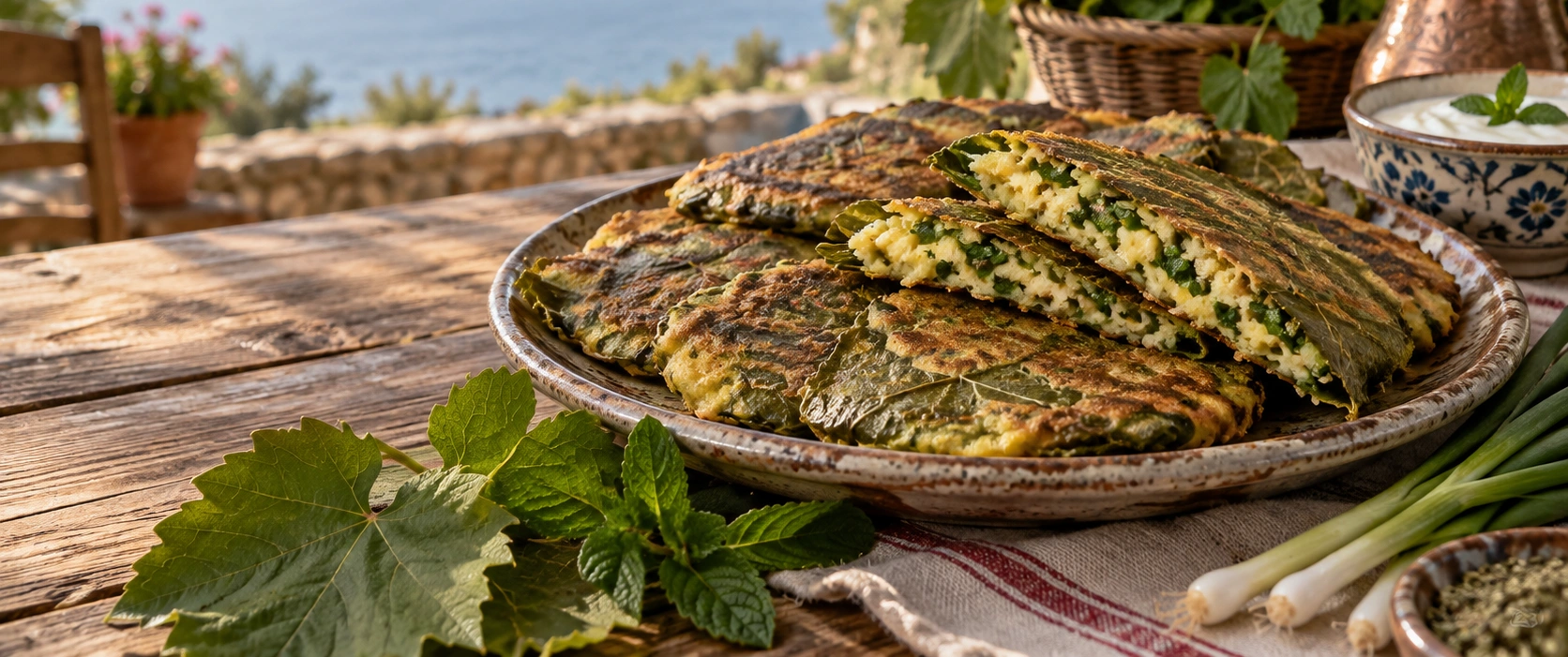
Build a food-focused route around Yaprak Pidesi, Yalova Sütlüsü, Termal Tatlısı, regional dishes and local agricultural products.
Ask About Custom Options