Private Yalova History & Culture Experience
Ask us about a tailor-made Yalova route combining Yalova City Museum, Yürüyen Köşk, Termal heritage, selected museums and the Marmara waterfront.
Request a Custom Tour




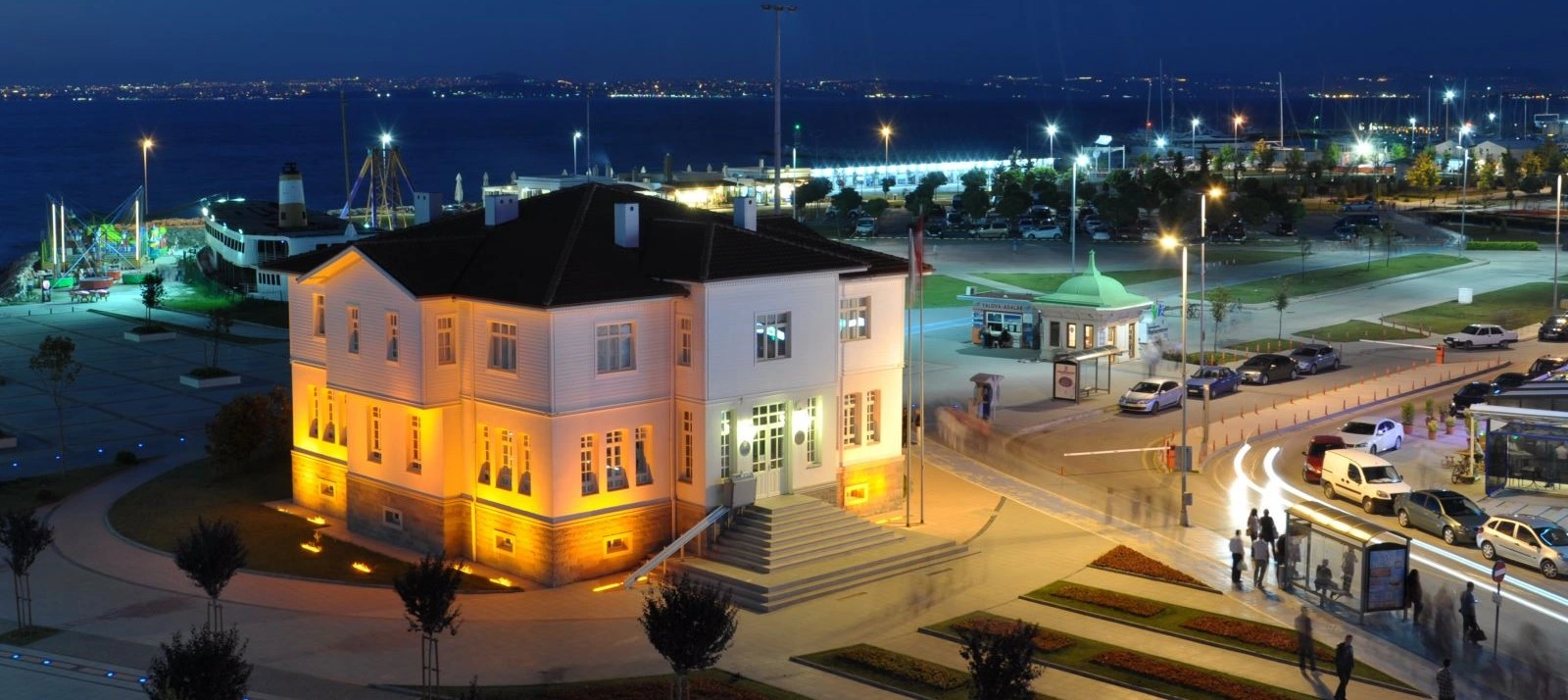
The Yalova City Museum, known in Turkish as Yalova Kent Müzesi, is one of the best places to begin exploring Yalova. Standing in the heart of the city near Cumhuriyet Square and the waterfront, the museum brings together archaeology, local history, photographs, documents, ethnographic objects, models and multimedia displays to explain how Yalova developed over time.
The museum occupies a reconstruction of the historic Yalova Government House, a building first constructed in 1908 and remembered as one of the most important civic structures of old Yalova. After the original building was demolished in 1968, a later reconstruction project revived its appearance and gave the site a new role as the city’s museum.
The museum officially opened on 15 May 2013. Its galleries present Yalova through a broad chronological story, from evidence of settlement reaching back approximately 8,000 years to the Ottoman period, the early Turkish Republic and the growth of the modern province.
A major part of the museum is devoted to Mustafa Kemal Atatürk and his connection with Yalova. Visitors can also see city models, a model of the Yürüyen Köşk, ethnographic displays and sections explaining local traditions such as flower cultivation, weaving and thermal-spa culture.
The year the original Yalova Government House was completed.
The original Government House was demolished after decades of civic use.
Yalova City Museum officially opened to visitors.
The museum’s historical narrative reaches back to the earliest settlement traces presented for Yalova.
Essential information for visiting one of central Yalova’s most important cultural attractions.
Central Yalova, beside Cumhuriyet Square and close to the Marmara waterfront.
Search on Google MapsA reconstruction of Yalova’s former Government House, originally built in 1908.
The City Museum opened to visitors on 15 May 2013.
From early settlement evidence through Ottoman, Republican and modern Yalova.
Yalova’s urban memory, local identity and the city’s transformation through time.
Dedicated displays explain Atatürk’s important relationship with Yalova.
Photographs, documents, models, ethnographic objects, panels, screens and kiosks.
Models include the city, Yürüyen Köşk and other important elements of Yalova’s built heritage.
First-time visitors, families, history lovers, students and travellers interested in Atatürk heritage.
Allow approximately 45–90 minutes depending on how closely you read the displays.
The museum explains how a small Marmara settlement became the modern provincial capital visitors see today.
Yalova has many individual attractions: thermal springs, Atatürk-era buildings, coastal parks, wetlands, waterfalls and small museums. The City Museum is valuable because it helps place all of these sites into one historical and geographical story.
Instead of focusing on a single archaeological period or collection, the museum follows the development of the city itself. Its displays explain local government, population, education, sport, industry, agriculture, geography, districts, tourism and social life alongside the better-known historical narrative.
For a first-time visitor, this makes the museum an excellent starting point before exploring Yürüyen Köşk, Termal Atatürk Mansion, İbrahim Müteferrika Paper Museum and Yalova’s wider landscape.
The building itself also forms part of the story. The reconstructed Government House is not simply a container for the museum: it represents an attempt to restore an important piece of Yalova’s lost civic architecture and give it a new public purpose.
Yalova City Museum stands in the city centre at Cumhuriyet Square, within the compact central waterfront area of Yalova. Its location makes it one of the easiest cultural sites to include in a walking itinerary.
The museum is close to the Marmara Sea, the central promenade, city shopping streets and transport connections. Visitors arriving in central Yalova can therefore combine the museum with a waterfront walk without needing a separate excursion into the countryside.
Official cultural-tourism information lists the museum simply as being in Cumhuriyet Square in central Yalova. The museum telephone number published by official tourism sources is +90 (226) 811 07 27.
The architectural story of Yalova City Museum begins with the Yalova Government House, one of the most important public buildings in the town during the early twentieth century.
Yalova became a district administrative centre around the beginning of the twentieth century, creating the need for a dedicated government building. Municipal historical information states that the Government House was completed in 1908 and came into full administrative use from 1913 onward.
The building was constructed by Hacı Artin Kalfa, a contractor of the period. It stood opposite the old Yalova pier, a location that placed it directly within the civic and transportation heart of the settlement.
For decades, the building accommodated municipal offices and other public institutions. It therefore became closely associated with everyday administration, public services and the changing urban life of Yalova.
The original Government House was demolished in 1968. By that time it had already become deeply embedded in the memories of local residents, so its disappearance left a noticeable gap in Yalova’s historic townscape.
Decades later, local institutions began a project to bring the building back as part of a wider effort to protect Yalova’s urban memory. An initial consultation process brought together public institutions, local representatives and civil-society participants to discuss the future city museum.
The restitution and reconstruction projects were approved on 20 April 2010 by the relevant regional conservation board. The project was developed through cooperation between Yalova Governorship and Yalova Municipality, with the municipality coordinating implementation.
The result was not an ordinary new museum building. The former Government House was reconstructed as a symbolic piece of the old city centre, allowing the architecture and the museum’s historical mission to reinforce one another.
After the reconstruction and museum-development process, Yalova City Museum opened on 15 May 2013. The museum was created to protect the city’s historical, social and cultural memory and to make that story accessible to residents and visitors.
The museum received permission to operate as a private museum through the Ministry of Culture and Tourism framework, while Yalova Municipality took responsibility for presenting the city’s history within the reconstructed civic landmark.
Since opening, the museum has functioned not only as a visitor attraction but also as a city-memory centre: a place where documents, photographs, objects and stories connected with Yalova can be preserved and interpreted.
The museum’s main narrative is arranged broadly in chronological order. Official museum descriptions state that the story begins with evidence of settlement in the Yalova area reaching back approximately 8,000 years.
From there, the displays move through the historical development of the region, including the long periods that shaped northwestern Anatolia, the Ottoman era, the Turkish Republic and the transformation of Yalova into the modern city and province known today.
The museum is especially useful because it does not isolate political history from everyday life. Information on population, agriculture, industry, education, sport, tourism and the city’s districts helps visitors understand how Yalova functioned as a living community.
Photographs and historical documents are particularly important to the presentation, because Yalova changed rapidly during the twentieth century. Images of streets, public buildings, waterfront areas and local life make it easier to compare the historical city with the modern one outside the museum doors.
One of the most important themes in Yalova City Museum is Mustafa Kemal Atatürk’s relationship with Yalova. His stays in the city and interest in its thermal springs, agriculture, landscaping and urban development had a lasting influence on Yalova’s twentieth-century identity.
Official museum information highlights dedicated panels titled “Kentin Kaderini Değiştiren Önder” and “Yalova Benim Kentimdir”, which present Atatürk as a central figure in the city’s modern history.
The museum therefore provides useful context before visiting Yalova’s two best-known Atatürk-related sites: Yürüyen Köşk and Termal Atatürk Mansion. Seeing the museum first helps place both buildings within a larger story of the early Republic and Yalova’s development.
For travellers interested specifically in Republican history, Yalova City Museum, Yürüyen Köşk and the Termal mansion form one of the strongest thematic combinations in the province.
Scale models are among the museum’s most immediately understandable displays. Official descriptions mention a city model, a model of Yürüyen Köşk and a mosque model within the exhibition areas.
These models are especially useful for visitors who do not already know Yalova. They transform names and historical references into physical relationships, showing how architecture, coastline, public spaces and important monuments fit within the city.
The Yürüyen Köşk model also introduces one of Yalova’s most memorable stories: the mansion that was moved to protect a plane tree rather than cutting the tree down. Visitors who want to explore that story in detail can continue to the dedicated Yürüyen Köşk guide.
Yalova’s identity cannot be explained only through administrative history. The museum also introduces activities that shaped the city’s economy, landscape and everyday culture.
Official museum descriptions specifically mention displays connected with flower cultivation, weaving and spa culture. These subjects reflect three very different parts of Yalova’s character: its horticultural traditions, local craft life and the geothermal heritage that made nearby Termal famous.
The flower-growing theme is especially relevant because ornamental horticulture remains strongly associated with Yalova today. Travellers interested in this side of the province can also visit Karaca Arboretum and the Yalova Bonsai Museum.
The thermal-culture displays meanwhile provide useful background for a later visit to Yalova Termal Hot Springs, where geothermal bathing became one of the defining experiences of the region.
A city museum depends heavily on the memories of the people who lived there. For this reason, Yalova City Museum includes ethnographic objects and documents acquired through donations.
These objects help give the galleries a human scale. Official history can explain administrative change, but household objects, photographs, printed material and personal documents reveal how people actually experienced the city.
The museum uses movable display stands and cases to present parts of this collection. Because city museums continue to develop as new material is donated or researched, some individual objects and temporary displays can change over time.
This community-based approach is particularly appropriate in Yalova, where twentieth-century migration, population growth, tourism and urban development altered the city quickly. The museum acts as a place where fragments of that changing social history can be preserved together.
The museum combines traditional wall panels with monitors, kiosks and LCD presentations. This allows subjects that cannot be explained easily within a limited wall display to be expanded through digital material.
The overall experience is therefore closer to a modern city-history centre than to a conventional archaeological museum filled only with display cases. Text, photographs, models, recreated scenes and multimedia work together to explain the city.
Visitors who enjoy reading can spend considerable time with the chronological panels, while families or travellers with less time can focus on the models, photographs and visual reconstructions.
Official cultural-tourism information describes the museum as using two main museum levels, including the ground and entrance floors, while the upper level was planned for official celebrations and exhibition use.
The museum is therefore compact enough to visit without fatigue, but dense enough to reward careful reading. The exhibition route is designed around a chronological sequence rather than a collection of unrelated rooms.
For most travellers, the easiest approach is to follow the museum in order, because later displays make more sense after seeing the earlier historical development of Yalova.
Follow Yalova’s development from early settlement through Ottoman and Republican history.
See the city, Yürüyen Köşk and other architectural subjects in miniature.
Community-donated objects and documents connect the city’s history with everyday life.
Kiosks, monitors and screens add material that cannot fit within the main wall panels.
Flower growing, weaving and thermal culture are presented through visual interpretation and décor.
Dedicated sections explain the leader’s connection with Yalova and the city’s modern development.
Learn why the original civic landmark was important, why it disappeared and how it was reconstructed.
See how Atatürk’s presence became one of the defining themes of twentieth-century Yalova.
A useful introduction to one of the city’s most famous architectural and environmental stories.
Compare old Yalova streets, waterfronts and buildings with the modern city outside.
See objects and documents that connect institutional history with ordinary local life.
Understand two industries that still help define Yalova’s identity and visitor experience.
Use the model to understand Yalova spatially before continuing your sightseeing.
Take time to look at the museum exterior as a revival of Yalova’s historic Government House.
Yalova City Museum is compact, but the amount of time you need depends on how closely you read the historical panels and documents.
A quick visual visit can take around 30–45 minutes, while visitors interested in Yalova’s history, Atatürk heritage or local urban development should allow around 60–90 minutes.
Because the museum is centrally located, it is easy to fit into a half-day walking route rather than treating it as a separate excursion.
Best for a quick overview focused on models, photographs and major themes.
A comfortable first visit with time to read the main chronological displays.
Better for history lovers who want to examine documents and thematic sections in detail.
Combine the museum with central Yalova, the waterfront and another nearby cultural attraction.
As an indoor attraction in the city centre, Yalova City Museum can be visited throughout the year. It is particularly useful on days when weather makes beach, forest or waterfall sightseeing less comfortable.
In summer, visiting the museum earlier in the day can provide a quieter cultural start before the waterfront becomes busier. In winter, it makes a good central stop before continuing to cafés, thermal attractions or other indoor sites.
Opening hours can change for public holidays, maintenance, exhibitions or municipal events. Because different online listings sometimes show different schedules, confirm the current visiting hours before making a special trip.
The museum can work well for families because it includes more than long text panels. Models, photographs, recreated scenes and digital displays give younger visitors visual points of interest.
The city model and Yürüyen Köşk model are particularly useful for children, because they turn historical ideas into physical objects that are easier to understand.
For school-age children, the museum can also be used as an introduction before visiting the real sites. Seeing the Yürüyen Köşk model first, for example, can make the later visit to Yürüyen Köşk more meaningful.
The museum is in a central, paved part of Yalova and is easier to approach than many outdoor heritage sites. However, the reconstructed historic-style building includes multiple levels, so visitors with reduced mobility should confirm the current step-free route and lift arrangements directly with the museum before arrival.
If you require wheelchair access, accessible toilets, seating during the visit or assistance between floors, contacting the museum in advance is the safest option.
The central square and surrounding waterfront are generally suitable for a relaxed city-centre visit, but temporary events, maintenance or crowding can affect the easiest approach to the entrance.
The exterior of the reconstructed Government House is one of the most attractive parts of the museum experience. Its white façade, traditional proportions and position near the open waterfront square make it especially photogenic in morning or late-afternoon light.
Inside the museum, photography rules may depend on the gallery, temporary exhibition or object on display. Visitors should follow staff instructions and any signs relating to flash photography or restricted areas.
For a wider city photograph, step back into the square and include the building together with the open urban space and Marmara setting. This helps show why the Government House once occupied such an important place in Yalova’s civic life.
The museum’s central location means most visitors staying in downtown Yalova can reach it on foot. It sits at Cumhuriyet Square close to the waterfront and major city-centre routes.
If you arrive in Yalova by sea, the museum is well positioned for inclusion near the beginning of a city walking itinerary. Visitors arriving by car should use current navigation and city-centre parking facilities rather than expecting parking immediately beside the museum entrance.
Local buses, taxis and central pedestrian routes also make the museum straightforward to reach from other parts of Yalova.
Best for visitors already staying or sightseeing in central Yalova.
Ask for “Yalova Kent Müzesi” or Cumhuriyet Meydanı.
Use central parking and continue on foot if the square is busy or vehicle access is restricted.
The museum is part of the central waterfront sightseeing area and easy to combine with a promenade walk.
Begin at Yalova City Museum to understand the city’s historical development, Atatürk connection and urban identity. After the museum, walk through the central square and continue along the waterfront.
From the city centre, continue to the İbrahim Müteferrika Paper Museum if you are interested in printing and paper history, or plan a later visit to Yürüyen Köşk for the most famous Atatürk-related story in Yalova.
Travellers interested in horticulture can instead combine the City Museum with the Yalova Bonsai Museum and Karaca Arboretum, creating a route that connects Yalova’s civic history with its strong plant-growing identity.
Yalova City Museum works especially well as the first stop in a museum-focused day because it gives visitors the broadest historical overview. Other museums can then be understood as more specialised chapters of the city’s story.
Explore paper, printing and the legacy of one of the most important figures in Ottoman printing history.
Discover bonsai art and Yalova’s wider horticultural identity through a very different museum experience.
Visit the real pavilion connected with Atatürk and the famous plane-tree conservation story.
Continue the Atatürk theme in the historic thermal district outside the city centre.
Because the museum is in central Yalova, it is an ideal starting point for a broader city itinerary before heading toward the province’s thermal, forest and wetland attractions.
Yalova’s famous Atatürk pavilion, moved to protect a plane tree and now one of the city’s best-known heritage sites.
A specialised museum exploring paper, printing and the historical legacy of İbrahim Müteferrika.
A modern cultural attraction focused on bonsai and Yalova’s strong horticultural traditions.
Leave the city centre for one of Yalova Province’s most important bird habitats and wetland landscapes.
Experience the geothermal heritage introduced inside the museum in Yalova’s famous historic spa district.
Discover the complete guide to museums, thermal springs, waterfalls, forests, wetlands and coastal attractions across the province.
If this is your first day in Yalova, visit the museum before the city’s individual historic sites.
Opening schedules can change, especially on Mondays, public holidays or during special events.
They provide valuable context for Yürüyen Köşk and Termal Atatürk Mansion.
Compare the historical city with the streets and waterfront immediately outside the museum.
The city and building models make Yalova’s geography and heritage easier to understand.
The upper spaces may host cultural activities or changing exhibitions at different times.
Follow barriers and cases, especially around donated documents and ethnographic material.
Respect restrictions on flash or photography where signs or staff indicate them.
Avoid blocking narrow display areas when reading panels or taking photographs.
The museum is an educational site and may host student visits, especially during weekdays.
Many city-museum collections survive because residents preserve and share family documents, photographs and objects.
Use the museum visit as a starting point for recognising Yalova’s surviving historic buildings outside the galleries.
Yalova City Museum, or Yalova Kent Müzesi, is a city-history museum presenting the historical, social and cultural development of Yalova through documents, photographs, objects, models and multimedia displays.
The museum is in central Yalova at Cumhuriyet Square, close to the Marmara waterfront.
It occupies a reconstruction of the historic Yalova Government House, one of the city’s important former civic landmarks.
The original Government House was completed in 1908 and came into full administrative use in the following years.
Municipal historical information identifies Hacı Artin Kalfa as the contractor responsible for the building.
The original building was demolished in 1968. Decades later, it was reconstructed as part of the project that created Yalova City Museum.
The museum officially opened on 15 May 2013.
Official museum descriptions say the historical narrative begins with settlement evidence reaching back approximately 8,000 years.
Displays include historical photographs, documents, ethnographic objects, chronological panels, a city model, a Yürüyen Köşk model, a mosque model, multimedia presentations and themed sections on local culture.
Yes. Atatürk’s relationship with Yalova is one of the museum’s major themes and is presented through dedicated panels and historical material.
Yes. Official museum information specifically mentions a model of Yürüyen Köşk among the displays.
Yes. The museum includes themed interpretation of thermal-spa culture, helping visitors understand why geothermal tourism became so important to Yalova.
Yes. Flower cultivation is one of the local cultural and economic themes represented in the museum.
Yes. The museum displays ethnographic objects and documents obtained through donations, helping preserve local family and community history.
Yes. Models, photographs and multimedia make the museum more accessible to younger visitors than a text-only historical exhibition.
Most visitors can see the museum in approximately 45–90 minutes, depending on how closely they read the displays.
Yes. Its central location at Cumhuriyet Square makes it one of the easiest museums in Yalova to visit on foot.
Published schedules can vary between sources and may change for public holidays or events. Check the latest opening hours directly before your visit, especially if you are travelling specifically for the museum.
Admission arrangements can change. Confirm the current entrance policy directly with the museum or Yalova Municipality before visiting.
Good combinations include Yürüyen Köşk, İbrahim Müteferrika Paper Museum, Yalova Bonsai Museum and the central waterfront.
For travellers who want to understand Yalova’s history, Atatürk heritage, local culture and urban development, the museum is one of the most useful first stops in the city.
Combine Yalova City Museum with Atatürk heritage, thermal landscapes, botanical attractions and the Marmara waterfront through a private itinerary designed around your interests.
Begin with the story of the city at Yalova City Museum, then continue to selected museums, Atatürk landmarks, Termal or the province’s natural attractions.
Ask us about a tailor-made Yalova route combining Yalova City Museum, Yürüyen Köşk, Termal heritage, selected museums and the Marmara waterfront.
Request a Custom Tour
Discover thermal springs, waterfalls, forests, wetlands, historic mansions, museums and coastal destinations throughout Yalova Province.
View Yalova Guide