Hard-Boiled Eggs
The eggs are boiled first, then peeled and cut lengthwise to create two natural cups for the filling.
- Official recipe: 10 boiled eggs
- Cut: Lengthwise
- Use: Whites hold the stuffing






Yumurta Dolması is one of the traditional dishes officially documented in Yalova’s regional cuisine. Hard-boiled eggs are cut lengthwise, their yolks are removed and combined with soaked and squeezed stale bread, parsley, salt and black pepper. The mixture is then returned to the egg whites, creating generously filled egg halves.
What makes the Yalova preparation especially distinctive is the final stage. The stuffed egg halves are dipped in beaten egg and fried, giving the outside a lightly golden surface while keeping the seasoned filling soft inside. They are traditionally served with green salad and have a particularly strong association with Hıdırellez celebrations and picnics.
Hard-boiled eggs are halved lengthwise and the yolks become the base of the stuffing.
Soaked stale bread, egg yolks, parsley, salt and black pepper are kneaded together.
The filled egg halves are coated in beaten egg before being fried until lightly golden.
In Yalova, the dish is especially associated with Hıdırellez gatherings and outdoor picnics.
Essential information about one of Yalova’s most memorable traditional egg dishes.
Yumurta Dolması is officially listed among the traditional foods of Yalova in northwestern Türkiye.
Open Yalova on Google MapsHard-boiled eggs are split lengthwise, with the yolks removed for the filling.
Egg yolk, soaked stale bread, parsley, salt and black pepper form the traditional stuffing.
The filled halves are coated in beaten egg and fried before being served with green salad.
A practical home-style recipe closely connected with seasonal gatherings, family tables and outdoor celebrations.
Yumurta Dolması appears in the culinary collection of the Yalova Provincial Directorate of Culture and Tourism and is also recognised within wider presentations of Yalova gastronomy. Its ingredients are modest, but the preparation transforms familiar pantry staples into a distinctive local dish.
The recipe reflects a traditional household approach to cooking. Hard-boiled eggs provide both the edible shell and part of the filling, while stale bread is softened and reused rather than discarded. Parsley and simple seasoning give freshness and aroma without making the dish complicated.
The strongest cultural detail recorded by the official Yalova source is its connection with Hıdırellez. The dish is described as an indispensable tradition especially during Hıdırellez and picnics, and the local attitude is summarised by the idea that there can be no Hıdırellez without Yumurta Dolması.
This makes the dish more than an everyday egg recipe. Its importance lies in when and how it is shared: prepared in batches, carried to outdoor gatherings and served as part of a communal spread.
Today, Yumurta Dolması offers visitors an accessible way to understand Yalova’s food culture, where household economy, seasonal traditions and straightforward ingredients come together at the table.
Its identity comes from boiled egg halves, a yolk-and-bread filling, fresh parsley and a final fried coating.
The eggs are boiled first, then peeled and cut lengthwise to create two natural cups for the filling.
The cooked yolks are removed and kneaded into the filling instead of being discarded.
Bayat ekmek is soaked and squeezed before being mixed with the yolks, giving the stuffing body.
Chopped parsley adds freshness, colour and a familiar herb note to the otherwise rich filling.
The documented seasoning is deliberately simple, allowing egg, bread and parsley to remain central.
The prepared mixture is packed back onto the hollowed egg whites, creating rounded stuffed halves.
Before frying, the filled eggs are dipped in beaten egg so the outside cooks into a delicate coating.
The official Yalova description specifically serves Yumurta Dolması with green salad.
The Yalova Provincial Directorate of Culture and Tourism records a notably simple ingredient list: boiled eggs, stale bread, vegetable oil, parsley, salt and black pepper, with additional oil used for frying. The preparation also calls for beaten egg to coat the filled halves before they go into the pan.
10 hard-boiled eggs form both the shells and the yolk-rich base of the filling.
3 slices are soaked in water and squeezed before being mixed into the stuffing.
Fresh parsley is mixed with the yolks and bread for colour and herbal freshness.
Salt seasons the soft yolk-and-bread mixture.
Black pepper gives the filling a gentle savoury warmth.
The filled halves are dipped in beaten egg immediately before frying.
Oil is used for the frying stage that gives the stuffed eggs their golden finish.
The official Yalova method recommends serving the finished dish with green salad.
Recipe note: the official source gives the principal ingredient quantities but does not specify an exact amount of parsley, salt, black pepper or beaten egg for coating. These are therefore adjusted according to the quantity and consistency of the filling.
The method is straightforward but depends on careful handling. The eggs must be boiled firmly enough to cut cleanly, the bread should be softened and then squeezed so the filling is not watery, and the stuffed halves need to stay intact while being dipped and fried.
One of the most important details in the official Yalova record is that Yumurta Dolması is not presented simply as a recipe. It is described as a food especially associated with Hıdırellez and picnics, making it part of the social traditions surrounding springtime outdoor gatherings.
The dish is specifically identified as an indispensable Hıdırellez tradition in the region.
Stuffed egg halves are naturally suited to shared outdoor tables and picnic spreads.
The recipe can be made from many eggs at once, making it practical for communal gatherings.
The official account records the local idea that Hıdırellez feels incomplete without Yumurta Dolması.
Stale bread is an important part of the documented Yalova filling. Rather than being used dry, it is first soaked and then squeezed. This softens the crumb while removing excess water, allowing it to combine smoothly with the cooked egg yolks.
Moistened bread blends easily with the crumbled yolks.
The bread increases the volume of the stuffing without hiding the egg flavour.
Kneading yolk and squeezed bread together creates a mixture that can be packed back into the whites.
Using stale bread is characteristic of practical household cooking that avoids unnecessary waste.
The filling is the heart of Yumurta Dolması. Cooked yolks provide richness, squeezed stale bread gives structure, and parsley brings freshness. Salt and black pepper are the only seasonings listed in the official Yalova recipe, keeping the flavour direct and familiar.
Breaking the cooked yolks down finely helps them combine evenly with the bread.
Too much water would make the stuffing loose and difficult to keep on the egg whites.
Finely chopped parsley distributes fresh herb flavour throughout the mixture.
The ingredients should come together into a soft but manageable stuffing before refilling.
Without the final frying stage, the preparation would resemble ordinary stuffed boiled eggs. In the Yalova method, dipping the filled halves in beaten egg and frying them gives the dish its characteristic cooked exterior, adds richness and creates a warm contrast with the soft filling.
Yumurta Dolması is savoury, rich and comforting. The egg whites remain mild, while the yolk-and-bread centre is soft and seasoned with parsley and black pepper. Frying adds a warmer, fuller flavour and a lightly cooked outer surface, while green salad brings freshness alongside it.
Both the shell and the filling are built around egg, giving the dish a full, familiar flavour.
The combination of yolk and softened bread creates a tender centre.
Parsley keeps the filling from tasting too heavy.
The beaten-egg coating develops a warm fried flavour and lightly coloured exterior.
The official Yalova preparation serves Yumurta Dolması with green salad. Because the dish is made as individual stuffed egg halves, it also fits naturally on a shared table, buffet-style meal or picnic spread where guests can take one or more pieces.
The whites need enough structure to hold the filling and survive dipping and frying.
Handling cooled eggs makes it easier to remove the shells without tearing the whites.
Long halves provide a stable base and enough surface area for a generous amount of filling.
The official Yalova preparation specifically uses bayat ekmek rather than fresh soft bread.
After soaking, remove excess moisture so the filling remains firm enough to shape.
Small pieces distribute evenly through the yolk mixture and make refilling easier.
Press it gently onto the egg-white cavities so it stays attached during coating.
Giving each stuffed half space makes it easier to turn and remove without breaking.
Yalova’s gastronomy reflects a meeting of Balkan, Black Sea and Anatolian food traditions shaped by migration, agriculture and household cooking. Yumurta Dolması fits naturally into this landscape: it relies on inexpensive familiar ingredients, uses stale bread thoughtfully, and carries an unusually clear connection with a seasonal social tradition.
Yumurta Dolması has its own recipe page on the Yalova Provincial Directorate of Culture and Tourism website.
It is included among the foods presented as part of Yalova’s culinary heritage.
The official local account gives the dish a specific place in spring celebration culture.
Individual stuffed egg halves are practical for carrying, sharing and serving outdoors.
Yumurta Dolması is a recognised Yalova speciality, but it should not be assumed to appear on every restaurant menu every day. Its strongest identity is connected with household cooking, picnics and Hıdırellez gatherings. If tasting it is important to your visit, ask regional restaurants, home-style kitchens, local hosts or accommodation kitchens whether it is available.
Use the Turkish name when enquiring; it literally identifies the dish as stuffed eggs.
Traditional home-style venues are more likely to recognise local Yalova preparations.
The dish has a particularly strong seasonal association with spring celebrations in the region.
Ask whether the version uses stale bread, parsley, beaten-egg coating and frying in the Yalova style.
Despite the word “dolma,” this is not vegetable stuffing; it is a fried stuffed-egg preparation.
The use of soaked stale bread is one of the most characteristic details of the Yalova recipe.
The herb should bring colour and freshness to the rich yolk mixture.
This is the accompaniment specifically given in the official local preparation.
The dish makes particular sense in the context of the outdoor gatherings with which it is associated.
Local stories about the spring celebration add cultural meaning to what may otherwise seem like a simple egg recipe.
Yalova Sütlüsü or Termal Tatlısı can follow the savoury course.
Yürüyen Köşk, Yalova City Museum and Termal can round out a regional-food day.
The traditional Yalova recipe contains both egg and wheat-based bread. It is therefore not suitable for people avoiding eggs and is not gluten-free in its documented form. The recipe itself does not require meat, making it suitable for many ovo-vegetarian diets, although restaurant frying oil and preparation practices should always be confirmed when dietary restrictions are strict.
Egg is the main ingredient, is used in the filling and is also used as the outer coating.
The documented filling includes stale bread, which is normally made from wheat.
The Yalova version documented by the provincial tourism authority is built around eggs, bread, parsley and seasoning.
Anyone avoiding particular oils or concerned about shared fryers should ask the kitchen about its frying practices.
This information describes the documented Yalova preparation and should not be treated as a guarantee of the ingredients, substitutions or cross-contact practices used by every restaurant, hotel or household.
A strong photograph should make it immediately clear that this is more than an ordinary boiled egg. The most effective presentation shows several golden stuffed halves on a traditional platter, with the yolk-and-bread filling clearly visible and fresh green salad adding natural colour around the dish.
A group of stuffed eggs communicates the dish’s shared picnic and gathering character.
Keep the stuffed side visible so viewers can see the soft yolk, bread and parsley mixture.
Side light can bring out the delicate fried coating and appetising texture.
Fresh greens reflect the traditional serving suggestion and balance the warm tones of the eggs.
Linen, a wooden table or a simple outdoor setting can quietly reference the dish’s cultural context.
The stuffed egg halves should remain the unmistakable focus of the image.
A traditional Yalova food stop can be combined easily with the city’s Atatürk heritage, thermal culture, botanical collections and green landscapes.
Visit one of Yalova’s best-known Atatürk landmarks beside the Marmara Sea.
Explore the province’s history and local identity before continuing into its food culture.
Experience the thermal waters, historic spa buildings and green surroundings of Termal.
Add an important republican-era heritage site to a day combining Termal and local gastronomy.
Explore one of Yalova’s most important botanical collections and its remarkable plant diversity.
Continue into Yalova’s wooded landscapes for walking, scenery and fresh air.
Add a distinctive plant-focused museum to a wider Yalova itinerary.
Discover Yalova’s connection with the history of paper production and printing culture.
Yumurta Dolması is one part of a much wider regional food story. Yalova’s cuisine ranges from pastries and soups to meat dishes, milk desserts, honey and locally important agricultural products.
Discover Yalova’s substantial stuffed sheep rib filled with seasoned meat-and-rice pilaf.
Discover the province’s coiled yufka pastry filled with spinach, white cheese and yogurt.
Try Yalova’s vegetable-rich soup finished with a yogurt, flour and egg-yolk terbiye.
Explore thinly pounded beef rolled around a savoury onion-and-mushroom filling.
Discover a distinctive grape-leaf and cornmeal preparation with yogurt, fresh onion and mint.
Explore another substantial savoury speciality associated with Yalova.
Discover a rich local dish combining sautéed meat, puff pastry and cheese.
Continue with a crêpe-based dessert filled with apple marmalade and pistachio.
Finish with Yalova’s chilled milk-soaked layered pastry dessert.
Explore a geographically indicated forest honey connected with Yalova’s chestnut woodlands.
Yumurta Dolması is a traditional Yalova dish made from halved boiled eggs whose yolks are mixed with soaked stale bread, parsley, salt and black pepper, returned to the whites, coated in beaten egg and fried.
Yes. Yumurta Dolması is officially included among the traditional foods presented by the Yalova Provincial Directorate of Culture and Tourism.
The official recipe lists 10 boiled eggs.
The filling is made from the cooked egg yolks, soaked and squeezed stale bread, parsley, salt and black pepper.
The bread is softened and combined with the yolks to add body and create a filling that can be packed back into the egg whites.
The official Yalova recipe lists 3 slices of stale bread for 10 boiled eggs.
Yes. Parsley is one of the ingredients specifically listed in the official local preparation.
The documented Yalova recipe uses salt and black pepper.
Yes. After filling, the egg halves are dipped in beaten egg and fried in oil.
The official Yalova recipe specifically recommends serving the fried stuffed eggs with green salad.
The Yalova Provincial Directorate of Culture and Tourism describes the dish as especially important at Hıdırellez and picnics and records a strong local belief that the celebration is not complete without it.
In Yalova it has a documented association with picnics, where its individual portions make it practical for a shared outdoor spread.
Not in the official Yalova recipe. Its main ingredients are eggs, stale bread, parsley, seasoning and frying oil.
The documented Yalova recipe contains no meat, so it can suit ovo-vegetarian diets, although individual kitchens may make variations.
No. Eggs are the principal ingredient and are also used for the coating.
No, not in its traditional documented form, because stale wheat bread is included in the filling.
Dairy is not listed in the official Yalova recipe, but diners with allergies should still confirm ingredients and cross-contact with the kitchen.
Ask regional restaurants, home-style kitchens and local hosts. Because the dish is strongly connected with home cooking, Hıdırellez and picnics, it may not be a daily restaurant-menu item.
Yes. The key stages are boiling and halving the eggs, preparing the yolk-and-bread filling, refilling the whites, dipping the halves in beaten egg and frying them carefully.
Its documented combination of yolks, soaked stale bread, parsley and simple seasoning, together with the final beaten-egg coating and its strong Hıdırellez association, gives the Yalova version its local identity.
The strongest hero image should show Yumurta Dolması as a generous traditional Yalova dish: several golden fried egg halves arranged on a rustic platter, with the seasoned yolk-and-bread filling clearly visible and a little fresh green salad providing contrast.
This shows both the rounded egg whites and the raised filling on top.
The viewer should immediately understand that the eggs have been hollowed and generously refilled.
Soft directional light can reveal the delicate golden coating without making the eggs look greasy.
A modest green salad reflects the documented Yalova serving style.
Natural linen, wood and daylight can subtly reference the dish’s traditional outdoor setting.
The image should feel generous, homemade and regional rather than overly elaborate.
Turn a traditional-food stop into a wider day through Yalova’s historic landmarks, thermal landscape, gardens and green countryside.
Pair a regional food experience with two of Yalova’s most distinctive visitor attractions.

Visit one of Yalova’s best-known Atatürk landmarks and combine coastal heritage with a tasting of the province’s traditional dishes.
Discover Yürüyen Köşk
Explore the mineral waters, historic spa culture and forest setting of Termal before or after discovering Yalova’s local cuisine.
Discover Termal Hot SpringsCombine Yalova city, Termal, Atatürk heritage, gardens, waterfalls and regional-food stops in a personalised route.

Create a personalised day combining Yalova city, Termal, Atatürk heritage, botanical gardens, waterfalls and local cuisine.
Request a Private Journey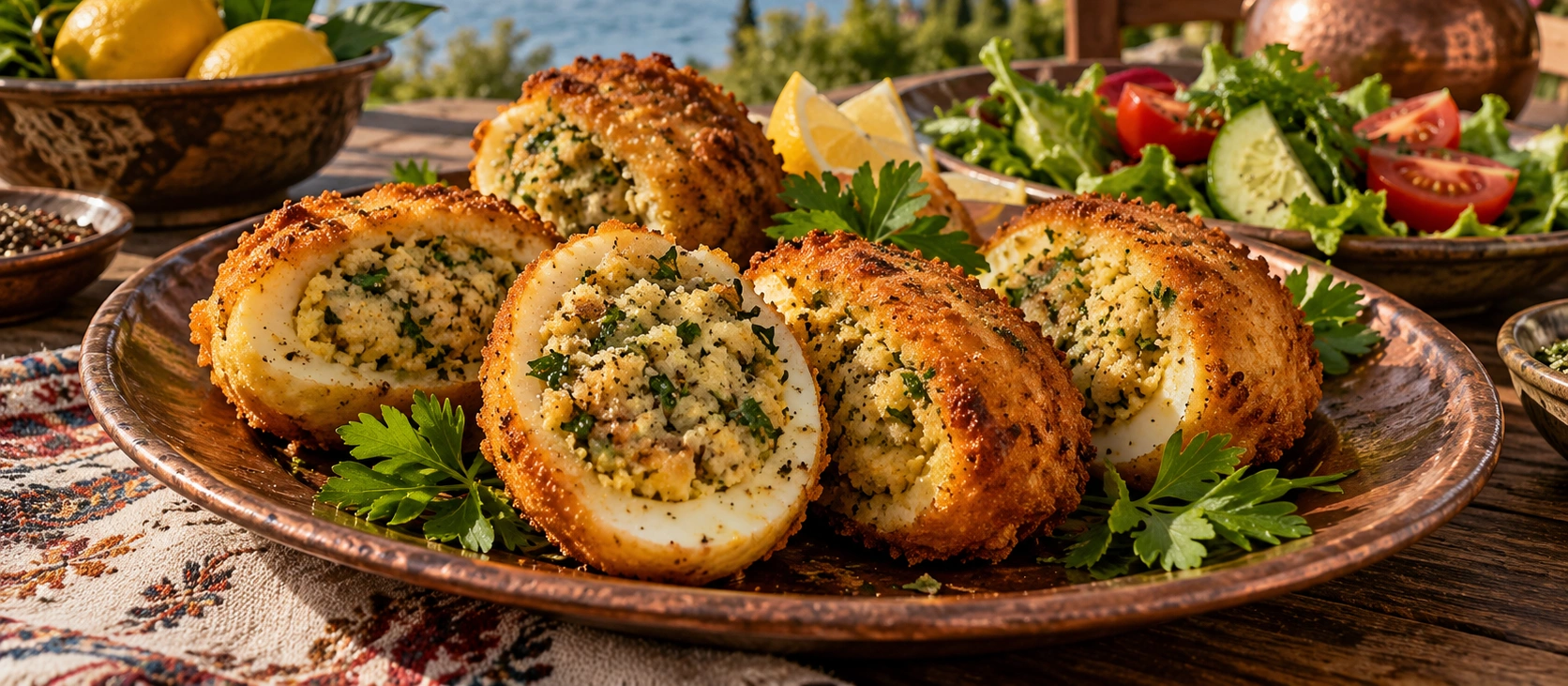
Build a food-focused route around Yumurta Dolması, Böğür, Spinach Yalova Börek, Termal Soup, Yaprak Pidesi, Yalova Köftesi, local desserts and regional products.
Ask About Custom Options