Julienned Lamb
The official recipe uses boneless lamb cut into thin strips, allowing the meat to cook quickly and combine evenly with the vegetables and seasonings.
- Meat: Boneless lamb
- Cut: Thin julienne strips
- Method: Pan-sautéed






Milföylü Yalova Kebabı is one of the dishes most closely associated with Yalova’s local food culture. Instead of being served with bread or rice alone, the savoury lamb mixture is presented inside or over a round, oven-baked base of milföy — Turkish puff pastry — creating a contrast between juicy, aromatic meat and crisp, flaky pastry.
The recipe published by Türkiye’s official Culture Portal, citing the Yalova Provincial Directorate of Culture and Tourism, uses julienned boneless lamb together with tomato, garlic, green pepper, spring onion, soy sauce, bay leaves, cumin, black pepper and salt. The cooked filling is spooned into the baked pastry and finished with grated kaşar cheese.
Boneless lamb is cut into thin strips and slowly cooked with vegetables, herbs and seasonings.
The pastry is shaped into a round base with raised edges and baked before the kebab filling is added.
The dish is listed by official Yalova and national culture sources among the province’s recognised local foods.
Its combination of lamb and pastry makes it a substantial dish traditionally presented as a main meal.
Essential information about one of Yalova’s most distinctive savoury dishes.
Associated with Yalova in northwestern Türkiye and featured in official presentations of the province’s local cuisine.
Open Yalova on Google MapsThe official recipe uses boneless lamb cut into thin julienne-style strips.
A crisp, round puff-pastry base gives the dish its distinctive texture and presentation.
The cooked lamb mixture is placed inside the baked pastry and topped with grated kaşar cheese.
A Yalova speciality remembered as much for its appearance as for its flavour.
Yalova’s cuisine reflects a city shaped by many culinary influences. The province has received communities from different parts of Anatolia, the Balkans, the Black Sea region and the Caucasus, and its food culture contains a wide variety of pastries, vegetable dishes, meat preparations, soups and desserts.
Within this varied food landscape, Milföylü Yalova Kebabı stands out because it combines two familiar elements in an uncommon way: a richly seasoned lamb sauté and a crisp puff-pastry base. The contrast gives the dish a presentation that differs markedly from kebabs served on flatbread, skewers or rice.
Official local education material describes Milföylü Yalova Kebabı as one of Yalova’s famous foods, appreciated for both its flavour and appearance and served as a main course. Yalova Municipality also includes it among the characteristic dishes used to introduce the city’s gastronomy.
A precise historical date or named inventor for the dish is not documented in the principal official sources commonly used to describe it. It is therefore better understood as an established local speciality rather than as a recipe with a firmly recorded origin story.
What is well documented is the preparation itself: strips of lamb are sautéed, combined with vegetables, bay leaf, spices and soy sauce, then served with oven-baked puff pastry and kaşar cheese. That combination has become the dish’s recognisable identity.
The dish is defined by the relationship between its lamb filling, fresh vegetables, aromatic seasonings and flaky pastry.
The official recipe uses boneless lamb cut into thin strips, allowing the meat to cook quickly and combine evenly with the vegetables and seasonings.
The milföy is opened into a round, plate-like shape and the edge is turned upward before baking, creating a shallow pastry base for the filling.
Tomato, green pepper, spring onion and garlic bring moisture, sweetness, freshness and savoury depth to the meat mixture.
Bay leaf, cumin, black pepper and salt season the lamb, while soy sauce gives the official recipe an especially distinctive savoury note.
Grated kaşar is scattered over the hot lamb and pastry, adding mild richness and a familiar Turkish cheese flavour.
One of the pleasures of the dish is the meeting of soft, juicy lamb and vegetables with dry, layered, crisp puff pastry.
The pastry acts as both an edible base and part of the visual presentation, making Milföylü Yalova Kebabı immediately recognisable on the plate.
With lamb, pastry and cheese in the same dish, it is substantial enough to be served as the centrepiece of a meal.
The recipe published by Türkiye’s Culture Portal gives a compact single-portion-style ingredient list. Exact quantities can be scaled according to the number of diners, but the combination below captures the recognised Yalova preparation.
150 g, cut into thin julienne strips.
60 g milföy dough, shaped into a round base.
20 g, grated and added as the finishing layer.
1 medium tomato, added to the lamb mixture.
1 sivri biber, contributing freshness and mild pepper flavour.
2 spring onions, incorporated into the sauté.
1 clove, adding aromatic depth.
50 g in the official Culture Portal recipe.
2 bay leaves perfume the slowly cooked filling.
Salt, cumin and black pepper are added according to taste.
Some household and restaurant versions may alter the quantities or use slightly different techniques. When discussing the recognised Yalova recipe, however, the lamb–vegetable mixture, puff pastry, kaşar and aromatic seasonings form the essential core.
The method is straightforward, but timing matters. The lamb needs to become tender and concentrated without leaving the pastry wet, while the pastry should remain crisp enough to support the filling.
The filling should be deeply savoury but not overly liquid. Because it is served in crisp pastry, the aim is to cook the lamb and vegetables until their flavours concentrate while enough moisture remains to keep the meat succulent.
Julienne cutting increases the surface area of the lamb and allows it to cook quickly with the vegetables.
Beginning without extra oil lets the meat release its own juices before butter is introduced.
Lower heat after the vegetables and seasonings are added helps the flavours combine without aggressively drying the meat.
The mixture should be moist enough to remain tender but reduced enough that it does not immediately soften the baked pastry.
The word milföylü means “with puff pastry.” The pastry is therefore not a decorative extra but one of the defining elements of the dish. Its layered structure gives the kebab a light crispness that contrasts with the softer filling.
The recognised preparation forms the pastry into a round, plate-like base rather than wrapping the filling completely.
Turning up the border creates a shallow rim that visually frames the filling and helps hold it in place.
The pastry is baked before assembly, an important detail for keeping it flaky rather than allowing it to steam beneath raw filling.
Once the juicy lamb is placed on the pastry, the base will gradually soften, so the dish is best eaten soon after assembly.
One of the most surprising details in the official recipe is soy sauce. It is not a typical ingredient in many classic Anatolian kebabs, but it appears clearly in the recipe published by Türkiye’s Culture Portal and attributed to the Yalova Provincial Directorate of Culture and Tourism.
Soy sauce reinforces the meat’s savoury character and contributes saltiness and umami.
Used with tomato, garlic and pepper, it becomes part of the sauce surrounding the thinly sliced lamb.
Because soy sauce already contains salt, additional seasoning should be adjusted gradually while cooking.
For travellers researching the recognised Yalova version, its presence is an interesting clue to the dish’s distinctive character.
Expect a rich but varied bite. The lamb provides the main savoury flavour, while tomato and spring onion bring freshness, garlic adds depth, green pepper contributes a gentle vegetal sharpness, and bay leaf and cumin add warmth. The pastry introduces buttery crispness, while kaşar rounds out the top with mild dairy richness.
Lamb, soy sauce, garlic and cheese build a deeply savoury flavour profile.
Bay leaf, cumin and black pepper give the filling a warm, fragrant character.
Tomato, green pepper and spring onion keep the meat mixture from tasting one-dimensional.
The pastry adds a crisp, layered texture that distinguishes the dish from many other kebab presentations.
The dish is assembled after both components are cooked. The baked pastry is transferred to the serving plate, the lamb sauté is spooned into its centre, and grated kaşar is added on top. It should be brought to the table while the meat is hot and the pastry is still crisp.
Uniform thin strips cook at a similar speed and help prevent a mixture of tough and overcooked pieces.
If preparing several portions, cook the lamb in batches so it sautés instead of steaming.
A very wet filling can quickly make the pastry soggy, so allow excess moisture to cook away before assembly.
A properly baked base gives enough structure to support the meat while remaining flaky.
The official recipe contains soy sauce, so check the seasoning before adding extra salt.
Freshly grated kaşar is best added immediately before serving, when the hot filling can soften it naturally.
If serving later, hold the pastry and meat separately and assemble only at the last moment.
The dish is at its best when the lamb is tender and hot while the pastry still has a crisp edge.
Yes. As with many local dishes, quantities and techniques can vary between kitchens. Some versions use larger portions of lamb, some bake the cheese briefly after assembly, and some household recipes adjust the vegetables, butter or pastry size.
Restaurant servings may be considerably larger than the compact quantities given in the official reference recipe.
Some cooks simply scatter kaşar over the hot filling, while others return the assembled dish briefly to the oven.
The classic idea is an open round base, although presentation can differ slightly from one kitchen to another.
The strength of cumin, pepper, garlic and soy sauce may be adjusted according to the cook’s preferred flavour profile.
For understanding the local identity of the dish, the most important features are the combination of lamb sauté, puff pastry and kaşar, together with the vegetable-and-seasoning profile documented by Yalova’s official food sources.
Yalova’s food culture is broad rather than being defined by a single culinary tradition. Local descriptions emphasise the effect of migration and the meeting of Balkan, Black Sea and Anatolian food traditions. This diversity can be seen in the province’s pastries, meat dishes, vegetable preparations, soups and desserts.
A thin local pide associated with Yalova’s bakery and dough traditions.
Another meat-based local speciality frequently mentioned alongside the province’s better-known dishes.
A local soup connected with the culinary identity of the Termal area.
A well-known local dessert that offers a sweet counterpart to Yalova’s savoury specialities.
A spinach-filled pastry reflecting the important place of dough-based dishes in regional home cooking.
Papara, Pavli, Tavuklu Mantı, Yumurta Dolması and other dishes add further variety to the province’s table.
Because Milföylü Yalova Kebabı is known as a local speciality rather than an everyday item on every restaurant menu, availability can vary. Travellers should check current menus or contact restaurants before making a special journey specifically to taste it.
Look for establishments that highlight Yalova cuisine, regional dishes or local specialities rather than assuming every kebab restaurant prepares it.
Use the Turkish name Milföylü Yalova Kebabı when asking staff, as “Yalova kebab” alone may be less specific.
Some kitchens may prepare the dish only at certain times, for groups or when requested in advance.
The pastry texture is best when the dish is assembled and served soon after cooking.
Lamb, pastry and cheese make this a substantial main course rather than a light snack.
The contrast between crisp pastry and hot filling is central to the experience.
The recognised recipe is based on boneless lamb, so travellers avoiding lamb should ask about alternatives before ordering.
The official recipe includes soy sauce, which can matter for guests monitoring salt or particular ingredients.
Puff pastry, cheese and soy sauce may contain common allergens; always ask the restaurant directly if you have dietary restrictions.
This is a plated lamb-and-pastry dish, visually different from the charcoal-grilled kebabs many visitors first imagine.
A Yalova food stop fits naturally into a day including the city centre, Termal, museums, gardens or coastal scenery.
Yalova’s cuisine includes pastries, soups, meat dishes, vegetable preparations and desserts worth exploring alongside the kebab.
The standard preparation is not vegetarian, vegan, dairy-free or normally gluten-free. Ingredients can vary between kitchens, so travellers with allergies or strict dietary requirements should always confirm the exact recipe with the restaurant preparing the dish.
The recognised recipe uses lamb as its main ingredient.
Standard puff pastry is wheat-based and therefore normally contains gluten.
Butter and kaşar cheese are part of the recognised preparation.
The published Yalova recipe includes soy sauce, which may contain soy and, depending on the product, wheat.
Restaurants may make substitutions, so ingredient information on this page should be treated as a guide to the traditional published recipe rather than as a guarantee for every serving.
The dish is particularly photogenic because several textures appear in a single plate: flaky pastry, browned lamb, colourful vegetables and melted or softened cheese. Photographing it immediately after serving gives the best impression of both freshness and texture.
A slightly elevated angle shows both the round pastry base and the lamb piled in the centre.
Focus on the raised, layered edge to show the crisp texture that makes this kebab distinctive.
Capture visible strips of lamb, tomato, pepper and spring onion rather than photographing only the cheese topping.
Soft window light usually shows the pastry’s golden colour and the meat’s texture more clearly than direct flash.
A cut or lifted piece can reveal how the crisp pastry and juicy filling work together.
The pastry gradually absorbs moisture from the filling, so the most attractive texture is visible soon after assembly.
A meal in Yalova city can easily be combined with museums, coastal landmarks, botanical collections, thermal heritage and nearby natural attractions.
Learn about the city’s history, population, culture and changing identity before exploring its local cuisine.
Visit one of Yalova’s best-known Atatürk heritage sites on the waterfront.
Discover the city’s strong horticultural identity through carefully cultivated miniature trees.
Explore an exceptional plant collection reflecting Yalova’s important role in Turkish horticulture.
Combine local food with historic thermal baths, mineral waters and forest scenery.
Add an important republican-era heritage stop to a day exploring the Termal district.
Continue into the countryside for forest scenery and one of Yalova’s best-known waterfall stops.
Explore the green landscapes that give the province much of its natural character.
Milföylü Yalova Kebabı is only one part of the province’s food story. Yalova also has notable desserts, agricultural products and traditional dishes worth seeking out.
A geographically indicated forest honey closely linked with Yalova’s chestnut woodlands and beekeeping tradition.
A protected regional product associated with the province’s productive orchard landscapes.
A dark-purple berry that has become an increasingly visible part of Yalova’s modern agricultural identity.
A local dessert commonly highlighted among the city’s characteristic sweet specialities.
A local meat dish frequently included in lists of foods associated with the province.
A thin pide representing another side of Yalova’s local dough and bakery traditions.
It is a Yalova local dish made with sautéed lamb and vegetables served in or over a round baked puff-pastry base and finished with kaşar cheese.
Milföylü means “with puff pastry.” The name refers to the pastry base that distinguishes the dish from many other kebab presentations.
The official recipe uses boneless lamb cut into thin julienne strips.
Not in the recognised preparation. The lamb is sautéed in a pan, while the puff pastry is baked separately in the oven.
The published Yalova recipe includes tomato, green pepper, spring onion and garlic.
Cumin, black pepper and salt are used together with bay leaf.
Yes. Soy sauce appears in the recipe published by Türkiye’s Culture Portal and attributed to the Yalova Provincial Directorate of Culture and Tourism.
The traditional published recipe uses grated kaşar cheese.
The official method describes a round pastry base with its edge turned upward. The pastry is baked first and the cooked filling is then placed inside the centre.
Yes. Official Yalova educational material describes it as a meat dish served as a main course.
The standard ingredients create a seasoned and aromatic dish rather than an intensely hot one. Green pepper, cumin and black pepper provide the main spice character.
No. The recognised recipe is centred on lamb.
Normally no, because standard puff pastry is made with wheat flour. Soy sauce may also contain wheat depending on the brand used.
Yes. The recognised preparation includes butter and kaşar cheese.
There is no special season required for the dish. The most important point is to eat it freshly assembled while the pastry is still crisp.
Yes. The dish can be prepared with a frying pan and oven using readily available puff pastry, lamb, vegetables, seasonings and cheese.
Bake the pastry fully, reduce excess liquid from the lamb mixture and assemble the dish only shortly before serving.
Look for restaurants specialising in Yalova or regional cuisine and check the current menu in advance, since the dish may not be available everywhere every day.
Yes. It is included in official national and local sources introducing Yalova’s traditional and regional cuisine.
The official sources used for this guide present Milföylü Yalova Kebabı as a local Yalova speciality and traditional dish rather than identifying it as a registered geographical-indication product.
Its most distinctive feature is the combination of a savoury lamb sauté with a separately baked puff-pastry base, finished with kaşar cheese.
For travellers interested in regional Turkish food, it offers a distinctive Yalova presentation that differs from the grilled and skewered kebabs found more commonly elsewhere in Türkiye.
The dish tells its story visually through the relationship between the pastry base and the colourful meat filling. A good photograph should make both parts visible rather than treating it as an ordinary plate of sautéed meat.
Frame the full round base so viewers can immediately understand what makes the presentation distinctive.
Side light can reveal the puffed layers and crisp edge of the pastry.
Tomato, pepper and spring onion add useful colour against the browned lamb.
The dish looks freshest immediately after assembly, before the pastry begins absorbing moisture from the filling.
A close-up can show the contrast between flaky pastry, tender lamb and grated or softened kaşar.
A wider frame with Turkish tableware or a Yalova dining setting can give the dish useful travel context.
A local-food stop can become part of a wider Yalova journey through museums, gardens, thermal springs, forests and the Marmara coast.
Pair Milföylü Yalova Kebabı with the city’s cultural landmarks and other local flavours.

Explore Yalova’s social and cultural history, then continue the story through the foods and recipes associated with the province.
Explore Yalova City Museum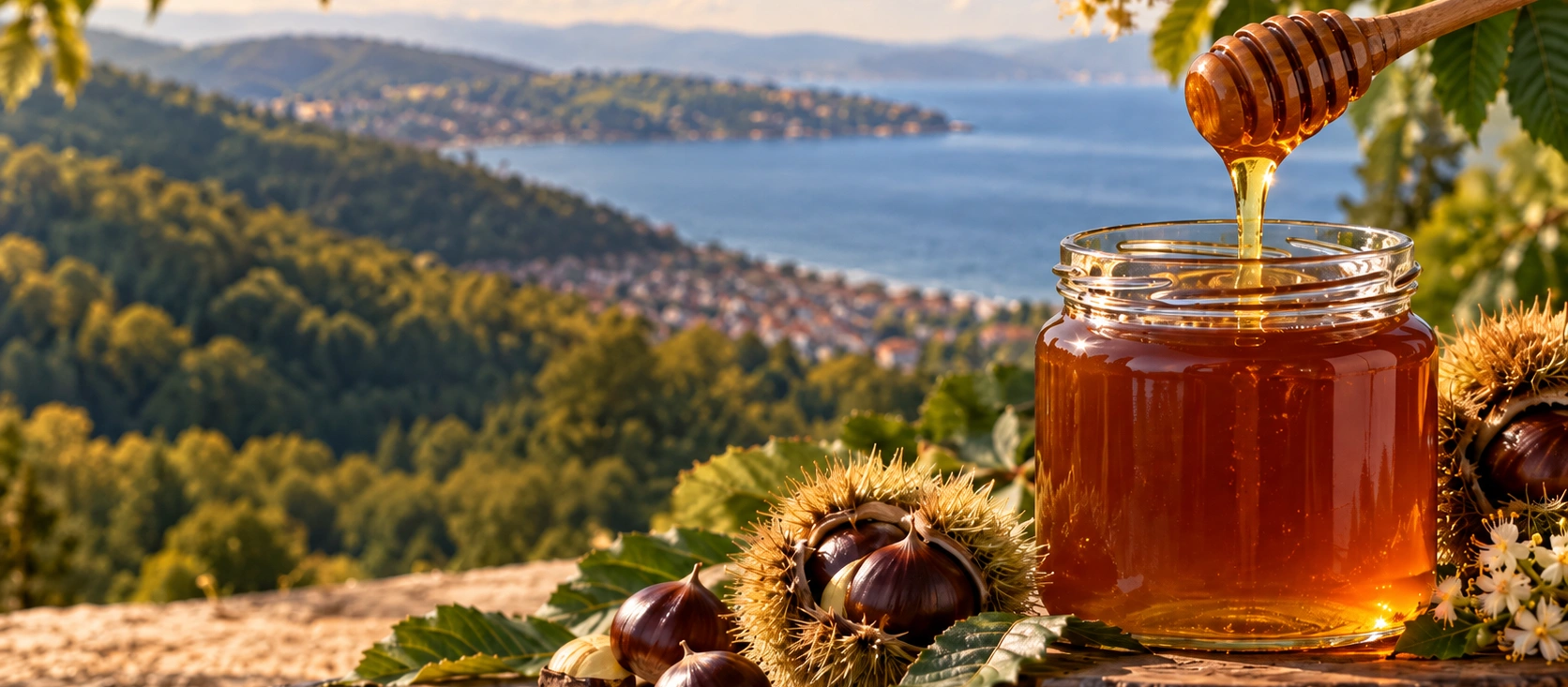
Continue your Yalova food journey with the province’s geographically indicated chestnut honey and its forest-based beekeeping story.
Discover Yalova Chestnut HoneyCombine Yalova city, Termal, countryside scenery, museums and local-food stops in a personalised route.

Create a personalised day combining Yalova’s museums, waterfront, Termal, botanical gardens, waterfalls and regional food experiences.
Request a Private Journey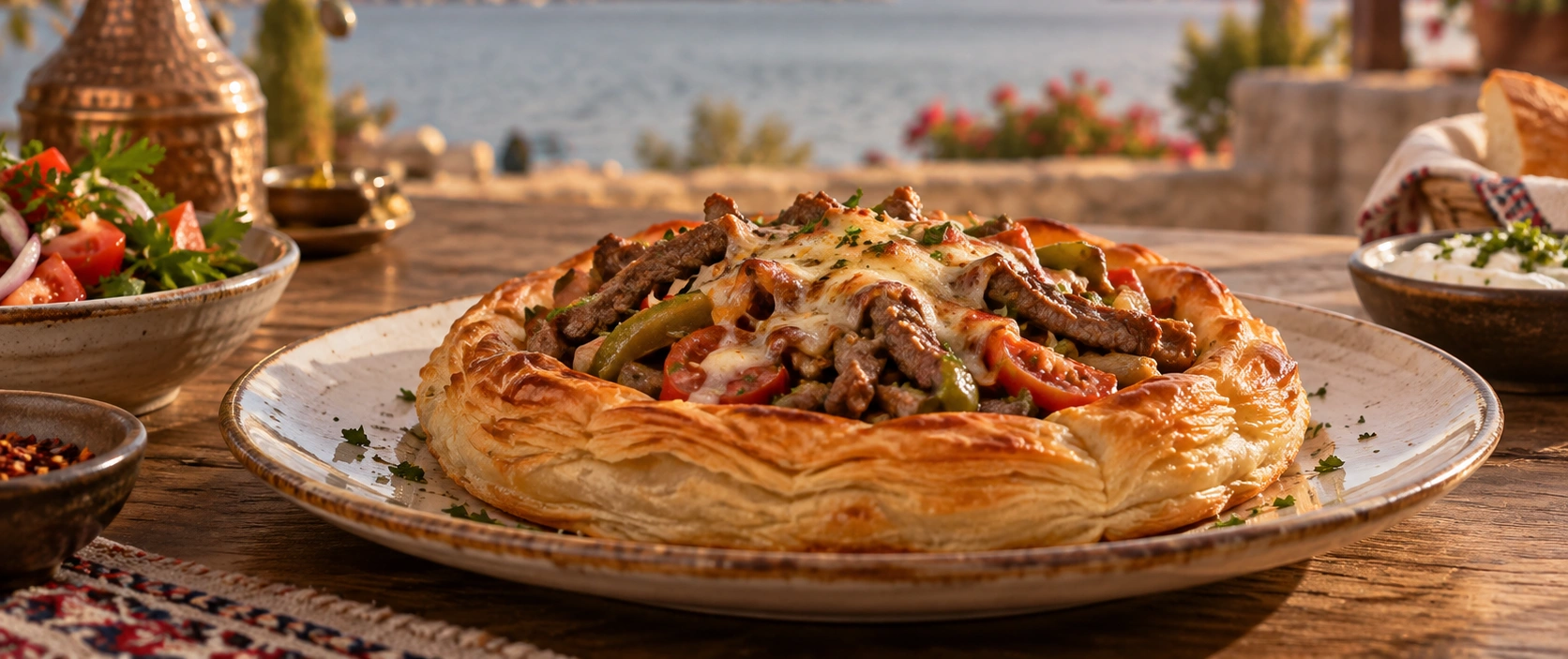
Build a food-focused route around Yalova’s local dishes, protected agricultural products, traditional sweets and regional countryside.
Ask About Custom Options