Atatürk, Early Republican History and the Green Thermal Landscape of Yalova

Termal Atatürk Mansion, Yalova – Visitor Guide

Step inside one of Yalova’s most important early Republican landmarks,
built for Mustafa Kemal Atatürk in the historic thermal resort of Termal.

Explore Termal Atatürk Mansion

Termal Atatürk Mansion – A Presidential Retreat in Yalova’s Historic Spa District

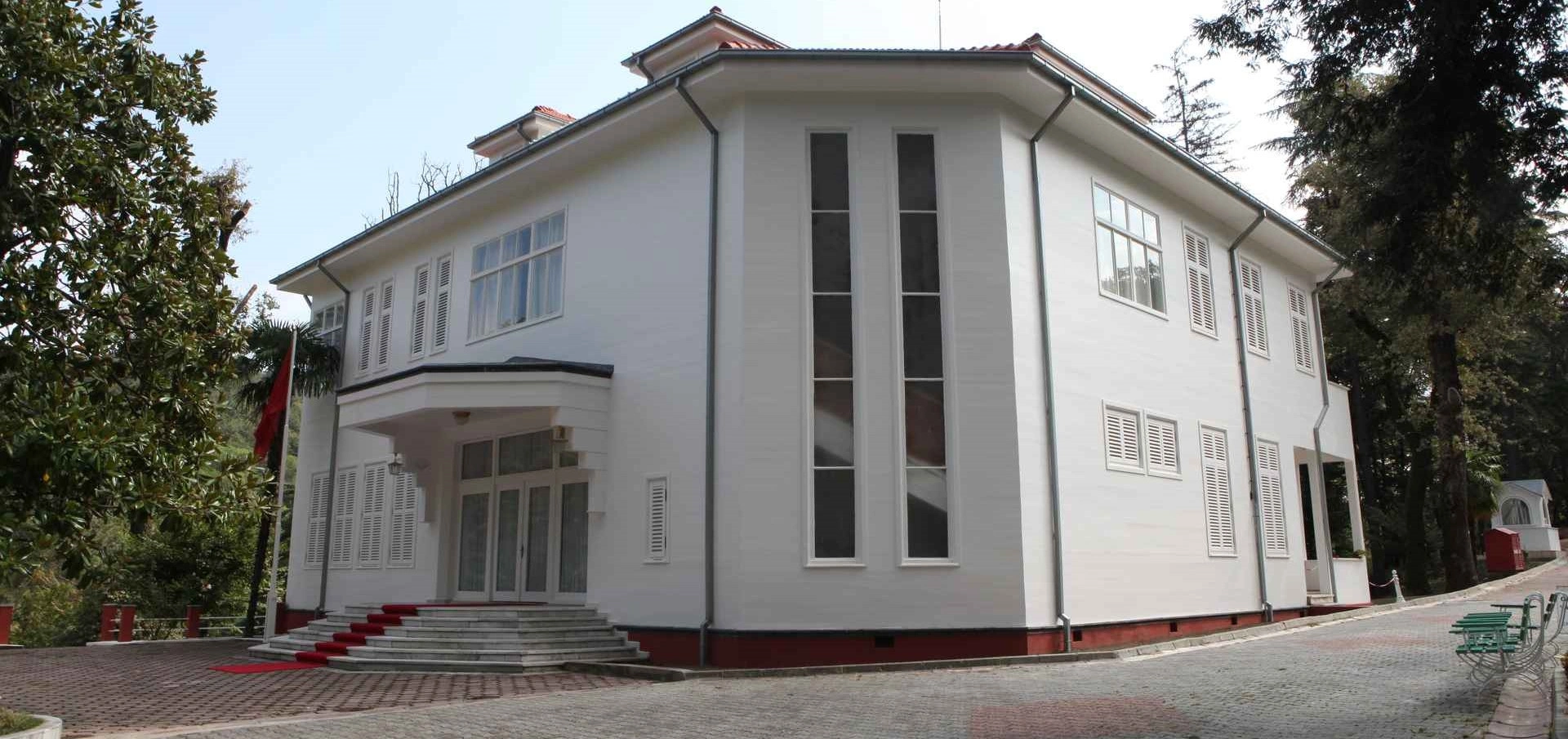
Termal Atatürk Mansion, also known as Termal Atatürk Köşkü or Yalova Atatürk Köşkü, stands among the forested grounds of Yalova’s famous thermal district. It is one of the most significant places in the province for understanding Mustafa Kemal Atatürk’s close connection with Yalova and the development of Termal during the early Turkish Republic.

The mansion was commissioned in 1929, the same year Atatürk began visiting Yalova regularly. Official cultural sources record that it was completed in only 38 days and associate its design with architect Sedad Hakkı Eldem.

This was not simply a holiday residence. The mansion functioned as a place for rest, official meetings, long table conversations, state affairs and the reception of important guests. Its rooms preserve furniture, paintings, carpets, decorative objects and personal details that help visitors imagine how the residence was used during Atatürk’s lifetime.

Its location makes the visit especially rewarding. The mansion stands within the same historic landscape as the Yalova Termal Hot Springs, allowing travellers to experience early Republican history, Ottoman and Byzantine thermal heritage, gardens and forest scenery in a single compact area.

1929

The mansion was commissioned during the year Atatürk began his regular Yalova visits.

38 Days

Official museum and cultural sources record an unusually rapid construction period.

Presidential Residence

The building served as a place for both private life and official work.

Historic House Museum

Today the mansion preserves period rooms, furnishings and objects connected with the early Republic.

Know Before You Go

Termal Atatürk Mansion – Quick Facts

Essential information for visiting one of Yalova’s most important Atatürk heritage sites.

📍

Location

Gökçedere, Termal district, approximately 12 km from central Yalova.

Search on Google Maps
🏛️

Type

Historic presidential residence and early Republican house museum.

📅

Construction

Built in 1929 and recorded by official sources as having been completed in 38 days.

✏️

Architect

Official Yalova cultural sources attribute the design to Sedad Hakkı Eldem.

🪵

Architecture

An early Republican timber residence with formal reception and private living spaces.

🇹🇷

Historical Figure

Built for Mustafa Kemal Atatürk during his close association with Yalova and Termal.

💼

Historic Use

A presidential retreat, working residence and setting for official discussions and guests.

🛋️

Collections

Period furniture, paintings, carpets, ceramics, decorative arts, a piano and other historic objects.

🌲

Setting

Landscaped grounds connected with the wooded environment of the Termal spa district.

♨️

Nearby Highlight

The mansion can easily be combined with Yalova Termal’s historic baths and thermal grounds.


Where Private Life and Public History Meet

Why Termal Atatürk Mansion Is Special

The mansion is important not only because Atatürk stayed here, but because it reveals how Yalova became one of the most meaningful working and resting places of the early Republic.

Many Atatürk houses in Türkiye preserve the memory of a particular visit. Termal Atatürk Mansion is different because Yalova became a recurring part of Atatürk’s life. He returned to the province over a number of years, used the thermal district for rest, followed local development closely and worked here while remaining in contact with ministers, officials, friends and citizens.

The mansion therefore combines several stories at once: presidential life, early Republican architecture, state affairs, diplomacy, social history and the modernization of Yalova.

Its setting is also unusually important. Rather than standing in an isolated museum quarter, the residence remains embedded in the historic landscape of Termal’s hot springs, old baths, gardens and wooded walking areas.

For visitors, this makes the house easier to understand. Atatürk’s interest in Termal was not limited to one building; it formed part of a larger vision for Yalova as a healthy, green and internationally recognized destination.

Atatürk’s First Visit to Yalova and Termal

Atatürk’s close association with Yalova began in August 1929. Official Yalova cultural records state that he arrived in Yalova on 19 August 1929 and went first to the thermal springs.

The visit became a turning point for the district. Atatürk examined the thermal area, gave instructions concerning its improvement and returned to Yalova repeatedly in the years that followed.

The natural setting, hot springs and proximity to Istanbul made Yalova particularly suitable as a place where rest and government work could exist side by side. Termal soon became closely connected with Atatürk’s presence and with new plans for the province.

The mansion built in the same period gave those visits a permanent architectural centre. From that point onward, Termal was no longer only an old spa settlement; it also became one of the important landscapes associated with the early Republican presidency.

19 August 1929 Atatürk’s first documented Yalova visit and inspection of the thermal district
Termal The historic spa area that became one of Atatürk’s recurring Yalova destinations
1929 The year the presidential mansion was commissioned in the thermal landscape
Repeated Visits Yalova continued to play an important role in Atatürk’s working and personal life through the 1930s

The Construction of Termal Atatürk Mansion

Official cultural and museum sources state that Termal Atatürk Mansion was completed in 38 days. The building was created to provide Atatürk with a suitable residence inside the thermal district while also allowing official work and meetings to continue.

The current Turkish Museums inventory records that construction was undertaken by the Seyr-i Sefâin Administration, the state maritime organization of the period. Local official sources attribute the architectural design to Sedad Hakkı Eldem, who later became one of the most influential names in twentieth-century Turkish architecture.

The mansion was initially referred to as the Reis-i Cumhur Köşkü — the Presidential Mansion — before becoming widely known as Atatürk Köşkü.

Its rapid completion should not make the building seem temporary. The residence was planned with formal salons, private rooms, service areas, bathrooms, terraces and carefully selected furnishings suitable for both presidential life and official hospitality.

38 Days

The construction period consistently recorded by official cultural and museum sources.

Seyr-i Sefâin

The state maritime administration is identified by Turkish Museums as the organization responsible for construction.

Sedad Hakkı Eldem

Official Yalova sources attribute the mansion’s architectural design to the important Turkish architect.

Presidential Mansion

The building’s original role combined accommodation, representation and government work.

Architecture of Termal Atatürk Mansion

The mansion is one of the notable early examples of Republican-period Turkish residential architecture. Its visual character is shaped by timber construction, broad windows, balconies and terraces, a pitched roof and a close relationship with the surrounding garden.

The current Turkish Museums inventory describes the house as occupying approximately 425 square metres and as having a nearly rectangular plan. When the basement and attic levels are included, that inventory describes a four-level internal arrangement.

Different official sources count the mansion’s rooms and formal halls in different ways. Older visitor descriptions often refer to three ceremonial halls and 11 rooms, while the current Turkish Museums inventory describes four salons, 17 rooms and four bathrooms when the wider building levels and functions are counted.

For travellers, the important point is not the numbering system but the layout: this is a substantial residence with public reception spaces downstairs and more private family and working rooms above.

Architecture note: Official inventories use different room-counting conventions. This guide preserves that distinction rather than presenting one number as universally accepted.

Inside the Mansion

The entrance leads through a hall toward the principal ceremonial and reception spaces. These rooms were designed not only for display, but for the everyday rhythm of meetings, meals, conversation and state business.

One of the key spaces is the Şeref Salonu, or Hall of Honour. Museum descriptions connect this room with long table conversations, official discussions and exchanges concerning government affairs.

The upper floor contains rooms associated with Atatürk’s more private routine, including his study, sitting room, resting room and bathroom. Other rooms were used by members of his family and household.

The Turkish Museums inventory also identifies spaces connected with Makbule Hanım, Atatürk’s sister, as well as rooms used by his adopted daughters, including Afet İnan and Sabiha Gökçen.

Service spaces were carefully separated from the principal rooms. One especially interesting design detail is the absence of a conventional kitchen within the main residence, a precaution connected with fire safety in a predominantly wooden building.

Hall of Honour

A principal space for formal conversation, dining and discussions connected with state affairs.

Atatürk’s Rooms

Private spaces include rooms used for working, resting, sitting and personal daily life.

Family Rooms

Parts of the house were used by Makbule Hanım and members of Atatürk’s close family circle.

Service Areas

Practical spaces and a service lift supported the residence without dominating the formal interiors.

A Presidential Working Residence

Termal Atatürk Mansion should not be imagined as a purely recreational summer house. During Atatürk’s Yalova periods, government work continued around him. The mansion provided a setting where ministers, officials, guests and close associates could meet the president away from Ankara while still conducting serious work.

Official cultural sources associate the residence with discussions and planning surrounding a number of early Republican political, economic, cultural and educational initiatives. Some older visitor texts summarize this by saying that important decisions were “taken here.”

Because major reforms usually developed through institutions, meetings and decisions extending beyond a single room, it is more accurate to understand the mansion as one of the working environments in which important questions of the period were discussed.

This distinction makes the site more interesting rather than less. The visitor is not simply entering a memorial house, but a place where informal meals, private conversations and official responsibilities often overlapped.

Historic Discussions Associated with the Mansion

Official Yalova and national cultural sources connect Termal Atatürk Mansion with discussions surrounding several important subjects of the early 1930s. These include the experiment with an opposition party, the encouragement of domestic production and consumption, the development of Turkish historical and linguistic institutions, and religious-text translation work.

The mansion’s role was often less formal than a parliament chamber or ministry office. Its importance came from being a place where senior figures could talk directly, continue discussions over meals and consider policy questions in a relatively private setting.

For modern visitors, these associations should be understood as part of the documented political and intellectual environment of the period, rather than as proof that every related reform was formally decided inside the building itself.

Government Discussions The mansion functioned as an active presidential working environment during Yalova stays
Economic Questions Official visitor sources associate the residence with discussions around domestic production and consumption
Culture & Language Historical accounts connect the Yalova working periods with wider cultural and linguistic initiatives
Informal Diplomacy Meals, salons and private meetings could complement formal state institutions

Reza Shah Pahlavi and the Mansion’s Diplomatic Role

The residence also became a setting for international hospitality. Official Yalova sources identify Reza Shah Pahlavi of Iran as the first foreign head of state received at the mansion.

Reza Shah made an important state visit to Türkiye in 1934, during a period when Ankara and Tehran were developing closer diplomatic relations. The use of Termal for high-level hospitality shows how the mansion’s role extended beyond private presidential life.

The guest story can still be traced through objects associated with diplomatic exchange. Museum descriptions mention, among other pieces, a clock presented by the Iranian Shah.

These objects help visitors understand the mansion as a place where personal hospitality and state representation could meet.

What You Can See Inside Termal Atatürk Mansion

One of the strongest reasons to visit is that the building retains the atmosphere of a furnished historic residence. The decoration was assembled from a mixture of palace collections, newly purchased furnishings and personal or diplomatic objects.

The current museum inventory notes that much of the furniture was selected from palaces and pavilions under the National Palaces administration, while additional furnishings were obtained from shops in Istanbul’s Beyoğlu district.

Visitors encounter Hereke and Persian carpets, porcelain, brass and ebony objects, period bedroom furniture, radios, paintings and a piano. Together they reveal the international material culture surrounding an elite presidential residence in the early twentieth century.

The collection is not visually uniform, and that is part of its interest. Ottoman palace taste, European furniture, East Asian ceramics, modern technology and Republican-period paintings appear together in the same house.

Hereke & Persian Carpets

Textiles contribute strongly to the formal atmosphere of the reception and living spaces.

Porcelain & Decorative Arts

Objects include pieces associated with Yıldız porcelain as well as European and Asian decorative traditions.

Historic Furniture

Many pieces were selected from state palace and pavilion collections or acquired in Istanbul.

Personal & Diplomatic Objects

Smaller objects help connect the rooms with Atatürk’s family life, guests and official relationships.

Paintings and Notable Works

The mansion contains artworks that make the visit more than an architectural tour. Official cultural inventories identify a painting by Nurettin Niyazi, dated to 1930, connected with the Kurşunlu bath and female bathers.

Another painting is traditionally attributed in official visitor information to Ivan Aivazovsky and dated 1875. It depicts a landscape with animals on a hillside.

Because the rooms preserve both historical furniture and art, visitors can read the mansion as a complete interior rather than as an empty shell. The placement of paintings, carpets, ceramics and furniture gives important context to the way presidential spaces were presented and experienced.

Photography tip: Interior photography rules can change because of conservation, security and museum policy. Check the current instructions before photographing rooms or individual artworks.

The Piano, Radio, Billiard Table and Everyday Details

Some of the mansion’s most memorable pieces are not monumental artworks but objects connected with daily life. The collection includes a Wilhelm Spaethe piano, a period RCA radio and a billiard table brought from Dolmabahçe Palace.

These items show that the mansion supported different rhythms: official work, meals, music, conversation, reading, recreation and private rest.

A large dining or meeting table in the main salon further reinforces the house’s social character. Long conversations around the table formed an important part of Atatürk’s working style, where discussion could continue beyond a formal office setting.

Look closely at such practical details. They often communicate the human scale of the mansion more effectively than ceremonial decoration alone.

The Garden and Natural Setting

Termal Atatürk Mansion belongs to a landscape as much as to an architectural complex. Its organized garden connects visually and physically with the surrounding wooded thermal district.

The Turkish Museums inventory records mature trees including sequoia, linden, hornbeam, oak, pine, weeping pine and palm, among other species.

This mixture reflects Termal’s long identity as a landscaped health and leisure destination. Paths, trees, fresh air and the thermal waters were understood as complementary parts of the experience.

The garden also helps explain why Atatürk was drawn to Yalova. The province offered a rare combination of easy access from Istanbul, abundant greenery, hot springs and enough privacy for work and rest.

Mature Trees

The garden contains long-lived species that reinforce the historic atmosphere of the residence.

Forest Connection

The formal garden merges naturally into the wooded character of the Termal district.

Slow Exploration

Allow time to appreciate the outdoor setting rather than treating the mansion as an indoor-only museum.

Thermal Landscape

The residence forms part of the same green cultural landscape as the historic hot-spring complex.

Atatürk’s Wider Connection with Yalova

Termal Atatürk Mansion is only one part of the larger Atatürk story in Yalova. From 1929 onward, he returned repeatedly to the province, using different residences and farms while taking a close interest in health, agriculture, urban development, the thermal springs and the relationship between buildings and nature.

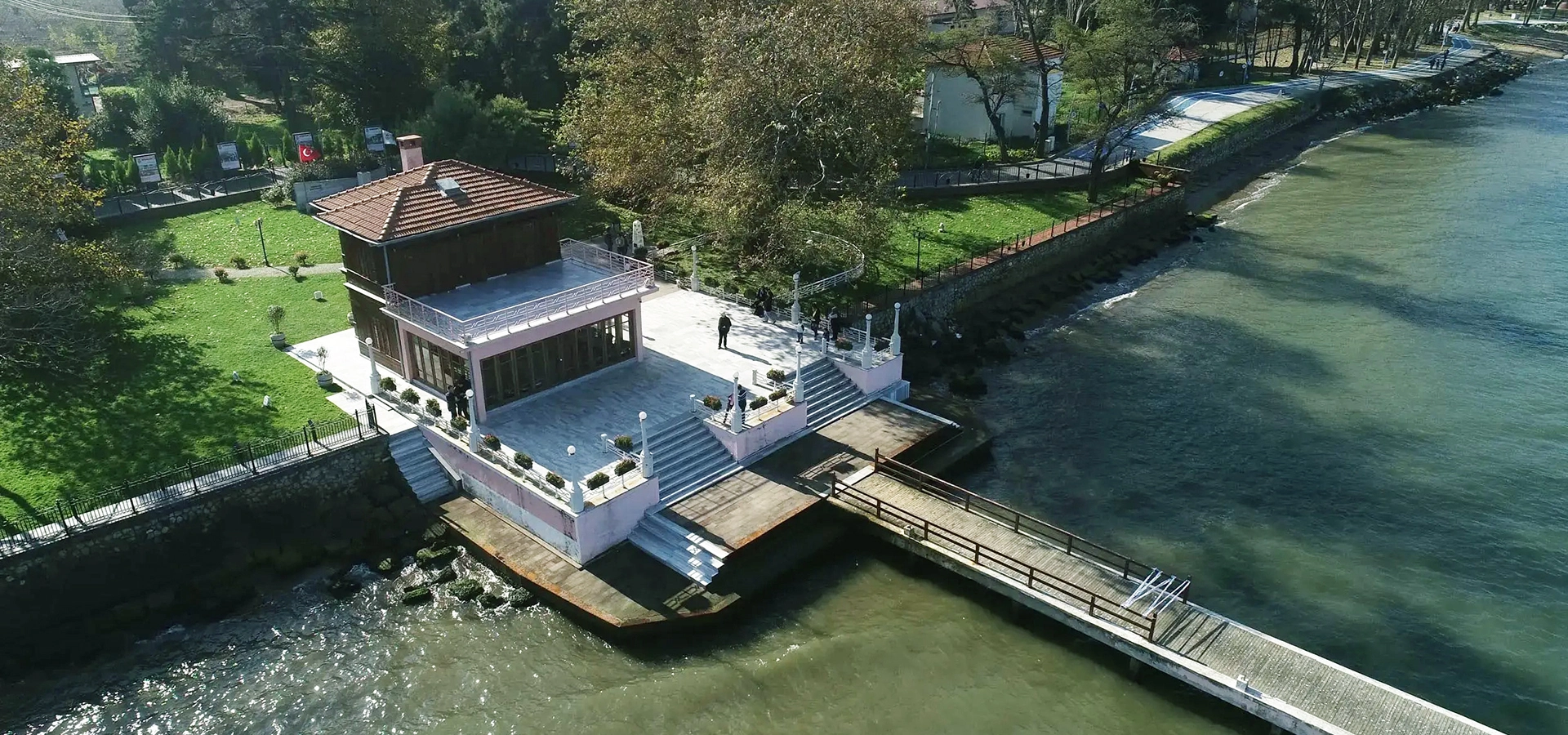
The best-known companion site is Yürüyen Köşk, the waterfront pavilion famously moved on rails in 1930 so that the branch of an old plane tree would not have to be cut.

The two houses reveal different sides of the same period. Yürüyen Köşk is remembered especially through the story of the tree and the moving of the building, while Termal Atatürk Mansion presents a broader world of presidential residence, government work, official guests and spa-district development.

Visiting both gives a much richer understanding of why Yalova occupies a distinctive place in Atatürk heritage.

Preservation and Museum History

The mansion remained an important state residence long after its construction. A 24 July 1930 decree placed it within the National Palaces framework for preservation as public property.

On 15 May 1983, the building was formally registered as a cultural property requiring protection. Official sources also record restoration and museum-use work during the 1980s.

The current Turkish Museums inventory states that the mansion underwent a major restoration between 2008 and 2012. Today it functions as a historic house museum administered within the Turkish Grand National Assembly heritage system.

Preservation is especially important because the building is largely timber. Maintaining historic interiors, furniture, textiles, paintings and the surrounding garden requires more than preserving the exterior shell.

1930 Placed within the National Palaces framework for long-term public preservation
1983 Registered as a protected cultural property
2008–2012 Major restoration period recorded by the current Turkish Museums inventory
Today Open as a historic house museum, subject to current visitor arrangements

Visitor Information for Termal Atatürk Mansion

The mansion is located in Gökçedere, Termal, Yalova, within the wider historic spa district. It can be visited independently or combined with the hot springs, historic bath buildings and walking areas of Termal.

The Turkish Museums listing currently presents the mansion as a publicly accessible museum house. It also lists visitor facilities including parking, toilets and guiding services.

Museum hours, weekly closing days, guided-visit arrangements and restoration closures can change. Check the current official museum information shortly before travelling, especially if the mansion is the main reason for your trip.

The current Turkish Museums page lists a 10:00–16:00 visiting window and Monday closure, but these practical details should always be rechecked before publication or travel.

District Gökçedere, Termal, Yalova
Distance Approximately 12 km from Yalova city centre
Current Museum Listing 10:00–16:00; Monday closed — verify before travelling
Best Combination Termal Atatürk Mansion + Yalova Termal Hot Springs + historic bath district
Emergency 112

Best Time to Visit Termal Atatürk Mansion

The mansion can be visited throughout the year, and because much of the experience is indoors, it works well even when Yalova’s weather is cool or rainy.

Spring is especially attractive because the Termal district becomes intensely green. The garden, forest paths and nearby thermal grounds feel fresh, making it easy to combine the museum with a longer walk.

Summer offers long daylight hours and is convenient for combining the mansion with the wider province. Weekends can be busier, especially in the thermal district.

Autumn brings softer light and changing forest colours. It is one of the most atmospheric periods for exterior photography.

Winter creates a strong contrast between the historic residence, cool forest air and nearby hot springs. A museum visit followed by a thermal experience can work especially well in colder weather.

Spring Fresh greenery and excellent walking conditions
Summer Long daylight and easy combination with wider Yalova sightseeing
Autumn Forest colour, softer light and quieter atmosphere
Winter Ideal for pairing indoor history with the nearby thermal experience

Photography at Termal Atatürk Mansion

The mansion is highly photogenic from the outside because its light timber architecture, balconies, roofline and garden sit naturally against the green Termal landscape.

Try wider compositions that include mature trees and pathways rather than photographing only the façade. The relationship between architecture and nature is one of the building’s most important visual qualities.

Inside, historic furniture, paintings, textiles and personal objects can create strong detail photographs, but museum photography rules may restrict flash, tripods or photography in selected rooms.

Always follow current staff instructions. Historic house museums are conservation environments first and photographic locations second.

Front Façade

Use the garden to frame the timber architecture and balconies.

Terraces & Windows

Architectural details show how the residence opens toward the landscape.

Historic Interiors

Photograph only where museum rules allow and avoid flash around sensitive collections.

Garden

Spring and autumn offer especially attractive vegetation and light.

Accessibility at Termal Atatürk Mansion

The mansion is a protected historic residence with multiple levels, historic doorways and original spatial arrangements. As a result, step-free access may not be identical to that of a modern purpose-built museum.

Visitors who require wheelchair access, a step-free route, seating assistance or another specific accommodation should contact the museum before travelling.

The surrounding Termal district also includes sloping roads, garden paths and older spa structures, so accessibility varies across a combined itinerary.

Accessibility planning: If a specific access requirement is essential, verify the current museum entrance route and interior access directly before your visit.

How Much Time Do You Need?

Allow around 45–75 minutes for a comfortable visit to the mansion itself, depending on access to rooms, whether guiding is available and how much time you spend studying the furnishings.

Allow 1.5–2 hours if you also want to walk around the garden, photograph the exterior and explore the immediate historic environment.

A half-day works very well if you combine the mansion with Yalova Termal Hot Springs, the historic bath architecture and a relaxed meal or walk in Termal.

A full day can include both Termal and Yürüyen Köşk in central Yalova, creating a strong Atatürk-focused itinerary.

45–75 Minutes

Focused mansion visit with the principal rooms and collections.

1.5–2 Hours

Add the garden, exterior photography and a slower museum pace.

Half-Day

Combine the mansion with the historic thermal district and baths.

Full Day

Add Yürüyen Köşk and central Yalova for a broader Atatürk heritage route.

How to Get to Termal Atatürk Mansion

The mansion is located in Termal district, approximately 12 kilometres from Yalova city centre. The road climbs inland from the Marmara coast toward the green foothills of the Samanlı Mountains.

Visitors arriving in Yalova by ferry or intercity bus can continue to Termal by local minibus, taxi or private vehicle.

For navigation, search specifically for “Termal Atatürk Köşkü” or “Yalova Atatürk Köşkü” rather than only “Atatürk Köşkü,” because several cities in Türkiye have museums with similar names.

If you are also visiting the thermal complex, park only in designated areas and continue through the historic district on foot where practical.

From Yalova Centre

Approximately 12 km by road toward Termal.

By Minibus

Local services connect central Yalova with Termal; confirm the current departure point locally.

By Taxi

A practical option from the ferry terminal, bus station or central hotels.

By Car

Follow signs toward Termal and use official parking areas near the thermal district.

Suggested Visit to Termal Atatürk Mansion

Begin with the mansion before entering the thermal baths. Seeing the residence first gives historical context to the transformation of Termal during the early Republic.

Take time to study the formal reception rooms, Atatürk’s private spaces, furniture and artworks. Rather than moving quickly from room to room, look for details showing how official and private life overlapped.

Continue into the garden and view the building from several angles. The timber architecture makes more sense when seen in relation to the forest and landscaped spa environment.

After the museum, walk toward the historic Termal Hot Springs and see the old bath architecture, parks and named water points.

If you have a full day, return toward central Yalova and finish at Yürüyen Köşk for a second perspective on Atatürk’s relationship with the province.

1. Visit the Mansion Begin with the historic rooms before exploring the spa district
2. Walk the Garden See how the residence connects with Termal’s wooded landscape
3. Explore the Hot Springs Continue into the historic thermal complex and bath district
4. Add Yürüyen Köşk Complete the Atatürk story with the famous waterfront pavilion in Yalova

Places to Visit with Termal Atatürk Mansion

The mansion sits in one of Yalova’s richest sightseeing areas, so it is easy to combine early Republican history with thermal heritage, nature and the Marmara coast.

Yalova Termal Hot Springs

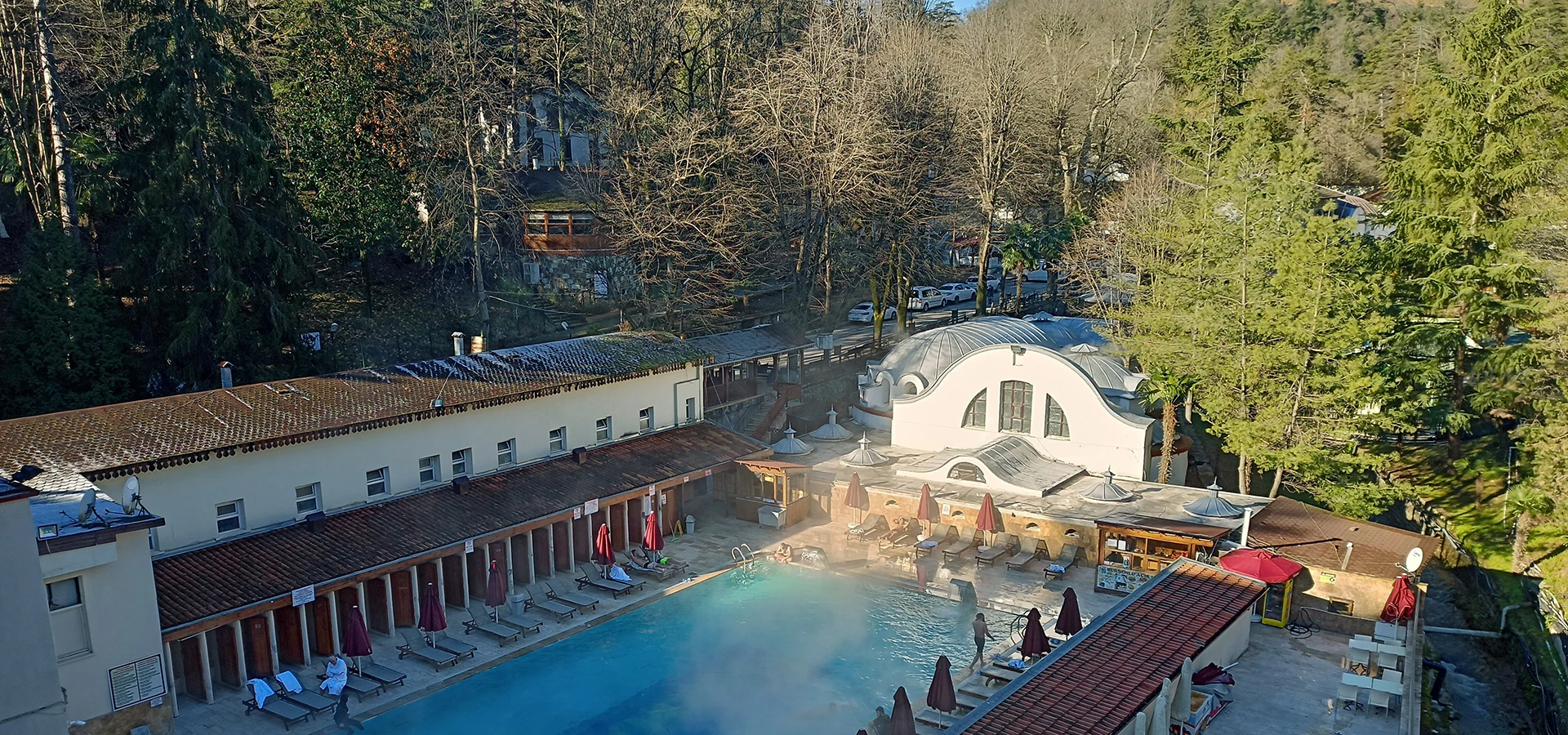
Explore the historic thermal landscape, Kurşunlu and Valide baths, park areas and hot mineral waters.

Yürüyen Köşk

Visit Atatürk’s famous waterfront mansion, moved on rails in 1930 to protect an old plane tree.

Sudüşen Waterfall

Add a nature stop in the wider Termal area, especially during spring and early summer.

Karaca Arboretum

Continue Yalova’s strong garden and botanical theme with an important private arboretum.

Yalova City Centre

Walk the waterfront and explore the compact coastal centre before or after Termal.

Explore Yalova

Continue across the province for waterfalls, beaches, forests, historic mansions, villages and thermal landscapes.

Responsible Visiting at Termal Atatürk Mansion

Do Not Touch Objects

Historic furniture, textiles, paintings and decorative pieces can be damaged by repeated contact.

Follow Photography Rules

Flash, tripods or interior photography may be restricted in selected spaces.

Stay on the Visitor Route

Protected historic houses often contain private conservation and service areas.

Keep Noise Low

A quieter environment helps visitors experience the rooms and protects the atmosphere of the museum.

Protect the Garden

Do not climb trees, pick plants or leave established paths for photographs.

Respect Barriers

Ropes and low barriers protect original surfaces and collection objects even when they seem unnecessary.

Follow Staff Guidance

Temporary access rules can change because of conservation, security or restoration work.

Keep the Grounds Clean

Use bins and leave the historic garden and thermal district free of litter.

Frequently Asked Questions About Termal Atatürk Mansion

Where is Termal Atatürk Mansion?

It is in Gökçedere, Termal district, Yalova, approximately 12 kilometres from Yalova city centre.

What is Termal Atatürk Mansion?

It is a historic presidential residence built for Mustafa Kemal Atatürk in the Termal spa district and now preserved as a museum house.

When was Termal Atatürk Mansion built?

The mansion was built in 1929.

How long did construction take?

Official cultural and museum sources record that the mansion was completed in only 38 days.

Who designed Termal Atatürk Mansion?

Official Yalova sources attribute the design to architect Sedad Hakkı Eldem.

Why did Atatürk spend time in Yalova?

Yalova offered hot springs, extensive greenery and convenient access from Istanbul. Atatürk also took a strong interest in the development of the thermal district and wider province.

Was the mansion only a holiday house?

No. It was also a working presidential residence where Atatürk met officials, received guests and continued discussions concerning state affairs.

Were important decisions discussed here?

Yes. Official visitor sources associate the mansion with discussions surrounding several early Republican political, economic and cultural initiatives. It is safest to understand the house as one of the important working environments of that period rather than the sole place where entire reforms were formally decided.

Did foreign leaders stay at the mansion?

Official Yalova sources identify Reza Shah Pahlavi of Iran as the first foreign head of state received at the mansion.

What is inside the mansion?

Visitors can see historic reception rooms, private apartments, period furniture, carpets, paintings, porcelain, radios, a piano and other objects connected with the residence.

How many rooms does the mansion have?

Official sources use different counting systems. Older visitor information commonly mentions three ceremonial halls and 11 rooms, while the current Turkish Museums inventory describes four salons, 17 rooms and four bathrooms when the wider building levels are included.

Is the mansion made of wood?

Yes. Official museum descriptions identify it as a predominantly timber historic residence.

Can I see Atatürk’s own rooms?

The historic interior includes spaces associated with Atatürk’s work, rest, sitting and personal daily life, subject to the current museum route.

What famous objects are displayed?

Notable objects include a Wilhelm Spaethe piano, a period RCA radio, Hereke and Persian carpets, porcelain and decorative arts, paintings and a billiard table associated with Dolmabahçe Palace.

Is there a garden?

Yes. The mansion stands in a landscaped garden connected with the wooded setting of the Termal spa district.

Is Termal Atatürk Mansion a museum today?

Yes. It functions as a historic house museum open to public visitors, subject to current operating arrangements.

What are the opening hours?

The current Turkish Museums listing shows 10:00–16:00 with Monday closed. Museum schedules can change, so verify the official listing shortly before your visit.

How much time should I allow?

Allow approximately 45–75 minutes for the mansion itself and longer if you want to explore the garden and thermal district.

Can I visit Termal Hot Springs on the same day?

Yes. The mansion is within the wider Termal landscape and combines naturally with the Yalova Termal Hot Springs.

Can I combine the mansion with Yürüyen Köşk?

Yes. Visiting both Termal Atatürk Mansion and Yürüyen Köşk creates one of the best Atatürk-focused itineraries in Yalova.

Is photography allowed inside?

Photography rules can change by room and conservation requirement. Follow the current instructions given by museum staff and avoid flash where it is prohibited.

Is the mansion wheelchair accessible?

Accessibility may be limited by the historic multi-level architecture. Visitors who need step-free access should confirm the current arrangements directly before travelling.

Is the mansion suitable for children?

Yes, especially for families interested in Turkish history. Children should be supervised closely around fragile interiors, stairs and protected collection areas.

What else can I visit nearby?

Good combinations include Yalova Termal Hot Springs, Sudüşen Waterfall, Karaca Arboretum, Yürüyen Köşk and central Yalova.

Is Termal Atatürk Mansion worth visiting?

For travellers interested in Atatürk, early Republican history, architecture or Yalova’s thermal heritage, the mansion adds essential historical context to the Termal district.


Private Yalova Heritage & Termal Experiences

Combine Termal Atatürk Mansion with Yalova’s thermal heritage, historic baths, gardens, waterfalls and selected Atatürk sites through a private itinerary designed around your interests and pace.

Custom Atatürk & Termal Heritage Experience

Discover Termal Atatürk Mansion, the historic hot springs, Yürüyen Köşk and selected natural or cultural attractions in a tailor-made private day.

Yalova Turkey history thermal nature and travel guide

Explore Yalova

Discover hot springs, waterfalls, forests, historic mansions, coastal towns, gardens and cultural attractions throughout Yalova Province.

View Yalova Guide

Continue Exploring Yalova

Pair Termal Atatürk Mansion with places that reveal Yalova’s early Republican history, thermal landscape and Marmara nature.