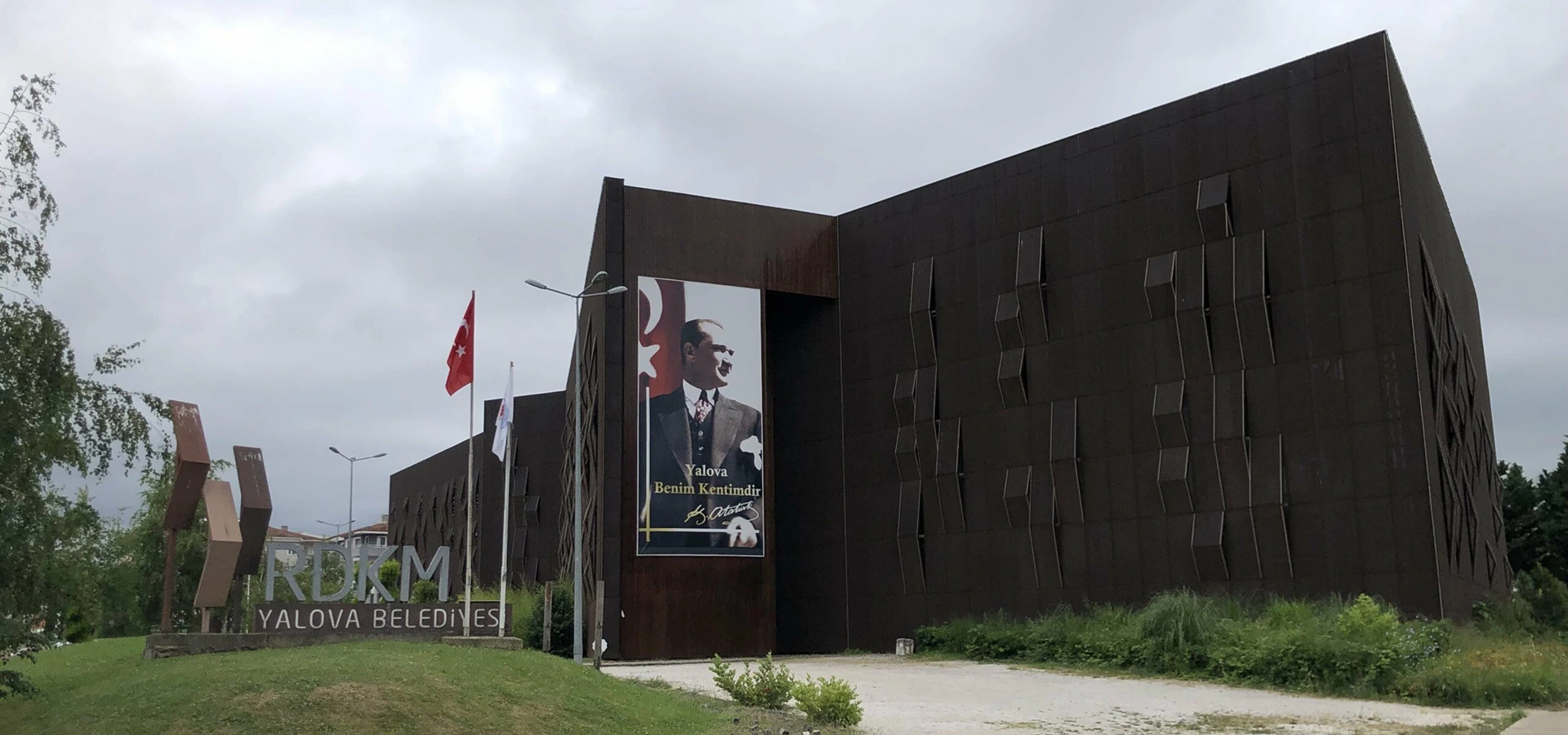
Private Paper Museum & Yalova Heritage Experience
Ask us about a tailor-made excursion combining the Paper Museum, Yürüyen Köşk, Termal and selected historical or natural places across Yalova Province.
Request a Custom Tour



The İbrahim Müteferrika Paper Museum is one of Yalova’s most distinctive cultural attractions. Located inside the Raif Dinçkök Cultural Center in central Yalova, the museum tells the story of paper as a material, a technology, an art form and one of the foundations of written civilization.
Its connection with Yalova is especially important. In the 18th century, the pioneering Ottoman printer İbrahim Müteferrika became closely involved with the establishment of a paper manufactory in the Yalova area, historically known as Yalakabad. The enterprise is significant because it is the first Ottoman paper-production facility whose existence can be securely documented in official records.
Historical research places Müteferrika’s initiative to establish the mill in 1741. Paper-making specialists were brought from Poland / the Polish–Lithuanian Commonwealth, and production developed near the watercourses of the Elmalık–Çardaklı area. An official order dated 18 April 1745 concerned the addition of a second water wheel and the supply of materials for the manufactory.
Today, the museum brings that history back to life through information panels, historic paper and writing objects, printing-related material, paper-art displays and a working handmade-paper workshop where visitors can learn how fibres are transformed into sheets. The museum is officially presented by Yalova Municipality as Türkiye’s first paper museum.
The year İbrahim Müteferrika began his documented initiative to establish a paper manufactory in Yalova.
A key documented year in the development of the Yalova paper mill, including an order for a second water wheel.
The İbrahim Müteferrika Paper Museum opened to visitors in Yalova.
Yalova Municipality identifies the institution as Türkiye’s first museum devoted specifically to paper.
Essential information for visiting Yalova’s interactive museum of paper, printing and traditional production.
Raif Dinçkök Cultural Center, Bahçelievler Mahallesi, central Yalova.
Search on Google MapsThe history, production, preservation and cultural importance of paper.
The museum interprets İbrahim Müteferrika, Ottoman printing and the Yalova paper manufactory.
The historic Yalova paper mill represents the first securely documented Ottoman paper-production facility.
Traditional handmade-paper production can be demonstrated and experienced in the museum workshop.
The museum opened to visitors on 25 May 2013 after research and development work begun in 2011.
Current official educational information lists museum admission as free.
Listed as Tuesday–Sunday 09:00–17:00, with Monday closed. Recheck before travel.
Families, students, book lovers, history travellers, artists and visitors interested in traditional crafts.
A modern museum inside the Raif Dinçkök Cultural Center rather than at the original paper-mill site.
The museum connects Yalova with the history of books, printing, craftsmanship, technology and the circulation of knowledge.
Paper can seem ordinary today, but for centuries it was a strategic cultural material. Government, education, commerce, religion, literature, science, mapping and printing all depended on reliable writing surfaces.
The Yalova museum is important because it explains paper not simply as a finished sheet, but as a product of raw materials, water, labour, technical skill and specialized equipment. That approach makes a familiar object understandable as a historical technology.
The museum also gives Yalova a direct place in Ottoman intellectual and industrial history. İbrahim Müteferrika’s printing activities created a growing need for paper, while imported paper remained an important part of the market. His involvement in the Yalova paper enterprise therefore links printing with local production.
Finally, the museum does not stop with the past. Its workshop turns paper history into a living craft, allowing visitors to see how pulp, water, moulding, pressing and drying can become a handmade sheet.
The museum is located in Yalova city centre, inside the Raif Dinçkök Cultural Center. The official address is Bahçelievler Mahallesi, Şehit Ömer Faydalı Bulvarı No:203, 77200 Yalova Merkez.
This central urban setting makes the museum much easier to include in a Yalova itinerary than many rural waterfalls, plateaus or archaeological sites. It can be combined naturally with Yürüyen Köşk, the city centre, the waterfront and other cultural attractions.
Visitors should note that the museum is not located at the surviving site of the 18th-century paper manufactory. The historic paper-making complex was associated with the Elmalık–Çardaklı area, while the modern museum interprets that story in central Yalova.
İbrahim Müteferrika was one of the most important figures in the history of Ottoman printing. He is closely associated with the first Ottoman Turkish press to produce books using movable type on a sustained basis, and his publications helped expand the use of print in fields such as history, geography and statecraft.
His importance to Yalova comes from another part of his career: the attempt to create a dependable local source of paper. Historical records show that he began an initiative in 1741 to establish a paper manufactory in the Yalova region.
Specialists were brought from Lehistan — Poland / the Polish–Lithuanian Commonwealth to contribute technical knowledge. The manufactory later operated under Müteferrika’s supervision, linking one of the Ottoman world’s most important printing pioneers directly with Yalova’s industrial history.
For visitors, this connection helps explain why the museum bears his name. It is not simply a memorial to a printer: it explores the material that made printing, books and the circulation of knowledge possible.
Printing is often discussed through presses, movable type and books, but every printed page depends on another technology: paper production.
When Müteferrika’s press began operating in the early 18th century, paper used for printing came from different sources, including imported European production. Watermarks preserved in historic sheets reveal the international paper market that supplied Ottoman printers.
A local manufactory therefore had potential strategic and economic value. It could reduce dependence on imported supply, support printing and create specialized technical knowledge inside the empire.
This is one of the museum’s strongest historical lessons: printing history and paper history cannot really be separated. The machine, the type, the ink and the sheet all formed part of one technological system.
In Ottoman documents, Yalova was historically known as Yalakabad. The paper manufactory associated with İbrahim Müteferrika is therefore frequently referred to as Kâğıthane-i Yalakabad or the Yalova Paper Mill.
The enterprise developed near Çardaklı in the Elmalık / Saruhanlı area, where flowing water could power the equipment required for traditional paper production. Water was essential not only for moving machinery but also for processing and washing fibrous raw material.
Academic reference works note that the initiative began in 1741. By the mid-1740s the mill was in operation, and an order dated 18 April 1745 authorized a second water wheel and directed that supplies be provided from major state workshops and arsenals.
The mill appears to have worked for roughly ten to fifteen years. Later sources associate its decline with a combination of limited water, technical difficulties and competition from imported European paper. Evidence for continued operation after around 1760 is lacking.
Historic paper can preserve evidence that is almost invisible at first glance. When held to the light, a sheet may reveal a watermark created during the manufacturing process. These marks can help researchers identify production traditions, paper makers, trade connections and approximate dates.
Research on Yalova paper has drawn attention to surviving sheets associated with the 18th-century manufactory. Sources discuss paper bearing references to Yalakabad and the date 1158 AH / 1745, together with a stylized motif.
Other archival research notes the production of paper using lion-type watermarks, reflecting the importance of recognizable marks in the paper trade of the period.
For museum visitors, watermarks offer a useful way to think like a historian: a sheet of paper is not merely a blank surface. Its fibres, thickness, texture, watermark and manufacturing traces can all become historical evidence.
The museum combines information panels, display cases, historic objects and interactive interpretation. Its themes extend far beyond the Yalova paper mill itself.
Follow paper from its early development and global spread to its role in modern life.
Learn how fibres are prepared, suspended in water, formed into sheets, pressed and dried.
Explore the wider history of writing surfaces and the need to record information.
Discover the place of paper in Turkish and Ottoman cultural history.
See how printing, book production and the need for reliable paper came together in the 18th century.
Historic writing sets and related objects help reconstruct the material culture of manuscripts and documents.
Examples of traditional and modern paper-based arts show that paper can be both medium and artwork.
The museum connects the sheet of paper with the larger histories of books, reading and libraries.
Learn why historic paper survives, deteriorates and requires specialized preservation.
Finished products demonstrate how handmade paper can continue as a contemporary craft material.
What makes the İbrahim Müteferrika Paper Museum especially engaging is its production workshop. Instead of only looking at finished objects, visitors can encounter the basic stages of traditional handmade paper production.
In a typical handmade process, prepared plant or textile fibres are broken down into pulp and mixed with water. A mould or screen is then used to lift a thin layer of fibres from the vat. As the water drains, the fibres interlock and begin to form a sheet.
The wet sheet must then be transferred, pressed and dried. The apparent simplicity of the process hides a great deal of skill: even fibre distribution, sheet thickness, surface quality and drying all affect the final result.
Educational information about the museum notes demonstrations and production using Uyghur-style paper made from mulberry cellulose as well as Ottoman-style paper using cotton and linen fibres. Workshop availability can vary, especially for groups, so visitors who specifically want a hands-on session should confirm arrangements in advance.
The museum uses the expression Yalova Paper for the handmade paper tradition it promotes through demonstrations, workshops, festivals and educational activities.
The name creates a bridge between the modern craft and the city’s 18th-century paper-making heritage. Rather than leaving Kâğıthane-i Yalakabad as an obscure archival episode, the museum turns the story into something visitors can touch, make and remember.
Yalova Municipality reported that during 2025 the museum received 57,420 visitors, while approximately 14,000 people participated in workshop activities during the year. The municipality also promoted handmade Yalova Paper to much larger audiences through festivals and events.
These numbers show that the museum functions not only as an exhibition space but as an active cultural workshop and outreach project.
The modern museum project was initiated by Yalova Municipality in 2011. Research carried out during the development process expanded the concept from a conventional exhibition into a museum that would also include a working production workshop.
The museum opened to visitors on 25 May 2013 inside the Raif Dinçkök Cultural Center. Its identity as a paper museum was unusual in Türkiye, and municipal and cultural sources describe it as the country’s first paper museum.
The project also developed a specialist dimension. Official descriptions emphasize a growing documentation library and consultation with scholars and international paper-museum specialists.
This research-based approach is important because paper history sits at the intersection of art history, book history, industrial history, chemistry, conservation and craft technology.
The İbrahim Müteferrika Paper Museum is not a huge encyclopedic museum. Its strength is focus. A visit takes a familiar material — paper — and reveals the many layers of history hidden behind it.
You can move from panels explaining the development of paper to displays of writing equipment, historic sheets, printing-related material and examples of paper art. The workshop then turns the story from observation into physical process.
Visitors who enjoy books or museums often discover that the most memorable part is realizing how labour-intensive a single handmade sheet can be. For children, the transformation of watery pulp into paper is especially easy to understand and remember.
Because the museum is inside a modern cultural centre, the experience is more comfortable and accessible than a ruin or rural heritage site. It also works well in poor weather, making it a useful year-round Yalova attraction.
Current information published through Türkiye’s Ministry of National Education outdoor-learning platform lists the museum as open Tuesday to Sunday from 09:00 to 17:00 and closed on Monday.
The same source states that museum admission is free and that individual visitors can normally enter without an appointment. Student groups are advised to contact museum management in advance.
Opening hours, public holidays, maintenance and workshop schedules can change. For that reason, travellers making a special journey should always reconfirm current conditions before departure.
Because the museum is indoors, there is no single season required for a good visit. It is one of Yalova’s easiest cultural attractions to enjoy in rain, winter weather or summer heat.
A morning visit can be useful if you prefer a quieter museum atmosphere. Current educational information specifically notes 09:00–11:00 as a generally calmer period.
In spring and summer, the museum can be paired with the waterfront, Yürüyen Köşk or natural attractions. In autumn and winter, it makes an excellent indoor counterpart to Yalova Termal Hot Springs.
The museum is particularly suitable for families because its main subject is immediately familiar. Children already know what paper is; the museum simply asks them to discover where it comes from and how it is made.
The workshop element turns the visit into more than reading labels. Seeing wet fibres become a sheet can introduce ideas about materials, water, recycling, craft, books and historical technology in a very concrete way.
For younger visitors, try asking simple questions: What did people write on before modern paper? Why does a paper mill need water? How can a watermark appear inside a sheet? Why would a printer want a local paper factory?
School groups should arrange visits responsibly and follow museum guidance. Current information asks groups to coordinate with museum management in advance.
Unlike many of Yalova’s historical ruins and natural attractions, the museum occupies a modern cultural-centre building. Current educational information identifies the venue as having accessible access.
The exhibition area and workshop occupy different parts of the cultural-centre complex, so visitors with specific mobility requirements may wish to contact the museum before travel to confirm lift, route and workshop access.
This museum is therefore one of the more practical Yalova cultural stops for mixed-age groups, school visits and travellers who prefer an indoor attraction.
For most travellers, allow around 45–60 minutes to read the main displays, study the objects and understand the connection between Müteferrika, printing and Yalova’s paper mill.
If a workshop or demonstration is available, allow approximately 60–90 minutes or more depending on the programme and group size. Families with children may also want extra time for the interactive elements.
The museum fits comfortably into a half-day central Yalova itinerary with Yürüyen Köşk, the waterfront and the city centre.
A quick look at the museum’s main displays and historical themes.
A comfortable visit for most independent travellers.
Allow longer when including a demonstration, workshop or detailed reading.
Combine the museum with Yürüyen Köşk, central Yalova and the Marmara waterfront.
Notice how different raw materials can create different textures, colours and strengths.
Think about how makers embedded identity and origin into the structure of a sheet.
The paper-making mould is one of the key tools for lifting fibres from the vat and forming a sheet.
Writing tools show the material world that surrounded manuscripts, documents and books.
Follow the relationship between Müteferrika’s press and the need for a dependable supply of paper.
Look for references to the historic name of Yalova and the 18th-century paper manufactory.
Observe how paper can become a creative material rather than merely a surface for text.
Consider why old paper survives unevenly and what museums do to protect fragile documents.
Handle objects only when museum staff specifically invite participation.
Paper-making tools, vats and wet materials should be used only as directed.
Current visitor information asks guests not to consume food and drink in exhibition areas.
Hands-on learning works best when children remain with adults or teachers.
Follow any current rules concerning flash, displays and workshop participants.
Keep voices moderate when school groups, guided visits or demonstrations are in progress.
The museum is in central Yalova inside the Raif Dinçkök Cultural Center, making it accessible by city transport, taxi or private car.
If arriving in Yalova by ferry, continue toward Bahçelievler Mahallesi and Şehit Ömer Faydalı Bulvarı. Current navigation should be used for the final approach.
Travellers coming from Istanbul can reach Yalova through the Marmara ferry and road network. From Bursa, the city is accessible by road across the northern approaches to the Samanlı Mountains.
Because the museum is an urban cultural attraction, it can be included easily before or after other central sights without the long transfers required for places such as Sudüşen Waterfall or Dipsiz Lakes.
Use current navigation for Raif Dinçkök Cultural Center on Şehit Ömer Faydalı Bulvarı.
Continue into central Yalova toward Bahçelievler Mahallesi by taxi, local transport or car.
Reach Yalova by ferry or road, then continue locally to the cultural centre.
Travel north toward Yalova, enter the city centre and follow navigation to the museum.
Begin at the İbrahim Müteferrika Paper Museum and spend around an hour learning how paper, printing and Yalova’s 18th-century manufactory are connected.
Continue to Yürüyen Köşk for one of Yalova’s best-known stories from the early Republic, combining architecture, Mustafa Kemal Atatürk and environmental heritage.
Afterwards, enjoy central Yalova and the Marmara waterfront. If you have more time, continue to Yalova Termal Hot Springs for a completely different chapter of the province’s history.
The museum’s central location makes it easy to combine with Republican history, thermal heritage, coastal scenery and other Yalova attractions.
Visit the famous waterfront mansion connected with Atatürk and Yalova’s best-known environmental story.
Discover historic thermal waters, spa traditions and a forested cultural landscape.
Continue the Republican-history theme at the historic mansion in Yalova’s thermal district.
Pair an indoor museum visit with forest paths, waterfalls and green scenery.
Travel east to Çiftlikköy for a compact but fascinating Byzantine architectural monument.
Continue toward Altınova for wetlands, flamingos and migratory birdlife.
Discover museums, mansions, hot springs, forests, waterfalls, beaches and historical sites across the province.
It is inside the Raif Dinçkök Cultural Center in central Yalova, at Bahçelievler Mahallesi, Şehit Ömer Faydalı Bulvarı No:203.
No. The museum is in central Yalova, while the historic paper manufactory was associated with the Elmalık–Çardaklı area.
Müteferrika was a pioneering Ottoman printer and was directly involved in establishing and supervising the 18th-century Yalova paper manufactory.
It was the historic Yalova paper manufactory, named after the older Ottoman name of Yalova, Yalakabad.
Historical reference works state that he began the initiative in 1741.
It was active by the mid-1740s and appears to have continued for roughly ten to fifteen years, with no firm evidence for operation after around 1760.
It is regarded as the first Ottoman paper-production facility whose operation is securely documented in official archival records.
Yes. Historical sources record that paper-making masters were brought from Poland / the Polish–Lithuanian Commonwealth to assist with the enterprise.
Traditional paper production needed water for processing fibres and powering mechanical equipment such as water wheels.
An Ottoman order dated 18 April 1745 concerned the construction of a second water wheel and support for the Yalova paper manufactory.
Yes. Yalova Municipality and other official local sources describe the İbrahim Müteferrika Paper Museum as Türkiye’s first paper museum.
The museum opened to visitors on 25 May 2013.
Displays cover paper history, production, preservation, paper arts, Turkish paper culture, paper industry, books and libraries, together with historic objects and handmade-paper material.
The museum has a traditional paper-production workshop where demonstrations and hands-on activities can be offered. Specific workshop availability should be confirmed in advance.
Educational information describes production using mulberry cellulose for Uyghur-style paper and cotton and linen for Ottoman-style paper.
It is the name used for the handmade paper tradition revived and promoted by the museum through workshops and cultural events.
Current published educational information lists museum admission as free. Reconfirm before travel in case policies change.
Current information lists Tuesday–Sunday, 09:00–17:00, with the museum closed on Monday. Public holidays and special programmes may affect access.
Individual visitors are currently listed as able to visit without an appointment. School and organized groups should contact the museum in advance.
Allow around 45–60 minutes for a normal visit, or longer if including a workshop or demonstration.
Yes. The combination of exhibitions, interactive interpretation and paper-making makes it one of Yalova’s most family-friendly cultural attractions.
The museum is inside a modern cultural centre, and current educational information identifies accessible access. Visitors with specific requirements should confirm the exact route beforehand.
Yes. It is an indoor attraction and a particularly useful choice when Yalova’s weather makes outdoor sightseeing less appealing.
Good combinations include Yürüyen Köşk, Yalova Termal Hot Springs, Termal Atatürk Mansion and central Yalova.
For travellers interested in Ottoman history, printing, books, traditional crafts, industrial heritage or hands-on museums, it is one of Yalova’s most distinctive cultural stops.
Combine the İbrahim Müteferrika Paper Museum with Yürüyen Köşk, Termal, historic neighbourhoods and selected cultural or natural attractions through a private itinerary designed around your interests and pace.
Discover Ottoman paper-making, Republican history, thermal heritage and selected cultural landscapes across Yalova Province.
Ask us about a tailor-made excursion combining the Paper Museum, Yürüyen Köşk, Termal and selected historical or natural places across Yalova Province.
Request a Custom Tour
Discover museums, historic mansions, thermal springs, Byzantine monuments, wetlands, forests, waterfalls and coastal landscapes throughout Yalova Province.
View Yalova GuidePair the Paper Museum with places that reveal Yalova’s Republican heritage, thermal culture and natural scenery.
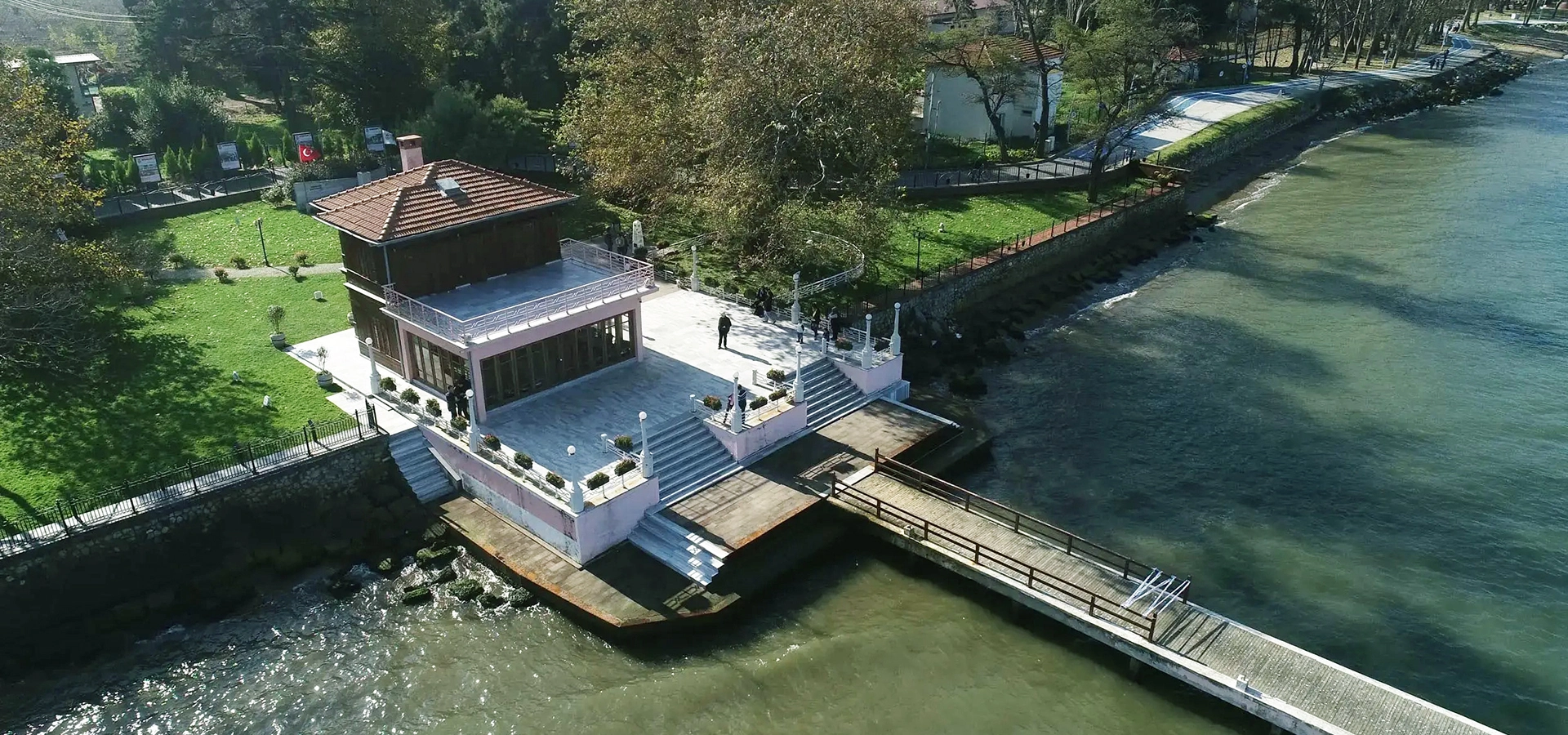
Continue from Ottoman paper history to the famous waterfront mansion associated with Mustafa Kemal Atatürk.
Explore Yürüyen Köşk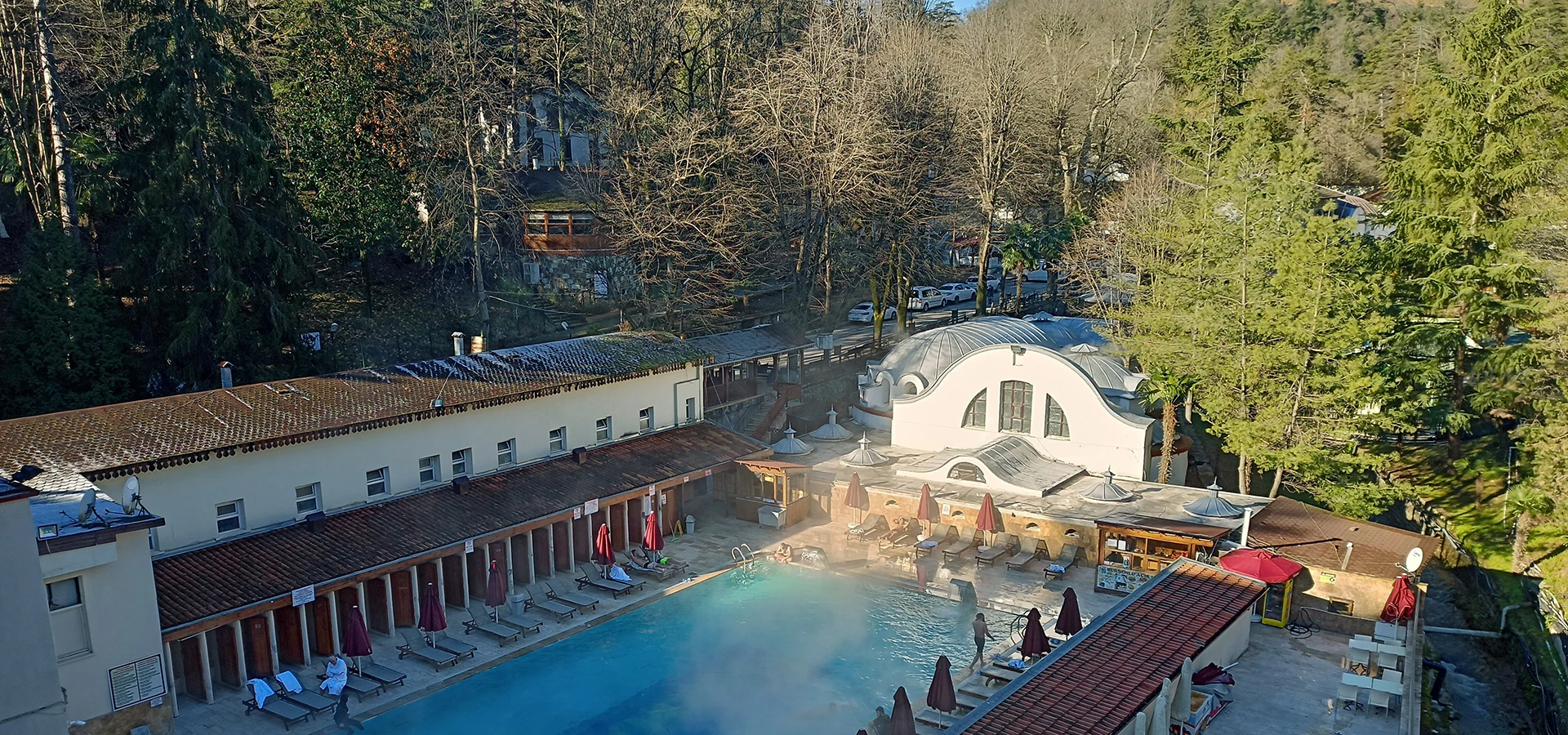
Travel inland from the museum to one of Türkiye’s historic thermal landscapes of mineral waters and forest scenery.
Explore Yalova Termal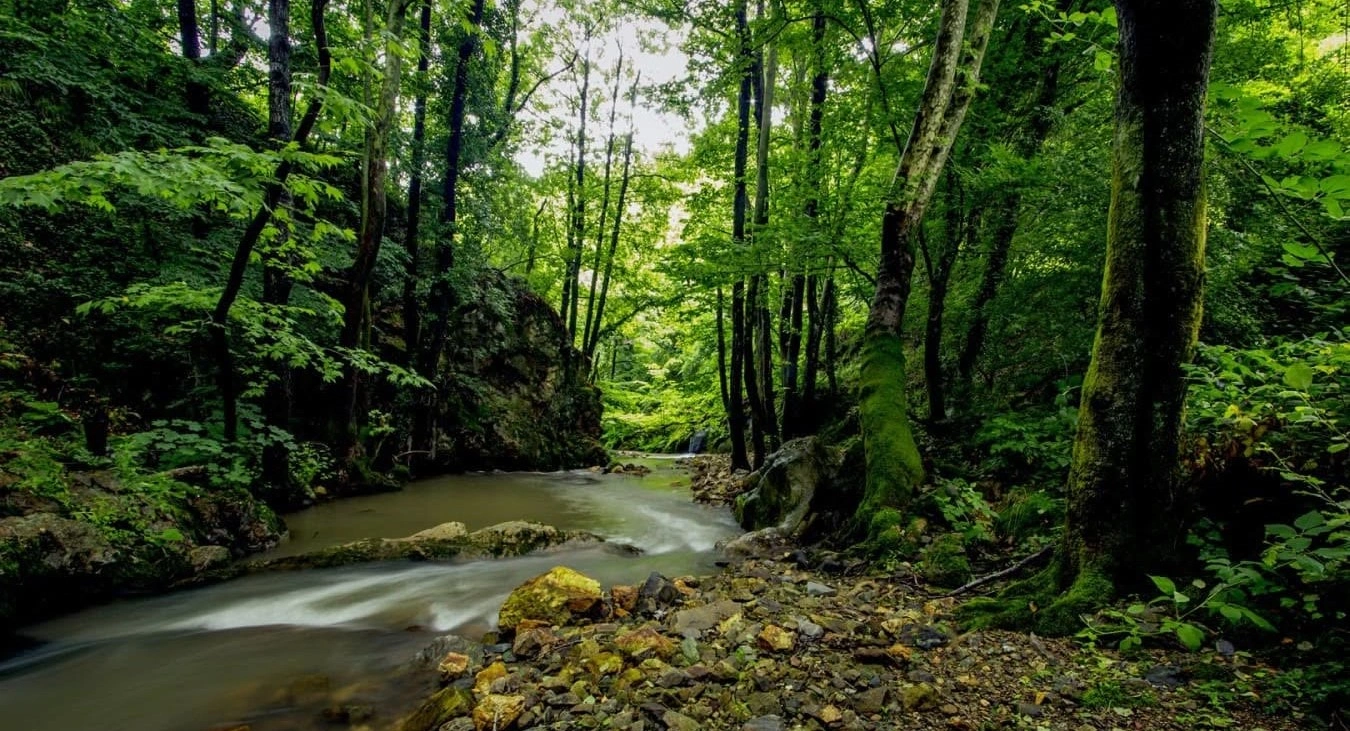
Balance an indoor cultural visit with waterfalls, walking paths and forest scenery in Yalova’s green interior.
Explore Yalova City Forest