Sheep Rib & Flank
The meat itself forms the outer shell of the dish, holding the pilaf as it cooks.
- Cut: Sheep rib / flank section
- Preparation: Opened to form a pocket
- Seasoning: Salt and black pepper






Böğür, also known as Kaburga Dolması, is one of the traditional dishes associated with Yalova’s regional cuisine. A sheep rib or flank section is opened to create a pocket, seasoned inside and out, filled with a partially cooked rice mixture enriched with diced meat, onion, pine nuts and spices, and then sewn closed before cooking.
The traditional Yalova method combines two cooking stages. The stuffed meat is first cooked gently on the stove until tender. It is then transferred to a tray, moistened with its cooking juices and finished in the oven until the exterior becomes appetisingly browned and crisp. At the table, it is sliced so the meat and fragrant inner pilaf can be served together.
A prepared sheep rib or flank section becomes the natural casing for the rich rice-and-meat filling.
Rice is combined with sautéed onion, diced meat, pine nuts, black pepper and allspice.
The filled and sewn meat is cooked until tender before its final oven stage.
The documented Yalova preparation is sliced at the table and traditionally enjoyed with ayran.
Essential information about one of Yalova’s most distinctive meat-and-rice dishes.
Böğür is officially listed among the traditional dishes of Yalova in northwestern Türkiye.
Open Yalova on Google MapsA sheep rib or flank section is opened, seasoned and filled before being sewn closed.
Rice, diced meat, onion, pine nuts, black pepper, salt and allspice form the inner pilaf.
The stuffed meat is cooked on the stove until tender and then browned in the oven.
A labour-intensive stuffed meat dish remembered through family cooking and local culinary tradition.
Böğür appears in the culinary material of the Yalova Provincial Directorate of Culture and Tourism under the explanation Kaburga Dolması, or stuffed rib. Yalova Municipality also includes the dish among the foods that reflect the province’s layered culinary heritage.
The name carries an unusually specific local explanation. The official Yalova account states that the dish is called Böğür because it is prepared from the sheep’s right flank. This links the dish not only to a recipe but also to an older vocabulary of household butchery and traditional meat preparation.
The same record preserves an oral-history detail: an 82-year-old local woman, Mukadder Teyze, recalled that this special and demanding dish had been prepared by her mother and even by her grandmother. That testimony places Böğür within a generational home-cooking tradition rather than presenting it as a modern restaurant invention.
Its preparation explains why it is regarded as a substantial special dish. The cook must prepare the pilaf, open and season the meat, fill the cavity without losing its shape, sew the opening closed, cook the stuffed rib until tender and then give it a final roasting in the oven.
When served, the browned meat is sliced with a knife and shared together with the pilaf from inside. The result is both a meat course and a rice dish in one preparation, with the cooking juices linking the two.
Its identity comes from the stuffed sheep rib, rich inner pilaf, sewn preparation and two-stage cooking method.
The meat itself forms the outer shell of the dish, holding the pilaf as it cooks.
Rice forms the main body of the stuffing and is intentionally kept somewhat firm during its first cooking.
Small pieces of meat are sautéed with onion before the rice and seasonings are added.
Dolmalık fıstık adds a classic stuffed-pilaf note and a gentle nutty character.
The documented seasoning is simple but aromatic, allowing the meat and rice to remain central.
After filling, the opening in the rib is sewn with needle and thread so the pilaf stays inside while cooking.
The stuffed meat is cooked in a wide pot until the rib section becomes tender.
The cooked Böğür is moved to a tray with its juices and roasted until the outside is well browned.
The Yalova Provincial Directorate of Culture and Tourism records a straightforward but substantial filling based on rice, onion, cooking fat, pine nuts, diced meat, salt, black pepper and allspice. The prepared sheep rib or flank section is the vessel that holds this pilaf during cooking.
1 kg forms the main body of the stuffing.
1 onion is finely chopped and sautéed as the flavour base.
The official recipe allows a glass measure of corn oil or butter for cooking.
Dolmalık fıstık gives the pilaf a traditional nutty accent.
500 g is sautéed with the onion before the rice is added.
Used in the filling and to season the rib inside and out.
Adds warmth to both the stuffed meat and the pilaf.
Provides the characteristic aromatic note described in the Yalova recipe.
The meat section is opened to form a pocket, then filled and sewn closed.
Recipe note: the official Yalova source gives the principal filling quantities but does not specify a fixed weight for the rib section or a precise oven temperature. Traditional cooks therefore rely on the size and tenderness of the meat to judge the final cooking.
The traditional preparation has several linked stages. The rice filling is cooked only until the grains remain firm, because it will continue cooking inside the meat. The rib is then seasoned, stuffed and sewn before being slowly tenderised and finally browned in the oven.
The Yalova Provincial Directorate of Culture and Tourism gives a direct explanation for the local name: Böğür takes its name from the sheep’s right flank, the part traditionally used for the dish. In Turkish, “böğür” refers to the side or flank of the body.
Böğür is the Yalova name used alongside the more descriptive Kaburga Dolması.
The name reflects the part of the sheep traditionally selected for the preparation.
The terminology preserves knowledge of traditional household meat preparation.
The official account records the dish as one remembered across mothers and grandmothers.
The stuffing is central to Böğür. It is not plain rice: finely chopped onion is sautéed in fat, diced meat is added, and the mixture is enriched with pine nuts, black pepper and allspice. Water is then added so the rice begins to cook before it enters the rib.
Softened onion forms the savoury base and distributes flavour through the rice.
Sautéing the diced meat before adding the rice builds richness into the filling.
The grains should not be fully soft after the first stage because cooking continues inside the rib.
Black pepper and allspice give the filling aroma without overwhelming the meat.
Once the rice mixture is placed inside the opened rib, the cut edge is sewn shut. This practical technique keeps the filling enclosed while the meat is moved, cooked in the pot and later transferred to the oven.
The traditional Yalova technique first focuses on tenderness and then on surface texture. Stove cooking gives the stuffed rib time to soften, while the final oven stage concentrates the juices and develops the crisp, roasted exterior described in the regional recipe.
Gentle pot cooking softens the meat without requiring an aggressively hot oven from the beginning.
The cooked Böğür is carefully moved to an oven tray so the stuffed structure stays intact.
Cooking liquid is spooned over the meat to keep it moist during the final stage.
The oven gives the outer meat an appetising roasted colour and firmer surface.
Böğür is a deeply savoury and filling dish. The outer meat becomes tender through slow cooking, while the oven finish adds roasted flavour and a crisp surface. Inside, the rice absorbs the aromas of diced meat, onion, pine nuts, black pepper, allspice and the juices released by the surrounding rib.
Both the outer rib and the diced meat in the filling contribute substantial savoury flavour.
Black pepper and allspice give the pilaf a warm, fragrant character.
Pine nuts bring a mild richness and textural contrast to the rice.
The oven finish adds browned edges while the interior remains juicy and tender.
The traditional Yalova description brings Böğür to the table whole and then slices it with a knife. Each serving should include both the tender outer meat and some of the seasoned pilaf from the centre. Ayran is specifically mentioned as the accompanying drink.
Explain to your butcher that the rib or flank section needs enough intact meat to open into a fillable pocket.
The rice continues cooking inside the stuffed meat, so keep it slightly firm during the first stage.
Salt and black pepper should reach both the cavity and the exterior of the rib.
Rice expands during cooking, so avoid packing the pocket so tightly that the seam is put under unnecessary pressure.
Strong food-safe thread helps keep the opening secure throughout the long cooking process.
The exact time depends on the size and cut of the meat; tenderness is more useful than a rigid clock time.
Reserve the cooking liquid because it is used to moisten the meat during the oven finish.
The final oven stage is for colour and crispness after the meat has already become tender.
Yalova’s gastronomy reflects the meeting of Balkan, Black Sea and Anatolian food traditions, shaped by migration and household cooking. Böğür belongs naturally within that broad culinary landscape: it uses familiar Turkish stuffed-pilaf techniques but preserves a local name, a specific association with the sheep’s flank and a Yalova family-memory narrative.
Böğür has its own recipe page on the Yalova Provincial Directorate of Culture and Tourism website.
Yalova Municipality lists Böğür (Kaburga Dolması) among the province’s characteristic foods.
The official account preserves a local memory of mothers and grandmothers making the dish.
Its multi-stage preparation makes it more elaborate than an everyday rice or meat dish.
Böğür is a recognised Yalova speciality, but its long preparation means it should not be assumed to appear on every restaurant menu every day. If tasting the traditional dish is important to your visit, ask restaurants specialising in Yalova cuisine, home-style cooking venues, hotel kitchens or local hosts whether it can be prepared in advance.
Use “Böğür” and “Kaburga Dolması” when enquiring so the dish is immediately understood.
Traditional home-style restaurants are more likely to recognise older local preparations.
The filling, sewing and long cooking stages make advance preparation sensible.
Kaburga dolması exists in several Turkish regional cuisines, so ask whether the preparation follows the Yalova tradition.
This is a substantial combination of stuffed meat and pilaf rather than a light tasting dish.
The traditional presentation is suited to slicing and serving among several diners.
The rice should carry the flavour of onion, diced meat, pine nuts and warm spices.
A well-prepared version contrasts tender meat with a browned, lightly crisp exterior.
The official Yalova description specifically recommends ayran alongside the dish.
Because the dish is labour-intensive, restaurants may require advance notice.
Yalova Sütlüsü or Termal Tatlısı can follow the rich savoury course.
Yürüyen Köşk, Yalova City Museum and Termal can round out a regional-food day.
The traditional Yalova recipe is meat-based and therefore is not vegetarian or vegan. Rice itself is naturally gluten-free, but restaurant or household preparation can introduce other ingredients or cross-contact. Pine nuts are also part of the documented filling, which is important for anyone with nut or seed-related allergies.
The dish uses both the outer sheep rib or flank and diced meat in the filling.
Dolmalık fıstık is included in the documented Yalova stuffing.
The traditional filling does not depend on bread or bulgur, but preparation practices may vary.
The official recipe allows either corn oil or butter, so dairy-free diners should ask which fat was chosen.
This information describes the documented Yalova preparation and should not be treated as a guarantee of the ingredients or cross-contact practices used by every restaurant, hotel or household.
A strong photograph should communicate immediately that Böğür is a stuffed meat dish. The most effective presentation shows the browned rib before slicing and then reveals the rice, diced meat and pine-nut filling inside.
The intact roasted rib communicates the scale and traditional presentation of the dish.
A cut section should clearly show the seasoned rice packed inside the tender meat.
Side light can bring out the crisp roasted surface created in the oven.
A generous platter reflects the dish’s shared, table-centred character.
A glass or copper cup of ayran provides natural context for the traditional serving.
Simple ceramics, linen and a wooden table suit the dish better than elaborate garnish.
A traditional Yalova meal can be combined easily with the city’s Atatürk heritage, thermal culture, botanical collections and green landscapes.
Visit one of Yalova’s best-known Atatürk landmarks beside the Marmara Sea.
Explore the province’s history and local identity before continuing into its food culture.
Experience the thermal waters, historic spa buildings and green surroundings of Termal.
Add an important republican-era heritage site to a day combining Termal and local gastronomy.
Explore one of Yalova’s most important botanical collections and its remarkable plant diversity.
Continue into Yalova’s wooded landscapes for walking, scenery and fresh air.
Add a distinctive plant-focused museum to a wider Yalova itinerary.
Discover Yalova’s connection with the history of paper production and printing culture.
Böğür is one part of a much wider regional food story. Yalova’s cuisine ranges from vegetable dishes and pastries to meat preparations, soups, milk desserts and locally important agricultural products.
Discover the province’s coiled yufka pastry filled with spinach, white cheese and yogurt.
Try Yalova’s vegetable-rich soup finished with a yogurt, flour and egg-yolk terbiye.
Explore thinly pounded beef rolled around a savoury onion-and-mushroom filling.
Discover a distinctive grape-leaf and cornmeal preparation with yogurt, fresh onion and mint.
Explore another substantial savoury speciality associated with Yalova.
Discover a rich local dish combining sautéed meat, puff pastry and cheese.
Continue with a crêpe-based dessert filled with apple marmalade and pistachio.
Finish with Yalova’s chilled milk-soaked layered pastry dessert.
Explore a geographically indicated forest honey connected with Yalova’s chestnut woodlands.
Böğür is a traditional Yalova stuffed meat dish also known as Kaburga Dolması. A sheep rib or flank section is filled with a seasoned rice-and-meat pilaf, sewn closed, cooked until tender and finished in the oven.
Böğür means the side or flank of the body. The official Yalova account says the dish takes its name from being prepared with the sheep’s right flank.
In Yalova, Böğür is presented as the local name for Kaburga Dolması, or stuffed rib.
The documented filling contains rice, onion, cooking fat, pine nuts, diced meat, salt, black pepper and allspice.
The Yalova description links the dish to the sheep’s right flank or rib section, which is opened to hold the filling.
Yes. The official recipe includes 500 grams of diced meat in the rice stuffing.
Pine nuts are part of the documented Yalova filling and add a gentle nutty flavour and texture to the rice.
The traditional Yalova recipe lists salt, black pepper and allspice.
The rice begins cooking before it is placed inside the meat, then continues to cook during the long stuffed-rib cooking stage.
Sewing secures the open side of the stuffed rib and helps keep the rice filling inside throughout cooking.
It is first cooked in a wide pot until the meat becomes tender, then transferred to an oven tray with its juices and roasted until browned and crisp outside.
Not in the documented Yalova method. The stuffed meat is tenderised on the stove before the final oven-browning stage.
The cooked stuffed rib is sliced with a knife and served together with the rice filling from inside.
The official Yalova recipe specifically mentions ayran as the accompanying drink.
No. It is a meat dish and the filling itself also contains diced meat.
The documented filling is based on rice rather than wheat, but diners with coeliac disease or severe intolerance should always confirm ingredients and cross-contact with the kitchen.
Yes. The Yalova recipe includes dolmalık fıstık, commonly translated as pine nuts.
It may. The official recipe allows either corn oil or butter, so ask which cooking fat was used if you avoid dairy.
Ask restaurants and home-style kitchens specialising in regional Yalova cuisine. Because the dish takes time to prepare, advance confirmation is recommended.
Yes, although it is a demanding recipe. The key stages are creating a suitable pocket in the meat, partially cooking the rice, filling and stitching the rib securely, tenderising it slowly and browning it at the end.
The strongest hero image should show Böğür as a generous traditional Yalova dish: a beautifully roasted rib or flank portion, sliced open so the richly seasoned rice filling is visible, with a warm and natural table setting.
This shows both the browned top of the meat and the depth of the stuffed centre.
A clean slice should reveal rice, diced meat and pine nuts packed inside.
Soft directional light makes the browned exterior look crisp and appetising.
The dish should feel substantial and shareable rather than styled as a tiny individual portion.
A simple glass of ayran reinforces the traditional serving context without distracting from the food.
The roasted rib and visible pilaf should remain the unmistakable visual focus.
Turn a traditional-food stop into a wider day through Yalova’s historic landmarks, thermal landscape, gardens and green countryside.
Pair a regional food experience with two of Yalova’s most distinctive visitor attractions.
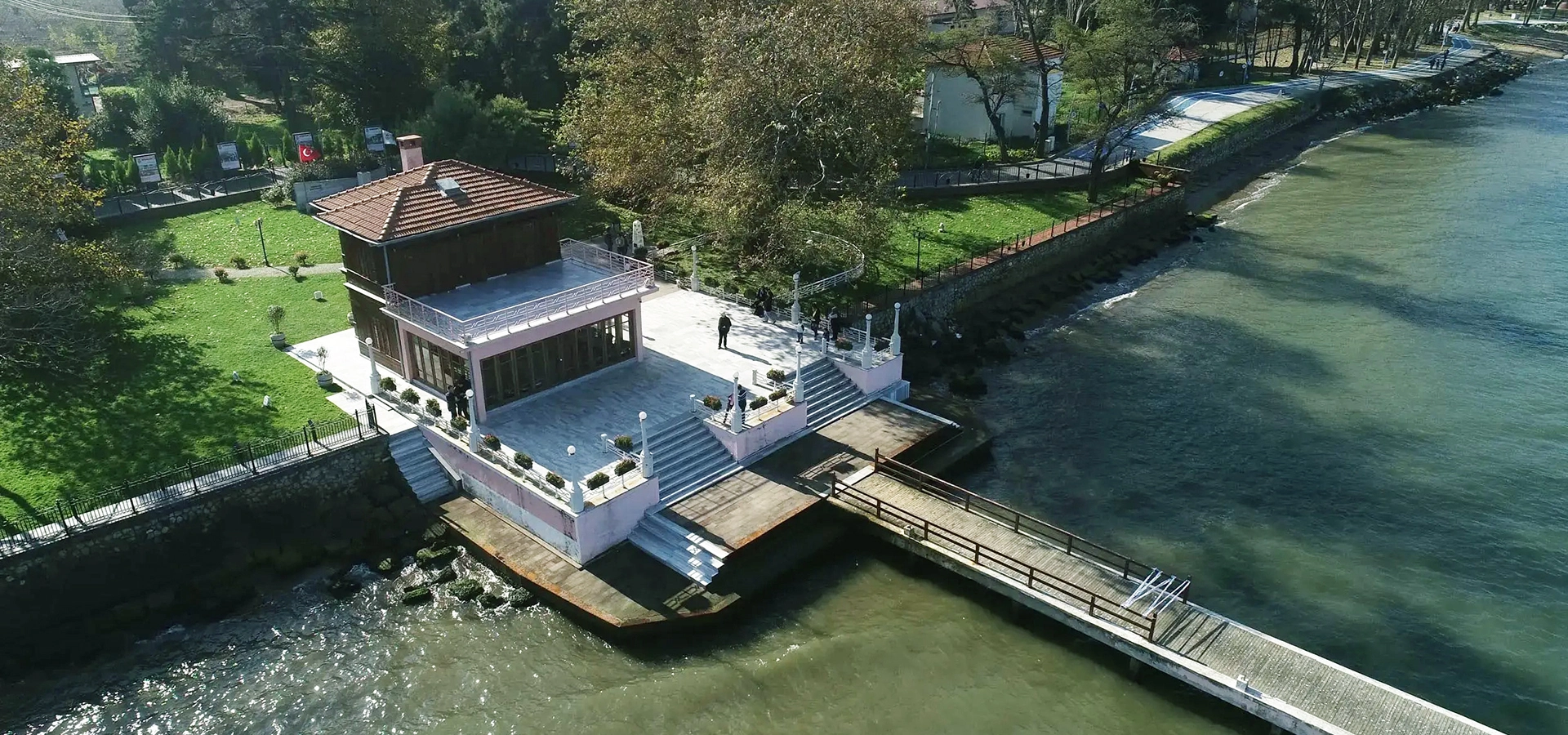
Visit one of Yalova’s best-known Atatürk landmarks and combine coastal heritage with a tasting of the province’s traditional dishes.
Discover Yürüyen Köşk
Explore the mineral waters, historic spa culture and forest setting of Termal before or after discovering Yalova’s local cuisine.
Discover Termal Hot SpringsCombine Yalova city, Termal, Atatürk heritage, gardens, waterfalls and regional-food stops in a personalised route.

Create a personalised day combining Yalova city, Termal, Atatürk heritage, botanical gardens, waterfalls and local cuisine.
Request a Private Journey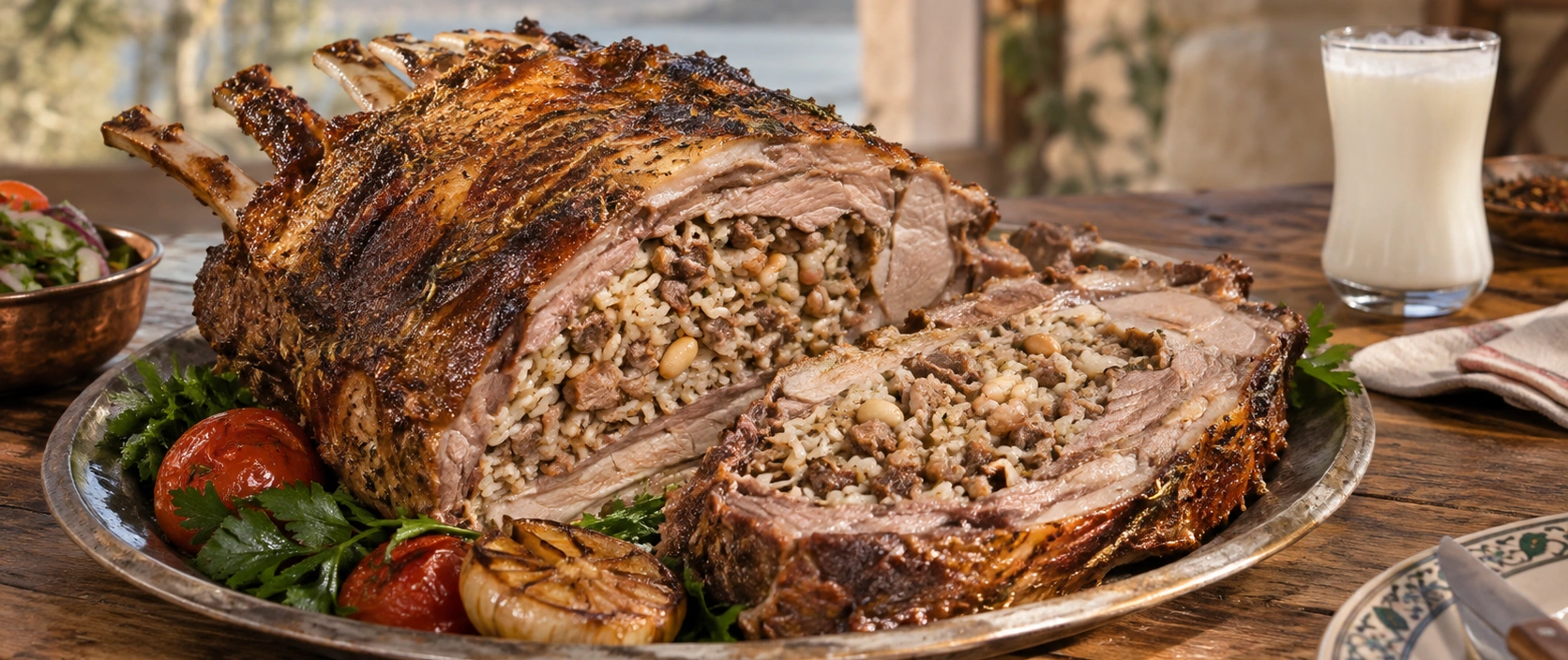
Build a food-focused route around Böğür, Spinach Yalova Börek, Termal Soup, Yaprak Pidesi, Yalova Köftesi, local desserts and regional products.
Ask About Custom Options