Minced Mutton
The official Culture Portal recipe specifies koyun kıyması — minced mutton — rather than a generic mixed mince.
- Meat: Mutton
- Form: Minced
- Role: Main structure of the köfte






Yalova Köftesi is one of the regional dishes associated with Yalova in northwestern Türkiye. Unlike the grilled, pan-fried or flattened köfte styles many travellers know, this local preparation is shaped into large round meatballs with a hollow centre, filled with a rich cream made from milk, flour, egg and kaşar cheese, and then baked in the oven.
Türkiye’s official Culture Portal records the recipe with mutton mince, onion, stale bread, egg yolks, black pepper and a small amount of grated nutmeg. The filled meatballs are arranged in a greased tray and baked until the top is attractively browned. Yalova educational material also identifies the dish as one of the foods frequently preferred in the province.
The recognised recipe uses koyun kıyması — minced mutton — mixed with onion, bread, egg and seasoning.
Each meatball is shaped with a hollow centre and filled with a savoury milk, flour, egg and kaşar mixture.
The prepared köfte are placed on a greased tray and baked rather than being cooked on a charcoal grill.
Official national and local educational sources include Yalova Köftesi among the province’s characteristic foods.
Essential information about one of Yalova’s most unusual traditional meat dishes.
Associated with Yalova and listed by Türkiye’s Culture Portal among the province’s traditional foods.
Open Yalova on Google MapsThe published recipe uses minced mutton combined with onion, stale bread, egg yolk and seasonings.
A creamy milk, flour, egg and kaşar filling is spooned into the hollow centre of each meatball.
The meatballs are baked in a greased tray at moderate oven heat until cooked and browned.
A local meat dish that turns the familiar idea of köfte into a filled, oven-baked main course.
Köfte is one of the broadest families of dishes in Turkish cuisine, with regional versions differing in meat, seasoning, shape and cooking method. Yalova’s version stands apart because the meat mixture is not simply formed and grilled. Instead, each portion is shaped into a substantial round piece with a hollow in the middle.
That hollow is filled with a cooked savoury cream containing milk, flour, egg and grated kaşar cheese. The result is a dish in which the browned meat surrounds a softer, richer centre. The technique gives Yalova Köftesi a presentation closer to a filled oven dish than to an everyday grilled meatball.
Official educational material from Yalova describes the dish as one of the foods frequently preferred in the province and specifically notes that the köfte are made from minced meat and prepared with cream in the centre.
A precise inventor or firmly dated origin story is not given in the principal official sources used for this guide. It is therefore best described as an established regional speciality associated with Yalova rather than a dish with a documented single creator.
What is clearly recorded is the preparation itself: seasoned mutton mince, a central cream filling, oven baking and browning on top. Those details form the recognisable identity of Yalova Köftesi.
Its character comes from the combination of seasoned mutton, a hollow shape, creamy cheese filling and oven baking.
The official Culture Portal recipe specifies koyun kıyması — minced mutton — rather than a generic mixed mince.
Large portions of the meat mixture are rounded and pressed in the centre to create a cavity for the cream.
Butter or margarine, flour and milk form a thick base that is enriched with egg and grated kaşar.
Grated nutmeg appears in the recognised meat mixture, giving the recipe a subtle aromatic note unusual in many köfte styles.
The published method uses juice from grated onion, helping season the mince without adding large pieces of onion to the texture.
Bread crumb from a thick slice of stale bread is incorporated into the meat mixture, a familiar technique in many köfte recipes.
The filled meatballs are arranged on a greased tray and baked at moderate heat for more than half an hour in the published method.
Meat, egg, cheese and milk make Yalova Köftesi a substantial dish suited to the centre of a meal.
The ingredient list published by Türkiye’s Culture Portal gives a useful reference for the recognised Yalova preparation. The recipe combines a seasoned mutton mixture with a separate creamy filling.
400 g koyun kıyması forms the base of the köfte.
3 eggs are listed in total, with egg yolks used in the meat mixture and egg also used in the cream.
1 thick slice provides bread crumb for the meat mixture.
2 medium onions are grated, with the juice used to season the mince.
½ cup grated kaşar enriches the creamy filling.
½ cup milk forms the liquid base of the cream.
2 tablespoons flour help thicken the milk mixture.
4 tablespoons clarified butter or margarine are listed in the published recipe.
1 teaspoon seasons the meat mixture.
½ teaspoon grated nutmeg gives the köfte its distinctive aromatic note.
2 teaspoons are listed, divided according to the preparation.
The official ingredient list also includes 1 green salad; the published wording about its exact use is somewhat unclear.
Home and restaurant versions may adjust quantities, fat choice and serving style. For understanding the documented Yalova recipe, however, the essential idea is the pairing of seasoned mutton köfte with a thick milk-and-kaşar filling.
The recipe is prepared in two parts: first the savoury cream, then the meat mixture. The two are brought together before the köfte go into the oven.
The filling is the detail that separates Yalova Köftesi from most familiar Turkish meatball preparations. It is closer to a savoury white sauce enriched with egg and cheese than to a cold dairy topping.
The preparation begins by melting fat and briefly cooking flour, creating the foundation for a smooth thickened sauce.
Milk is whisked into the cooked flour until the mixture thickens enough to stay inside the meatball cavity.
Egg enriches the mixture and helps it set during baking.
Grated kaşar gives the centre a mild salty richness and helps create a browned, appetising finish.
One of the most interesting details in the published recipe is grated nutmeg. Nutmeg is used only in a modest amount, so it should not dominate the meat. Instead, it brings warm aromatic depth that works especially well with onion, dairy and the rich flavour of mutton.
A small amount adds fragrance without turning the köfte into a strongly spiced dish.
Nutmeg is naturally compatible with milk-based sauces and cheese, linking the meat mixture with the creamy centre.
Too much nutmeg can overpower the dish; the official recipe uses only half a teaspoon for 400 g of mince.
For travellers comparing regional köfte styles, the presence of nutmeg is one of Yalova Köftesi’s most memorable recipe features.
Expect a rich, savoury dish with two contrasting layers. The mutton gives the outside a deep meat flavour, onion and black pepper add familiar köfte character, and nutmeg contributes a gentle aromatic warmth. Inside, the milk-and-kaşar filling is softer, creamier and milder.
Mutton creates a fuller, more pronounced flavour than very lean beef-based köfte.
The centre softens the overall bite with milk, egg and cheese.
Black pepper and nutmeg add warmth rather than intense chilli heat.
Baking gives the exterior and filling a cooked, browned character different from charcoal-grilled köfte.
Yalova Köftesi is best served hot, when the meat is still juicy and the creamy centre is warm and soft. Because it is already a rich preparation, simple accompaniments allow the filled köfte itself to remain the focus.
Use onion juice rather than large quantities of grated onion pulp so the mixture remains easy to shape.
Good mixing helps the mutton, bread and egg yolk bind into a firm mixture that holds its hollow shape.
The indentation should be large enough to hold cream but not so deep that the meat splits underneath.
A runny sauce may overflow during baking, so cook the milk-and-flour mixture until it has real body.
Mixing the kaşar into the warm sauce after thickening helps preserve a smooth texture.
Its aroma is powerful; a small amount should support rather than dominate the mutton.
The official method places the meatballs on a greased baking tray, helping prevent sticking during the longer oven cooking.
The published recipe specifically values a browned top, so allow enough oven time for attractive colour to develop.
As with many regional dishes, home cooks and restaurants may adapt the recipe. Meat choice, cheese quantity, the richness of the sauce and the size of each köfte can all vary. The official Culture Portal version is best treated as a documented reference rather than the only possible household interpretation.
The published recipe specifies mutton, although some modern cooks may prefer beef or a mixed mince.
The official ingredient list permits clarified butter or margarine, while contemporary kitchens may use ordinary butter.
The amount of kaşar can be adjusted depending on how rich or strongly cheesy the filling is intended to be.
Fresh greens, salad or herbs may be used differently from one kitchen to another.
The features that matter most to the dish’s Yalova identity are the seasoned minced-meat base, the hollow centre, the creamy cheese filling and oven baking.
Yalova’s food culture reflects the meeting of communities and culinary traditions from different parts of Anatolia, the Balkans, the Black Sea region and the Caucasus. The province’s local-food lists therefore include pastries, meat dishes, soups, vegetable preparations, dairy-rich recipes and sweets.
A distinctive lamb dish served with a baked puff-pastry base and kaşar cheese.
A thin local pide that represents Yalova’s strong dough and bakery traditions.
Another regional recipe associated with Yalova’s traditional food repertoire.
A well-known local sweet offering a lighter contrast to the province’s rich savoury dishes.
A spinach-filled pastry reflecting the important role of savoury dough dishes in local cooking.
Chestnut honey, kiwi and aronia add a modern agricultural dimension to Yalova’s culinary identity.
Yalova Köftesi is recognised as a local dish, but travellers should not assume that every köfte restaurant serves this particular cream-filled version. Menus change and some regional foods may be prepared only by selected restaurants or for special local-food menus.
Look for restaurants that specifically mention Yalova cuisine, yöresel yemekler or regional specialities.
Use the full local name so staff understand that you mean the filled Yalova preparation rather than ordinary köfte.
If tasting this dish is important to your itinerary, contact the restaurant in advance and ask whether it is currently available.
The creamy centre and browned oven finish are most enjoyable when the dish has been freshly prepared.
This is an oven-baked, filled meatball dish rather than a flat charcoal-grilled köfte.
Mutton, egg, milk, cheese and fat make the traditional recipe filling and substantial.
The official recipe uses mutton; restaurants may use a different mince, so ask if the exact meat matters to you.
Its subtle warmth is one of the less expected flavours in the documented recipe.
The traditional preparation contains wheat, dairy and egg, so guests with allergies should confirm ingredients directly.
Fresh vegetables and greens offer a pleasant contrast to the creamy, savoury main dish.
A food stop fits naturally into a day exploring central Yalova, Termal, museums, gardens or the waterfront.
Compare it with Milföylü Yalova Kebabı, local pide, regional desserts and Yalova’s protected agricultural products.
The traditional published recipe is not vegetarian, vegan, dairy-free, egg-free or gluten-free. Restaurant recipes can differ, so travellers with allergies or strict dietary requirements should always ask about the exact preparation being served.
The recognised recipe uses minced mutton.
Milk, kaşar cheese and a dairy-based fat such as clarified butter may be used.
Egg yolks appear in the meat mixture and egg is also part of the creamy centre.
Stale wheat bread and flour are both included in the documented recipe.
Ingredient information on this page describes the traditional published preparation and should not be treated as a guarantee for every restaurant serving.
Yalova Köftesi is especially photogenic when the cream-filled centre is clearly visible. A strong photograph should show both the browned meat and the pale, rich filling so viewers immediately understand what makes the dish different.
A slightly elevated angle reveals the round köfte shape while keeping the filled centre visible.
Focus on the contrast between browned meat and creamy kaşar filling.
A tray or plate with multiple filled köfte demonstrates the distinctive repeated shape of the dish.
Window light can show both the texture of the meat and the pale filling without harsh reflections.
A carefully cut piece can reveal the relationship between the baked meat shell and softer centre.
The filling looks most appetising before it cools and firms completely.
A meal in Yalova city can easily be combined with waterfront heritage, museums, botanical collections, thermal springs and nearby natural scenery.
Discover the city’s history and social identity before continuing your exploration through its regional cuisine.
Visit one of Yalova’s best-known Atatürk heritage landmarks beside the Marmara waterfront.
Explore the city’s horticultural identity through carefully cultivated miniature trees.
See an exceptional plant collection in a city strongly associated with ornamental horticulture.
Combine regional food with historic thermal baths, mineral waters and forest scenery.
Add an important republican-era heritage stop to your visit to the Termal district.
Continue into the countryside for forest landscapes and one of Yalova’s best-known waterfall excursions.
Explore the lush natural scenery that gives the province much of its green character.
Yalova Köftesi is only one part of the province’s food story. Other local dishes, sweets and agricultural products add very different flavours to a Yalova culinary itinerary.
Discover another unusual Yalova meat dish combining lamb sauté, puff pastry and kaşar cheese.
A geographically indicated forest honey associated with chestnut woodlands and local beekeeping.
A protected regional agricultural product grown in the province’s favourable orchard conditions.
A dark-purple berry that has become an increasingly important part of Yalova’s agricultural identity.
A local dessert often highlighted among the city’s characteristic sweet specialities.
A thin pide showing another side of Yalova’s regional dough and bakery tradition.
Yalova Köftesi is a regional Yalova meat dish made from seasoned minced mutton shaped into large hollow-centred meatballs, filled with a creamy milk-and-kaşar mixture and baked in the oven.
Türkiye’s official Culture Portal recipe specifies minced mutton.
Not in the published traditional preparation. The filled meatballs are arranged on a greased tray and baked in the oven.
The hollow is deliberately shaped to hold the savoury cream filling before baking.
The documented cream is prepared with fat, flour, milk, egg, salt and grated kaşar cheese.
Yes. Grated kaşar cheese is part of the creamy centre.
Yes. The official ingredient list includes a small amount of grated nutmeg in the meat mixture.
It is aromatic rather than chilli-hot. Black pepper and nutmeg provide the principal spice character in the published recipe.
Yes. The method uses juice from grated onion in the meat mixture.
Yes. The published recipe uses the soft interior of a thick slice of stale bread.
Yes. Egg yolks are incorporated into the meat mixture, and egg is also used in the creamy filling.
No. The recognised preparation is centred on minced mutton.
Normally no. Both stale bread and flour are included in the traditional published recipe.
Yes. Milk and kaşar cheese are essential components of the recognised creamy filling.
Its meat-and-dairy composition makes it a substantial savoury dish suitable as a main course.
The shaped and filled meatballs are placed on a greased tray and baked at moderate heat for more than half an hour in the official method.
The published recipe specifically notes that browning on top is desirable, giving the finished dish a more appetising colour and oven-baked character.
Yes. It requires ordinary kitchen equipment: a saucepan for the cream, a mixing bowl for the meat and an oven for baking.
Look for restaurants specialising in Yalova or regional cuisine and check the current menu before making a special journey, as the dish may not be available everywhere.
Yes. It appears in Türkiye’s Culture Portal and in Yalova educational material presenting the province’s regional foods.
The principal official sources used for this guide present it as a traditional Yalova dish. They do not identify the dish itself as a registered geographical-indication product.
Its signature feature is the combination of seasoned mutton köfte with a hollow centre filled with a creamy milk, egg and kaşar mixture before oven baking.
Many köfte styles are grilled, fried or cooked as plain meat patties. Yalova Köftesi is shaped as a filled meatball and baked with a creamy cheese centre.
Fresh salad, greens or simple vegetables work well because they balance the rich meat, egg and dairy elements of the dish.
The visual story of Yalova Köftesi is concentrated in its filled centre. Good food photography should therefore make the unusual shape obvious rather than allowing the dish to look like an ordinary tray of meatballs.
Angle the camera so the cream filling can be seen clearly inside each browned meatball.
Warm side light can emphasise the oven-baked colour on the meat and cheese.
A little salad or herbs add colour contrast to the brown meat and pale filling.
A tighter frame can highlight the texture of the mince and the smoother cream.
A cross-section can reveal how the filling sits within the shaped meat.
The centre appears softer and more appetising while the köfte are still hot from the oven.
Turn a local-food stop into a wider Yalova journey through museums, gardens, hot springs, forests and the Marmara coast.
Pair Yalova Köftesi with the city’s cultural landmarks and other regional flavours.

Explore Yalova’s social and cultural history, then continue the story through the dishes associated with the province.
Explore Yalova City Museum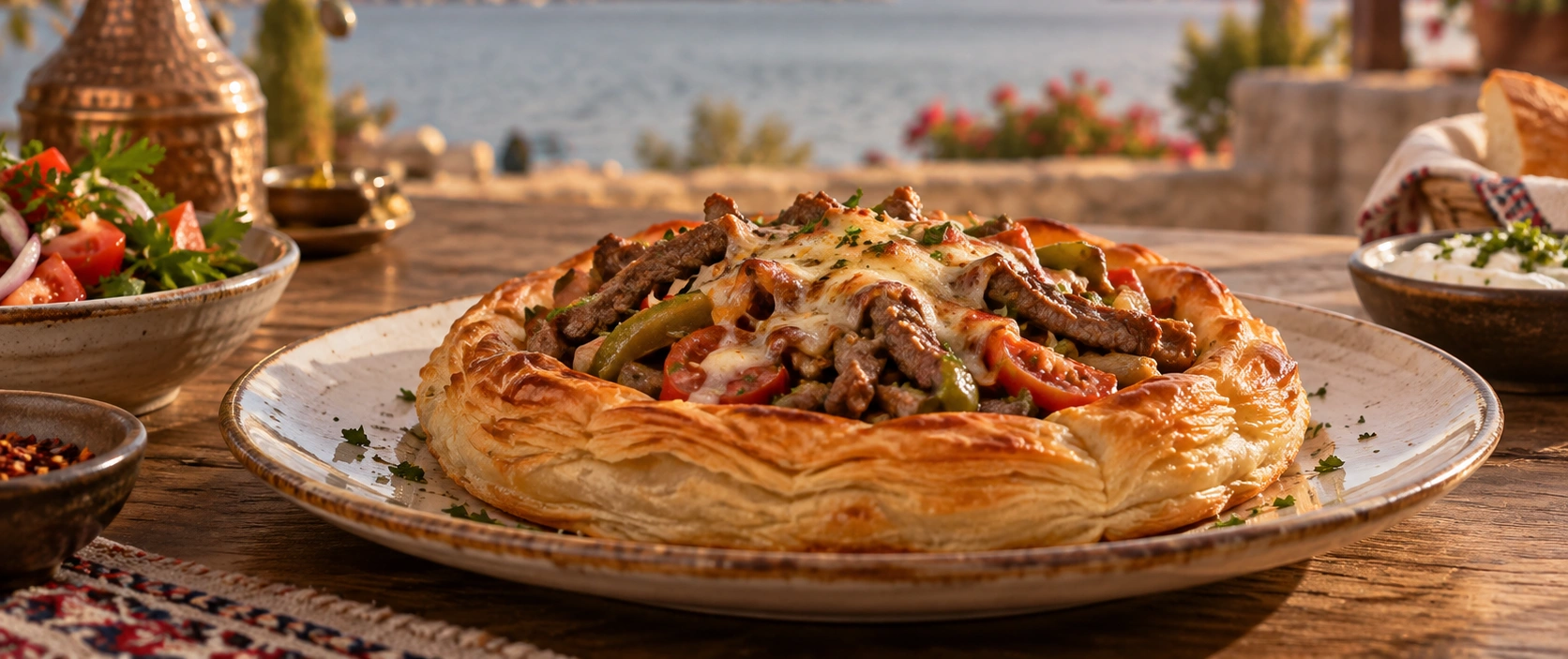
Compare Yalova Köftesi with another distinctive regional meat dish featuring lamb, puff pastry and kaşar.
Discover Milföylü Yalova KebabıCombine Yalova city, Termal, countryside scenery, museums and local-food stops in a personalised route.

Create a personalised day combining Yalova’s museums, waterfront, Termal, botanical gardens, waterfalls and regional foods.
Request a Private Journey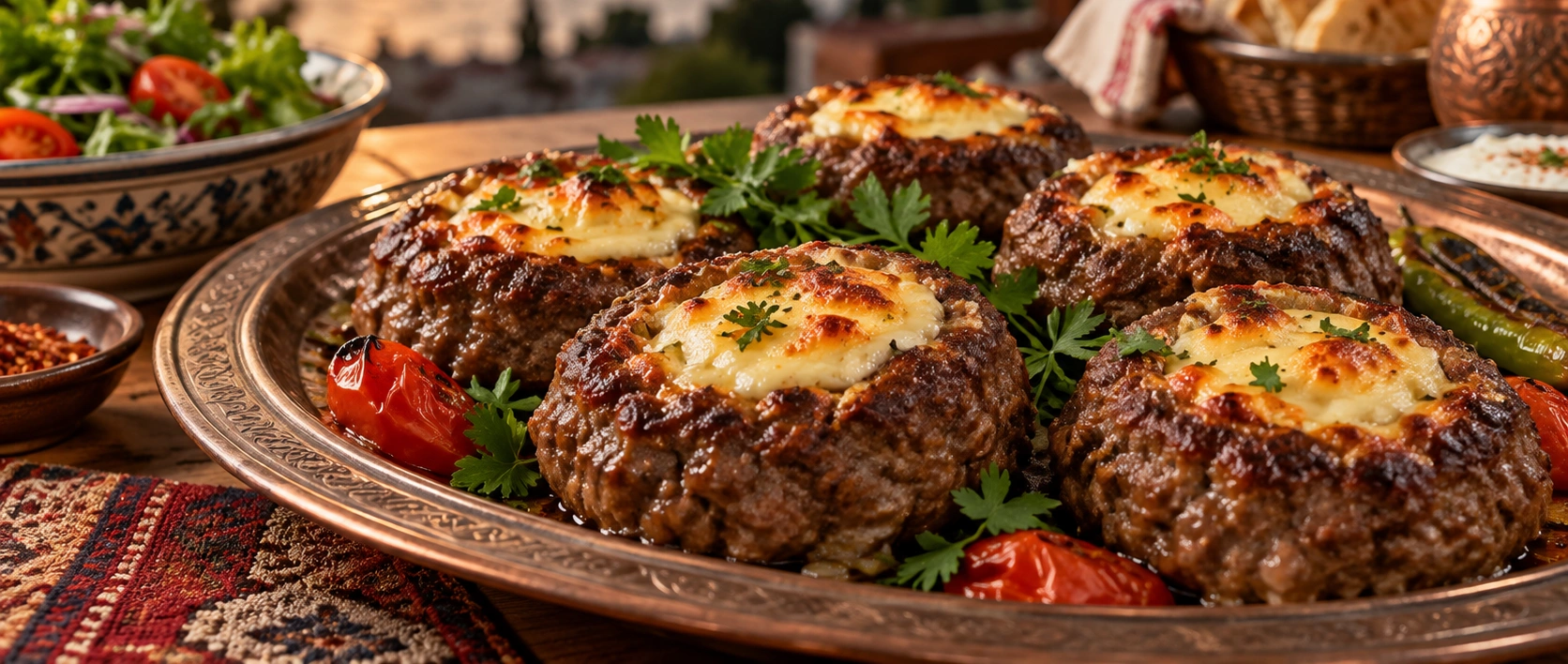
Build a food-focused route around Yalova’s meat dishes, traditional sweets, protected agricultural products and regional countryside.
Ask About Custom Options